
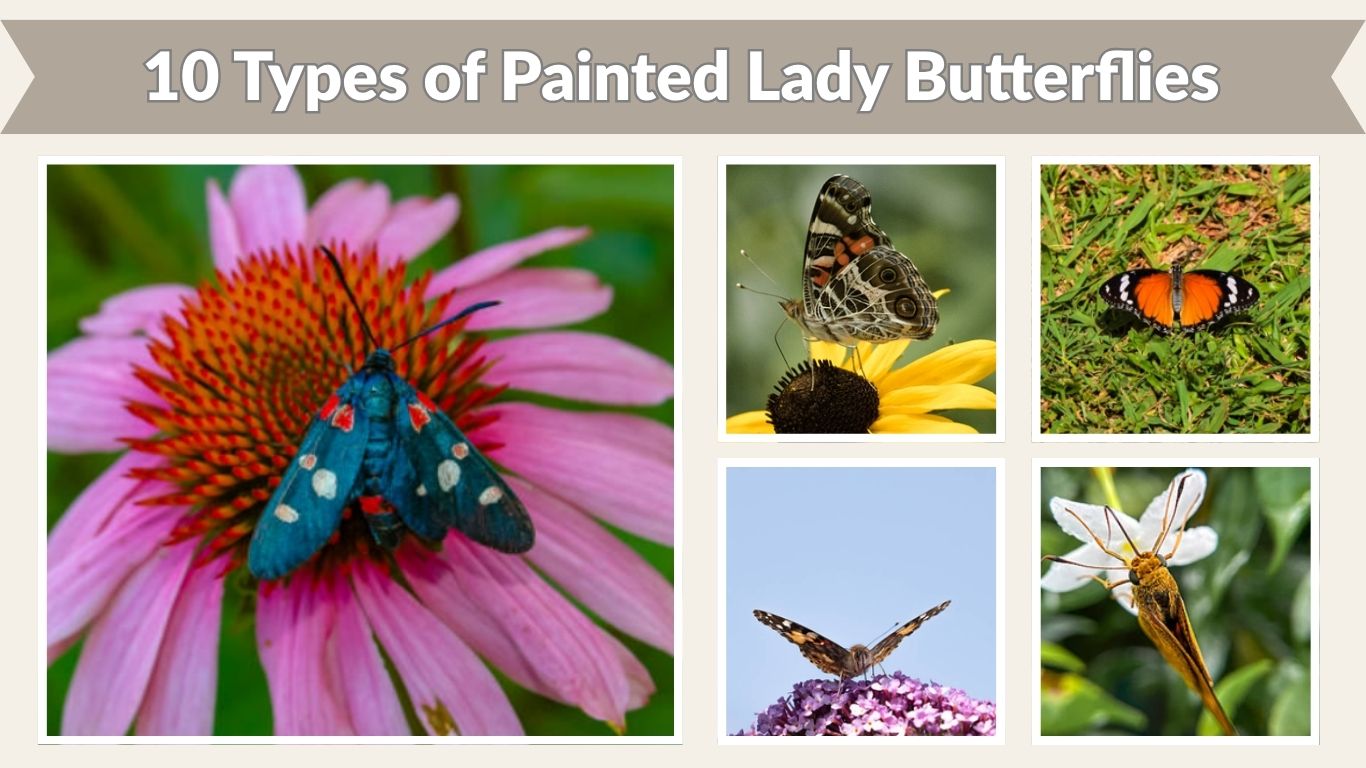
Painted Lady butterflies are among the most colorful and widely recognized butterflies in the world. They are admired for their bright orange wings, detailed markings, and graceful flight patterns. These butterflies can be found across many different habitats, including meadows, deserts, forests, mountains, and tropical regions.
Different types of Painted Lady butterflies vary in size, wing color, habitat preference, and identifying features. Some species are famous for long-distance migration, while others are adapted to survive in harsh climates such as deserts or alpine regions. Their beautiful patterns and active behavior make them popular among butterfly watchers and nature enthusiasts.
In this guide, you will discover 10 types of Painted Lady butterflies along with their size, color, habitat, identification features, and pictures.
1. American Painted Lady
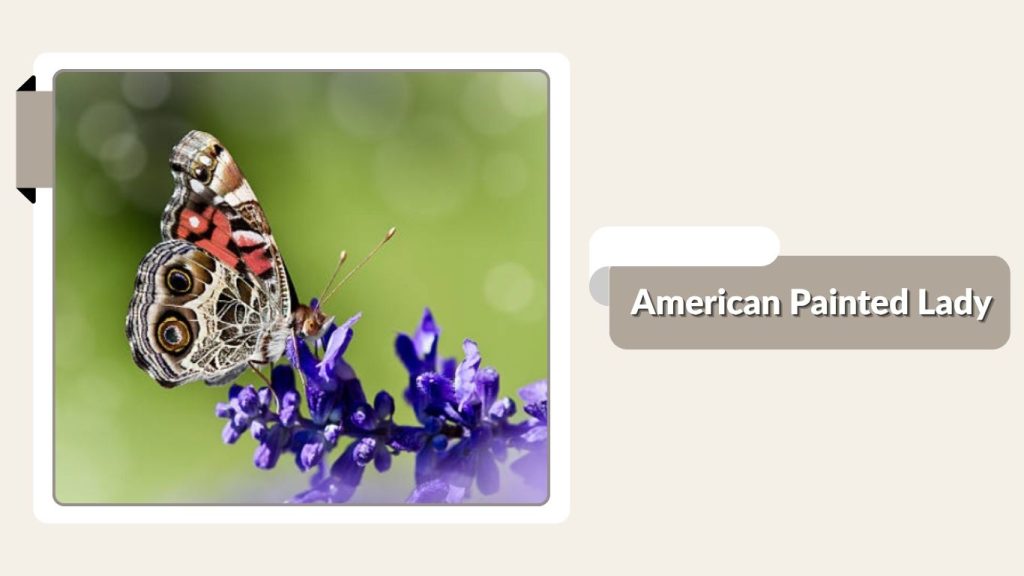
The American Painted Lady is a colorful butterfly commonly found across North America. It is known for its striking orange and brown wings with eye-catching markings. This butterfly prefers open landscapes filled with flowers and is often seen during warm months feeding on nectar.
Size
The American Painted Lady has a wingspan of about 2 to 2.5 inches. Its medium-sized body allows it to fly quickly and gracefully through meadows, gardens, and fields. Despite its delicate appearance, this butterfly is a strong flier and can travel long distances during seasonal movements.
Color
This butterfly displays a beautiful mix of orange, brown, black, and white colors on its wings. The upper side of the wings is mostly orange with dark patterns, while the underside contains small eye spots that help protect it from predators. These colors provide excellent camouflage among dry plants and flowers.
Habitat
The American Painted Lady lives in open sunny habitats where flowers are abundant. It is commonly found in grasslands, roadsides, parks, gardens, and desert edges. The butterfly prefers areas with host plants such as everlasting plants and pussytoes, which are important for caterpillar development. Warm climates and blooming vegetation support healthy populations throughout the year.
Identification
- Orange and brown wings with black markings
- Small blue-centered eye spots on hindwings
- Wingspan around 2 to 2.5 inches
- Fast and active flight pattern
- Underside has mottled brown camouflage patterns
- Commonly confused with the Painted Lady butterfly
2. Australian Painted Lady
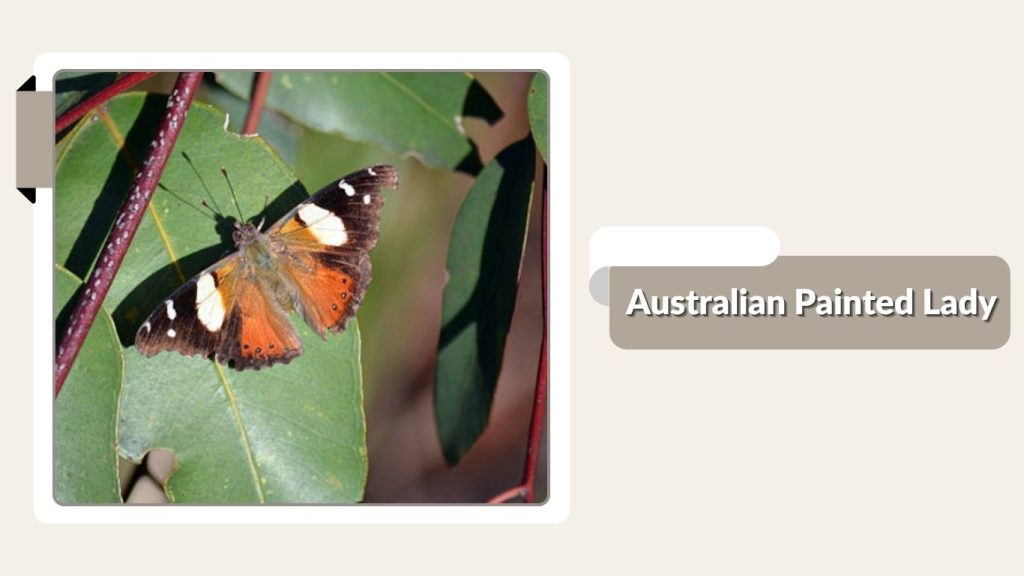
The Australian Painted Lady is a vibrant butterfly species widely distributed across Australia and nearby regions. It is admired for its bright wing patterns and active flying behavior. This butterfly often appears in large numbers after seasonal rains when flowers become plentiful across open landscapes.
Size
The Australian Painted Lady has a wingspan ranging from 2 to 2.8 inches. Its body is slender and lightweight, allowing smooth and rapid flight. The butterfly is highly mobile and may travel across large distances in search of food and breeding areas during favorable weather conditions.
Color
This butterfly features a rich combination of orange, brown, black, and white shades. The upper wings show bold orange patches with dark borders and white spots near the tips. The underside is softer in color with several small eye spots that help distract predators. Its colorful appearance makes it easy to notice among wildflowers.
Habitat
The Australian Painted Lady prefers open environments with abundant flowering plants. It commonly lives in grasslands, coastal dunes, woodland edges, farmlands, and gardens. The caterpillars feed on native herbs and daisies, while adults depend on nectar from blooming flowers. Populations increase rapidly during warm seasons with good rainfall.
Identification
- Bright orange wings with black and white patterns
- Wingspan between 2 and 2.8 inches
- Small eye spots visible on hindwings
- Fast and energetic flight style
- Underside shows light brown camouflage markings
- Often seen near flowering plants and open fields
3. Cosmopolitan Painted Lady
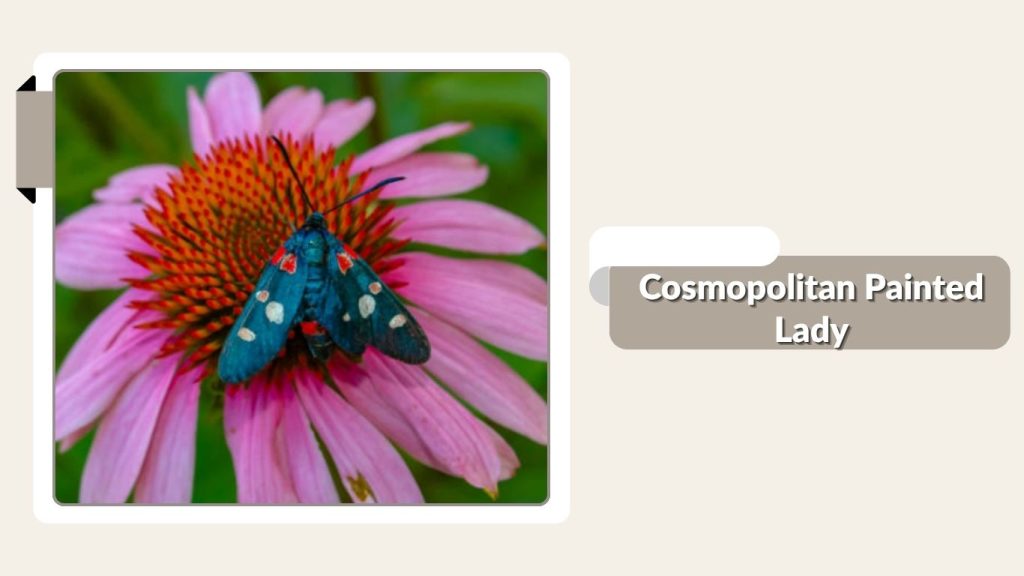
The Cosmopolitan Painted Lady is one of the most widespread butterfly species in the world. It can be found across Europe, Asia, Africa, North America, and Australia. Known for its long migrations and colorful appearance, this butterfly thrives in many different climates and environments.
Size
The Cosmopolitan Painted Lady has a wingspan of about 2 to 3 inches. It is considered a medium-sized butterfly with strong wings designed for long-distance travel. This species is famous for its seasonal migrations, sometimes covering thousands of miles in search of suitable breeding grounds and food sources.
Color
This butterfly displays bright orange wings decorated with black, white, and brown markings. The forewings contain bold white spots near the tips, while the underside features several small eye spots. Its colorful wings not only attract attention but also help provide camouflage when resting among dry leaves and plants.
Habitat
The Cosmopolitan Painted Lady can survive in many habitats, including grasslands, deserts, gardens, farmlands, meadows, and mountain slopes. It prefers sunny places rich in flowering plants where nectar is available throughout the season. Caterpillars commonly feed on thistles, mallows, and other leafy plants found in open areas.
Identification
- Orange wings with black and white patterns
- Wingspan between 2 and 3 inches
- White spots near the tips of forewings
- Small eye spots on the underside of hindwings
- Strong and fast migratory flight
- Commonly found in open sunny habitats
4. West Coast Lady
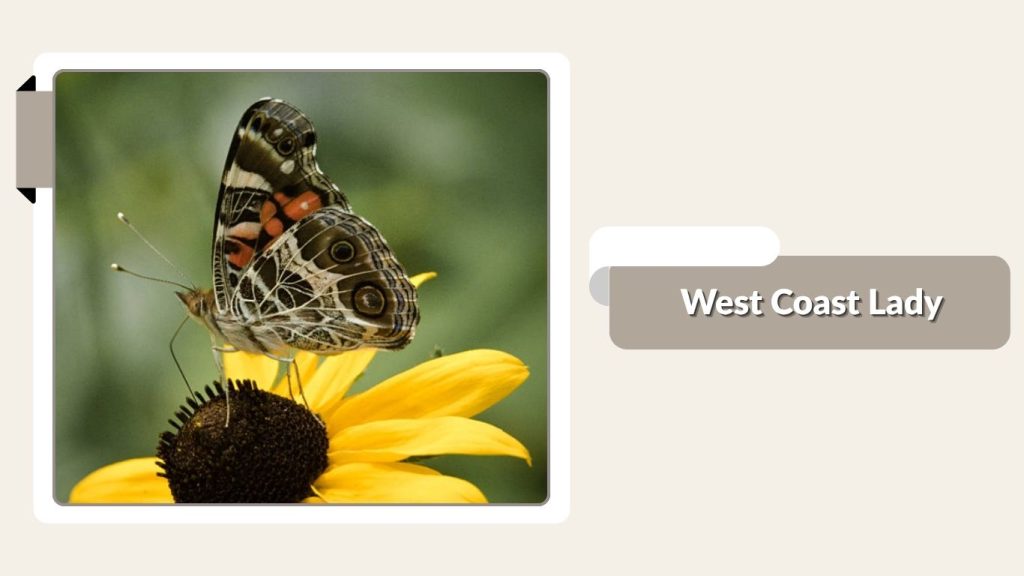
The West Coast Lady is a beautiful butterfly commonly found along the western regions of North America. It is closely related to other painted lady butterflies but has unique wing markings that help distinguish it. This species is especially active during spring and summer when flowers bloom across open landscapes.
Size
The West Coast Lady has a wingspan of around 2 to 2.5 inches. Its medium-sized wings provide excellent agility and speed during flight. The butterfly moves quickly between flowers while feeding and can often be seen gliding through sunny meadows and gardens.
Color
This butterfly features bright orange wings mixed with black, brown, and white markings. The upper wings show bold dark patches, while the underside contains detailed patterns and eye spots. These colors help the butterfly blend into natural surroundings when resting on plants or dry ground.
Habitat
The West Coast Lady prefers warm and open habitats with plenty of flowering vegetation. It is commonly found in grasslands, coastal areas, parks, deserts, and mountain valleys. Adults feed on nectar from wildflowers, while caterpillars rely on plants such as mallows and desert herbs for growth and development.
Identification
- Orange wings with black and white markings
- Wingspan around 2 to 2.5 inches
- Distinct eye spots on hindwings
- Fast and smooth flight pattern
- Underside has complex brown camouflage designs
- Commonly found in western North America
5. Meadow Painted Lady
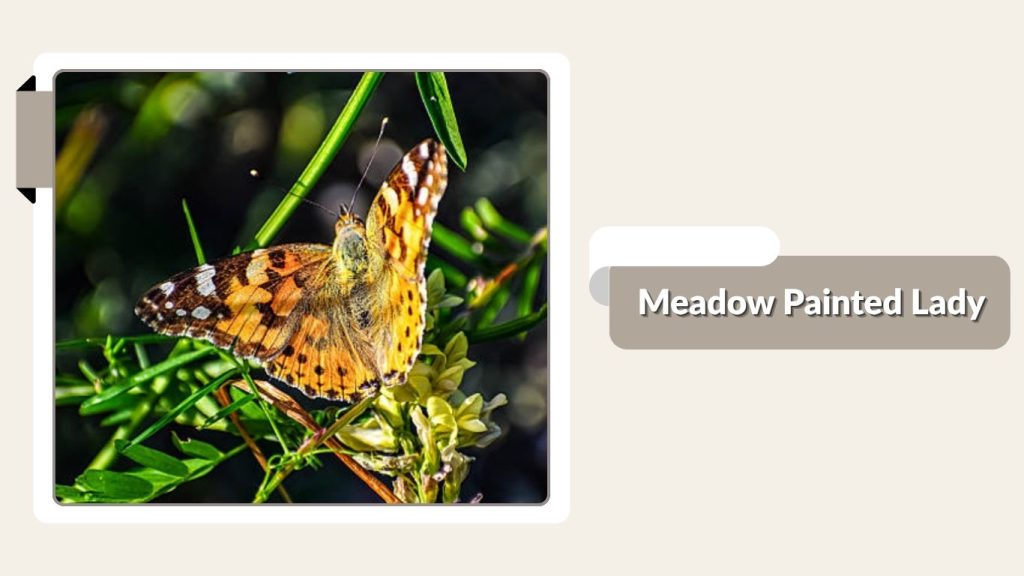
The Meadow Painted Lady is a colorful butterfly often associated with grassy meadows and flower-filled open spaces. It is admired for its delicate wing patterns and active daytime behavior. This butterfly plays an important role in pollination as it moves from flower to flower collecting nectar.
Size
The Meadow Painted Lady has a wingspan of about 2 to 2.6 inches. Its lightweight body and broad wings allow smooth and balanced flight. The butterfly is quick in movement and can travel efficiently across fields and open landscapes while searching for food and breeding sites.
Color
This butterfly displays vibrant orange wings with black and white markings. The upper side appears brighter in sunlight, while the underside contains softer brown tones and small eye spots. These patterns provide natural camouflage against grasses and dried vegetation, helping the butterfly avoid predators.
Habitat
The Meadow Painted Lady mainly lives in open meadows, grasslands, farmlands, and wildflower fields. It prefers sunny areas rich in nectar-producing flowers. The caterpillars depend on low-growing plants and herbs for food, while adults are frequently seen feeding on daisies, asters, and thistles during warm seasons.
Identification
- Bright orange wings with dark black markings
- Wingspan between 2 and 2.6 inches
- Small eye spots on hindwings
- Brown and tan camouflage patterns underneath
- Commonly seen in grassy meadows and fields
- Active during warm sunny weather
6. Desert Painted Lady
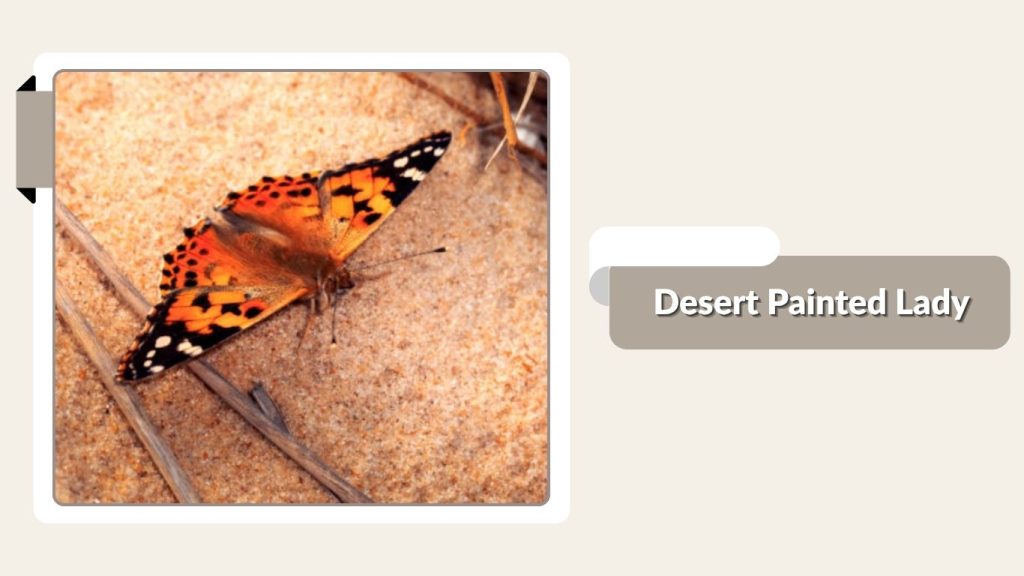
The Desert Painted Lady is a hardy butterfly species adapted to dry and warm environments. It is often seen flying across desert landscapes and arid grasslands where flowering plants are available. Despite living in harsh conditions, this butterfly is colorful, active, and well suited for survival in hot climates.
Size
The Desert Painted Lady has a wingspan of around 2 to 2.7 inches. Its wings are strong enough to handle windy desert conditions and long flights between feeding areas. The butterfly remains highly active during daylight hours, especially in mild morning and evening temperatures.
Color
This butterfly shows a striking blend of orange, brown, black, and white shades. The upper wings are mostly orange with dark markings, while the underside contains lighter brown patterns and eye spots. These earthy colors help the butterfly blend naturally with desert plants, rocks, and dry soil.
Habitat
The Desert Painted Lady mainly inhabits deserts, dry grasslands, scrublands, and semi-arid regions. It prefers open sunny environments where wildflowers bloom after seasonal rains. Adults feed on nectar from desert flowers, while caterpillars survive on hardy host plants that grow in dry conditions with limited water.
Identification
- Orange wings with black and white patterns
- Wingspan between 2 and 2.7 inches
- Small eye spots on hindwings
- Brown camouflage patterns on wing undersides
- Commonly found in dry desert regions
- Strong and fast daytime flier
7. Mountain Painted Lady
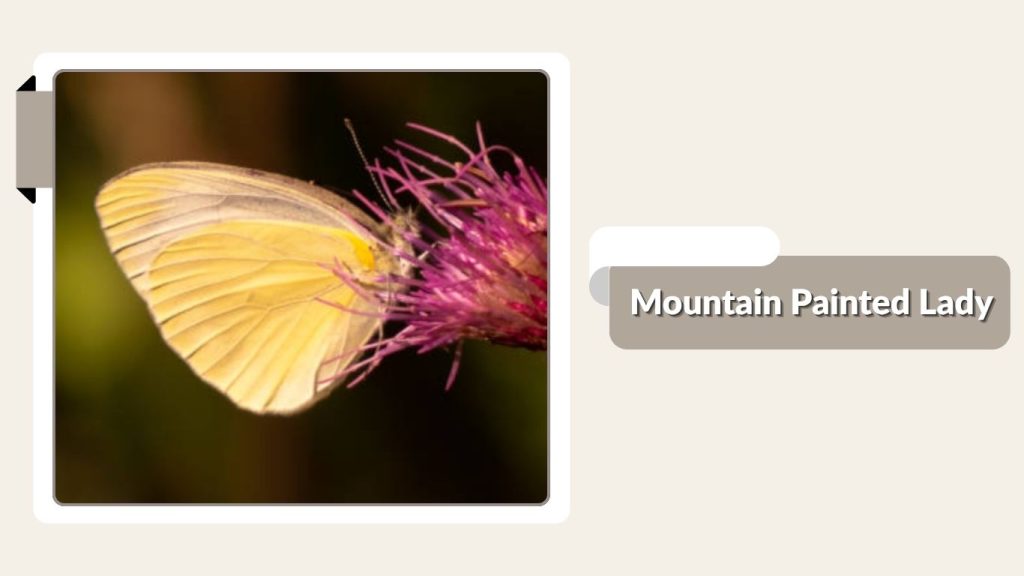
The Mountain Painted Lady is a beautiful butterfly commonly found in elevated regions with cool temperatures and abundant wildflowers. It is known for its strong flight and colorful wing patterns that stand out against rocky landscapes and alpine meadows. This butterfly is most active during warmer months in mountainous environments.
Size
The Mountain Painted Lady has a wingspan of about 2 to 2.8 inches. Its broad wings help it glide efficiently through windy mountain areas. The butterfly is agile and capable of flying across steep slopes and valleys while searching for nectar and breeding locations.
Color
This butterfly displays vivid orange wings decorated with black, white, and brown markings. The upper wings are brighter and more noticeable in sunlight, while the underside has muted tones with eye spots that provide camouflage. These natural colors help protect the butterfly from predators in rocky surroundings.
Habitat
The Mountain Painted Lady prefers alpine meadows, mountain grasslands, forest edges, and rocky hillsides. It thrives in cool regions where flowering plants bloom during spring and summer. Adults feed on nectar from wildflowers, while caterpillars depend on mountain herbs and leafy plants for growth and survival.
Identification
- Orange wings with black and white markings
- Wingspan between 2 and 2.8 inches
- Small eye spots on the hindwings
- Strong flight adapted for windy mountain areas
- Brown camouflage patterns underneath the wings
- Commonly found in alpine meadows and rocky slopes
8. Tropical Painted Lady
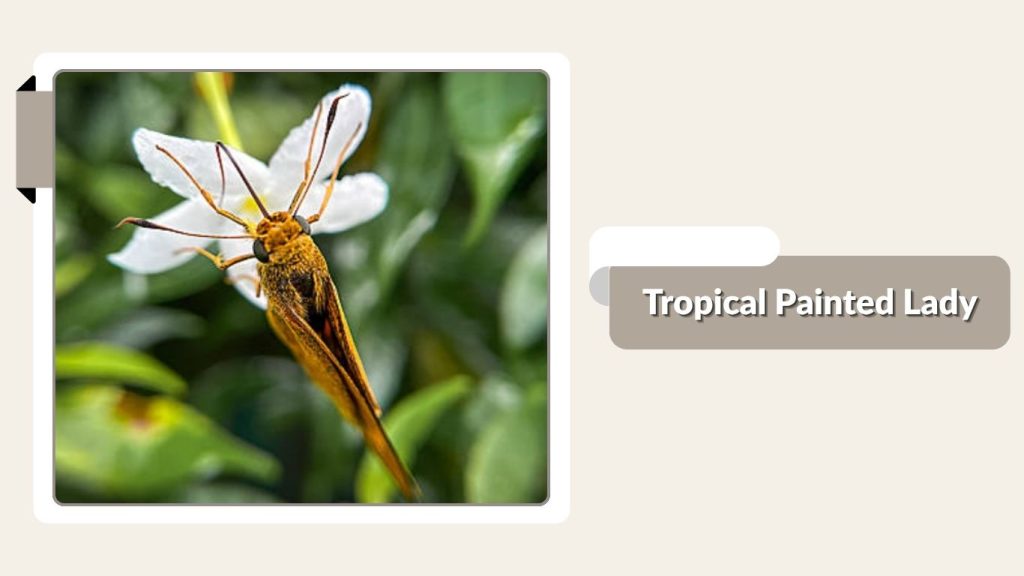
The Tropical Painted Lady is a colorful butterfly species that thrives in warm and humid climates. It is commonly seen in tropical forests, gardens, and open areas filled with flowering plants. This butterfly is admired for its energetic flight and bright wing patterns that make it easy to spot in sunny environments.
Size
The Tropical Painted Lady has a wingspan of around 2 to 3 inches. Its medium-sized body and broad wings allow smooth flight through dense vegetation and open tropical landscapes. The butterfly is highly active during the daytime and often travels between flowers in search of nectar.
Color
This butterfly features vibrant orange wings with black, white, and brown markings. The upper side of the wings appears bold and bright, while the underside contains softer shades with eye spots for camouflage. These colorful patterns help the butterfly blend among tropical flowers and leafy surroundings.
Habitat
The Tropical Painted Lady mainly lives in tropical forests, rainforest edges, gardens, grasslands, and coastal regions. It prefers warm areas with abundant flowering plants throughout the year. Adults feed on nectar from tropical blooms, while caterpillars survive on leafy host plants commonly found in humid environments.
Identification
- Bright orange wings with black and white markings
- Wingspan between 2 and 3 inches
- Eye spots visible on hindwings
- Fast and active daytime flight
- Brown and tan camouflage underneath the wings
- Commonly found in warm tropical habitats
9. European Painted Lady
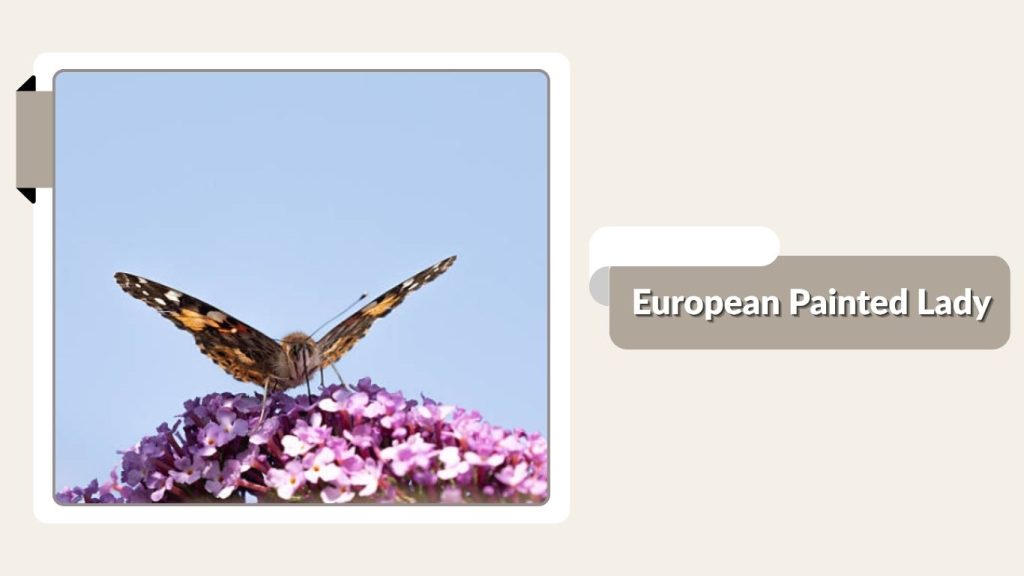
The European Painted Lady is a widely recognized butterfly found across Europe and neighboring regions. It is famous for its seasonal migrations and ability to travel long distances. This butterfly is commonly seen in gardens, meadows, and countryside landscapes during warm months when flowers are abundant.
Size
The European Painted Lady has a wingspan of about 2 to 3 inches. Its wings are long and powerful, helping it migrate across large areas during seasonal movements. The butterfly flies quickly and gracefully, often gliding above fields and flower-rich habitats in search of nectar.
Color
This butterfly displays a striking combination of orange, black, white, and brown colors. The upper wings feature bold orange patches with dark borders and white spots near the tips. The underside contains eye spots and soft brown patterns that help provide camouflage while resting.
Habitat
The European Painted Lady prefers open sunny environments such as meadows, grasslands, farmlands, woodland edges, and gardens. It thrives in areas with plentiful flowering plants that provide nectar throughout the season. Caterpillars commonly feed on thistles, mallows, and other leafy host plants found in natural landscapes.
Identification
- Orange wings with black and white markings
- Wingspan between 2 and 3 inches
- White spots near the tips of forewings
- Small eye spots on hindwings
- Strong migratory flying ability
- Frequently found in gardens and open meadows
10. African Painted Lady
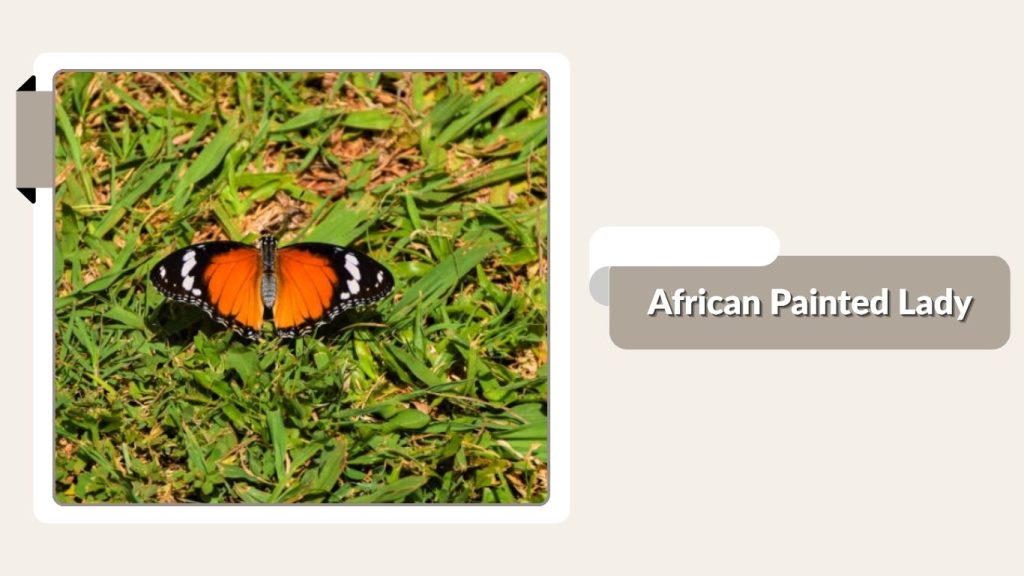
The African Painted Lady is a colorful butterfly species commonly found across many parts of Africa. It is well adapted to warm climates and is often seen flying in open areas filled with flowering plants. This butterfly is admired for its bright wing patterns and active daytime behavior.
Size
The African Painted Lady has a wingspan of around 2 to 2.9 inches. Its medium-sized wings provide excellent speed and balance during flight. The butterfly is capable of traveling long distances, especially during seasonal movements when food sources change across different regions.
Color
This butterfly features vibrant orange wings mixed with black, brown, and white markings. The upper side of the wings appears bold and colorful, while the underside contains softer brown shades and small eye spots. These patterns help the butterfly blend into dry grasses, flowers, and rocky environments.
Habitat
The African Painted Lady prefers warm habitats such as grasslands, savannas, gardens, farmlands, and woodland edges. It is commonly found in sunny places where nectar-rich flowers are abundant. Caterpillars feed on various leafy plants, while adult butterflies play an important role in pollinating flowering vegetation.
Identification
- Bright orange wings with black and white patterns
- Wingspan between 2 and 2.9 inches
- Eye spots visible on hindwings
- Brown camouflage markings underneath the wings
- Fast and active daytime flier
- Commonly found in warm African grasslands and gardens
FAQs
What do Painted Lady butterflies eat?
Painted Lady butterflies mainly feed on flower nectar. They are attracted to bright flowers such as thistles, daisies, asters, and sunflowers. Caterpillars feed on leafy host plants including mallows, thistles, and other soft vegetation that supports their growth and development.
Where are Painted Lady butterflies commonly found?
Painted Lady butterflies are found in many parts of the world, including North America, Europe, Africa, Asia, and Australia. They commonly live in grasslands, gardens, deserts, meadows, forests, and tropical regions where flowering plants are abundant.
How can you identify a Painted Lady butterfly?
Painted Lady butterflies are usually identified by their orange wings with black, white, and brown markings. Most species also have small eye spots on the underside of their hindwings. Their medium size and fast flight patterns make them easy to recognize in open sunny habitats.
Are Painted Lady butterflies migratory?
Yes, many Painted Lady butterflies are known for long-distance migration. Some species travel thousands of miles during seasonal movements in search of warmer climates, breeding grounds, and food sources. Their strong wings allow them to migrate across large regions successfully.
How long do Painted Lady butterflies live?
The average adult Painted Lady butterfly lives for about two to four weeks. However, the complete life cycle from egg to adult may last several weeks depending on climate, food availability, and environmental conditions.