
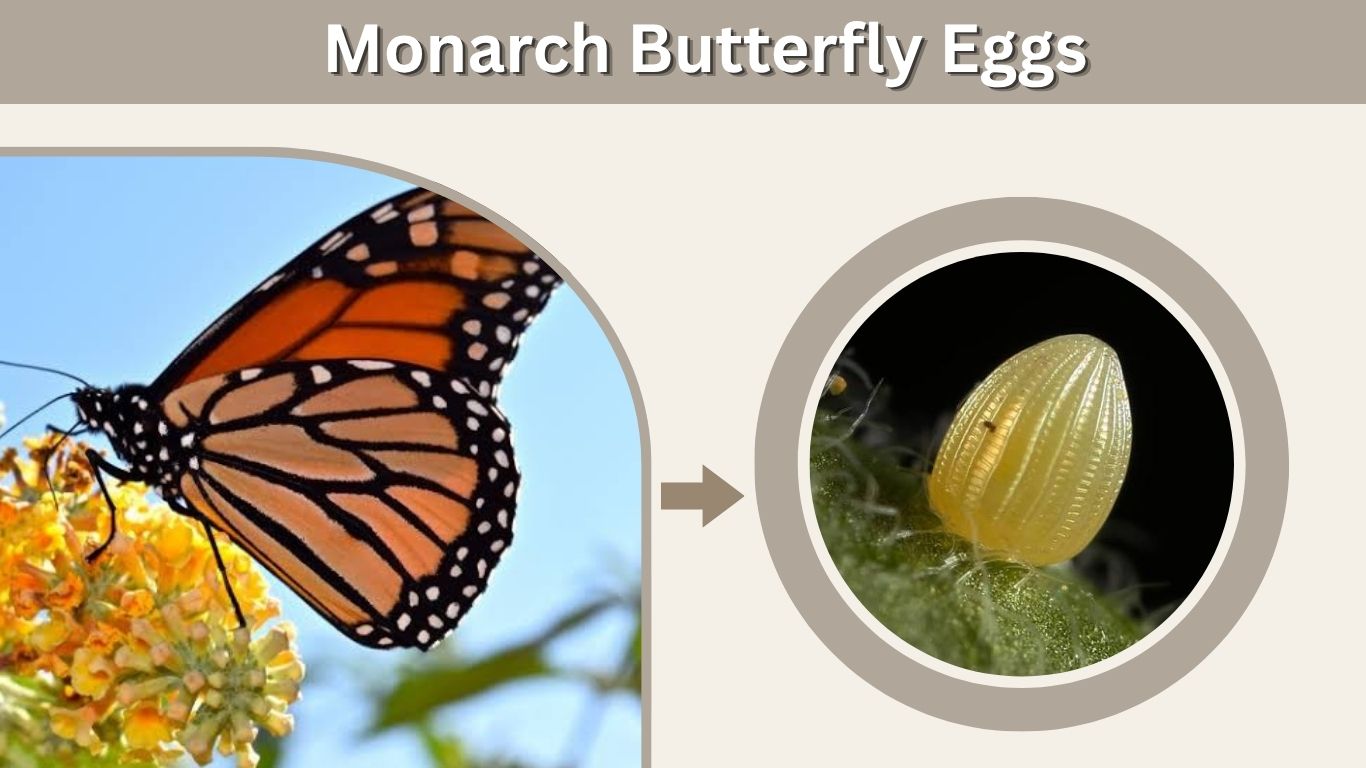
Monarch butterfly eggs are tiny, pale structures usually found on milkweed leaves, where the next generation begins its transformation. Female monarchs carefully choose suitable milkweed plants because newly hatched caterpillars depend on them for food. The eggs are extremely small and can easily be confused with aphids, plant debris, or other insect eggs. Knowing their shape, size, location, and hatching time makes them easier to recognize. Understanding how monarchs lay eggs and how those eggs develop also provides a fascinating look at the butterfly’s complete life cycle.
What Do Monarch Butterfly Eggs Look Like?
Monarch butterfly eggs are remarkably small but have a distinctive shape when viewed closely. They are usually attached individually to milkweed leaves rather than laid in large clusters. Their pale color and vertical ridges can help distinguish them from other objects on the plant. Careful inspection is often necessary because an egg can easily be overlooked.
Monarch Butterfly Egg Identification
Typical characteristics include:
- Creamy white to pale yellow color
- Dome-shaped or slightly pointed form
- Fine vertical ridges along the surface
- Roughly 1 millimeter in diameter
- Usually one egg at a time
- Commonly attached beneath a milkweed leaf
- Firmly secured to the plant surface
- Darkening slightly as hatching approaches
A magnifying glass can make the ridged surface much easier to see.
How Big Are Monarch Butterfly Eggs?
A monarch egg is only about the size of a pinhead. It is generally a little more than 1 millimeter tall and less than 1 millimeter wide.
Because the eggs are so small, people often mistake water droplets, dried milkweed sap, aphids, or other insect eggs for monarch eggs.
Looking for the characteristic dome shape and fine ridges is more reliable than relying on size alone.
Where Do Monarch Butterflies Lay Their Eggs?
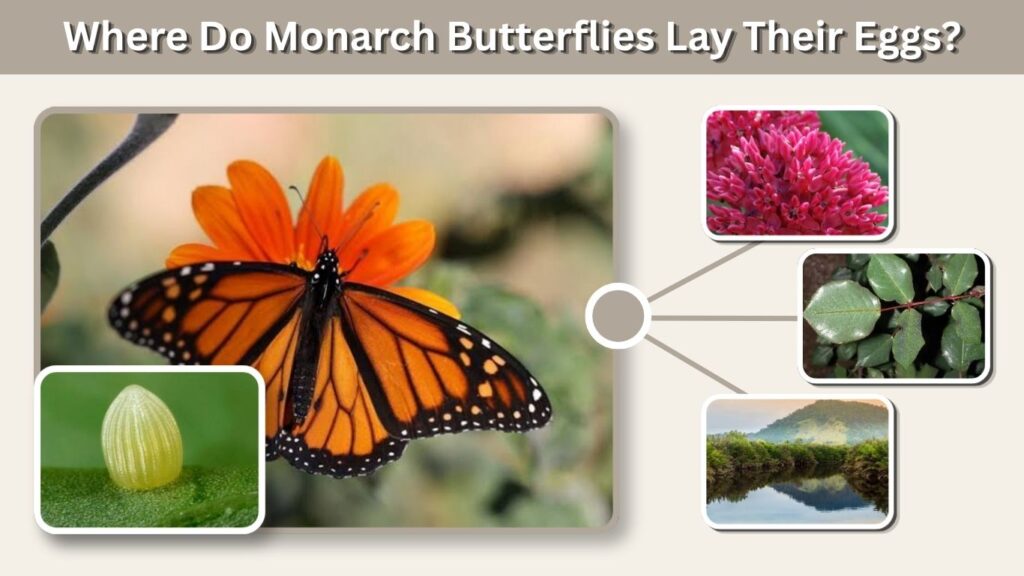
Female monarchs search specifically for plants in the milkweed family because their caterpillars require milkweed after hatching. A female may examine several plants before choosing one. She typically touches the plant with her legs and antennae before bending her abdomen toward a leaf and attaching a single egg to its surface.
Common Egg-Laying Locations
Monarch eggs may be found:
- On the underside of milkweed leaves
- On the upper surface of leaves
- Near tender new milkweed growth
- On flower buds
- Along milkweed stems
- On young leaves near the top of a plant
The underside of a leaf is particularly common because it can provide some protection from direct sunlight, rain, and certain predators.
Do Monarchs Only Lay Eggs on Milkweed?
Monarch females normally choose milkweed species because their larvae are specialized to eat these plants. Milkweed contains chemical compounds that caterpillars absorb and retain as part of their defense against predators.
Butterfly weed, Asclepias tuberosa, is also a milkweed species and can serve as a host plant.
An adult monarch may drink nectar from many different flowers, but nectar plants and caterpillar host plants serve different purposes. Eggs are associated primarily with milkweed.
When Do Monarch Butterflies Lay Eggs?
Egg laying occurs during the monarch breeding season, which varies according to geographic location and climate. In North America, monarchs may produce several generations between spring and late summer. Females lay eggs whenever suitable milkweed is available during reproductive periods, while migratory patterns strongly influence when eggs appear in different regions.
Monarch Egg-Laying Season
The timing may follow this general pattern:
- Spring: Migrating females begin laying eggs in warmer regions.
- Late spring: New generations continue moving northward.
- Summer: Breeding continues wherever healthy milkweed is available.
- Late summer: Additional generations may develop.
- Early fall: Egg laying decreases as the migratory generation develops.
Local weather, latitude, and milkweed growth can shift these periods considerably.
How Does a Monarch Lay an Egg?
A female lands on milkweed and evaluates the plant before laying. Once she finds a suitable location, she curls the tip of her abdomen toward the leaf.
A sticky substance helps attach the egg securely to the plant.
The process can happen quickly, after which the female moves away and searches for another suitable location. Distributing eggs among multiple plants can reduce competition among newly hatched caterpillars.
How Many Eggs Does a Monarch Butterfly Lay?
A female monarch can produce hundreds of eggs over her reproductive life, although she does not normally deposit them all in one place. Instead, she travels among milkweed plants and usually lays eggs individually. This strategy spreads offspring across a wider area and reduces the chance that one event will destroy the entire group.
Monarch Egg-Laying Facts
A female monarch may:
- Lay several hundred eggs during her life
- Place eggs individually rather than in large clusters
- Visit numerous milkweed plants
- Lay multiple eggs during a single day
- Continue laying over several days or weeks
- Choose young, tender milkweed when available
The actual number produced depends on the female’s health, age, weather, and access to suitable host plants.
How Many Eggs Are Laid at One Time?
Typically, only one monarch egg is deposited at a particular spot. A female may place additional eggs elsewhere on the same plant or travel to another milkweed.
Finding several monarch eggs on one plant does not necessarily mean they were laid simultaneously.
Different females may also visit the same healthy patch, which can result in numerous eggs appearing within a relatively small area.
Monarch Butterfly Eggs on Milkweed

Milkweed is essential during the earliest stages of monarch development. Once the caterpillar hatches, it needs immediate access to suitable leaves. By placing an egg directly on milkweed, the female ensures that the tiny larva starts life beside its primary food source.
How to Find Monarch Eggs on Milkweed
When inspecting plants:
- Check the underside of leaves first.
- Look closely at tender new growth.
- Examine both upper and lower leaf surfaces.
- Search around buds and stems.
- Use a magnifying glass for tiny objects.
- Avoid crushing leaves while inspecting them.
- Look for eggs individually rather than expecting clusters.
Young milkweed plants can be particularly useful places to search because females often select fresh growth.
Monarch Eggs vs Aphids
Aphids commonly occur on milkweed and can be confused with monarch eggs from a distance. However, they look very different on close inspection.
Monarch eggs are immobile, pale, dome-shaped, and usually solitary. Aphids have visible legs and bodies and commonly gather together in groups.
Oleander aphids, often seen on milkweed, may be bright yellow or orange with dark legs. If the object moves when disturbed, it is certainly not a monarch egg.
When Do Monarch Butterfly Eggs Hatch?

Monarch eggs develop relatively quickly. Under typical warm conditions, hatching usually occurs approximately three to five days after the egg is laid. Temperature and weather can influence development. During this short period, the embryo develops inside until a tiny first-instar caterpillar is ready to emerge.
Signs an Egg Is About to Hatch
You may notice:
- The egg becoming slightly darker
- A dark spot appearing inside
- Reduced creamy coloration
- A more transparent appearance
- A tiny caterpillar visible shortly before emergence
These changes become easier to see with magnification.
From Egg to Caterpillar
When development is complete, the tiny caterpillar chews through the eggshell and emerges.
Newly hatched monarch caterpillars are much smaller than the familiar striped caterpillars seen later in development. They begin feeding shortly after hatching and may first consume part or all of their eggshell.
The caterpillar then starts eating milkweed and passes through five larval stages, called instars, before forming its chrysalis.
How to Care for Monarch Butterfly Eggs

Some people choose to observe monarch eggs outdoors, while others raise monarchs for educational purposes. Keeping eggs and caterpillars healthy requires clean conditions, fresh milkweed, suitable ventilation, and careful handling. Whenever possible, minimizing unnecessary handling reduces the risk of damaging these delicate eggs.
Basic Care Tips
If observing eggs:
- Keep the milkweed leaf fresh.
- Avoid touching the egg directly.
- Protect it from extreme heat.
- Provide good ventilation.
- Replace wilted plant material carefully.
- Keep containers clean.
- Provide fresh milkweed after hatching.
- Avoid exposing larvae to pesticide-treated plants.
Never use milkweed that may have been treated with insecticides because residues can harm caterpillars.
Should You Move Monarch Eggs?
Moving an egg is not always necessary. If it is on a healthy milkweed plant in a suitable location, leaving it outdoors allows development to occur naturally.
When an egg must be relocated for educational observation, it is usually safer to move the section of leaf carrying the egg rather than trying to detach the egg itself.
The eggs are delicate, and direct handling can crush or damage them.
What Eats Monarch Butterfly Eggs?
The egg stage is one of the most vulnerable parts of the monarch life cycle. Despite being placed carefully on milkweed, many eggs never hatch because they are eaten, damaged by weather, or affected by disease. This high mortality is one reason females produce large numbers of eggs.
Common Threats to Monarch Eggs
Potential threats include:
- Ants
- Spiders
- Lady beetles
- Lacewing larvae
- True bugs
- Wasps
- Other small predators
- Heavy rain
- Damaged or dying milkweed
Not every insect found near a monarch egg is necessarily attacking it. Milkweed supports a diverse community of insects, many of which simply share the same plant.
From Monarch Egg to Adult Butterfly
The egg is only the beginning of a dramatic transformation. After hatching, the caterpillar feeds intensively on milkweed and grows through several molts. It eventually forms a chrysalis, where metamorphosis produces the adult butterfly. In warm summer conditions, the complete journey from egg to adult can occur within several weeks.
Monarch Life Cycle Stages
The complete sequence is:
- Egg: Laid primarily on milkweed.
- Caterpillar: Feeds and grows through five instars.
- Chrysalis: Metamorphosis occurs inside the pupa.
- Adult butterfly: Emerges, feeds on nectar, and eventually reproduces.
Each new female that successfully reproduces can begin the process again by finding milkweed and laying another generation of eggs.
FAQs
What Do Monarch Butterfly Eggs Look Like?
Monarch butterfly eggs are tiny, creamy white to pale yellow, and shaped somewhat like small domes. Their surface has fine vertical ridges. They are usually found individually on milkweed leaves and measure only about 1 millimeter across.
How Long Do Monarch Butterfly Eggs Take to Hatch?
Monarch eggs generally hatch in about three to five days under favorable warm conditions. Cooler temperatures can slow development. As hatching approaches, the egg may darken slightly and the developing caterpillar can sometimes become visible through the shell.
Where Do Monarch Butterflies Lay Their Eggs?
Female monarchs primarily lay their eggs on milkweed plants because newly hatched caterpillars depend on milkweed for food. Eggs are frequently placed on the underside of leaves, although they may also occur on upper leaf surfaces, stems, buds, and tender growth.
How Many Eggs Does a Monarch Butterfly Lay?
A female monarch may lay several hundred eggs throughout her reproductive life. Rather than laying them in one cluster, she usually distributes individual eggs among many milkweed plants, helping spread her offspring across different feeding locations.
How Can You Tell a Monarch Egg From an Aphid?
A monarch egg is stationary, pale, dome-shaped, and covered with fine ridges. Aphids have recognizable bodies and legs and usually gather in groups. Yellow or orange aphids commonly found on milkweed are therefore quite different from the single pale eggs deposited by monarch butterflies.