
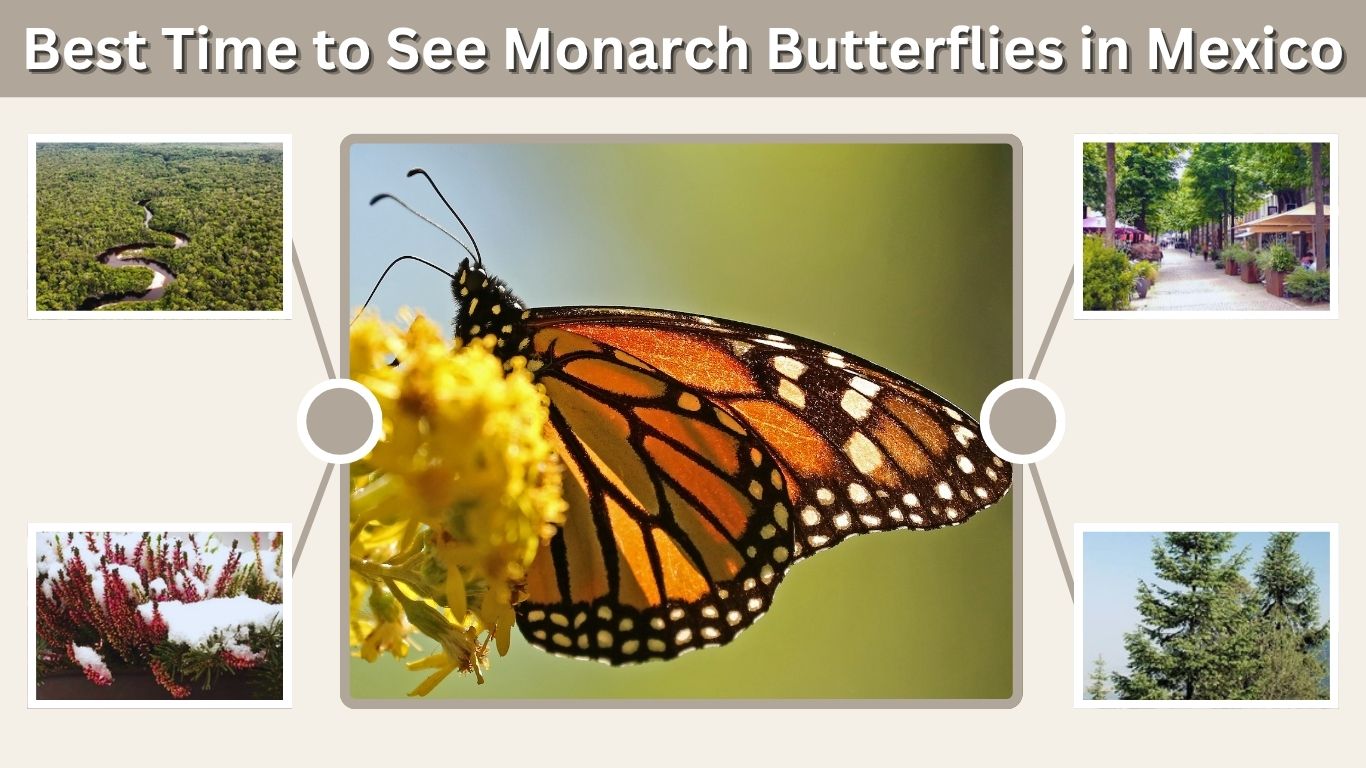
Monarch butterfly migration to Mexico is one of the most remarkable seasonal movements in the insect world. Each fall, millions of eastern North American monarchs travel south toward the cool mountain forests of central Mexico, where they spend the winter clustered together on trees. Some individuals may travel more than 2,000 miles before reaching their destination. Their journey connects Canada, the United States, and Mexico and depends on suitable weather, nectar sources, and protected overwintering forests for survival.
When Do Monarch Butterflies Migrate to Mexico?
Monarch migration begins as summer ends and daylight decreases across northern North America. Butterflies from the eastern migratory population gradually move south, stopping along the way to rest and feed. Their timing varies according to latitude and weather, but the main southward movement occurs during late summer and fall before the butterflies settle into Mexican overwintering sites.
When Does the Migration Start?
Monarchs in northern portions of their range may begin moving south around late August, with migration continuing through September and October as butterflies from different areas join the journey. Weather can accelerate or delay their progress.
Many reach central Mexico around late October and November, when large overwintering colonies begin forming in the mountains.
How Far Do Monarch Butterflies Fly?
Some eastern monarchs travel more than 2,000 miles, or roughly 3,000 kilometers, to reach overwintering areas in central Mexico. The remarkable part is that the butterflies making the southward journey have never personally visited those Mexican forests before.
Where Do Monarch Butterflies Go in Mexico?
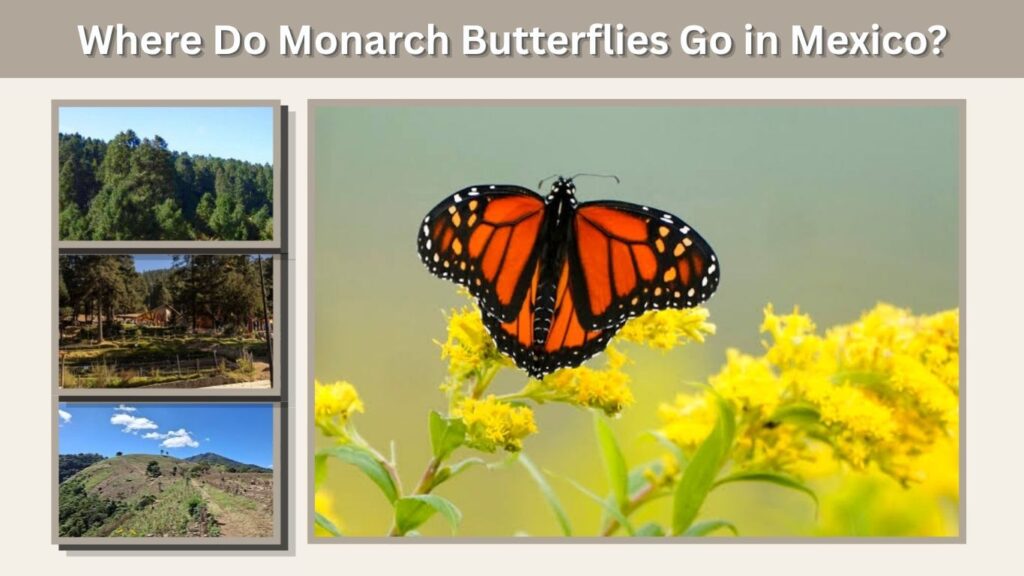
The eastern migratory population concentrates primarily in mountainous areas of central Mexico. Many colonies occur within and around the Monarch Butterfly Biosphere Reserve, which spans portions of Michoacán and the State of Mexico. The high-elevation forests there provide the specialized winter conditions monarchs need while they remain relatively inactive.
Monarch Butterfly Sanctuaries in Mexico
Important sanctuary areas associated with monarch overwintering include:
- Sierra Chincua
- Sierra el Campanario
- Cerro Pelón
- Cerro Altamirano
- Cerros Chivatí-Huacal
- Areas surrounding Angangueo in Michoacán
Several protected sanctuary areas are open to visitors during the monarch season, although access and conditions can vary.
Monarch Butterflies in Michoacán
Michoacán is particularly famous for its enormous winter monarch colonies. Mountain forests near communities such as Angangueo provide access to some of the best-known overwintering areas.
During periods of high activity, thousands of butterflies may fill the air while many more remain clustered on tree trunks and branches.
Why Do Monarch Butterflies Migrate to Mexico?
Monarchs migrate because winter conditions across much of the United States and Canada become unsuitable for their survival. Central Mexico’s high mountain forests provide a relatively stable environment where butterflies can conserve energy through winter rather than continuing normal breeding and feeding activity.
Why Are Mexico’s Mountains Suitable?
The overwintering colonies occupy high-elevation oyamel fir forests. The U.S. Forest Service notes that monarchs winter in these forests at roughly 2,400 to 3,600 meters in elevation.
The forest canopy helps create a sheltered microclimate. Temperatures remain cool enough to reduce monarch activity and energy use while the trees provide protection from harsh environmental conditions.
Why Do Monarchs Cluster Together?
During cold periods, monarchs gather densely on trunks and branches. Large groups can remain relatively still until warmer sunlight encourages activity.
Clustering allows enormous numbers of monarchs to occupy a very small portion of the available forest. UNESCO describes colonies dense enough to cover trees and weigh down branches.
How Do Monarch Butterflies Migrate to Mexico?
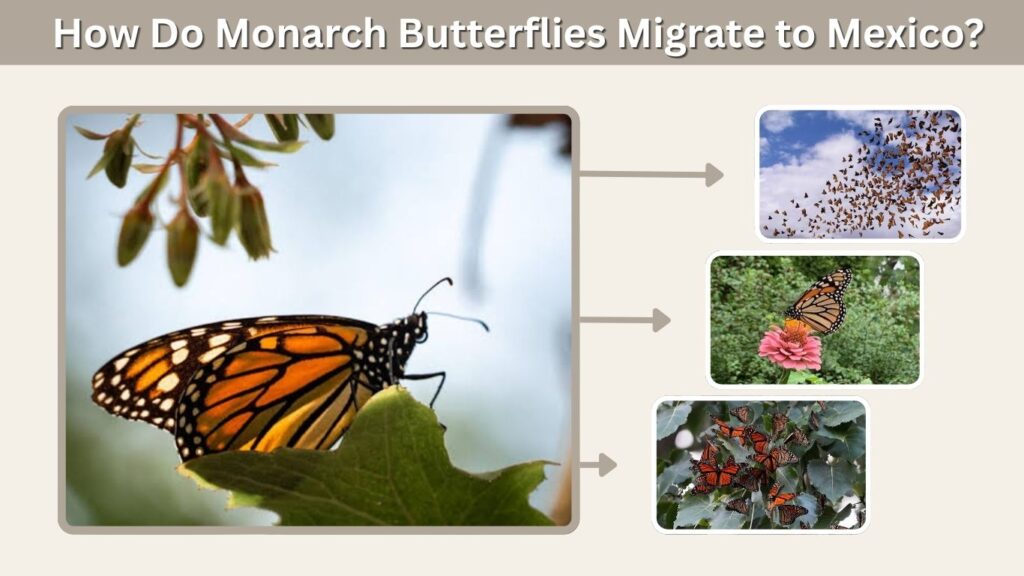
The migration is accomplished by a special long-lived generation that behaves differently from normal summer monarchs. Instead of reproducing immediately, these butterflies devote their energy to traveling south and surviving winter. They use environmental cues and favorable flying conditions while stopping repeatedly for nectar during the journey.
Monarch Migration Route
A simplified migration pattern is:
- Monarchs develop across Canada and the United States during summer.
- Shorter days and cooler conditions help trigger southward movement.
- Butterflies travel through the United States toward Texas.
- They continue south into Mexico.
- Eastern monarchs reach mountainous forests in central Mexico.
- They form dense overwintering colonies.
- In late winter and spring, surviving monarchs begin moving north again.
Most eastern migratory monarchs use this Mexico-bound strategy, although not every North American monarch follows exactly the same route.
Do All Monarch Butterflies Migrate to Mexico?
No. Most eastern migratory monarchs overwinter in central Mexico, but western monarch populations commonly winter along coastal California and into northern Baja California. Some monarchs in warmer parts of the southern United States may also remain there during winter.
Monarch Butterfly Trees and Forests in Mexico
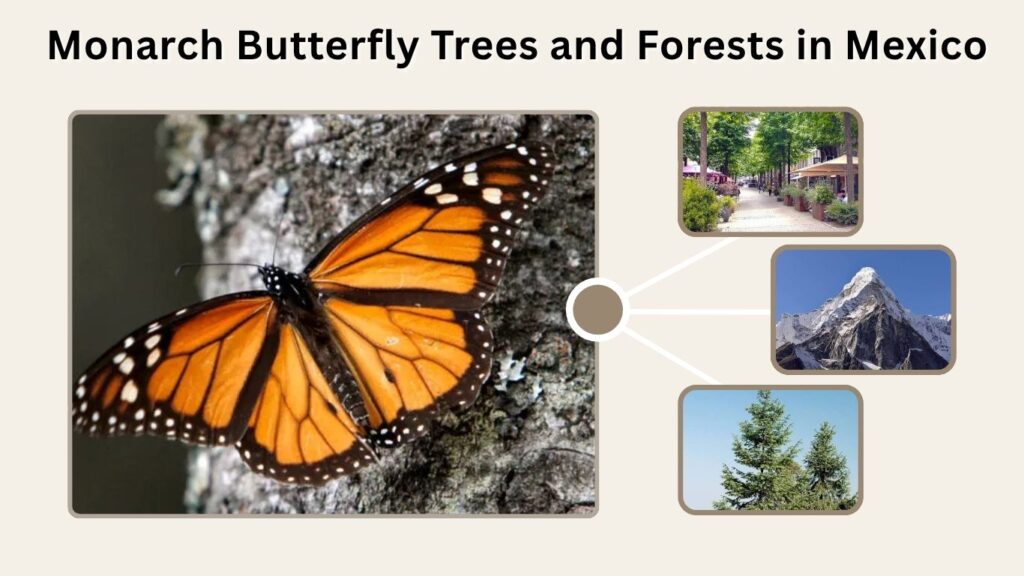
The famous photographs of branches covered with monarch butterflies come from high-altitude forests where enormous colonies spend winter. The trees are far more than resting surfaces; they create the environmental conditions that allow millions of delicate insects to survive for months before beginning their northward journey.
What Trees Do Monarch Butterflies Use?
Important characteristics of their winter forest include:
- Large stands of oyamel fir
- High mountain elevations
- Dense tree canopies
- Cool winter temperatures
- Sheltered forest conditions
- Suitable humidity and moisture
- Protected roosting branches
Oyamel fir, Abies religiosa, is especially important in the principal overwintering region.
Why Are Oyamel Fir Trees Important?
Oyamel forests create the specialized microclimate needed by overwintering monarchs. Butterflies can remain clustered on the trees for long periods while conserving the fat reserves accumulated during their southward migration.
Protecting these forests is therefore closely linked to protecting the eastern monarch migration itself.
Best Time to See Monarch Butterflies in Mexico
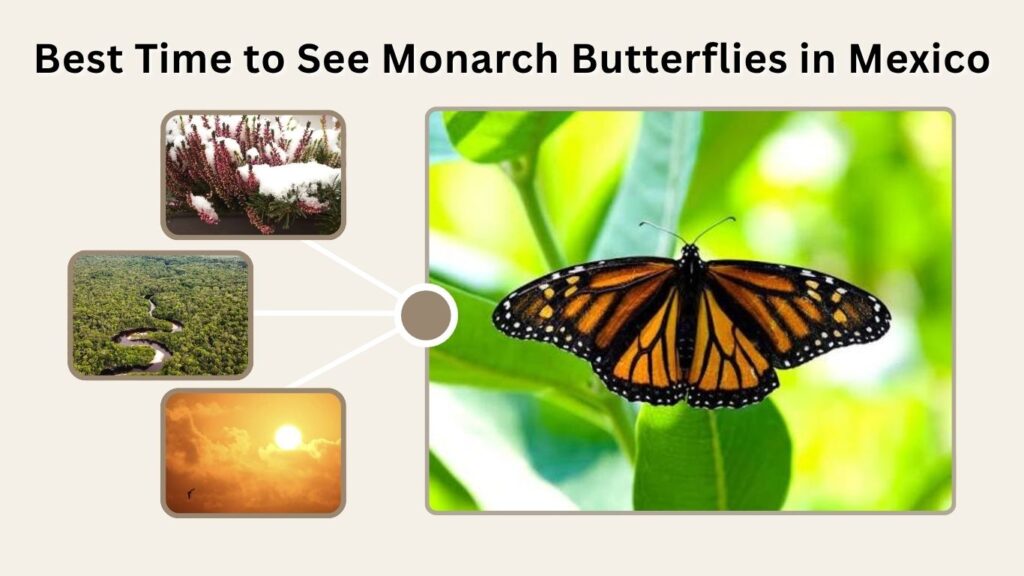
Monarchs generally occupy their central Mexican overwintering grounds from late fall through winter, with activity changing according to temperature and sunlight. Visitors often seek the period when colonies are established but warmer daytime conditions encourage butterflies to leave their clusters and fly through the forest.
When Should You Visit?
For planning a monarch-viewing trip:
- Consider the main winter overwintering season.
- January and February are commonly popular viewing months.
- Warmer sunny days usually produce more flight activity.
- Cool mornings may show butterflies densely clustered.
- Conditions and sanctuary access should be checked before traveling.
By late winter, monarchs begin preparing for their northward return.
Monarchs Returning North
The same butterfly does not normally complete the entire round trip back to northern North America. Monarchs leaving Mexico move north and reproduce, and their offspring continue the journey.
Several generations eventually repopulate northern breeding areas, while the later long-lived migratory generation makes the southward journey again.
Monarch Butterfly Biosphere Reserve
The Monarch Butterfly Biosphere Reserve protects major portions of the overwintering habitat in central Mexico. UNESCO lists the reserve as covering 56,259 hectares of mountainous forest roughly 100 kilometers northwest of Mexico City.
Why Is the Reserve Important?
The reserve protects forest areas where huge concentrations of monarchs gather every winter. Maintaining these forests is essential because the butterflies depend on very specific climatic and habitat conditions.
The protected landscape also represents an ecological connection among Mexico, the United States, and Canada, the three countries crossed during the monarch’s remarkable annual migration.
Monarch Butterflies and Mexican Culture
The arrival of monarchs in central Mexico occurs near the end of October and beginning of November, overlapping with Día de Muertos traditions. In parts of Mexico, this seasonal arrival has become culturally associated with remembrance and the return of departed loved ones.
FAQs
1. Where do monarch butterflies migrate to in Mexico?
Most eastern migratory monarchs travel to mountainous forests in central Mexico, particularly areas within Michoacán and the State of Mexico. Many overwintering colonies occur within or near the Monarch Butterfly Biosphere Reserve, where cool, sheltered oyamel fir forests provide suitable winter habitat.
2. When do monarch butterflies migrate to Mexico?
The southward migration generally begins during late summer and continues through fall. Northern monarchs may start moving in late August, while large numbers reach central Mexico around late October and November and remain there through much of the winter.
3. Why do monarch butterflies go to Mexico?
Monarchs travel to Mexico to escape winter conditions farther north. High-elevation oyamel fir forests provide cool, sheltered conditions that allow them to reduce activity, conserve stored energy, and survive until temperatures begin rising toward the end of winter.
4. How far do monarch butterflies travel to Mexico?
Some eastern monarch butterflies travel more than 2,000 miles, or about 3,000 kilometers, during their fall migration to central Mexico. The distance varies depending on where an individual begins its journey in Canada or the United States.
5. Do all monarch butterflies migrate to Mexico?
No. Most eastern migratory monarchs overwinter in central Mexico, while many western monarchs use overwintering sites along coastal California and into northern Baja California. Some monarchs may also remain year-round or through winter in warmer southern areas.