
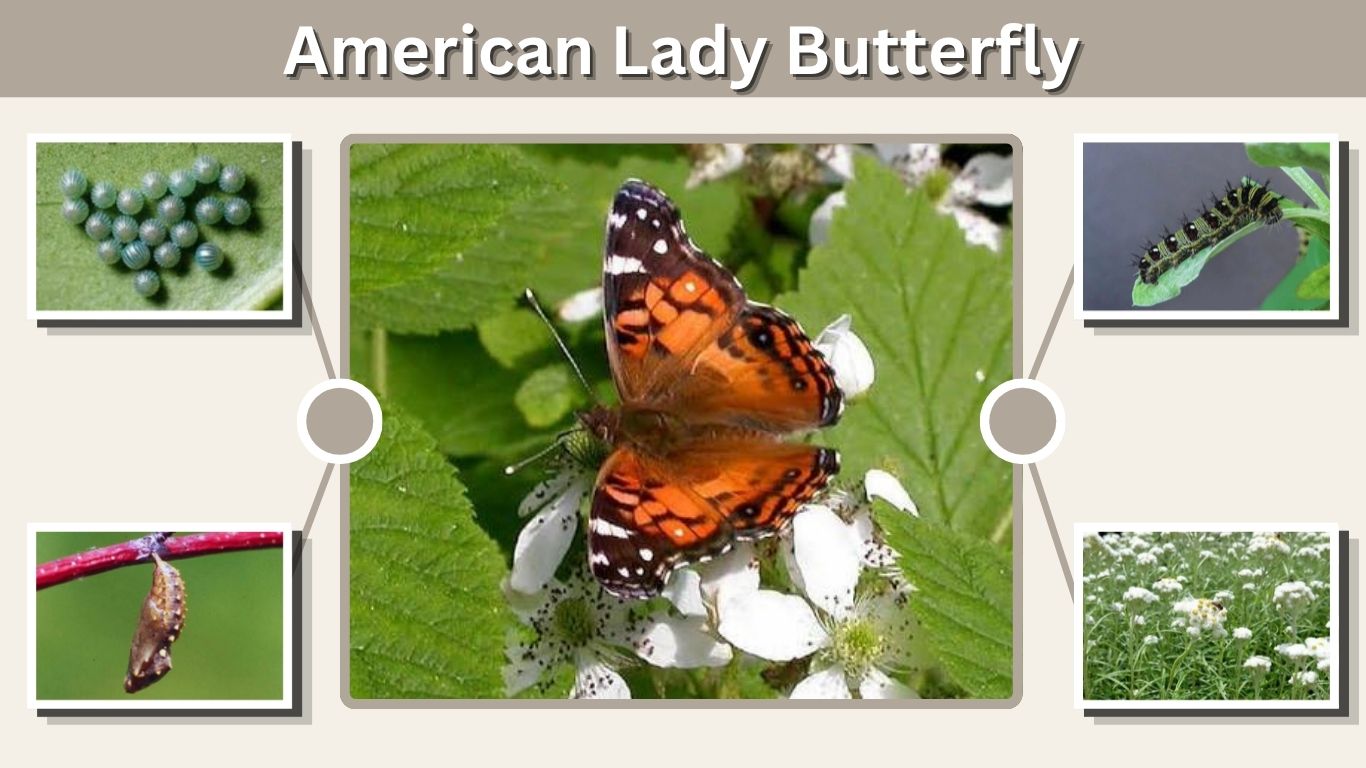
The American lady butterfly is a colorful North American butterfly recognized by its orange, black, and white wings. Scientifically known as Vanessa virginiensis, it is commonly found in gardens, meadows, fields, and other sunny habitats. Its distinctive wing markings, unusual spiny caterpillar, and preference for plants such as cudweed make it fascinating to observe. Below, you’ll learn how to identify the American lady butterfly, what its caterpillars eat, its host plants, life cycle, habitat, lifespan, and how it differs from the painted lady.
What Is an American Lady Butterfly?
The American lady is a medium-sized brush-footed butterfly belonging to the family Nymphalidae. Although it resembles several other “lady” butterflies, especially the painted lady, a few distinctive markings make identification relatively easy. Adults are active flower visitors, while their caterpillars depend on specific host plants for development.
American Lady Butterfly Identification
Look for these characteristics when identifying an American lady:
- Wingspan of approximately 1.75 to 2.5 inches
- Orange upper wings with black patches and white spots
- A small white spot within the orange area of the forewing
- Two large eyespots on the underside of each hindwing
- Brown, gray, and pinkish patterns underneath the wings
- Scalloped outer wing margins
- Dark brown to black body with fine hairs
When the wings are open, orange and black dominate the butterfly’s appearance. When closed, the patterned underside provides excellent camouflage against leaves, bark, and dried vegetation.
American Lady Butterfly Caterpillar
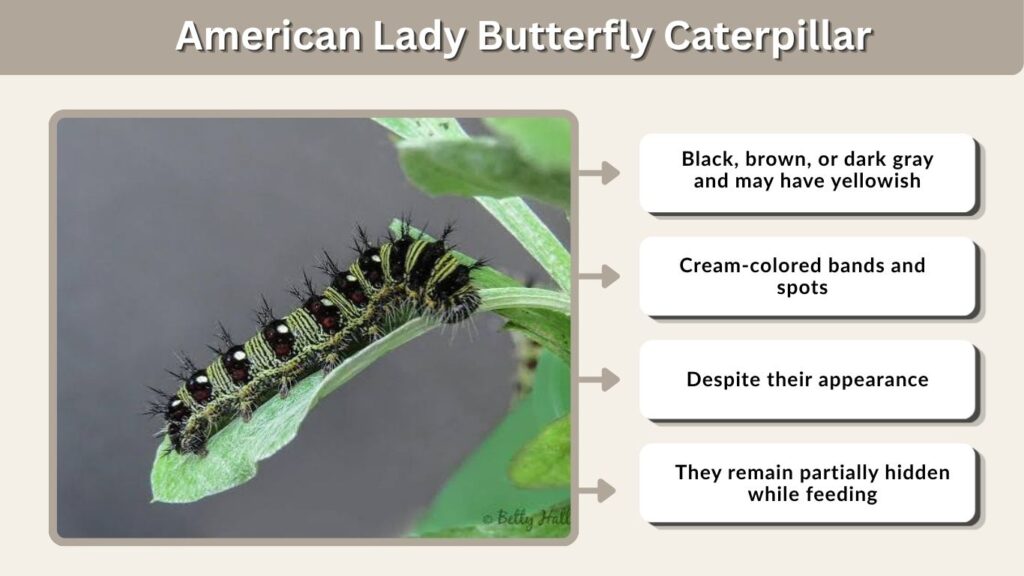
American lady caterpillars look dramatically different from the adults they eventually become. They are dark-colored larvae covered with branching spines that may make them appear intimidating.
What Does the Caterpillar Look Like?
The caterpillar is generally black, brown, or dark gray and may have yellowish or cream-colored bands and spots. Numerous branched spines extend from the body.
Despite their appearance, these caterpillars are not equipped with dangerous stingers. Their spines primarily help discourage predators.
Young caterpillars often create shelters by joining leaves together with silk. They remain partially hidden while feeding, which provides protection from birds, insects, and environmental conditions.
What Do American Lady Butterfly Caterpillars Eat?
American lady caterpillars mainly eat the leaves of plants belonging to the sunflower family. They are especially associated with cudweeds and closely related plants.
Unlike adults, caterpillars do not feed on nectar. Their job is to consume enough plant material to support rapid growth before pupation.
American Lady Butterfly Host Plants
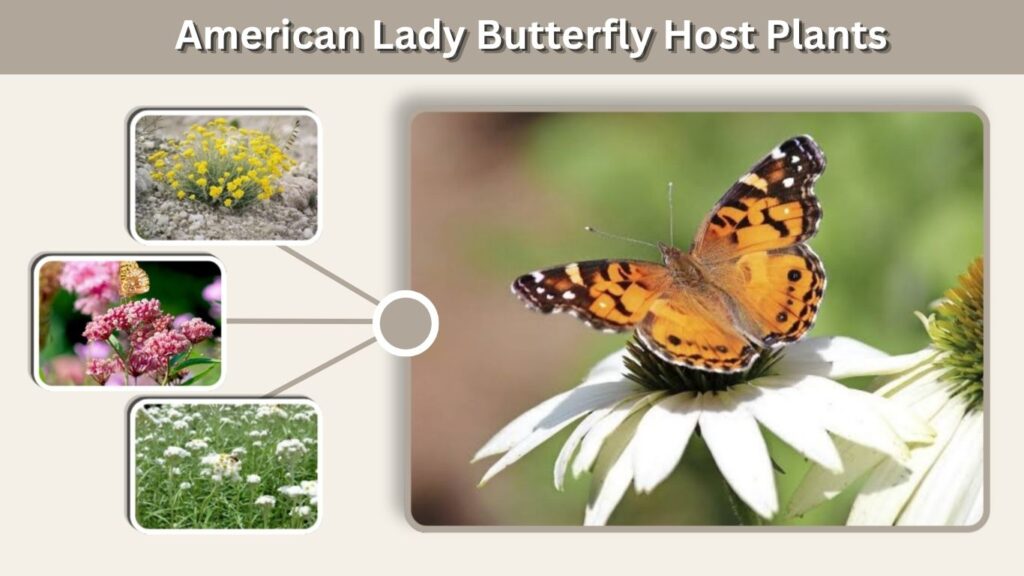
Host plants are essential because female butterflies lay their eggs on plants that their larvae can eat after hatching.
Common Host Plants
Some important American lady butterfly host plants include:
- Cudweed
- Everlasting
- Pussytoes
- Pearly everlasting
- Sweet everlasting
- Related plants in the Asteraceae family
Cudweed is one of the best-known host plants for the American lady butterfly.
Gardeners hoping to attract breeding American ladies can provide suitable host plants along with nectar-producing flowers. Avoiding unnecessary pesticide applications also gives eggs and caterpillars a better chance of surviving.
American Lady Butterfly Life Cycle
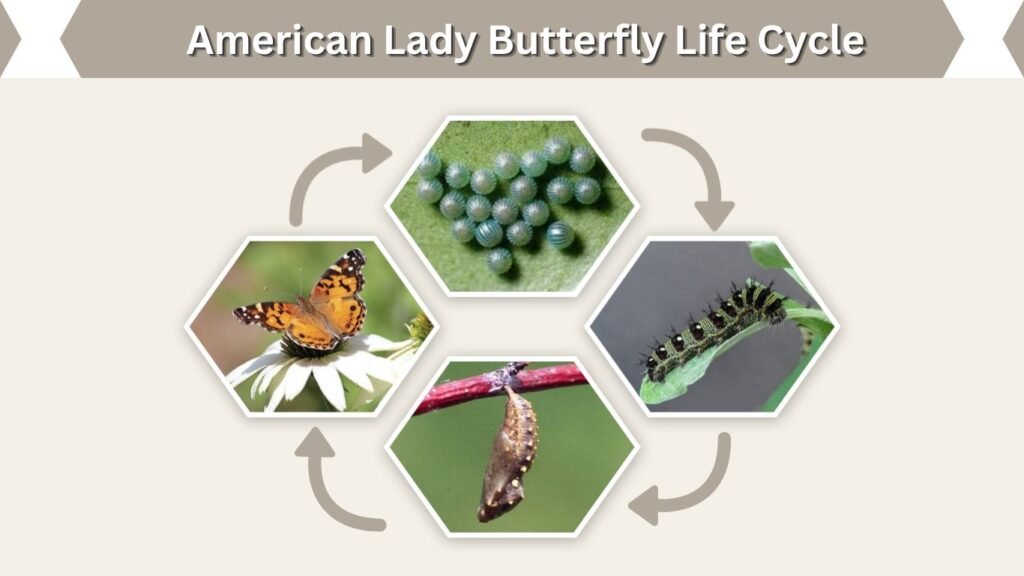
Like other butterflies, the American lady undergoes complete metamorphosis through four major life stages: egg, caterpillar, chrysalis, and adult.
Eggs
Females usually lay small eggs individually on suitable host plants. The eggs are tiny, pale greenish or cream-colored, and difficult to notice without close inspection.
After several days, depending on temperature and environmental conditions, a larva emerges.
Caterpillar Stage
The caterpillar begins eating shortly after hatching. As it grows, it sheds its skin several times.
American lady larvae frequently create protective leaf shelters. These shelters are one useful clue that caterpillars may be living on a host plant.
American Lady Butterfly Chrysalis
When fully grown, the caterpillar attaches itself to a protected surface and forms a chrysalis.
The chrysalis is generally brown, gray, tan, or golden in appearance and can blend well with surrounding vegetation. Inside, the caterpillar undergoes the remarkable transformation into an adult butterfly.
Eventually, the adult emerges, expands its wings, and begins flying after the wings have hardened.
Habitat and Range
American lady butterflies occur across a large portion of North America and can also be found farther south into Central America and parts of South America.
Where Does the American Lady Butterfly Live?
Typical habitats include gardens, fields, roadsides, meadows, open woodland edges, disturbed areas, and other sunny locations where host and nectar plants grow.
They can be seen in areas including Virginia, California, Wyoming, southern Canada, and many regions across the United States. Sightings may become less frequent toward colder northern areas depending on the season.
American ladies prefer open environments where they can easily move among flowers and locate appropriate plants for egg laying.
American Lady Butterfly Diet
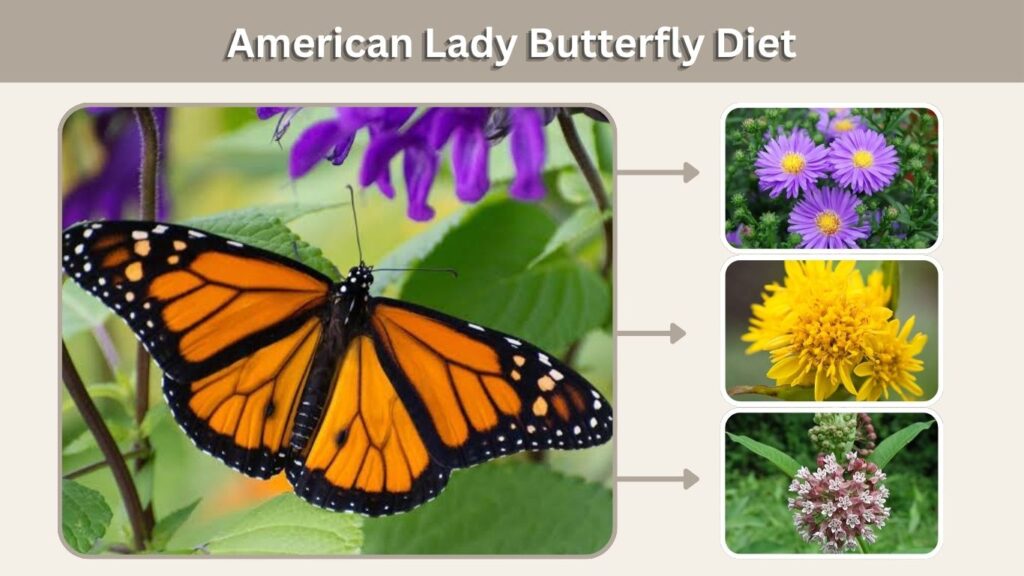
Adult American lady butterflies feed primarily on flower nectar.
They may visit asters, goldenrods, milkweeds, dogbane, and many other flowering plants. Adults can also obtain nutrients from tree sap, overripe fruit, or moist mineral-rich ground when available.
Planting flowers that bloom at different times of the year can provide a continuous food source for visiting butterflies.
American Lady Butterfly Lifespan
The exact lifespan varies with weather, predators, food availability, and seasonal generation.
Adult American ladies generally live for only a few weeks, although individuals developing under favorable conditions may survive longer.
The complete life cycle can repeat several times during warm months. In colder regions, seasonal temperatures strongly influence how quickly each stage develops and where adults can survive.
American Lady Butterfly Migration
American ladies are capable fliers and can move considerable distances. Populations may expand northward during warmer months and become much less common in northern regions during winter.
Their movement is not usually as famous or predictable as the long-distance migration of monarch butterflies. Instead, movements can vary from year to year depending on temperature, storms, food plants, and regional conditions.
American Lady Butterfly vs Painted Lady
The American lady and painted lady are frequently confused because both have orange-and-black patterned wings.
How to Tell Them Apart
One of the easiest differences can be seen underneath the hindwings.
The American lady generally has two large, prominent eyespots, while the painted lady has several smaller eyespots.
The American lady also has a noticeable small white spot within the orange area of each forewing. Looking carefully at these markings is usually more reliable than judging the butterfly by overall color alone.
Painted ladies are also famous for extensive migrations and occur across a much wider global range.
Male vs Female American Lady Butterfly
Male and female American ladies look remarkably similar, making visual sex identification challenging for casual observers.
Behavior may provide additional clues. Males often patrol or defend areas where females are likely to pass, while females spend more time searching for appropriate host plants on which to lay eggs.
Close anatomical examination provides more dependable identification than wing coloration.
Predators and Protection
American ladies face predators throughout every stage of their lives.
Birds, spiders, predatory insects, and parasitoids may attack eggs, caterpillars, pupae, or adults.
Their survival strategies change with each life stage. Caterpillars hide inside silken leaf shelters and have conspicuous spines, while the patterned underside of adult wings helps them blend into vegetation when resting with their wings closed.
Fast, irregular flight can also make an adult difficult for predators to capture.
Interesting American Lady Butterfly Facts
- The scientific name is Vanessa virginiensis.
- It belongs to the brush-footed butterfly family, Nymphalidae.
- Cudweed is one of its most important caterpillar host plants.
- The caterpillar constructs protective shelters from leaves and silk.
- Adults have two prominent eyespots underneath each hindwing.
- American ladies can produce multiple generations during warm seasons.
- Adults obtain energy primarily from flower nectar.
- Their range covers much of North America.
FAQs
Is the American Lady Butterfly Rare?
No. The American lady is relatively widespread, although abundance varies according to location, season, weather, and availability of suitable host plants.
What Is the Scientific Name of the American Lady Butterfly?
Its scientific name is Vanessa virginiensis.
What Is the Best Host Plant for American Lady Butterflies?
Cudweed is one of their most commonly used host plants. Pussytoes, everlasting, and related plants may also support the caterpillars.
Is an American Lady Caterpillar Poisonous?
American lady caterpillars have a spiny appearance, but they are not considered dangerous to people. The spines mainly function as a defensive feature.
How Can You Tell an American Lady From a Painted Lady?
Check the underside of the hindwing. American ladies typically show two large eyespots, while painted ladies display several smaller ones. The American lady also has a distinctive white spot in the orange section of the forewing.