
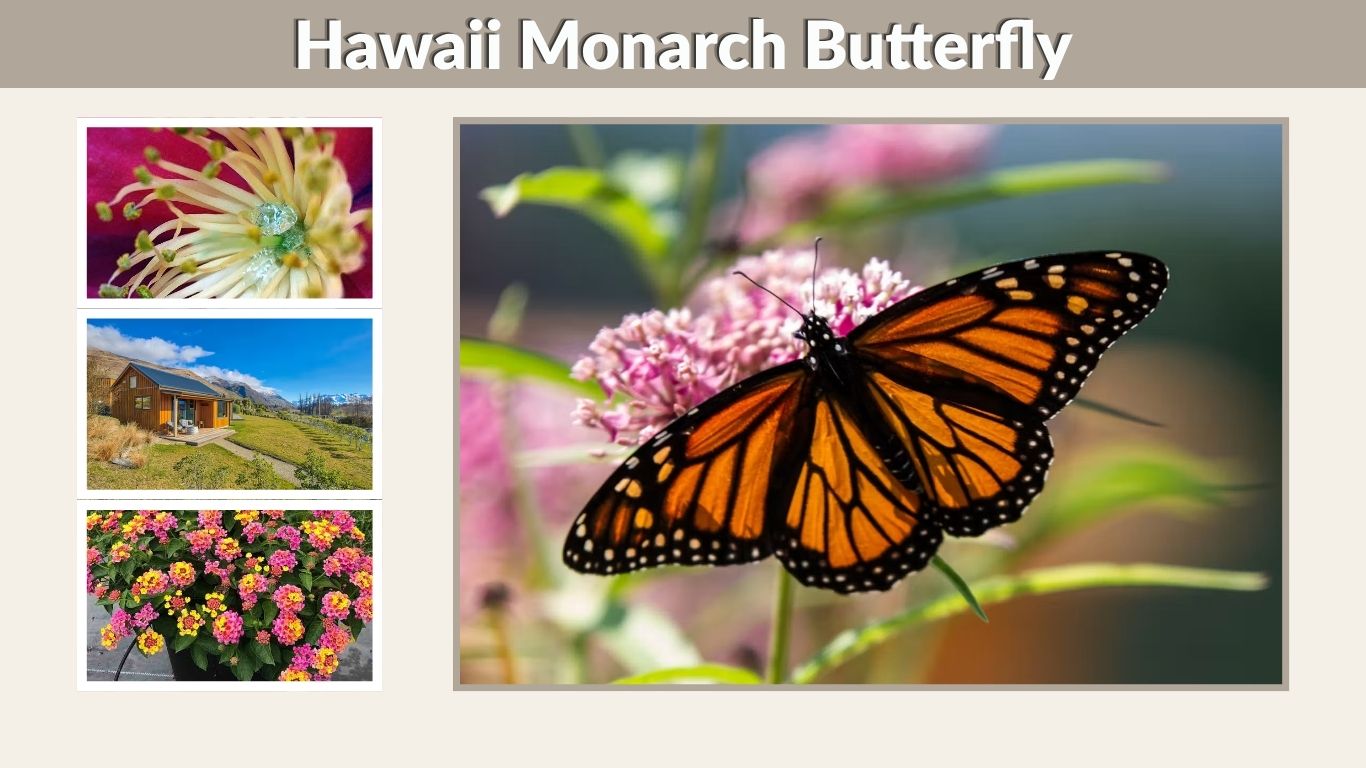
The Hawaii monarch butterfly is one of the islands’ most recognizable butterflies, known for its orange-and-black wings and close relationship with milkweed plants. Although monarchs are not native to Hawaii, they have established breeding populations across several islands. Unlike mainland North American monarchs, Hawaiian populations generally remain in the islands rather than completing long-distance seasonal migrations. Their caterpillars depend on milkweed, while adults feed on nectar from many flowering plants. Hawaii is also notable for occasionally producing striking pale or white monarch butterflies.
Are There Monarch Butterflies in Hawaii?
Yes, monarch butterflies live and reproduce in Hawaii. They can be found in gardens, parks, open fields, roadsides, and other locations where milkweed and nectar-producing flowers grow. Hawaii’s warm climate allows monarchs to remain active through much of the year, although local numbers can fluctuate depending on weather, food availability, predators, parasites, and the condition of their host plants.
Are Monarch Butterflies Native to Hawaii?
Monarch butterflies are not considered native Hawaiian insects. They arrived after European contact and became established as milkweed plants became available on the islands.
Today, monarchs can reproduce successfully in Hawaii without needing to arrive every year from North America. This makes them an established part of Hawaii’s modern butterfly fauna even though they were introduced historically.
Where Do Monarch Butterflies Live in Hawaii?
Monarchs are most likely to occur wherever their essential plants are available. Common locations include:
- Residential gardens with milkweed
- Botanical gardens and landscaped areas
- Open sunny fields
- Roadsides with flowering plants
- Farms and agricultural edges
- Parks and school gardens
- Warm coastal and low-elevation habitats
Adults often travel between flowering areas while females search for suitable milkweed on which to lay their eggs.
What Do Monarch Butterflies in Hawaii Eat?
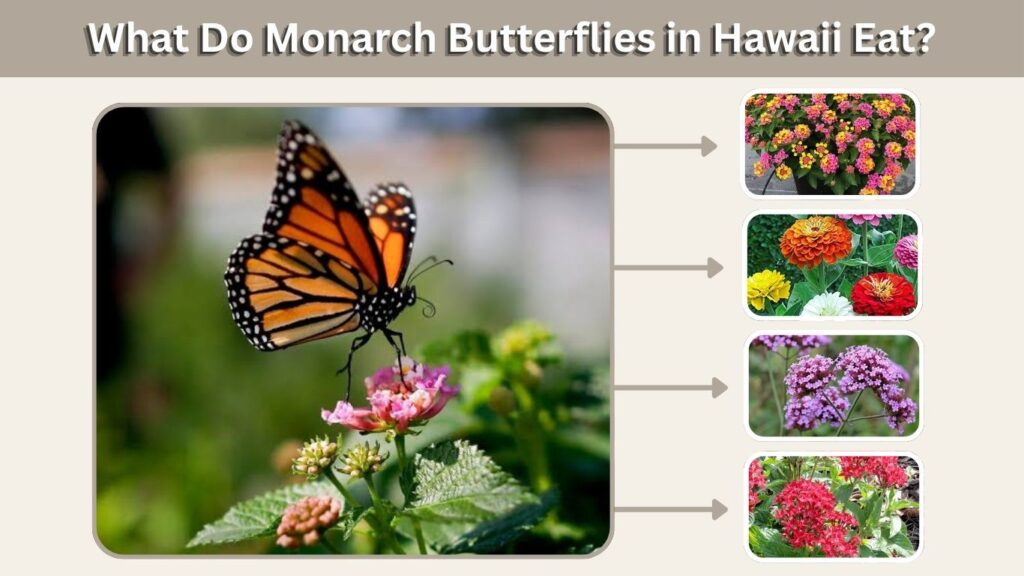
Hawaiian monarchs have different food requirements during their caterpillar and adult stages. Caterpillars are specialists that rely primarily on milkweed, while adults are much less selective and drink nectar from many flowering plants. Maintaining both milkweed and nectar-rich flowers is therefore important for anyone hoping to support monarchs throughout their complete life cycle.
What Do Monarch Caterpillars Eat?
Monarch caterpillars feed almost entirely on milkweed plants. Females usually lay eggs on or near suitable milkweed so newly hatched caterpillars can begin feeding immediately.
Commonly used milkweeds may include:
- Tropical milkweed
- Crown flower
- Other milkweed species suitable for monarch larvae
- Young milkweed leaves
- Tender stems and flower parts when leaves become scarce
Crown flower is particularly associated with monarchs in Hawaii and is widely grown in gardens.
What Do Adult Monarch Butterflies Eat?
Adult monarchs drink nectar using their long, coiled proboscis. Their nectar sources can include many kinds of flowers rather than only milkweed.
They may visit:
- Lantana
- Zinnia
- Pentas
- Verbena
- Milkweed flowers
- Cosmos
- Other nectar-rich garden plants
Planting several flowering species can provide a more continuous food supply throughout the year.
Hawaii Monarch Butterfly Life Cycle
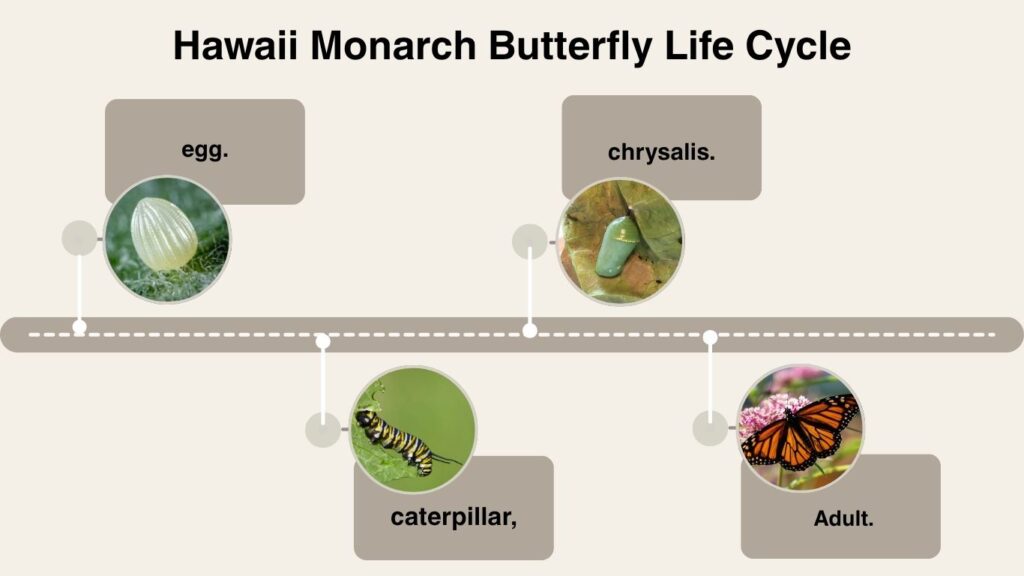
The monarch butterfly in Hawaii develops through complete metamorphosis: egg, caterpillar, chrysalis, and adult. Warm conditions can allow repeated generations throughout much of the year. Development speed varies with temperature, plant quality, and other environmental conditions, so the total time from egg to adult is not always identical.
Egg and Caterpillar Stage
A female monarch places tiny eggs individually on milkweed, often on tender leaves. After hatching, the caterpillar begins eating its eggshell before feeding on the plant.
During the larval stage, the caterpillar:
- Develops black, white, and yellow bands
- Passes through several growth stages called instars
- Eats large quantities of milkweed
- Grows rapidly over roughly two weeks in favorable conditions
- Eventually leaves the feeding area to find a pupation site
Chrysalis and Adult Stage
Before becoming a chrysalis, the caterpillar hangs upside down in a characteristic J-shaped position. It then sheds its final larval skin and forms a smooth green chrysalis decorated with small metallic-looking gold spots.
Inside the chrysalis, the body transforms into an adult butterfly. Once development is complete, the adult emerges, expands its wings, and waits for them to harden before flying away.
Do Monarch Butterflies in Hawaii Migrate?
Hawaii’s monarchs differ significantly from the famous migratory populations of continental North America. Mainland monarchs can travel enormous distances between breeding areas and overwintering sites, but monarchs established in Hawaii generally do not participate in this same migration system.
Do Hawaiian Monarchs Migrate Long Distances?
Hawaiian monarch butterflies are generally considered resident populations. They may move locally between gardens, valleys, elevations, and areas with better flowers or milkweed, but these movements are different from the large seasonal migrations seen in North America.
Some reasons include:
- Hawaii has a relatively mild year-round climate.
- Host plants may remain available for long periods.
- Adults can reproduce locally across multiple generations.
- The islands are geographically isolated from major continental migration routes.
Individual butterflies may still disperse considerable distances within or occasionally between suitable areas.
Do Monarch Butterflies Migrate to Hawaii?
Hawaii is not a normal destination for the famous migration of monarchs from the United States, Canada, and Mexico. The monarch population now living in Hawaii reproduces locally.
Historically, monarchs probably reached the Hawaiian Islands through long-distance dispersal, potentially assisted by winds or human-associated movement, and eventually established permanent breeding populations.
White Monarch Butterflies in Hawaii
One of the most fascinating features of Hawaiian monarch populations is the occurrence of unusually pale or white individuals. These butterflies may look dramatically different from the typical bright orange monarch, while retaining the familiar dark wing veins and borders.
What Is a White Monarch Butterfly?
A white monarch is a color variation in which much of the normally orange wing area appears cream, pale yellow, or white. This unusual appearance results from genetic variation affecting wing pigmentation rather than representing a separate butterfly species.
Typical characteristics include:
- White or cream-colored main wing areas
- Dark black veins
- Black outer wing borders
- White spots around the margins
- The same general wing shape as ordinary monarchs
These pale monarchs are sometimes noticed more frequently in Hawaii than in many mainland populations.
Is a White Hawaiian Monarch a Different Species?
No. A pale Hawaiian monarch is still a monarch butterfly. Its unusual coloration does not mean it belongs to a separate species.
White and orange monarchs can occur within the same population, and their caterpillars have the same basic dependence on milkweed.
Monarch Butterflies in Hawaii Backyards
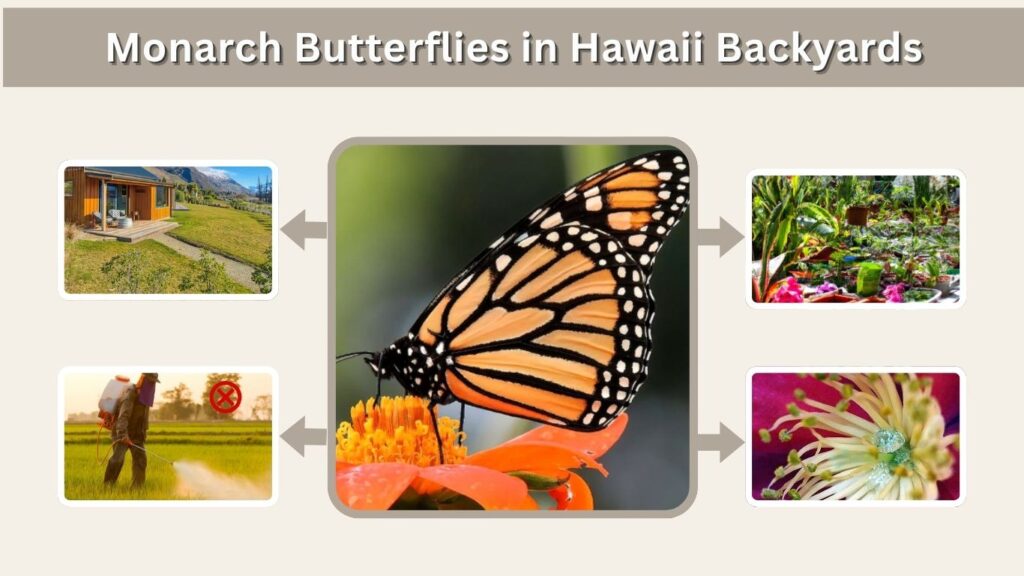
A Hawaiian backyard can provide valuable feeding and breeding habitat when it contains appropriate plants. However, concentrating large numbers of caterpillars on a small amount of milkweed can create problems, including exhausted plants and increased transmission of parasites.
How to Attract Monarch Butterflies
A butterfly-friendly garden should provide both caterpillar food and adult nectar. Useful steps include:
- Grow healthy milkweed plants
- Add several nectar-producing flower species
- Provide sunny, sheltered areas
- Avoid unnecessary insecticide use
- Space plants rather than overcrowding them
- Replace unhealthy or severely depleted plants
- Maintain flowers during different seasons
Should You Raise Monarch Butterflies in Hawaii?
Watching monarch development can be educational, but keeping large numbers of butterflies together in captivity may increase disease transmission. A well-managed outdoor habitat generally allows butterflies to reproduce naturally while reducing handling.
Gardeners should focus on healthy plants, good sanitation, sufficient space, and avoiding overcrowding rather than trying to produce unusually large numbers of monarchs in confined areas.
FAQs
Are there monarch butterflies in Hawaii?
Yes. Monarch butterflies have established breeding populations in Hawaii and can be seen in gardens, parks, roadsides, and other areas where milkweed and flowering plants grow.
Are monarch butterflies native to Hawaii?
No. Monarchs are considered introduced to Hawaii rather than native. However, they are now established and reproduce naturally on several Hawaiian islands.
Do monarch butterflies in Hawaii migrate?
Hawaiian monarchs generally do not perform the massive seasonal migration associated with North American monarch populations. They usually remain resident and make shorter local movements.
What do monarch butterflies eat in Hawaii?
Caterpillars eat milkweed, including plants such as crown flower, while adults drink nectar from many flowering plants such as lantana, pentas, zinnias, verbena, and milkweed flowers.
Why are some monarch butterflies in Hawaii white?
White Hawaiian monarchs are unusual color forms caused by genetic differences affecting pigmentation. They are still monarch butterflies and have the same basic life cycle and host-plant requirements as orange monarchs.