
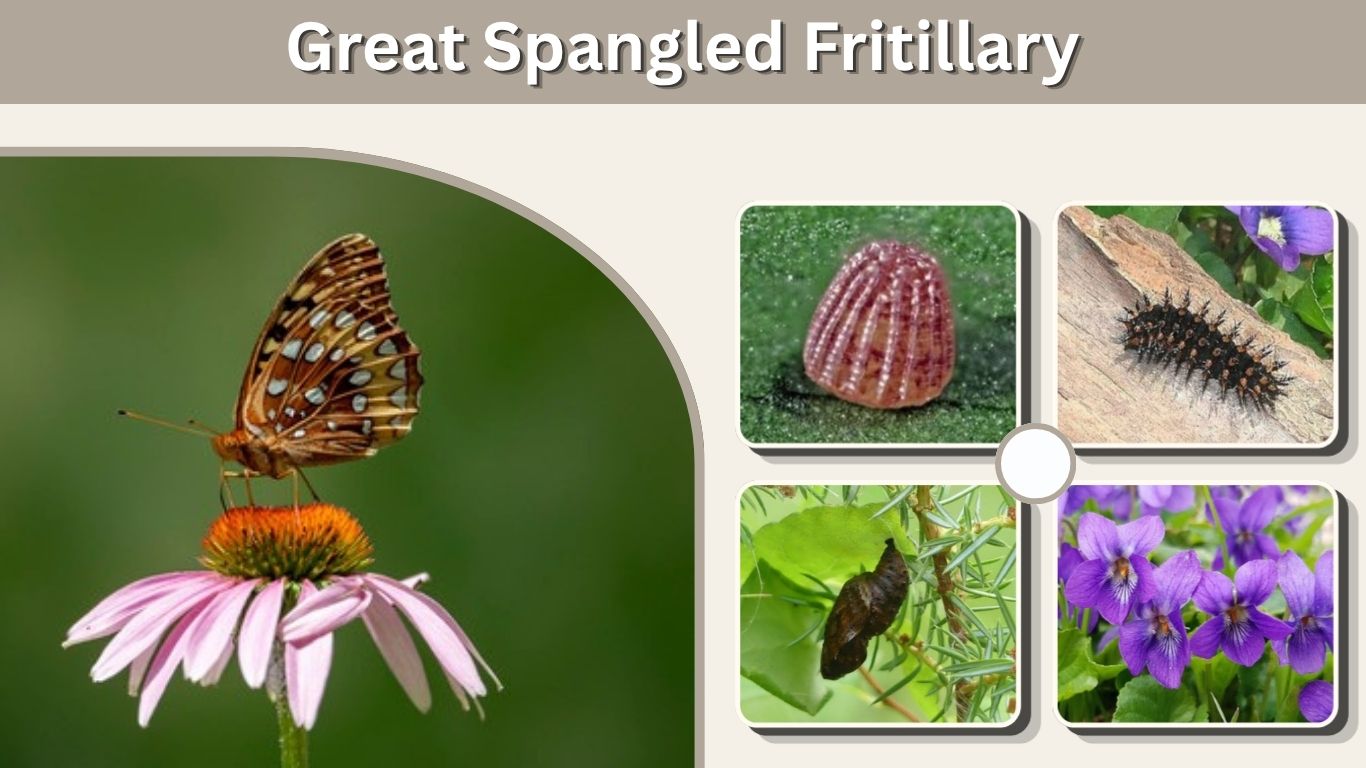
The great spangled fritillary is a large orange butterfly whose silver-spotted hindwings catch the light as it feeds. Often listed as Speyeria cybele, this North American species visits meadows, woodland edges, and gardens, but its survival depends on an easily overlooked plant: the violet. Tiny caterpillars spend winter tucked away, growing into dark, spiny larvae as they feed in spring. Learning the wing markings, host plants, and seasonal habits makes it easier to recognize this butterfly and distinguish it from similar fritillaries, especially the closely resembling Aphrodite fritillary.
Great Spangled Fritillary Identification
Great spangled fritillary identification starts with the underside of the hindwing, where large silver spots sit beside a broad pale band. The upper wings are orange with dark markings, but similar butterflies share that pattern. Size, wing shape, location, and sex also matter. Use several features together rather than treating one orange butterfly or one silver spot as conclusive evidence.
Key Features
- Wingspan of approximately 2.5–4 inches (6.3–10.1 centimeters).
- Orange upper wings patterned with black spots and lines.
- Large metallic silver spots beneath the hindwings.
- A broad cream or pale tan band near the hindwing’s outer edge.
Male vs Female
Males are generally orange with dark markings. Females often have heavier dark coloring near the wing bases. Regional variation matters: some western females are nearly black with pale outer bands, unlike the more familiar eastern forms. Size or color alone is therefore an unreliable way to sex every individual.
Caterpillar Appearance
The mature great spangled fritillary caterpillar is velvety black with rows of black spines arising from orange or reddish bases. It often shelters beneath leaves during daylight and feeds at night.
Great Spangled Fritillary Range and Habitat
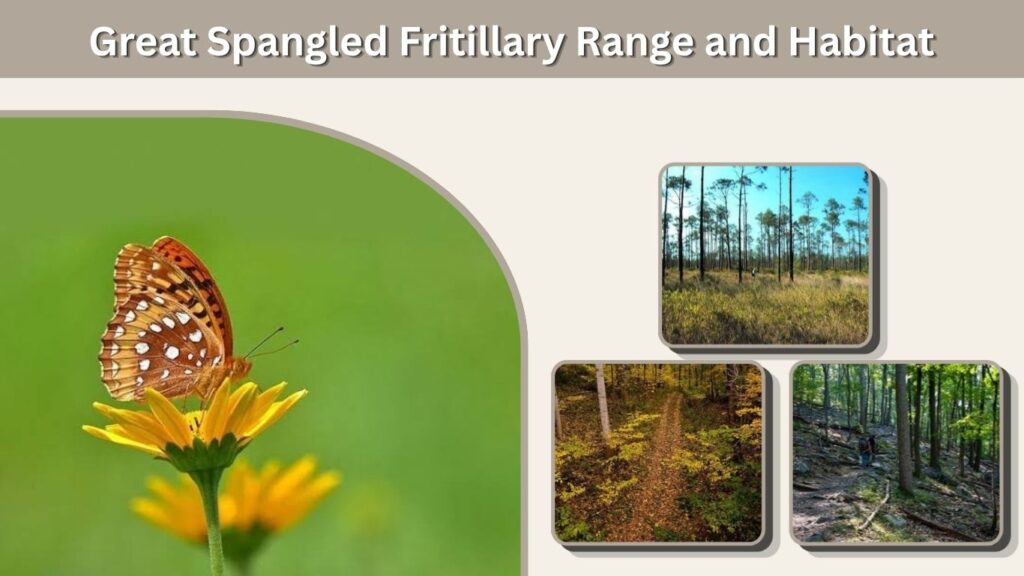
This butterfly is native to North America, with populations across southern Canada and much of the United States. It occupies a mixture of open feeding areas and nearby sheltered habitat. A meadow full of nectar flowers may attract adults, while the next generation depends on violets and suitable ground cover. Local abundance therefore reflects more than the number of blossoms.
Where Does It Live?
The range stretches across southern Canada and south into parts of the western, central, and eastern United States, including northern Georgia. Look around meadows, woodland edges, and streamsides rather than assuming it occurs everywhere within that broad area.
Great Spangled Fritillary Host Plants and Diet
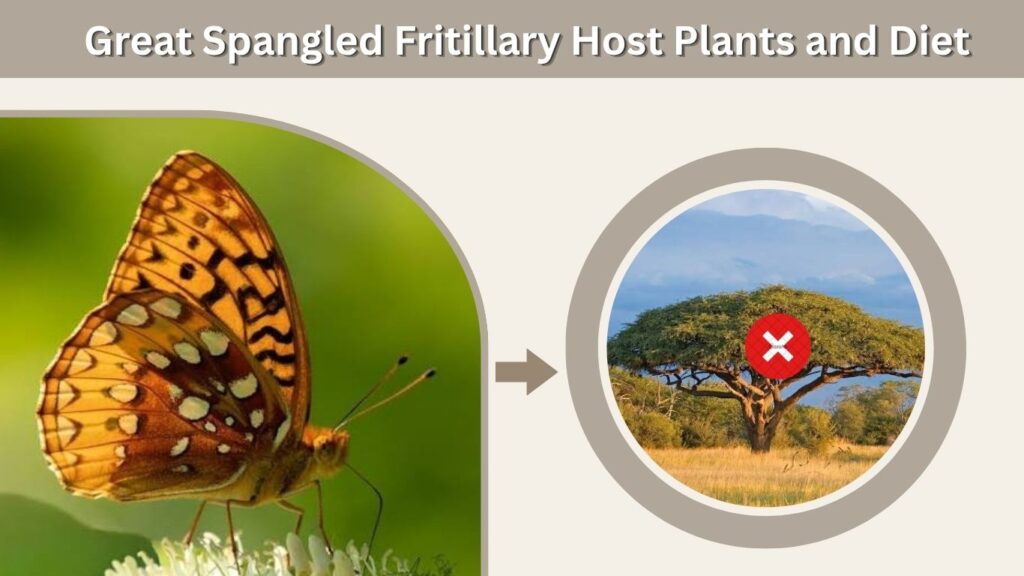
Violets are the essential great spangled fritillary host plants. Caterpillars eat these plants, while adults obtain nectar from many different flowers. The distinction matters when planning a butterfly garden: a feeding adult does not prove that its offspring can develop there. A useful planting provides both larval food and nectar, with suitable resources available through the butterfly’s changing seasonal needs.
Caterpillar Food
Great spangled fritillary larvae feed on violets in the genus Viola. These are their host plants, not simply optional garden flowers. Choose locally appropriate native violets; an adult visiting milkweed does not mean its caterpillars eat milkweed.
Nectar Flowers for Adults
Useful nectar sources include:
- Milkweeds, including butterfly weed.
- Purple coneflower and black-eyed Susan.
- Joe-Pye weed and ironweed.
- Native thistles and wild bergamot.
- Red clover.
Adults use a range of flowers rather than one universal favorite. Match plant choices to your region and growing conditions.
Great Spangled Fritillary Life Cycle
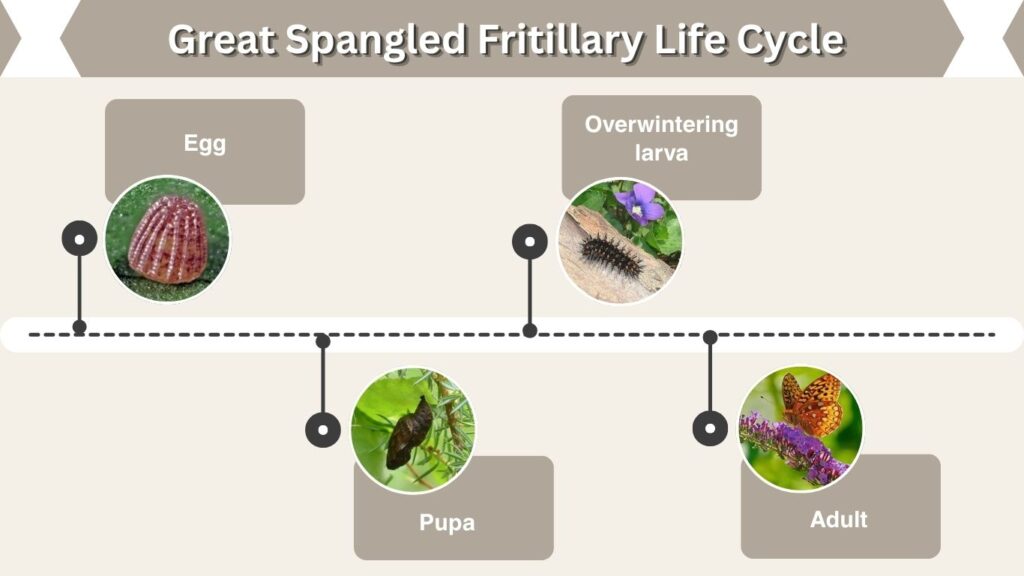
Great spangled fritillaries produce one generation each year. Their life cycle includes a long pause: newly hatched caterpillars spend winter dormant instead of immediately growing into butterflies. Feeding resumes when fresh violet growth becomes available in spring. This seasonal connection explains why protecting a flower garden only during summer misses an important part of the butterfly’s life and habitat needs.
From Egg to Butterfly
- Egg: Females lay eggs singly on or near violets, commonly in late summer or fall.
- Overwintering larva: Tiny hatchlings enter dormancy without feeding on their host plants.
- Growing caterpillar: Spring brings renewed activity, violet feeding, and successive molts.
- Pupa and adult: Caterpillars pupate before adults emerge. Males usually appear before females.
Females may survive through summer and delay egg laying until later in the season.
Chrysalis Appearance and Timing
The chrysalis is stout and chestnut brown. Reported pupal development takes approximately 13–19 days, although temperature and other conditions affect timing. The winter pause occurs in the larval stage, not normally inside the chrysalis.
How to Distinguish Similar Fritillaries
Several fritillaries share orange upper wings and silvery markings below, making identification challenging even with a clear photograph. The Aphrodite fritillary is a particularly close match. Compare the pale band beneath the hindwing, not just the presence of silver spots. Whenever possible, photograph both wing surfaces and note the location; those details can help separate otherwise convincing look-alike butterflies reliably.
Aphrodite vs Great Spangled Fritillary
The great spangled usually has a broad, pale band beneath the hindwing. The Aphrodite’s corresponding band is narrower or sometimes absent. Both have silver spots, so silvering alone does not distinguish them.
Great Spangled vs Variegated Fritillary
Variegated fritillaries have mottled hindwing undersides without the great spangled’s bright silver spots. Their wings are also more angular. A clear photograph of the closed wings often makes this comparison easier.
How to Attract Great Spangled Fritillaries
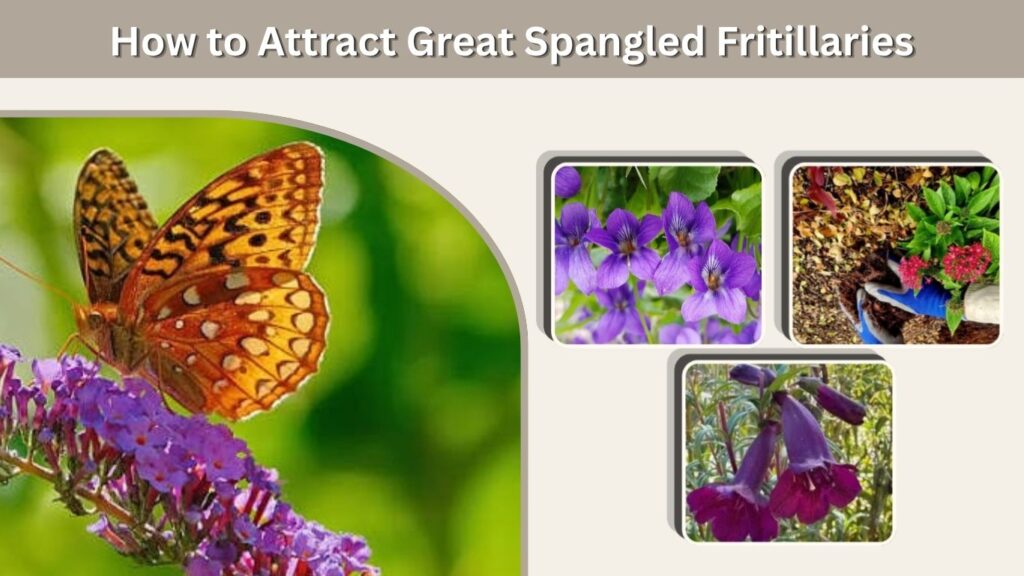
Attracting great spangled fritillaries means supporting a whole life cycle, not simply adding a bright flower. Adults need nectar, caterpillars need violets, and overwintering larvae need protected places near those plants. A garden with a slightly untidy edge can provide resources that a closely mown lawn lacks. Focus on food, shelter, and gentle maintenance rather than purchasing butterflies for release.
Practical Garden Steps
- Retain or plant suitable native violets.
- Provide nectar flowers with overlapping bloom periods.
- Leave sheltered leaf litter near host plants.
- Avoid mowing occupied violet patches.
- Avoid insecticides around butterfly habitat.
Leaf litter near violets can shelter overwintering caterpillars, while native plantings provide food.
FAQs
The great spangled fritillary attracts questions beyond identification, especially about its name, lifespan, and seasonal behavior. Some answers depend on location, sex, or the stage being discussed. An adult butterfly’s lifespan is not the same as its complete life cycle, and a species that is widespread can still be uncommon in a particular garden or at its outer range limits.
Are Great Spangled Fritillaries Rare?
They are widespread and common in many areas, but abundance varies locally. A species can be uncommon near its range limits without being rare everywhere.
What Is Their Scientific Name?
Many guides use Speyeria cybele; others classify the same butterfly as Argynnis cybele. These names reflect different treatments of its genus.
How Long Do They Live?
The annual life cycle includes months spent as a dormant caterpillar. Adults live for a shorter period; females can persist through summer before laying eggs later in the season.
Do Great Spangled Fritillaries Migrate?
They are generally considered non-migratory. Their seasonal appearance mainly reflects their annual life cycle, rather than a monarch-like migration.
What Does “Great Spangled Fritillary” Mean?
“Spangled” refers to the conspicuous silver spots beneath the wings. “Fritillary” is associated with checkered patterns, matching the butterfly’s intricate markings.