
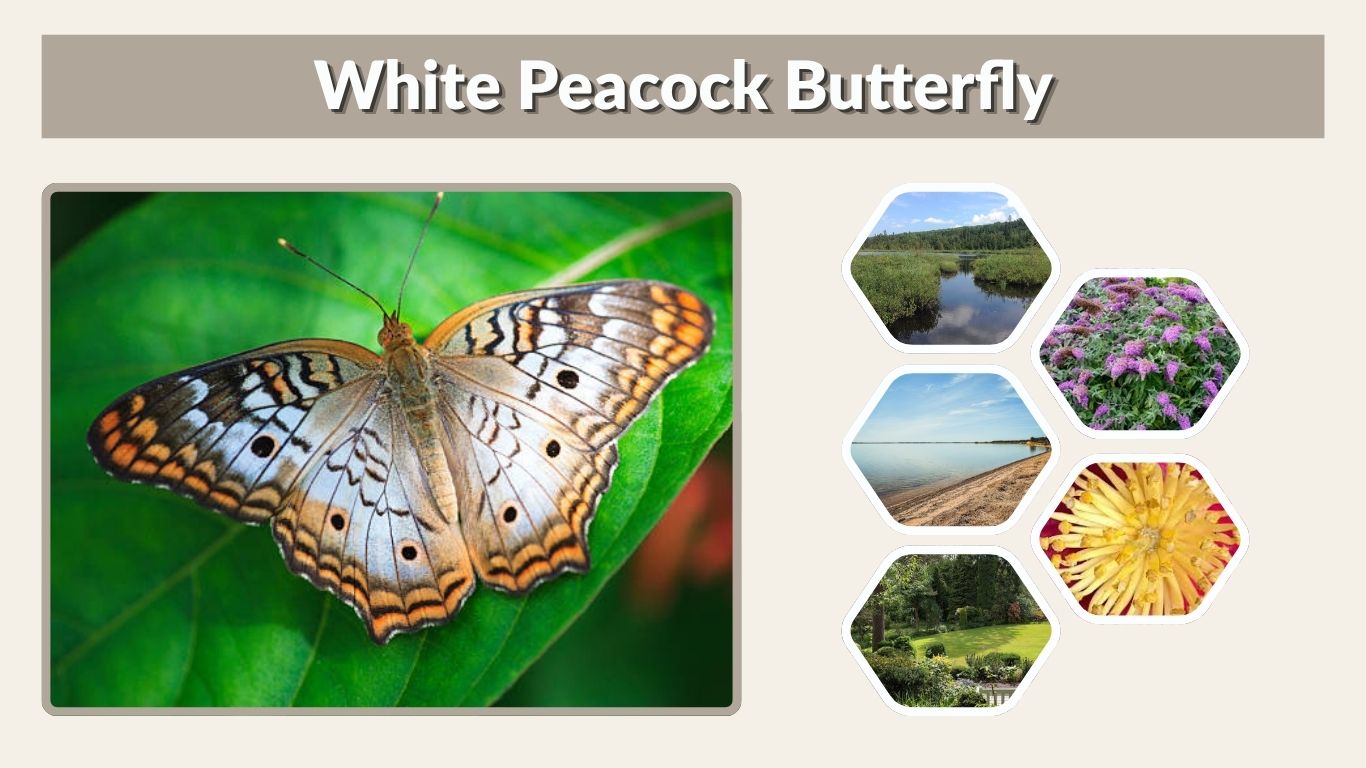
The white peacock butterfly is a graceful tropical butterfly recognized by its pale wings, orange markings, and distinctive dark eyespots. Scientifically known as Anartia jatrophae, it occurs from the southern United States through Central America, the Caribbean, and parts of South America. In Florida, it is especially common around wetlands, gardens, canals, and other sunny habitats. Its caterpillars depend on particular host plants, while adults visit many nectar-rich flowers. Understanding its appearance, habitat, diet, and life cycle makes this butterfly much easier to identify.
What Is a White Peacock Butterfly?
The white peacock is a member of the brush-footed butterfly family Nymphalidae. Despite its name, it is not closely related to the European peacock butterfly, Aglais io. White peacocks prefer warm climates and are frequently seen flying low over vegetation. Their combination of pale wings, orange bands, and dark markings makes them distinctive among butterflies found in Florida and tropical America.
White Peacock Butterfly Classification
- Common name: White peacock butterfly
- Scientific name: Anartia jatrophae
- Family: Nymphalidae
- Order: Lepidoptera
- Class: Insecta
- Phylum: Arthropoda
- Type: Brush-footed butterfly
- Primary range: Southern North America through South America
Several geographical forms or subspecies have been described within its broad range.
What Does a White Peacock Butterfly Look Like?
Adults have mostly white to cream-colored wings decorated with orange-brown bands and dark spots. Small eyespots occur near the outer portions of the wings, helping create the characteristic peacock-like pattern.
Dark lines and brownish markings contrast sharply with the pale background. The body is slender and dark, while the antennae end in small clubs. Its light coloration makes the butterfly especially noticeable when flying across green vegetation.
White Peacock Butterfly Size
The white peacock is a medium-sized butterfly. Its wingspan is usually approximately 5 to 7 centimeters, although individual size can vary.
Its wings are broad relative to its body, allowing it to move easily through open wetlands and low vegetation. When resting with the wings spread, the pale wing surfaces and patterned borders make identification relatively straightforward.
White Peacock Butterfly Habitat and Range
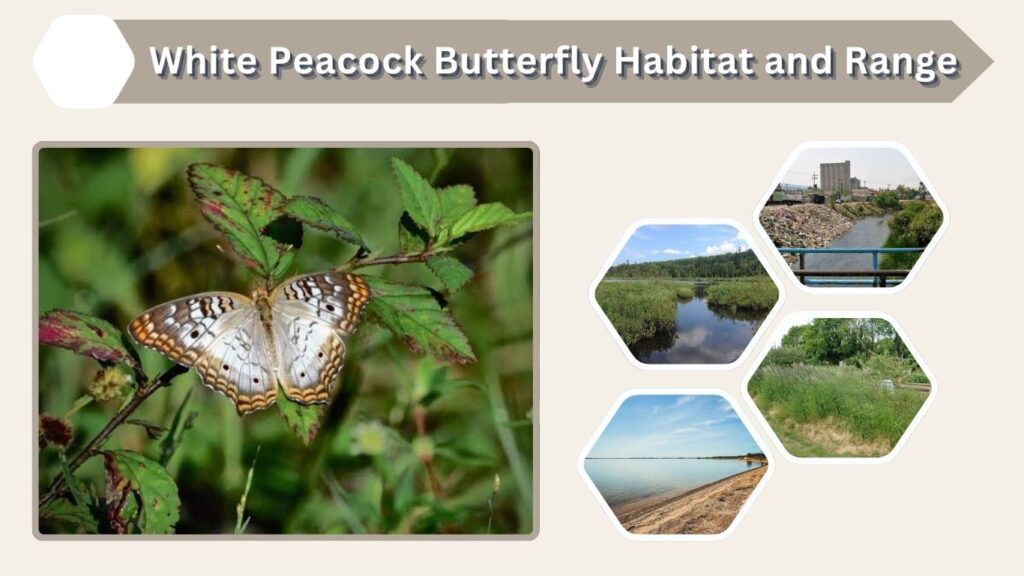
White peacock butterflies thrive in warm, sunny environments, especially where water and low-growing vegetation occur together. They often remain relatively close to the ground rather than spending most of their time high in trees. Because many of their caterpillar host plants grow in damp habitats, adults are commonly associated with marshes, canals, pond edges, roadside ditches, and wetlands.
Where Do White Peacock Butterflies Live?
Their range extends through tropical and subtropical parts of the Americas. Populations occur in the Caribbean, Mexico, Central America, South America, and the southern United States.
Common habitats include:
- Wetlands and marsh edges
- Pond and lake margins
- Canals and drainage areas
- Sunny gardens
- Roadsides
- Open disturbed habitats
- Moist fields
- Riverbanks
They are particularly successful in areas where both nectar plants and suitable caterpillar host plants are available.
White Peacock Butterfly in Florida
Florida is one of the best places in the United States to observe white peacock butterflies. They are particularly associated with central and southern Florida, although their abundance varies with season, weather, and local habitat conditions.
Wet areas containing frogfruit and other low-growing plants can support breeding populations. Adults may also enter residential gardens when nectar-producing flowers are available.
Because Florida remains warm for much of the year, several generations can develop under favorable conditions.
White Peacock Butterfly Range
Beyond Florida, white peacocks occur throughout much of the Caribbean and tropical mainland Americas. Their distribution reaches southward through Central America into extensive areas of South America.
The species generally becomes less common in regions with prolonged freezing temperatures. Individual butterflies may occasionally wander beyond established breeding areas during warm periods, but permanent populations depend on suitable climate and host plants.
White Peacock Butterfly Host Plants
Host plants are essential because female butterflies must locate vegetation that newly hatched caterpillars can eat. White peacock larvae feed on several plants, particularly members of the acanthus and plantain-related plant groups. The exact plants used may vary geographically, so gardens containing locally suitable species can sometimes support reproduction.
Common Host Plants
Plants reported as hosts include:
- Frogfruit
- Water hyssop or bacopa
- Ruellia species
- Justicia species
- Other suitable low-growing wetland plants
Frogfruit is particularly important in many areas because it can provide both habitat for developing caterpillars and flowers visited by adult insects.
Gardeners hoping to support white peacocks should concentrate on native host plants appropriate for their local climate.
Is Lantana a Host Plant?
Lantana is better known as a nectar source than as an important caterpillar host plant for white peacocks. Adult butterflies may readily visit lantana flowers to obtain nectar, creating the impression that they depend on the plant for reproduction.
A nectar plant feeds adult butterflies, while a host plant provides food for caterpillars. Both types of plants are useful in a butterfly garden, but they perform different roles.
White Peacock Nectar Plants
Adults visit numerous small and medium-sized flowers. They are not restricted to a single nectar species and may move between flowering plants throughout the day.
Good nectar sources can include:
- Lantana
- Verbena
- Frogfruit
- Bidens
- Asters
- Other small nectar-rich flowers
Planting several species that bloom at different times can provide a more consistent food supply.
What Do White Peacock Butterflies Eat?
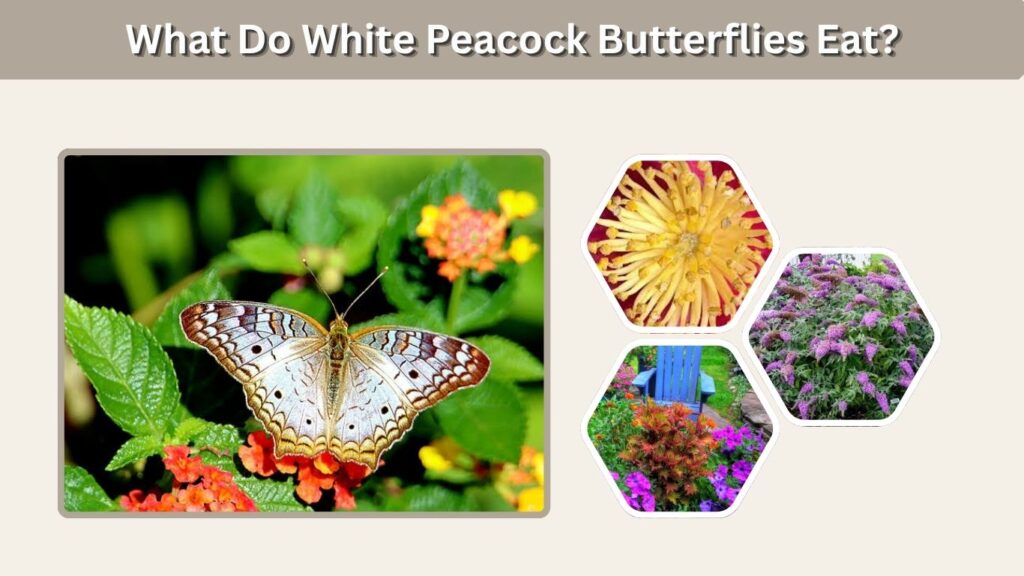
The diet changes completely during metamorphosis. Caterpillars consume leaves because they need protein and nutrients for rapid growth. Adults mainly drink nectar, which supplies sugars used for flying, mating, searching for host plants, and other activities. This separation between larval and adult diets is typical of butterflies undergoing complete metamorphosis.
What Do Adult White Peacock Butterflies Eat?
Adults primarily drink flower nectar. Using their long coiled proboscis, they reach liquid nectar inside flowers without chewing plant material.
They often move quickly between low-growing flowers in sunny areas. Nectar provides carbohydrates required for flight and daily activity.
Adults may repeatedly patrol productive flower patches, particularly where host plants and nectar plants grow close together.
What Do White Peacock Caterpillars Eat?
White peacock caterpillars eat the leaves of suitable host plants. After hatching, the larvae begin feeding and continue eating as they pass through several growth stages.
Their feeding can leave small holes or damaged edges on host plant leaves. This is a normal part of butterfly development and usually does not seriously harm healthy established plants.
White Peacock Butterfly Life Cycle
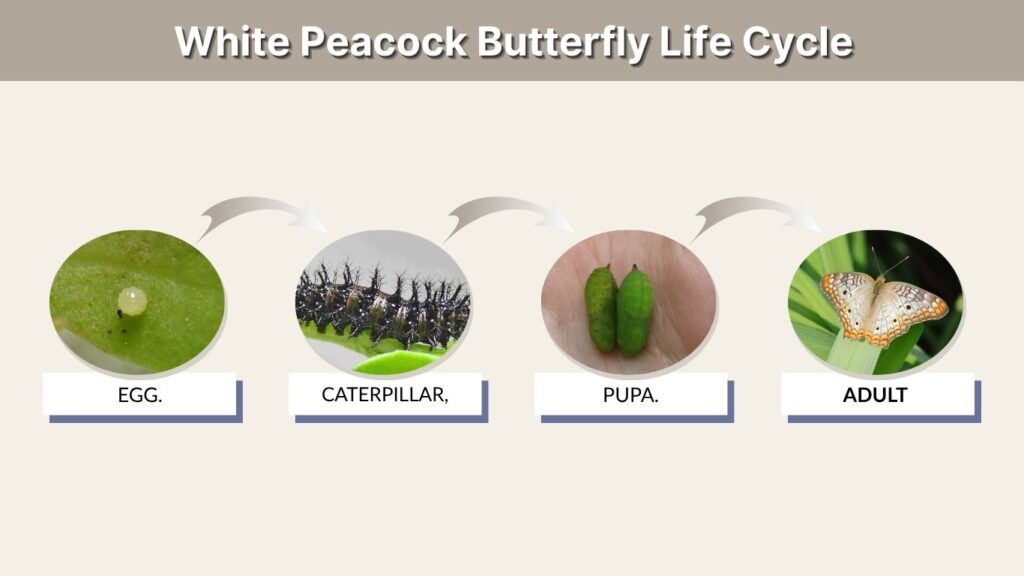
White peacocks undergo complete metamorphosis, passing through egg, caterpillar, chrysalis, and adult stages. In tropical and subtropical climates, development can occur repeatedly during the warm season. Temperature and food availability influence the speed of development, so there is no single exact number of days that applies to every population.
White Peacock Butterfly Eggs
Females search for appropriate host plants before laying their eggs. The eggs are small and are generally placed where newly hatched larvae can quickly reach suitable leaves.
The egg stage protects the developing embryo until a tiny caterpillar emerges. Warm temperatures generally encourage faster development than cooler conditions.
White Peacock Butterfly Caterpillar
The caterpillar is darker and less colorful than the adult butterfly. Its body has numerous projections or spines that create a rough, defensive appearance.
Typical characteristics include:
- Dark brown to blackish coloration
- Numerous branching spines
- Small lighter markings
- Several pairs of abdominal prolegs
- Increasing body size after each molt
The spiny appearance helps discourage some predators, although white peacock caterpillars still face threats from birds, insects, spiders, and parasitoids.
White Peacock Butterfly Chrysalis
When the caterpillar reaches its final larval stage, it stops feeding and searches for a protected location. It attaches itself to vegetation or another surface before transforming into a chrysalis.
Inside the chrysalis, dramatic biological changes take place as larval structures are reorganized into the adult butterfly.
Eventually, the adult emerges, expands its wings, and waits for them to harden before flying.
Adult Stage
Adult white peacocks focus on feeding and reproduction. Males frequently patrol territories or suitable habitat while searching for females.
Females locate host plants and begin another generation by laying eggs. In warm regions, overlapping generations may make adults visible during much of the year.
White Peacock Butterfly Behavior and Predators
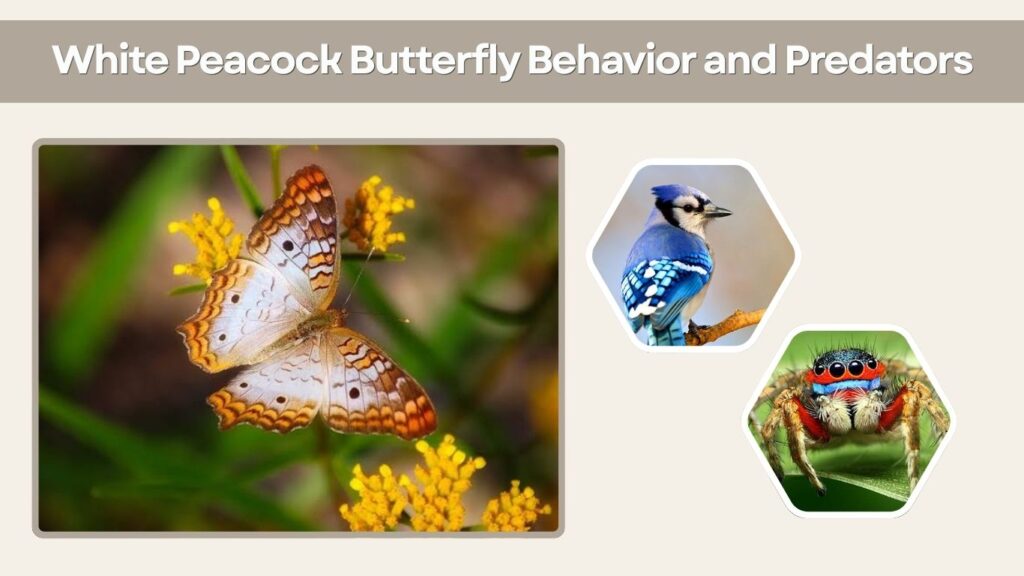
White peacocks are active daytime butterflies that often fly close to the ground. They frequently perch with their wings open, especially while warming themselves in sunlight. Their low, quick flight can make them difficult to photograph even when numerous individuals are present in a small wetland or garden.
Typical Behavior
Adults frequently exhibit several recognizable behaviors:
- Basking with open wings
- Flying close to low vegetation
- Visiting flowers repeatedly
- Patrolling sunny pathways
- Resting on leaves or bare ground
- Males defending or investigating small territories
Warm, calm weather generally produces the greatest activity.
Natural Predators
White peacock butterflies are part of the food web and may be captured by birds, spiders, predatory insects, reptiles, and other small animals.
Eggs and caterpillars are also vulnerable to predators and parasitoids. Producing numerous offspring helps compensate for the high mortality experienced during immature stages.
White Peacock Butterfly Facts
The white peacock has several characteristics that distinguish it from similarly named butterflies. Its strong association with wetlands, widespread tropical range, and preference for low-growing vegetation make it an interesting species for gardeners and butterfly watchers alike.
Quick Facts
- Its scientific name is Anartia jatrophae.
- It belongs to the family Nymphalidae.
- Florida supports established populations.
- Adults have pale wings with orange and dark markings.
- Frogfruit is an important plant associated with the species.
- Adults primarily drink nectar.
- Caterpillars eat leaves of specific host plants.
- Several generations may develop each year in warm climates.
- White peacocks are often found around wetlands and canals.
- They are different from the European peacock butterfly.
FAQs
What is the scientific name of the white peacock butterfly?
The scientific name of the white peacock butterfly is Anartia jatrophae. It belongs to the brush-footed butterfly family Nymphalidae.
Is the white peacock butterfly common in Florida?
Yes. It is an established Florida butterfly, particularly in warm areas with wetlands, canals, ponds, gardens, and suitable host plants.
What is the host plant for a white peacock butterfly?
Several plants can serve as hosts. Frogfruit, bacopa, Ruellia, and related plants are among those associated with white peacock caterpillars.
What do white peacock butterflies eat?
Adults mainly drink nectar from flowers such as lantana, verbena, and other nectar-producing plants. Caterpillars eat the leaves of suitable host plants.
How long does a white peacock butterfly live?
Exact adult lifespan varies with temperature, weather, food, predation, and other environmental conditions. The entire life cycle progresses relatively quickly in warm climates, allowing several generations to occur within a year.