
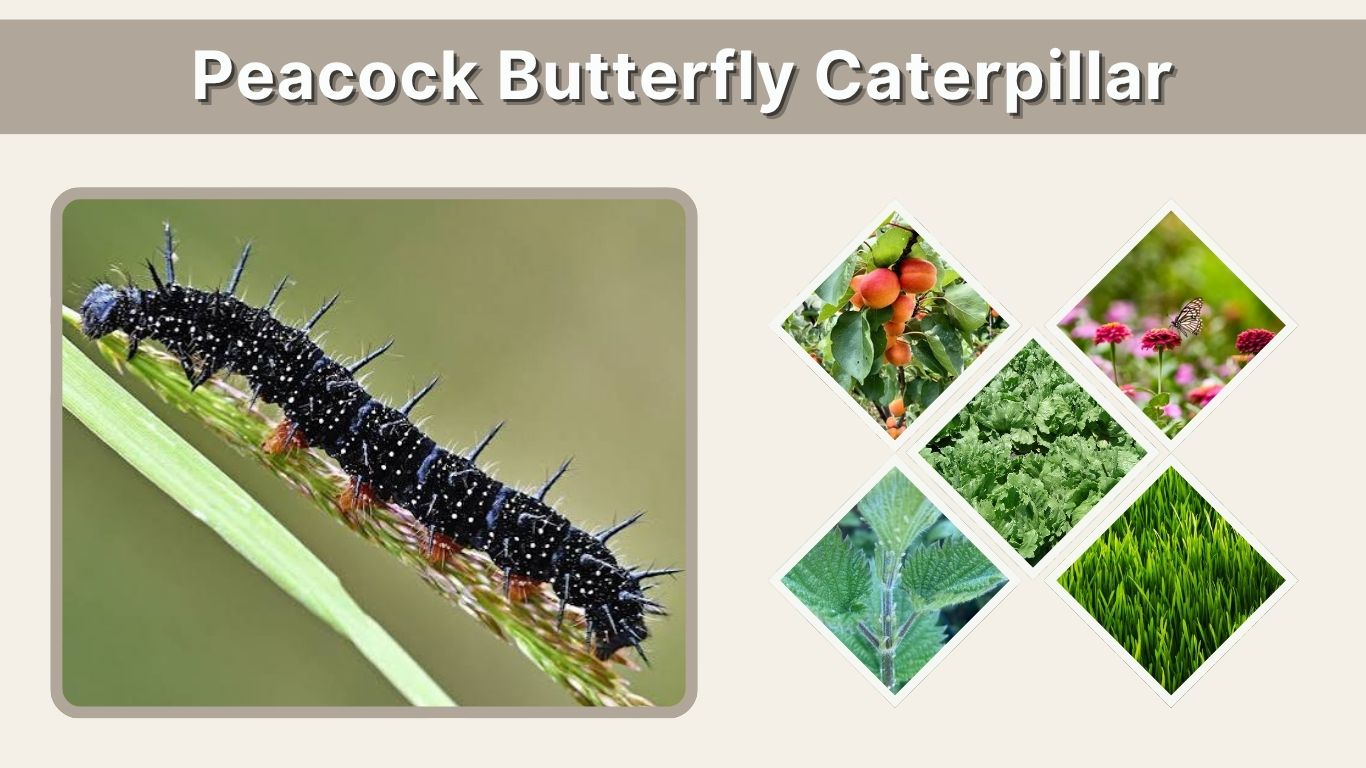
The peacock butterfly caterpillar is a black, spiny caterpillar with tiny white spots, often found feeding in groups on nettles. In Britain and much of Europe, this name usually refers to Aglais io, the butterfly famous for its dramatic eyespots. However, the white peacock butterfly belongs to a different species and uses different food plants. This guide explains how to identify these caterpillars, what they eat, where they live, and how they develop, with practical advice for observing them safely and supporting them in your garden.
How to Identify a Peacock Butterfly Caterpillar
A mature European peacock caterpillar looks very different from the colourful butterfly it becomes. Its dark body and branching spines are useful clues, but identification also depends on its food plant and surroundings. Look at several features together, especially when comparing photographs. Other butterflies also have dark, spiny larvae, so colour alone cannot confirm exactly which species you have found.
Main Identification Features
- Colour: A mostly black body sprinkled with tiny white dots.
- Spines: Rows of prominent, branched black spines along the body.
- Size: Fully grown caterpillars reach approximately 4.5 centimetres.
- Behaviour: Young larvae gather in groups, often within communal silk webs.
- Food plant: In the UK, colonies commonly occupy patches of nettles.
Similar Caterpillars and Brown Specimens
Small tortoiseshell caterpillars also feed on nettles, but typically show noticeable yellow striping. Young caterpillars may differ from mature ones, and lighting can distort colour in photographs. A brown caterpillar therefore needs closer examination. Photograph its back, side, and food plant rather than identifying it from colour alone.
What Do Peacock Butterfly Caterpillars Eat?
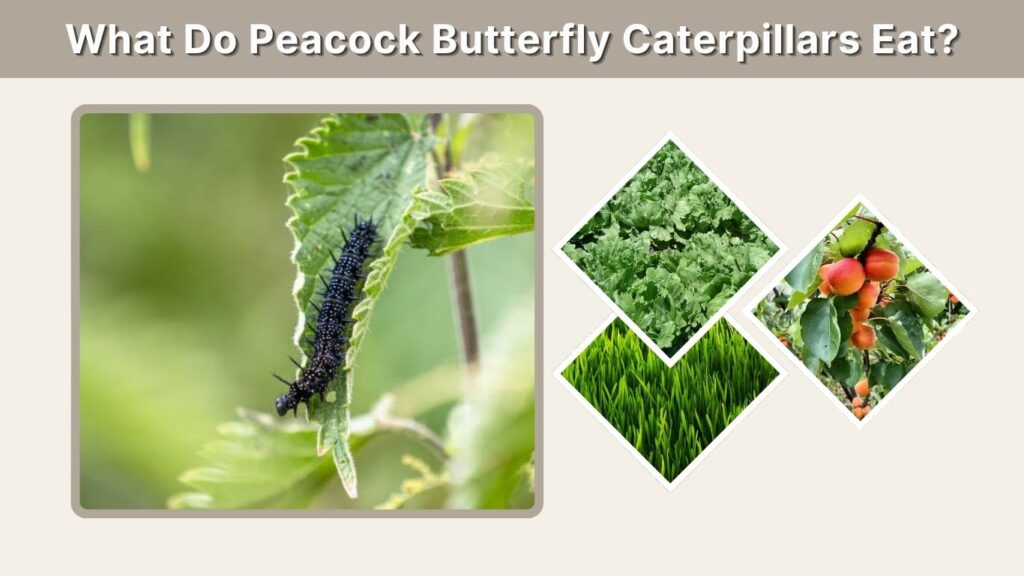
Peacock butterfly caterpillars need suitable host plants to grow. These are the plants on which larvae feed, and they are different from the nectar flowers visited by adults. A garden full of flowers may attract butterflies without supporting their caterpillars. To help the complete life cycle, provide larval food alongside flowering plants and leave occupied vegetation undisturbed while caterpillars develop.
Nettles Are the Main Food Plant
Common nettle, Urtica dioica, is the principal food plant for European peacock caterpillars. Small nettle is also used, and feeding on hop has been recorded.
Fresh nettle leaves supply food throughout larval growth. Lettuce, fruit, grass, or a bowl of sugar water should not replace the correct host plant. Caterpillars and adult butterflies have different feeding needs.
Where and When to Look
In the UK, look for caterpillars from roughly May to July, allowing for weather and local variation. Search sunny nettle patches in gardens, woodland edges, hedgerows, and other sheltered places.
The European peacock occurs across much of Europe and temperate Asia. A similarly named caterpillar in Texas requires a different identification process.
When taking peacock butterfly caterpillar pictures, include the whole plant and a wider view of the colony. These images can be more useful for identification than an extreme close-up of the spines.
Peacock Butterfly Caterpillar Life Cycle
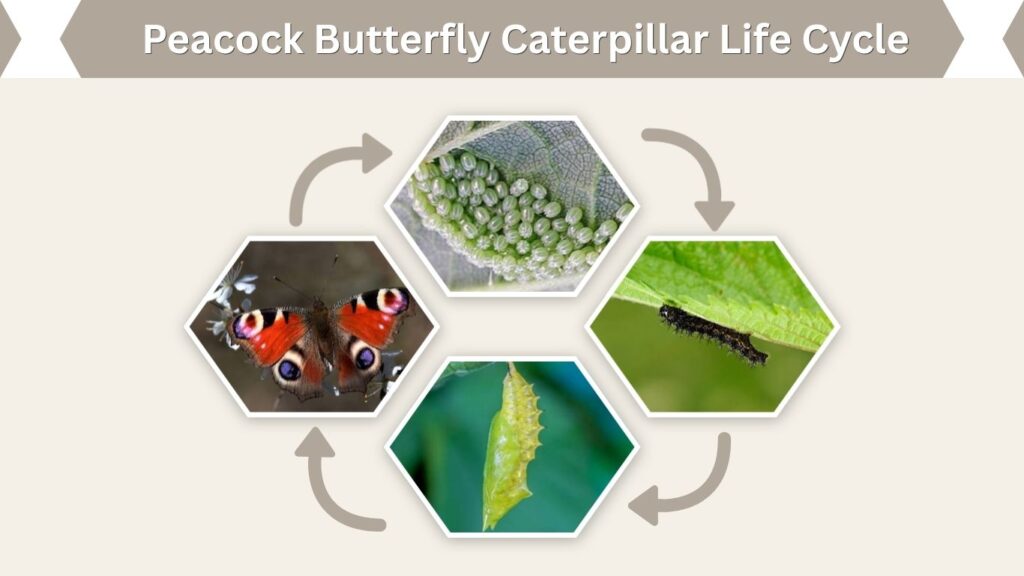
The peacock butterfly passes through four stages: egg, caterpillar, chrysalis, and adult. The caterpillar stage is devoted to feeding and growth, while the chrysalis houses the transformation into a butterfly. Development follows temperature and seasonal conditions rather than a fixed calendar. Watching one colony over several weeks reveals changes that a single photograph cannot show, including growth and dispersal behaviour.
Eggs and Growing Caterpillars
Females lay clusters of eggs on nettle leaves, often underneath them. After hatching, the young caterpillars live together within silk webbing and feed nearby.
As they grow, they shed their skins several times. Larger larvae become less tightly grouped and eventually leave their feeding sites to find suitable places for pupation.
The feeding stage usually lasts several weeks. Its duration changes with temperature and growing conditions, so an individual caterpillar may not match an exact timetable.
From Caterpillar to Chrysalis
A fully grown caterpillar attaches itself to a silk pad and hangs head down before shedding its final larval skin. The resulting chrysalis may be greenish or greyish brown.
This is a pupa, rather than a caterpillar wrapped inside a silk cocoon. The pupal stage commonly lasts around two to four weeks, depending on conditions.
The Adult Butterfly Emerges
The adult has reddish wings with conspicuous eyespots and a dark underside. After emerging, it must expand and dry its wings before flying.
European peacocks overwinter as adults in sheltered places. The number of generations varies with climate and location, so avoid applying one seasonal timetable across their entire range.
Is the Peacock Butterfly Caterpillar Poisonous?
The European peacock caterpillar is not known for venomous stings, despite its intimidating spines. However, appearance alone cannot establish whether an unidentified caterpillar is safe to touch. The nettles supporting a colony can sting, and unnecessary handling may injure delicate larvae. For most people, watching caterpillars on their food plant is the safest and most useful way to enjoy them.
Observe Without Handling
Use a camera’s zoom to examine the spines and markings. Avoid pulling caterpillars from leaves or disturbing their webs. When gardening around an occupied patch, protect yourself from nettles and leave the insects room to feed.
Peacock Butterfly Caterpillar Care
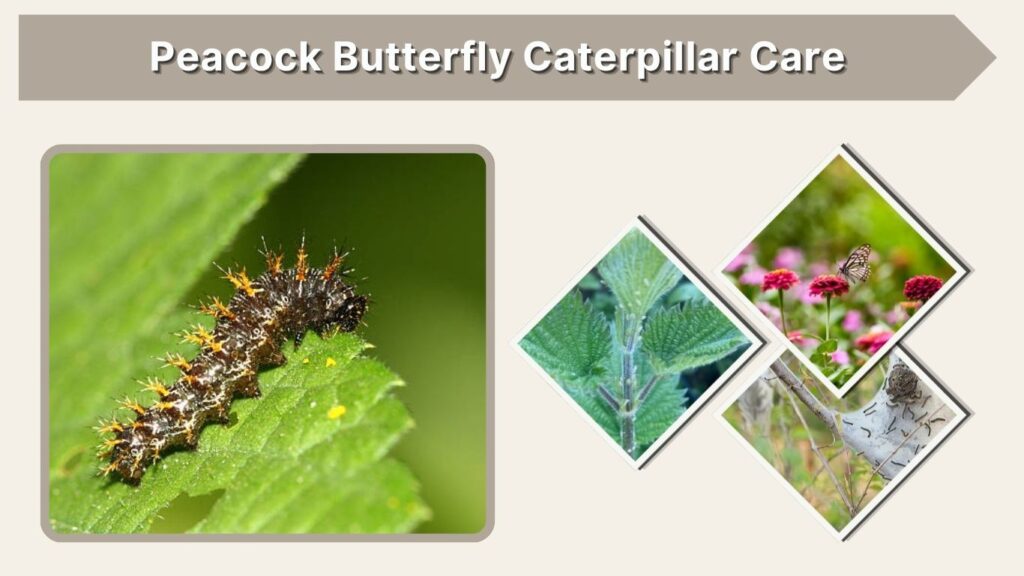
Supporting caterpillars outdoors usually starts with preserving the plants they already use. A thriving colony needs fresh leaves, shelter, and freedom from repeated disturbance. Keeping caterpillars indoors creates additional responsibilities, including food replacement and cleaning. Before moving one, identify both the insect and its host plant, then consider whether observing it where you found it would meet your purpose instead.
Helping Caterpillars in the Garden
- Keep a nettle patch: A substantial sunny patch can provide useful breeding habitat.
- Check before cutting: Inspect leaves and stems for eggs, webs, larvae, and chrysalises.
- Avoid spraying occupied plants: Insecticides can harm caterpillars and other beneficial insects.
- Provide flowers nearby: Adult butterflies need feeding opportunities as well as places to breed.
Some chewed leaves are an expected part of supporting caterpillars, rather than a reason to remove an otherwise healthy colony.
Caring for a Caterpillar Temporarily
Use a secure, well-ventilated enclosure away from direct sunlight. Supply fresh, pesticide-free leaves from the correct host plant, and remove droppings and spoiled foliage regularly.
Provide attachment surfaces and enough space for an emerging butterfly to hang and open its wings. Once pupation begins, avoid disturbing the caterpillar or chrysalis. Release a locally collected butterfly near its original habitat once its wings are ready and conditions are suitable.
White Peacock and Other Peacock Caterpillars
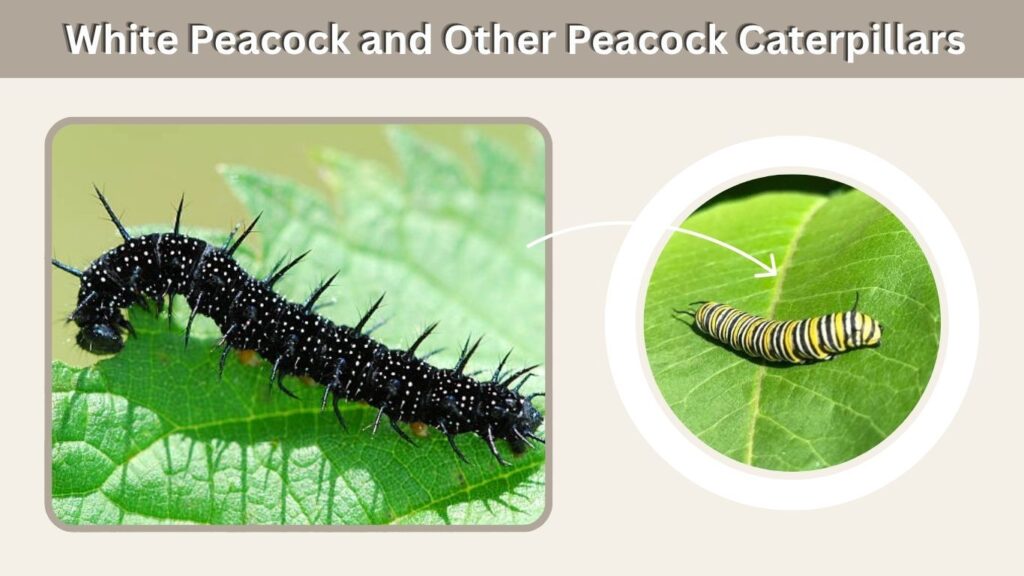
The white peacock butterfly, Anartia jatrophae, is a separate species found in the Americas, including Florida and southern Texas. It is not a pale form of the European peacock. Its mature caterpillar can also be black, with small white spots and black spines. Location and host plant therefore matter when distinguishing these insects, especially when photographs show only the caterpillar.
White Peacock Butterfly Caterpillar Food
Recorded host plants include:
- Water hyssop: Bacopa monnieri, associated with damp habitats.
- Frogfruit: Phyla nodiflora, a low-growing plant.
- Wild petunias: Certain Ruellia species used within its range.
White peacocks often occur near wet ditches, pond edges, and other moist open habitats. Their caterpillars should not automatically be given nettles simply because “peacock” appears in the butterfly’s name.
Common Peacock and Great Peacock Names
In parts of Asia, “common peacock” refers to swallowtail butterflies, including Papilio polyctor. Their caterpillars require their own identification and food-plant guidance.
“Great peacock” often refers to Saturnia pyri, a moth. Its caterpillar is not the larva of the European peacock butterfly. Scientific names help prevent these common-name mix-ups.
FAQs
Small details can make a large difference when identifying or observing peacock caterpillars. The plant beneath the insect, its location, and whether it is feeding or preparing to pupate all provide useful context. These answers address common questions about transformation, appearance, food, and behaviour. Unless a different species is named, they refer to the European peacock butterfly and its larvae.
What Does a Peacock Butterfly Caterpillar Turn Into?
An Aglais io caterpillar becomes a European peacock butterfly, with reddish wings and large eyespots. A white peacock caterpillar instead becomes the mostly white butterfly Anartia jatrophae.
Why Are There So Many Caterpillars on One Nettle Plant?
Females lay eggs in clusters, and young larvae feed together. A crowded nettle patch can therefore be a normal colony rather than evidence that something is wrong.
Are White Peacock Butterfly Caterpillars White?
No. Mature white peacock caterpillars are generally dark, with spines and small pale spots. The name describes the adult butterfly’s predominantly white wings, not the larva’s colour.
Do Peacock Butterfly Caterpillars Eat Garden Flowers?
European peacock caterpillars primarily eat nettle leaves. Adult butterflies visit flowers for nectar, but their larvae do not share the same diet. Providing flowers alone does not supply caterpillar food.
Why Has a Peacock Caterpillar Stopped Eating?
A caterpillar may stop feeding before moulting or pupating. However, unsuitable food or poor conditions can also cause problems. Observe its behaviour and surroundings instead of assuming every pause means transformation.