
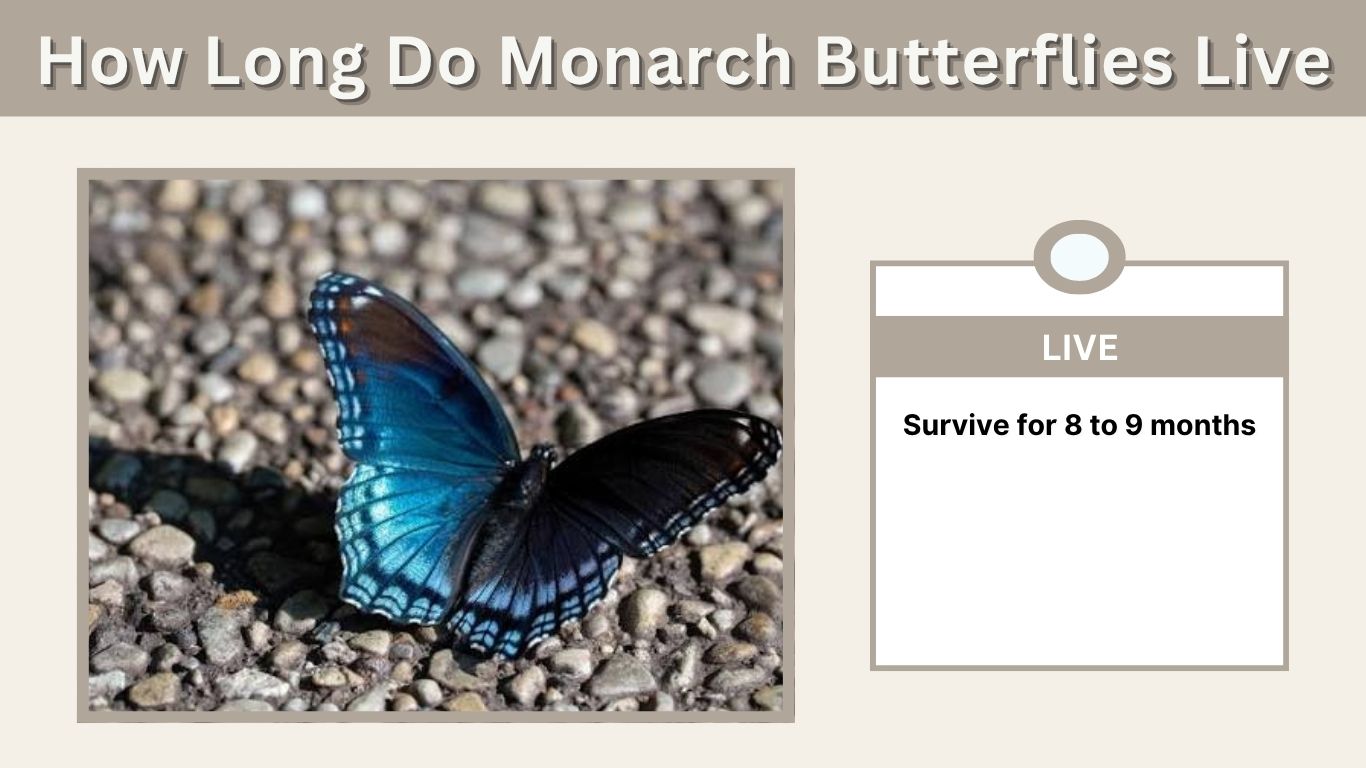
Monarch butterflies are famous for their bright orange wings, remarkable migration, and surprisingly complex lifespan. So, how long do monarch butterflies live? Most adult monarchs live for only 2 to 6 weeks, but the special generation that migrates and overwinters can survive for 8 to 9 months. Their lifespan depends on the season, temperature, food availability, migration, predators, and whether they live in the wild or captivity. Understanding their life cycle explains why some monarchs survive much longer than others.
How Long Do Monarch Butterflies Live?
Most monarch butterflies have a relatively short adult life. During spring and summer, several generations are produced, and adults usually survive for about 2 to 6 weeks. These butterflies quickly reproduce and complete their role in the monarch life cycle. However, the final generation produced toward the end of summer lives dramatically longer.
Typical Adult Monarch Lifespan
An ordinary adult monarch generally lives for approximately 2–6 weeks. During this short period, it spends much of its time feeding on flower nectar, finding a mate, and reproducing.
Females search for milkweed plants where they can deposit their eggs. Males spend considerable time searching for females. Once reproduction has occurred, these summer monarchs gradually reach the end of their natural lifespan.
Their short lifespan allows several monarch generations to appear during a single warm season.
Migratory Monarch Lifespan
Migrating monarch butterflies can live approximately 8 to 9 months, making them dramatically longer-lived than summer generations.
This special generation is often called the migratory or overwintering generation. Instead of immediately reproducing, these butterflies delay reproductive development and devote their energy to migration and survival.
They may travel thousands of miles before gathering at overwintering locations. After winter, surviving monarchs begin moving north again and reproduce, starting the next annual cycle.
Monarch Lifespan at a Glance
- Normal summer adults: About 2–6 weeks
- Migrating generation: Around 8–9 months
- Egg stage: About 3–5 days
- Caterpillar stage: Roughly 10–14 days
- Chrysalis stage: Approximately 8–15 days
- Egg-to-adult development: Usually around 25–35 days
Temperature and environmental conditions can make these periods somewhat shorter or longer.
Why Do Migrating Monarch Butterflies Live So Much Longer?
The extraordinary difference between summer and migrating monarchs is largely related to reproduction. Summer butterflies become reproductively active soon after reaching adulthood. The migrating generation delays reproduction, allowing more energy to be directed toward flight, fat storage, and survival.
Delayed Reproduction
Most spring and summer monarchs mature quickly and begin mating within their relatively short adult lives.
Migratory monarchs enter a condition known as reproductive diapause, meaning their reproductive development temporarily slows or stops. Instead of immediately mating, their bodies remain focused on surviving migration and winter.
After overwintering, reproductive development resumes.
Building Energy Reserves
Before and during migration, monarch butterflies drink nectar from many flowering plants. Nectar contains sugars that provide immediate energy while also helping butterflies build fat reserves.
These reserves become extremely important during migration and overwintering, especially when flowers are scarce.
Cooler Winter Conditions
Cool temperatures at overwintering locations help monarch butterflies conserve energy. Their metabolism slows, reducing the amount of stored fat they need to survive.
However, extremely cold conditions can also be dangerous. The butterflies need suitable temperatures that allow them to conserve energy without suffering damaging freezes.
Reduced Reproductive Energy Costs
Reproduction requires significant energy. Because migrating monarchs postpone mating and egg production, they can dedicate more of their resources to surviving several months.
This biological strategy is one of the biggest reasons the migratory generation can live many times longer than a typical summer monarch.
How Long Do Monarch Butterflies Live in the Wild?
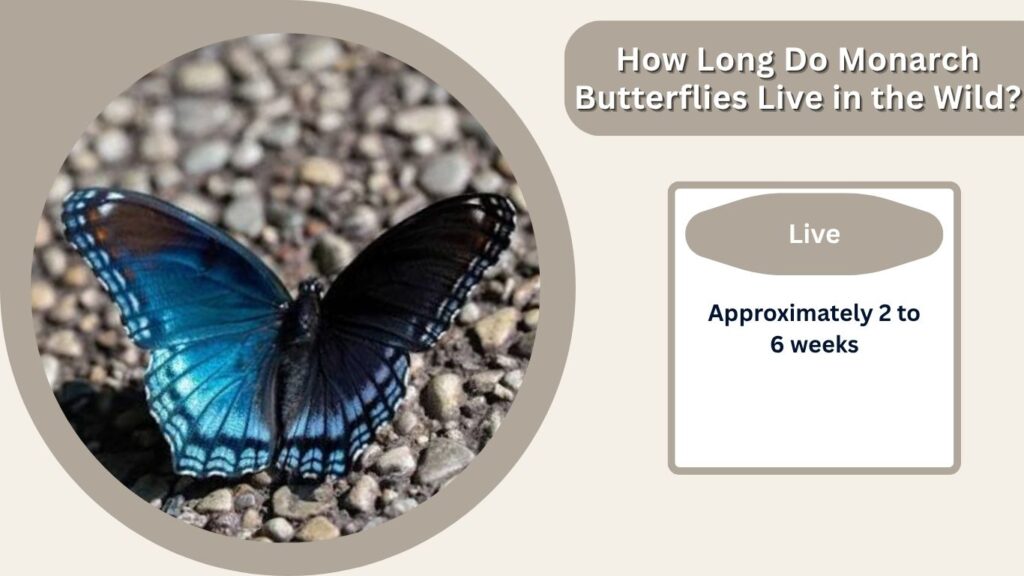
In the wild, most summer monarch adults live approximately 2 to 6 weeks. Their survival is influenced by predators, storms, temperature extremes, diseases, nectar availability, and habitat conditions. Migratory butterflies may survive many months if they successfully complete migration and overwintering.
Predators
Monarch butterflies contain defensive chemicals acquired when their caterpillars eat milkweed. Their bright orange-and-black coloration warns many predators that they may taste unpleasant.
This protection is not perfect. Some birds, spiders, insects, and other animals can still prey on monarchs.
Weather
Weather can strongly influence monarch survival. Heavy rain and powerful winds can make flying and feeding difficult, while drought can reduce the number of available nectar-producing flowers.
Severe freezing temperatures can be especially dangerous to large groups of overwintering monarchs.
Food Availability
Adult monarchs depend mainly on flower nectar for energy. They visit many kinds of flowers rather than relying entirely on milkweed.
Milkweed is especially important during reproduction because female monarchs lay their eggs on it, and monarch caterpillars use it as their primary food source.
Areas containing both milkweed and abundant nectar plants therefore provide important resources throughout the monarch life cycle.
How Long Do Monarch Butterflies Live in Captivity?
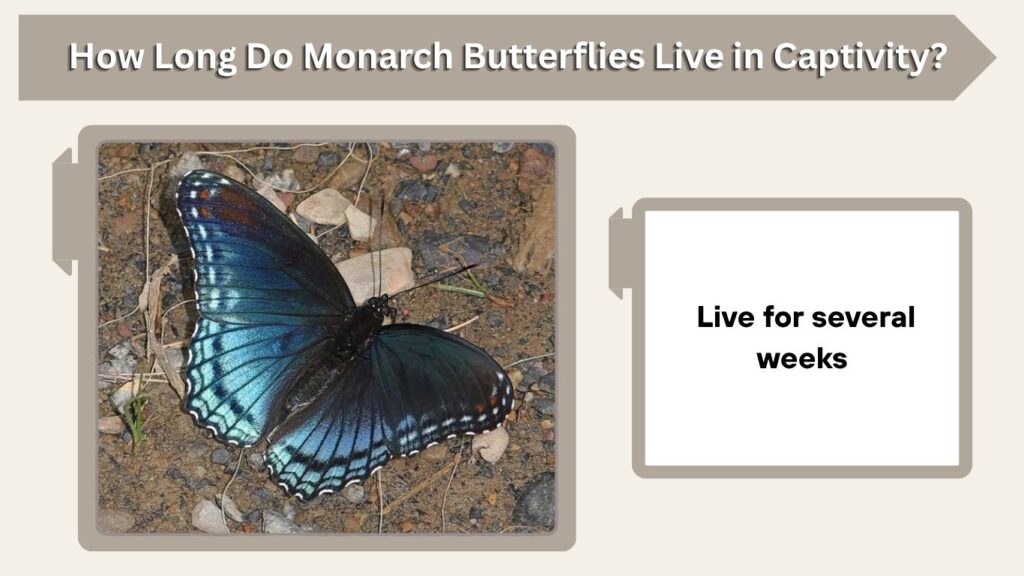
Captive monarch butterflies commonly live for several weeks, although their lifespan depends heavily on temperature, feeding, season, genetics, and the generation being raised. Simply keeping a butterfly indoors does not guarantee that it will live longer than a healthy monarch in nature.
Food and Nutrition
Adult monarchs need consistent access to carbohydrates. Nectar-producing flowers are their natural food source, while appropriately prepared nectar substitutes may sometimes be used when monarchs are being temporarily cared for.
Without sufficient food, a butterfly’s energy reserves quickly decline.
Temperature
Temperature affects monarch metabolism and activity. Warm conditions generally increase activity and energy use, while cooler suitable temperatures reduce activity.
Excessive heat, extreme cold, and large temperature fluctuations can all negatively affect survival.
Captivity Does Not Stop Aging
Protecting monarchs from predators does not stop their natural biological aging. Summer-generation monarchs are naturally programmed for relatively short adult lives.
Therefore, even under protected conditions, many will still live only a few weeks.
Monarch Butterfly Life Cycle and Total Lifespan
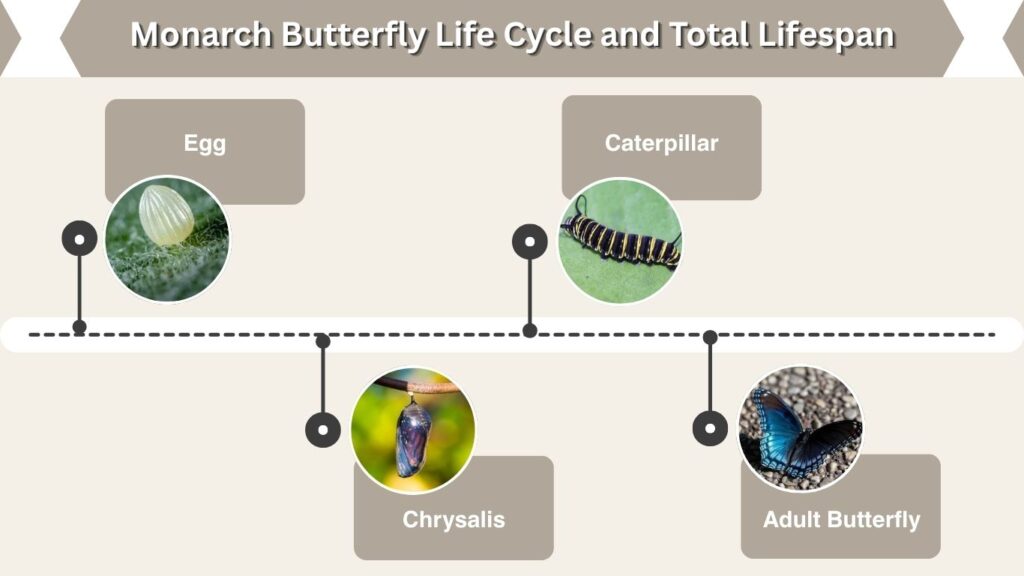
The monarch’s adult stage represents only part of its complete life. Before becoming a butterfly, every monarch passes through egg, larval, and pupal stages. Development from egg to adult typically requires around a month, although temperature can influence the exact timing.
Egg Stage
A female monarch lays individual eggs, usually on the underside or surface of milkweed leaves.
The egg typically hatches after approximately 3–5 days. A tiny caterpillar then emerges and begins eating milkweed.
Caterpillar Stage
The monarch caterpillar, or larva, generally spends around 10–14 days feeding and growing.
During this period it passes through five developmental stages called instars. Its body size increases dramatically before it eventually stops feeding and prepares to pupate.
Chrysalis Stage
The caterpillar forms a green chrysalis in which its body transforms into an adult butterfly.
This pupal stage generally lasts around 8–15 days, depending largely on temperature.
Shortly before emergence, the chrysalis becomes darker and the orange-and-black wing pattern may become visible through its outer covering.
Adult Stage
Once the adult emerges, its wings expand and harden before it begins flying and feeding.
Summer adults usually have only another 2–6 weeks to live. Migratory adults, however, can survive through autumn and winter and into the following spring.
How Long Do Monarch Butterflies Live After Hatching?
If “hatching” refers to the caterpillar emerging from its egg, a typical non-migratory monarch may live another roughly 4 to 8 weeks or more, including its caterpillar, chrysalis, and adult stages. Seasonal conditions can significantly affect this estimate.
The caterpillar spends around two weeks growing, followed by approximately one to two weeks inside the chrysalis. The resulting summer adult may then live another two to six weeks.
A monarch that develops into the migratory generation can survive much longer. Including immature development, its total lifespan can approach nine months or more under favorable conditions.
Do Male and Female Monarch Butterflies Live the Same Length?
Male and female monarch butterflies generally have similar potential lifespans, and there is no simple rule stating that one sex always lives substantially longer than the other. Individual survival depends more heavily on season, environmental conditions, predation, disease, and physical condition.
Male monarchs spend considerable energy searching for mates and defending or exploring areas where females may occur.
Females devote substantial energy to producing eggs and locating milkweed plants. A female may lay hundreds of eggs during her lifetime, although relatively few offspring eventually survive to become adults.
For both sexes, belonging to the summer or migratory generation has a much greater influence on lifespan than sex alone.
How Long Do Monarch Butterflies Live in Florida, Australia, and New Zealand?
Monarch lifespan varies more with season and reproductive condition than simply with geographic location. In warmer regions where monarchs may remain active for longer portions of the year, migration and winter behavior can differ from populations in colder climates.
Monarch Butterflies in Florida
Florida’s warm climate supports monarch activity during much of the year, and some monarch populations may remain in the region rather than participating in the long-distance migration associated with more northern populations.
Individual non-migratory adults generally still survive for weeks rather than many months.
Monarch Butterflies in Australia
Monarch butterflies also occur in Australia, where they are sometimes called wanderer butterflies. Their breeding and movement patterns are influenced by local temperature, rainfall, milkweed availability, and seasonal conditions.
Adult lifespan therefore varies according to the environmental conditions experienced by each generation.
Monarch Butterflies in New Zealand
Monarchs are well established in New Zealand and are commonly seen around gardens containing milkweed relatives used by their caterpillars.
Some individuals may form seasonal overwintering groups. As elsewhere, cooler conditions and delayed reproductive activity can allow certain butterflies to survive considerably longer than actively reproducing summer adults.
What Factors Affect How Long a Monarch Butterfly Lives?
Many monarchs die before reaching their biological maximum lifespan. Environmental conditions and individual health can significantly change how long a butterfly survives.
Important factors include:
- Availability of nectar-rich flowers
- Access to suitable milkweed for reproduction
- Temperature and seasonal weather
- Predators
- Parasites and diseases
- Pesticide exposure
- Migration difficulty
- Habitat quality
- Physical injuries
- Availability of safe overwintering habitat
A monarch with abundant food and favorable weather may survive much longer than one experiencing drought, storms, disease, or habitat loss.
FAQs
How long do adult monarch butterflies live?
Most adult monarch butterflies produced during spring and summer live for approximately 2 to 6 weeks. The migratory generation can survive for around 8 to 9 months.
How long do migrating monarch butterflies live?
Migrating monarchs can live for approximately 8–9 months because they delay reproduction and conserve energy through migration and overwintering.
Do monarch butterflies live for only one day?
No. Monarch butterflies live much longer than one day. Even ordinary summer adults normally survive for several weeks when conditions are suitable.
Can monarch butterflies live for a year?
It would be unusual for a monarch to survive an entire year. The longest-lived migratory generation typically survives around eight or nine months, although lifespan varies among individuals.
Why do some monarch butterflies live longer than others?
Season is the biggest reason. Summer monarchs reproduce quickly and live only a few weeks, while the fall migratory generation delays reproduction, stores additional energy, and can survive through winter for many months.