
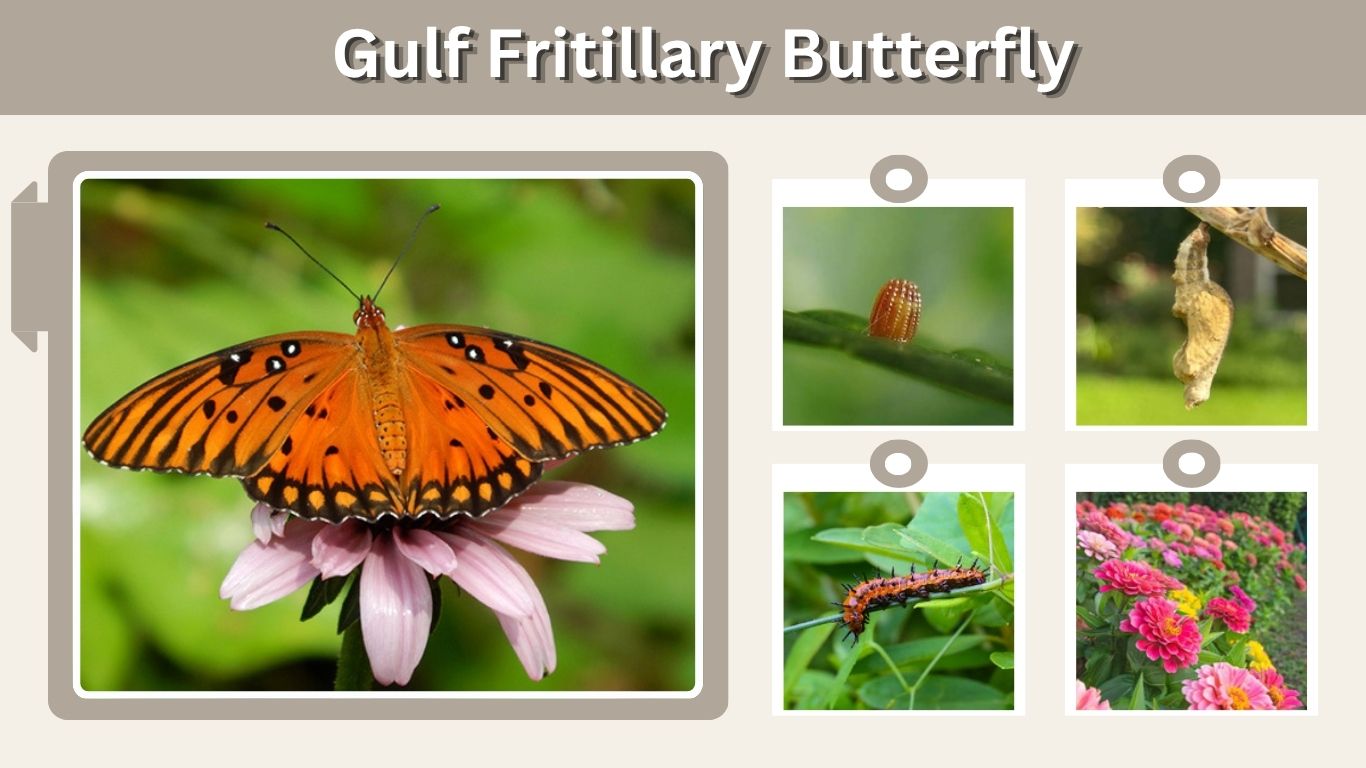
The Gulf fritillary is a bright orange butterfly commonly seen in gardens, fields, and warm coastal regions. Its scientific name is Dione vanillae, although it was formerly classified as Agraulis vanillae. The species is especially associated with passionflower vines, which provide food for its striking orange caterpillars. Despite their intimidating black spines, these caterpillars do not sting and are not considered dangerous. This guide explains Gulf fritillary identification, habitat, diet, life cycle, host plants, migration, and differences from monarch butterflies.
Gulf Fritillary Identification
Adult Gulf fritillaries are medium-sized butterflies with long, narrow wings. Their bright upper wings make them noticeable in flight, while the reflective silver markings underneath provide excellent identification clues. Although commonly called a fritillary, this butterfly is more closely related to longwing butterflies than to the true fritillaries found in other groups.
Key Identification Features
- Scientific name: Dione vanillae
- Former scientific name: Agraulis vanillae
- Family: Nymphalidae
- Wingspan: Approximately 2.5 to 3.8 inches
- Upper wings: Bright orange with black spots and borders
- Underwings: Brownish-orange with large, reflective silver spots
- Body: Slender and brownish-orange
- Flight: Fast, direct, and sometimes gliding
- Common name variation: Gulf Coast fritillary
Male vs Female Gulf Fritillary
Male and female Gulf fritillaries look similar, but females are usually slightly larger and darker. They often have heavier black markings across the upper wings. Males tend to display a brighter orange color with somewhat narrower black borders.
Behavior can also provide clues. Males frequently patrol open spaces while searching for females, whereas females spend more time near passion vines, inspecting leaves and stems before laying their eggs.
Gulf Fritillary Habitat, Range, and Migration
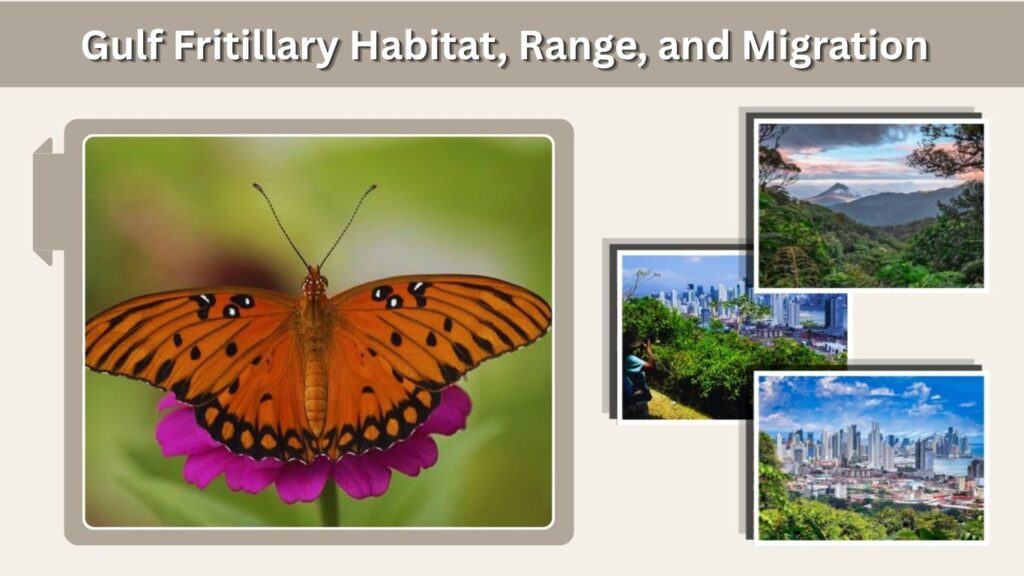
Gulf fritillaries thrive in warm, sunny habitats where passion vines and flowering plants are available. They are especially common in gardens but also inhabit roadsides, woodland edges, open fields, parks, and disturbed areas. Their ability to use cultivated passionflowers allows them to live successfully near towns and residential properties.
Where Do Gulf Fritillaries Live?
Their native range extends from parts of the southern United States through Mexico, Central America, and South America. They are especially familiar in Florida, Texas, and other Gulf Coast states.
Gulf fritillaries also occur in Arizona and California. Populations have been introduced to Hawaii, where passion vines provide suitable host plants. During warmer months, individuals may travel north beyond their permanent breeding range.
Do Gulf Fritillary Butterflies Migrate?
Gulf fritillaries make seasonal movements, although their migration is not as famous or organized as monarch migration. Butterflies may move northward during spring and summer, producing temporary populations in cooler regions.
As temperatures fall, many individuals travel south or disappear from northern locations. They generally cannot survive prolonged freezing conditions, although chrysalises may overwinter in places with relatively mild winters.
Gulf Fritillary Host Plants and Food
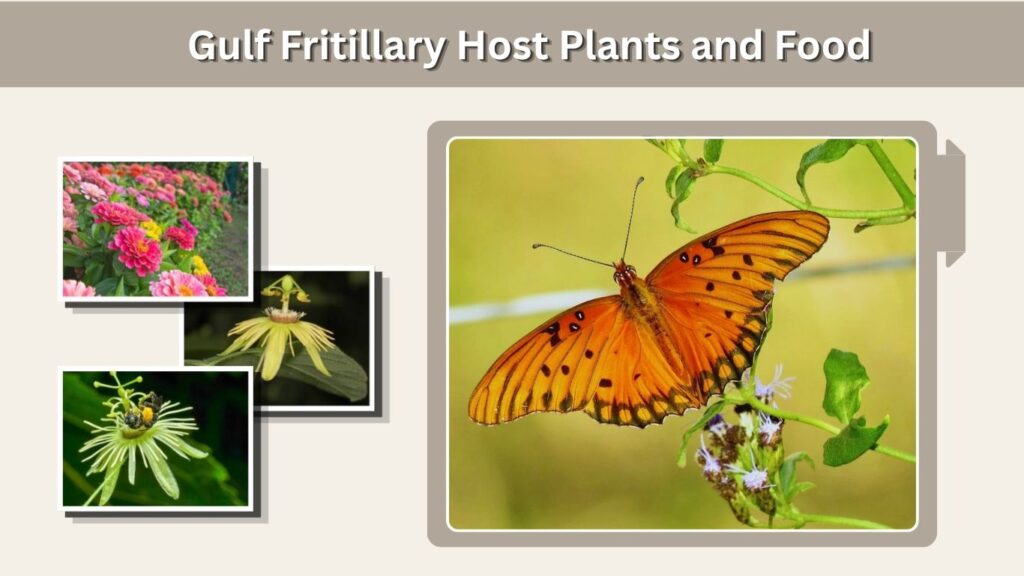
The survival of this butterfly depends heavily on passion vines. Adults can drink nectar from many flowers, but females require suitable passionflower plants for egg laying. Gardens containing both passion vines and nectar-rich flowers can support the butterfly throughout its development.
What Do Gulf Fritillary Caterpillars Eat?
Gulf fritillary caterpillars feed almost exclusively on plants in the passionflower family. Common host plants include:
- Purple passionflower
- Corkystem passionflower
- Yellow passionflower
- Maypop
- Blue passionflower
- Passion fruit vines
- Ornamental passion vines
The caterpillars chew holes in the leaves and may also consume young stems. Large groups can remove much of a plant’s foliage in a short period.
Will Caterpillars Kill a Passion Vine?
Established passion vines usually recover from caterpillar feeding because they grow vigorously. Young, potted, or unhealthy vines can be severely defoliated, however. A small plant may die if too many caterpillars consume its leaves repeatedly.
Gardeners can protect young plants with mesh or move some caterpillars to a larger vine. Avoid broad-spectrum insecticides. Even organic products such as Bt can kill Gulf fritillary larvae and other butterfly caterpillars.
What Do Adult Gulf Fritillaries Eat?
Adults drink nectar through a long, coiled feeding tube called a proboscis. Popular nectar plants include:
- Lantana
- Zinnia
- Verbena
- Pentas
- Coneflower
- Buttonbush
- Spanish needle
- Salvia
- Milkweed
- Thistle
They may also obtain minerals and moisture from damp soil, mud, or animal droppings.
Gulf Fritillary Life Cycle
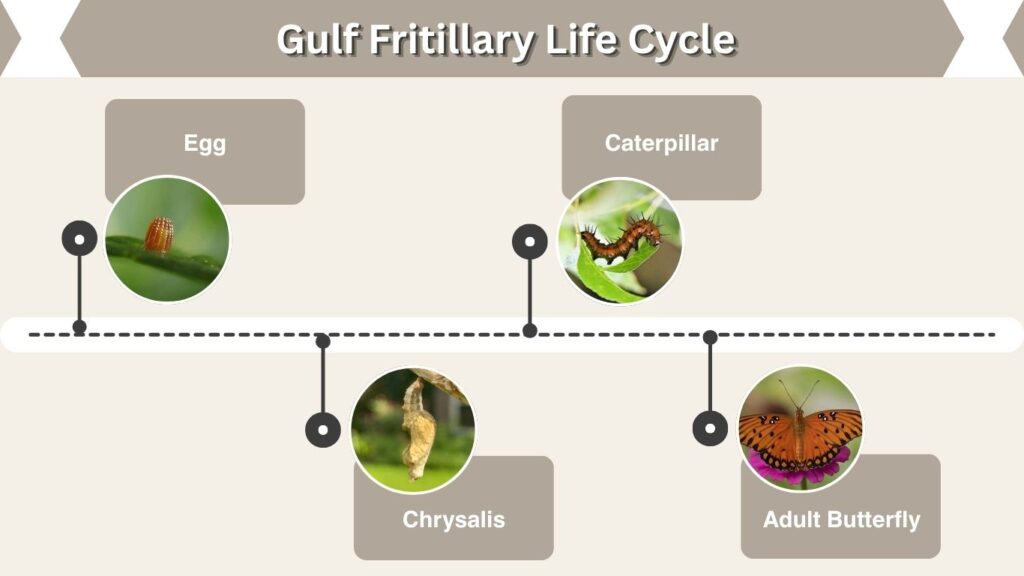
The Gulf fritillary undergoes complete metamorphosis, developing through egg, larval, pupal, and adult stages. Warm temperatures can accelerate this process, allowing several generations to appear in one year. Depending on weather and food availability, the complete journey from egg to adult commonly takes about four to six weeks.
Eggs
A female lays small yellow eggs individually on passionflower leaves, stems, and curling tendrils. She may occasionally place them on nearby objects. Individual placement helps reduce competition among newly hatched caterpillars.
The eggs typically hatch within several days. The tiny larvae may consume their eggshells before beginning to feed on the host plant.
Gulf Fritillary Caterpillar Stages
The caterpillar passes through several growth stages called instars. Its appearance changes as it matures:
- Newly hatched larvae are small and relatively dark.
- Young caterpillars begin developing an orange color.
- Black spots and soft, branched spines become more noticeable.
- Growing larvae consume increasing amounts of passion vine.
- Mature caterpillars become bright orange with prominent black spines.
After reaching full size, the caterpillar leaves its feeding location and searches for a protected place to pupate.
Chrysalis
The Gulf fritillary forms a chrysalis rather than a silk cocoon. It hangs upside down from a silk pad attached to a stem, wall, fence, or other surface. Its mottled brown or gray appearance resembles a curled dead leaf.
The chrysalis stage often lasts approximately 8 to 14 days during warm weather. Cooler temperatures can extend this period. Movement of a chrysalis is not necessarily a sign of trouble; a living pupa may twitch when disturbed.
Adult Butterfly
Shortly before emergence, the chrysalis darkens and the developing wing pattern may become visible. The adult breaks free, hangs from the empty shell, and pumps fluid into its folded wings.
After the wings expand and harden, the butterfly can fly, feed, mate, and begin another generation. Adults generally live for several weeks, although temperature, predators, and food availability influence their lifespan.
Are Gulf Fritillary Caterpillars Dangerous?
The bright color and black spines of a Gulf fritillary caterpillar can look threatening. However, the spines are soft defensive structures rather than venom-delivering stingers. The caterpillar cannot sting, and ordinary contact is not considered dangerous to humans or household pets.
Are They Poisonous or Venomous?
Gulf fritillary caterpillars are not venomous. They obtain defensive chemicals from passion vines, which can make them unpleasant or potentially harmful for certain predators to eat. Their orange-and-black appearance serves as a warning signal.
People should still avoid eating caterpillars or allowing pets to consume them. Passion vines themselves contain compounds that can cause illness if large quantities are swallowed.
Caterpillar Predators
Despite their chemical defenses, Gulf fritillary caterpillars and butterflies face numerous enemies, including:
- Spiders
- Assassin bugs
- Wasps
- Ants
- Birds
- Lizards
- Parasitic flies
- Parasitoid wasps
Eggs and small caterpillars are especially vulnerable. Only a portion of each generation survives to adulthood.
Gulf Fritillary vs Monarch Butterfly
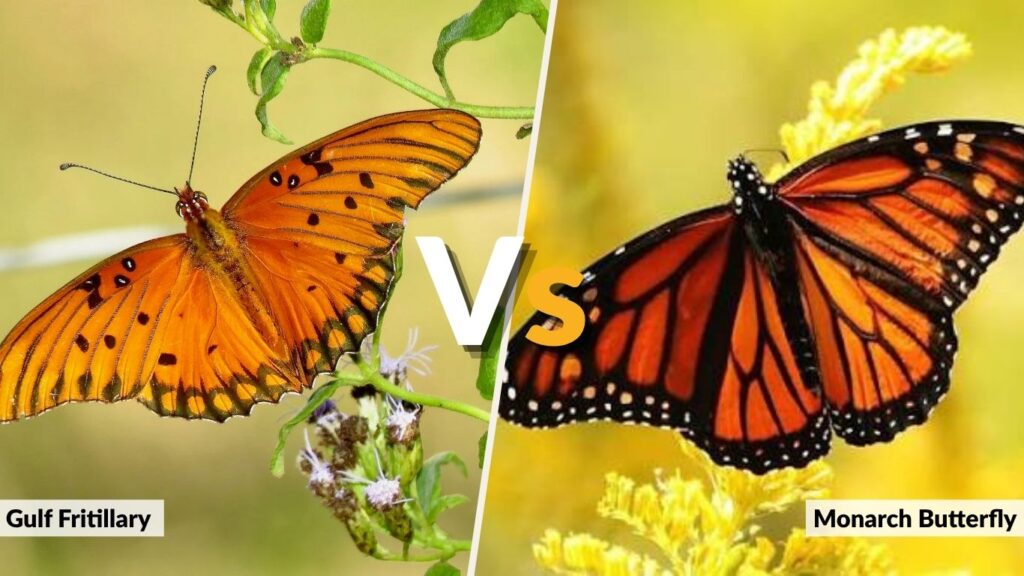
Both butterflies have orange wings and black markings, so they may appear similar at first. Their body shapes, wing patterns, caterpillars, and host plants make them easy to separate with closer observation.
Main Differences
| Feature | Gulf Fritillary | Monarch |
| Wing shape | Long and narrow | Broad and rounded |
| Upper-wing pattern | Orange with scattered black spots | Orange divided by thick black veins |
| Underwing | Large silver spots | Pale orange with black veins |
| Caterpillar | Orange with black spines | Yellow, black, and white bands |
| Host plant | Passion vine | Milkweed |
| Migration | Seasonal regional movement | Long-distance mass migration |
| Flight | Fast and energetic | Slower, floating, and gliding |
FAQs
Do Gulf fritillary caterpillars sting?
No. Their black spines look sharp, but they do not function as stingers and do not inject venom.
Are Gulf fritillary butterflies endangered?
Gulf fritillaries are not generally considered endangered. They remain widespread in warm regions, especially where passion vines grow.
How long does a Gulf fritillary stay in its chrysalis?
The chrysalis stage commonly lasts around 8 to 14 days in warm conditions. Development may take longer during cool weather.
Is a Gulf fritillary chrysalis supposed to move?
Yes. A healthy chrysalis may twitch when touched or disturbed. Continuous leaking, severe discoloration, or a strong odor may indicate that it has died.
What is the best plant for Gulf fritillary caterpillars?
Native passionflower species are usually the best options. Purple passionflower, corkystem passionflower, and yellow passionflower can provide dependable food for developing caterpillars.