
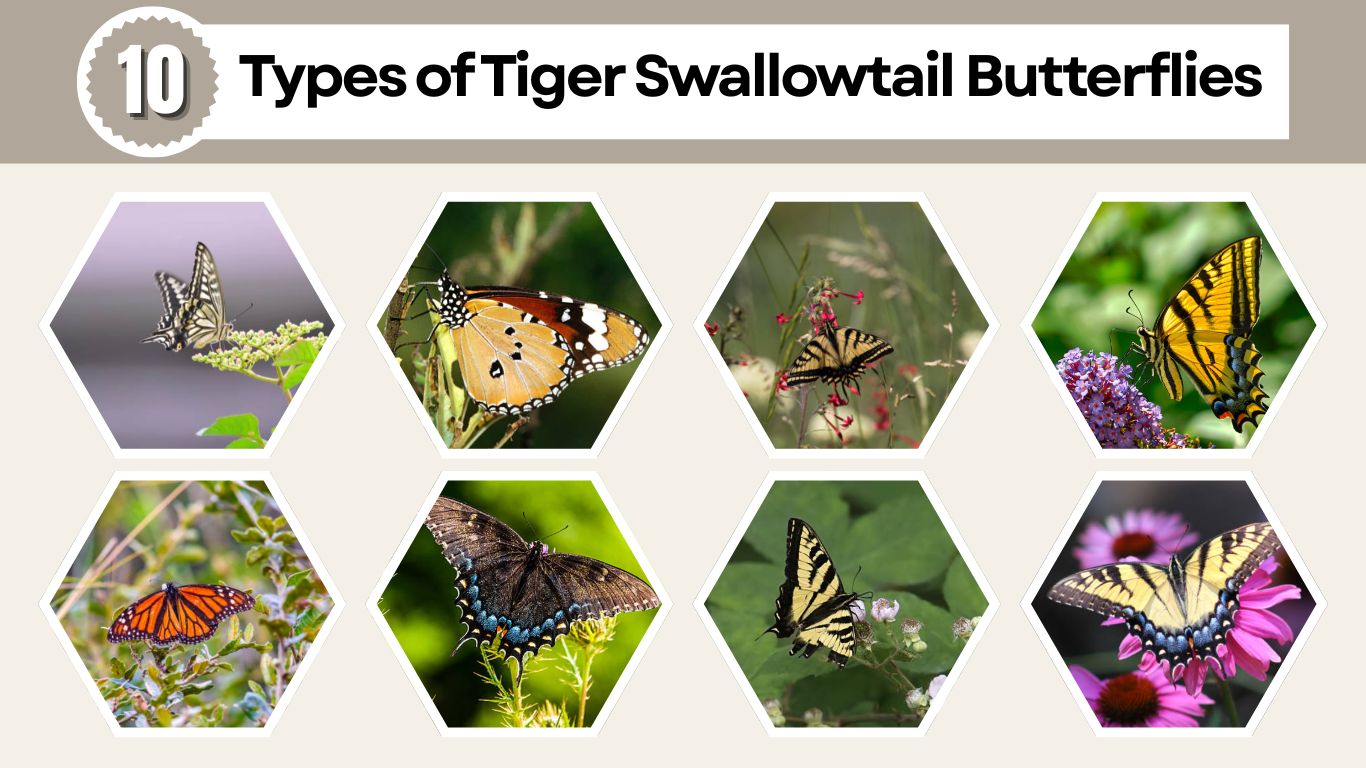
Tiger swallowtail butterflies are among the most striking and easily recognizable butterflies in the world. Known for their bright yellow wings and bold black stripes, these butterflies are admired for their beauty and graceful flight. They are commonly found in forests, gardens, and open landscapes, where they play an important role in pollination. Different types of tiger swallowtails vary in size, color intensity, and habitat preferences. Learning about these species can help you identify them more easily and appreciate their role in maintaining a healthy ecosystem.
1. Eastern Tiger Swallowtail
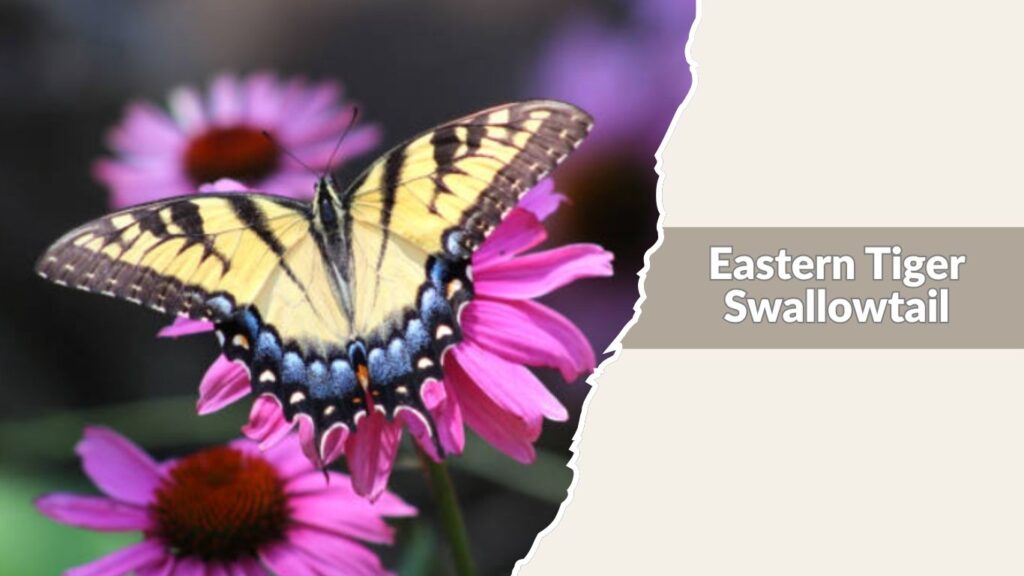
The Eastern Tiger Swallowtail is one of the most recognizable and widespread butterfly species in North America. Known for its striking yellow wings with bold black stripes, this butterfly is often seen fluttering through gardens, forests, and open fields. It is admired for its graceful flight and seasonal presence.
Identification
- Bright yellow wings with black tiger-like stripes
- Wingspan typically ranges from 9–14 cm
- Black border with small blue and orange spots on hindwings
- Females may appear darker or even black in some forms
- Long tails extending from the hindwings
- Smooth, delicate wing texture
Habitat
Eastern Tiger Swallowtails are commonly found in deciduous forests, river valleys, gardens, and parks. They prefer areas with abundant flowering plants and access to host trees such as tulip trees, wild cherry, and birch. They are especially active in warm, sunny environments.
Behavior
This species is known for its strong and gliding flight. Males often gather in groups near puddles or damp soil to absorb minerals, a behavior called puddling. They are active during the day and are frequently seen visiting flowers for nectar.
Diet and Lifespan
Adult Eastern Tiger Swallowtails feed on nectar from a variety of flowering plants. Caterpillars feed on leaves of host trees. The average lifespan of an adult butterfly is around 2 to 4 weeks, depending on environmental conditions and predation.
2. Western Tiger Swallowtail
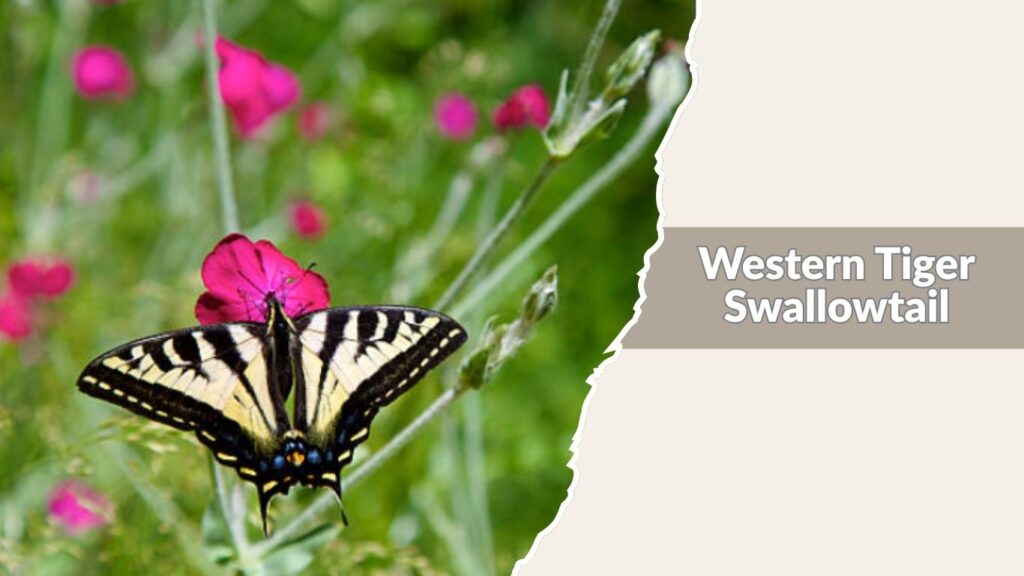
The Western Tiger Swallowtail is a large and vibrant butterfly commonly found in the western regions of North America. It is known for its bright coloration and smooth, gliding flight. This species is often seen near water sources, gardens, and open landscapes during warm seasons.
Identification
- Yellow wings with bold black tiger-like stripes
- Wingspan ranges from 10–15 cm
- Distinct black border along the edges of the wings
- Small blue and orange spots on the hindwings
- Long, narrow tails extending from hindwings
- Slightly paler yellow compared to eastern species
Habitat
Western Tiger Swallowtails prefer open areas such as riverbanks, woodlands, canyons, and urban parks. They are frequently found near streams and moist environments where host plants like willow, cottonwood, and alder grow abundantly.
Behavior
This species is known for its graceful and steady flight. Males often engage in puddling behavior, gathering on wet soil to absorb minerals. They are active during daylight hours and can often be seen gliding between flowers or resting briefly on vegetation.
Diet and Lifespan
Adult Western Tiger Swallowtails feed on nectar from a wide range of flowering plants. Caterpillars feed on leaves of host trees such as willow and cottonwood. The adult lifespan typically lasts around 2 to 3 weeks, depending on environmental conditions and seasonal factors.
3. Canadian Tiger Swallowtail
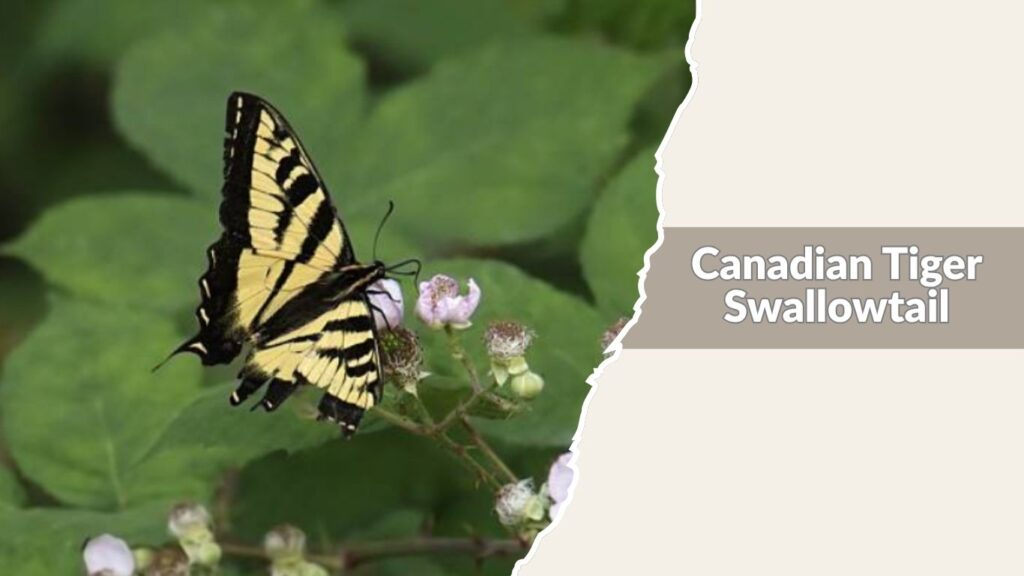
The Canadian Tiger Swallowtail is a cold-adapted butterfly species commonly found in northern regions of North America. It closely resembles other tiger swallowtails but is generally associated with cooler climates and shorter summers. This species is often seen in forests and near woodland edges during its active season.
Identification
- Yellow wings with bold black tiger-like stripes
- Wingspan ranges from 8–11 cm
- Black border along wing edges with subtle blue spots
- Hindwings have short, narrow tails
- Slightly smaller than other tiger swallowtails
- Paler yellow coloration in some individuals
Habitat
Canadian Tiger Swallowtails are typically found in boreal forests, woodland clearings, and areas near streams or wetlands. They prefer cooler environments and are often associated with host trees such as birch, aspen, and willow.
Behavior
This species has a steady and somewhat slower flight compared to larger swallowtails. It is active during the day and often seen flying along forest edges or visiting flowers. Males may gather in moist areas for puddling, especially during warmer days.
Diet and Lifespan
Adults feed on nectar from wildflowers, while caterpillars consume leaves of host trees like birch and willow. Due to the shorter warm season in northern regions, they usually produce only one generation per year. Adult butterflies typically live for about 2 to 3 weeks.
4. Appalachian Tiger Swallowtail
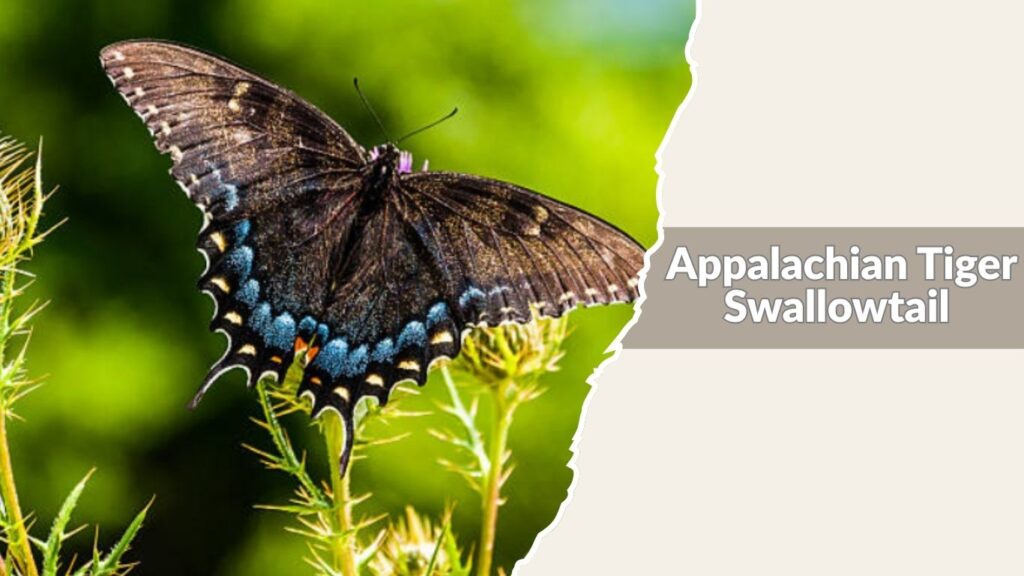
The Appalachian Tiger Swallowtail is a relatively recently recognized species found in the Appalachian Mountains. It was once considered part of other tiger swallowtail groups but is now identified as a distinct species. It thrives in cooler, higher elevation areas and is known for its slightly darker appearance.
Identification
- Yellow wings with bold black tiger-like stripes
- Wingspan ranges from 9–12 cm
- Darker overall coloration compared to similar species
- Black borders with faint blue and orange spots
- Long tails on hindwings
- Subtle shading differences on forewings
Habitat
Appalachian Tiger Swallowtails are mainly found in mountainous regions, especially in deciduous forests at higher elevations. They prefer cool, shaded environments with access to host plants such as ash, cherry, and tulip trees.
Behavior
This species has a smooth and gliding flight, often seen moving along forest edges and mountain clearings. Males may gather at moist ground for puddling, while females are more often seen flying near host plants for egg-laying.
Diet and Lifespan
Adults feed on nectar from a variety of wildflowers found in mountain habitats. Caterpillars rely on leaves from host trees like ash and cherry. Due to cooler climates, they typically produce one or two generations per year, with adults living around 2 to 3 weeks.
5. Mexican Tiger Swallowtail
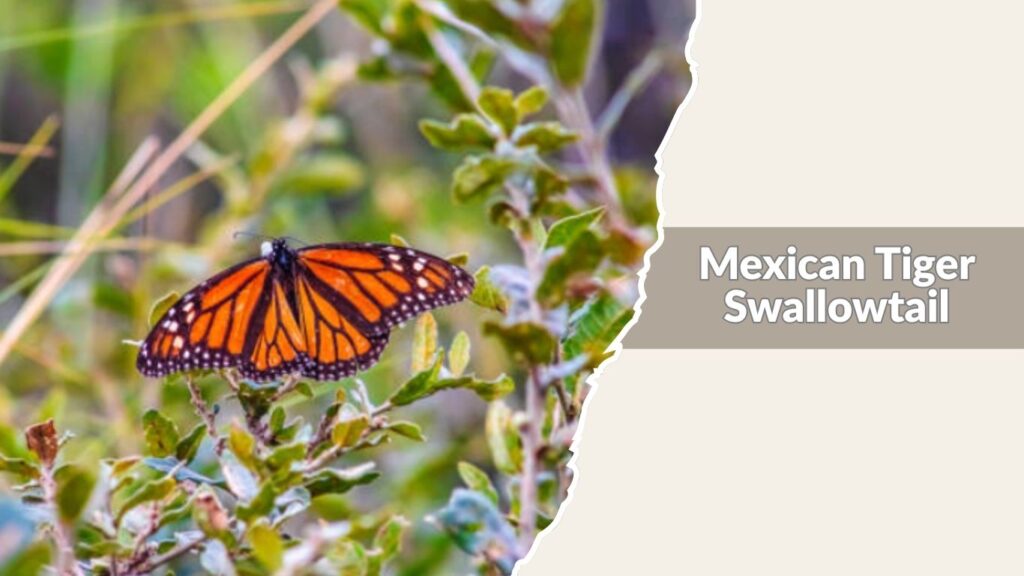
The Mexican Tiger Swallowtail is a striking butterfly species found in warmer regions, particularly in Mexico and parts of Central America. It is known for its bright coloration and active presence in tropical and subtropical environments. This species is often seen fluttering around gardens and forest edges.
Identification
- Bright yellow wings with bold black tiger-like stripes
- Wingspan ranges from 10–14 cm
- Prominent black border along the wing edges
- Blue and orange spots on hindwings
- Long, well-defined tails on hindwings
- Slightly deeper yellow tone compared to northern species
Habitat
Mexican Tiger Swallowtails are commonly found in tropical forests, woodland edges, gardens, and open countryside. They prefer warm climates and areas rich in flowering plants and host trees, including citrus and other native species.
Behavior
This species is active during the day and is known for its fast, fluttering flight. It frequently visits flowers for nectar and may be seen basking in sunlight. Males sometimes gather in moist areas to absorb minerals through puddling behavior.
Diet and Lifespan
Adult butterflies feed on nectar from a wide variety of tropical flowers. Caterpillars feed on leaves of host plants such as citrus and related species. The adult lifespan is usually around 2 to 3 weeks, depending on environmental conditions.
6. Pale Swallowtail
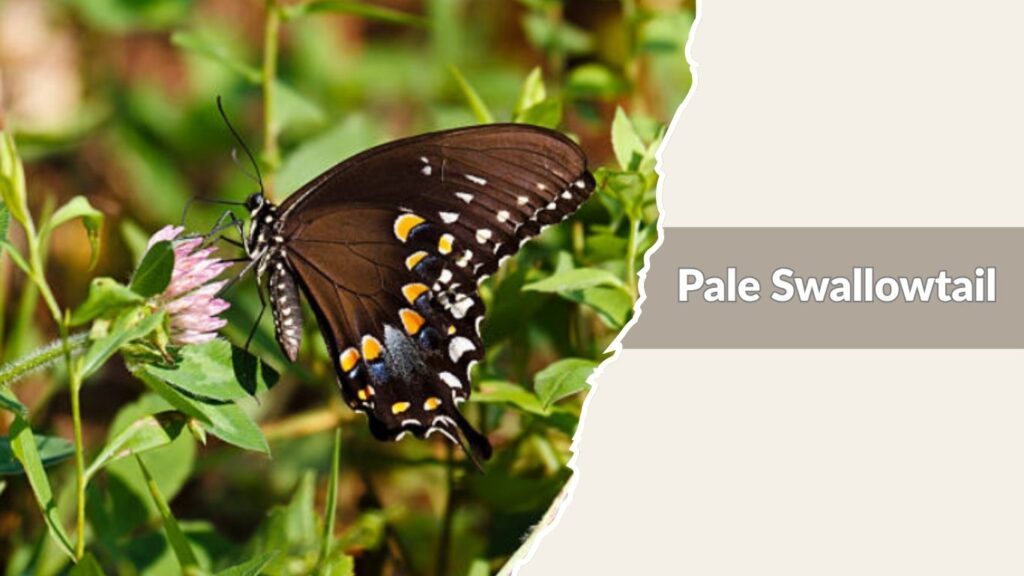
The Pale Swallowtail is a light-colored butterfly commonly found in western North America. It is closely related to tiger swallowtails but stands out due to its softer, paler yellow appearance. This species is often seen in open landscapes and near water sources during warm months.
Identification
- Pale yellow wings with subtle black striping
- Wingspan ranges from 9–12 cm
- Narrow black borders along the wing edges
- Reduced blue and orange markings on hindwings
- Long, delicate tails on hindwings
- Overall lighter and softer coloration
Habitat
Pale Swallowtails prefer open woodlands, grasslands, river valleys, and suburban areas. They are often found near streams or moist environments where host plants such as willow, poplar, and cottonwood are available.
Behavior
This species has a gentle and gliding flight, often seen moving slowly between flowers. Males may gather in damp areas for puddling, while females are more focused on locating suitable host plants for laying eggs.
Diet and Lifespan
Adults feed on nectar from a variety of flowering plants. Caterpillars rely on host trees like willow and poplar for food. The adult lifespan typically lasts around 2 to 3 weeks, depending on weather conditions and environmental factors.
7. Two-tailed Swallowtail
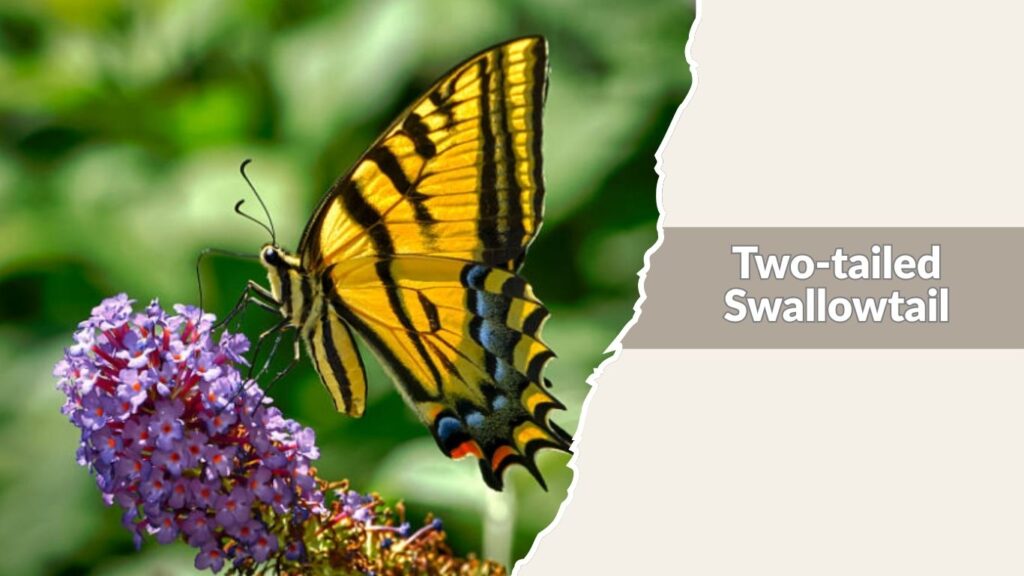
The Two-tailed Swallowtail is a large and impressive butterfly known for its distinctive double tails on each hindwing. It is commonly found in western North America and is often seen in open areas, gardens, and near water sources. Its bold appearance and size make it easy to recognize.
Identification
- Bright yellow wings with bold black tiger-like stripes
- Wingspan ranges from 10–16 cm
- Two tails on each hindwing (four total)
- Prominent blue and orange spots near the hindwing edges
- Thick black borders along the wings
- Strong and slightly broader wing shape
Habitat
Two-tailed Swallowtails are typically found in open woodlands, canyons, parks, and suburban areas. They prefer warm environments with access to host plants such as ash and citrus trees, as well as flowering plants for nectar.
Behavior
This species is known for its powerful and fast flight. It is often seen gliding at higher elevations or moving quickly between flowers. Males may engage in puddling behavior, gathering in damp areas to absorb essential minerals.
Diet and Lifespan
Adult butterflies feed on nectar from a wide range of flowers. Caterpillars feed on host plants like ash and citrus. The adult lifespan is generally around 2 to 4 weeks, depending on environmental conditions.
8. Three-tailed Tiger Swallowtail
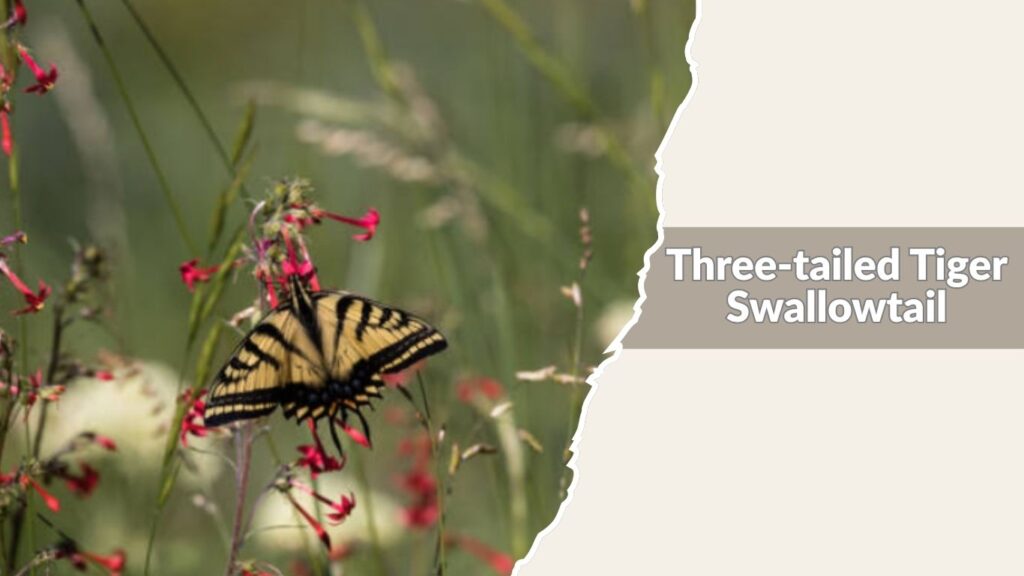
The Three-tailed Tiger Swallowtail is a rare and less commonly referenced butterfly, noted for its unique tail structure. It shares many visual traits with other tiger swallowtails but stands out due to its unusual wing features. This species is typically associated with warm regions and lightly wooded habitats.
Identification
- Yellow wings with black tiger-like stripes
- Wingspan ranges from 10–14 cm
- Three tail-like extensions on hindwings
- Black borders with faint blue and orange markings
- Slender body with a smooth wing surface
- Bright and contrasting coloration
Habitat
Three-tailed Tiger Swallowtails are usually found in open woodlands, forest edges, and warm lowland areas. They prefer environments with abundant flowering plants and suitable host trees for reproduction.
Behavior
This species displays a graceful and steady flight, often gliding between flowers. It is active during the day and may occasionally be seen basking in sunlight. Males can sometimes be observed gathering near moist soil for puddling.
Diet and Lifespan
Adults feed on nectar from various flowering plants, while caterpillars depend on host trees for development. The adult lifespan is typically around 2 to 3 weeks, influenced by environmental conditions and availability of food.
9. Asian Tiger Swallowtail
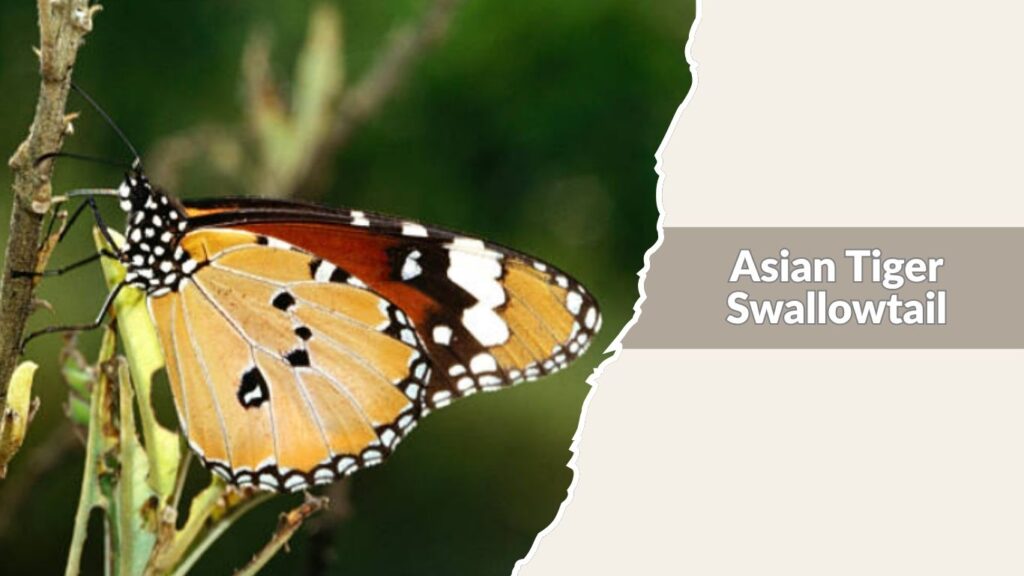
The Asian Tiger Swallowtail is a widely distributed butterfly found across parts of Asia. It is admired for its bold coloration and elegant flight. This species is commonly seen in gardens, forests, and rural landscapes, especially during warm seasons when flowers are abundant.
Identification
- Bright yellow wings with strong black tiger-like stripes
- Wingspan ranges from 9–13 cm
- Black borders with blue and orange spots on hindwings
- Long, narrow tails extending from hindwings
- Smooth wing texture with clear markings
- Slight variation in color depending on region
Habitat
Asian Tiger Swallowtails are found in a variety of environments, including woodlands, gardens, agricultural areas, and forest edges. They prefer regions with plenty of flowering plants and host trees such as citrus and related species.
Behavior
This species is active during the day and known for its graceful, gliding flight. It frequently visits flowers for nectar and may also be seen basking in sunlight. Males often gather at damp soil or puddles to absorb minerals.
Diet and Lifespan
Adult butterflies feed on nectar from a wide range of flowers. Caterpillars rely on host plants like citrus for growth and development. The adult lifespan is generally around 2 to 3 weeks, depending on environmental conditions.
10. Japanese Tiger Swallowtail
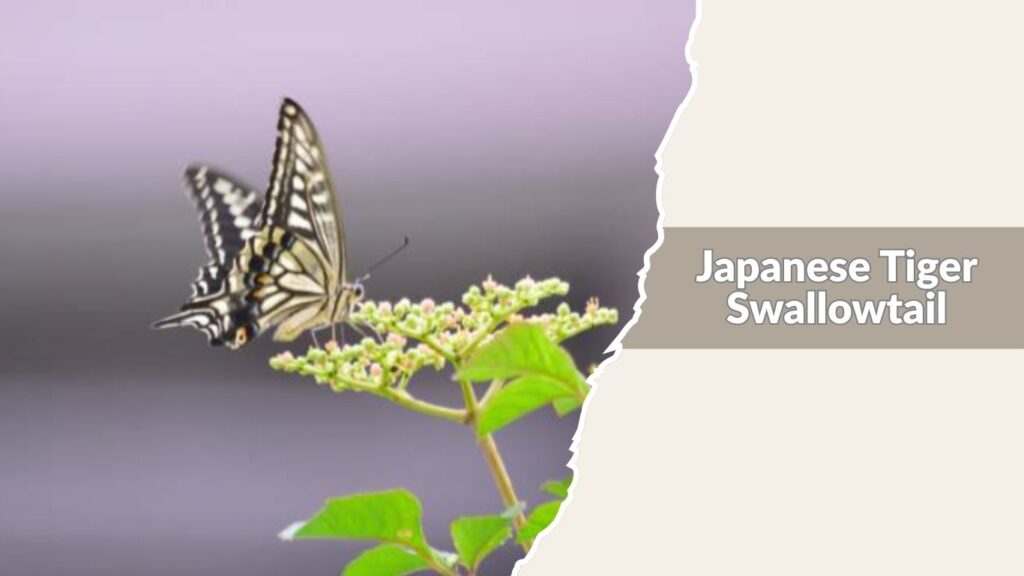
The Japanese Tiger Swallowtail is a beautiful and well-known butterfly found in Japan and nearby regions. It is admired for its bright coloration and smooth flight. This species is commonly seen in gardens, parks, and forest edges, especially during the warmer months.
Identification
- Bright yellow wings with bold black tiger-like stripes
- Wingspan ranges from 9–12 cm
- Black borders with blue and orange spots on hindwings
- Long, slender tails extending from hindwings
- Smooth wing surface with clear patterns
- Slight regional variation in color intensity
Habitat
Japanese Tiger Swallowtails are commonly found in woodlands, gardens, and suburban areas. They prefer environments with abundant flowering plants and host trees such as citrus, which support their life cycle.
Behavior
This species is active during the day and known for its graceful, floating flight. It often visits flowers for nectar and may be seen basking in sunlight. Males sometimes gather in damp areas for puddling behavior.
Diet and Lifespan
Adults feed on nectar from a variety of flowers, while caterpillars rely on citrus and related plants. The adult lifespan typically ranges from 2 to 3 weeks, depending on environmental conditions and seasonal factors.
FAQs
What makes tiger swallowtail butterflies unique?
Tiger swallowtail butterflies are known for their bright yellow wings with bold black stripes, resembling a tiger pattern. Their large size, long tail-like extensions on the hindwings, and graceful flight make them stand out among other butterfly species.
Where are tiger swallowtail butterflies commonly found?
They are commonly found in North America, Asia, and parts of Central America. These butterflies prefer habitats such as forests, gardens, parks, and areas near water where flowering plants and host trees are abundant.
What do tiger swallowtail butterflies eat?
Adult tiger swallowtails feed on nectar from a wide variety of flowers. Their caterpillars feed on leaves of host plants like willow, birch, cherry, and citrus trees, depending on the species.
How long do tiger swallowtail butterflies live?
The adult lifespan of tiger swallowtail butterflies is usually around 2 to 4 weeks. However, their full life cycle—from egg to caterpillar, pupa, and adult—can take several weeks to a few months.
Are tiger swallowtail butterflies beneficial?
Yes, they are beneficial insects. They help with pollination by transferring pollen between flowers as they feed on nectar. This supports plant reproduction and contributes to maintaining a healthy ecosystem.