
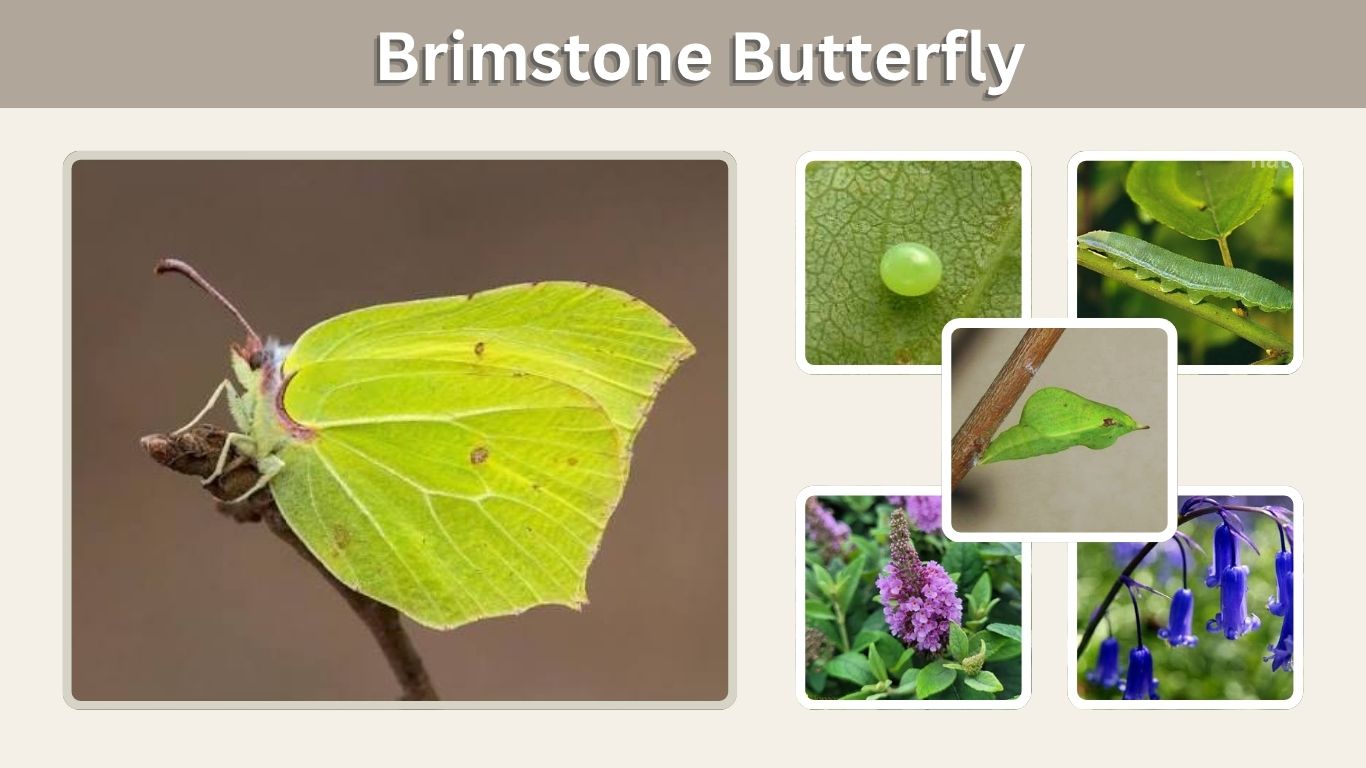
The brimstone butterfly is one of the most recognizable yellow butterflies found across much of Europe and parts of Asia. Known for its leaf-shaped wings, long lifespan, and early spring appearances, this species is often among the first butterflies seen after winter. Males are usually bright yellow, while females are much paler and may look almost white. From its caterpillar stage and preferred food plants to its unusual hibernation habits, the brimstone butterfly has several fascinating adaptations that help it survive through changing seasons.
What Is a Brimstone Butterfly?
The common brimstone butterfly is scientifically known as Gonepteryx rhamni. It belongs to the family Pieridae, which also includes many white and yellow butterflies. The species is especially well known in the United Kingdom and other parts of Europe, where adults can be seen from early spring through autumn.
What Does a Brimstone Butterfly Look Like?
Brimstone butterflies have distinctive angular wings that resemble leaves when closed. This shape gives them excellent natural camouflage when resting among vegetation.
Key identification features include:
- Leaf-shaped wings with pointed tips
- Small orange or reddish spots on each wing
- Pale greenish-yellow undersides
- Bright lemon-yellow males
- Pale cream or greenish-white females
- Slender dark antennae
- Wingspan generally around 55–65 mm
Because the butterflies usually rest with their wings closed, the underside coloration can make them difficult to notice among leaves.
Male vs. Female Brimstone Butterfly
Male and female brimstone butterflies look noticeably different, particularly in their wing coloration. This difference makes them relatively easy to distinguish when seen clearly.
Male Brimstone Butterfly
Male brimstones are famous for their vivid lemon-yellow wings. When flying in bright sunlight, they can appear almost fluorescent and are often mistaken for other yellow butterfly species.
Their bright coloration makes males especially noticeable during spring, when they actively fly in search of females.
Female Brimstone Butterfly
Female brimstones are much paler. Their wings are usually creamy white, pale greenish-yellow, or very light yellow.
At a quick glance, a female may be mistaken for a large white butterfly. However, the pointed, leaf-shaped wings and small orange spots help distinguish her from common white species.
Brimstone Butterfly Habitat and Distribution
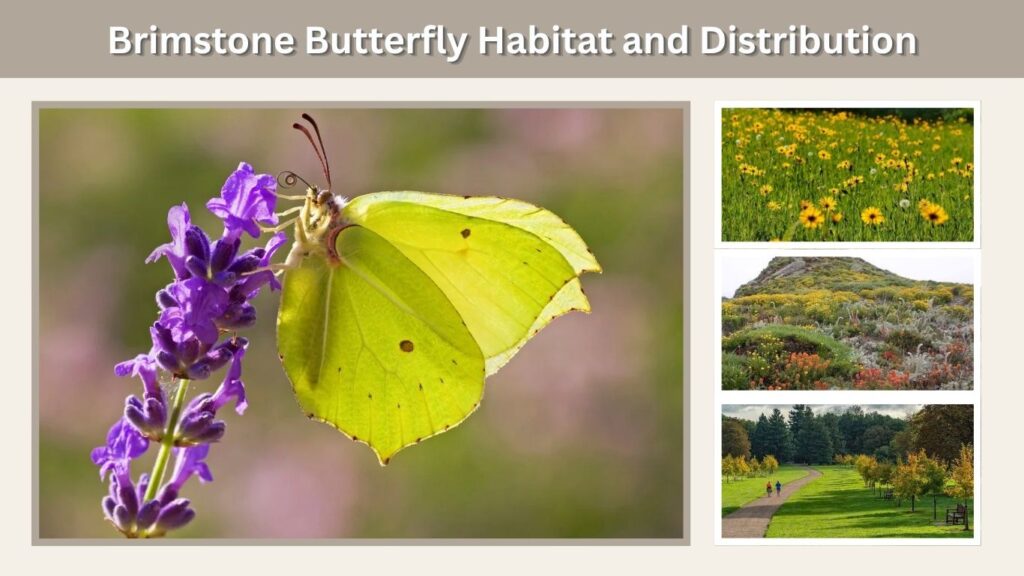
Brimstone butterflies prefer habitats where their larval food plants grow and where adults can find abundant nectar. They are commonly associated with woodland edges, hedgerows, scrubland, gardens, parks, and countryside landscapes.
Where Are Brimstone Butterflies Found?
The common brimstone occurs across much of Europe and extends into parts of North Africa and Asia.
Typical habitats include:
- Woodland clearings
- Hedgerows
- Gardens
- Meadows
- Scrubland
- Parks
- Forest edges
- Countryside lanes
In the UK, brimstones are widespread across much of England and Wales and are also found in parts of Scotland and Ireland.
They often travel considerable distances while searching for nectar or suitable places to lay eggs.
What Do Brimstone Butterflies Eat?
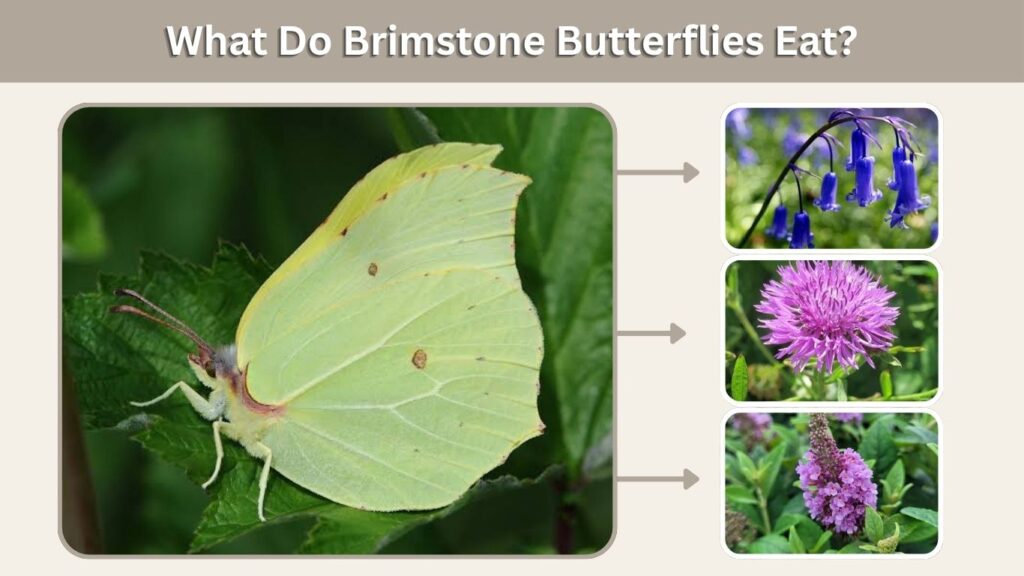
Adult brimstone butterflies mainly feed on flower nectar. Their long flight season means they visit many different plants depending on which flowers are available throughout spring, summer, and autumn.
Adult Food Sources
Adults may feed from flowers such as:
- Dandelions
- Primroses
- Thistles
- Knapweed
- Bluebells
- Buddleia
- Lavender
- Red campion
- Teasel
- Wildflowers
Early spring nectar sources are particularly important because overwintered adults emerge when relatively few flowers are blooming.
Brimstone Caterpillar Food Plants
Brimstone caterpillars have a much more specialized diet than the adults.
Their main food plants are buckthorns, particularly:
- Common buckthorn
- Alder buckthorn
Females search specifically for these plants when laying eggs because the newly hatched caterpillars depend on their leaves for food.
Brimstone Butterfly Life Cycle
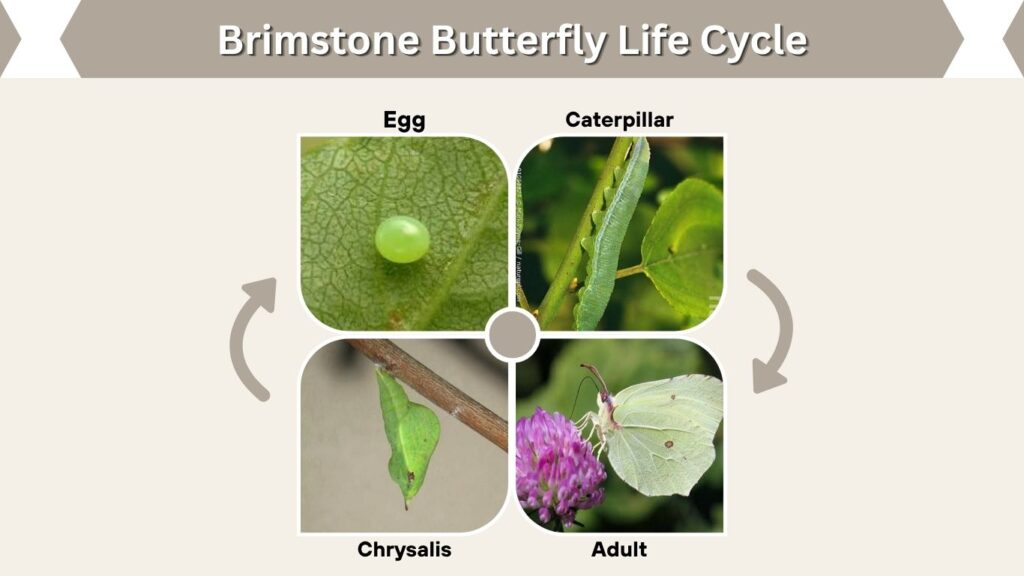
Like other butterflies, the brimstone passes through four main stages: egg, caterpillar, chrysalis, and adult. Its complete yearly cycle is unusual because the adult butterfly survives through winter rather than dying at the end of the warm season.
Eggs
Female brimstones lay their eggs individually on or near fresh buckthorn leaves. The eggs are initially pale and gradually change color as development progresses.
Once conditions are suitable, the caterpillar emerges and begins feeding on young leaves.
Caterpillar
The brimstone butterfly caterpillar is green and well camouflaged against its food plant.
Important characteristics include:
- Bright to yellowish-green body
- Fine pale markings
- Green coloration matching leaves
- Usually rests along leaf veins
- Feeds mainly on buckthorn foliage
This camouflage helps protect the caterpillar from birds and other predators.
Chrysalis
After completing its growth, the caterpillar forms a chrysalis attached to vegetation.
The chrysalis is usually green and shaped somewhat like a curled leaf, allowing it to blend into the surrounding plant material.
Inside the chrysalis, the caterpillar undergoes metamorphosis and eventually emerges as an adult butterfly.
Adult
New adults generally emerge during summer. Instead of completing their lives within a few weeks, they may feed during late summer and autumn before finding sheltered vegetation where they remain dormant through winter.
They become active again when temperatures rise.
Brimstone Butterfly Lifespan
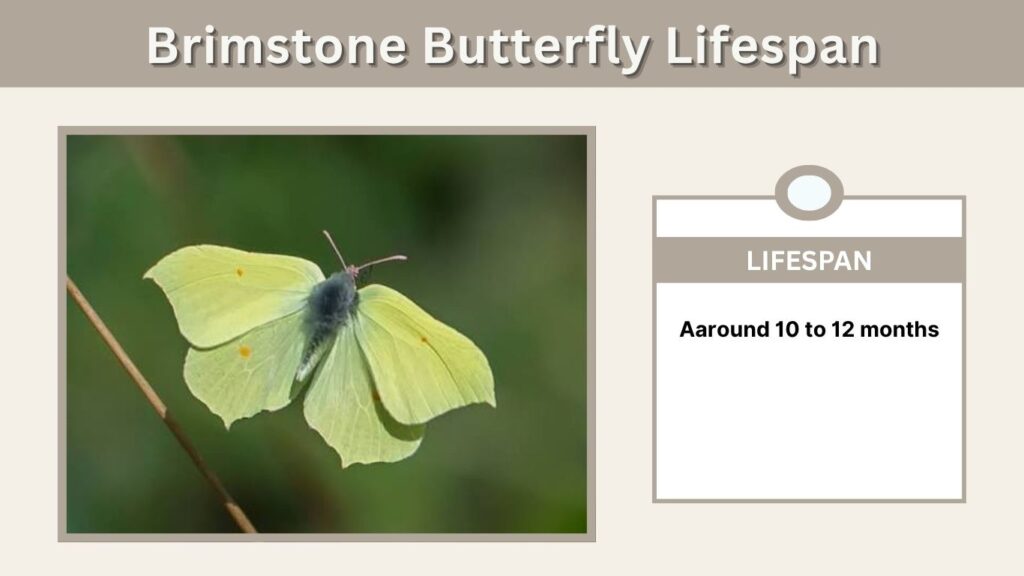
The brimstone butterfly has one of the longest adult lifespans of any butterfly commonly found in Britain.
An individual adult can potentially survive for around 10 to 12 months. Much of this unusually long life is spent inactive during winter.
Why Do Brimstone Butterflies Live So Long?
Their longevity is closely connected to hibernation.
Rather than reproducing immediately after emerging in summer and then dying, adults feed, prepare for winter, and enter a dormant state.
They reappear the following spring, mate, reproduce, and complete their life cycle before the next generation emerges.
This strategy allows brimstones to take advantage of the earliest warm days of the year.
Brimstone Butterfly Hibernation
One of the most interesting brimstone butterfly facts is that adults hibernate.
They often shelter deep within evergreen vegetation, ivy, holly, bramble, or other dense plant growth.
How Do They Survive Winter?
Brimstones can withstand surprisingly cold conditions while dormant. Their camouflage helps them remain concealed from predators while their metabolism slows dramatically.
On warmer winter or very early spring days, an individual may occasionally become active.
This explains why brimstones are sometimes seen flying in February or even earlier during unusually mild weather.
Are Brimstone Butterflies Rare?
The common brimstone is not generally considered a rare butterfly across much of its range. In suitable habitats, it can be locally common, particularly where buckthorn plants are abundant.
However, populations may vary greatly between regions.
What Affects Their Numbers?
Several factors can influence local brimstone populations:
- Availability of buckthorn
- Loss of hedgerows
- Changes in woodland management
- Availability of nectar-rich flowers
- Pesticide exposure
- Weather conditions
- Habitat fragmentation
Planting native buckthorn and nectar-producing flowers can make gardens more attractive to brimstone butterflies.
Brimstone Butterfly Camouflage
The brimstone’s closed wings provide one of its most effective defenses. Their shape and pale green underside closely resemble a leaf.
When resting among vegetation, a brimstone may remain motionless with its wings tightly closed.
This combination of shape, color, and behavior can make the butterfly extremely difficult for predators to detect.
The camouflage is particularly valuable during hibernation because the butterfly may remain in the same sheltered area for long periods.
Brimstone Butterfly Meaning and Symbolism
The brimstone butterfly is sometimes associated with renewal, transformation, hope, and the arrival of spring.
Because it frequently appears very early in the year, seeing one can symbolize the end of winter and the beginning of warmer weather.
Its long period of dormancy followed by renewed activity also connects naturally with themes of persistence and new beginnings.
These symbolic meanings come largely from cultural interpretations rather than biological characteristics.
Interesting Brimstone Butterfly Facts
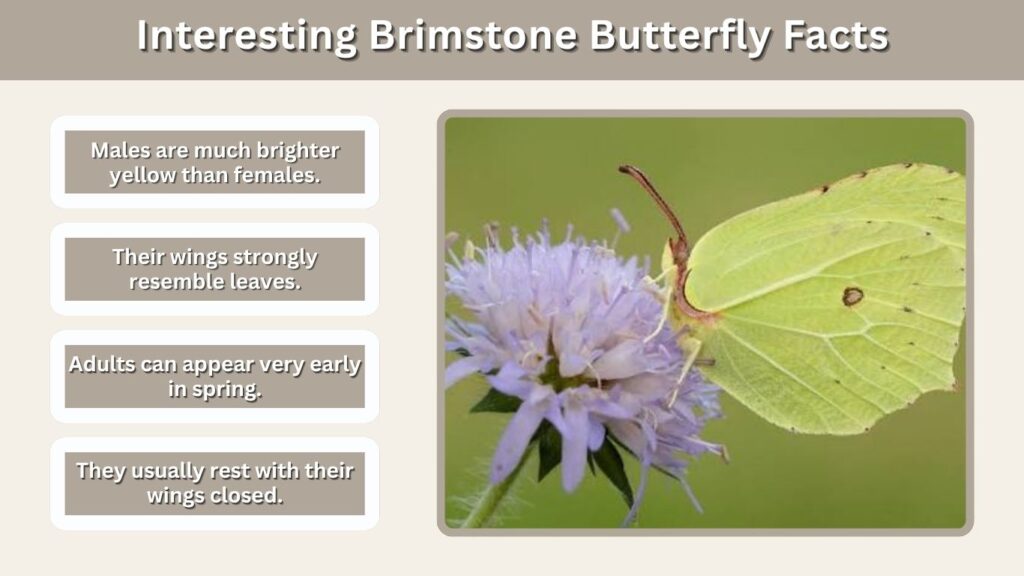
The brimstone is unusual even among familiar European butterflies.
Some interesting facts include:
- Adults may survive nearly an entire year.
- They overwinter as fully developed butterflies.
- Males are much brighter yellow than females.
- Their wings strongly resemble leaves.
- Caterpillars mainly depend on buckthorn.
- Adults can appear very early in spring.
- They usually rest with their wings closed.
- Their name refers to the sulfur-yellow coloration of males.
- Brimstones may travel far from their breeding habitat.
- Early sightings are often associated with the arrival of spring.
FAQs
Brimstone butterflies attract attention because of their bright yellow males, early spring activity, and unusually long adult lives. These common questions cover their rarity, food, coloration, hibernation, and lifespan.
1. How Long Does a Brimstone Butterfly Live?
A brimstone butterfly may live for around 10 to 12 months, making it unusually long-lived compared with many other butterfly species. Its long lifespan is possible because adults spend much of the winter in a dormant state before becoming active again in spring.
2. What Color Is a Brimstone Butterfly?
Male brimstones are bright lemon-yellow, while females are much paler and can appear cream, greenish-white, or very pale yellow. Both sexes have small orange spots on their wings and pale greenish undersides that provide camouflage.
3. What Do Brimstone Butterflies Eat?
Adult brimstones drink nectar from many flowers, including dandelions, primroses, thistles, knapweed, and garden flowers. Their caterpillars have a more specialized diet and mainly feed on the leaves of common buckthorn and alder buckthorn.
4. Do Brimstone Butterflies Hibernate?
Yes. Adult brimstone butterflies hibernate during winter, often sheltering among dense evergreen vegetation such as ivy, holly, and bramble. When temperatures rise during late winter or early spring, they emerge and begin feeding and searching for mates.
5. Are Brimstone Butterflies Rare?
Common brimstone butterflies are not generally considered rare across much of their range. However, they may be uncommon in areas where suitable breeding habitat or buckthorn plants are limited. Their abundance can therefore vary significantly from one region to another.