
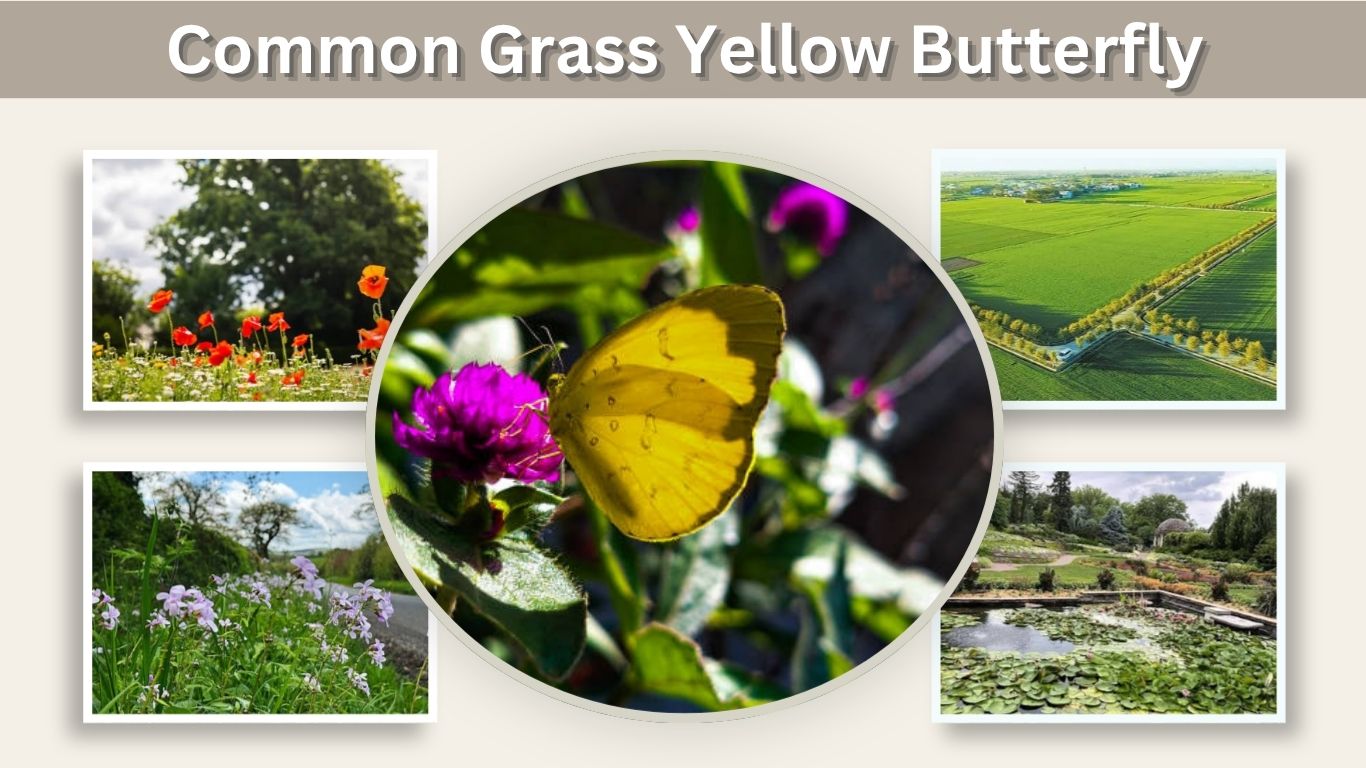
The common grass yellow butterfly is a small, bright yellow butterfly commonly seen flying low over gardens, grasslands, roadsides, and open fields. Scientifically known as Eurema hecabe, it belongs to the Pieridae family, which includes many white and yellow butterflies. Its cheerful yellow wings, dark markings, and quick fluttering flight make it relatively easy to notice, although it can sometimes be confused with other grass yellow species. Learning about its appearance, habitat, caterpillar, host plants, and life cycle makes identification much easier.
What Is the Common Grass Yellow Butterfly?
The common grass yellow, or Eurema hecabe, is a widespread yellow butterfly found across many tropical and subtropical parts of Asia and surrounding regions. It often occurs in areas where grasses, shrubs, flowering plants, and caterpillar host plants grow together.
Despite its name, this butterfly does not depend specifically on grass for food. The term “grass yellow” refers to a broader group of small yellow butterflies that are frequently encountered in open grassy habitats.
| Feature | Common Grass Yellow |
| Common name | Common Grass Yellow |
| Scientific name | Eurema hecabe |
| Family | Pieridae |
| Main color | Bright yellow |
| Size | Small to medium |
| Caterpillar diet | Leaves of selected host plants |
| Adult diet | Flower nectar |
| Habitat | Gardens, fields, woodland edges, roadsides |
Common Grass Yellow Butterfly Identification
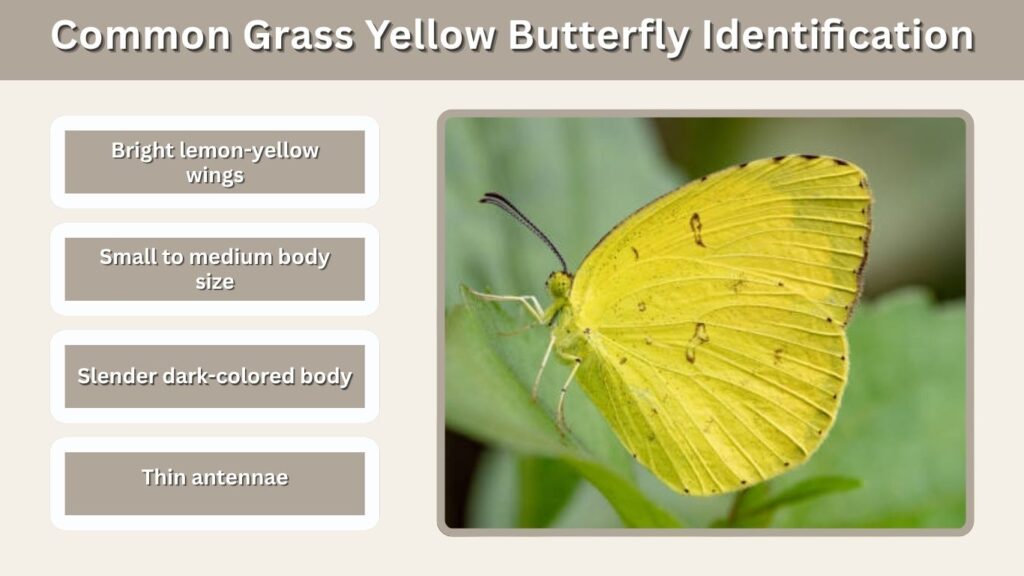
The Common Grass Yellow is recognized primarily by its yellow wings combined with dark borders and small markings. Its appearance may vary slightly depending on sex, season, and geographic location.
Identification Features
Look for these characteristics:
- Bright lemon-yellow wings
- Small to medium body size
- Black or dark brown edging on the upper wings
- Dark markings near the tips of the forewings
- Small brownish markings on the underside
- Slender dark-colored body
- Thin antennae
- Rapid, fluttering flight close to vegetation
When resting, the butterfly usually holds its wings closed above its back, making the underside easier to observe.
Male vs Female Common Grass Yellow
Male and female Common Grass Yellows can look very similar from a distance. However, differences may be visible in wing markings and the width or arrangement of darker borders.
Females can sometimes appear slightly larger, and their dark wing markings may differ subtly from those of males. These differences are easier to notice when butterflies are observed closely or compared side by side.
Common Grass Yellow Scientific Name
The scientific name of the Common Grass Yellow butterfly is Eurema hecabe.
It belongs to the family Pieridae, a large butterfly family containing whites, sulphurs, yellows, and related species.
Scientific Classification
- Kingdom: Animalia
- Phylum: Arthropoda
- Class: Insecta
- Order: Lepidoptera
- Family: Pieridae
- Genus: Eurema
- Species: Eurema hecabe
Its scientific classification distinguishes the Common Grass Yellow from other similar-looking yellow butterflies.
Where Does the Common Grass Yellow Butterfly Live?
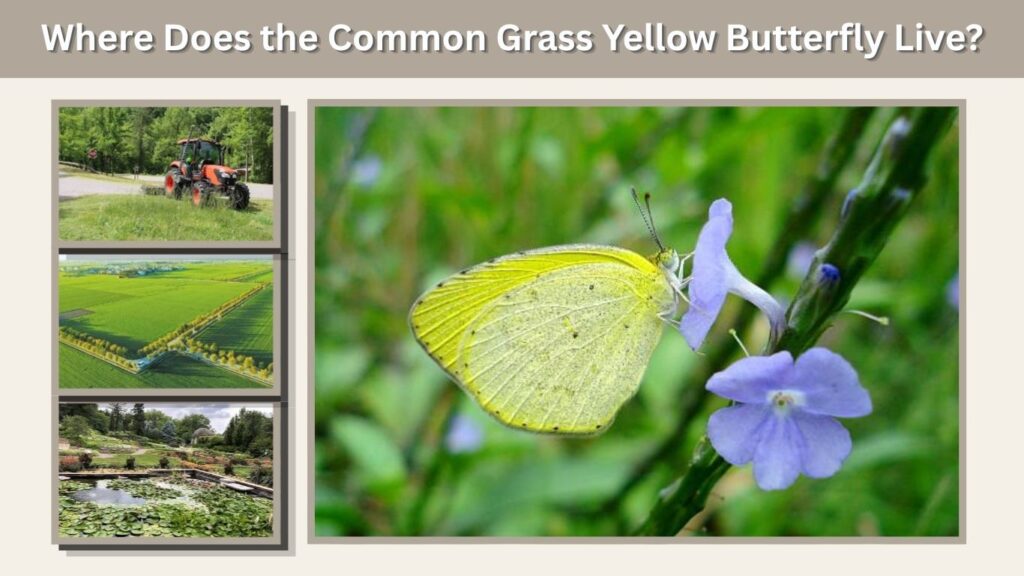
The Common Grass Yellow prefers warm environments with plenty of sunlight and vegetation. It is adaptable and may be found in both natural and human-modified landscapes.
Common Grass Yellow Butterfly Habitat
Typical habitats include:
- Grasslands
- Gardens
- Open forests
- Forest edges
- Agricultural areas
- Roadsides
- Parks
- Scrubland
- Sunny woodland clearings
It is often seen flying relatively close to the ground while looking for nectar flowers, mates, or suitable host plants.
The butterfly can tolerate somewhat disturbed habitats, which is one reason it may frequently appear around villages, urban gardens, farmland, and roadside vegetation.
Common Grass Yellow Butterfly Life Cycle
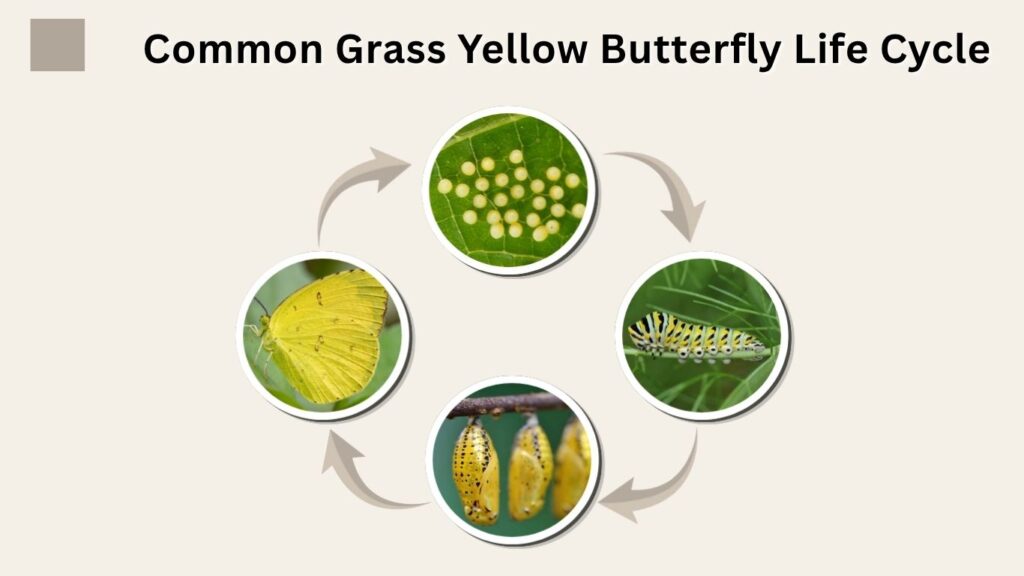
Like other butterflies, the Common Grass Yellow goes through complete metamorphosis. Its life cycle contains four main stages: egg, caterpillar, pupa, and adult butterfly.
Egg Stage
The female lays small eggs on suitable host plants. Selecting the correct plant is important because newly hatched caterpillars cannot travel very far before they need to begin feeding.
The eggs are generally placed on leaves where the larvae have immediate access to food.
Common Grass Yellow Caterpillar
After hatching, the larva begins feeding on the leaves of its host plant.
The Common Grass Yellow caterpillar is usually green, allowing it to blend into foliage and avoid predators. Its slim body and coloration make it difficult to see unless someone examines the plant carefully.
The caterpillar grows through several stages, shedding its skin as its body becomes larger.
Pupa Stage
Once fully grown, the caterpillar stops feeding and prepares to pupate.
It attaches itself securely to vegetation and forms a chrysalis. Inside the chrysalis, major physical changes take place as the caterpillar transforms into an adult butterfly.
Adult Butterfly
When development is complete, the adult emerges from the chrysalis. Its wings initially remain soft and folded.
After pumping fluid into the wings and allowing them to harden, the butterfly becomes capable of flight. Adults then begin searching for flowers, mates, and host plants where the next generation can develop.
Common Grass Yellow Host Plant
Host plants are essential because they provide food for developing caterpillars.
The Common Grass Yellow is associated with several plants, especially members of the legume family. Depending on location, caterpillars may use plants such as:
- Cassia species
- Senna species
- Acacia-related plants
- Mimosa-related plants
- Other suitable legumes
Adult butterflies and caterpillars have very different diets. Caterpillars chew leaves, while adults mainly drink nectar.
What Does the Common Grass Yellow Butterfly Eat?
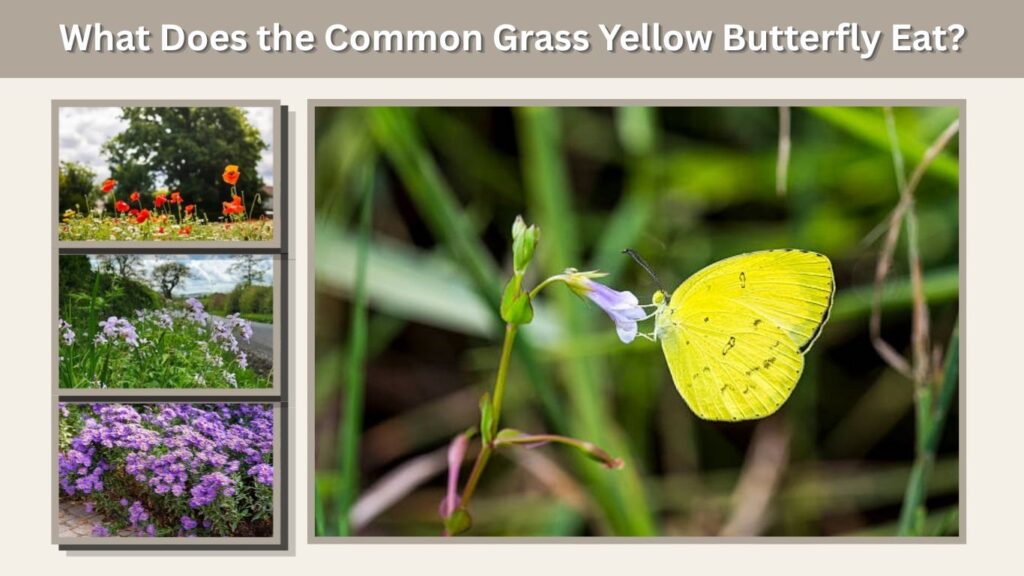
Adult Common Grass Yellow butterflies obtain energy primarily from flower nectar.
They use their long, tube-like proboscis to reach nectar inside flowers. When the butterfly is not feeding, the proboscis remains curled beneath its head.
Nectar Sources
Adults may visit many small flowering plants, including:
- Wildflowers
- Garden flowers
- Roadside blossoms
- Small flowering weeds
- Shrubs
- Seasonal flowering plants
Butterflies may move frequently between flowers rather than remaining on a single plant for long periods.
Common Grass Yellow Butterfly Behavior
One of the easiest ways to notice this butterfly is through its characteristic flight.
The Common Grass Yellow often flies quickly and somewhat irregularly just above low vegetation. It may repeatedly stop to feed before flying a short distance to another flower.
Flying Behavior
Its flight usually appears:
- Quick
- Light
- Fluttering
- Low to the ground
- Somewhat unpredictable
During sunny weather, adults can be highly active. Activity may decrease during rain, strong winds, or cooler conditions.
Common Grass Yellow vs Other Yellow Butterflies
Several small yellow butterflies can resemble the Common Grass Yellow, particularly other members of the genus Eurema.
Identification should therefore consider more than basic yellow coloration.
Important Features to Compare
When identifying a yellow butterfly, examine:
- Wing size
- Shape of the dark borders
- Forewing markings
- Hindwing markings
- Underside patterns
- Geographic location
- Seasonal appearance
Taking a clear photograph of the underside as well as the upper side can make identification easier.
Is the Common Grass Yellow Butterfly Harmful?
The Common Grass Yellow butterfly is not dangerous to humans.
Adults do not sting or bite people, and their caterpillars are not known for causing the painful reactions associated with some stinging caterpillar species.
They are generally harmless garden visitors.
Common Grass Yellow caterpillars may eat leaves from their host plants, but normal populations rarely create the kind of widespread damage associated with major agricultural pests.
Common Grass Yellow Butterfly in Gardens
Seeing Common Grass Yellows in a garden can indicate that suitable nectar and host plants are available nearby.
Gardeners who want to attract them can provide both flowering plants for adults and appropriate host plants for caterpillars.
Avoiding unnecessary pesticide use can also help butterflies and other beneficial insects survive in garden environments.
Common Grass Yellow Butterfly Facts
Here are some interesting facts about the Common Grass Yellow:
- Its scientific name is Eurema hecabe.
- It belongs to the Pieridae family.
- Adults are predominantly bright yellow.
- It usually flies close to the ground.
- The caterpillar is mainly green.
- Caterpillars feed on selected host plants.
- Adults mainly drink flower nectar.
- It undergoes complete metamorphosis.
- It can live in gardens and disturbed habitats.
- It is easily confused with related grass yellow butterflies.
- Its dark wing borders help with identification.
- Warm, sunny conditions encourage greater activity.
FAQs
What is the scientific name of the Common Grass Yellow butterfly?
The scientific name of the Common Grass Yellow butterfly is Eurema hecabe. It belongs to the Pieridae family, which contains many familiar white, yellow, and sulphur butterflies found throughout tropical, subtropical, and temperate regions.
What does a Common Grass Yellow caterpillar look like?
A Common Grass Yellow caterpillar is usually green and relatively slender. Its coloration helps it blend with the leaves and stems of host plants, making it difficult for predators—and people—to notice when it remains still.
What is the Common Grass Yellow butterfly’s host plant?
Its caterpillars use several host plants, particularly species belonging to the legume family. Cassia, Senna, and related plants can serve as caterpillar food sources depending on the butterfly’s geographic location.
Where do Common Grass Yellow butterflies live?
They commonly inhabit sunny open environments such as gardens, grasslands, roadsides, agricultural areas, scrublands, forest edges, and woodland clearings. They can also adapt well to landscapes altered by human activity.
Is the Common Grass Yellow butterfly poisonous?
The Common Grass Yellow is not considered dangerous or poisonous to humans. It does not sting people, and adults primarily spend their time feeding on nectar, flying among vegetation, mating, and searching for suitable host plants.