
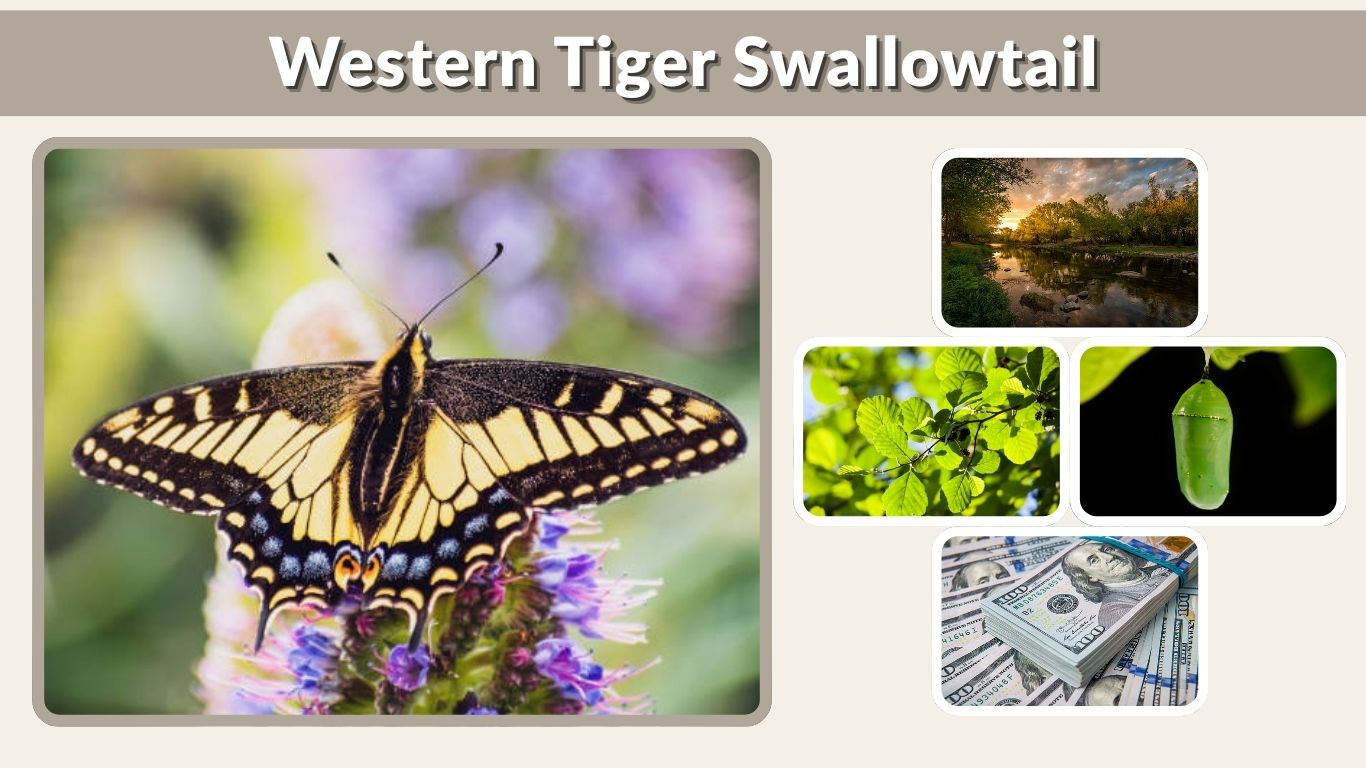
The western tiger swallowtail is one of the most eye-catching butterflies in North America. With its bright yellow wings and bold black stripes, it is easy to recognize in the wild. This butterfly is not only beautiful but also plays an important role in pollination. Commonly found in western regions, it thrives in forests, gardens, and near water sources. In this guide, you will learn about its size, life cycle, diet, and key features that make it unique.
What Is a Western Tiger Swallowtail?
The western tiger swallowtail is a large butterfly species known for its striking color and smooth flight. It belongs to the swallowtail family, which includes some of the most visually impressive butterflies. Its bright appearance and wide distribution make it one of the most recognizable species in western North America.
Scientific Name and Classification
The scientific name of the western tiger swallowtail is Papilio rutulus. It belongs to the swallowtail family, known for butterflies with tail-like extensions on their hind wings. This species is closely related to the eastern tiger swallowtail but is primarily found in western regions with slightly different habitat preferences.
Key Identification Features
- Bright yellow wings with bold black stripes
- Tail-like extensions on hind wings
- Blue and orange markings near the edges
- Large wingspan compared to most butterflies
- Smooth and gliding flight pattern
Western Tiger Swallowtail Size
The western tiger swallowtail is considered a large butterfly, making it easy to spot even from a distance. Its size and wing shape allow it to glide gracefully, often catching attention in open areas like parks and riverbanks.
Wingspan and Body Size
The wingspan of a western tiger swallowtail typically ranges between 3 to 4 inches. This wide wingspan allows for smooth and controlled flight. Its body is relatively slim compared to its wings, giving it a balanced structure that supports efficient movement through the air.
Male vs Female Size
Females are usually slightly larger than males, although the difference is subtle and not always easy to notice. Both genders share similar color patterns, but females may appear slightly broader in body structure. This size variation helps females carry and lay eggs more effectively.
Western Tiger Swallowtail Life Cycle

Like all butterflies, the western tiger swallowtail undergoes complete metamorphosis. This process includes four stages, each playing a crucial role in development. Understanding these stages helps explain how the butterfly grows and survives in its environment.
Egg Stage
The life cycle begins when the female lays small, round eggs on the leaves of host plants. These eggs are usually green and placed individually to reduce competition. Their placement ensures that the caterpillar has immediate access to food once it hatches.
Caterpillar Stage
After hatching, the caterpillar begins feeding on leaves. It is usually bright green with eye-like markings that resemble a snake’s face. This clever adaptation helps scare away predators. As it grows, it sheds its skin several times, increasing in size and strength.
Chrysalis Stage
The caterpillar forms a chrysalis once it reaches full size. This stage acts as a protective shell where transformation occurs. The chrysalis blends into its surroundings, helping it stay hidden. Inside, the caterpillar undergoes a complete change into an adult butterfly.
Adult Butterfly Stage
Once the transformation is complete, the butterfly emerges with soft wings that quickly expand and harden. It then begins flying, feeding on nectar, and searching for a mate. This stage focuses on reproduction and spreading the species.
Western Tiger Swallowtail Caterpillar
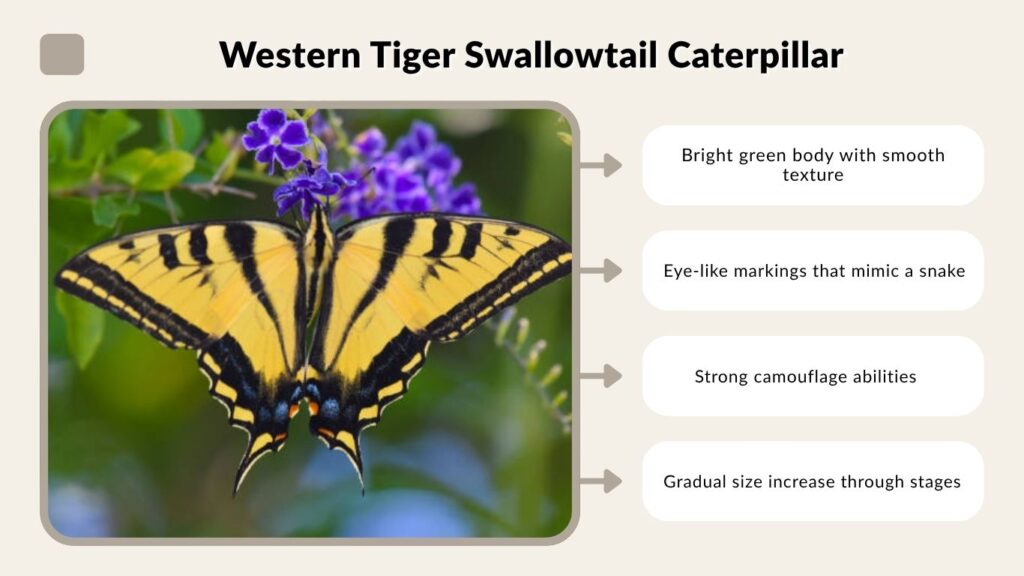
The caterpillar stage is essential for growth and survival. During this phase, the insect consumes large amounts of food to prepare for transformation. Its appearance and behavior are designed to protect it from predators while it develops.
Caterpillar Features
- Bright green body with smooth texture
- Eye-like markings that mimic a snake
- Strong camouflage abilities
- Gradual size increase through stages
- Defensive posture when threatened
Caterpillar Behavior
- Feeds mainly on host plant leaves
- Remains hidden during the day
- Moves slowly to avoid detection
- Uses mimicry for protection
- Prepares for chrysalis formation
Western Tiger Swallowtail Eggs
Eggs are a critical part of the butterfly’s life cycle. Their placement and structure help ensure the survival of the next generation.
Egg Characteristics
The eggs are very small, round, and usually green in color. Their smooth surface and natural coloring help them blend into leaves. Because they are laid individually, they are less likely to attract attention from predators or competing insects.
Egg Placement Strategy
Female butterflies carefully choose host plants for laying eggs. Each egg is placed on a leaf where food will be available immediately after hatching. This strategic placement increases survival rates and reduces the need for the caterpillar to travel in search of food.
Western Tiger Swallowtail Diet
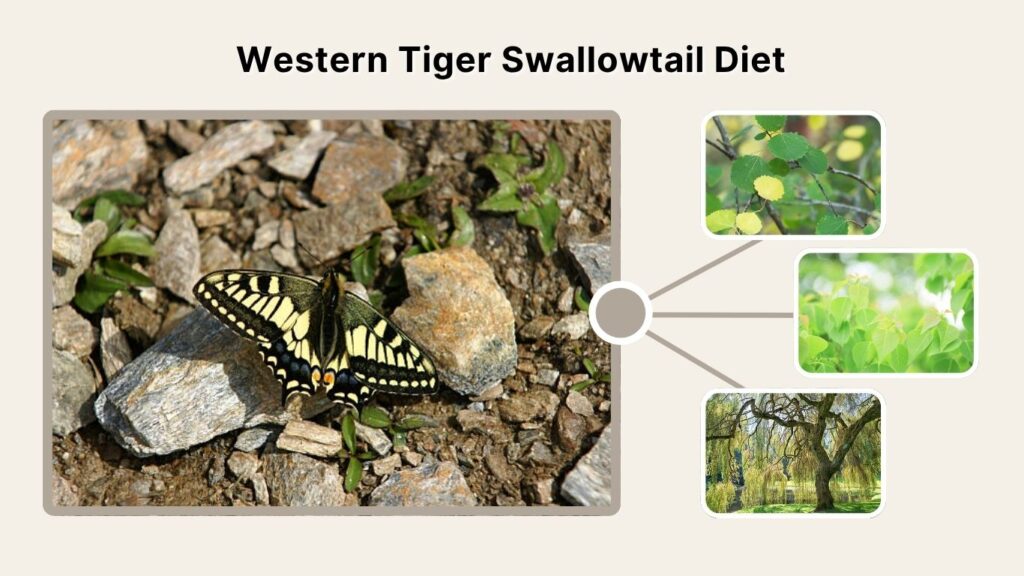
The diet of the western tiger swallowtail changes as it grows. Both caterpillars and adult butterflies rely on different food sources to meet their energy needs.
Caterpillar Diet
- Leaves from host plants
- Willow, cottonwood, and poplar leaves
- Fresh and soft foliage preferred
- Continuous feeding for growth
- High nutrient intake required
Adult Butterfly Diet
- Nectar from flowering plants
- Preference for bright-colored flowers
- Minerals from puddles and damp soil
- Occasional feeding on tree sap
- Energy used for flight and reproduction
Western Tiger Swallowtail Host Plants
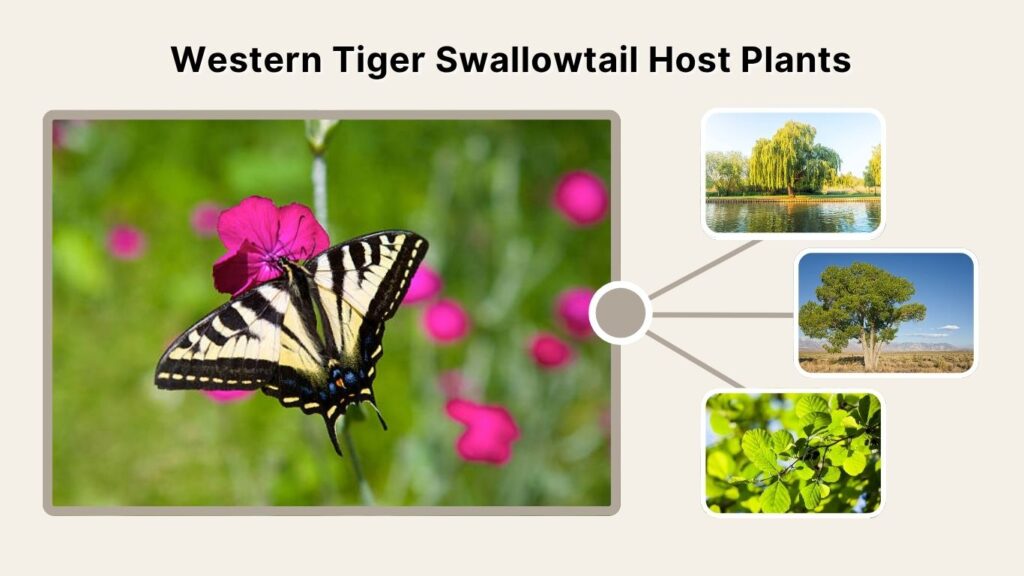
Host plants are essential for the survival of western tiger swallowtail butterflies. These plants provide food for caterpillars and a safe place for females to lay eggs. Without the right host plants, the butterfly cannot complete its life cycle.
Common Host Plants
- Willow trees
- Cottonwood
- Aspen
- Alder
- Poplar
Why Host Plants Matter
Host plants provide the nutrients needed for caterpillar growth. Female butterflies carefully select these plants to ensure their offspring survive. The availability of these plants directly affects population levels, making them a critical part of the butterfly’s ecosystem.
Western Tiger Swallowtail Range and Habitat
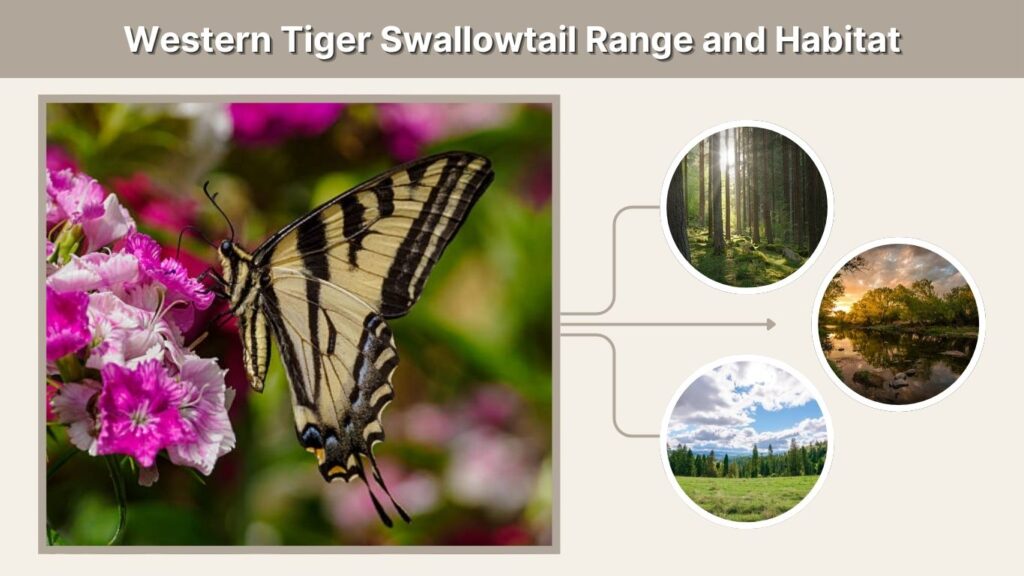
The western tiger swallowtail is widely distributed across western North America. Its ability to adapt to different environments allows it to thrive in various natural and human-made landscapes.
Geographic Range
This butterfly is commonly found in the western United States and parts of Canada. Its range extends from coastal regions to inland areas, depending on climate and vegetation. Warmer regions tend to support higher populations due to better food availability.
Habitat Types
It prefers habitats such as forests, riverbanks, and open woodlands. It is also commonly seen in gardens and parks where flowering plants are present. Areas near water sources are especially attractive because they provide both food and moisture.
Western vs Eastern Tiger Swallowtail
The western and eastern tiger swallowtails are often confused because of their similar appearance. However, there are clear differences that help distinguish them.
Key Differences
| Feature | Western Tiger Swallowtail | Eastern Tiger Swallowtail |
| Region | Western North America | Eastern North America |
| Species | Papilio rutulus | Papilio glaucus |
| Color variation | Mostly yellow | Yellow and dark morph |
| Habitat | Western forests | Eastern forests |
How to Tell Them Apart
- Western species has more consistent yellow coloring
- Eastern females may appear black
- Geographic location is a key clue
- Slight differences in wing patterns
- Habitat region helps identification
Western Tiger Swallowtail Meaning and Symbolism
Butterflies often carry symbolic meanings, and the western tiger swallowtail is no exception. Its transformation and beauty make it a powerful symbol in many cultures.
Spiritual Meaning
The western tiger swallowtail represents transformation and personal growth. Its life cycle reflects change and renewal, making it a symbol of new beginnings. Many people associate it with positive life changes and personal development.
Cultural Symbolism
In many cultures, this butterfly symbolizes freedom, beauty, and joy. Its bright colors and graceful movement are often linked to happiness and lightness. It is also seen as a reminder to embrace change and appreciate life’s transitions.
Can You Buy Western Tiger Swallowtail Caterpillars?

Some people are interested in raising butterflies at home, which leads to questions about buying caterpillars. However, there are important considerations to keep in mind.
Availability of Caterpillars
- Sometimes available from licensed breeders
- May be sold for educational purposes
- Availability depends on region
- Seasonal supply may vary
- Must follow local regulations
Ethical Considerations
- Avoid removing from wild populations
- Support conservation-friendly sources
- Ensure proper care and habitat
- Do not release non-native species
- Respect environmental balance
Western Tiger Swallowtail Facts
The western tiger swallowtail has many fascinating features that make it unique among butterflies. These facts highlight its importance in nature.
Interesting Facts
- One of the largest butterflies in western regions
- Strong and smooth flyer
- Active during daytime
- Important pollinator for many plants
- Common in gardens and natural habitats
Behavioral Traits
- Males gather at puddles for minerals
- Females search for host plants
- Flight pattern includes gliding and flapping
- Active in warm weather
- Seasonal activity varies by climate
FAQs
What does a western tiger swallowtail look like?
The western tiger swallowtail has bright yellow wings with bold black stripes and tail-like extensions. It also features small blue and orange markings near the edges, making it easy to identify among other butterfly species.
What do western tiger swallowtail caterpillars eat?
Caterpillars feed on leaves from host plants such as willow, cottonwood, and poplar. These plants provide the nutrients needed for growth and development during the early stages of the butterfly’s life cycle.
Where do western tiger swallowtails live?
They are found in western North America, including the United States and Canada. They prefer forests, riverbanks, and areas with plenty of flowering plants for feeding and reproduction.
What is the difference between western and eastern tiger swallowtail?
The main differences include geographic range, color variation, and species classification. Western tiger swallowtails are mostly yellow, while eastern females can appear in darker forms.
What does the western tiger swallowtail symbolize?
It symbolizes transformation, growth, and positive change. Its life cycle represents renewal, while its bright appearance is often associated with joy and freedom.