
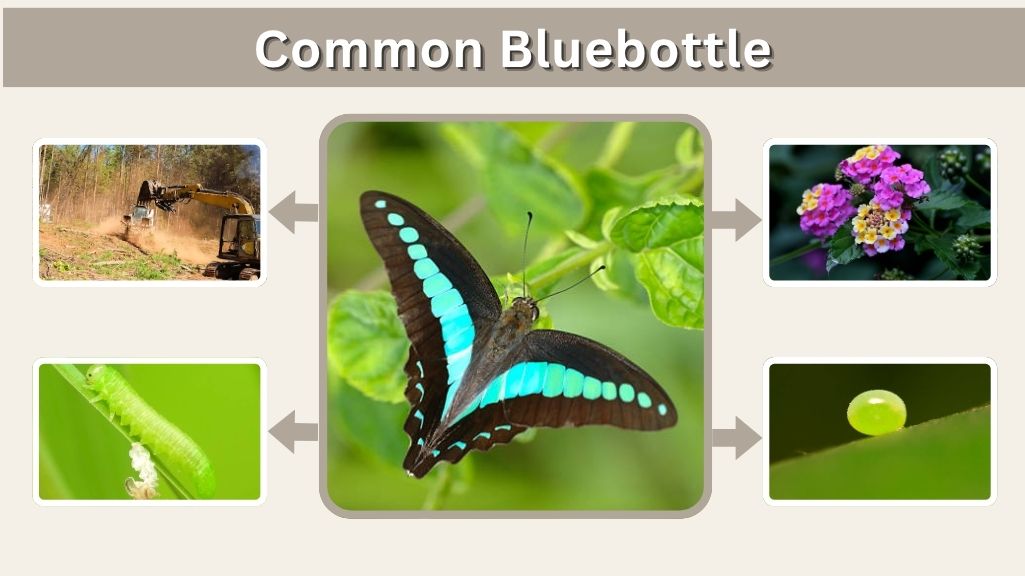
The Common Bluebottle butterfly (Graphium sarpedon) is famous for its striking blue stripes and graceful flight. Native to Australia, Taiwan, and parts of Southeast Asia, it contributes to pollination and ecosystem balance. Its caterpillars rely on specific host plants to develop, while adults feed on nectar and minerals. Beyond nature, this butterfly is featured in popular games like Animal Crossing: New Horizons, where collectors value it for its rarity. This guide explores its identification, life cycle, habitat, behavior, and interactions both in the wild and virtual worlds.
Overview of the Common Bluebottle
The Common Bluebottle belongs to the swallowtail family and is known for its iridescent blue bands and long hindwing tails. Its fast and erratic flight makes it easily recognizable. Found in forests, gardens, and urban areas, this butterfly plays an important ecological role in pollination while serving as prey for birds and other predators.
Identification (List Section)
- Wingspan: 55–70 mm
- Bright blue bands on black wings
- Long tails on hindwings
- Iridescent sheen visible in sunlight
- Quick, erratic flight
Behavior
- Diurnal: active during sunny hours
- Males gather at hilltops and puddles for minerals
- Territorial, agile fliers with rapid escape ability
Habitat
- Tropical and subtropical forests
- Urban gardens with flowering plants
- Distributed across Australia, Taiwan, and Southeast Asia
Life Cycle of the Common Bluebottle
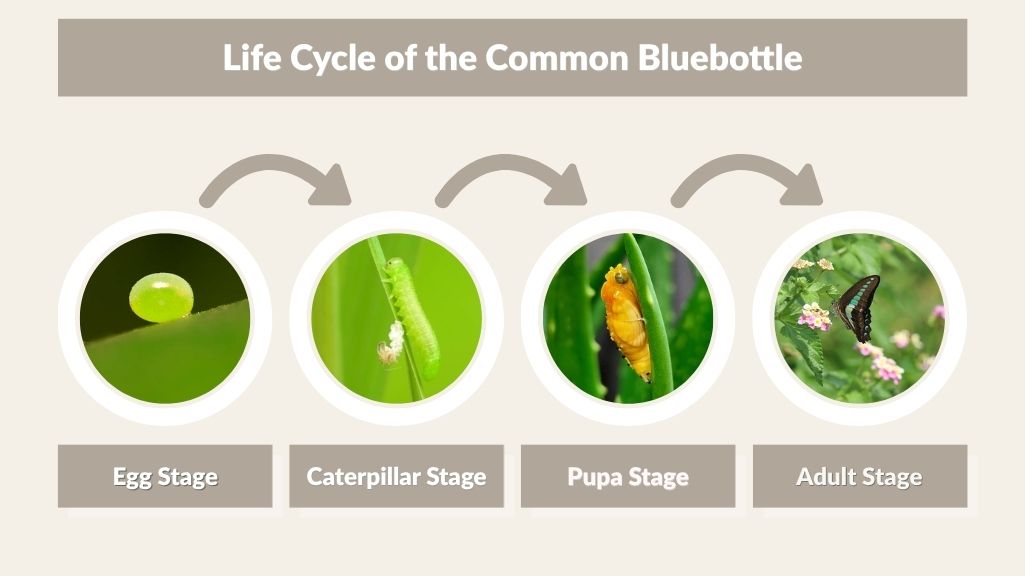
The Common Bluebottle undergoes complete metamorphosis, passing through egg, caterpillar, pupa, and adult stages. Each stage is adapted for survival and reproductive success, influenced by seasonal and environmental conditions. Understanding the life cycle helps butterfly enthusiasts and gardeners create suitable habitats to support population growth and preserve ecological balance.
Egg Stage
- Laid singly on host plants
- Small, round, pale green or white
- Hatch in 4–6 days
Caterpillar Stage
- Feeds on Lauraceae family plants
- Green with subtle markings for camouflage
- Passes through 4–5 instars over 2–3 weeks
Pupa Stage
- Chrysalis attached to leaves or stems
- Camouflaged for protection
- Duration: 7–14 days depending on temperature
Adult Stage
- Emerges with full wing coloration
- Lives 2–3 weeks
- Focuses on feeding, mating, and territorial displays
Host Plants of the Common Bluebottle
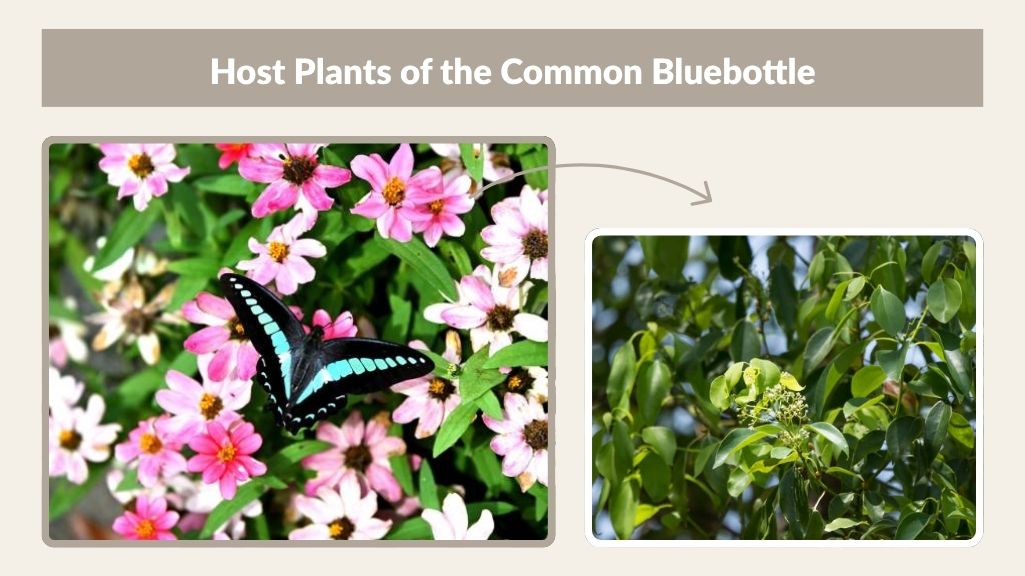
Caterpillars depend on specific host plants to grow and develop. Lauraceae family plants provide essential nutrients for larval growth. Protecting these plants ensures butterfly survival and maintains ecosystem biodiversity. Gardeners and conservationists often cultivate these plants to attract Common Bluebottles and support local pollinator populations.
List of Host Plants (List Section)
- Cinnamomum species (Cinnamon trees)
- Litsea species
- Cryptocarya species
- Other native Lauraceae plants
Common Bluebottle Diet and Feeding Habits
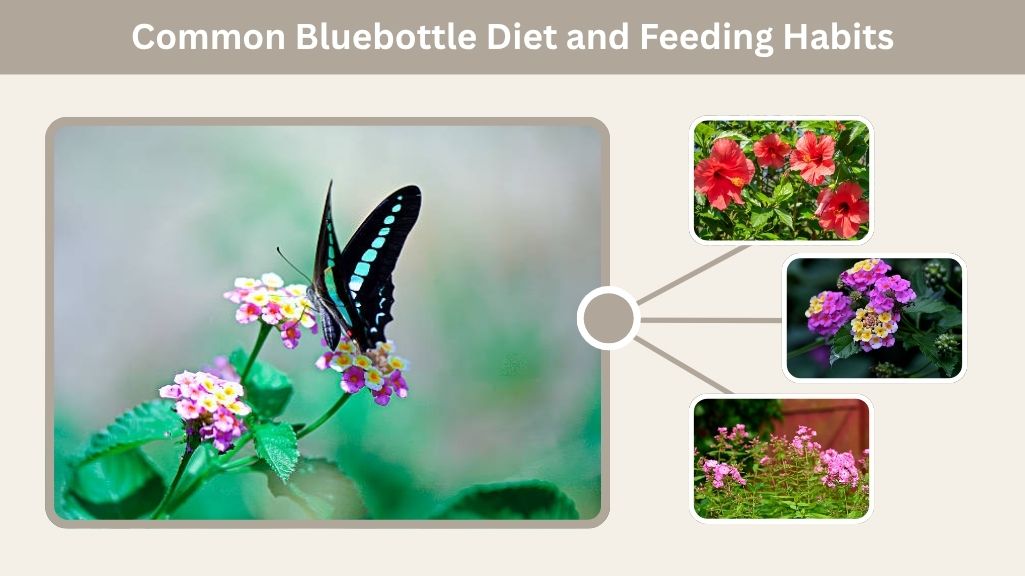
Adult Common Bluebottles feed primarily on nectar from a variety of flowers and occasionally gather minerals from moist soil or puddles. These feeding behaviors are essential for energy, reproduction, and pollination. Observing their diet helps gardeners cultivate butterfly-friendly environments and supports conservation efforts by ensuring that butterflies have access to the resources they need to thrive.
Nectar Sources (List Section)
- Hibiscus flowers
- Lantana species
- Native flowering plants like Melastoma and Ixora
- Other nectar-rich tropical flowers
Mineral Puddling
- Males gather at damp soil, mud, or puddles
- Absorb salts and minerals critical for reproduction
- Puddling sites often attract multiple males at once
Feeding Behavior
- Feeds primarily during daylight hours
- Chooses flowers based on color and nectar availability
- Adult feeding supports pollination for multiple plant species
Common Bluebottle in Popular Culture
The Common Bluebottle has gained popularity in virtual worlds, especially in Animal Crossing: New Horizons. Players can catch, sell, or display it in museums, mirroring its real-world behaviors and ecology. Its digital representation educates players on butterfly ecology while providing in-game economic and collection value, making it both entertaining and informative.
Animal Crossing Appearance (List Section)
- Appears seasonally depending on hemisphere
- Found near trees, flowers, or nectar sources
- Active during sunny weather, mimicking real butterfly behavior
Animal Crossing Price
- Typically sells for 1000–1200 Bells
- Valued by collectors for completing museum exhibits
- Price varies slightly by game version or location
Tips for Capturing
- Use nets carefully to avoid startling butterflies
- Observe seasonal and daily spawn patterns
- Explore multiple areas on the island for higher success
Interesting Facts About the Common Bluebottle
Beyond appearance, the Common Bluebottle exhibits fascinating ecological behaviors. Its rapid flight, puddling habits, and pollination activities contribute to ecosystem health. Learning these facts enriches our understanding of biodiversity and encourages the protection of natural habitats, as well as butterfly-friendly gardening practices.
Fun Facts (List Section)
- Males congregate at puddles for essential minerals
- Rapid and agile fliers, escaping predators easily
- Act as important pollinators for native plants
- Can be found in both rural forests and urban areas
- Often mimic environmental cues to avoid predators
Threats and Conservation
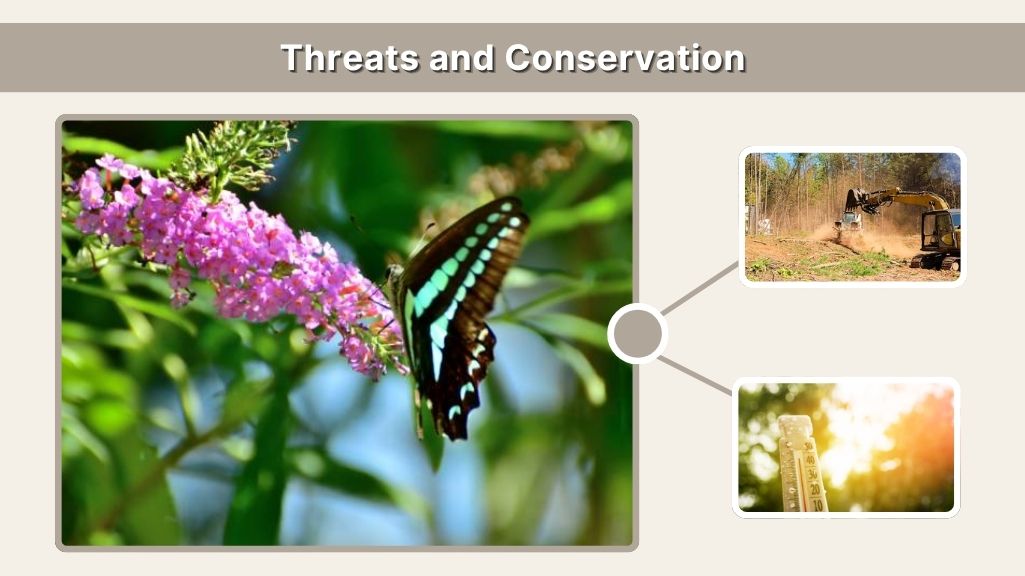
Although widespread, the Common Bluebottle faces threats from habitat destruction, pesticide use, and climate change. Conservation efforts aim to protect host plants and nectar sources, ensuring healthy butterfly populations. Awareness campaigns, garden planting, and ecological preservation are essential to maintain their ecological role and prevent population declines, supporting biodiversity for future generations.
Main Threats
- Deforestation and urban expansion reducing habitat
- Pesticides harming larvae and adult butterflies
- Climate change affecting seasonal migration and breeding
Conservation Strategies
- Planting butterfly-friendly gardens with nectar and host plants
- Protecting native forests and green corridors
- Educating the public on butterfly ecology and conservation importance
FAQs
Can Common Bluebottles migrate?
Yes, some populations of Common Bluebottles exhibit short-distance migratory behavior, moving between forests and gardens in search of nectar, host plants, or suitable breeding sites. Migration is influenced by seasonal changes, temperature, and availability of food resources, ensuring survival and reproduction in varying environments.
How can I attract Common Bluebottles to my garden?
Plant native flowering plants like Hibiscus, Lantana, and Melastoma, and include host plants from the Lauraceae family such as Cinnamomum and Litsea. Avoid pesticides and provide sunny, sheltered spots. Fresh water sources or damp soil patches for puddling can also encourage male butterflies to visit.
Are Common Bluebottles harmful to humans?
No, Common Bluebottles are harmless to humans. They do not bite, sting, or carry diseases. Their primary interactions with people involve visiting gardens to feed on nectar, and they contribute positively to pollination and ecosystem health.
How can I identify a male versus female Common Bluebottle?
Males are often smaller, more vibrant, and actively patrol territories or gather at puddling sites for minerals. Females tend to be slightly larger, less vibrant, and focus more on searching for suitable host plants to lay eggs. Observing behavior along with subtle coloration differences can help distinguish them.
Do Common Bluebottles face any predators?
Yes, they are preyed upon by birds, spiders, lizards, and other insectivorous animals. Their bright coloration and rapid flight help reduce predation, while camouflage at the caterpillar and pupa stages provides additional protection. Predation is a natural part of their ecological role.