
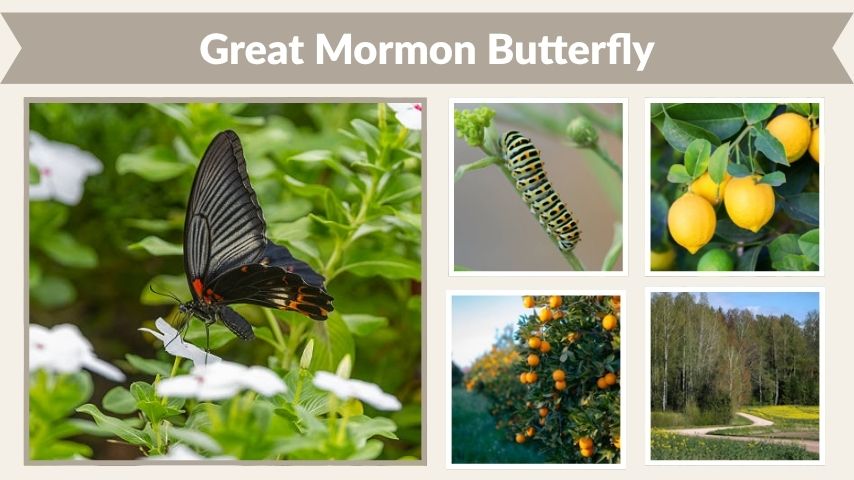
The great Mormon butterfly is one of the largest and most impressive swallowtail butterflies found in Asia. Known for its large black wings and graceful flight, this butterfly is popular among photographers, butterfly enthusiasts, and nature lovers. It is commonly seen in forests, gardens, and tropical regions where flowering plants are abundant.
The great Mormon butterfly is also famous for its female mimic forms, which help protect it from predators. Like many swallowtails, it plays an important role in pollination and ecosystem balance. Its beautiful wing patterns and fascinating life cycle make it one of the most interesting butterflies in tropical Asia.
What Is the Great Mormon Butterfly?
The great Mormon butterfly is a large swallowtail species belonging to the Papilionidae family. It is admired for its broad wings, powerful flight, and striking color patterns. This butterfly is mostly found in warm tropical environments where host plants and nectar-rich flowers grow throughout the year.
Scientific Name and Classification
The scientific name of the great mormon butterfly is Papilio memnon. It belongs to the swallowtail butterfly group, which includes many large and colorful butterfly species found worldwide.
Why It Is Called the Great Mormon
The butterfly received its unusual name from early scientific naming traditions. The term “great” refers to its large size, while “mormon” became part of the historical species name used by naturalists.
Physical Appearance
- Large black wings with glossy texture
- Tail-like wing extensions in some forms
- White or red markings on females
- Broad wings built for strong flight
- Thick dark body with small spots
- Long antennae and slender legs
Great Mormon Butterfly Identification
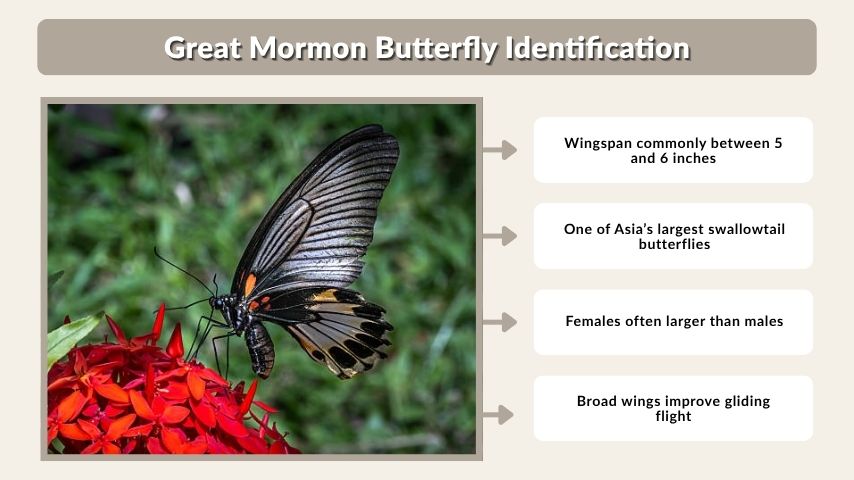
The great mormon butterfly can be identified by its large wingspan and variable wing patterns. Males usually appear dark black, while females often show different mimic forms that resemble toxic butterfly species. These differences make the species especially interesting for butterfly researchers and collectors.
Wing Colors and Patterns
Male great mormon butterflies usually have black wings with subtle markings. Females may display white, red, or pale patches depending on the mimic form. The underside of the wings often contains additional patterns and lighter markings.
Male vs Female Differences
Female great mormon butterflies are generally larger and more colorful than males. Many females mimic poisonous butterflies to discourage predators from attacking them. Males are usually darker and simpler in appearance.
Average Wingspan and Size
- Wingspan commonly between 5 and 6 inches
- One of Asia’s largest swallowtail butterflies
- Females often larger than males
- Broad wings improve gliding flight
- Bigger than many common garden butterflies
Great Mormon Butterfly Habitat and Distribution
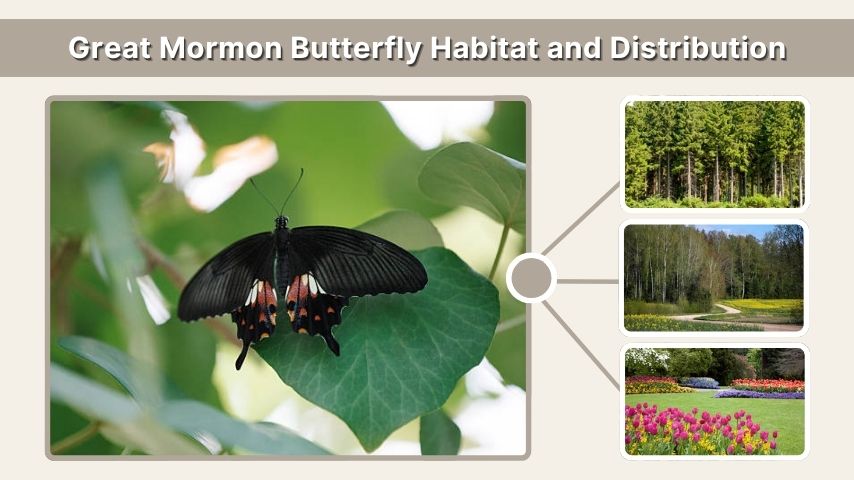
The great mormon butterfly is widely distributed across South Asia and Southeast Asia. It thrives in tropical habitats where warm temperatures and dense vegetation support both adult butterflies and caterpillars. Forest edges and gardens are common places to spot this species.
Native Range
The species occurs in countries such as India, Bangladesh, Sri Lanka, Nepal, Myanmar, and Thailand. It is especially common in humid tropical and subtropical regions.
Preferred Habitats
- Tropical forests
- Woodland edges
- Flower gardens
- Agricultural areas
- Riverbank vegetation
Countries Where Great Mormon Butterflies Are Found
Great Mormon butterflies are often seen in regions with rich plant diversity and year-round warmth. Their distribution depends heavily on the availability of citrus plants and nectar-producing flowers.
Great Mormon Butterfly Diet
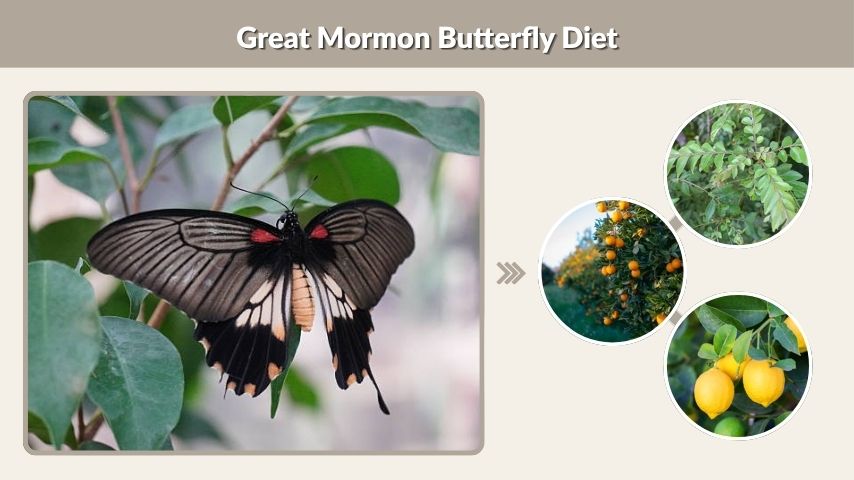
The great Mormon butterfly feeds mainly on sugary liquids and plant-based food sources. Adult butterflies visit flowers frequently, while caterpillars feed on specific host plants during development. Their feeding habits contribute to pollination and healthy ecosystem function in tropical habitats.
What Adult Great Mormon Butterflies Eat
Adult butterflies mainly drink flower nectar for energy. They may also feed on moisture from wet soil and juices from ripe or rotting fruits to obtain extra minerals and nutrients.
Caterpillar Food Plants
- Citrus trees
- Curry leaf plants
- Orange and lemon plants
- Rutaceae family plants
- Wild forest host plants
Feeding Behavior
Great mormon butterflies are active feeders during sunny daytime hours. They glide between flowers while searching for nectar and may gather on moist ground to absorb minerals through mud-puddling behavior.
Life Cycle of the Great Mormon Butterfly
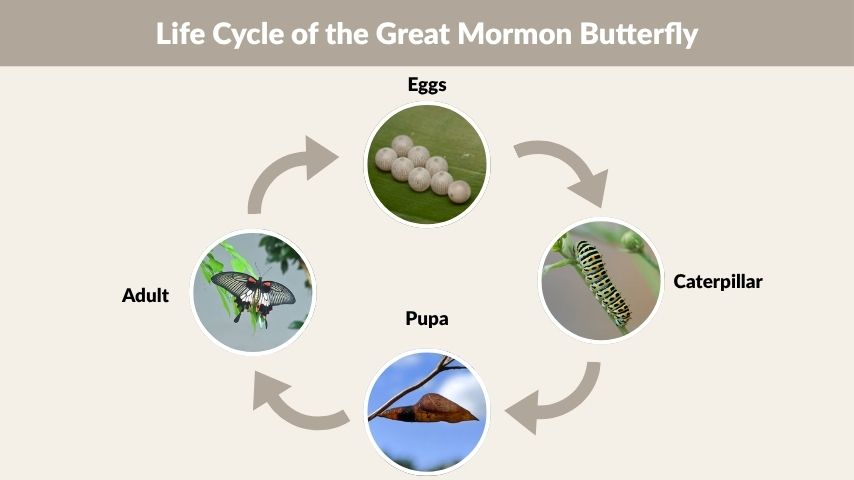
The great Mormon butterfly passes through four stages of complete metamorphosis. Each stage has a unique role in the butterfly’s development and survival. From tiny eggs to large colorful adults, the transformation process helps this species adapt successfully to tropical environments filled with predators and changing weather conditions.
Egg Stage
Female great mormon butterflies lay small eggs on host plant leaves. The eggs are usually placed carefully on fresh leaves so newly hatched caterpillars can begin feeding immediately after emerging.
Caterpillar Stage
The caterpillar stage focuses mainly on eating and growth. Young caterpillars feed heavily on leaves and shed their skin multiple times before reaching full size. Early-stage caterpillars often resemble bird droppings, which helps them avoid predators.
Pupa Stage
After reaching maturity, the caterpillar forms a chrysalis attached to a branch or leaf. Inside the pupa, the insect undergoes a major transformation before emerging as an adult butterfly.
Adult Butterfly Stage
Adult great mormon butterflies emerge with soft folded wings that gradually expand and harden. Once fully developed, the butterfly begins feeding, searching for mates, and exploring suitable habitats for reproduction.
Behavior and Adaptations
The great Mormon butterfly has several adaptations that improve survival in tropical forests and gardens. Its strong flight, camouflage abilities, and female mimicry help protect it from predators. These butterflies are most active during warm sunny weather when flowers and host plants are abundant.
Flight Style
Great Mormon butterflies are strong and fast fliers. They glide smoothly through forests and gardens while occasionally flapping rapidly to change direction or avoid threats during flight.
Mimicry and Defense
- Females mimic poisonous butterfly species
- Dark wing colors provide camouflage
- Fast flight helps escape predators
- Caterpillars resemble bird droppings
- Hidden resting spots reduce visibility
Seasonal Activity
The species is usually active during warmer months with high humidity and flowering plant growth. Rainfall patterns and temperature changes may influence local butterfly populations throughout the year.
Great Mormon Butterfly Predators and Threats
Like many butterflies, the great mormon faces threats from predators and environmental changes. Birds, spiders, reptiles, and insects may prey on eggs, caterpillars, or adults. Human activities such as habitat destruction and pesticide use also affect butterfly survival.
Common Predators
Birds are among the main predators of adult butterflies. Spiders, lizards, and praying mantises commonly hunt caterpillars or resting butterflies in forests and gardens.
Habitat Loss
Deforestation and urban development continue to reduce natural habitats for the great mormon butterfly. Loss of host plants also decreases breeding opportunities and caterpillar survival.
Environmental Threats
- Pesticide exposure
- Pollution in natural habitats
- Climate change effects
- Forest fires
- Decline of nectar plants
Great Mormon vs Similar Swallowtail Butterflies

The great mormon butterfly is often confused with other large swallowtail species because of similar wing shapes and dark coloration. However, differences in markings, size, and female mimic forms help separate this species from related butterflies.
Great Mormon vs Common Mormon
| Feature | Great Mormon | Common Mormon |
| Size | Larger | Smaller |
| Wing Shape | Broader wings | Narrower wings |
| Habitat | Forests and gardens | Mostly urban areas |
| Female Forms | Multiple mimic forms | Fewer variations |
Great Mormon vs Red Helen
| Feature | Great Mormon | Red Helen |
| Wing Pattern | Variable markings | Red hindwing spots |
| Body Size | Larger | Slightly smaller |
| Flight Style | Fast and strong | Smooth gliding |
Interesting Facts About the Great Mormon Butterfly
The great Mormon butterfly is admired for its beauty, size, and unique mimicry behavior. Its role in pollination and biodiversity makes it important in tropical ecosystems.
Amazing Facts
- One of Asia’s largest swallowtail butterflies
- Females can mimic toxic butterfly species
- Strong flyer capable of fast movement
- Frequently visits flowers for nectar
- Important pollinator in tropical habitats
FAQs
What does the great Mormon butterfly eat?
Adult great mormon butterflies mainly feed on flower nectar, fruit juices, and mineral-rich moisture from damp soil. Their caterpillars commonly eat leaves from citrus plants and other plants in the Rutaceae family.
Where is the great mormon butterfly found?
The great mormon butterfly is found across South Asia and Southeast Asia. It commonly occurs in countries such as India, Bangladesh, Sri Lanka, Nepal, Myanmar, and Thailand in warm tropical habitats.
How big is the great mormon butterfly?
The great Mormon butterfly usually has a wingspan between 5 and 6 inches. Its large size makes it one of the biggest swallowtail butterflies found in Asia.
Is the great Mormon a swallowtail butterfly?
Yes, the great mormon belongs to the swallowtail butterfly family called Papilionidae. It is recognized for its broad wings, elegant flight, and tail-like wing extensions in some forms.
What plants do great Mormon caterpillars eat?
Great Mormon caterpillars mainly feed on citrus plants, curry leaf plants, and other members of the Rutaceae plant family. These plants provide important nutrients for larval growth and development.