
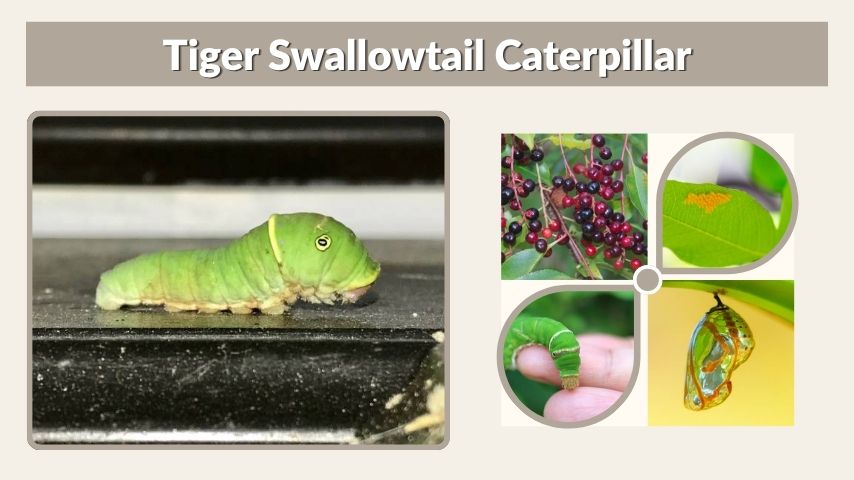
The tiger swallowtail caterpillar is one of the most interesting caterpillars found on trees and garden plants. It is best known for its green body, large fake eyes, and unusual defense behavior. Many people also notice its brown early stages and wonder if it is poisonous or safe to touch. This guide explains what a tiger swallowtail caterpillar looks like, how it grows, what it eats, and how to identify Eastern, Western, and Canadian tiger swallowtail caterpillars.
What Is a Tiger Swallowtail Caterpillar?
A tiger swallowtail caterpillar is the larval stage of a tiger swallowtail butterfly. Before becoming a large yellow-and-black butterfly, it spends time feeding on host plant leaves and growing through several stages. These caterpillars are often found on trees, shrubs, and woodland plants, depending on the species and region.
Common Tiger Swallowtail Species
Several species are commonly called tiger swallowtails. They look similar as caterpillars, but they may live in different regions and use different host plants.
- Eastern tiger swallowtail: Common in eastern North America
- Western tiger swallowtail: Found mainly in western North America
- Canadian tiger swallowtail: Common in northern areas
- Appalachian tiger swallowtail: Found in parts of the Appalachian region
Why People Notice This Caterpillar
People often notice tiger swallowtail caterpillars because they look unusual. Young caterpillars may look brown, black, or white like bird droppings. Older caterpillars are usually green and have large false eyespots that make them look like a small snake or cartoon character.
What Does a Tiger Swallowtail Caterpillar Look Like?
Tiger swallowtail caterpillars change appearance as they grow. This is why some people search for green, brown, orange, yellow, or black tiger swallowtail caterpillars. Their body color depends on the species, age, and stage. The most recognizable mature stage is usually green with large false eyespots near the front.
Baby Tiger Swallowtail Caterpillar
A baby tiger swallowtail caterpillar looks very different from the mature caterpillar. In the early stage, it is usually small and dark with pale markings. This makes it look like a bird dropping, which helps protect it from predators.
Green Tiger Swallowtail Caterpillar
The green tiger swallowtail caterpillar is the stage most people recognize. It has a soft, smooth body and large false eyespots near the head area. These are not real eyes. They are markings that help scare birds and other predators.
Brown Tiger Swallowtail Caterpillar
A brown tiger swallowtail caterpillar may be an early-stage caterpillar or one that is getting ready to form a chrysalis. Some caterpillars become dull, brownish, or less bright before pupation. This color change is normal and does not always mean the caterpillar is sick.
Tiger Swallowtail Caterpillar Stages
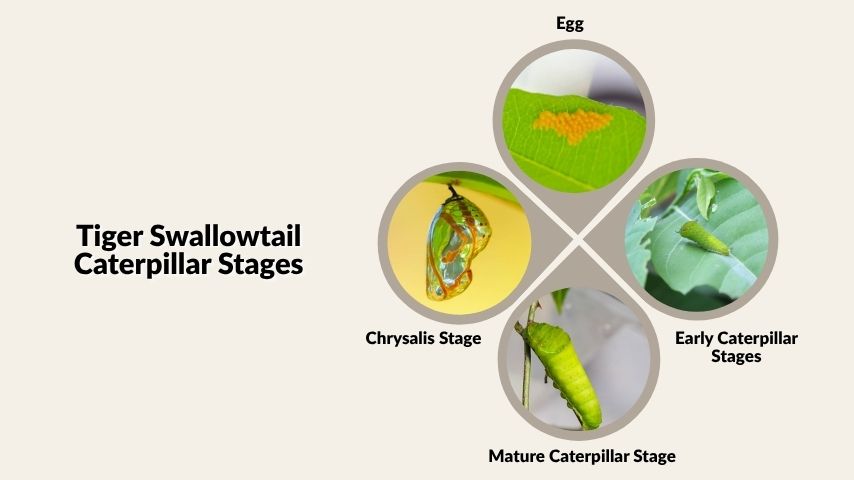
Tiger swallowtail caterpillars pass through several growth stages before becoming butterflies. These stages include egg, larva, chrysalis, and adult butterfly. The caterpillar stage itself has several instars, which means the caterpillar molts and grows larger several times before it is ready to pupate.
Egg Stage
The female butterfly lays a single egg on a suitable host plant leaf. The egg is small and easy to miss. After a short period, the tiny caterpillar hatches and begins feeding on the leaf.
Early Caterpillar Stages
In the first stages, the caterpillar is usually dark and marked with white or brown patterns. This bird-dropping mimicry helps it avoid being eaten. At this time, it is small and spends most of its time eating and resting on leaves.
Mature Caterpillar Stage
The mature tiger swallowtail caterpillar is usually green, plump, and smooth. It has large false eyespots and may rest on a silk pad on a leaf. This is the stage where many people compare it to Caterpie from Pokémon because of its cartoon-like appearance.
Chrysalis Stage
When the caterpillar finishes feeding, it may wander away from the leaf to find a safe place. Then it forms a chrysalis. A tiger swallowtail chrysalis may be brown, green, or grayish. In colder regions, the chrysalis may stay through winter before the adult butterfly emerges.
What Does a Tiger Swallowtail Caterpillar Eat?
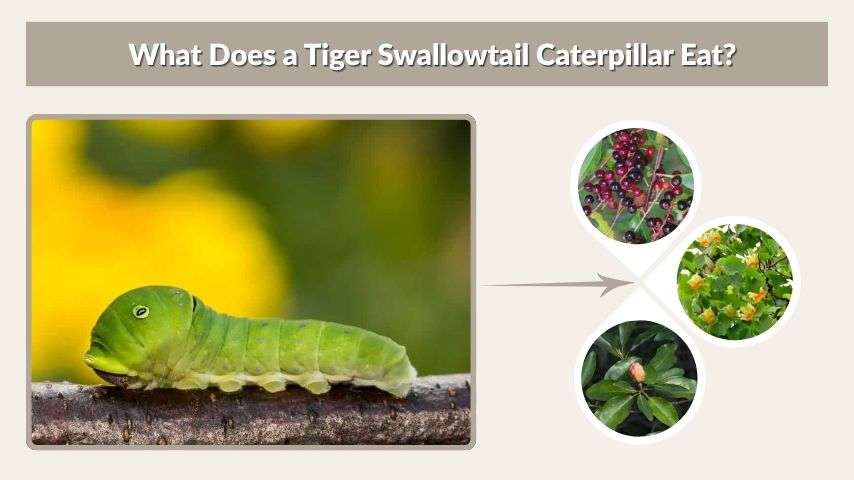
Tiger swallowtail caterpillars eat leaves from specific host plants. They do not drink nectar like adult butterflies. The correct food plant is very important because a caterpillar may not survive if it is moved to the wrong plant. Different tiger swallowtail species use different trees and shrubs as host plants.
Eastern Tiger Swallowtail Caterpillar Food
Eastern tiger swallowtail caterpillars feed on leaves from several trees and shrubs. Common host plants include:
- Wild cherry
- Tulip tree
- Sweetbay magnolia
- Birch
- Ash
- Willow
- Cottonwood
- Basswood
Western Tiger Swallowtail Caterpillar Food
Western tiger swallowtail caterpillars use many host plants found in western North America. Common examples include:
- Cottonwood
- Aspen
- Willow
- Wild cherry
- Ash
- Sycamore in some areas
Canadian Tiger Swallowtail Caterpillar Food
Canadian tiger swallowtail caterpillars are often linked with northern woodland trees. Their common food plants include birch, aspen, and black cherry. These plants provide the leaves the caterpillar needs before it becomes a chrysalis.
Tiger Swallowtail Caterpillar Host Plants
Host plants are the plants where female tiger swallowtail butterflies lay eggs and where the caterpillars feed after hatching. These plants are different from nectar flowers. Adult butterflies may visit many flowers for nectar, but caterpillars need specific leaves to survive. Knowing the host plant also helps with correct caterpillar identification.
Best Host Plants for a Butterfly Garden
If you want to support tiger swallowtail butterflies, choose native host plants that grow well in your region. Good choices may include wild cherry, tulip tree, birch, willow, ash, cottonwood, and magnolia. The best plant depends on whether Eastern, Western, or Canadian tiger swallowtails live in your area.
Can You Move a Tiger Swallowtail Caterpillar?
You should avoid moving a caterpillar unless it is in danger. If you must move it, place it on the same plant species it was already eating or on a known host plant. Moving it to the wrong plant can cause it to stop feeding.
Host Plant vs Nectar Plant
A host plant feeds the caterpillar. A nectar plant feeds the adult butterfly. For a complete butterfly-friendly garden, you need both. Host trees support the young caterpillars, while flowers provide nectar for adult tiger swallowtail butterflies.
Eastern Tiger Swallowtail Caterpillar Identification
The Eastern tiger swallowtail caterpillar is one of the most searched tiger swallowtail caterpillars. It is usually found on host trees in eastern North America. Its appearance changes from a small brown or dark caterpillar into a green caterpillar with large false eyespots. These changes make identification easier when you understand its life stages.
Eastern Tiger Swallowtail Caterpillar Brown Stage
A brown Eastern tiger swallowtail caterpillar is usually in an early instar or getting close to pupation. Early brown stages help the caterpillar blend in with leaves and droppings. Later brown coloring may appear before the chrysalis stage.
Eastern Tiger Swallowtail Caterpillar Eyes
The large “eyes” on an Eastern tiger swallowtail caterpillar are not real eyes. They are eyespots. These markings make the caterpillar look larger and more threatening to predators. The real eyes are tiny and much harder to see.
Eastern Tiger Swallowtail Caterpillar Chrysalis
When the Eastern tiger swallowtail caterpillar is ready to pupate, it stops feeding and looks for a safe place. It then forms a chrysalis attached by silk. The chrysalis may be brown, green, or grayish and may stay in place for days, weeks, or through winter.
Is a Tiger Swallowtail Caterpillar Poisonous?
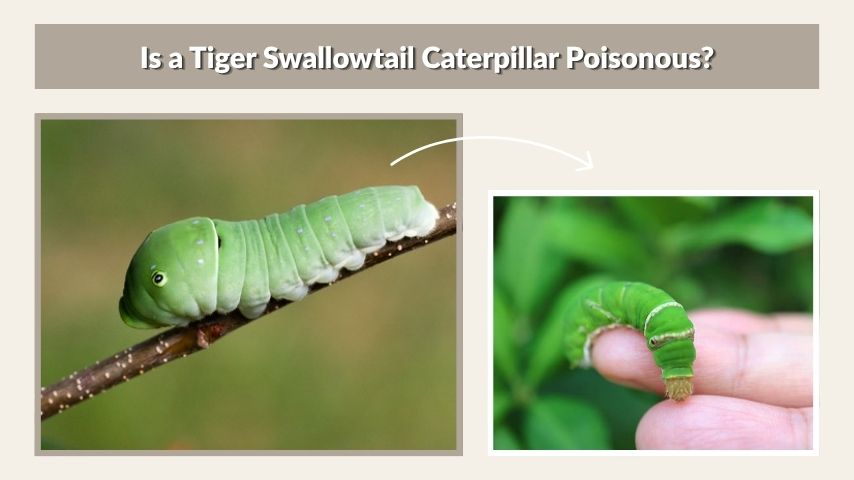
A tiger swallowtail caterpillar is not generally considered poisonous to people. It is not aggressive and does not have a dangerous bite. However, it is a delicate living insect, so it should not be handled roughly. The safest choice is to observe it on its host plant and avoid unnecessary touching.
Can You Touch an Eastern Tiger Swallowtail Caterpillar?
You can usually touch an Eastern tiger swallowtail caterpillar without being poisoned, but touching is not recommended unless necessary. Oils, pressure, or rough handling can harm the caterpillar. If you need to move it, use a leaf or small stick instead of your fingers.
Do Tiger Swallowtail Caterpillars Bite?
Tiger swallowtail caterpillars do not bite people in a harmful way. They have chewing mouthparts for eating leaves, but they are not dangerous to humans. If disturbed, they are more likely to use defense behavior than bite.
Are Tiger Swallowtail Caterpillars Dangerous?
Tiger swallowtail caterpillars are not dangerous to people, pets, or garden plants in the way many pests are. They may eat some leaves from host trees, but they usually do not cause serious damage to healthy trees.
How Does the Tiger Swallowtail Caterpillar Protect Itself?
Tiger swallowtail caterpillars use clever defenses to avoid predators. Their protection changes as they grow. Young caterpillars rely on camouflage, while older caterpillars use false eyespots and a special defensive organ. These defenses help them survive long enough to become butterflies.
Bird-Dropping Mimicry
Young tiger swallowtail caterpillars often look like bird droppings. This makes birds and other predators less interested in eating them. Their dark and pale markings are useful camouflage during the early stages.
False Eyespots
Older caterpillars develop large false eyespots near the front of the body. These markings can make the caterpillar look like a small snake or larger animal. This may scare predators away.
Osmeterium Defense
When threatened, a tiger swallowtail caterpillar may push out an orange, forked organ called an osmeterium. This organ can release an unpleasant smell. It is a defense tool used to discourage predators.
Black Swallowtail vs Tiger Swallowtail Caterpillar
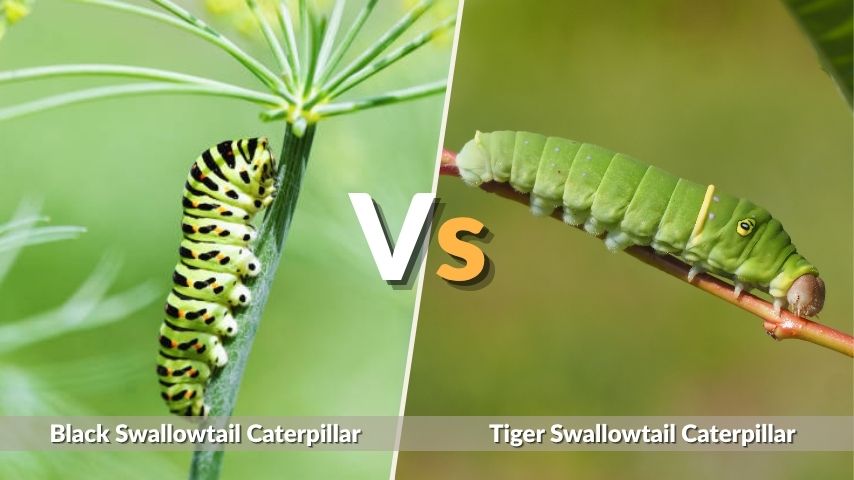
Black swallowtail and tiger swallowtail caterpillars are often confused, but they look and feed differently. Tiger swallowtail caterpillars are usually smooth, green, and marked with false eyespots when mature. Black swallowtail caterpillars usually have striped green, black, and yellow bodies and feed on different host plants.
Appearance Difference
A mature tiger swallowtail caterpillar looks plump and green with large eyespots. A black swallowtail caterpillar has bold stripes and spots across the body. It does not look as snake-like as a mature tiger swallowtail caterpillar.
Food Plant Difference
Tiger swallowtail caterpillars usually eat leaves from trees such as cherry, tulip tree, birch, willow, and ash. Black swallowtail caterpillars often eat plants in the carrot family, such as dill, fennel, parsley, and Queen Anne’s lace.
Raising a Tiger Swallowtail Caterpillar
Raising a tiger swallowtail caterpillar can be interesting, but it must be done carefully. The caterpillar needs the correct host plant, fresh leaves, clean space, and protection from pesticides. If you are not sure what species it is or what it eats, it is usually better to leave it outdoors.
Basic Care Tips
- Use fresh leaves from the same host plant
- Keep the container clean and dry
- Remove old leaves and frass daily
- Avoid leaves from sprayed plants
- Provide sticks or stems for pupation
- Release the butterfly outdoors after it emerges
When to Leave It Alone
Leave the caterpillar alone if it is already feeding well on a safe host plant. Wild caterpillars often do best in their natural environment. You should also avoid disturbing a caterpillar that is preparing to form a chrysalis.
FAQs
What does a tiger swallowtail caterpillar eat?
A tiger swallowtail caterpillar eats leaves from host plants. Common host plants include wild cherry, tulip tree, birch, ash, willow, cottonwood, magnolia, and aspen. The exact food plant depends on the species and region.
Is a tiger swallowtail caterpillar poisonous?
No, a tiger swallowtail caterpillar is not generally considered poisonous to people. It is safe to observe, but it should be handled gently or not handled at all because its body is soft and delicate.
What does an Eastern tiger swallowtail caterpillar look like?
An Eastern tiger swallowtail caterpillar is often green and smooth when mature, with large false eyespots near the front. Young caterpillars may be brown, blackish, or white-marked and can look like bird droppings.
What is the chrysalis of a tiger swallowtail caterpillar like?
The chrysalis is the pupal stage before the butterfly emerges. It may be brown, green, or grayish. In some regions, the chrysalis may remain through winter before the adult butterfly comes out.
How does a tiger swallowtail caterpillar protect itself?
It protects itself through bird-dropping mimicry, false eyespots, and an orange defensive organ called an osmeterium. These defenses help scare away or confuse predators.