
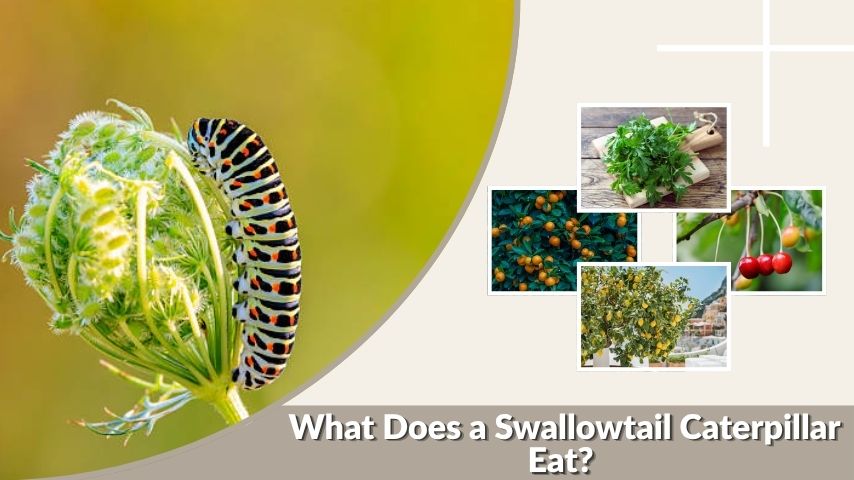
Swallowtail caterpillars eat the leaves, flowers, and tender parts of specific host plants. The exact food depends on the swallowtail species. Some eat parsley and dill, while others feed on spicebush, sassafras, citrus, pipevine, tulip tree, birch, or wild cherry. Knowing the right host plant is important because most swallowtail caterpillars cannot survive on random garden leaves.
Swallowtail Caterpillar Diet Overview
Swallowtail caterpillars do not eat the same food as adult swallowtail butterflies. Adult butterflies drink nectar from flowers, but caterpillars need host plants. A host plant is the plant where a female butterfly lays eggs and where the young caterpillar feeds after hatching.
This is why a garden can attract adult butterflies but still fail to support caterpillars. Flowers may bring butterflies in, but host plants allow them to complete their life cycle.
Why Host Plants Matter
Swallowtail caterpillars are usually selective feeders. Their bodies are adapted to certain plant families. If you move a caterpillar from its host plant to the wrong plant, it may refuse to eat and die.
For example, a black swallowtail caterpillar found on parsley should not be moved to a citrus tree. A giant swallowtail caterpillar on citrus should not be moved to dill. Each species has its own preferred food plants.
Common Swallowtail Caterpillar Foods
Different swallowtail species eat different plants, but many fall into clear groups:
- Black swallowtails eat carrot-family herbs.
- Spicebush swallowtails eat spicebush, sassafras, and related plants.
- Tiger swallowtails eat leaves of trees such as cherry, tulip tree, birch, ash, and willow.
- Giant swallowtails eat citrus-family plants.
- Pipevine swallowtails eat pipevine plants.
- Canadian tiger swallowtails eat birch, aspen, and black cherry.
The safest way to identify the right food is to check the plant where the caterpillar was found.
What Does a Black Swallowtail Caterpillar Eat?
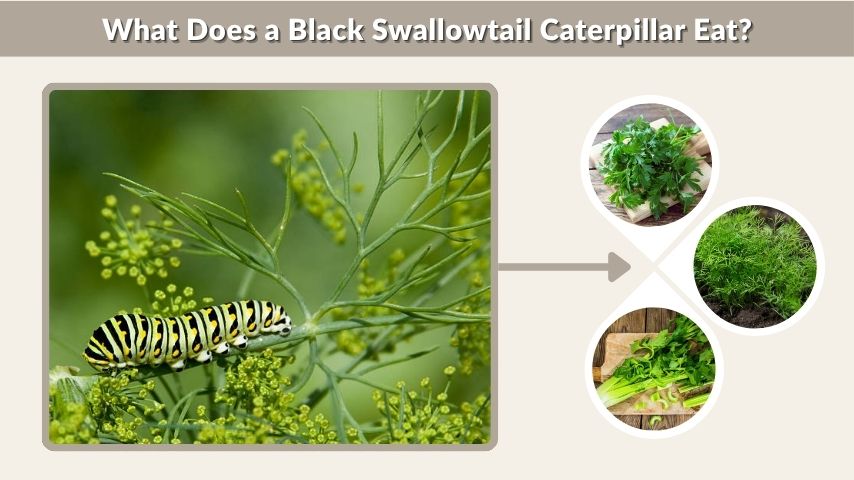
A black swallowtail caterpillar usually eats plants in the carrot family. This is why gardeners often find it on parsley, dill, fennel, carrots, celery, and Queen Anne’s lace. It may also use related herbs such as rue in some gardens.
Black swallowtail caterpillars are sometimes called parsley worms because they commonly feed on parsley. They can look alarming when they eat garden herbs, but they later become beautiful black swallowtail butterflies.
Best Food Plants for Black Swallowtails
If you want to support black swallowtail caterpillars, grow extra plants so there is enough for both you and the caterpillars.
Good host plants include:
- Parsley
- Dill
- Fennel
- Carrot tops
- Celery leaves
- Queen Anne’s lace
- Rue
These caterpillars may eat leaves, flowers, and seed heads. They often feed heavily as they grow, especially in the later stages.
Should You Remove Them From Herbs?
In most home gardens, black swallowtail caterpillars are better tolerated than removed. They may chew parsley or dill, but they rarely cause serious long-term damage if you plant enough herbs. If you need to move one, place it on another suitable carrot-family plant nearby.
What Does a Spicebush Swallowtail Caterpillar Eat?
A spicebush swallowtail caterpillar eats leaves from spicebush and several related trees and shrubs. It is most strongly linked with spicebush and sassafras, but it may also use sweet bay, red bay, and tulip tree in some regions.
These caterpillars are famous for hiding inside folded leaves. They pull leaf edges together with silk, creating a small shelter where they rest when they are not feeding.
Main Spicebush Swallowtail Host Plants
The best-known host plants include:
- Spicebush
- Sassafras
- Sweet bay
- Red bay
- Tulip tree
If you find a green caterpillar with large eyespots tucked inside a folded spicebush or sassafras leaf, it may be a spicebush swallowtail caterpillar.
Why It Hides in Leaves
Spicebush swallowtail caterpillars use leaf shelters for protection. The folded leaf hides them from predators and harsh weather. They come out to feed and then return to the shelter.
This behavior is useful for identification. If you are looking for caterpillars, check folded leaves rather than only exposed leaf surfaces.
Swallowtail Caterpillar Food by Species
Use this table as a quick reference when identifying what a swallowtail caterpillar eats.
| Swallowtail Caterpillar | Common Food Plants | Where You May Find It |
| Black swallowtail | Parsley, dill, fennel, carrot, celery, Queen Anne’s lace | Herb gardens, vegetable gardens, meadows |
| Spicebush swallowtail | Spicebush, sassafras, sweet bay, red bay, tulip tree | Woodlands, native gardens, shrub borders |
| Tiger swallowtail | Wild cherry, tulip tree, ash, birch, cottonwood, willow, magnolia | Trees, forest edges, parks |
| Canadian tiger swallowtail | Birch, aspen, black cherry | Northern woods and forest edges |
| Giant swallowtail | Citrus, wild lime, hop tree, Hercules’ club | Citrus trees, warm gardens, forest margins |
| Pipevine swallowtail | Pipevine and Dutchman’s pipe species | Native plant gardens, woodland edges |
What Does a Tiger Swallowtail Caterpillar Eat?
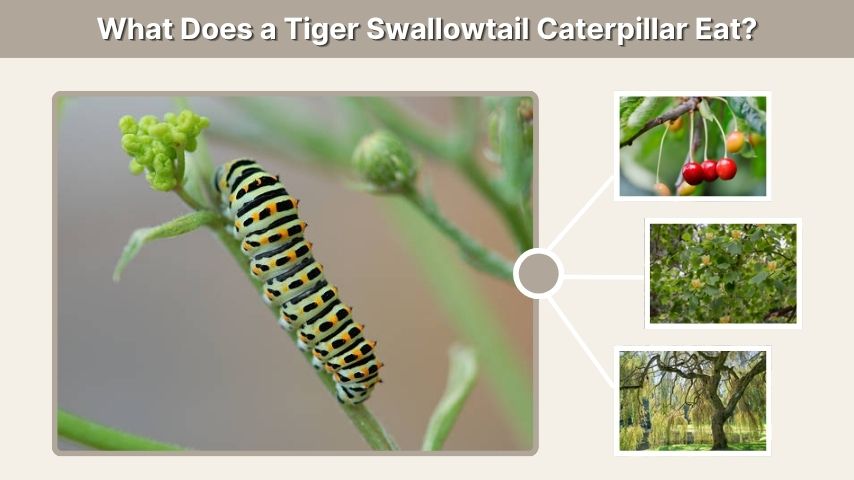
Tiger swallowtail caterpillars usually eat leaves from trees rather than herbs. Depending on the species and region, they may use wild cherry, tulip tree, birch, ash, cottonwood, willow, magnolia, or other woody plants.
This group includes eastern tiger swallowtails, western tiger swallowtails, and Canadian tiger swallowtails. Their host plants can overlap, but location helps narrow the identification.
Eastern and Western Tiger Swallowtail Food
Tiger swallowtail caterpillars often feed on native trees and shrubs. Common host plants can include:
- Wild cherry
- Tulip tree
- Ash
- Birch
- Willow
- Cottonwood
- Magnolia
- Aspen
A tiger swallowtail caterpillar may look green with false eyespots when mature. Younger caterpillars may look like bird droppings, which helps them avoid predators.
What Does a Canadian Tiger Swallowtail Caterpillar Eat?
Canadian tiger swallowtail caterpillars eat leaves of birch, aspen, and black cherry. They are associated with northern deciduous and mixed forests, forest edges, and areas where these host trees grow.
If you are in a northern region and find a swallowtail caterpillar on birch or aspen, Canadian tiger swallowtail is one possibility.
What Does a Giant Swallowtail Caterpillar Eat?
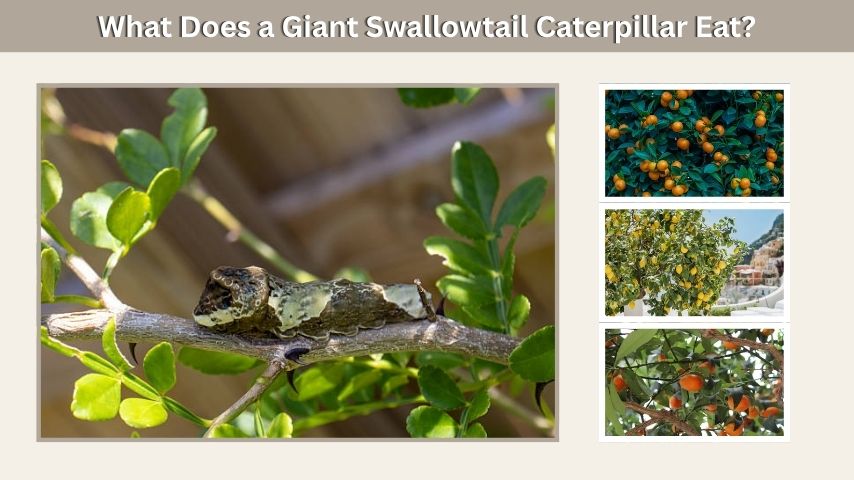
A giant swallowtail caterpillar eats plants in the citrus family. It is often found on citrus trees such as orange, lemon, lime, grapefruit, and other related plants. It can also feed on native citrus relatives, including wild lime, hop tree, and Hercules’ club.
The caterpillar is sometimes called an “orangedog” because it feeds on citrus leaves. It has a brown-and-white bird-dropping appearance that helps protect it from predators.
Giant Swallowtail Host Plants
Good host plants for giant swallowtails include:
- Orange
- Lemon
- Lime
- Grapefruit
- Kumquat
- Wild lime
- Hop tree
- Hercules’ club
A few caterpillars may not seriously harm a mature citrus tree, but young citrus trees can lose leaves quickly if several larvae are feeding at once.
Should You Protect Citrus Trees?
If the tree is small or newly planted, you may move caterpillars to a larger citrus-family host plant if one is available. Avoid spraying pesticides if your goal is to protect butterflies. Hand-moving is usually better than chemical control in a butterfly garden.
What Does a Pipevine Swallowtail Caterpillar Eat?
Pipevine swallowtail caterpillars eat pipevine plants, especially species in the genus Aristolochia. They are highly specialized feeders and should not be moved to unrelated plants.
These caterpillars often feed in groups when young. They may appear dark, spiny, and dramatic compared with green swallowtail caterpillars. Their food plants contain chemical compounds that help make the caterpillars and butterflies less appealing to predators.
Best Pipevine Host Plants
The best pipevine plants depend on your region. Native pipevine species are usually the safest choice. Some gardeners grow Dutchman’s pipe, woolly Dutchman’s pipe, or other native Aristolochia species where appropriate.
Be careful with non-native pipevine plants. Some ornamental species may attract egg-laying butterflies but may not properly support the caterpillars. For butterfly gardening, choose native host plants suited to your area.
Can Swallowtail Caterpillars Eat Lettuce or Random Leaves?
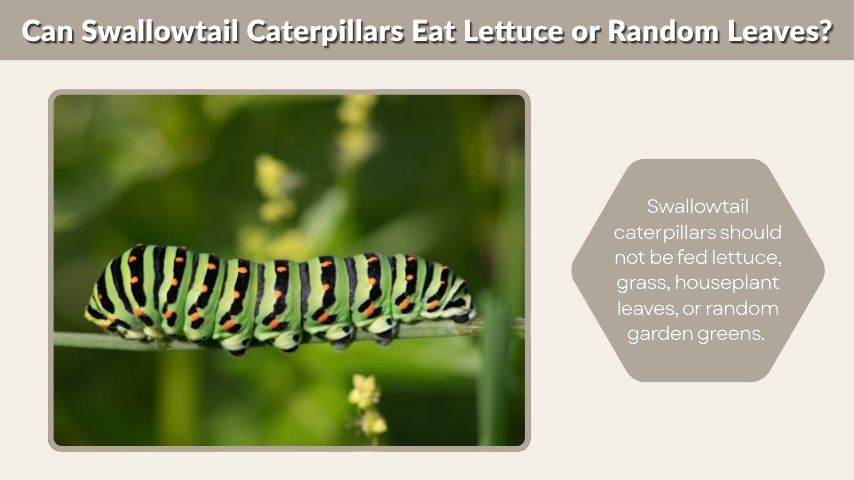
Swallowtail caterpillars should not be fed lettuce, grass, houseplant leaves, or random garden greens. Even if a caterpillar takes a few bites, the plant may not provide the right chemistry or nutrition. Most swallowtail caterpillars need their correct host plants to survive.
If you find a caterpillar and are unsure what to feed it, first identify the plant where it was found. That plant is usually the best food source. If the plant is unavailable, identify the caterpillar species before offering a substitute.
What to Do If You Find One
Follow these steps:
- Look at the plant it was eating.
- Take a clear photo of the caterpillar and plant.
- Identify the plant family.
- Match the caterpillar to a local swallowtail species.
- Move it only to another correct host plant.
Do not move a caterpillar from parsley to a tree, or from citrus to parsley. Host plant matching is more important than general leaf availability.
How Much Do Swallowtail Caterpillars Eat?
Swallowtail caterpillars eat more as they grow. A tiny newly hatched caterpillar may only make small holes in leaves. A mature caterpillar can chew much more quickly, especially right before it forms a chrysalis.
In most gardens, the feeding is temporary. Caterpillars do not stay in the feeding stage forever. After they finish growing, they leave the host plant or settle nearby to pupate.
When Feeding Looks Heavy
Feeding may look heavy on small herbs like dill or parsley because the plant has less foliage. A few black swallowtail caterpillars can strip a small dill plant. To avoid losing all your herbs, plant extra host plants in different spots.
Tree-feeding swallowtails usually cause less noticeable damage because trees have more leaves. A few caterpillars on a mature tree are rarely a serious issue.
How to Grow Food for Swallowtail Caterpillars
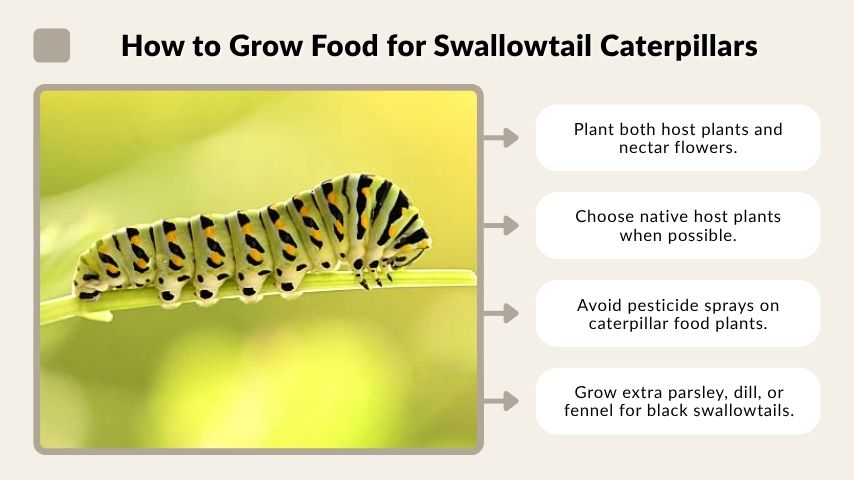
The best way to help swallowtail caterpillars is to grow host plants before butterflies arrive. Female butterflies search for the correct plants when laying eggs.
Garden Tips
To create a swallowtail-friendly garden:
- Plant both host plants and nectar flowers.
- Choose native host plants when possible.
- Avoid pesticide sprays on caterpillar food plants.
- Grow extra parsley, dill, or fennel for black swallowtails.
- Include shrubs or trees for tiger and spicebush swallowtails.
- Keep some leaves with minor chewing damage.
A perfect butterfly garden is not spotless. A few chewed leaves are a sign that your garden is supporting the full butterfly life cycle.
FAQs
What does a swallowtail caterpillar eat?
A swallowtail caterpillar eats the leaves and tender parts of its host plant. The exact plant depends on the species. Black swallowtails eat parsley, dill, fennel, and carrot family plants, while giant swallowtails eat citrus-family plants.
What does a black swallowtail caterpillar eat?
A black swallowtail caterpillar eats carrot-family plants such as parsley, dill, fennel, carrot tops, celery, and Queen Anne’s lace. Gardeners often find them on herb plants, where they feed until they are ready to form a chrysalis.
What does a spicebush swallowtail caterpillar eat?
A spicebush swallowtail caterpillar mainly eats spicebush and sassafras. It may also feed on sweet bay, red bay, and tulip tree. These caterpillars often hide inside folded leaves, which they use as shelters.
What does a giant swallowtail caterpillar eat?
A giant swallowtail caterpillar eats citrus-family plants. Common foods include orange, lemon, lime, grapefruit, wild lime, hop tree, and Hercules’ club. On citrus trees, the caterpillar is often called an orangedog.
Can swallowtail caterpillars eat any leaves?
No. Swallowtail caterpillars usually need specific host plants. Random leaves, lettuce, grass, or unrelated garden plants are not good substitutes. The best food is usually the same plant where the caterpillar was found.