
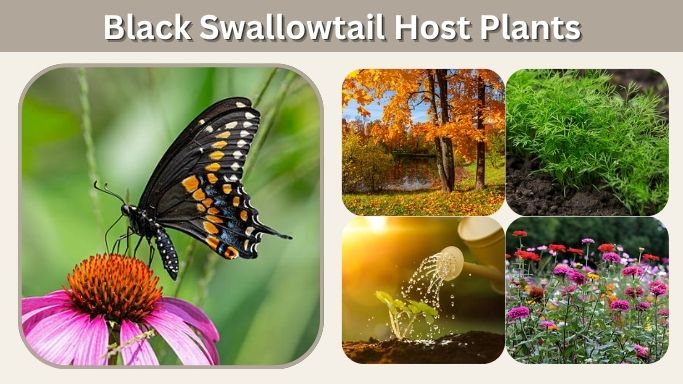
Black swallowtail host plants are the plants where female butterflies lay eggs and where their caterpillars feed after hatching. Most black swallowtail caterpillar host plants belong to the carrot family, including parsley, dill, fennel, carrots, and Queen Anne’s lace. Gardeners often find the striped green, black, and yellow caterpillars eating herb leaves. Instead of removing them, you can plant extra host plants to support the butterfly life cycle.
What Are Black Swallowtail Host Plants?
Black swallowtail host plants are not the same as nectar flowers. Nectar flowers feed adult butterflies, while host plants feed the caterpillars. Without the right host plant, a black swallowtail caterpillar cannot complete its life cycle.
The University of Florida Extension notes that black swallowtail caterpillars feed only on plants in the carrot family, including dill, fennel, parsley, cilantro, and carrots. The same source also explains that dill and fennel flowers attract beneficial insects and other pollinators.
Host Plant Meaning
A host plant is a plant used by a butterfly for reproduction. The adult female butterfly finds the correct plant, lays eggs on it, and the young caterpillars eat the leaves after hatching.
For black swallowtails, the host plant must be suitable for the larvae. A caterpillar cannot simply move to any garden plant and survive. This is why planting the correct herbs and native plants is important.
Host Plants vs Nectar Plants
Many people confuse host plants with nectar plants. Both are useful, but they serve different stages of the butterfly’s life.
Adult black swallowtails visit nectar flowers for energy. Caterpillars need host plants for growth. A complete butterfly garden should have both.
| Plant Type | Main Purpose | Examples |
| Host plants | Feed caterpillars | Parsley, dill, fennel, carrot, rue |
| Nectar plants | Feed adult butterflies | Zinnia, milkweed, lantana, coneflower |
| Native host plants | Support caterpillars naturally | Golden Alexander, water hemlock relatives, native Apiaceae |
| Garden herbs | Easy backyard host plants | Parsley, dill, cilantro, fennel |
Why Host Plants Matter
Host plants matter because butterflies need them to reproduce. If a garden has only flowers but no caterpillar food, adult butterflies may visit but not stay to raise the next generation.
Planting host plants helps:
- Support the full butterfly life cycle
- Provide food for caterpillars
- Encourage egg-laying
- Increase butterfly activity in the garden
- Create a more balanced pollinator habitat
- Teach children about metamorphosis
A host plant garden may look slightly chewed at times, but that is a sign the plants are doing their job.
Best Host Plants for Black Swallowtail Butterflies
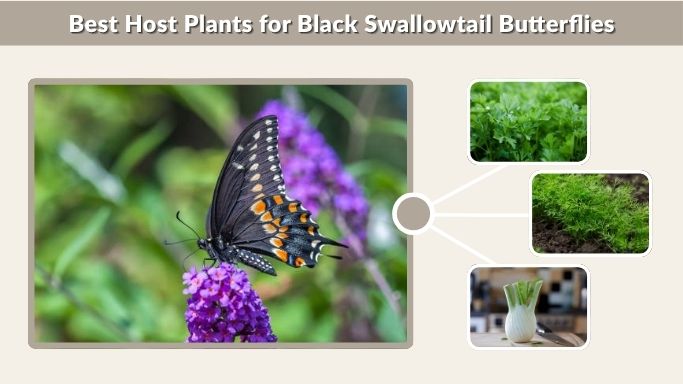
The best host plants for black swallowtail butterflies are usually members of the carrot family, also called Apiaceae. Many common kitchen herbs belong to this family, which makes black swallowtails easy to attract in home gardens.
KidsGardening says gardeners who grow parsley, dill, fennel, or carrots may find colorful black swallowtail larvae feeding on the foliage.
Parsley
Parsley is one of the most common black swallowtail butterfly host plants. Female butterflies often lay eggs on parsley leaves, and caterpillars eat the foliage as they grow.
Parsley is useful because it is easy to grow in pots, raised beds, and herb gardens. Curly parsley and flat-leaf parsley can both work. If you use parsley in the kitchen, plant extra so caterpillars have enough food.
Dill
Dill is another excellent host plant for black swallowtail caterpillars. It has soft, feathery leaves that young caterpillars can eat easily. Dill also produces umbrella-shaped flower clusters that attract small pollinators and beneficial insects.
Dill grows quickly, but it can also disappear quickly if several caterpillars feed on it. Planting multiple dill plants is better than relying on only one.
Fennel
Fennel is often one of the strongest host plants because it grows larger than many herbs. Bronze fennel and green fennel can both attract black swallowtails.
Fennel is especially useful because it provides a lot of foliage. However, it can reseed freely in some areas, so gardeners should manage it carefully. If allowed to flower, fennel can also bring bees, wasps, and other beneficial insects into the garden.
Black Swallowtail Caterpillar Host Plants
Black swallowtail caterpillar host plants must provide safe, edible leaves for growing larvae. The caterpillars do not eat the same foods as adult butterflies. Adults drink nectar, while caterpillars chew leaves.
The black swallowtail caterpillar usually starts small and dark, then becomes green with black bands and yellow spots. These caterpillars are often found on herbs in the carrot family.
Common Caterpillar Food Plants
Black swallowtail caterpillars can feed on several garden and wild plants. Some are better for small gardens, while others work better in meadows or naturalized areas.
Common caterpillar host plants include:
- Parsley
- Dill
- Fennel
- Carrot tops
- Cilantro
- Celery
- Lovage
- Queen Anne’s lace
- Golden Alexander
- Rue
Not every plant will be equally attractive in every garden. Local butterfly populations, plant health, season, and location can affect which host plants are used most.
Carrot Tops and Celery
Carrots and celery can also serve as host plants. Black swallowtail caterpillars eat the leaves, not the orange carrot root. If you grow carrots for food, you may need to plant extra or protect part of the crop.
Celery can work, but it may not always be the first choice in every garden. Still, it belongs to the same plant family and can support caterpillars when eggs are laid on it.
Cilantro and Lovage
Cilantro is a good short-season host plant, especially in cooler weather. When cilantro bolts and flowers, it may still support insects in the garden. Caterpillars may eat the leaves before the plant finishes its cycle.
Lovage is a larger perennial herb that can act as a strong host plant. Some gardeners like lovage because it returns year after year and produces enough foliage to handle caterpillar feeding.
Native Black Swallowtail Host Plants
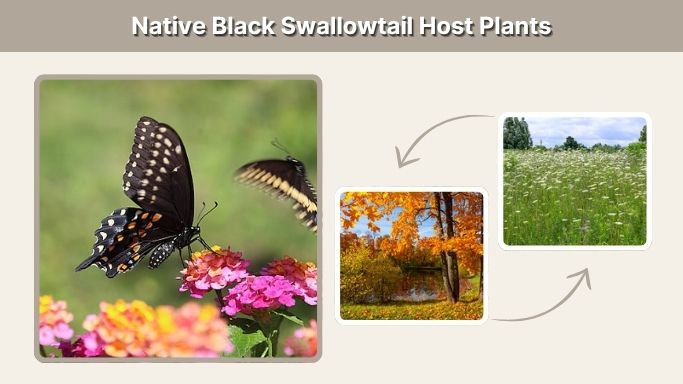
Native black swallowtail host plants are valuable because they fit local ecosystems better than many garden herbs. They can support caterpillars while also feeding native pollinators and blending into natural landscapes.
The eastern black swallowtail uses many members of the carrot family, and native host options may vary by region. Golden Alexander is often recommended in eastern North America because it is a native carrot-family plant and can serve as a host for black swallowtails.
Golden Alexander
Golden Alexander is one of the best native host plants for black swallowtail butterflies in many eastern regions. It is a perennial plant with yellow flower clusters and is easier to include in native plant gardens than some wild carrot-family plants.
It is useful because it blooms early and supports pollinators. It can also help attract egg-laying females before parsley and dill are fully established.
Queen Anne’s Lace
Queen Anne’s lace is commonly used by black swallowtails, but gardeners should be careful. It is not native to North America and can spread aggressively in some areas. It also looks similar to some toxic plants, which can make wild plant identification risky.
If Queen Anne’s lace already grows nearby, black swallowtails may use it. However, for intentional planting, many gardeners prefer controlled herbs or native options like Golden Alexander.
Native Options by Region
Native host plant choices can vary by location. A plant that works well in Pennsylvania may not be the best choice for Florida or New England. Always check local native plant guidance before adding wild species.
Useful regional planning tips:
- Choose native Apiaceae when possible.
- Plant several host species, not just one.
- Avoid collecting unknown wild plants.
- Use nursery-grown native plants.
- Keep some plants in sunny areas.
- Avoid pesticides on host plants.
- Let some herbs flower and reseed.
For New England, Pennsylvania, and similar eastern areas, Golden Alexander can be a strong native choice. In Florida, gardeners often use dill, fennel, parsley, and other herbs, but native options should be checked locally.
Black Swallowtail Host Plants in Florida
Black swallowtails can be seen in many parts of Florida, and gardeners often attract them with common herbs. Warm weather can support long growing seasons, but heat, humidity, and plant timing matter.
Florida gardeners should focus on healthy host plants, enough foliage, and pesticide-free growing areas.
Best Florida Garden Choices
In Florida gardens, common host plants include dill, fennel, parsley, cilantro, and carrots. The University of Florida Extension highlights dill, fennel, and parsley as culinary herbs that also work as butterfly plants for black swallowtail caterpillars.
Good Florida options include:
- Dill
- Fennel
- Parsley
- Cilantro
- Carrot tops
- Rue, where suitable
- Local native carrot-family plants
Because Florida weather can be hot, some herbs may perform better in cooler seasons. Planting in different times of year can provide more consistent caterpillar food.
Planting in Multiple Spots
Planting host plants in multiple areas helps protect the caterpillars. If all host plants are in one pot, a group of caterpillars may quickly eat everything. Multiple patches also make it easier for female butterflies to find egg-laying sites.
Place some host plants in sunny spots and others where they get afternoon protection. Keep the soil healthy and avoid letting young plants dry out too much.
Avoid Sprays on Herbs
Do not use insecticides on plants meant for caterpillars. Even organic or natural sprays can harm butterfly larvae. If aphids or other pests appear, use gentle methods such as hand removal or water spray away from caterpillars.
A host plant should be safe to eat. If it has been sprayed with harmful chemicals, it may kill the caterpillars instead of helping them.
Do Black Swallowtail Caterpillars Kill Host Plants?
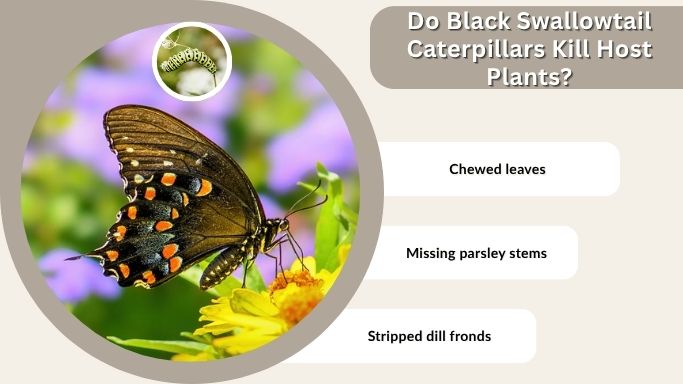
Black swallowtail caterpillars can make host plants look damaged, but they usually do not kill healthy, established plants. Small parsley or dill seedlings may be eaten down quickly if several caterpillars are present, but larger plants often recover.
The key is to plant enough host plants before caterpillars arrive.
How Much Damage to Expect
Caterpillars chew leaves as they grow. Young caterpillars eat small amounts, but larger caterpillars can eat quickly. A plant may look bare near the end of the caterpillar stage.
Normal feeding signs include:
- Chewed leaves
- Missing parsley stems
- Stripped dill fronds
- Caterpillar droppings
- Several larvae on one plant
- Foliage disappearing quickly
This damage is part of the butterfly life cycle. If the plant is healthy and well-watered, it may grow back.
Protecting Your Herb Harvest
If you want both herbs and butterflies, plant extra. Divide your herb garden into two parts: one for the kitchen and one for caterpillars.
Helpful methods include:
- Plant more than you need.
- Grow parsley and dill in several pots.
- Move caterpillars only to safe host plants.
- Keep some plants covered for harvest.
- Let other plants become butterfly food.
- Avoid spraying edible or host plants.
Do not move caterpillars to random plants. They need the correct host plant to survive.
What If Caterpillars Eat Everything?
If caterpillars eat all available leaves, they may wander in search of more food. You can help by providing more of the same safe host plant. For example, if they are eating parsley, add more parsley or another suitable carrot-family host.
Do not give lettuce, grass, random weeds, or plantain unless you know the species can use them. Plantain is not a normal black swallowtail host plant.
Will Black Swallowtail Caterpillars Cocoon on Host Plants?
Black swallowtail caterpillars may form a chrysalis on or near the host plant, but they often wander away before pupating. This is normal behavior. When a caterpillar is fully grown, it may leave the food plant to find a safe place to attach.
The chrysalis stage is when the caterpillar transforms into an adult butterfly.
Where They Form a Chrysalis
A black swallowtail caterpillar may pupate on plant stems, fences, garden stakes, walls, pots, or nearby branches. It attaches with silk and forms a chrysalis that may be green or brown depending on surroundings.
Possible chrysalis sites include:
- Host plant stems
- Nearby shrubs
- Fence rails
- Garden netting
- Plant pots
- Wooden stakes
- Porch edges
- Outdoor walls
If you see a still caterpillar attached by silk, do not disturb it.
How Long the Chrysalis Lasts
The chrysalis may last a couple of weeks in warm conditions, but late-season chrysalises may overwinter. This means the butterfly may not emerge until spring.
Do not throw away dead-looking stems too quickly in winter. A chrysalis can look dry and still be alive. Gentle garden cleanup helps protect overwintering butterflies.
Should You Move a Chrysalis?
It is usually best not to move a chrysalis unless it is in danger. Moving it can damage the attachment or injure the developing butterfly. If it is attached in a risky place, careful relocation may be possible, but it should be done gently and only when necessary.
For most gardens, leaving it alone is the safest choice.
How to Plant Host Plants for Black Swallowtail Butterflies
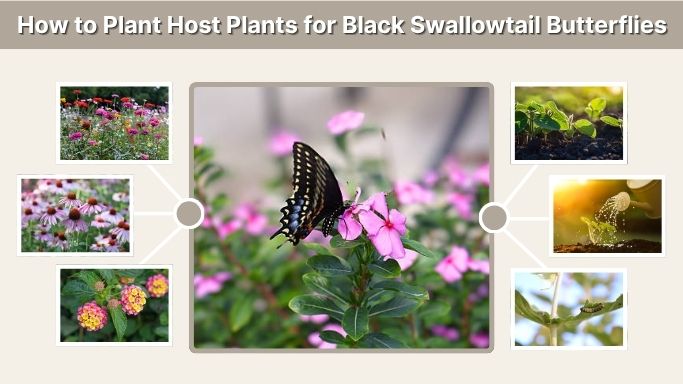
Planting host plants is simple, but success improves when you plan for the whole season. Black swallowtails may lay eggs when plants are small, so it helps to grow several plants at different stages.
A good butterfly garden includes host plants for caterpillars and nectar flowers for adults.
Sun, Soil, and Spacing
Most common black swallowtail host plants grow best in sun and well-drained soil. Parsley can tolerate a little shade, while dill and fennel usually prefer more sun.
Basic planting tips:
- Plant in full sun when possible.
- Use well-drained soil.
- Water young plants regularly.
- Space plants so they have airflow.
- Plant in groups so females can find them.
- Grow extra plants for caterpillars.
- Avoid insecticides and pesticide drift.
Healthy plants can handle caterpillar feeding better than weak or crowded plants.
Plant in Succession
Succession planting means planting new seeds or seedlings every few weeks. This helps keep fresh host plants available when butterflies lay eggs.
Dill and cilantro can finish quickly, especially in heat. Parsley lasts longer, and fennel can provide more foliage. Mixing short-season and longer-lasting plants gives caterpillars more options.
Add Nectar Flowers Nearby
Adult black swallowtails need nectar. If you plant only host plants, caterpillars may survive, but adult butterflies may not stay around as long.
Good nectar flowers include:
- Zinnia
- Coneflower
- Lantana
- Milkweed
- Verbena
- Joe-Pye weed
- Blazing star
- Bee balm
- Butterfly bush, where non-invasive
- Native wildflowers
A garden with both host plants and nectar flowers supports the full butterfly life cycle.
FAQs
What is the host plant for black swallowtail butterflies?
The main host plants for black swallowtail butterflies are plants in the carrot family. Common examples include parsley, dill, fennel, carrot tops, cilantro, celery, lovage, and Queen Anne’s lace. Native options such as Golden Alexander can also support caterpillars in some eastern regions.
What is the best host plant for black swallowtail caterpillars?
Parsley, dill, and fennel are among the best and easiest host plants for black swallowtail caterpillars in home gardens. Fennel provides lots of foliage, dill grows quickly, and parsley works well in pots. Planting several host plants is better than depending on one plant.
Do black swallowtail caterpillars kill parsley or dill?
Black swallowtail caterpillars can heavily chew parsley or dill, especially if the plant is small. However, healthy established plants often recover. To avoid losing all your herbs, plant extra host plants. Keep some for kitchen use and leave others for caterpillars.
Are black swallowtail host plants native?
Some black swallowtail host plants are native, while others are common garden herbs from other regions. Golden Alexander is a good native host plant in many eastern areas. Parsley, dill, fennel, and carrots are useful garden hosts, but they are not native North American wild plants.
Will black swallowtail caterpillars cocoon on the host plant?
Black swallowtail caterpillars may form a chrysalis on the host plant, but they often leave the plant and attach to a nearby stem, fence, pot, wall, or garden structure. This wandering is normal. Once attached with silk, the caterpillar should not be disturbed.