
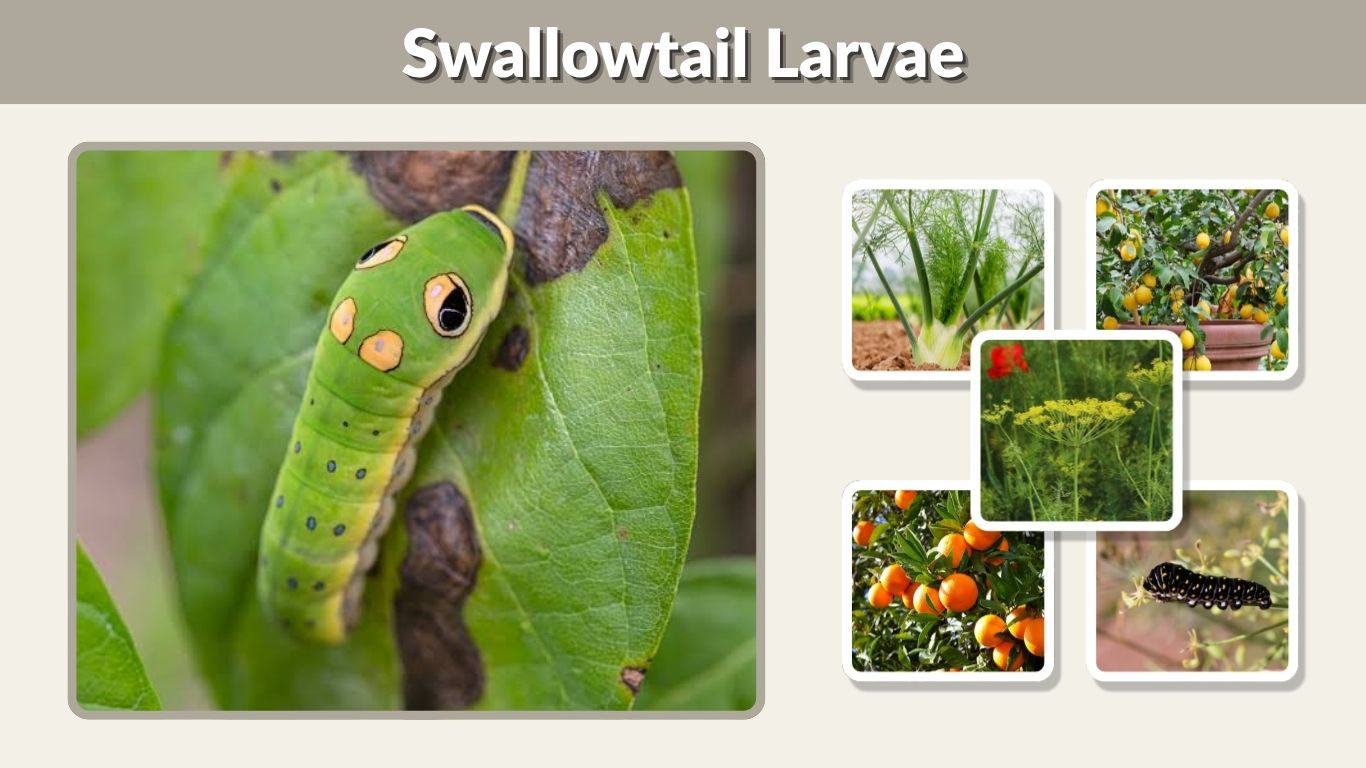
Swallowtail larvae are the caterpillar stage of butterflies belonging to the family Papilionidae. Depending on the species and age, these caterpillars may resemble bird droppings, tiny snakes, striped worms or dark, spiny creatures. Common examples include black swallowtail, giant swallowtail, tiger swallowtail, pipevine swallowtail and spicebush swallowtail larvae. Each species feeds on particular host plants, such as parsley, citrus, pawpaw or pipevine. Understanding their appearance, feeding habits and developmental stages helps gardeners identify and protect these beneficial butterfly larvae.
What Are Swallowtail Larvae?
A swallowtail larva is the immature, feeding stage between the egg and chrysalis in a swallowtail butterfly’s lifecycle. The terms larva and caterpillar describe the same life stage.
After mating, a female butterfly searches for the correct host plant and deposits her eggs on its leaves, flowers or stems. A tiny caterpillar hatches and begins eating the plant. As it grows, it repeatedly sheds its skin. Each period between skin changes is called an instar. After completing its final instar, the caterpillar forms a chrysalis and eventually emerges as an adult butterfly.
Most swallowtail species pass through five larval instars. Their color, shape and markings can change dramatically from one instar to the next, which explains why young and mature caterpillars may appear to be unrelated insects.
Swallowtail Larvae Identification
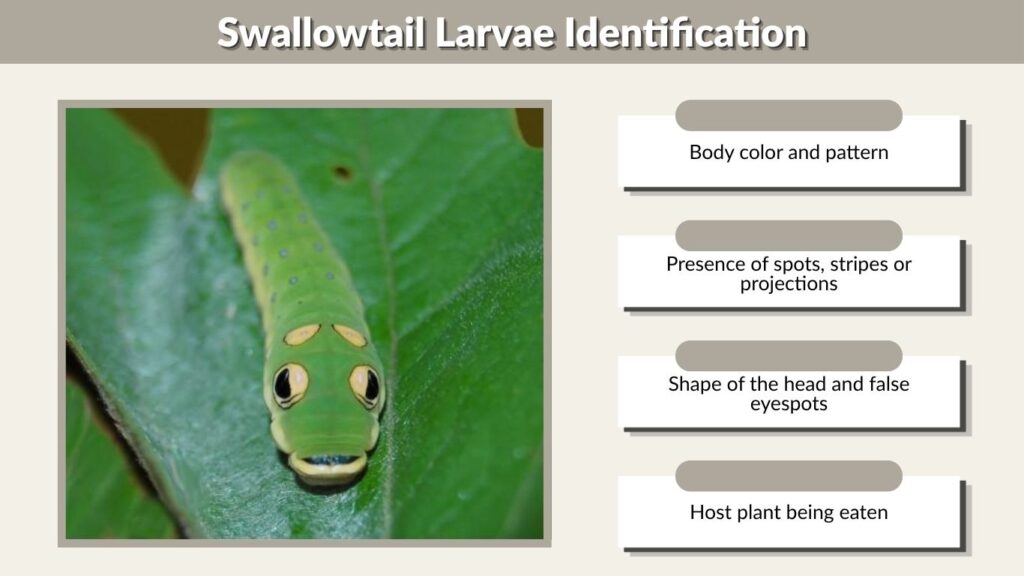
Swallowtail larvae have soft, segmented bodies, three pairs of true legs near the head and several pairs of fleshy prolegs along the abdomen. Most are smooth rather than hairy, although pipevine and polydamas swallowtails have prominent fleshy projections.
A particularly useful identification feature is the osmeterium. This forked organ remains hidden behind the head until the caterpillar feels threatened. It then extends the osmeterium and releases a strong odor that can discourage ants, spiders, birds and other predators.
Identification should consider:
- Body color and pattern
- Presence of spots, stripes or projections
- Shape of the head and false eyespots
- Host plant being eaten
- Geographic location
- Size and larval stage
The host plant is often one of the strongest clues. Swallowtail caterpillars may look similar, but each species generally feeds within a limited group of related plants. Photographs are also more useful when the host plant is recorded.
Common Swallowtail Larvae and Their Food
| Swallowtail species | Mature larva appearance | Main host plants |
|---|---|---|
| Black swallowtail | Green with black bands and yellow spots | Parsley, dill, fennel and carrot |
| Giant swallowtail | Brown and cream, resembling bird droppings | Citrus, prickly ash and rue |
| Eastern tiger swallowtail | Green with large false eyespots | Tuliptree, wild cherry and ash |
| Pipevine swallowtail | Black or reddish with fleshy projections | Pipevines |
| Spicebush swallowtail | Green with snake-like eyespots | Spicebush, sassafras and redbay |
| Zebra swallowtail | Green with narrow yellow and dark bands | Pawpaw |
| Western tiger swallowtail | Green with eyespots | Willow, cottonwood and other trees |
Host relationships vary somewhat by region, but the food plant often provides a reliable way to narrow down identification.
Black Swallowtail Larvae
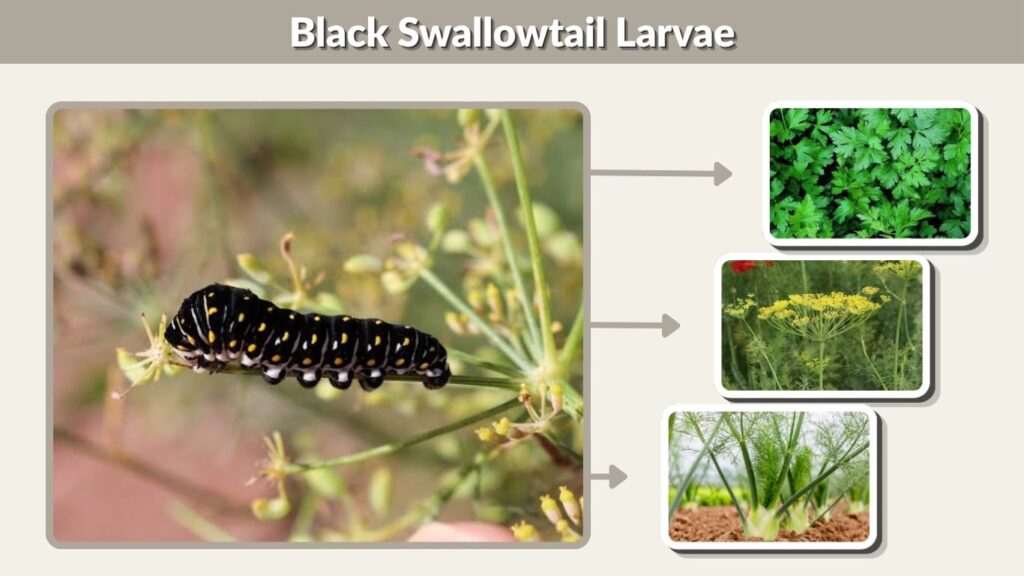
Black swallowtail larvae, scientifically called Papilio polyxenes, are among the caterpillars most frequently found in herb gardens.
Appearance and Stages
Newly hatched black swallowtail larvae are mostly black or dark brown, with small orange projections and a pale patch across the middle. This pattern resembles bird droppings and provides camouflage.
As they grow, the caterpillars become smoother and develop green, white, black and yellow markings. A mature larva is usually bright green with black crossbands containing yellow or orange spots. It may reach approximately 1½ inches long.
What Do Black Swallowtail Larvae Eat?
Their main food plants belong to the carrot family. Common choices include:
- Parsley
- Dill
- Fennel
- Carrot
- Celery
- Queen Anne’s lace
- Golden Alexander
Dill and parsley are especially common garden hosts.
Black swallowtail larvae do not normally eat basil because basil belongs to the mint family. A caterpillar found near basil may have wandered from a nearby parsley, dill or fennel plant while preparing to pupate.
The larval period often lasts approximately 10–30 days, depending on temperature, food and environmental conditions.
Giant Swallowtail Larvae
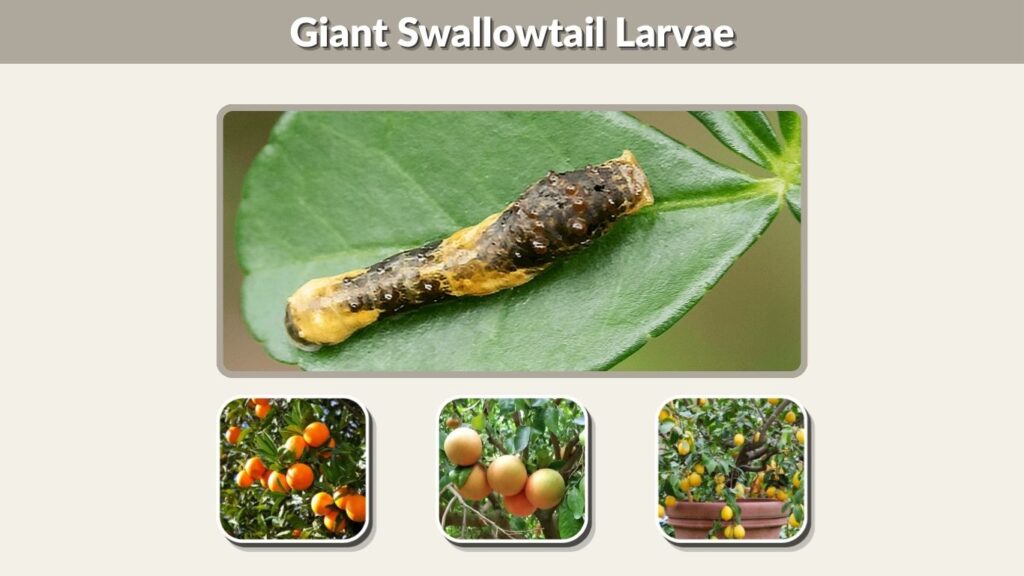
The giant swallowtail larva is commonly called an orange dog because it frequently feeds on orange, lemon and other citrus trees.
Identification
A giant swallowtail caterpillar looks very different from the striped black swallowtail larva. Its body is mottled brown, tan, cream and white, closely resembling fresh bird droppings.
The larva often rests motionless along a leaf or branch, making the disguise even more effective. When disturbed, it can extend a reddish or orange osmeterium that resembles a small snake’s tongue.
What Do Giant Swallowtail Larvae Eat?
Giant swallowtail larvae feed on plants in the citrus family, including:
- Orange trees
- Lemon trees
- Lime trees
- Grapefruit trees
- Wild lime
- Prickly ash
- Hercules club
- Common rue
Regional host-plant lists commonly include prickly ash and rue, while citrus trees are especially important in warmer areas.
Do They Harm Citrus Trees?
A few larvae usually do not seriously damage a mature, healthy citrus tree. They may remove noticeable portions of leaves, but established trees generally recover.
Very young citrus plants can be affected more heavily because they have fewer leaves. Instead of spraying insecticide, gardeners can move larvae carefully to another untreated citrus plant of the same type. Systemic pesticides should be avoided because toxins inside treated leaves can kill caterpillars that feed on them.
Tiger Swallowtail Larvae
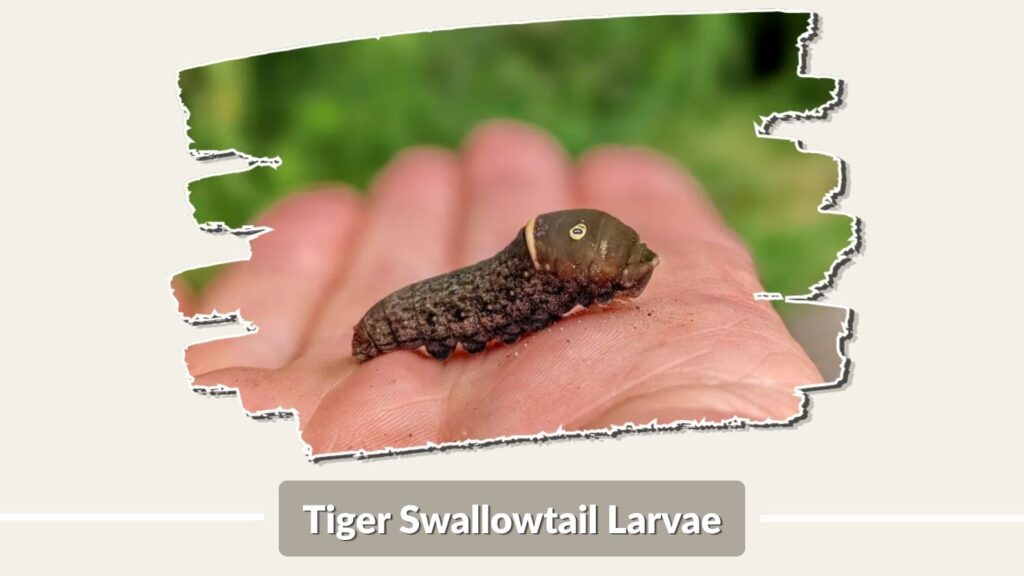
Tiger swallowtail caterpillars include eastern, western and Canadian tiger swallowtails. Their adult butterflies are usually yellow with black tiger-like stripes, but the larvae are primarily green.
Tiger Swallowtail Larva Identification
Young tiger swallowtail larvae initially look brown and white, providing bird-dropping camouflage. Older larvae become plump and green.
Two large false eyespots appear behind the actual head. These markings make the caterpillar look like a small snake. The true head is smaller and tucked beneath the front of the body.
Eastern tiger swallowtail caterpillars commonly feed on tuliptrees, wild black cherry and ash. Western and Canadian tiger swallowtails may use different mixtures of willow, cottonwood, cherry, aspen and other deciduous trees.
Tiger swallowtail larvae frequently make a silken resting pad on a leaf. The silk causes the leaf surface to curl slightly, forming a sheltered resting place.
Pipevine Swallowtail Larvae
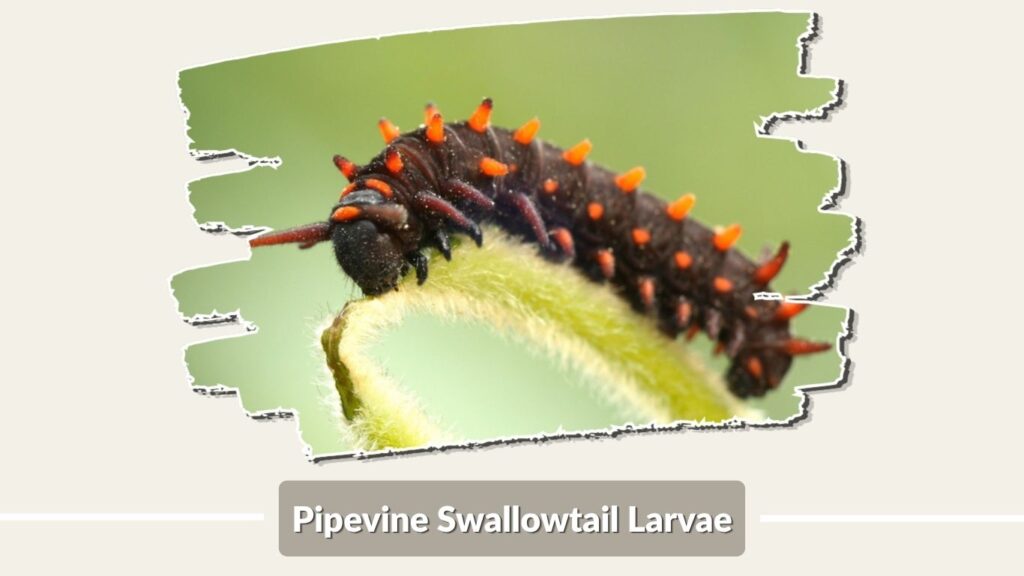
Pipevine swallowtail larvae are dark and dramatic. Depending on temperature and age, they may appear black, dark red, purple-brown or reddish-orange.
Their bodies bear rows of fleshy projections, with particularly long projections near the front and rear. Bright orange spots often contrast with the dark body.
Young larvae may feed together in groups, while older caterpillars become more solitary. Their primary food plants are pipevines in the genus Aristolochia.
Pipevine plants contain defensive chemicals that the caterpillars store in their bodies. These compounds make the larvae and adult butterflies distasteful or toxic to many predators. This protection is so effective that several other swallowtails have evolved adult wing patterns resembling the pipevine swallowtail.
Gardeners should choose native pipevines appropriate to their region. Some imported ornamental pipevines may attract egg-laying adults but be unsuitable or harmful to developing larvae.
Spicebush Swallowtail Larvae
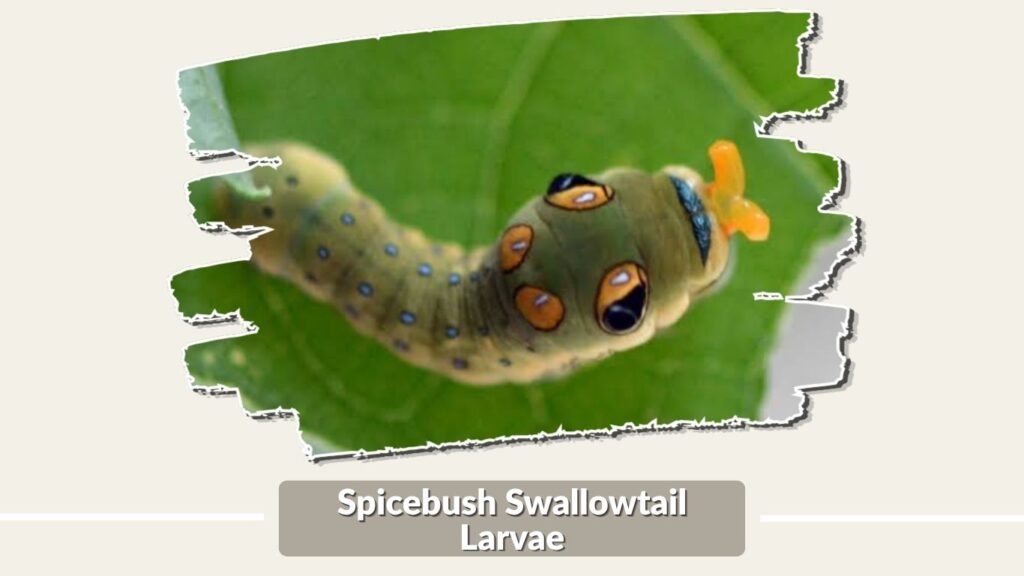
The spicebush swallowtail caterpillar is famous for its snake-like appearance. Young larvae begin as brown-and-white bird-dropping mimics. Later instars become bright green, orange or yellow.
A mature caterpillar has two enormous false eyespots behind its actual head. Smaller spots farther back increase the resemblance to a snake. When alarmed, it may raise the front of its body, retract its head and expand the eye-marked region.
Its main host plants include:
- Spicebush
- Sassafras
- Redbay
- Swamp bay
The caterpillar often creates a leaf shelter by laying silk across a leaf. As the silk dries and contracts, the leaf folds around the larva.
Zebra Swallowtail Larvae
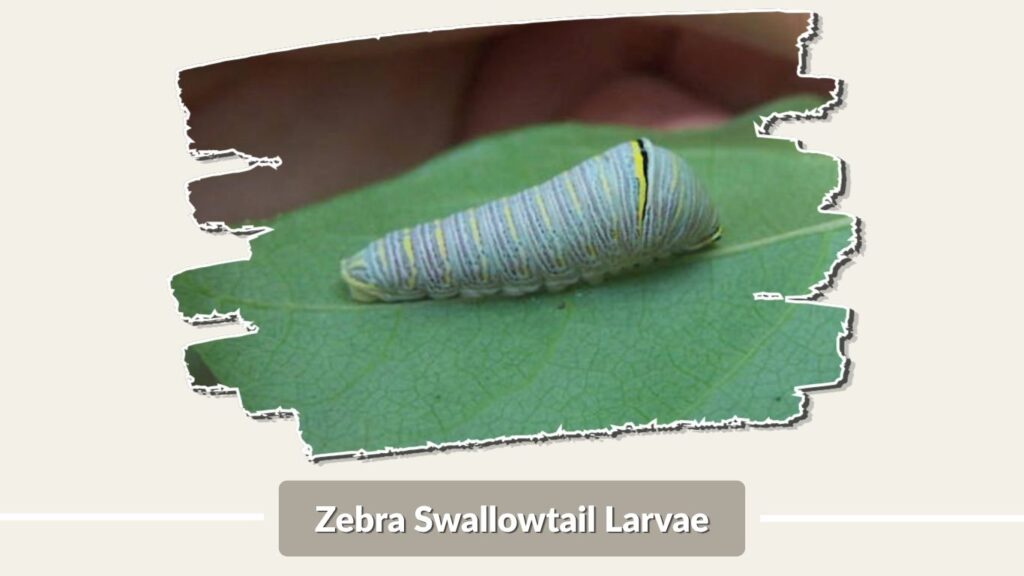
Zebra swallowtail larvae feed on pawpaw plants in the genus Asimina. Their close association with pawpaw means the adult butterflies are generally found near places where these shrubs or small trees grow.
The mature larva is usually green with thin yellow, black and white crossbands. Small fleshy projections may be visible along the body.
Pawpaw foliage contains natural chemicals that provide the caterpillar with some protection from predators. Gardeners hoping to support zebra swallowtails must grow pawpaw because parsley, citrus and pipevine cannot replace the correct host plant.
Swallowtail Larval Stages
The larval stage begins when the egg hatches and ends when the caterpillar forms a chrysalis.
First Instar
The newly hatched larva is extremely small. It may eat part of its eggshell before beginning to feed on the host plant. Early instars often resemble bird droppings.
Middle Instars
The caterpillar grows rapidly and consumes increasing amounts of foliage. Its color and markings become more developed after each molt.
Final Instar
The mature caterpillar reaches its largest size and eats heavily. Before pupating, it stops feeding, empties its digestive system and begins wandering in search of a secure site.
Chrysalis Formation
The caterpillar attaches its rear end to a silk pad and creates a thin silk girdle around the middle of its body. It then sheds its final larval skin to reveal the chrysalis.
The chrysalis may be green or brown depending partly on its surroundings. Some swallowtails emerge within weeks, while others remain in the pupal stage through winter. Black and tiger swallowtails are among the species that may overwinter as chrysalids attached to stems or other surfaces.
How to Care for Swallowtail Larvae
The safest approach is usually to leave larvae outdoors on their natural host plants. Their survival can be improved by avoiding pesticides and providing enough untreated foliage.
For temporary indoor rearing:
- Confirm the caterpillar’s species and host plant.
- Use only fresh, pesticide-free leaves from the same host species.
- Keep the container ventilated rather than airtight.
- Remove droppings and wilted foliage every day.
- Avoid overcrowding larvae.
- Provide upright stems where mature caterpillars can pupate.
- Release adults near suitable habitat after their wings harden.
Do not feed caterpillars random leaves. Most swallowtail larvae cannot survive on unrelated plants, even when the leaves appear fresh.
Diseases and Parasites
Not every swallowtail larva survives to adulthood. Natural threats include birds, spiders, wasps, ants and predatory insects.
Tachinid flies and parasitoid wasps may lay eggs on or inside caterpillars. Their larvae develop within the host and eventually kill it. Affected caterpillars may become sluggish, stop eating or die before completing pupation.
Disease can spread quickly in crowded containers. Daily cleaning, good ventilation and separation of sick individuals reduce risk, although they cannot guarantee survival.
FAQs
What do swallowtail larvae eat?
Each species eats specific host plants. Black swallowtails use parsley, dill and fennel; giant swallowtails eat citrus-family plants; tiger swallowtails feed on selected trees; pipevine swallowtails use pipevines; and zebra swallowtails depend on pawpaw.
Are swallowtail larvae poisonous?
Most are harmless to people. Pipevine and some related swallowtail larvae store defensive plant chemicals that make them toxic or unpleasant to predators. They should not be eaten, but they do not sting and usually pose no danger when observed.
How long does the swallowtail larval stage last?
The larval period commonly lasts several weeks, but temperature, species and food quality affect its duration. Black swallowtail larvae may complete this stage in approximately 10–30 days before forming a chrysalis.
Why does a swallowtail larva look like a snake?
Tiger and spicebush swallowtail larvae have large false eyespots and defensive postures that imitate small snakes. This form of mimicry may startle birds and other predators long enough for the caterpillar to avoid attack.
Should I remove swallowtail larvae from my plants?
Removal is usually unnecessary. A few larvae rarely cause serious damage to mature plants. Planting extra host plants and avoiding insecticides allows the caterpillars to feed while preserving enough foliage for gardening or harvesting.