
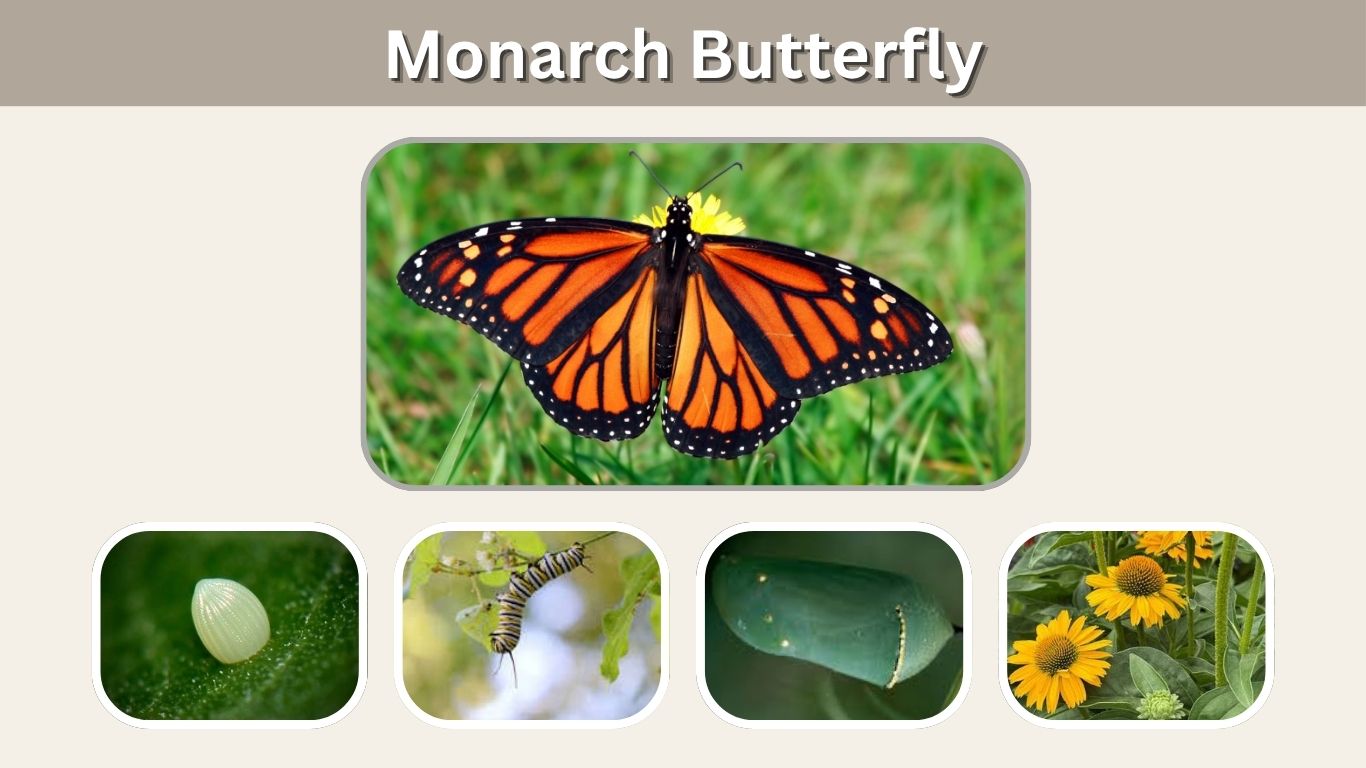
The monarch butterfly is one of the most recognizable butterflies in North America, famous for its bright orange-and-black wings and remarkable long-distance migration. Scientifically known as Danaus plexippus, monarchs depend heavily on milkweed during their caterpillar stage and flowering plants for nectar as adults.
Beyond their beauty, monarch butterflies have an extraordinary life cycle, unique defensive adaptations, and one of the most impressive migrations in the insect world. Understanding their appearance, habitat, food, lifespan, and seasonal movements makes it easier to appreciate why these butterflies are so special.
What Does a Monarch Butterfly Look Like?
Adult monarch butterflies have large orange wings crossed by thick black veins. A broad black border surrounds each wing and contains two rows of small white spots.
Their striking coloration is more than decorative. It also serves as a warning to many potential predators.
Monarch Butterfly Identification
Common characteristics include:
- Wing color: Bright orange with black veins
- Wing borders: Black with small white spots
- Body: Dark brown to black
- Wingspan: Usually around 3.5–4 inches
- Antennae: Long, thin, and dark
- Wing shape: Broad and slightly rounded
Male monarchs can usually be distinguished from females by a small black scent spot on each hindwing. Females generally have slightly thicker black wing veins.
Monarch Butterfly Scientific Name
The scientific name of the monarch butterfly is Danaus plexippus. It belongs to the family Nymphalidae, commonly known as brush-footed butterflies.
Monarch Butterfly Habitat
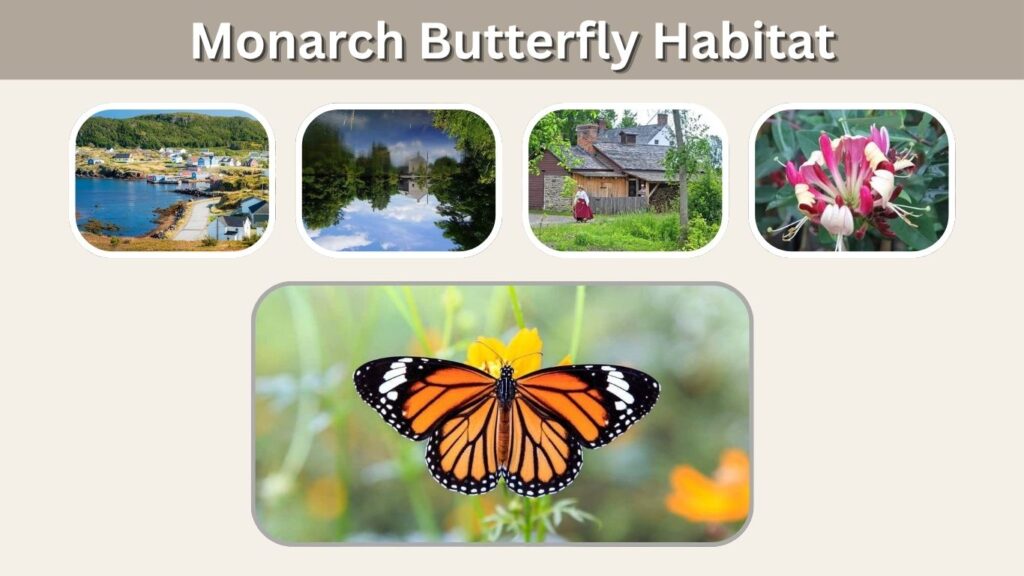
Monarch butterflies live in open environments where flowering plants and milkweed are available. They can be found in gardens, meadows, fields, roadsides, prairies, wetlands, and other sunny habitats.
Milkweed is especially important because female monarchs need it for reproduction.
Where Do Monarch Butterflies Live?
Monarchs occur throughout much of North America, including the United States, southern Canada, and Mexico. Populations also occur in several other parts of the world.
During the warmer months, monarchs spread into areas where milkweed and nectar-producing flowers are abundant.
As temperatures fall, many North American monarchs travel south to overwintering areas.
What Do Monarch Butterflies Eat?
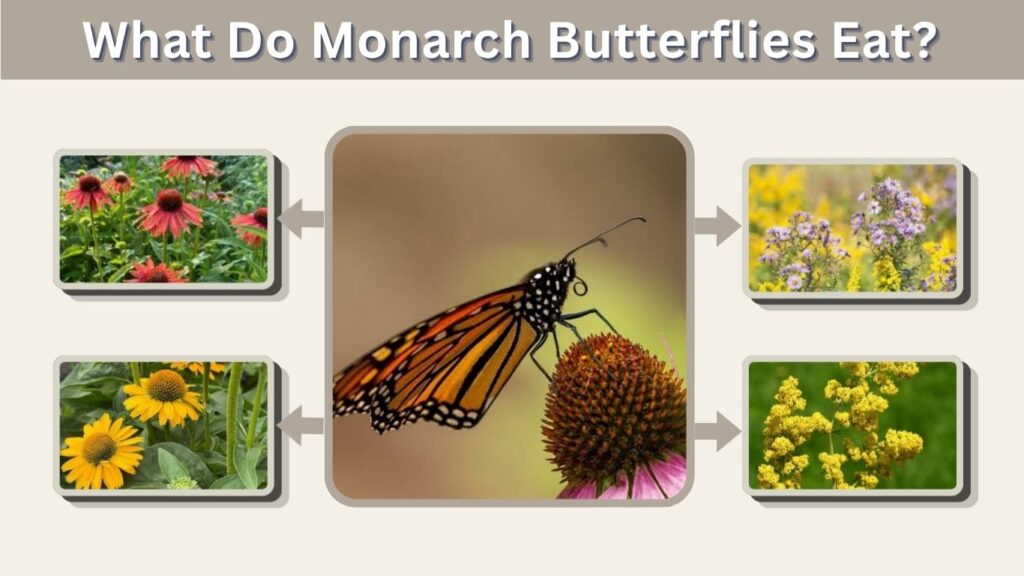
Adult monarch butterflies mainly drink nectar from flowers. They use their long, tube-like proboscis to reach liquid nectar inside blossoms.
They may feed from many flowering plants, including asters, goldenrods, coneflowers, blazing stars, and milkweed flowers.
What Do Monarch Caterpillars Eat?
Monarch caterpillars have a much more specialized diet.
They feed almost exclusively on milkweed plants.
Female monarch butterflies intentionally lay their eggs on milkweed so newly hatched caterpillars immediately have access to food.
Milkweed contains chemical compounds called cardenolides. Monarch caterpillars absorb some of these compounds into their bodies, helping make both caterpillars and adult butterflies unpleasant or potentially toxic to certain predators.
Monarch Butterfly Life Cycle
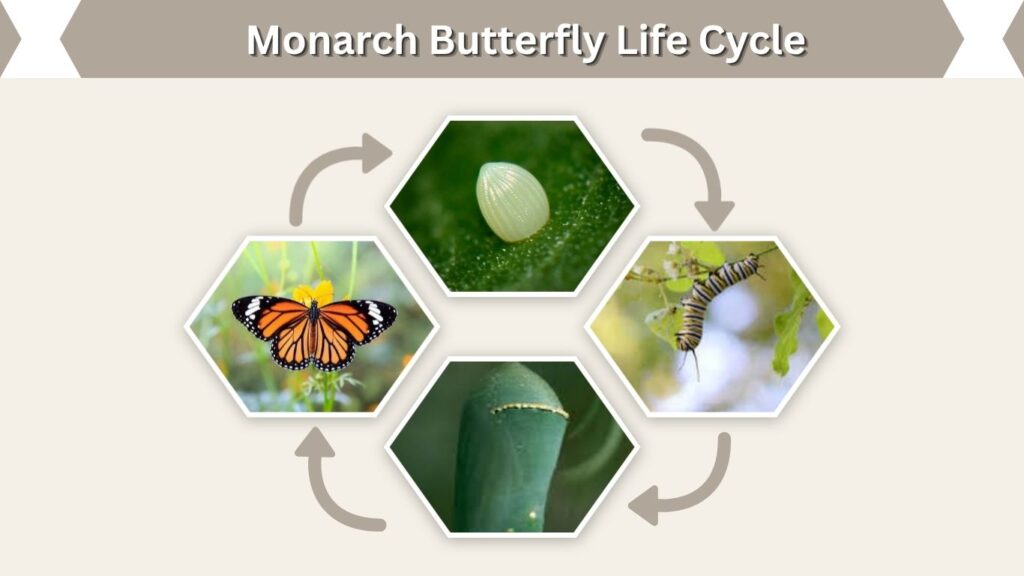
The monarch butterfly undergoes complete metamorphosis consisting of four major stages:
- Egg
- Caterpillar
- Chrysalis
- Adult butterfly
Each stage looks dramatically different from the one before it.
Monarch Butterfly Eggs
Female monarchs usually place tiny eggs individually on milkweed leaves.
The eggs are extremely small, pale cream or whitish, and shaped somewhat like miniature domes. Fine vertical ridges can often be seen on their surfaces.
After several days, a tiny caterpillar emerges.
Monarch Butterfly Caterpillar
A newly hatched monarch caterpillar begins feeding on its eggshell before moving to milkweed leaves.
As it grows, it develops distinctive bands of:
- Black
- White
- Yellow
The caterpillar also develops two pairs of long, flexible filaments—one pair near the head and another near the rear.
It repeatedly sheds its skin as its body grows.
Monarch Butterfly Chrysalis
Once fully developed, the caterpillar finds a protected location and attaches itself using silk.
It eventually forms a beautiful green chrysalis decorated with small gold-colored markings.
Inside the chrysalis, the caterpillar undergoes an extraordinary transformation. Its body is reorganized into the structures of an adult butterfly.
When development is complete, the chrysalis becomes darker and the orange-and-black wings may become visible through the outer covering.
Adult Monarch Butterfly
The adult eventually emerges with soft, folded wings.
It pumps fluid into the wings, allowing them to expand. After the wings harden and dry, the butterfly can fly away to feed, mate, and continue the next generation.
How Long Do Monarch Butterflies Live?
The lifespan of a monarch butterfly depends heavily on the generation and season.
Monarchs produced during spring and summer generally live for only several weeks. During this time, they mate, reproduce, and produce another generation.
The migration generation is different.
These butterflies emerge toward the end of summer or beginning of fall and can live for several months because they delay reproduction while migrating and overwintering.
This longer lifespan allows them to complete the long journey to their winter habitat.
Monarch Butterfly Migration
Monarch butterfly migration is one of the most impressive natural movements performed by an insect.
Every year, huge numbers of monarchs travel hundreds or even thousands of miles between breeding areas and overwintering sites.
Where Do Monarch Butterflies Migrate?
Many monarchs living east of the Rocky Mountains migrate toward central Mexico.
There, enormous numbers gather in high-elevation forests and remain relatively inactive through the winter.
Western monarch populations traditionally overwinter along parts of coastal California, although their migration patterns can vary.
When Do Monarch Butterflies Migrate?
Southward migration usually begins during late summer and fall as temperatures decrease and daylight changes.
The butterflies travel south while feeding on nectar along the way.
In spring, monarchs begin moving north again.
However, one individual usually does not complete the entire northward return journey. Instead, several generations reproduce and gradually continue the movement north.
Milkweed and Monarch Butterflies
Milkweed is essential to monarch reproduction.
Adult monarch butterflies can drink nectar from many different flowers, but their caterpillars depend on milkweed as their primary food source.
Female monarchs search for suitable milkweed plants before laying their eggs.
Growing native milkweed can therefore provide important breeding habitat for monarch butterflies.
A butterfly-friendly garden can also include nectar-rich flowers that bloom during different seasons, providing adult monarchs with food during breeding and migration.
Are Monarch Butterflies Poisonous?
Monarch butterflies contain chemicals obtained when their caterpillars eat milkweed.
These substances can make monarchs unpleasant or harmful to some predators if eaten.
Their bright orange-and-black coloration acts as warning coloration, signaling that they may not be a desirable meal.
Monarch butterflies are not dangerous to people through normal contact. They do not sting and are not aggressive.
Monarch Butterfly Predators
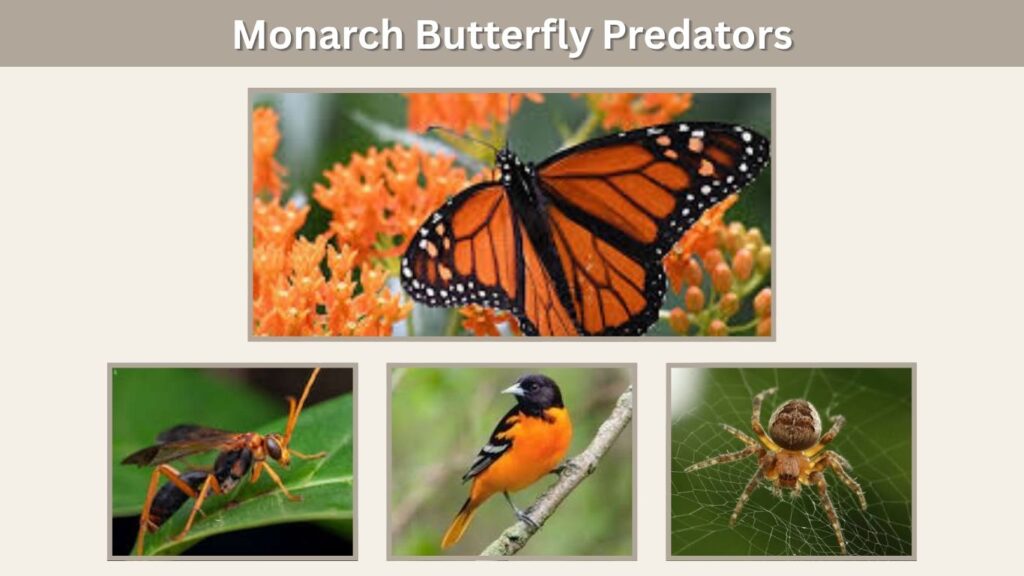
Despite their chemical defenses, monarch butterflies still have natural predators.
Possible predators include certain:
- Birds
- Spiders
- Wasps
- Ants
- Insects
- Small mammals
Eggs and young caterpillars are particularly vulnerable because they can be eaten by insects and other small predators.
Parasites and diseases can also affect monarch caterpillars and adults.
Monarch Butterfly Look-Alikes
Several butterflies can resemble monarchs, but the viceroy butterfly is one of the best-known look-alikes.
Both species have orange-and-black wings.
A useful difference is the black line running horizontally across the viceroy’s hindwings. Monarch butterflies do not have this distinctive horizontal black line.
Careful examination of the wing patterns usually makes the two species easier to separate.
Are Monarch Butterflies Endangered?
Monarch populations face several conservation challenges, especially habitat loss and the decline of suitable milkweed and nectar resources.
Because monarchs depend on habitats across enormous geographic areas, changes occurring anywhere along their migration route can affect their survival.
Conservation efforts commonly focus on protecting overwintering habitat, preserving natural grasslands, reducing unnecessary habitat destruction, and planting native milkweed and flowering plants.
Interesting Monarch Butterfly Facts
Monarch butterflies have several remarkable characteristics.
- Monarchs can migrate thousands of miles.
- Their caterpillars primarily eat milkweed.
- Adults have distinctive orange-and-black warning colors.
- Migratory monarch generations live considerably longer than many summer generations.
- Monarchs undergo complete metamorphosis.
- A single butterfly does not necessarily complete the entire multigenerational migration cycle.
- Monarch caterpillars store defensive chemicals obtained from milkweed.
- Females can identify suitable plants for egg laying.
- Viceroy butterflies closely resemble monarchs.
- Large numbers of monarchs may gather together at overwintering sites.
FAQs
What is special about the monarch butterfly?
The monarch is particularly famous for its long-distance seasonal migration. Some populations travel thousands of miles between breeding areas in the United States and Canada and overwintering areas farther south. Monarchs are also recognizable by their orange-and-black wings and dependence on milkweed.
What does a monarch butterfly caterpillar look like?
Monarch caterpillars have distinctive black, white, and yellow bands running around their bodies. They also have long flexible filaments near the front and rear of the body. They are commonly found feeding on milkweed plants.
Do monarch butterflies only eat milkweed?
Adult monarch butterflies drink nectar from many types of flowers. Their caterpillars, however, rely primarily on milkweed. This is why milkweed is considered an essential host plant for monarch reproduction.
How far can monarch butterflies migrate?
Some North American monarch populations travel thousands of miles during their fall migration. The journey can extend from areas of Canada and the northern United States to overwintering locations in central Mexico.
Can you touch a monarch butterfly?
A monarch butterfly is not poisonous to touch and does not sting. However, butterflies are delicate animals. Their wings and bodies can be damaged through unnecessary handling, so observing them without touching is generally the safest approach.