
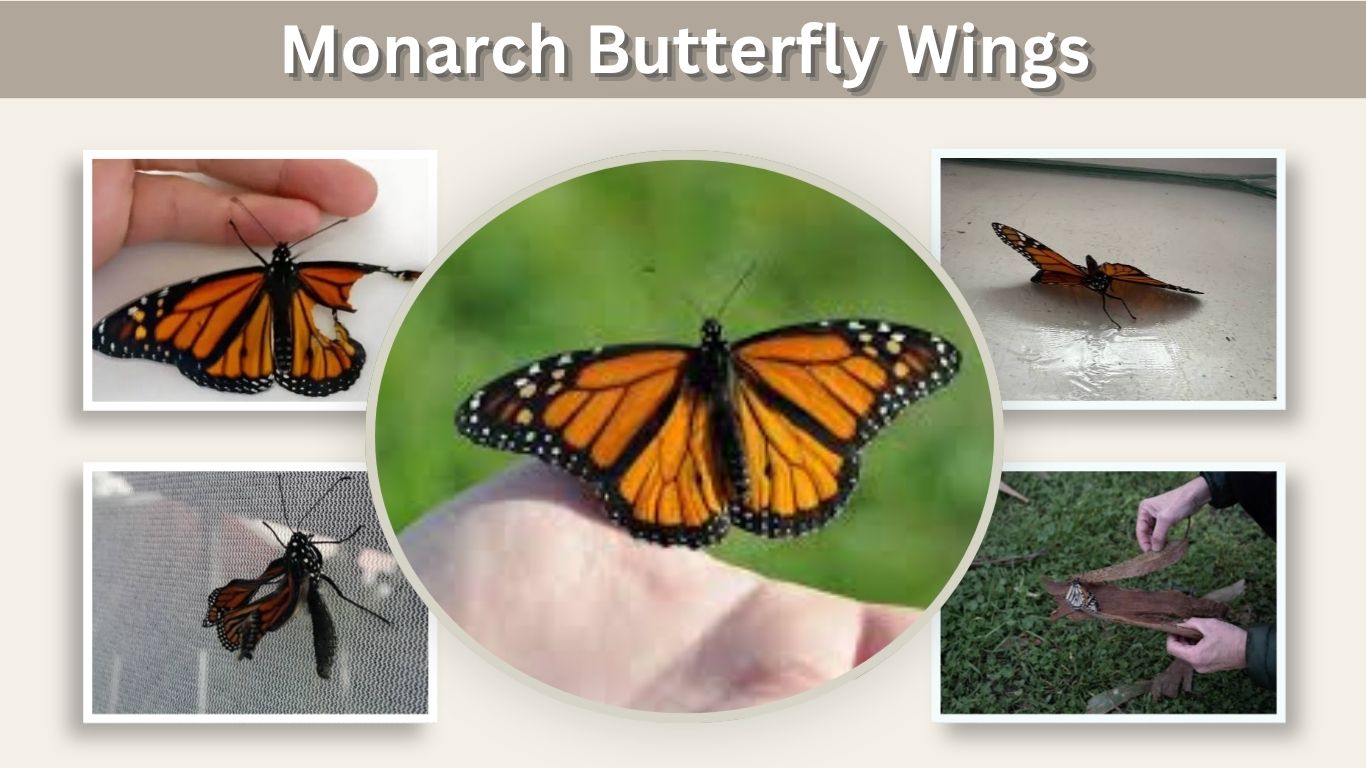
Monarch butterfly wings are among the most recognizable in the insect world, with brilliant orange panels, bold black veins, and white-spotted borders. Beyond their beauty, the wings are highly functional structures that allow monarchs to travel remarkable distances during migration. Wing patterns can also help distinguish males from females, while problems such as crumpled, curled, wet, or damaged wings can interfere with flight. This guide explains monarch butterfly wing anatomy, colors, size, drying, common problems, and whether a monarch can survive with a broken wing.
What Do Monarch Butterfly Wings Look Like?
Adult monarch butterflies (Danaus plexippus) are famous for their orange-and-black coloration. Their wings contain a network of black veins surrounded by orange areas, while the outer edges are black with rows of small white spots.
When the butterfly closes its wings, the underside appears somewhat paler than the upper surface.
Monarch Butterfly Wing Colors
Typical monarch wing colors include:
- Bright orange or reddish-orange
- Deep black veins
- Black outer borders
- Small white spots along the margins
- Paler orange-yellow coloration underneath
Natural monarch butterflies are not normally blue, purple, pink, or rainbow-colored. Images showing these colors usually represent artwork, costumes, decorations, or digitally altered designs rather than naturally occurring monarch wing coloration.
Monarch Butterfly Wing Pattern
The monarch butterfly wing pattern consists of orange sections divided by strong black veins.
The forewings have elongated orange cells, while the hindwings are rounder and display the same combination of orange, black, and white.
This bold pattern also contributes to the monarch’s warning coloration, signaling to potential predators that the butterfly may be unpleasant to eat.
How Many Wings Does a Monarch Butterfly Have?
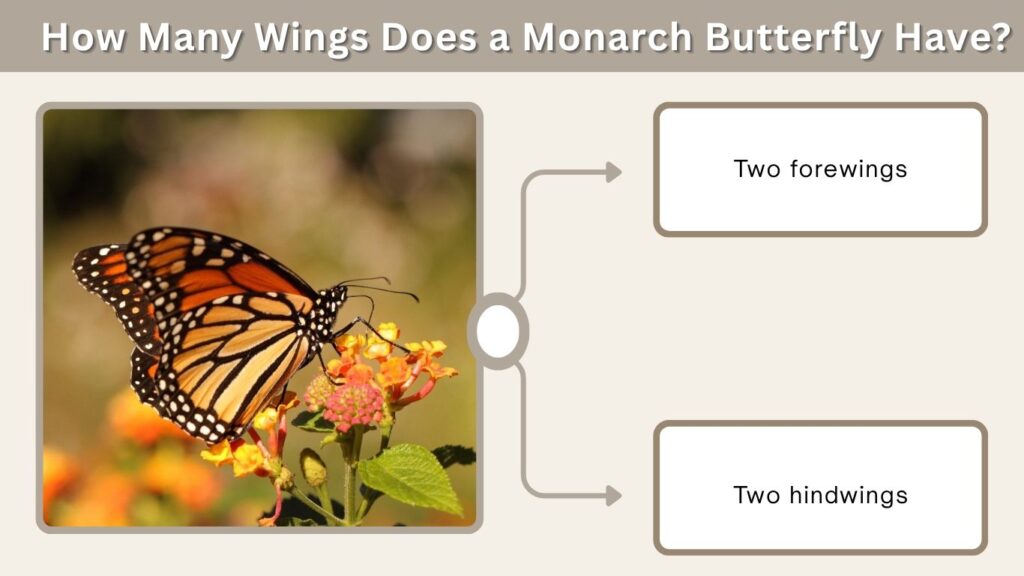
A monarch butterfly has four wings, just like other butterflies and moths.
Although the wings may appear to form only two large surfaces during flight, there are actually two separate pairs.
Four Monarch Wings
They consist of:
- Two forewings
- Two hindwings
The forewings are positioned closer to the head and are generally more elongated. The hindwings are positioned behind them and have a broader, rounder shape.
During flight, the forewings and hindwings move together efficiently, giving the monarch powerful and controlled flight.
How Far Across Are Monarch Butterfly Wings?
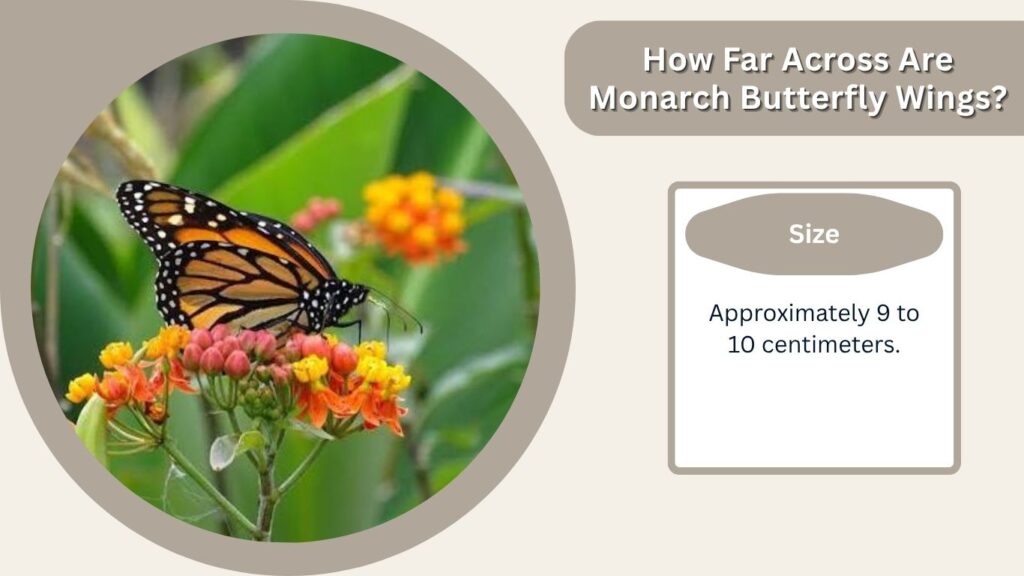
An adult monarch’s wingspan is commonly around 3.5 to 4 inches, or approximately 9 to 10 centimeters.
Individual size varies depending on factors such as genetics, development, nutrition during the caterpillar stage, and environmental conditions.
Why Large Wings Are Important
The relatively broad wings help monarchs:
- Fly between flowers
- Escape predators
- Search for mates
- Move between breeding habitats
- Travel during seasonal migration
- Glide using favorable air currents
Long-distance migration places particularly high demands on healthy wings.
Male vs Female Monarch Butterfly Wings
Male and female monarchs have nearly identical orange-and-black patterns, but close inspection of their hindwings can reveal an important difference.
Male Monarch Wings
Male monarchs usually have a small black spot on a vein of each hindwing.
These spots are associated with specialized scent-producing structures. Males also tend to have somewhat thinner black wing veins.
Female Monarch Wings
Females lack the prominent black spots found on male hindwings.
Their black veins also usually appear slightly thicker, giving the wings a somewhat darker network pattern.
These features are among the easiest ways to tell male and female monarch butterflies apart.
Monarch Butterfly Wings Open vs Closed
A monarch may rest with its wings completely open, partially spread, or folded upright above its body.
Wing position often depends on temperature, activity, weather, and the butterfly’s behavior at that moment.
Monarch Butterfly With Open Wings
Monarchs frequently open their wings while basking in sunlight.
Because butterflies are ectothermic, warming their bodies helps them become active enough to fly.
Open wings also reveal the vivid orange upper-wing pattern most people associate with monarch butterflies.
Monarch Butterfly With Closed Wings
A resting monarch may hold its wings together vertically above its body.
The undersides of the wings are still orange, black, and white but tend to look slightly paler than the upper surfaces.
Closing the wings can make the butterfly less conspicuous when it is resting among vegetation.
How Long Do Monarch Butterfly Wings Take to Dry?
When an adult monarch emerges from its chrysalis, its wings initially appear small, soft, wrinkled, and wet.
This is normal.
Drying After Emerging
The newly emerged butterfly pumps fluid through veins in the wings, causing them to expand.
During the next several hours, the wings gradually become firm enough for flight.
The butterfly should remain relatively undisturbed during this period. Trying to force the wings open can damage delicate structures before they have hardened.
Why the Wings Look Crumpled at First
Immediately after emergence, crumpled wings do not necessarily indicate a problem.
The concern arises when the wings remain severely wrinkled or fail to expand properly after sufficient time has passed.
Monarch Butterfly Crumpled or Deformed Wings
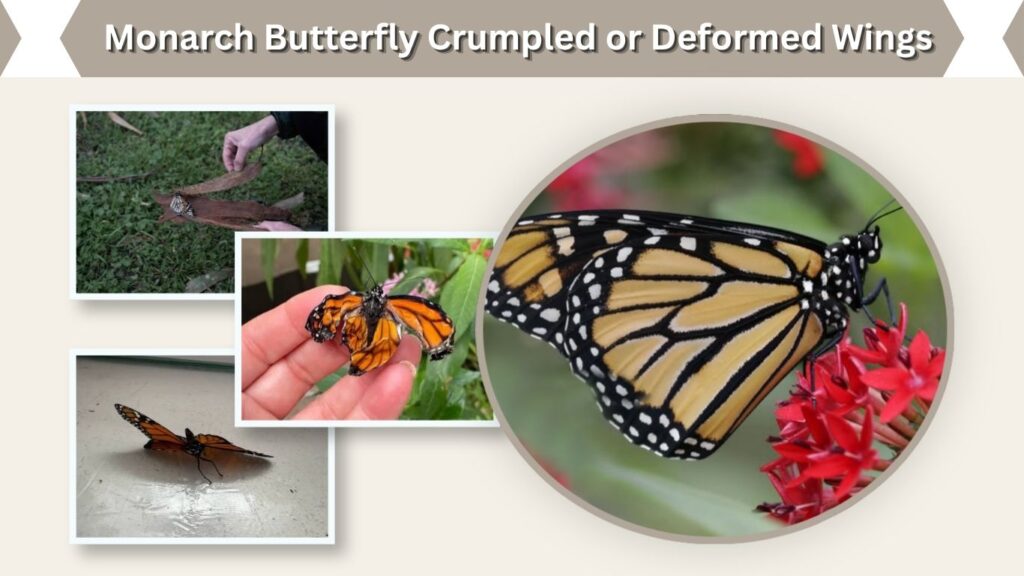
Sometimes a monarch’s wings remain crumpled, curled, folded, or unusually small after emergence.
Severe deformities can prevent normal flight.
Causes of Wing Problems
Possible causes can include:
- Difficulty emerging from the chrysalis
- Developmental abnormalities
- Disease or parasite infection
- Physical injury
- Poor conditions during development
- Damage before the wings fully harden
A butterfly with slightly imperfect wings may still be able to fly, while severe deformation can make sustained flight impossible.
Monarch Butterfly Wings Not Unfolding
A newly emerged monarch should gradually expand its wings by pumping fluid through them.
If the wings stay tightly curled or crumpled, normal expansion may have failed.
Signs of a Serious Problem
Watch for:
- Wings remaining severely wrinkled
- One wing much smaller than the others
- Permanently folded wings
- Curling at the edges
- Inability to hold the wings normally
- Failure to fly after the wings have hardened
Once severely deformed wings harden, they generally cannot naturally expand into normal wings later.
Can You Touch Monarch Butterfly Wings?
It is best to minimize direct contact with a monarch’s wings.
Butterfly wings are covered with thousands of microscopic scales that create their colors and patterns.
Does Touching Destroy the Wings?
A light accidental touch does not automatically make a butterfly unable to fly.
However, repeated or rough handling can remove scales, tear the wing membrane, or damage the veins supporting the wing.
If handling is necessary for conservation or educational purposes, it should be done carefully and only when appropriate.
Can a Monarch Survive With a Broken Wing?
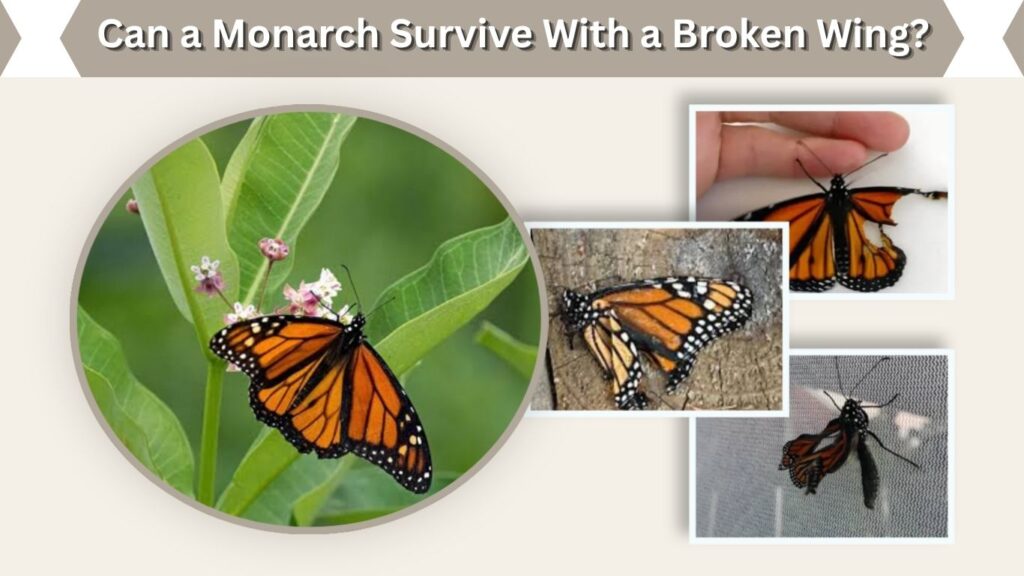
The answer depends on how much damage has occurred.
Monarch wings can naturally become worn, faded, chipped, or torn as the butterfly ages.
Minor Wing Damage
A monarch may still fly with:
- Small tears
- Missing scales
- Slightly worn edges
- Small pieces missing from the outer wing
Because butterfly wings do not heal or regrow after adulthood, the damage remains, but the butterfly may compensate surprisingly well.
Severe Wing Damage
A badly broken wing can prevent normal flight.
Without effective flight, a monarch may have difficulty finding nectar, avoiding predators, locating mates, or completing migration.
The location and extent of the damage are more important than simply whether a tear is visible.
Should You Repair a Monarch Butterfly Wing?
Wing repair and so-called wing transplants sometimes appear in online videos, but attempting them without specialist experience can cause additional injury.
A butterfly wing is not living tissue that heals back together in the way a mammal’s skin does.
Helping an Injured Monarch
If you find an injured monarch:
- Avoid unnecessary handling
- Place it somewhere protected from immediate danger
- Provide access to nectar-producing flowers when possible
- Keep it away from predators
- Avoid gluing or cutting wings without specialized knowledge
Many butterflies with moderate natural wing wear continue functioning without human intervention.
Are Monarch Butterfly Wings Poisonous?
Monarch wings themselves are not structures that inject venom or sting people.
However, monarch butterflies acquire defensive chemicals during their caterpillar stage by feeding on milkweed.
Why Predators Avoid Monarchs
The monarch’s orange-and-black coloration serves as warning coloration.
Some predators learn to associate the distinctive wing pattern with an unpleasant meal and may avoid attacking monarchs in the future.
The colorful wings therefore play an important role beyond simply making the butterfly attractive.
Interesting Monarch Butterfly Wing Facts
Monarch wings combine beauty, strength, and specialized biological design that allows these relatively lightweight insects to perform demanding flights.
Quick Wing Facts
- Monarchs have four wings.
- Their wingspan is roughly 3.5–4 inches.
- Wings are covered with microscopic scales.
- Males have recognizable black spots on their hindwings.
- Females usually have thicker black veins.
- Wings do not regrow after damage.
- Newly emerged wings must expand and harden.
- Minor tears may not prevent flight.
- The underside is paler than the upper surface.
- Orange-and-black coloration helps warn predators.
FAQs
How Many Wings Does a Monarch Butterfly Have?
A monarch butterfly has four wings: two forewings and two hindwings. During flight, the two pairs work together so smoothly that they can sometimes appear to form only two large wings.
How Long Do Monarch Butterfly Wings Take to Dry?
After emerging from its chrysalis, a monarch normally needs several hours for its wings to fully expand, dry, and harden. During this period, the butterfly usually hangs quietly while preparing for its first flight.
Can a Monarch Butterfly Survive With a Broken Wing?
Yes, some monarchs can survive with minor tears, worn edges, or small missing sections. Severe damage that prevents flight is much more serious because the butterfly may struggle to feed, escape predators, reproduce, or migrate.
Can You Touch Monarch Butterfly Wings?
Light accidental contact does not necessarily harm a monarch, but unnecessary handling should be avoided. Wings contain tiny scales and delicate membranes that can be damaged by repeated rubbing, squeezing, or rough handling.
Do Monarch Butterfly Wings Grow Back?
No. Once a monarch becomes an adult, damaged or missing wing tissue does not grow back. Small tears and natural wear are permanent, although butterflies can sometimes continue flying normally despite moderate wing damage.