
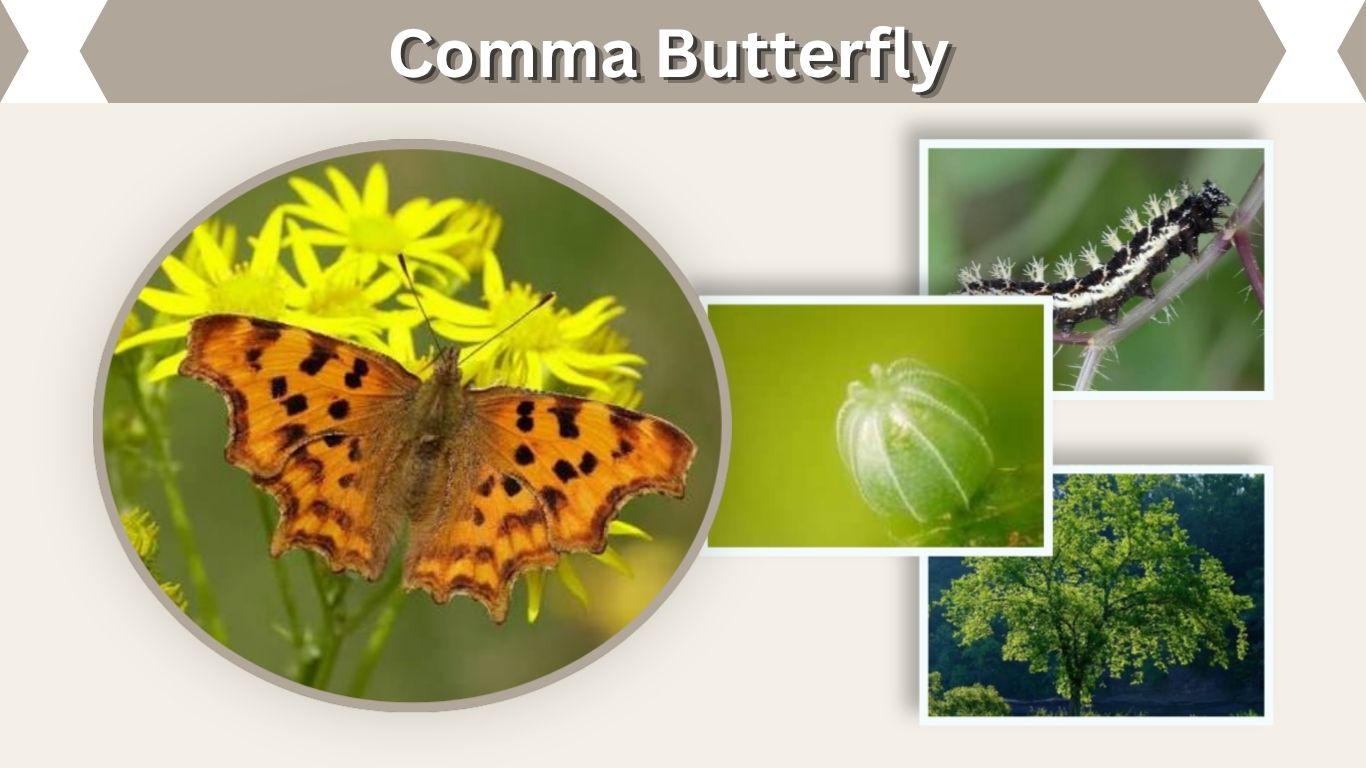
The comma butterfly is recognized by its jagged orange wings and the small, silvery comma-shaped marking on each hindwing’s underside. The name applies to several closely related Polygonia butterflies, including the European comma and eastern comma. When their wings are open, these butterflies display vivid orange-and-black patterns. Once closed, their mottled brown undersides resemble dead leaves or tree bark. This guide covers identification, species differences, caterpillars, host plants, diet, distribution, seasonal forms, and comparisons with the question mark butterfly.
What Is a Comma Butterfly?
Comma butterflies belong to the brush-footed butterfly family, Nymphalidae. Their genus name, Polygonia, refers to their many-angled wing shape. Although “comma butterfly” commonly means Polygonia c-album in Europe and the United Kingdom, North Americans may use it for the eastern comma, Polygonia comma.
Why Is It Called a Comma Butterfly?
The name comes from a white or silver curved marking on the underside of each hindwing. Its shape resembles a punctuation comma or the letter C. The marking contrasts against a mottled background of brown, gray, black, and tan.
When resting, the butterfly closes its wings and exposes this leaflike underside. The comma marking may remain visible, but the rest of the insect becomes exceptionally difficult to distinguish from bark or dried vegetation.
Classification
The commonly recognized European comma is classified as follows:
- Common name: Comma butterfly
- Scientific name: Polygonia c-album
- Family: Nymphalidae
- Subfamily: Nymphalinae
- Genus: Polygonia
- Order: Lepidoptera
The eastern comma has the scientific name Polygonia comma. It belongs to the same genus and has a similar silver hindwing mark.
Comma Butterfly Identification
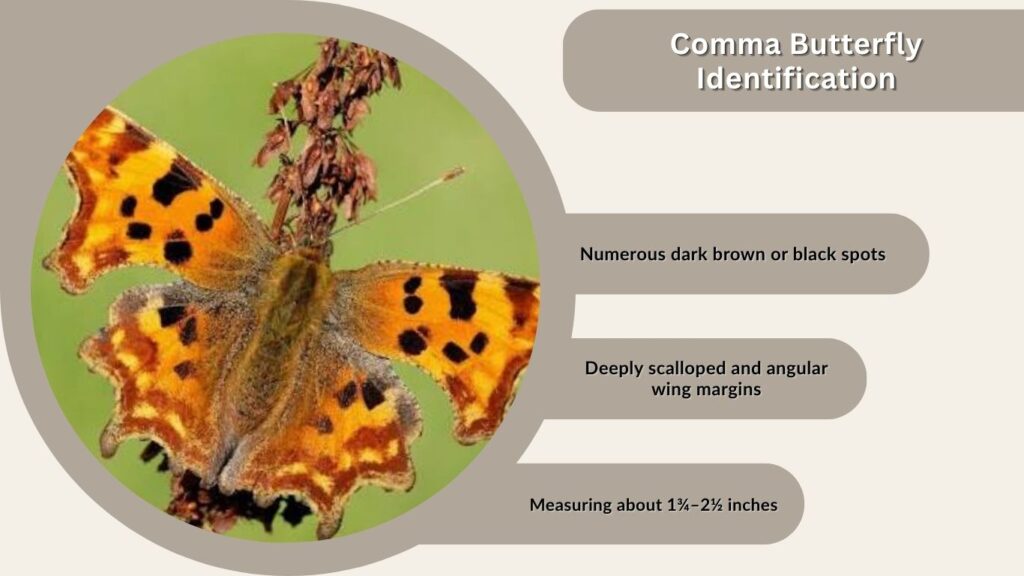
Comma butterflies have deeply notched wings that can appear torn or damaged. This irregular shape is natural and contributes to their dead-leaf camouflage. Identification should include the wing shape, upper pattern, underside, size, and geographic location.
Physical Features
Typical comma butterfly characteristics include:
- Bright orange or reddish-orange upper wings
- Numerous dark brown or black spots
- Deeply scalloped and angular wing margins
- Short tails projecting from the hindwings
- Brown, gray, or black mottling beneath the wings
- A small white or silver comma-shaped marking
- A wingspan generally measuring about 1¾–2½ inches
- Three prominent dark spots across the upper forewing in eastern commas
- Seasonal variations in color and underside pattern
Males and females look broadly similar. Females may be slightly larger, while males often patrol sunny woodland openings and defend temporary territories.
Comma Butterfly With Wings Closed
With its wings closed, a comma butterfly looks remarkably like a dead leaf. Dark lines resemble leaf veins, and the jagged margins imitate torn plant material. Color varies from pale gray-brown to nearly black.
This camouflage helps adults avoid birds and other predators. The butterfly may land on a tree trunk, branch, fence, or leaf litter and remain motionless until the threat passes.
Seasonal Forms
Some comma species develop different seasonal forms. Adults that emerge during summer may have lighter undersides and reproduce without entering dormancy. Individuals developing later often have darker undersides and survive the winter as adults.
The European comma’s lighter summer form is sometimes called hutchinsoni. Day length and temperature during development help determine which form appears.
Types of Comma Butterflies
Several members of the genus Polygonia possess silvery punctuation-shaped markings. Their common names, color patterns, host plants, and distributions differ.
Common Species
Notable comma butterflies include:
- European comma: Found across Europe and parts of Asia and North Africa; scientifically named Polygonia c-album.
- Eastern comma: Widespread in eastern North America; scientifically named Polygonia comma.
- Green comma: Occurs across northern and western North America and has greenish mottling beneath its wings.
- Gray comma: A North American species with gray-brown undersides and relatively pale coloration.
- Hoary comma: Found mainly in northern and mountainous regions of North America.
- Satyr comma: Distributed across much of western North America and commonly associated with nettles.
- Asian comma: A general name sometimes applied to related Polygonia species occurring in Asia.
Comma Butterfly in the UK
In the United Kingdom, “comma butterfly” usually refers to Polygonia c-album. It occurs around woodland margins, hedgerows, gardens, parks, and countryside containing nettles or other larval food plants.
Its British range expanded substantially after an earlier historical decline. Adults can now be found across much of England and Wales, with records extending into additional areas as climate and habitat conditions change.
Eastern Comma in North America
The eastern comma inhabits forests, parks, stream corridors, gardens, and suburban woodland across eastern and central North America. Its range includes parts of Canada and numerous American states, including Minnesota, Ohio, and other areas east of the Rocky Mountains.
Adults often remain near deciduous woodland where elm, nettle, and hops provide food for their caterpillars.
Comma vs. Question Mark Butterfly
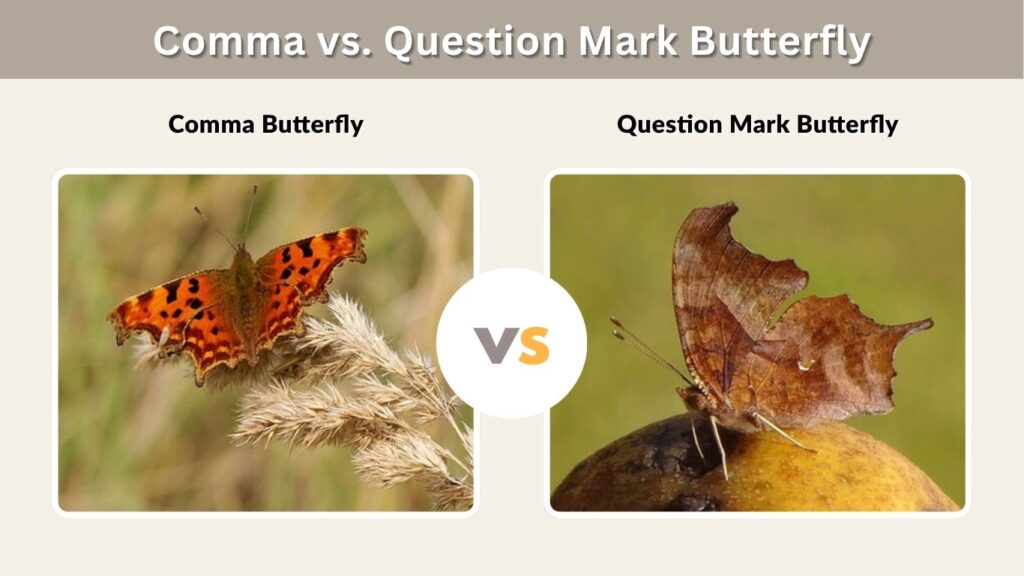
The eastern comma and question mark are closely related and frequently occur in the same habitats. Both have orange-and-black upper wings, jagged edges, brown undersides, and silver punctuation marks.
Key Differences
Examine the following characteristics:
- Hindwing mark: The comma has one curved silver line; the question mark has a curved line with a separate dot.
- Overall size: The question mark is generally larger.
- Forewing spots: The eastern comma normally has three dark spots in a row; the question mark generally has four.
- Hindwing tail: The question mark usually has a longer and more prominent tail.
- Wing shape: The question mark may appear more elongated and strongly hooked.
- Upper hindwing: Summer-form question marks frequently have extensive black coloration.
Individual markings can vary. Checking the underside mark and forewing spots together usually produces a more dependable identification than using size alone.
Similarities
Both species overwinter as adults, feed on sap and decaying fruit, and produce spiny caterpillars. They also use elm, nettle, and hops as larval host plants.
When their wings are closed, both resemble dead leaves. Geographic location cannot always distinguish them because their ranges overlap widely in eastern North America.
Comma Butterfly Caterpillar
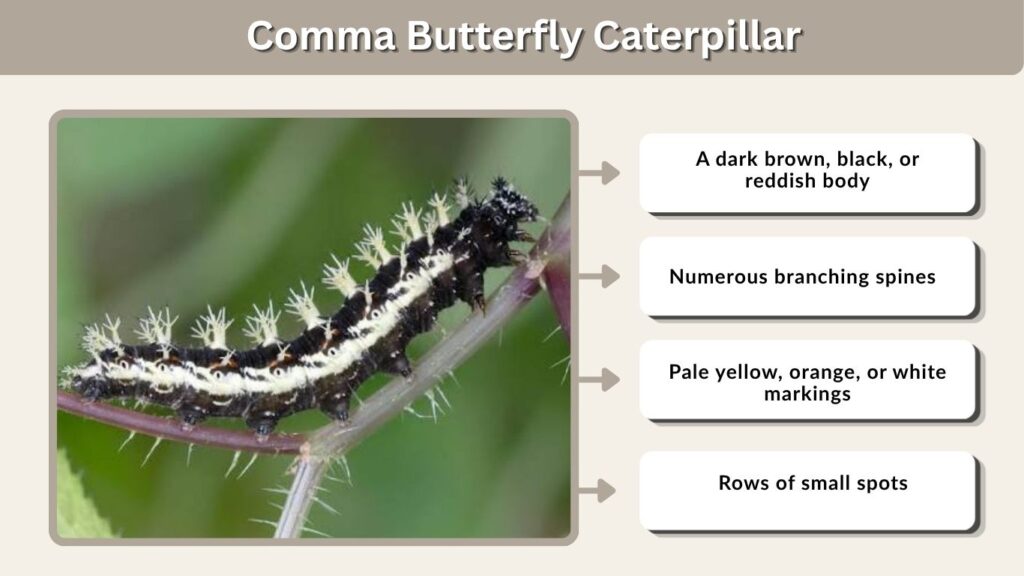
Comma caterpillars look dramatically different from the adults. Their branching spines can create the appearance of a dangerous or stinging larva, but they primarily function as protection against predators.
Caterpillar Identification
A comma butterfly caterpillar may have:
- A dark brown, black, or reddish body
- Numerous branching spines
- Pale yellow, orange, or white markings
- A broad white patch across the rear portion of the body
- Rows of small spots or stripes along its sides
- A body resembling bird droppings during certain growth stages
Color and pattern depend on the species and the caterpillar’s developmental stage. The European comma larva’s white rear section makes it resemble a bird dropping, providing effective camouflage.
Is the Caterpillar Poisonous?
Comma butterfly caterpillars are not considered poisonous or medically significant stinging caterpillars. Their spines are defensive structures rather than venom-delivering organs.
However, handling any spiny caterpillar may cause mechanical irritation, particularly for someone with sensitive skin. It is better to observe the larva without touching it and leave it on its food plant.
Comma Butterfly Host Plants and Eggs
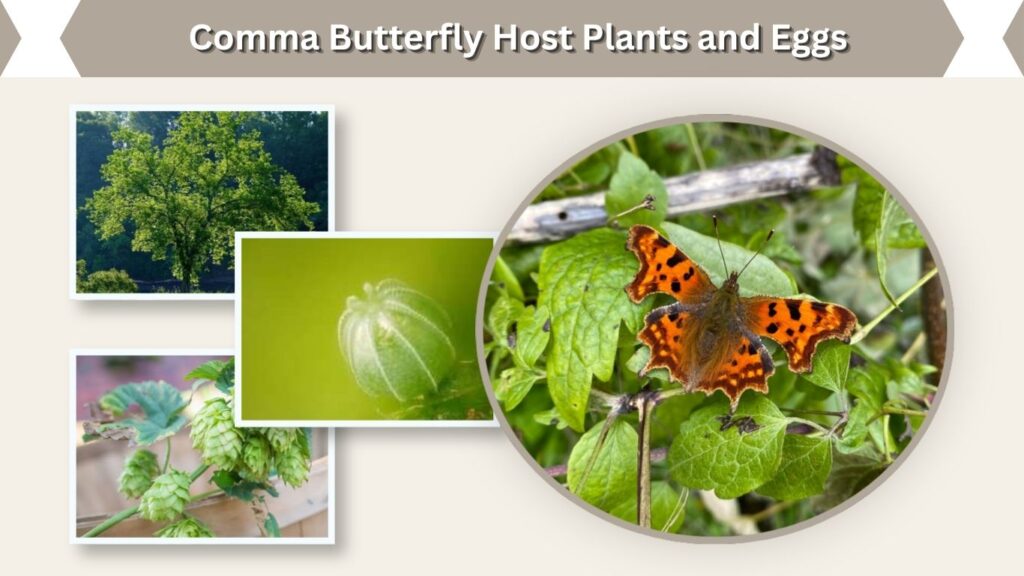
Female comma butterflies locate specific plants on which their caterpillars can feed. Plant preference varies between species and geographic regions, but nettles and other members of related plant families are especially important.
Common Host Plants
Comma butterfly host plants include:
- Stinging nettle
- False nettle
- American elm
- Hops
- Japanese hops
- Willows
- Currants
- Gooseberries
- Hackberry
- Other locally suitable nettle or elm relatives
The European comma frequently uses stinging nettle, while the eastern comma commonly uses elm, nettle, and hops. Gardeners can support these butterflies by retaining an untreated patch of native host plants.
Eggs and Larvae
Females usually deposit small green eggs individually on suitable plants. After hatching, the young caterpillars feed on leaves and molt several times as they grow.
Feeding may leave irregular holes or chewed leaf edges, but caterpillars rarely cause serious damage to mature plants. They eventually leave their feeding area to find a protected location for pupation.
Comma Butterfly Life Cycle and Chrysalis
Comma butterflies undergo complete metamorphosis. Depending on climate and species, they may produce one, two, or more generations during a year.
Developmental Stages
The life cycle includes:
- Egg: A female places an egg on or near a suitable caterpillar food plant.
- Larva: The spiny caterpillar feeds, grows, and molts repeatedly.
- Chrysalis: The mature larva hangs upside down and develops into an angular pupa.
- Adult: The butterfly emerges, expands its wings, and begins feeding and reproducing.
The chrysalis is usually brown or gray with irregular projections and reflective gold or silver spots. Its shape resembles a dried leaf or plant debris.
Lifespan and Hibernation
Summer adults may live for several weeks. The generation that overwinters can survive for several months because it enters reproductive dormancy and remains sheltered during cold weather.
Adults hibernate beneath loose bark, inside hollow trees, among woodpiles, or within protected crevices. They sometimes emerge to fly on unusually warm winter days before returning to shelter.
Comma Butterfly Diet and Behavior
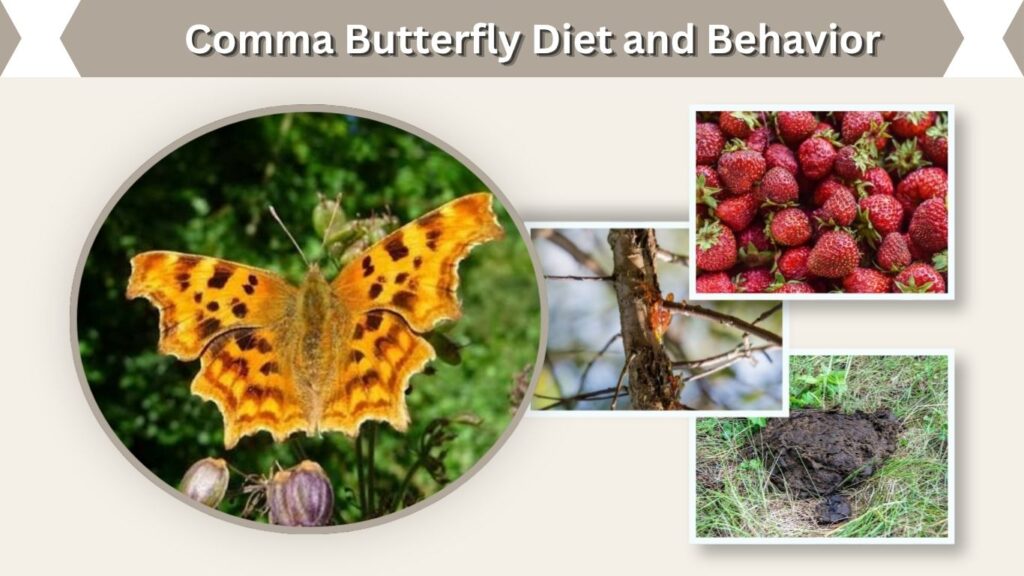
Adult comma butterflies are opportunistic feeders. Although they occasionally visit flowers, they obtain much of their nutrition from materials that many other butterflies ignore.
What Do Comma Butterflies Eat?
Adults consume tree sap, overripe fruit, animal dung, carrion, and minerals from damp soil. They may also drink nectar from flowers such as thistles, bramble, ivy, and other seasonal blooms.
Males sometimes gather on moist ground to absorb salts. Both sexes may defend feeding locations and fly rapidly when another insect approaches.
Predators and Adaptations
Birds, spiders, predatory insects, and small mammals may prey upon commas at different life stages. Caterpillar spines, angular chrysalises, rapid flight, and leaflike adult camouflage all improve their chances of survival.
Comma Butterfly Meaning
The comma butterfly has no scientifically recognized spiritual meaning. In art and personal symbolism, its punctuation-shaped mark may represent a pause, continuation, survival, or a new chapter rather than an ending.
Comma butterfly tattoos are sometimes chosen to symbolize resilience or transformation. These interpretations are personal and cultural, not biological characteristics of the species.
FAQs
Comma butterflies are easily confused with related anglewing butterflies. These answers address several common questions about their appearance and behavior.
Is the Comma Butterfly Rare?
Most comma species are not globally rare, but their local abundance varies with climate, habitat quality, and the availability of caterpillar host plants.
Where Do Comma Butterflies Live?
They commonly inhabit woodland edges, hedgerows, parks, stream banks, gardens, and forest clearings. Different species occur across Europe, Asia, and North America.
What Is the Comma Butterfly’s Main Host Plant?
Stinging nettle is particularly important for the European comma. Eastern comma caterpillars commonly feed on nettles, elms, and hops.
How Long Do Comma Butterflies Live?
Summer adults may survive several weeks. Overwintering adults can live for several months and may remain alive from late summer or autumn until the following spring.
Do Comma Butterflies Feed on Milkweed?
They may occasionally take nectar from milkweed flowers, but milkweed is not a principal caterpillar host plant. Comma larvae rely mainly on plants such as nettles, elm, and hops.