
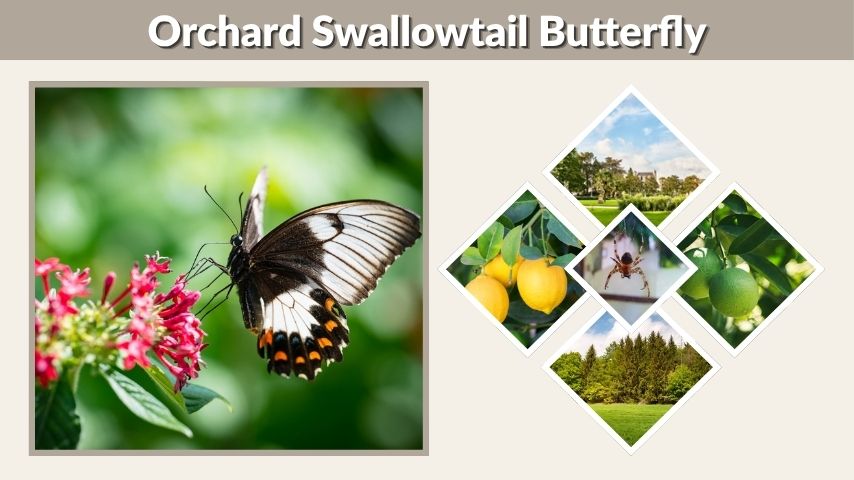
The Orchard Swallowtail is one of the largest and most recognizable butterflies found in Australia. Known scientifically as Papilio aegeus, this striking swallowtail species is famous for its bold black wings, colorful markings, and fast flight patterns. It is commonly seen in gardens, orchards, forests, and citrus-growing regions where host plants are abundant. Many people search for information about its caterpillar, chrysalis, and butterfly life cycle because the species undergoes dramatic transformations during development.
Orchard Swallowtails are also important pollinators that help support healthy ecosystems. Their caterpillars feed mainly on citrus plants, while adult butterflies visit flowers for nectar. Understanding their habits, appearance, and life stages can help gardeners and butterfly enthusiasts identify and appreciate this beautiful Australian species.
What Is an Orchard Swallowtail?
The Orchard Swallowtail is a large butterfly species belonging to the swallowtail butterfly family. It is commonly found across parts of Australia and is especially associated with citrus plants and warm environments. Its large wings and elegant flight make it one of the most noticeable butterflies in Australian gardens.
Scientific Classification
The scientific name of the Orchard Swallowtail is Papilio aegeus. It belongs to the Papilionidae family, which includes many swallowtail butterflies known for their tail-like wing extensions and colorful patterns.
Physical Appearance
Orchard Swallowtails have black wings with white patches and red or blue markings near the hindwings. Their long tail-like extensions help identify them as swallowtail butterflies. Females are usually larger and more colorful than males.
Orchard Swallowtail Butterfly Characteristics
- Large wingspan
- Black wings with colorful markings
- Fast and graceful flight
- Tail-like hindwing extensions
- Active during warm seasons
Orchard Swallowtail Butterfly Identification
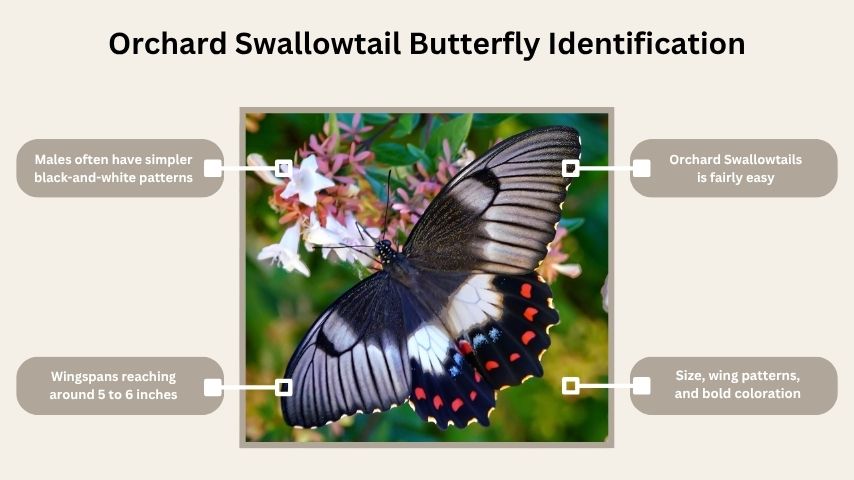
Identifying Orchard Swallowtails is fairly easy because of their size, wing patterns, and bold coloration. Both adults and caterpillars have distinctive appearances that help separate them from other butterflies commonly found in Australia.
Male vs Female Orchard Swallowtail
Female Orchard Swallowtails are generally larger and display brighter wing markings than males. Males often have simpler black-and-white patterns, while females may show additional red or blue coloration on the hindwings.
Orchard Swallowtail Butterfly Size
Adult Orchard Swallowtails can have wingspans reaching around 5 to 6 inches, making them one of the larger butterflies in Australia. Caterpillars also become relatively large before entering the chrysalis stage.
Orchard or Citrus Swallowtail Butterfly
The Orchard Swallowtail is sometimes called the Citrus Swallowtail because its caterpillars commonly feed on citrus trees. Lemon, orange, lime, and other citrus plants are important host plants used during the caterpillar stage.
Orchard Swallowtail Habitat and Range
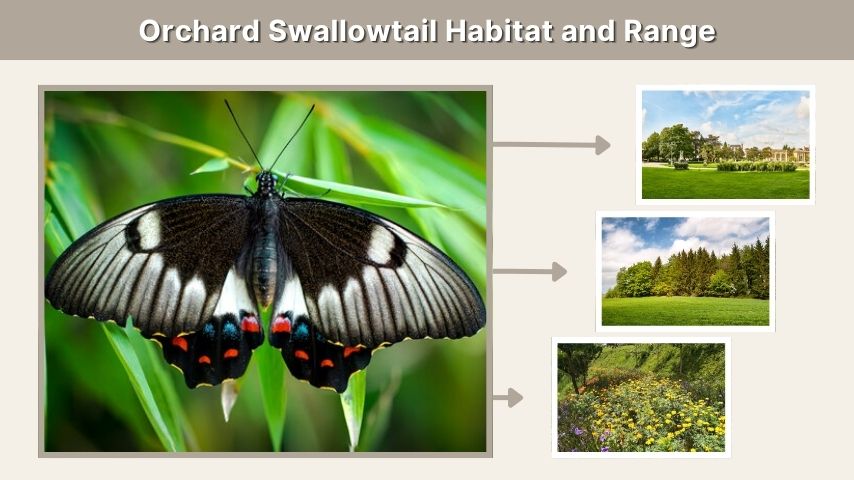
Orchard Swallowtails are widely distributed across parts of Australia where warm temperatures and citrus plants are available. They thrive in gardens, orchards, forests, and suburban areas with flowering plants and suitable host trees for caterpillars.
Orchard Swallowtail Butterfly Australia Distribution
- Queensland
- Brisbane
- Sydney
- New South Wales
- Western Australia
Preferred Habitat
- Citrus orchards
- Gardens and parks
- Forest edges
- Suburban backyards
- Flower-rich environments
Seasonal Activity and Migration
Orchard Swallowtails are most active during warm months when flowers and host plants are abundant. In tropical and subtropical regions, they may remain active for much of the year, while cooler areas may see reduced activity during winter.
Orchard Swallowtail Caterpillar
The Orchard Swallowtail caterpillar changes appearance dramatically as it grows. Young caterpillars resemble bird droppings for camouflage, while older caterpillars become bright green with eye-like markings that help scare away predators.
Orchard Swallowtail Caterpillar Identification
- Green body coloration in later stages
- White or cream markings
- Eye-like patterns near the head
- Bird-dropping appearance when young
- Thick soft-bodied structure
Are Orchard Swallowtail Caterpillars Poisonous?
Orchard Swallowtail caterpillars are not poisonous to humans, but they possess a defensive organ called an osmeterium. When threatened, this orange forked structure releases strong-smelling chemicals that help deter predators.
Caterpillar Feeding Habits
Caterpillars feed mainly on citrus leaves and related host plants. They consume large amounts of foliage while growing quickly through several molting stages before forming a chrysalis.
Orchard Swallowtail Butterfly Diet
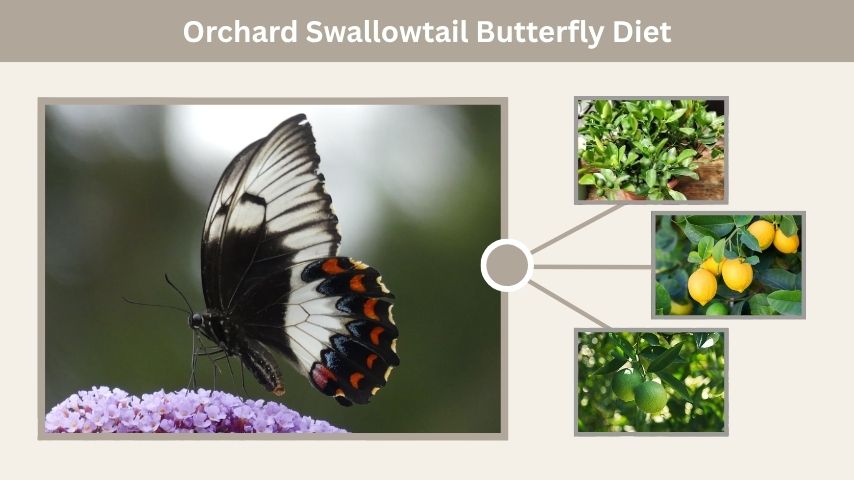
Orchard Swallowtails feed differently during each stage of their life cycle. Caterpillars mainly eat leaves from citrus plants, while adult butterflies depend on flower nectar for energy. Their feeding habits help support pollination and natural ecosystem balance in gardens and forests.
What Do Orchard Swallowtail Caterpillars Eat?
- Citrus leaves
- Lemon tree foliage
- Orange and lime leaves
- Native host plants
- Young soft leaves
Adult Butterfly Diet
Adult Orchard Swallowtails feed mainly on flower nectar using their long proboscis. They visit a wide variety of flowering plants and help transfer pollen between flowers while feeding throughout the day.
Favorite Nectar Plants
Many Orchard Swallowtails are attracted to brightly colored flowers with rich nectar sources. Garden plants, native flowers, and flowering shrubs provide important feeding areas for adult butterflies during warm seasons.
Orchard Swallowtail Life Cycle
The Orchard Swallowtail undergoes complete metamorphosis, meaning it passes through four distinct life stages: egg, caterpillar, chrysalis, and adult butterfly. Each stage has unique behaviors and physical changes that help the butterfly survive and reproduce successfully.
Orchard Swallowtail Butterfly Eggs
- Small round eggs
- Pale yellow or cream color
- Laid on citrus leaves
- Deposited individually
- Attached to host plants
Caterpillar and Chrysalis Stage
After hatching, caterpillars feed heavily and molt several times while growing larger. Once fully developed, the caterpillar attaches itself to a branch or stem and transforms into a chrysalis where major body changes occur.
Adult Butterfly Emergence
Inside the chrysalis, the butterfly develops wings, legs, and adult body structures. After metamorphosis is complete, the adult butterfly emerges, expands its wings, and prepares for its first flight.
Orchard Swallowtail Chrysalis and Pupa
The chrysalis stage is one of the most fascinating parts of the Orchard Swallowtail life cycle. During this period, the caterpillar completely transforms into an adult butterfly through metamorphosis while remaining protected inside the pupa.
Orchard Swallowtail Chrysalis Appearance
- Green or brown coloration
- Leaf-like camouflage
- Attached to branches or stems
- Hard protective outer shell
- Angular body shape
How Long Does the Pupa Stage Last?
The pupa stage may last several weeks depending on temperature and environmental conditions. Warmer climates usually speed up development, while cooler weather can slow the transformation process significantly.
Metamorphosis Process
During metamorphosis, the caterpillar’s body changes dramatically inside the chrysalis. Adult butterfly organs, wings, legs, and reproductive structures slowly develop before the butterfly finally emerges from the pupa.
Orchard Swallowtail Lifespan
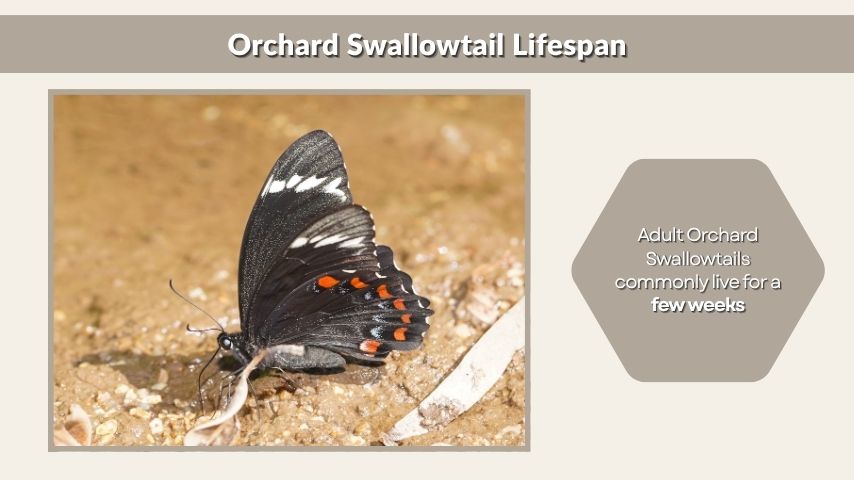
The Orchard Swallowtail lifespan depends on environmental conditions, predators, weather, and food availability. Different life stages vary greatly in survival rates, especially during the vulnerable caterpillar and chrysalis periods.
Orchard Swallowtail Butterfly Life Span
- Adult butterflies may live several weeks
- Warm climates improve survival
- Predators reduce lifespan
- Food availability affects health
- Weather influences activity levels
How Long Do Orchard Swallowtail Butterflies Live?
Adult Orchard Swallowtails commonly live for a few weeks after emerging from the chrysalis. Their main goals during adulthood are feeding, mating, and laying eggs for the next generation.
Survival Challenges
Orchard Swallowtails face many threats, including birds, spiders, parasitic insects, habitat loss, and pesticide exposure. Extreme weather conditions can also reduce survival rates during different stages of the life cycle.
Orchard Swallowtail Predators and Defenses
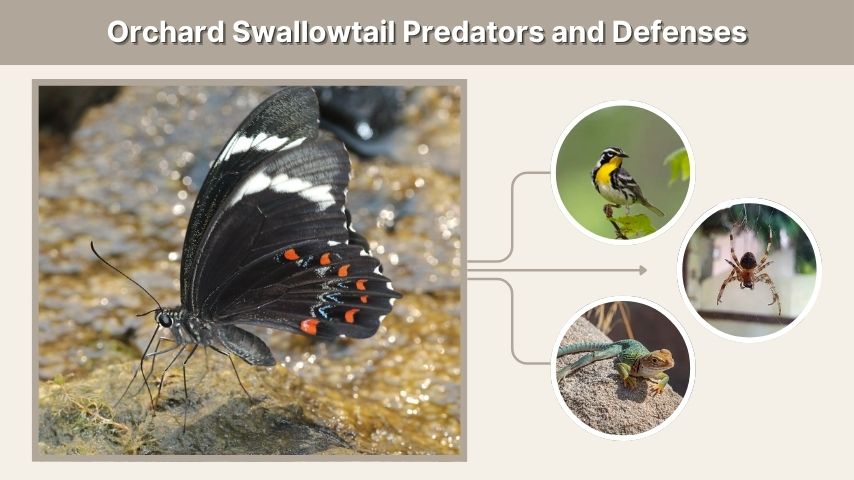
Orchard Swallowtails use camouflage, defensive chemicals, and fast flight to survive in the wild. Both caterpillars and adults have unique adaptations that help reduce the risk of predation.
Common Predators
- Birds
- Spiders
- Lizards
- Praying mantises
- Parasitic wasps
Caterpillar Defense Mechanisms
Young caterpillars resemble bird droppings, helping them avoid predators visually. Older caterpillars use camouflage and their orange osmeterium organ to release unpleasant smells when threatened.
Butterfly Survival Adaptations
Adult Orchard Swallowtails rely on fast flight, strong wing movements, and warning coloration to escape predators. Their ability to move quickly between flowers and trees helps improve survival in natural habitats.
FAQs
What is an Orchard Swallowtail butterfly?
The Orchard Swallowtail is a large Australian swallowtail butterfly scientifically known as Papilio aegeus. It is famous for its black wings, colorful markings, and long tail-like wing extensions. This butterfly is commonly found in gardens, orchards, and citrus-growing regions across Australia.
Are Orchard Swallowtail caterpillars poisonous?
Orchard Swallowtail caterpillars are not poisonous to humans. However, they possess a defensive organ called an osmeterium that releases a strong odor when threatened. This defense helps scare away predators such as birds and small reptiles in the wild.
What do Orchard Swallowtail caterpillars eat?
Orchard Swallowtail caterpillars mainly feed on citrus plants such as lemon, lime, and orange trees. They also eat leaves from related host plants. Caterpillars consume large amounts of foliage while growing rapidly before entering the chrysalis stage.
How long do Orchard Swallowtail butterflies live?
Adult Orchard Swallowtail butterflies usually live for several weeks, depending on weather conditions, predators, and food availability. Their lifespan is mainly focused on feeding, mating, and laying eggs to continue the next butterfly generation.
What does an Orchard Swallowtail chrysalis look like?
The Orchard Swallowtail chrysalis is usually green or brown and shaped to resemble a leaf or twig for camouflage. It attaches firmly to branches or stems while the butterfly transforms inside during the metamorphosis stage.