
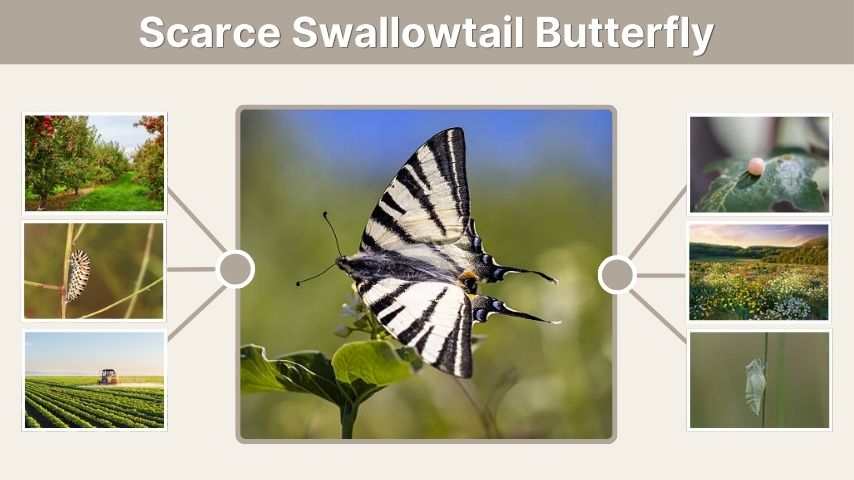
The Scarce Swallowtail (Iphiclides podalirius) is one of Europe’s most elegant butterflies, known for its long tail-like hindwings and striking black-and-yellow striped pattern. Found across France, Spain, Italy, Greece, and the UK, it captivates butterfly watchers and entomologists alike. This article explores its appearance, distribution, diet, caterpillar stages, and habitat preferences. Understanding these aspects helps enthusiasts, gardeners, and conservationists support its populations while observing it safely in the wild.
Scarce Swallowtail Identification and Physical Characteristics
Recognizing the Scarce Swallowtail is essential for accurate observation and study. Its distinct wing shape, coloration, and size make it easily identifiable from other European butterflies.
Appearance
- Large wingspan ranging from 6–8 cm
- Pale yellow wings with bold black tiger stripes
- Tail-like extensions on hindwings
- Black spots with blue and orange markings near the tails
Caterpillar Stage
- Green body with black bands and orange spots
- Feeds primarily on prunus species and other Rosaceae host plants
- Excellent camouflage against predators on host plants
Adult Characteristics
- Average weight: 0.5–1 g
- Lifespan: 2–4 weeks
- Active mainly during spring and summer
Scarce Swallowtail Distribution and Habitat
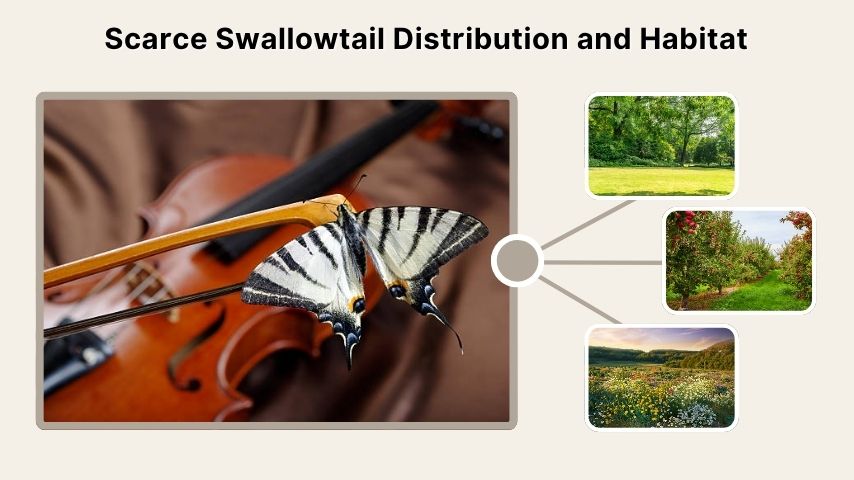
The Scarce Swallowtail is primarily a European butterfly, but its populations are patchy and influenced by climate, geography, and availability of host plants. Proper knowledge of its habitat helps in observation and conservation.
Geographic Distribution
- France, Spain, Italy, Greece, and the UK
- European populations concentrated in Mediterranean climates
- Rare sightings in Haiti, known as the Scarce Haitian Swallowtail
Preferred Habitat
- Open woodlands and orchards
- Meadows with nectar-rich flowering plants
- Warm, sunny environments with sheltered resting spots
Country-specific Observations
- France: Southern regions have higher populations; northern areas are sparse
- Spain & Italy: Mediterranean regions host the densest colonies
- Greece: Mainly found in coastal and hilly areas
- UK: Very rare; usually limited to southern counties
Scarce Swallowtail Diet and Feeding Behavior
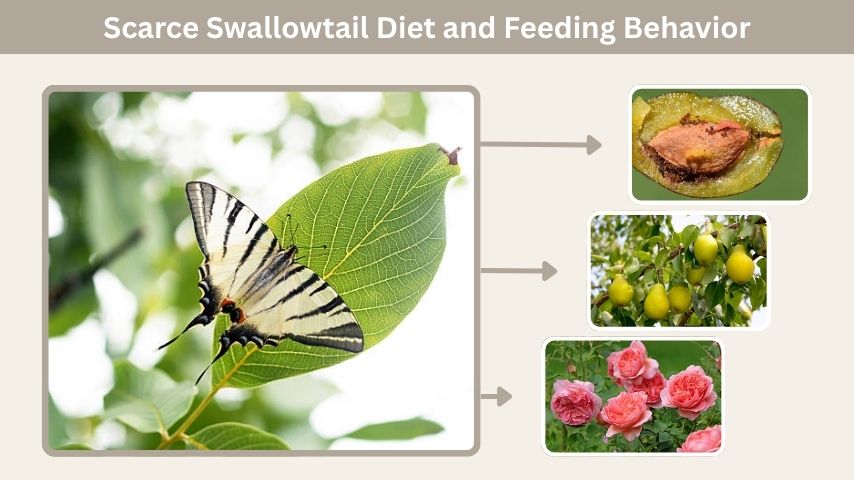
Understanding both larval and adult feeding preferences is crucial for conservation and butterfly garden planning. The Scarce Swallowtail relies on specific host plants as a caterpillar and nectar-rich flowers as an adult.
Caterpillar Diet
- Feeds on Prunus, Pyrus, and other Rosaceae species
- Requires young, tender leaves for proper growth
- Caterpillars may occasionally feed on alternative native shrubs in Mediterranean regions
Adult Feeding
- Prefers nectar from thistle, lavender, and other flowering plants
- Feeds primarily on sun-exposed flowers for energy
- Serves an important role in local pollination
Seasonal Feeding Patterns
- Spring and early summer: caterpillars feed actively on host plants
- Adults feed mainly during sunny hours for optimal nectar collection
Scarce Swallowtail Life Cycle and Reproduction
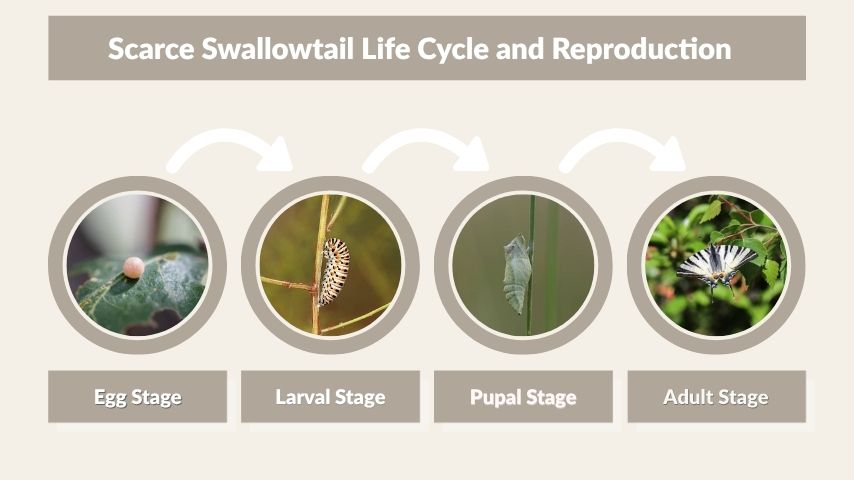
The Scarce Swallowtail undergoes complete metamorphosis, progressing through egg, larval, pupal, and adult stages. Each stage is adapted to survive and maximize reproductive success.
Egg Stage
- Laid singly on the leaves of host plants
- Incubation lasts 7–10 days
- Eggs are small, round, and pale green
Larval Stage
- Feeds on host plants for 3–4 weeks
- Grows through five instars, increasing in size each stage
- Camouflaged with green and black bands to avoid predators
Pupal Stage
- Forms a green or brown chrysalis attached to branches or stems
- Pupation lasts 2–3 weeks, depending on temperature and humidity
- Remains motionless and blends into surroundings
Adult Stage
- Emerges with fully developed wings
- Active for 2–4 weeks, feeding on nectar and seeking mates
- May migrate short distances to find optimal nectar sources
Conservation and Threats
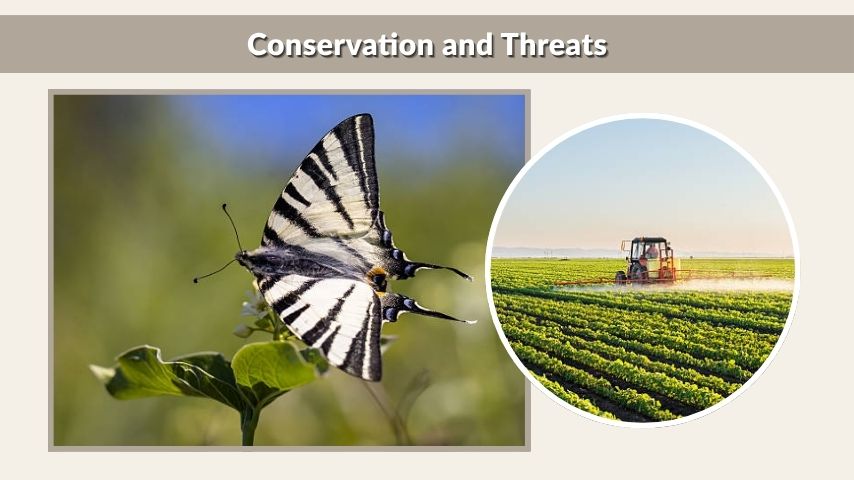
Scarce Swallowtails face threats from habitat loss, pesticide use, and climate change. Awareness and conservation measures help maintain their populations.
Main Threats
- Agricultural expansion reducing host plants
- Pesticide exposure affecting larvae and adults
- Habitat fragmentation due to urbanization or climate change
Conservation Measures
- Planting nectar-rich flowers and host plants in gardens
- Avoiding chemical pesticides in areas where they feed and breed
- Protecting orchards, meadows, and Mediterranean habitats from development
Observing Scarce Swallowtails in the Wild
Observing Scarce Swallowtails requires patience, knowledge of their habitats, and understanding of seasonal behavior.
Best Locations
- Southern France, Spain, Italy, and Greece for European populations
- Sunny meadows, orchards, and woodland edges
- Rare sightings in southern UK counties
Seasonal Tips
- Spring and early summer offer the best chances to observe caterpillars and emerging adults
- Adults are most active during warm, sunny hours
- Use binoculars and cameras to avoid disturbing them
FAQs
What is the average lifespan of a Scarce Swallowtail butterfly?
Adults typically live 2–4 weeks. Caterpillars feed for 3–4 weeks before pupating. The total lifespan from egg to adult varies by climate and region.
Which plants do Scarce Swallowtail caterpillars feed on?
Primarily Prunus, Pyrus, and other Rosaceae species. Young, tender leaves are preferred for optimal growth. Some caterpillars may adapt to alternative native shrubs.
Where can I observe Scarce Swallowtails in Europe?
Southern France, Spain, Italy, and Greece have the densest populations. In the UK, they are very rare and mostly found in southern counties. They prefer warm, sunny meadows and orchards.
How can I attract Scarce Swallowtails to my garden?
Plant nectar-rich flowers like thistle and lavender, provide host plants such as Prunus or Pyrus, and avoid pesticides. Sunny, sheltered spots encourage feeding and egg-laying.
Are Scarce Swallowtails endangered or threatened?
They are not globally endangered but are considered scarce in northern Europe and in regions where habitats have been lost. Conservation measures help maintain local populations.