
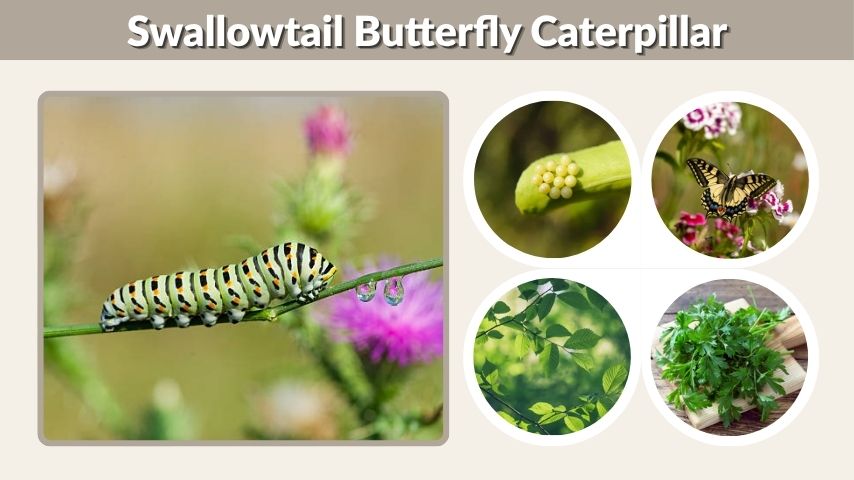
A swallowtail butterfly caterpillar is one of the most fascinating larvae you may find in a garden, woodland, citrus tree, or herb bed. These caterpillars can look striped, green, black, spiny, or even like bird droppings depending on the species and stage. Learning how to identify them helps gardeners protect butterfly habitat while understanding which plants the caterpillars need to survive.
What Is a Swallowtail Butterfly Caterpillar?
Swallowtail caterpillars are the larval stage of swallowtail butterflies, a large butterfly group known for their graceful wings, bright markings, and tail-like extensions on the hindwings of many adult species. Before becoming butterflies, they pass through several growth stages as caterpillars.
During this stage, their main job is simple: eat, grow, molt, and prepare for pupation. Many swallowtail caterpillars are host-plant specialists, which means they depend on particular plant families. This is why one species may appear on parsley while another appears on citrus, spicebush, tulip tree, pawpaw, or pipevine.
Why They Look So Different
A swallowtail caterpillar’s appearance changes as it grows. Young caterpillars often use camouflage to avoid predators. Some resemble bird droppings, while others look like small dark spiny larvae. As they mature, many develop bold colors, stripes, false eyespots, or smooth green bodies that blend into leaves.
These changes can make identification tricky. A young giant swallowtail caterpillar may look nothing like a mature black swallowtail caterpillar, even though both belong to the swallowtail family.
How to Identify a Swallowtail Butterfly Caterpillar
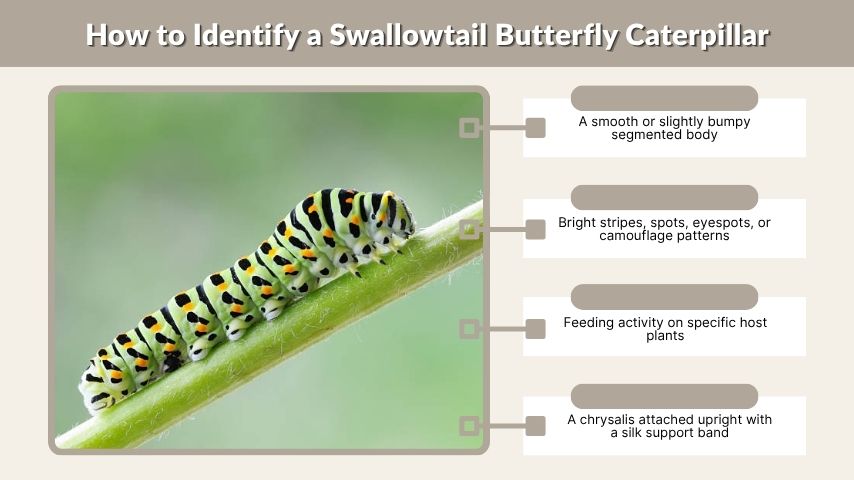
Identification usually depends on color, body shape, markings, host plant, and location. The plant it is eating is often the biggest clue.
Look for these common signs:
- A smooth or slightly bumpy segmented body
- Bright stripes, spots, eyespots, or camouflage patterns
- A hidden forked organ called an osmeterium that may appear when disturbed
- Feeding activity on specific host plants
- A chrysalis attached upright with a silk support band
Common Identification Clues
A black swallowtail caterpillar is often green or yellow-green with black bands and yellow-orange spots when mature. It is commonly found on parsley, dill, fennel, carrot, celery, and Queen Anne’s lace.
A giant swallowtail caterpillar is famous for looking like bird droppings. It is often brown, white, and mottled, which helps it hide from birds and other predators. It commonly feeds on citrus and related plants.
A spicebush swallowtail caterpillar is usually green in later stages with large false eyespots. It often hides inside folded leaves on spicebush or sassafras.
A tiger swallowtail caterpillar may also have large eyespots and a swollen-looking front section. It feeds on trees such as tulip tree, wild cherry, ash, birch, cottonwood, and related host plants depending on the species.
Swallowtail Caterpillar Types and Host Plants
Different swallowtail species need different host plants. Knowing the food plant helps you identify the caterpillar and decide how to care for it.
| Swallowtail caterpillar type | Common appearance | Common host plants |
| Black swallowtail | Green with black bands and yellow-orange spots | Parsley, dill, fennel, carrot, celery, Queen Anne’s lace |
| Giant swallowtail | Brown and white, bird-dropping camouflage | Citrus, rue, prickly ash, hop tree |
| Spicebush swallowtail | Green or yellowish with large eyespots | Spicebush, sassafras |
| Tiger swallowtail | Green with eyespots, later brown before pupation | Tulip tree, cherry, ash, birch, cottonwood |
| Zebra swallowtail | Green, black, or striped depending on stage | Pawpaw |
| Pipevine swallowtail | Dark body with fleshy orange or red projections | Pipevine plants |
What Do Swallowtail Butterfly Caterpillars Eat?
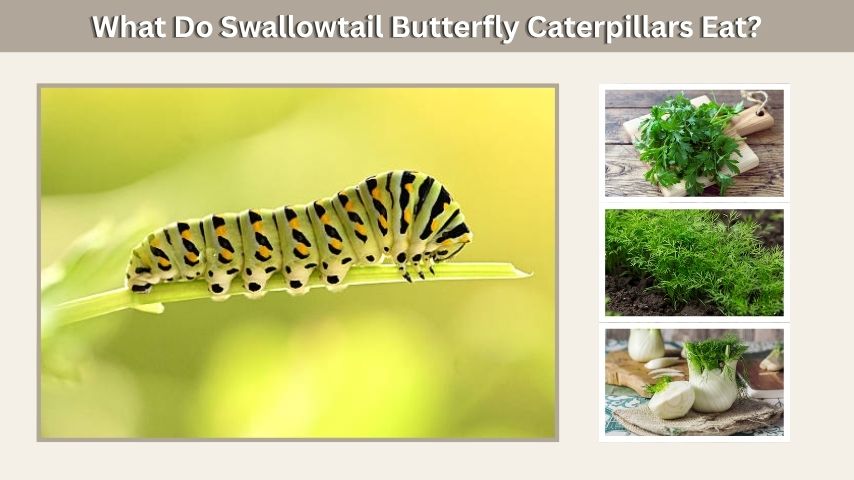
Swallowtail caterpillars eat leaves from their host plants. They usually do not switch easily from one plant family to another, so the safest food is the same plant where you found the caterpillar.
Black Swallowtail Caterpillar Food
Black swallowtail caterpillars are often seen in herb gardens. Their favorite host plants include:
- Parsley
- Dill
- Fennel
- Carrot tops
- Celery
- Queen Anne’s lace
- Rue
Gardeners sometimes worry when they see them eating herbs, but the damage is usually limited unless many caterpillars are present. If you want butterflies in the garden, plant extra herbs so both you and the caterpillars have enough.
Giant Swallowtail Caterpillar Food
Giant swallowtail caterpillars are strongly linked with citrus-family plants. They may feed on orange, lemon, lime, grapefruit, rue, prickly ash, and hop tree. Because of this, they are sometimes noticed on backyard citrus trees.
Their bird-dropping appearance may look strange at first, but it is a natural defense. If you find one on citrus, it is likely doing exactly what it needs to do.
Spicebush and Tiger Swallowtail Food
Spicebush swallowtail caterpillars usually feed on spicebush and sassafras. They often fold or curl leaves into shelters, making them easier to locate if you know what to look for.
Tiger swallowtail caterpillars usually feed on trees rather than herbs. Depending on the species and region, they may use tulip tree, wild cherry, ash, birch, willow, cottonwood, or magnolia.
Swallowtail Butterfly Caterpillar Life Cycle
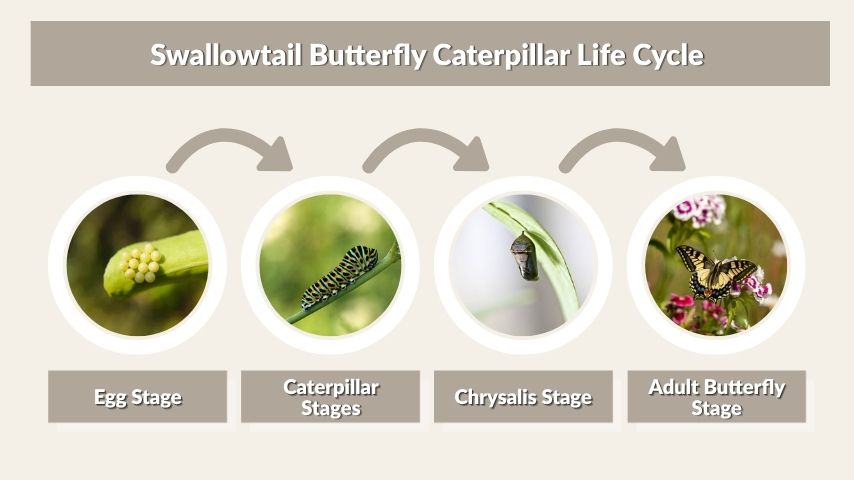
The swallowtail life cycle includes four main stages: egg, caterpillar, chrysalis, and adult butterfly. The caterpillar stage is only one part of the transformation, but it is often the stage people notice most.
Egg Stage
Female swallowtail butterflies lay eggs on host plants. The eggs are often placed singly on leaves or stems. Once the caterpillar develops inside, the egg darkens before hatching.
The tiny caterpillar usually eats its eggshell after emerging. This gives it a small first meal before it begins feeding on the host plant.
Caterpillar Stages
Caterpillars grow through several stages called instars. Between each stage, they molt and shed their old skin. Their color, markings, and size may change dramatically during this process.
A young caterpillar may be dark and spiny, while an older one may become smooth, green, and striped. This is why people often mistake different growth stages for different species.
Chrysalis Stage
When fully grown, the caterpillar stops feeding and searches for a safe place to pupate. Swallowtail caterpillars usually attach themselves upright with a silk pad and a thin silk band around the body.
Inside the chrysalis, the caterpillar transforms into an adult butterfly. The chrysalis may be green, brown, or mottled, helping it blend into stems, bark, walls, or garden structures.
Adult Butterfly Stage
After development is complete, the adult butterfly emerges. Its wings are soft at first and must expand and dry before flight. Once ready, the butterfly searches for nectar and eventually mates, beginning the cycle again.
Are Swallowtail Caterpillars Poisonous?
Most swallowtail caterpillars are not dangerous to humans. However, they should be handled gently or left alone because they are delicate. Some species feed on plants with chemical defenses, and many have their own predator-deterring adaptations.
One of the most interesting defenses is the osmeterium. This is a forked, horn-like organ behind the head. When disturbed, the caterpillar may push it out quickly and release a strong smell. It can startle predators, but it is not a stinger.
What the Orange Horns Mean
If you see orange horns on a black swallowtail caterpillar, the caterpillar is probably feeling threatened. The horns are not permanent antennae; they appear briefly as a defense response.
To reduce stress, avoid poking or repeatedly handling the caterpillar. Observation is better than disturbance, especially if you want it to survive to become a butterfly.
How to Care for a Swallowtail Caterpillar
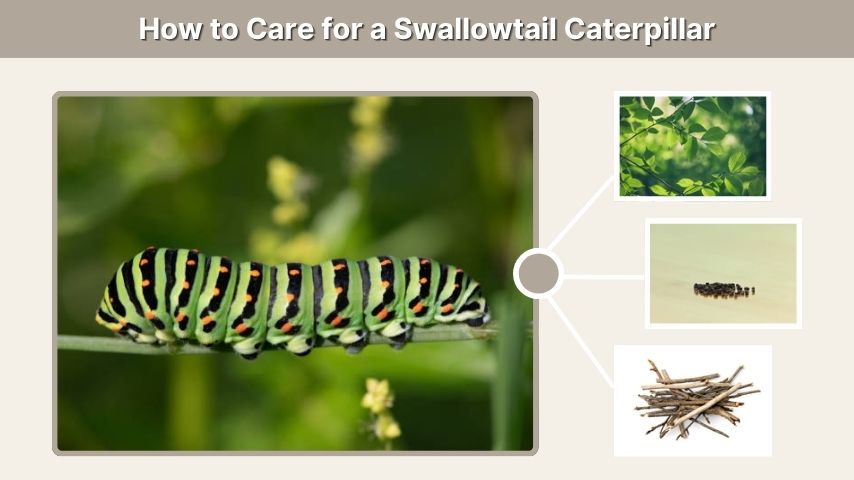
Caring for a swallowtail caterpillar is possible, but it requires fresh host plants, cleanliness, airflow, and minimal handling. The most important rule is to feed it the correct plant.
Use this simple care approach:
- Keep the caterpillar with fresh leaves from its original host plant.
- Replace wilted leaves daily.
- Remove droppings from the container to prevent mold.
- Provide ventilation, but protect it from ants, wasps, and spiders.
- Add sticks or stems for pupation.
- Do not disturb the chrysalis once it forms.
Can You Keep One Indoors?
You can keep a swallowtail caterpillar indoors for observation if you can provide the right host plant every day. A mesh enclosure is better than a sealed jar because caterpillars need airflow.
Once the butterfly emerges, release it outdoors during suitable weather. Avoid releasing it at night, in heavy rain, or during extreme cold.
Swallowtail Caterpillar in the Garden: Pest or Pollinator Helper?
Whether a swallowtail caterpillar is a pest depends on your perspective. If it is eating a prized parsley plant, it may feel like a problem. But if you want a butterfly-friendly garden, the caterpillar is a welcome guest.
A balanced approach works best. Instead of removing every caterpillar, grow extra host plants. Plant parsley, dill, fennel, rue, spicebush, pawpaw, native trees, and nectar flowers depending on your region and target species.
Garden-Friendly Tips
To support swallowtails naturally:
- Plant both host plants and nectar flowers.
- Avoid broad insecticide use.
- Leave some herbs for caterpillars.
- Grow native plants suited to your local swallowtail species.
- Provide a mix of sunny areas, shrubs, and sheltered spaces.
This approach helps the whole life cycle, not just the adult butterfly stage.
Why Some Swallowtail Caterpillars Look Like Bird Droppings
Several swallowtail caterpillars use bird-dropping camouflage when young. This unusual appearance helps protect them from predators because birds and other animals are less likely to investigate something that looks like waste.
Giant swallowtail caterpillars are the best-known example. Their mottled brown, white, and gray pattern can look surprisingly realistic. Some black swallowtail and spicebush swallowtail early stages may also use dark coloring and pale markings as camouflage.
As they mature, some species switch to other defenses, such as eyespots, bright patterns, or the osmeterium.
Black Swallowtail vs Monarch Caterpillar
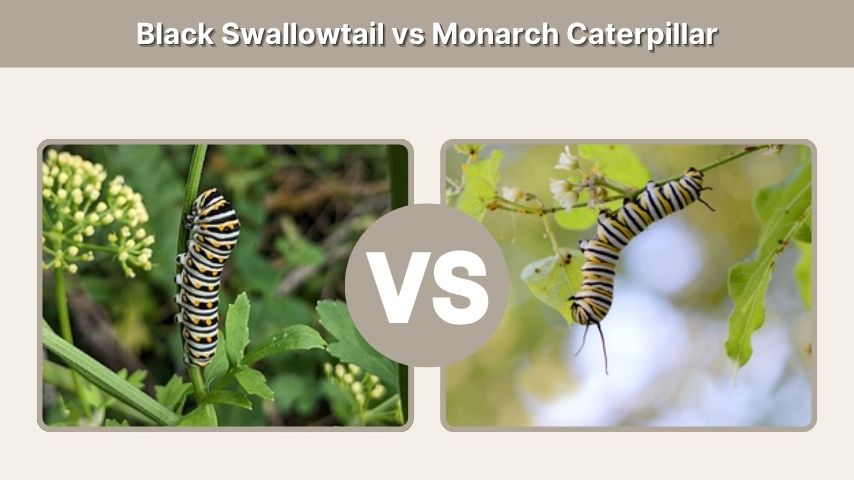
Black swallowtail and monarch caterpillars are often confused because both can have stripes. However, they are easy to tell apart once you know the differences.
Monarch caterpillars feed on milkweed and have black, white, and yellow bands with soft tentacle-like filaments at the front and back. Black swallowtail caterpillars usually feed on carrot-family plants and have green bodies with black bands and yellow-orange spots when mature.
The host plant is the simplest clue. A striped caterpillar on parsley or dill is much more likely to be a black swallowtail than a monarch.
FAQs
What does a swallowtail butterfly caterpillar look like?
A swallowtail butterfly caterpillar can look green, striped, dark, spiny, or mottled depending on the species and growth stage. Some have yellow spots, black bands, false eyespots, or bird-dropping camouflage. The host plant is often the best clue because different swallowtails use different plants.
What do black swallowtail caterpillars eat?
Black swallowtail caterpillars commonly eat plants in the carrot family, including parsley, dill, fennel, carrot, celery, parsnip, and Queen Anne’s lace. They may also use rue. If you find one on a plant, keep feeding it that same host plant for the safest care.
How long does it take a swallowtail caterpillar to become a butterfly?
Timing depends on species, temperature, season, and region. The caterpillar stage may last a few weeks, followed by the chrysalis stage. Some chrysalides produce butterflies within weeks, while others overwinter and emerge in spring when conditions are suitable.
Are swallowtail caterpillars harmful to plants?
They can chew leaves and may damage small herb plants if several are feeding at once. However, they are also the future adult butterflies many gardeners want to attract. Growing extra host plants is the best way to protect your garden while supporting their life cycle.
Should I move a swallowtail caterpillar?
Move a swallowtail caterpillar only when necessary, such as when the plant is being sprayed, cut, or destroyed. Place it on the same type of host plant nearby. Avoid moving it to an unrelated plant because many swallowtail caterpillars cannot survive on the wrong food source.