
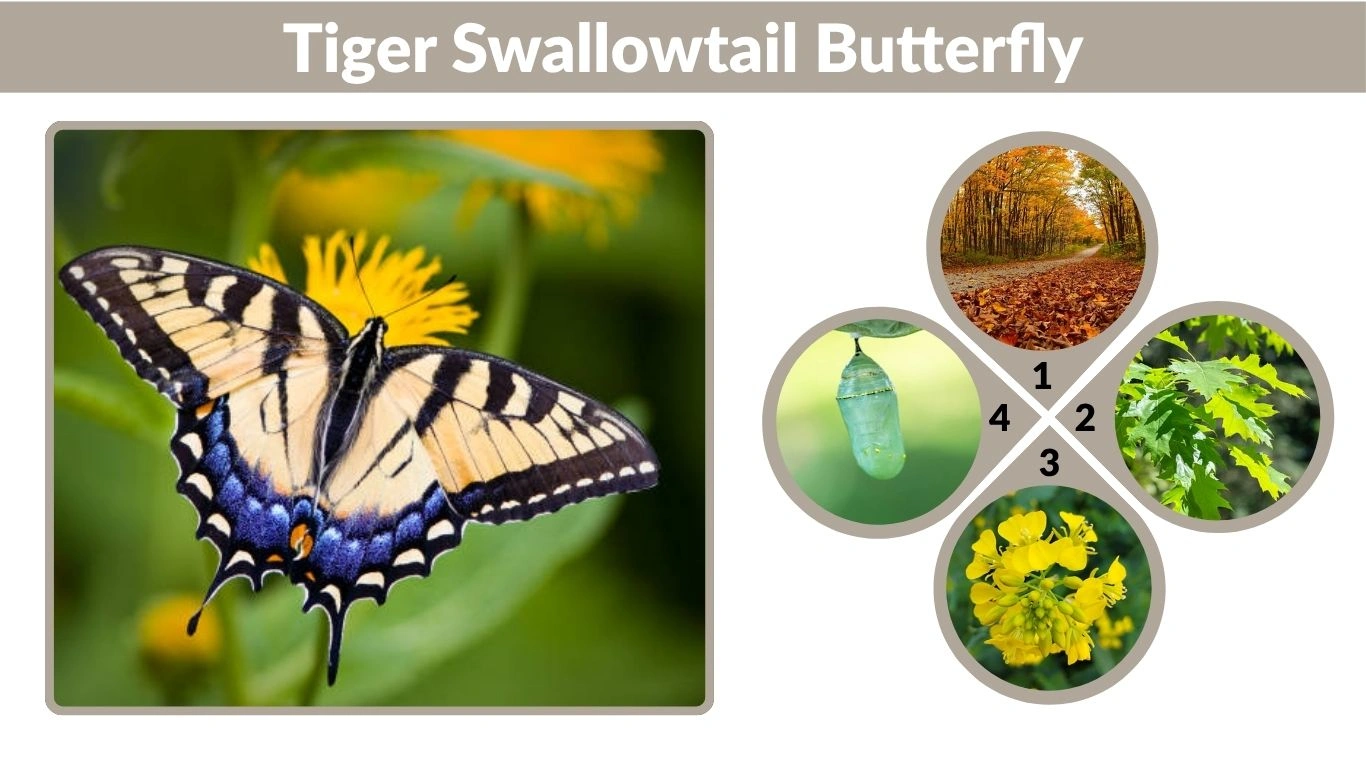
The tiger swallowtail butterfly is one of the most recognizable and admired butterflies in North America. Known for its striking yellow wings with bold black stripes, it is often seen fluttering through gardens, forests, and open fields. Its large size and graceful flight make it a favorite among nature enthusiasts and photographers. Beyond its beauty, this butterfly plays an important role in pollination and ecosystem balance. In this guide, you’ll learn how to identify it, understand its life cycle, and explore its habitat and behavior.
What Is a Tiger Swallowtail Butterfly?
The tiger swallowtail butterfly is a large, colorful butterfly known for its yellow wings with black stripes. It belongs to the swallowtail family and is commonly found across North America. Its striking appearance and smooth flight pattern make it one of the easiest butterflies to identify in the wild.
Scientific Name and Classification
Tiger swallowtail butterflies belong to the Papilio genus, which includes many large and visually striking butterfly species. They are part of the swallowtail family, known for the distinctive tail-like extensions on their hind wings.
There are several closely related species, and they are often grouped based on geographic regions. These species share similar features but may vary slightly in size, color, and habitat.
Types of Tiger Swallowtail Butterflies
There are three main types commonly recognized:
- Eastern tiger swallowtail butterfly
- Western tiger swallowtail butterfly
- Canadian tiger swallowtail butterfly
The eastern tiger swallowtail is the most widespread and commonly seen species. The western and Canadian varieties are found in specific regions and may show slight differences in appearance and behavior.
Tiger Swallowtail Butterfly Identification
Identifying a tiger swallowtail butterfly is relatively simple due to its bold colors and distinctive patterns. However, differences between species and genders can sometimes create confusion.
Key Physical Features
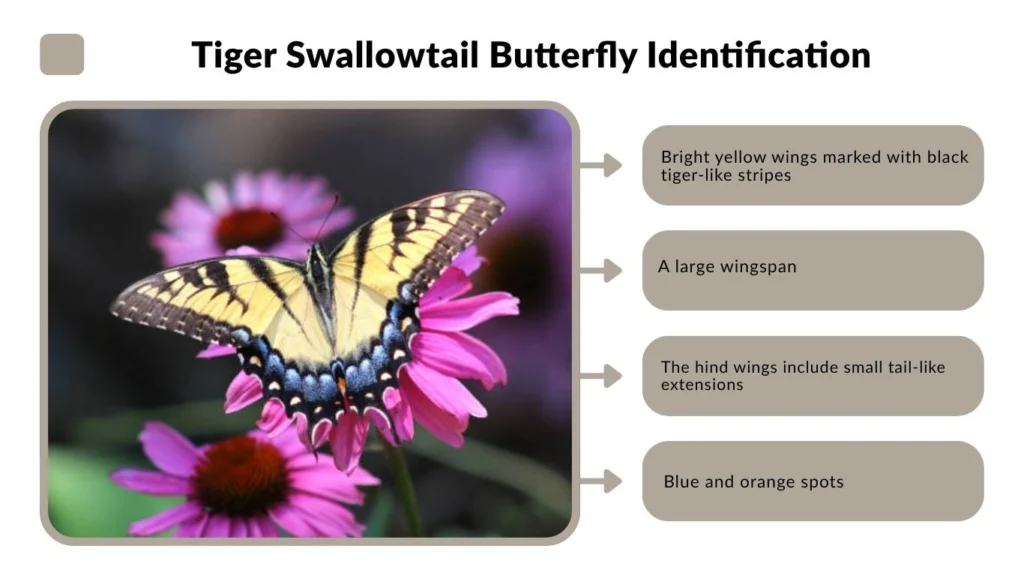
The most noticeable feature of the tiger swallowtail butterfly is its bright yellow wings marked with black tiger-like stripes. These stripes run vertically across the wings, giving the butterfly its name.
It also has a large wingspan compared to many other butterflies. The hind wings include small tail-like extensions, which are a defining characteristic of swallowtail butterflies.
The edges of the wings may have additional markings, including blue and orange spots, depending on the species.
Male vs Female Differences
Male and female tiger swallowtail butterflies can look slightly different. Males are usually brighter yellow with clearly defined black stripes.
Females may appear darker, and in some cases, they can have a black or bluish variation. This darker form helps them blend into their surroundings and may provide some protection from predators.
Observing these subtle differences can help you distinguish between the two, especially when viewing them closely.
Tiger Swallowtail Butterfly Life Cycle
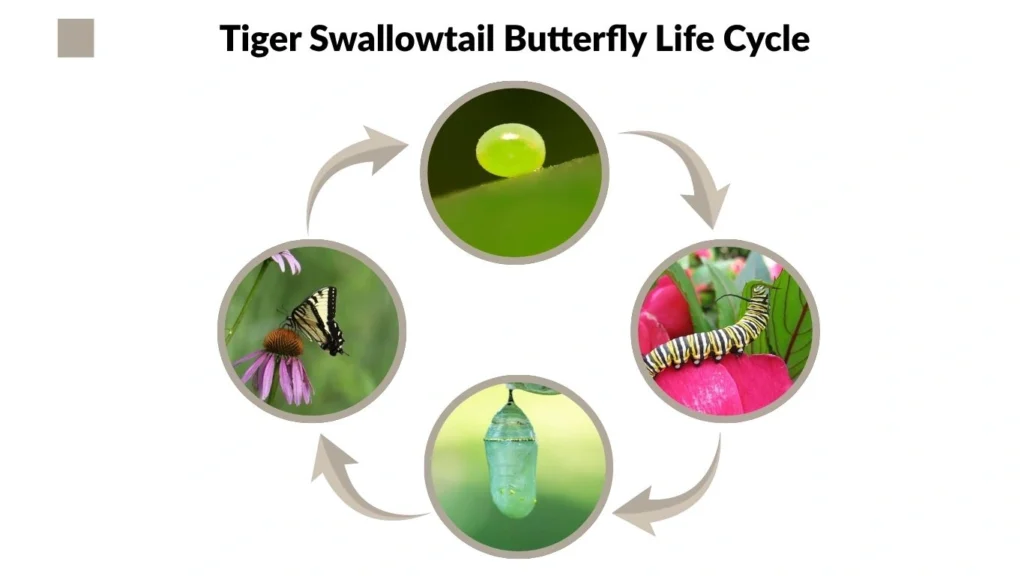
Like all butterflies, the tiger swallowtail undergoes a complete metamorphosis. This life cycle includes four distinct stages, each playing an important role in development.
Egg Stage
The life cycle begins when a female butterfly lays eggs on suitable host plants. These eggs are small, round, and usually green or pale in color.
Each egg is placed carefully on leaves that will serve as food for the caterpillar once it hatches. This ensures the young larvae have immediate access to nourishment.
Caterpillar (Larvae) Stage
After hatching, the caterpillar begins feeding on the leaves of the host plant. In its early stages, it is small and less noticeable.
As it grows, the caterpillar develops a green body with markings that resemble eyes. This helps it mimic a snake’s appearance, which can scare away predators.
The caterpillar goes through several growth stages, shedding its skin multiple times as it increases in size.
Chrysalis Stage
Once fully grown, the caterpillar forms a chrysalis, which is a protective casing where transformation takes place. This stage is crucial for development into an adult butterfly.
The chrysalis may be attached to a branch or leaf and can vary in color to blend into the environment. Inside, the caterpillar undergoes a complete transformation.
Adult Butterfly
After the transformation is complete, the adult butterfly emerges from the chrysalis. Its wings are initially soft and folded, but they quickly expand and harden.
Once ready, the butterfly begins flying, feeding on nectar, and eventually reproducing to continue the cycle.
What Do Tiger Swallowtail Butterflies Eat?
Diet plays a key role in the survival and development of tiger swallowtail butterflies. Their food sources change depending on their life stage.
- Caterpillars feed on leaves of host plants
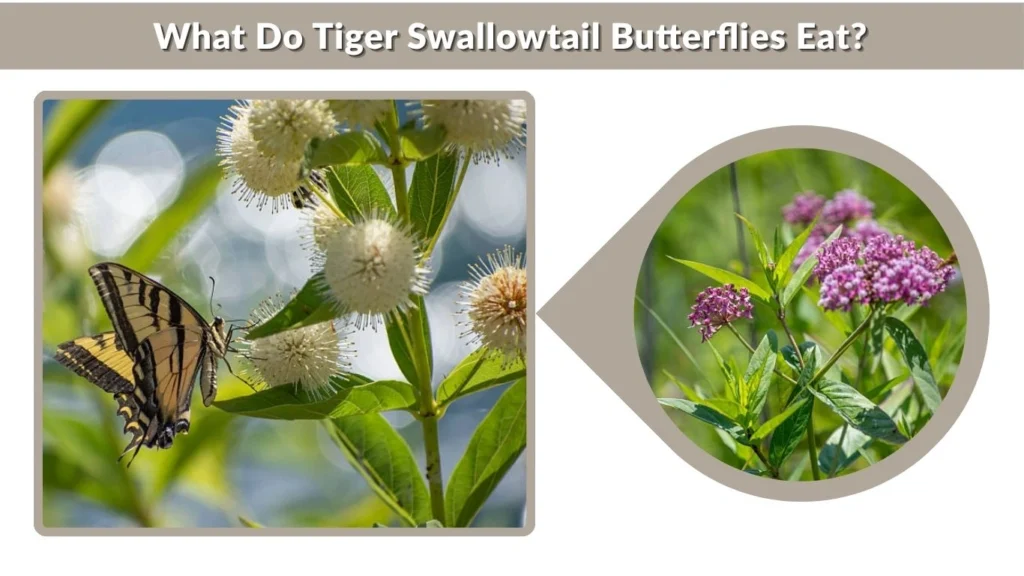
- Adult butterflies consume nectar from flowers
- Prefer brightly colored flowers like lilac and milkweed
- May gather minerals from puddles
- Sometimes feed on tree sap or rotting fruit
Caterpillars rely heavily on specific host plants for growth. Without these plants, they cannot survive.
Adult butterflies, on the other hand, seek out nectar-rich flowers. Their long proboscis allows them to extract nectar efficiently, helping them gain energy for flight and reproduction.
Habitat and Where They Live

Tiger swallowtail butterflies are widely distributed and can adapt to a variety of environments. Their habitat is closely linked to the availability of host plants and food sources.
Common Habitats
These butterflies are commonly found in forests, woodlands, and open fields. They are also frequent visitors to gardens and parks where flowering plants are abundant.
They prefer areas with a mix of trees and open space, which allows them to find both shelter and food.
Geographic Distribution
Tiger swallowtail butterflies are found across North America. Different species occupy different regions, including eastern, western, and northern areas.
They can also be seen in specific states and regions depending on climate conditions. Their distribution is influenced by temperature, vegetation, and seasonal changes.
Host Plants for Tiger Swallowtail Butterflies
Host plants are essential for the survival and reproduction of tiger swallowtail butterflies. Female butterflies lay their eggs only on specific plants that will provide food for the caterpillars after hatching.
- Oak trees
- Maple trees
- Tulip trees
- Willow
- Wild cherry
These plants are carefully selected because they provide the nutrients needed for caterpillar growth. Without the right host plants, the butterfly cannot complete its life cycle.
Different species of tiger swallowtail butterflies may prefer slightly different plants depending on their region. However, hardwood trees remain the most common choice.
Planting these trees or having them nearby increases the chances of seeing tiger swallowtail butterflies in your area.
How Long Do Tiger Swallowtail Butterflies Live?
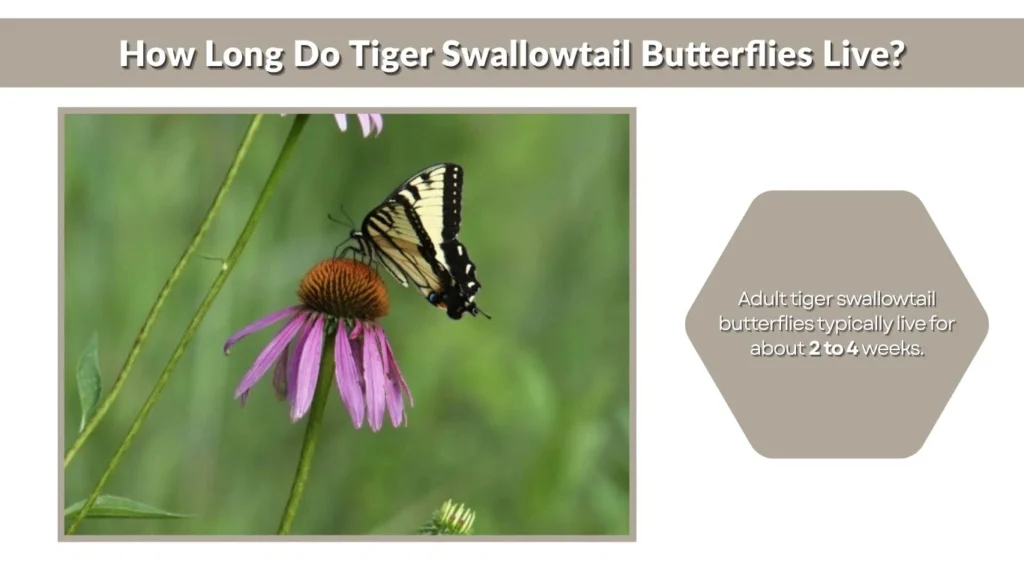
The lifespan of a tiger swallowtail butterfly varies depending on its life stage and environmental conditions. While the adult stage is relatively short, the full life cycle takes longer.
Adult Lifespan
Adult tiger swallowtail butterflies typically live for about 2 to 4 weeks. During this time, their main focus is feeding, mating, and laying eggs.
Despite their short lifespan, they are highly active and can cover large distances while searching for food and suitable breeding sites.
Full Life Cycle Duration
From egg to adult, the entire life cycle can take several weeks to a few months. The exact duration depends on temperature, food availability, and environmental conditions.
Warmer climates often speed up development, while cooler conditions may slow the process.
Tiger Swallowtail Butterfly Behavior
Tiger swallowtail butterflies display several unique behaviors that make them interesting to observe in nature. Their movements and habits help them survive and reproduce effectively.
- Strong and fast flyers
- Active during daylight hours
- Males gather at puddles to collect minerals
- Females search for host plants to lay eggs
- Seasonal activity patterns vary by region
One of their most noticeable behaviors is puddling. Male butterflies often gather around damp soil or puddles to absorb minerals, which are important for reproduction.
Their flight pattern is smooth and gliding, often interrupted by quick wing beats. This makes them easy to spot in open areas such as gardens and fields.
They are most active on warm, sunny days when flowers are in bloom and nectar is readily available.
Are Tiger Swallowtail Butterflies Rare or Dangerous?
Many people wonder whether these butterflies are rare or if they pose any risk. In reality, they are both common and harmless.
Are They Rare?
Tiger swallowtail butterflies are not considered rare. They are commonly found across North America, especially in areas with suitable host plants and food sources.
However, their population can vary depending on environmental factors such as habitat loss and climate changes.
Are They Poisonous?
Tiger swallowtail butterflies are not poisonous and do not pose any danger to humans. They do not bite or sting and are completely safe to observe.
Their bright coloration may resemble warning patterns seen in other species, but in this case, it is simply part of their natural appearance.
Tiger Swallowtail Butterfly Meaning and Symbolism
Beyond their physical beauty, tiger swallowtail butterflies hold symbolic meaning in many cultures and belief systems. They are often associated with transformation and personal growth.
Spiritual Meaning
The butterfly’s life cycle—from caterpillar to chrysalis to adult—is often seen as a symbol of transformation. It represents change, renewal, and new beginnings.
Seeing a tiger swallowtail butterfly is sometimes interpreted as a sign of positive change or personal development.
Cultural Symbolism
In various cultures, butterflies symbolize freedom, beauty, and the soul. The tiger swallowtail, with its bold colors and graceful movement, is often associated with joy and lightness.
It is also seen as a reminder to embrace change and appreciate the present moment.
How to Attract Tiger Swallowtail Butterflies

Creating a butterfly-friendly environment is one of the best ways to attract tiger swallowtail butterflies to your garden or outdoor space.
- Plant nectar-rich flowers
- Include host plants like oak or maple
- Provide shallow water sources
- Avoid using pesticides
- Create sunny, open spaces
Nectar-rich flowers such as lilac, butterfly bush, and milkweed are especially attractive to adult butterflies. These plants provide the energy they need for flight and reproduction.
Adding host plants ensures that butterflies will not only visit but also stay and reproduce in your area.
Providing a small water source, such as a shallow dish or damp soil, can encourage puddling behavior and attract more butterflies.
Interesting Facts About Tiger Swallowtail Butterflies
Tiger swallowtail butterflies have several fascinating traits that make them unique among butterfly species.
- One of the largest butterflies in North America
- Caterpillars mimic snakes for protection
- Females can have different color forms
- Strong flyers capable of long-distance travel
- Important pollinators in many ecosystems
Their ability to mimic predators during the caterpillar stage is particularly interesting. This adaptation helps them avoid being eaten by birds and other animals.
They also play an important role in pollination, helping plants reproduce by transferring pollen as they feed on nectar.
FAQs
What does a tiger swallowtail butterfly look like?
It has bright yellow wings with bold black stripes and small tail-like extensions. Its large size and distinctive pattern make it easy to recognize in the wild.
What do tiger swallowtail butterflies eat?
Caterpillars eat leaves from host plants like oak and maple, while adult butterflies feed on nectar from flowers and occasionally tree sap or fruit.
How long do tiger swallowtail butterflies live?
Adults usually live for 2–4 weeks, while the full life cycle from egg to butterfly can take several weeks to months depending on environmental conditions.
Are tiger swallowtail butterflies rare?
No, they are common in many parts of North America, especially in areas with suitable habitat and host plants.
What is the meaning of a tiger swallowtail butterfly?
It often symbolizes transformation, growth, and new beginnings due to its life cycle and graceful appearance.