
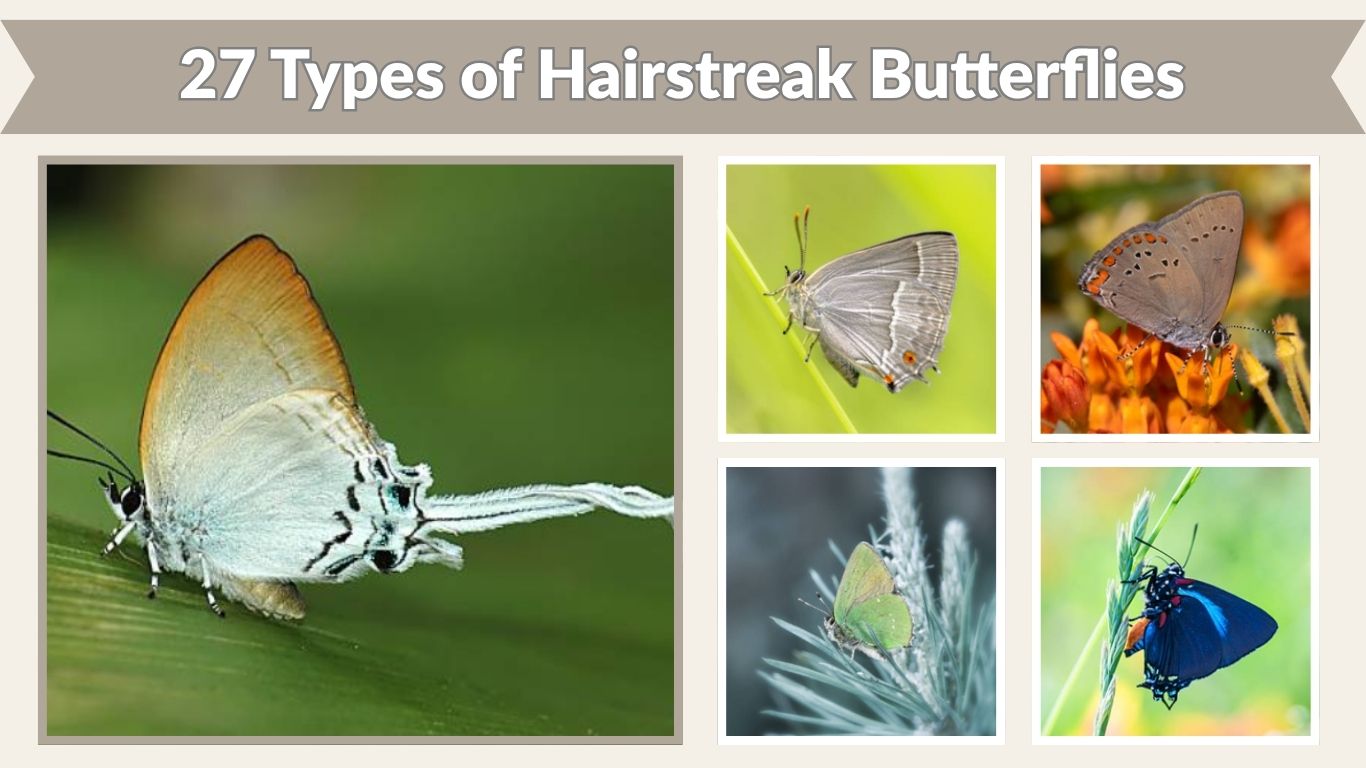
Hairstreak butterflies are small, delicate insects known for the fine tails on their hindwings and intricate patterns on their undersides. They are commonly found in woodlands, meadows, gardens, and shrublands, where they play an important role as pollinators. These butterflies are harmless to humans, but their cryptic coloration and quick, erratic flight help them evade predators. Hairstreak larvae feed on the leaves or buds of specific host plants. In this guide, you will discover 27 common types of hairstreak butterflies, along with their identification, habitat, behavior, and lifecycle.
1. Banded Hairstreak
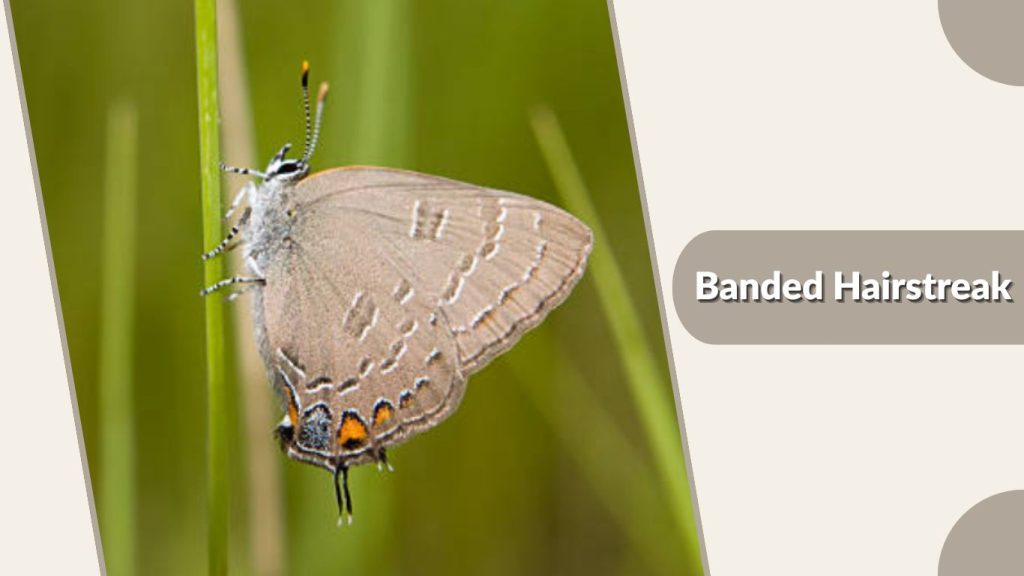
The Banded Hairstreak is a small, striking butterfly known for its delicate markings and fine tails on the hindwings. It is commonly found in woodland edges, meadows, and areas with abundant flowering plants. These butterflies are important pollinators and are recognized for their rapid, erratic flight patterns.
Identification
- Small wingspan of about 1 to 1.25 inches
- Brownish upper wings with orange and black bands
- Fine tails on hindwings
- Underside is gray-brown with white or pale bands
- Small white or orange spots near tails
- Slender body with short antennae
- Fast, fluttering flight
Habitat and Distribution
Banded Hairstreaks are commonly found in woodland edges, forest clearings, meadows, and brushy areas across North America. They prefer habitats with flowering plants for nectar and host plants for larvae, including oaks, hickories, and other deciduous trees.
Behavior and Diet
Adult Banded Hairstreaks feed primarily on flower nectar and occasionally on tree sap. Males are territorial and often perch on leaves or branches to watch for females. They are active during sunny, warm days and rest with wings closed, displaying the patterned underside for camouflage.
Lifecycle
The lifecycle begins when females lay eggs on the leaves or twigs of host plants. Larvae feed on young leaves and buds, growing through several stages. Pupation occurs in leaf litter or on the host plant. Adults emerge to feed on nectar, mate, and continue the reproductive cycle.
2. Gray Hairstreak
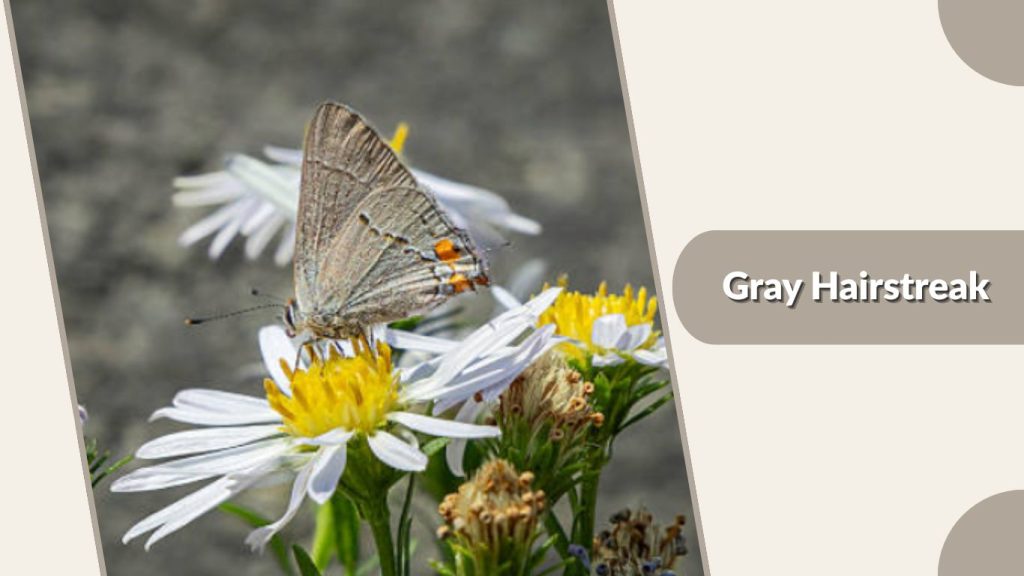
The Gray Hairstreak is a small, widespread butterfly known for its gray-colored wings with delicate white and orange markings. It is one of the most common hairstreaks in North America and is easily recognized by the fine tails on its hindwings. These butterflies are important pollinators and exhibit rapid, darting flight.
Identification
- Small wingspan of about 1 to 1.25 inches
- Gray upper wings with faint white streaks
- Two fine tails on hindwings
- Underside gray with white and orange bands
- Small black and orange spots near the tails
- Slender body with short antennae
- Fast, erratic flight patterns
Habitat and Distribution
Gray Hairstreaks are found in open fields, gardens, woodland edges, meadows, and roadsides across North America. They prefer habitats with a variety of flowering plants for nectar and host plants for larvae, including mallows, clovers, and legumes.
Behavior and Diet
Adults feed primarily on flower nectar and occasionally on sap or rotting fruit. Males are territorial and often patrol areas searching for females. They rest with wings closed, displaying the cryptic underside to avoid predators.
Lifecycle
The lifecycle begins when females lay eggs on host plant leaves or buds. Larvae feed on leaves, flowers, or seed pods depending on the plant species, growing through multiple stages. Pupation occurs in leaf litter or on the host plant. Adults emerge to feed, mate, and continue the reproductive cycle.
3. Red-Banded Hairstreak
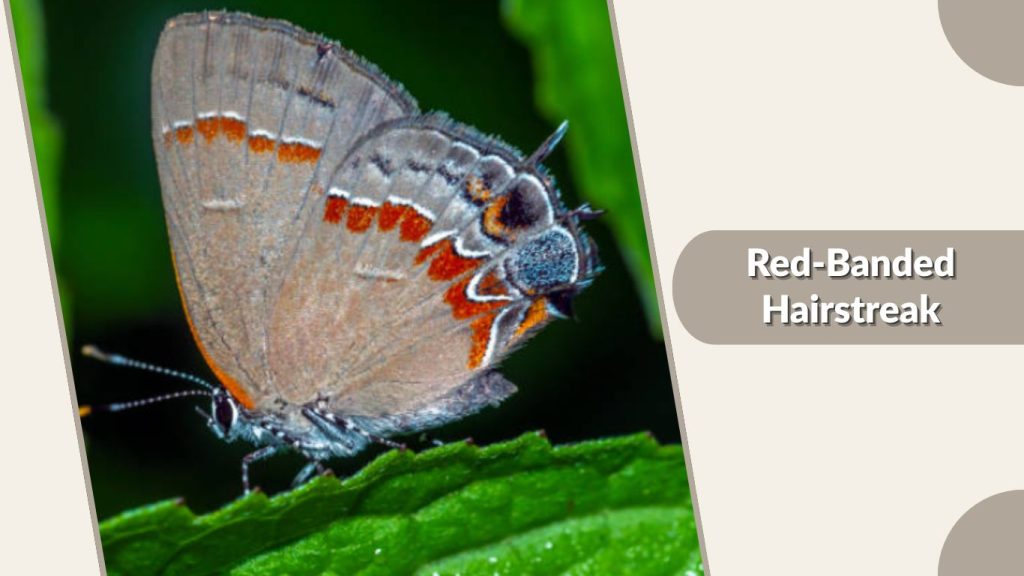
The Red-Banded Hairstreak is a visually striking butterfly recognized by the bright red stripe across its otherwise dark hindwings. It is typically found in woodlands, forest edges, and scrubby areas. These butterflies are important pollinators and are known for their quick, erratic flight and small, fine tails on the hindwings.
Identification
- Small wingspan of about 1 to 1.5 inches
- Dark brown to black upper wings
- Bright red band across the hindwings
- Two fine tails on hindwings
- Underside gray with subtle white markings
- Small orange or blue spots near tails
- Slender body with short antennae
Habitat and Distribution
Red-Banded Hairstreaks are commonly found in southern and eastern North America, particularly in oak and hickory woodlands, scrub areas, and forest edges. They favor habitats with flowering plants for nectar and deciduous trees as host plants for larvae.
Behavior and Diet
Adults feed primarily on nectar from a variety of wildflowers and occasionally sip tree sap. Males are territorial and patrol perches to locate females. These butterflies rest with wings closed, showing the patterned underside, which provides camouflage against predators.
Lifecycle
The lifecycle begins when females lay eggs on the leaves or twigs of host plants, usually oaks or hickories. Larvae feed on new leaves and buds, growing through several instars. Pupation occurs in leaf litter or attached to branches. Adults emerge to feed, mate, and continue the reproductive cycle.
4. Hickory Hairstreak
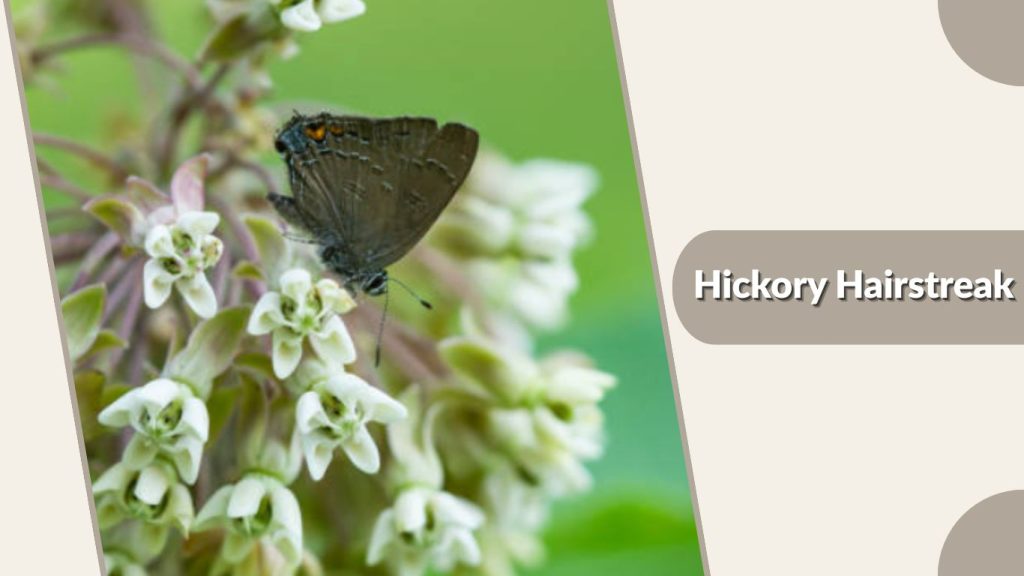
The Hickory Hairstreak is a small, delicate butterfly primarily associated with hickory and other deciduous trees. It is known for its muted brown upper wings and small tails on the hindwings, which help confuse predators. These butterflies are active pollinators and are most commonly seen near forest edges and woodland clearings.
Identification
- Small wingspan of about 1 to 1.25 inches
- Brown upper wings with subtle iridescent sheen
- Two fine tails on the hindwings
- Underside gray with faint white and orange markings
- Small black spots near the tails
- Slender body with short antennae
- Quick, darting flight patterns
Habitat and Distribution
Hickory Hairstreaks are commonly found in deciduous forests, woodland edges, and areas with abundant hickory, oak, or walnut trees. They occur primarily in eastern and central North America and prefer habitats with flowering plants for nectar.
Behavior and Diet
Adults feed mainly on nectar from flowers and occasionally on sap or overripe fruit. Males are territorial and perch on tree branches to watch for females. They rest with wings closed to display the cryptic underside for camouflage against predators.
Lifecycle
The lifecycle begins when females lay eggs on leaves or twigs of hickory or related host trees. Larvae feed on the leaves and buds, growing through several instars. Pupation occurs on the host plant or nearby leaf litter. Adults emerge to feed, mate, and continue the reproductive cycle.
5. Acadian Hairstreak

The Acadian Hairstreak is a small, vibrant butterfly found primarily in northern North America. It is recognized for its subtle greenish or brownish upper wings and small tails on the hindwings. These butterflies are important pollinators and are most commonly observed in woodland edges, meadows, and areas with abundant host trees.
Identification
- Small wingspan of about 1 to 1.25 inches
- Greenish-brown or grayish upper wings
- Two fine tails on hindwings
- Underside gray with white and orange markings
- Small black or orange spots near the tails
- Slender body with short antennae
- Fast, fluttering flight
Habitat and Distribution
Acadian Hairstreaks are found in northern forests, woodland edges, and meadows throughout northeastern North America. They prefer habitats with flowering plants for nectar and deciduous trees such as birch, oak, and hickory for larval host plants.
Behavior and Diet
Adult Acadian Hairstreaks feed mainly on nectar from flowers and occasionally on sap or rotting fruit. Males are territorial and perch on leaves or branches to locate females. They often rest with wings closed, showing the cryptic underside to avoid predators.
Lifecycle
The lifecycle begins when females lay eggs on the leaves or twigs of host trees. Larvae feed on the leaves, growing through several stages. Pupation occurs on the host plant or in leaf litter. Adults emerge to feed, mate, and continue the reproductive cycle.
6. Coral Hairstreak
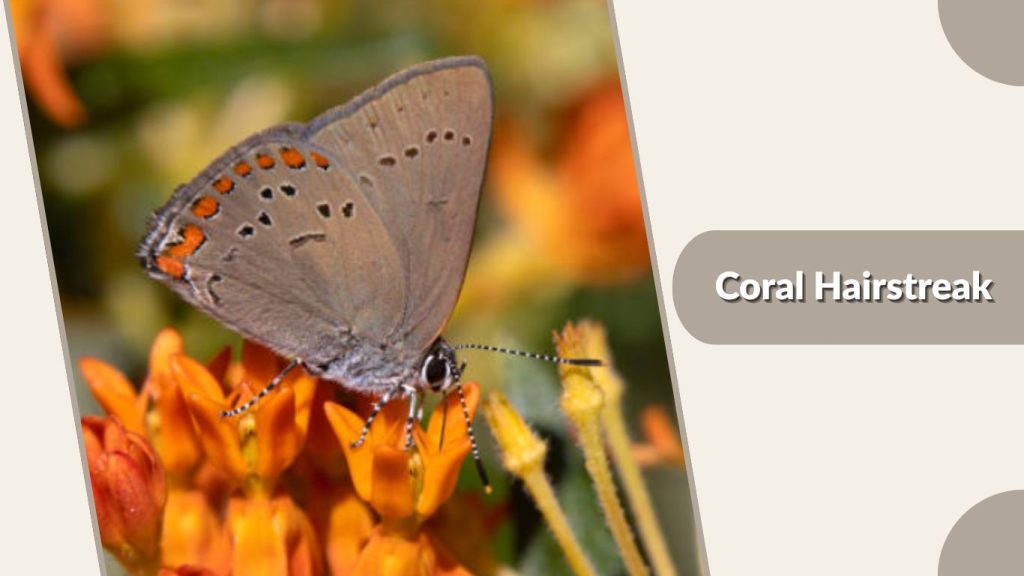
The Coral Hairstreak is a small, colorful butterfly known for its reddish-orange or coral markings on the underside of the hindwings. It is typically found in woodland edges, open forests, and shrubby areas. These butterflies are active pollinators and are recognized by the fine tails on their hindwings.
Identification
- Small wingspan of about 1 to 1.25 inches
- Brown or gray upper wings
- Coral or reddish-orange band along the underside of hindwings
- Two fine tails on hindwings
- Small black or orange spots near tails
- Slender body with short antennae
- Quick, darting flight patterns
Habitat and Distribution
Coral Hairstreaks are commonly found in deciduous or mixed forests, woodland edges, and scrubby habitats across eastern North America. They favor areas with flowering plants for nectar and host trees or shrubs for larval development.
Behavior and Diet
Adults feed mainly on flower nectar and occasionally sip sap or rotting fruit. Males are territorial and often perch on leaves or branches to locate females. They rest with wings closed, showing the colorful underside that helps camouflage against predators.
Lifecycle
The lifecycle begins when females lay eggs on leaves or twigs of host plants. Larvae feed on leaves while growing through several instars. Pupation occurs in leaf litter or attached to the host plant. Adults emerge to feed, mate, and continue the reproductive cycle.
7. Edward’s Hairstreak
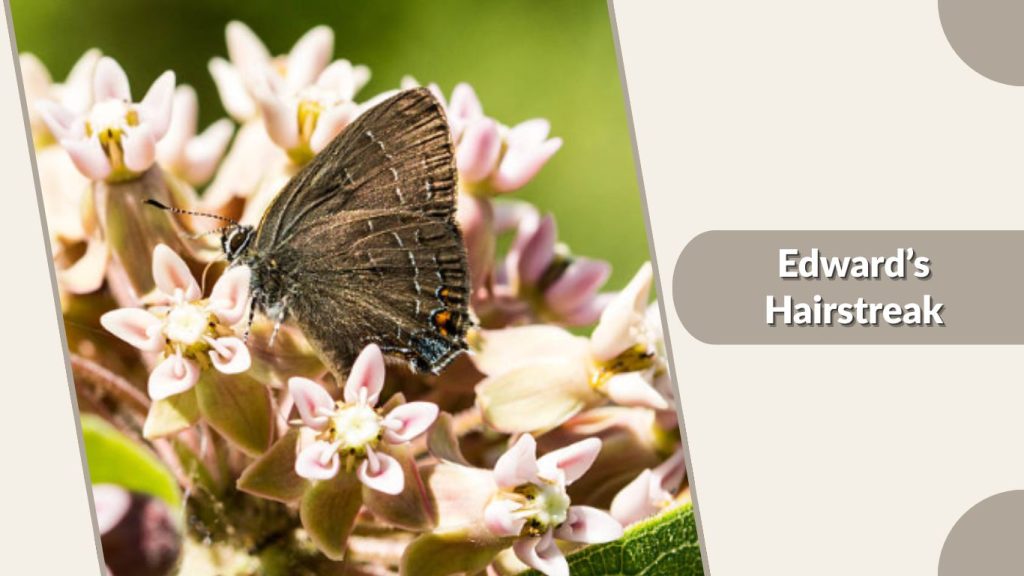
Edward’s Hairstreak is a small, delicate butterfly primarily found in deciduous forests and woodland edges. It is known for its subtle brown or gray upper wings and fine tails on the hindwings, which help confuse predators. These butterflies are active pollinators and are often seen visiting flowers or resting on leaves.
Identification
- Small wingspan of about 1 to 1.25 inches
- Brown or gray upper wings with faint markings
- Two fine tails on the hindwings
- Underside pale gray with subtle white or orange markings
- Small black or orange spots near tails
- Slender body with short antennae
- Rapid, darting flight
Habitat and Distribution
Edward’s Hairstreaks are commonly found in deciduous forests, woodland edges, and meadows across northeastern North America. They prefer habitats with flowering plants for nectar and host trees such as oak, hickory, and ash for larval feeding.
Behavior and Diet
Adults feed primarily on nectar from flowers and occasionally on tree sap or overripe fruit. Males are territorial and perch on leaves or branches to locate females. They often rest with wings closed, displaying the cryptic underside for camouflage.
Lifecycle
The lifecycle begins when females lay eggs on leaves or twigs of host trees. Larvae feed on leaves while developing through multiple instars. Pupation occurs in leaf litter or on the host plant. Adults later emerge to feed, mate, and continue the reproductive cycle.
8. Juniper Hairstreak

The Juniper Hairstreak is a small butterfly closely associated with juniper and cedar trees. It is recognized for its greenish or bluish upper wings and tiny tails on the hindwings. These butterflies are active pollinators and are most commonly seen near woodland edges, forest clearings, and shrublands where host plants are abundant.
Identification
- Small wingspan of about 1 to 1.25 inches
- Greenish or bluish upper wings
- Two fine tails on the hindwings
- Underside gray or green with subtle white and orange markings
- Small black or orange spots near the tails
- Slender body with short antennae
- Quick, fluttering flight
Habitat and Distribution
Juniper Hairstreaks are commonly found in forests, woodland edges, and shrubby habitats across North America. They prefer areas with abundant juniper or cedar for larval feeding and nearby flowering plants for nectar.
Behavior and Diet
Adults feed mainly on nectar from flowers and occasionally on sap or overripe fruit. Males are territorial and often perch on branches to locate females. They rest with wings closed, showing the cryptic underside that provides camouflage against predators.
Lifecycle
The lifecycle begins when females lay eggs on leaves or twigs of juniper or cedar host plants. Larvae feed on the foliage while growing through several stages. Pupation occurs in leaf litter or on the host plant. Adults emerge to feed, mate, and continue the reproductive cycle.
9. Strymon Hairstreak
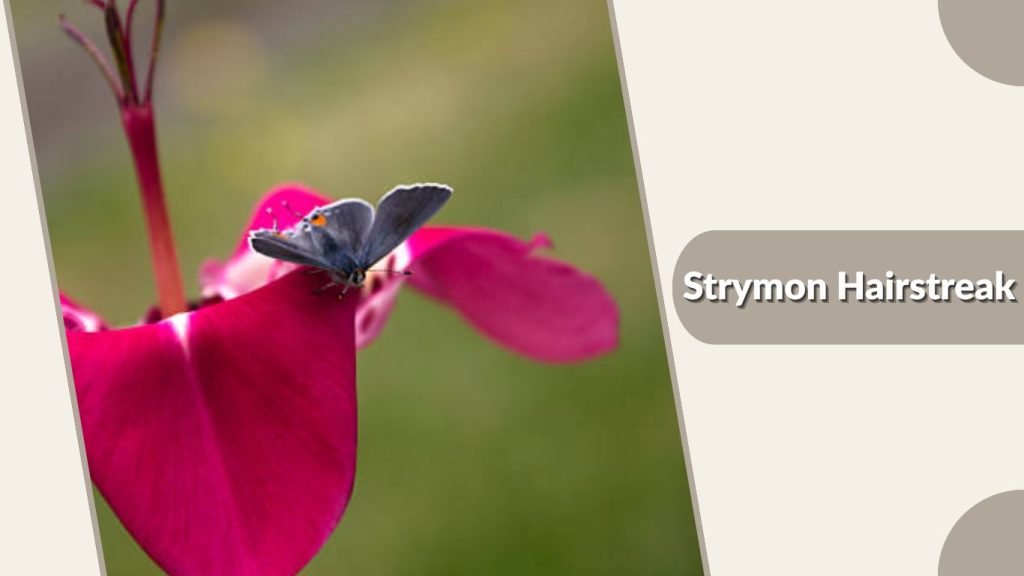
The Strymon Hairstreak is a small, colorful butterfly commonly found in woodland edges, meadows, and gardens. It is known for its vibrant markings on the hindwings and the tiny tails that help confuse predators. These butterflies are important pollinators and are most active during sunny, warm days.
Identification
- Small wingspan of about 1 to 1.25 inches
- Brown or gray upper wings with subtle markings
- Two fine tails on the hindwings
- Underside gray or brown with white and orange markings
- Small black or orange spots near tails
- Slender body with short antennae
- Rapid, darting flight patterns
Habitat and Distribution
Strymon Hairstreaks are commonly found in woodland edges, meadows, gardens, and scrubby areas across North America. They prefer habitats with flowering plants for nectar and host plants such as oaks, elms, and other deciduous trees for larval feeding.
Behavior and Diet
Adult Strymon Hairstreaks feed mainly on nectar from flowers and occasionally on tree sap or rotting fruit. Males are territorial and perch on leaves or branches to locate females. They rest with wings closed, displaying the cryptic underside for camouflage.
Lifecycle
The lifecycle begins when females lay eggs on leaves or twigs of host plants. Larvae feed on leaves while developing through multiple stages. Pupation occurs in leaf litter or on the host plant. Adults emerge to feed, mate, and continue the reproductive cycle.
10. White-M Hairstreak
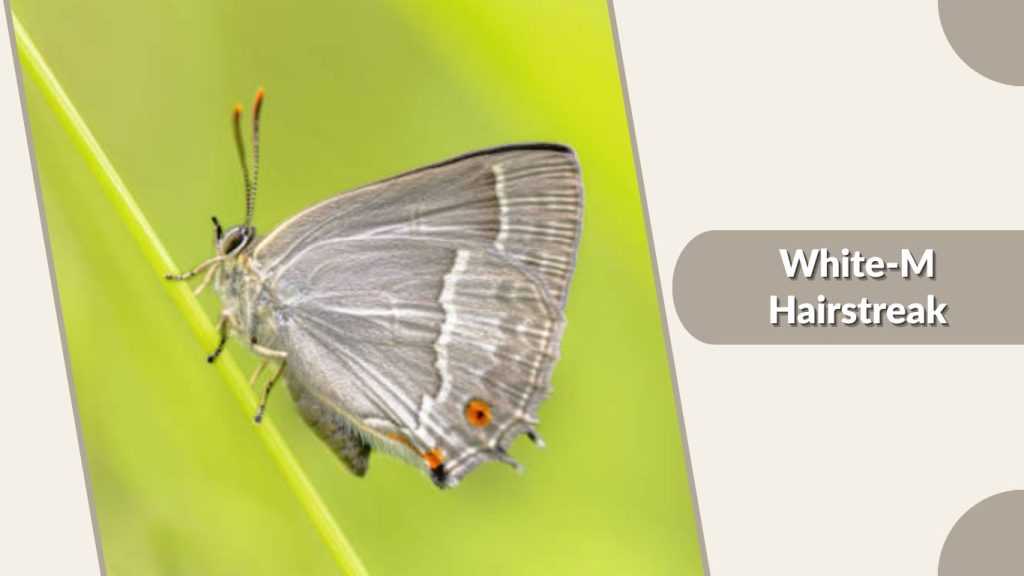
The White-M Hairstreak is a small, delicate butterfly named for the characteristic white “M”-shaped marking on the underside of its hindwings. It is typically found in woodland edges, meadows, and gardens. These butterflies are active pollinators and are recognized by the small tails on the hindwings that help deter predators.
Identification
- Small wingspan of about 1 to 1.25 inches
- Brown or gray upper wings with subtle markings
- Two fine tails on the hindwings
- Underside gray or brown with a distinct white “M” marking
- Small black and orange spots near tails
- Slender body with short antennae
- Quick, darting flight
Habitat and Distribution
White-M Hairstreaks are commonly found in forests, woodland edges, meadows, and gardens across North America. They prefer areas with flowering plants for nectar and deciduous trees or shrubs, such as oaks and hickories, for larval host plants.
Behavior and Diet
Adults feed primarily on flower nectar and occasionally on tree sap or overripe fruit. Males are territorial and perch on branches or leaves to locate females. They often rest with wings closed, showing the cryptic underside that camouflages them against predators.
Lifecycle
The lifecycle begins when females lay eggs on leaves or twigs of host plants. Larvae feed on the leaves while growing through multiple instars. Pupation occurs in leaf litter or on the host plant. Adults emerge to feed, mate, and continue the reproductive cycle.
11. Frosted Green Hairstreak
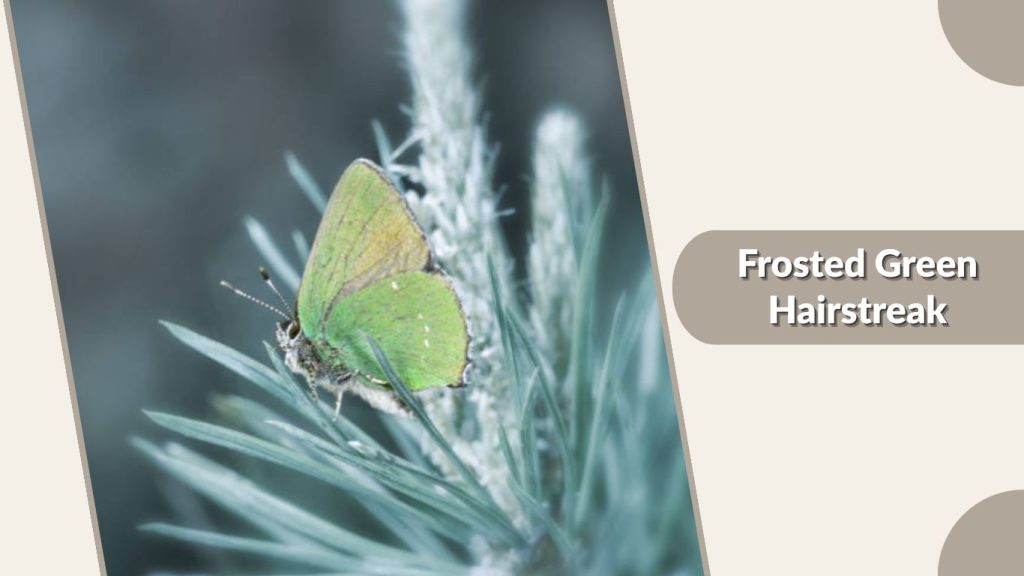
The Frosted Green Hairstreak is a small butterfly known for its delicate greenish underwings with frosted white markings. It is commonly found in woodland edges, meadows, and shrubby habitats. These butterflies are important pollinators and have small tails on their hindwings that help distract predators.
Identification
- Small wingspan of about 1 to 1.25 inches
- Greenish upper and underside of wings with frosted markings
- Two fine tails on the hindwings
- Underside has subtle white and orange spots
- Slender body with short antennae
- Rapid, darting flight
- Smooth, delicate wing edges
Habitat and Distribution
Frosted Green Hairstreaks are commonly found in northern and temperate forests, woodland edges, meadows, and shrublands across North America. They prefer habitats with flowering plants for nectar and host plants such as oaks, blueberries, or huckleberries for larval feeding.
Behavior and Diet
Adults feed primarily on flower nectar and occasionally on tree sap. Males are territorial and perch on leaves or branches to locate females. They rest with wings closed, displaying the cryptic underside for camouflage.
Lifecycle
The lifecycle begins when females lay eggs on leaves or buds of host plants. Larvae feed on the leaves while developing through several stages. Pupation occurs in leaf litter or on the host plant. Adults emerge to feed, mate, and continue the reproductive cycle.
12. Red-Spotted Hairstreak
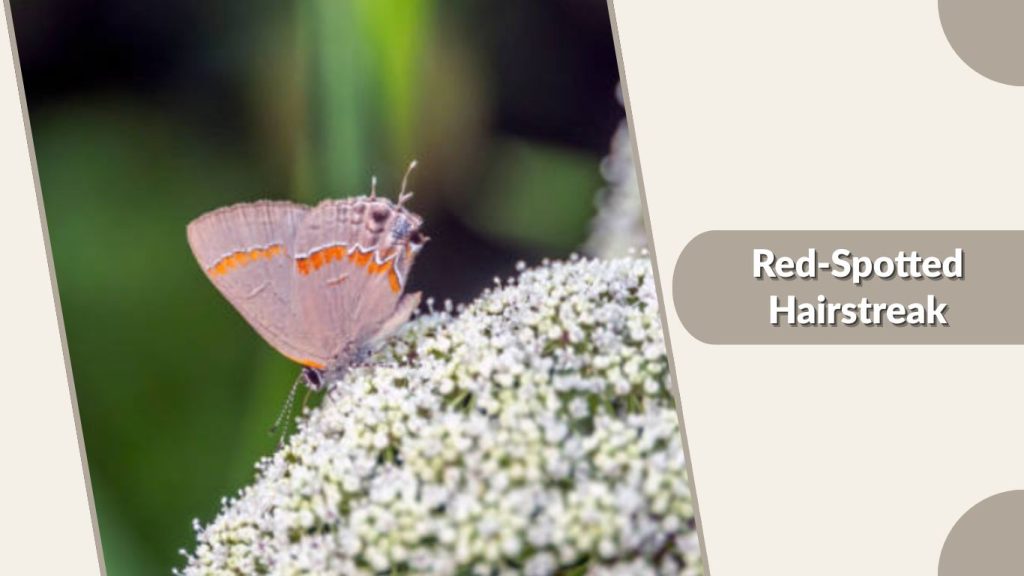
The Red-Spotted Hairstreak is a small, colorful butterfly recognized for the bright red spots on the underside of its hindwings. It is commonly found in woodland edges, meadows, and shrubby areas. These butterflies are active pollinators and are characterized by the fine tails on their hindwings that help distract predators.
Identification
- Small wingspan of about 1 to 1.25 inches
- Brown or gray upper wings with subtle markings
- Two fine tails on the hindwings
- Underside gray or brown with bright red spots near tails
- Small orange or black spots along hindwings
- Slender body with short antennae
- Quick, darting flight
Habitat and Distribution
Red-Spotted Hairstreaks are commonly found in forests, woodland edges, meadows, and gardens across North America. They prefer habitats with flowering plants for nectar and deciduous trees or shrubs, such as oaks and hickories, for larval host plants.
Behavior and Diet
Adults feed primarily on nectar from flowers and occasionally on tree sap or overripe fruit. Males are territorial, often perching on branches or leaves to locate females. They rest with wings closed, displaying the cryptic underside for camouflage from predators.
Lifecycle
The lifecycle begins when females lay eggs on leaves or twigs of host plants. Larvae feed on leaves while growing through multiple instars. Pupation occurs in leaf litter or on the host plant. Adults later emerge to feed, mate, and continue the reproductive cycle.
13. Hoary Hairstreak
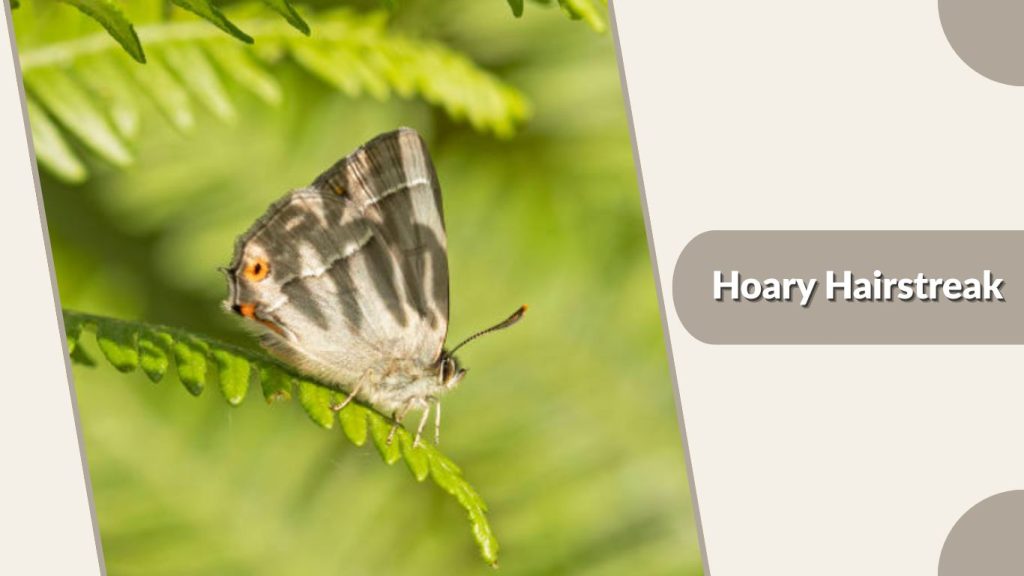
The Hoary Hairstreak is a small, delicate butterfly known for its silvery-gray coloration on the underside of its wings. It is commonly found in woodland edges, meadows, and areas with flowering plants. This species has fine tails on the hindwings, which help confuse predators, and plays an important role as a pollinator.
Identification
- Small wingspan of about 1 to 1.25 inches
- Gray or silvery upper and underside wings
- Two fine tails on the hindwings
- Subtle white or orange spots near the tails
- Slender body with short antennae
- Rapid, fluttering flight
- Smooth, delicate wing edges
Habitat and Distribution
Hoary Hairstreaks are commonly found in northern and temperate forests, woodland edges, meadows, and open shrubby areas across North America. They prefer habitats with flowering plants for nectar and deciduous trees such as oaks for larval host plants.
Behavior and Diet
Adults feed primarily on flower nectar and occasionally sip tree sap. Males are territorial and perch on leaves or branches to find females. They rest with wings closed, displaying the cryptic underside for camouflage from predators.
Lifecycle
The lifecycle begins when females lay eggs on leaves or buds of host plants. Larvae feed on the leaves while growing through multiple instars. Pupation occurs in leaf litter or on the host plant. Adults later emerge to feed, mate, and continue the reproductive cycle.
14. Tailed Blue Hairstreak
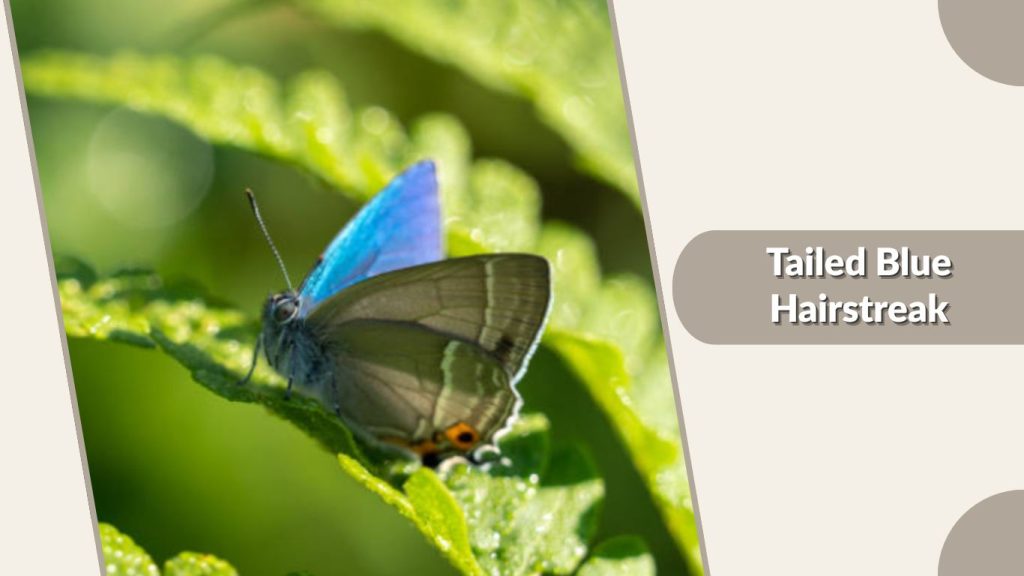
The Tailed Blue Hairstreak is a small butterfly notable for its blue upper wings and tiny tails on the hindwings. It is commonly found in open woodlands, meadows, and gardens where flowering plants are abundant. These butterflies are active pollinators and use their tails to distract predators.
Identification
- Small wingspan of about 1 to 1.25 inches
- Blue upper wings with subtle markings
- Two fine tails on hindwings
- Underside gray or pale blue with white or orange spots
- Slender body with short antennae
- Quick, darting flight
- Smooth, delicate wing edges
Habitat and Distribution
Tailed Blue Hairstreaks are commonly found in meadows, woodland edges, gardens, and open forested areas across North America. They prefer habitats with flowering plants for nectar and host plants such as oaks, blueberries, or legumes for larval development.
Behavior and Diet
Adults feed mainly on nectar from flowers and occasionally sip sap or overripe fruit. Males are territorial and perch on leaves or branches to locate females. They rest with wings closed, displaying the underside that camouflages them from predators.
Lifecycle
The lifecycle begins when females lay eggs on the leaves or buds of host plants. Larvae feed on foliage while developing through multiple stages. Pupation occurs in leaf litter or on the host plant. Adults later emerge to feed, mate, and continue the reproductive cycle.
15. Striped Hairstreak
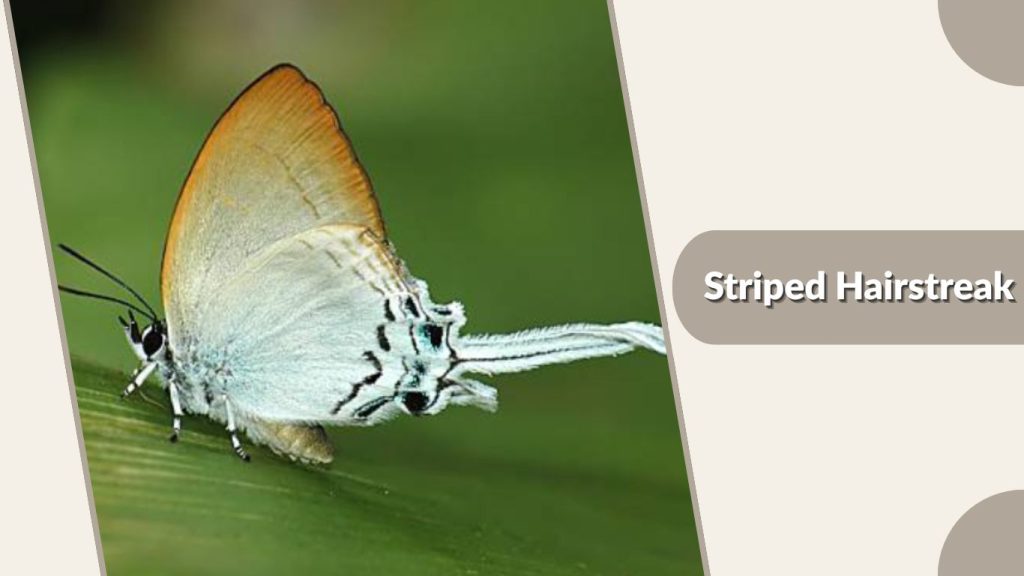
The Striped Hairstreak is a small butterfly characterized by its delicate stripes on the underside of the hindwings and tiny tails. It is commonly found in woodland edges, meadows, and shrubby areas where host plants are abundant. These butterflies are important pollinators and are known for their rapid, erratic flight.
Identification
- Small wingspan of about 1 to 1.25 inches
- Brown or gray upper wings with subtle markings
- Two fine tails on hindwings
- Underside gray with white or pale stripes
- Small black or orange spots near the tails
- Slender body with short antennae
- Fast, fluttering flight
Habitat and Distribution
Striped Hairstreaks are commonly found in deciduous forests, woodland edges, meadows, and open shrubby habitats across North America. They prefer areas with flowering plants for nectar and host plants such as oak, hickory, or sumac for larval feeding.
Behavior and Diet
Adults feed primarily on nectar from flowers and occasionally on tree sap or overripe fruit. Males are territorial and perch on leaves or branches to locate females. They often rest with wings closed, showing the patterned underside to avoid predators.
Lifecycle
The lifecycle begins when females lay eggs on leaves or twigs of host plants. Larvae feed on the leaves while developing through several stages. Pupation occurs in leaf litter or on the host plant. Adults emerge to feed, mate, and continue the reproductive cycle.
16. Great Purple Hairstreak
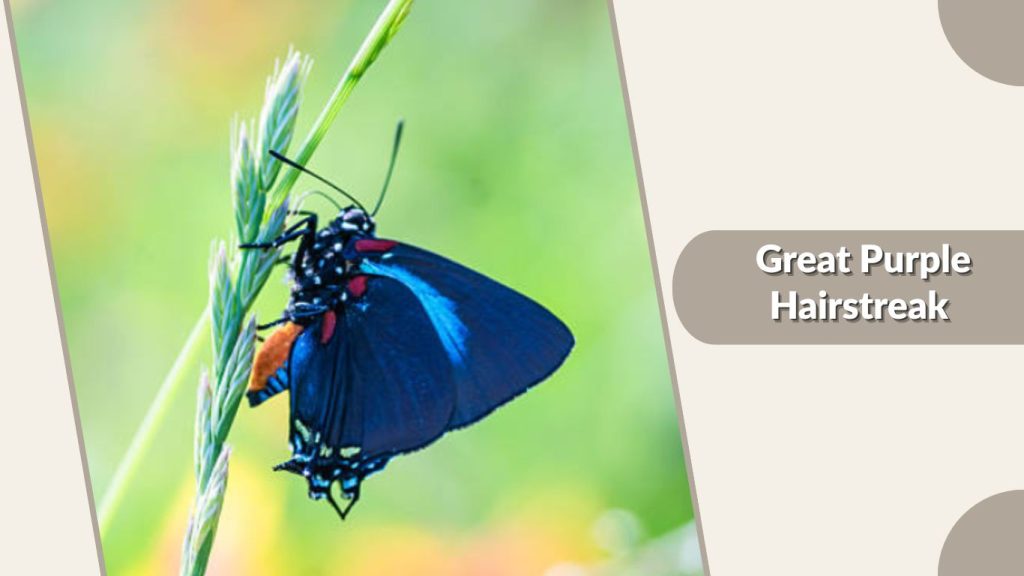
The Great Purple Hairstreak is a striking butterfly recognized for its dark, iridescent purple upper wings and small tails on the hindwings. It is commonly found in oak woodlands and scrubby habitats. These butterflies are important pollinators and are known for their rapid, erratic flight and vivid coloration.
Identification
- Small wingspan of about 1 to 1.5 inches
- Iridescent purple upper wings with subtle markings
- Two fine tails on the hindwings
- Underside gray or brown with orange and white spots
- Slender body with short antennae
- Rapid, fluttering flight
- Smooth, delicate wing edges
Habitat and Distribution
Great Purple Hairstreaks are commonly found in oak woodlands, forest edges, and shrub-dominated habitats across North America, particularly in the southern and eastern regions. They prefer areas with host oaks for larval feeding and flowering plants for nectar.
Behavior and Diet
Adults feed primarily on nectar from flowers and occasionally on tree sap or overripe fruit. Males are territorial and perch on leaves or branches to watch for females. They often rest with wings closed, displaying the patterned underside for camouflage against predators.
Lifecycle
The lifecycle begins when females lay eggs on oak leaves or twigs. Larvae feed on leaves while growing through several instars. Pupation occurs in leaf litter or on the host plant. Adults emerge to feed, mate, and continue the reproductive cycle.
17. Black Hairstreak
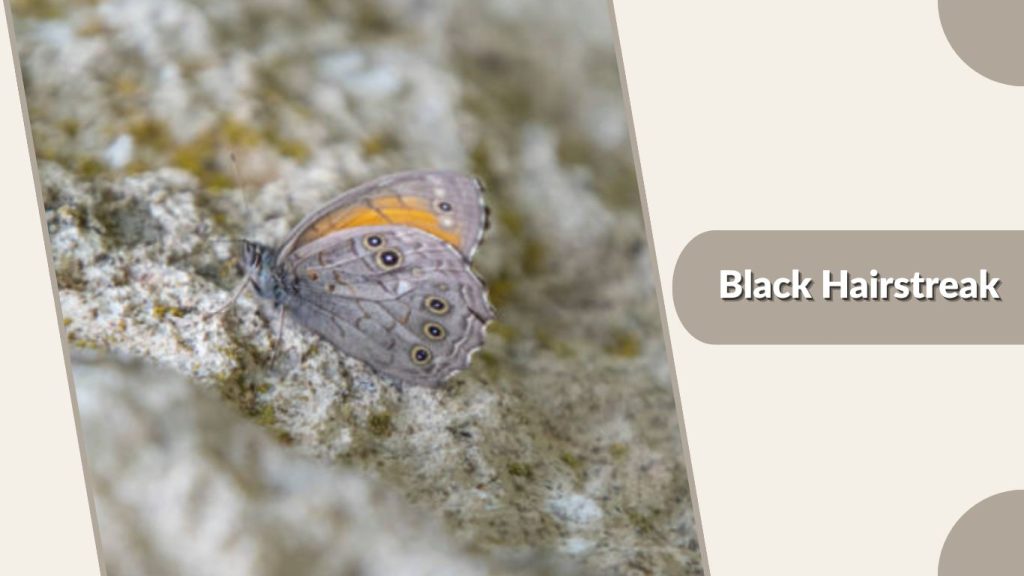
The Black Hairstreak is a small, rare butterfly recognized by its dark brown to black upper wings and tiny tails on the hindwings. It is typically found in dense woodlands and scrubby habitats with plenty of flowering plants. These butterflies are important pollinators and are often elusive due to their cryptic coloration and woodland habits.
Identification
- Small wingspan of about 1 to 1.25 inches
- Dark brown to black upper wings
- Two fine tails on hindwings
- Underside gray or brown with subtle white or orange markings
- Slender body with short antennae
- Fast, fluttering flight
- Smooth, delicate wing edges
Habitat and Distribution
Black Hairstreaks are commonly found in dense woodlands, forest edges, and scrub habitats across Europe and parts of North America. They prefer areas with host plants like blackthorn and flowering shrubs for nectar.
Behavior and Diet
Adults feed primarily on flower nectar and occasionally on tree sap or rotting fruit. Males are territorial and perch on branches or leaves to locate females. They rest with wings closed, using the cryptic underside to camouflage against predators.
Lifecycle
The lifecycle begins when females lay eggs on leaves or twigs of host plants. Larvae feed on leaves while growing through several stages. Pupation occurs in leaf litter or on the host plant. Adults later emerge to feed, mate, and continue the reproductive cycle.
18. Green Hairstreak
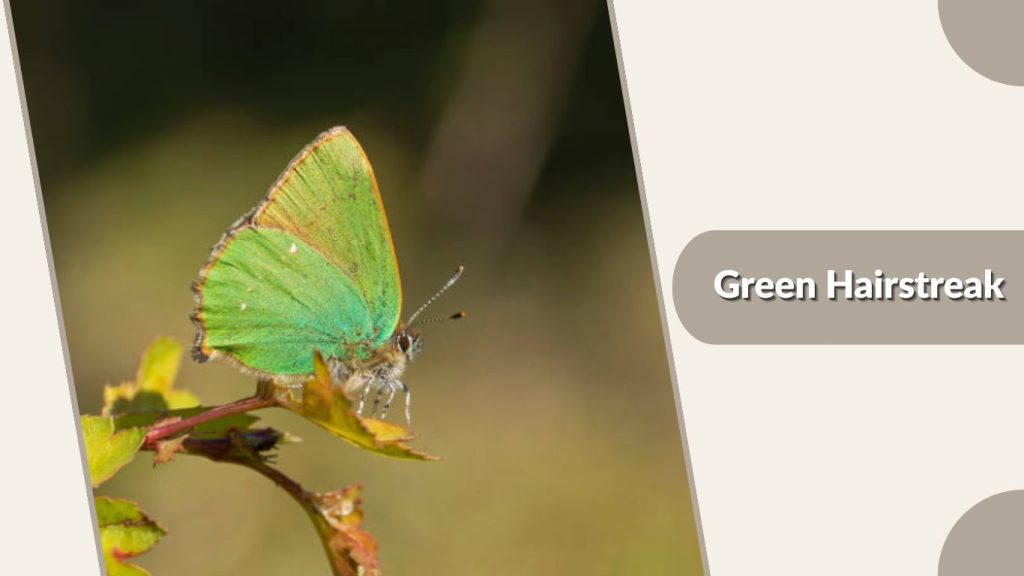
The Green Hairstreak is a small, striking butterfly known for its bright green underwings and tiny tails on the hindwings. It is commonly found in grasslands, heathlands, and woodland edges. These butterflies are important pollinators and use their green coloration to blend in with foliage, making them difficult to spot.
Identification
- Small wingspan of about 1 to 1.25 inches
- Bright green underside of wings
- Brown or gray upper wings
- Two fine tails on the hindwings
- Small orange or white spots near the tails
- Slender body with short antennae
- Quick, darting flight
Habitat and Distribution
Green Hairstreaks are commonly found in grasslands, heathlands, woodland edges, and open shrubby areas across Europe, Asia, and North America. They prefer habitats with flowering plants for nectar and host plants such as buckthorn, gorse, or heather for larvae.
Behavior and Diet
Adults feed primarily on flower nectar and occasionally on tree sap. Males are territorial and perch on leaves or branches to locate females. They often rest with wings closed, showing the bright green underside that camouflages them against foliage.
Lifecycle
The lifecycle begins when females lay eggs on leaves or twigs of host plants. Larvae feed on leaves while developing through multiple stages. Pupation occurs in leaf litter or on the host plant. Adults emerge to feed, mate, and continue the reproductive cycle.
19. Silver-Banded Hairstreak
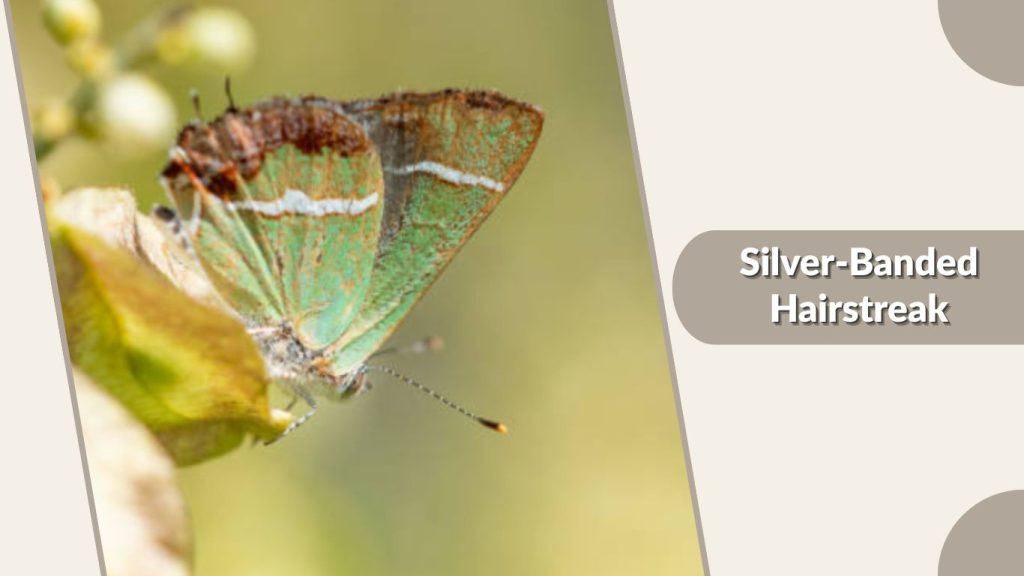
The Silver-Banded Hairstreak is a small, delicate butterfly notable for the silvery band running across the underside of its hindwings. It is commonly found in woodland edges, meadows, and shrubby areas. These butterflies are active pollinators and use the fine tails on their hindwings to distract predators.
Identification
- Small wingspan of about 1 to 1.25 inches
- Brown or gray upper wings with subtle markings
- Two fine tails on the hindwings
- Underside gray or brown with a silvery band
- Small orange or black spots near the tails
- Slender body with short antennae
- Quick, fluttering flight
Habitat and Distribution
Silver-Banded Hairstreaks are commonly found in deciduous forests, woodland edges, meadows, and shrublands across North America. They prefer habitats with flowering plants for nectar and host trees such as oak or hickory for larval development.
Behavior and Diet
Adults feed primarily on flower nectar and occasionally on tree sap or overripe fruit. Males are territorial and perch on leaves or branches to locate females. They rest with wings closed, displaying the cryptic underside for camouflage.
Lifecycle
The lifecycle begins when females lay eggs on leaves or twigs of host plants. Larvae feed on leaves while growing through several stages. Pupation occurs in leaf litter or on the host plant. Adults emerge to feed, mate, and continue the reproductive cycle.
20. White M Hairstreak
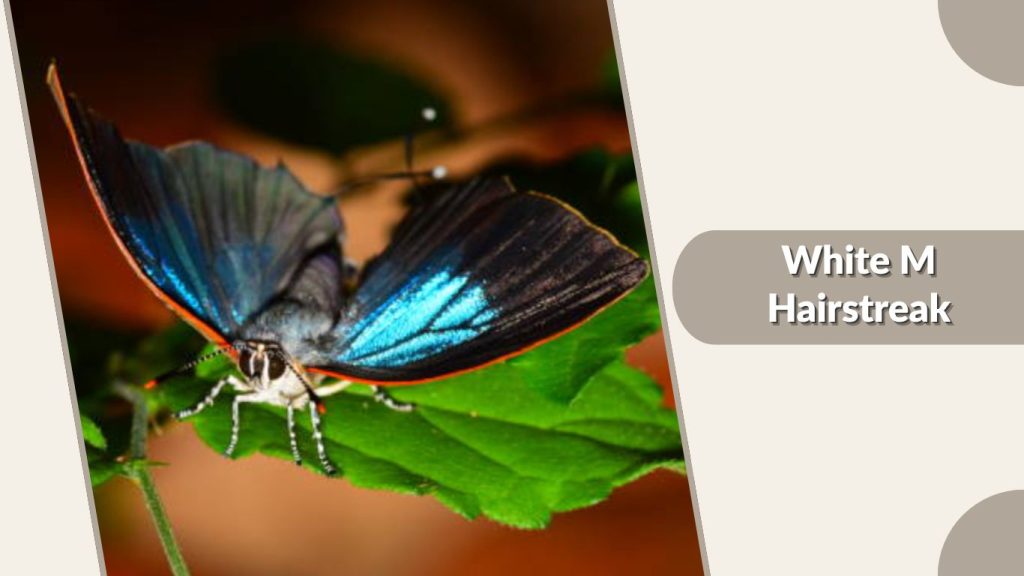
The White M Hairstreak is a small butterfly named for the distinctive white “M” marking on the underside of its hindwings. It is commonly found in woodland edges, meadows, and shrubby areas. These butterflies are active pollinators and have small tails on their hindwings that help deter predators.
Identification
- Small wingspan of about 1 to 1.25 inches
- Brown or gray upper wings
- Two fine tails on hindwings
- Underside gray or brown with a white “M” marking
- Small orange or black spots near the tails
- Slender body with short antennae
- Fast, fluttering flight
Habitat and Distribution
White M Hairstreaks are commonly found in deciduous forests, woodland edges, meadows, and gardens across North America. They prefer habitats with flowering plants for nectar and host trees or shrubs such as oak and hickory for larval development.
Behavior and Diet
Adults feed mainly on flower nectar and occasionally on sap or rotting fruit. Males are territorial and perch on branches or leaves to locate females. They rest with wings closed, showing the cryptic underside for camouflage from predators.
Lifecycle
The lifecycle begins when females lay eggs on leaves or twigs of host plants. Larvae feed on leaves while growing through several stages. Pupation occurs in leaf litter or on the host plant. Adults emerge to feed, mate, and continue the reproductive cycle.
21. Brown Hairstreak
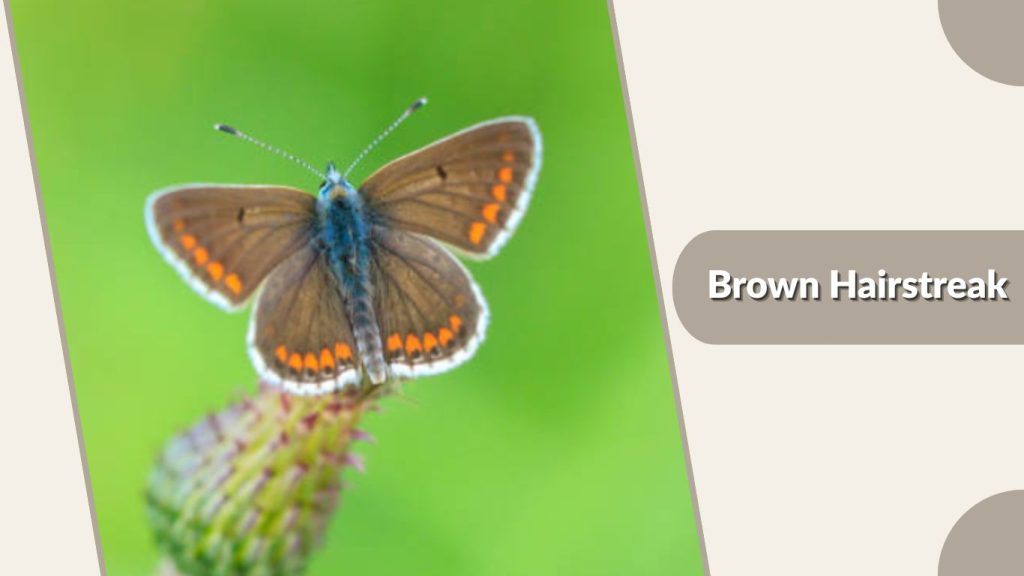
The Brown Hairstreak is a small butterfly known for its subtle brown upper wings and delicate tails on the hindwings. It is typically found in hedgerows, woodland edges, and scrubby habitats. These butterflies are important pollinators and rely on host plants such as blackthorn for their larvae.
Identification
- Small wingspan of about 1 to 1.25 inches
- Brown upper wings with subtle markings
- Two fine tails on the hindwings
- Underside brown or gray with small white or orange spots
- Slender body with short antennae
- Rapid, fluttering flight
- Smooth, delicate wing edges
Habitat and Distribution
Brown Hairstreaks are commonly found in woodland edges, hedgerows, and scrub habitats across Europe and parts of North America. They prefer areas with host plants such as blackthorn for larvae and flowering plants for nectar.
Behavior and Diet
Adults feed primarily on flower nectar and occasionally on tree sap or overripe fruit. Males are territorial and perch on branches to locate females. They often rest with wings closed, using the cryptic underside for camouflage.
Lifecycle
The lifecycle begins when females lay eggs on the twigs or leaves of host plants. Larvae feed on young leaves while developing through multiple stages. Pupation occurs in leaf litter or on host plants. Adults emerge to feed, mate, and continue the reproductive cycle.
22. Small Green Hairstreak
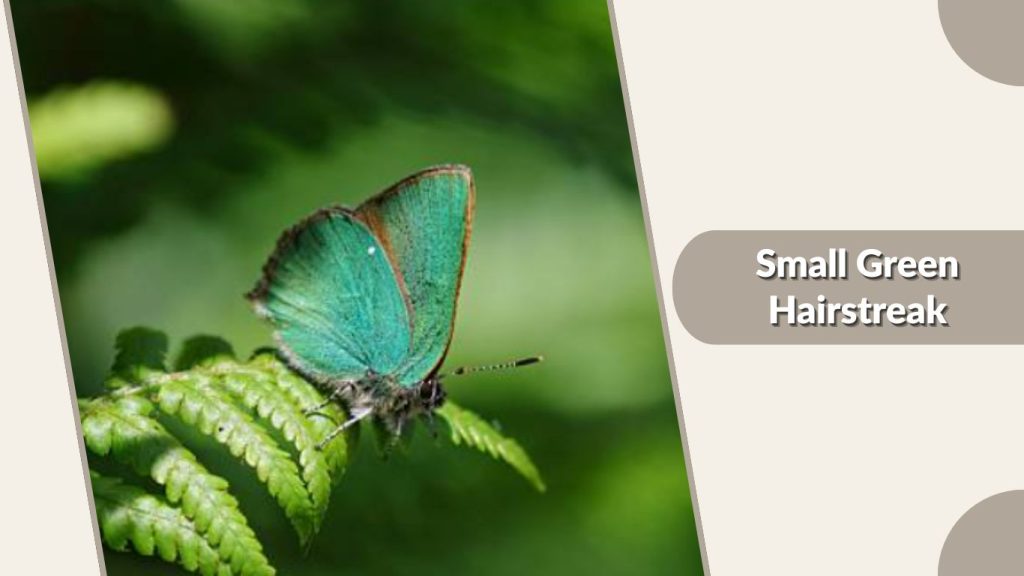
The Small Green Hairstreak is a tiny butterfly recognized for its bright green underside and small tails on the hindwings. It is commonly found in grasslands, heathlands, and woodland edges. These butterflies are important pollinators and are well-camouflaged due to their green coloration, making them difficult to spot.
Identification
- Small wingspan of about 1 to 1.25 inches
- Bright green underside of wings
- Brown or gray upper wings
- Two fine tails on hindwings
- Small orange or white spots near tails
- Slender body with short antennae
- Rapid, fluttering flight
Habitat and Distribution
Small Green Hairstreaks are commonly found in grasslands, heathlands, woodland edges, and open scrub habitats across Europe, Asia, and parts of North America. They prefer areas with flowering plants for nectar and host plants such as buckthorn, gorse, or heather for larval feeding.
Behavior and Diet
Adults feed primarily on nectar from flowers and occasionally on sap. Males are territorial and perch on leaves or twigs to locate females. They often rest with wings closed, displaying the green underside that helps camouflage them among foliage.
Lifecycle
The lifecycle begins when females lay eggs on the leaves or buds of host plants. Larvae feed on leaves while growing through several stages. Pupation occurs in leaf litter or on the host plant. Adults emerge to feed, mate, and continue the reproductive cycle.
23. Common Hairstreak
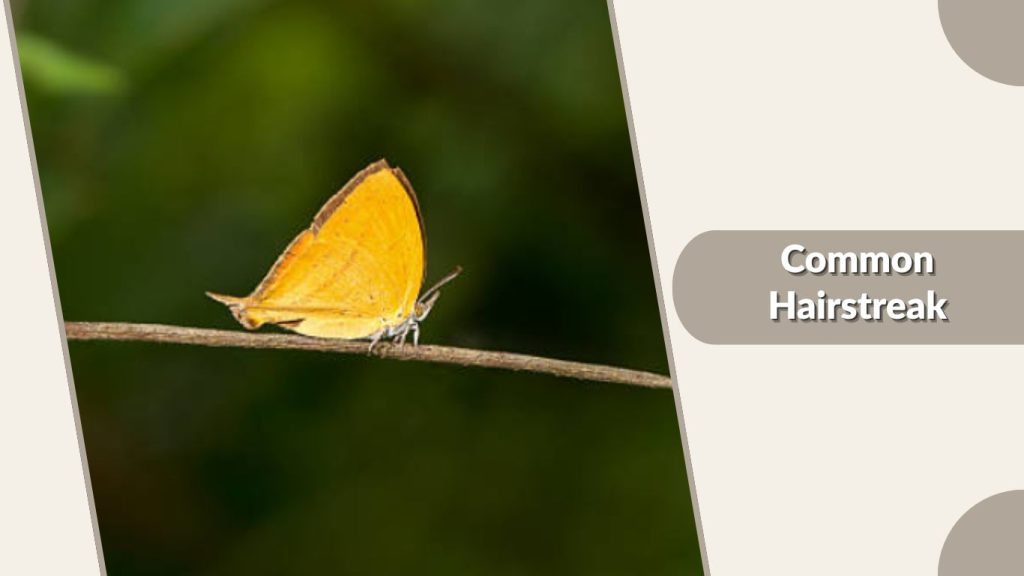
The Common Hairstreak is a small butterfly found in a variety of habitats, including woodland edges, meadows, and gardens. It is recognized for the small tails on its hindwings and subtle markings that help it blend with foliage. These butterflies are active pollinators and often visit flowers for nectar.
Identification
- Small wingspan of about 1 to 1.25 inches
- Brown or gray upper wings with faint markings
- Two fine tails on hindwings
- Underside gray or brown with small white or orange spots
- Slender body with short antennae
- Quick, darting flight
- Smooth, delicate wing edges
Habitat and Distribution
Common Hairstreaks are found across North America and parts of Europe. They inhabit woodland edges, meadows, gardens, and open shrubby areas. They prefer locations with host plants such as oak, hickory, or sumac for larvae and flowering plants for nectar.
Behavior and Diet
Adults feed mainly on flower nectar and occasionally on tree sap or overripe fruit. Males are territorial and perch on branches or leaves to locate females. They rest with wings closed, using the patterned underside for camouflage against predators.
Lifecycle
The lifecycle begins when females lay eggs on leaves or twigs of host plants. Larvae feed on leaves while developing through multiple stages. Pupation occurs in leaf litter or on the host plant. Adults emerge to feed, mate, and continue the reproductive cycle.
24. Olive Hairstreak
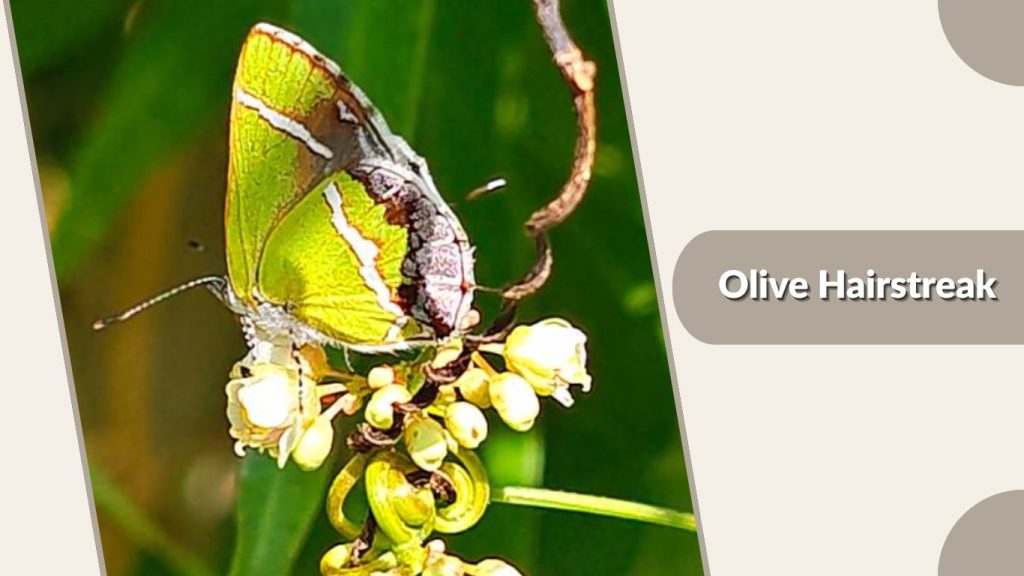
The Olive Hairstreak is a small butterfly recognized for its subtle olive-green undertones on the hindwings and delicate tails. It is commonly found in woodland edges, scrubby areas, and meadows. These butterflies are important pollinators and rely on host plants such as oaks or buckthorn for larval development.
Identification
- Small wingspan of about 1 to 1.25 inches
- Olive-green undertones on the underside of hindwings
- Brown or gray upper wings
- Two fine tails on hindwings
- Small orange or white spots near tails
- Slender body with short antennae
- Rapid, fluttering flight
Habitat and Distribution
Olive Hairstreaks are commonly found in deciduous forests, woodland edges, and meadows across North America and parts of Europe. They prefer habitats with flowering plants for nectar and host trees or shrubs for larvae.
Behavior and Diet
Adults feed primarily on flower nectar and occasionally on tree sap. Males are territorial and perch on branches or leaves to locate females. They often rest with wings closed, showing the cryptic underside that blends with foliage.
Lifecycle
The lifecycle begins when females lay eggs on leaves or twigs of host plants. Larvae feed on leaves while developing through several stages. Pupation occurs in leaf litter or on the host plant. Adults later emerge to feed, mate, and continue the reproductive cycle.
25. Two-Tailed Hairstreak
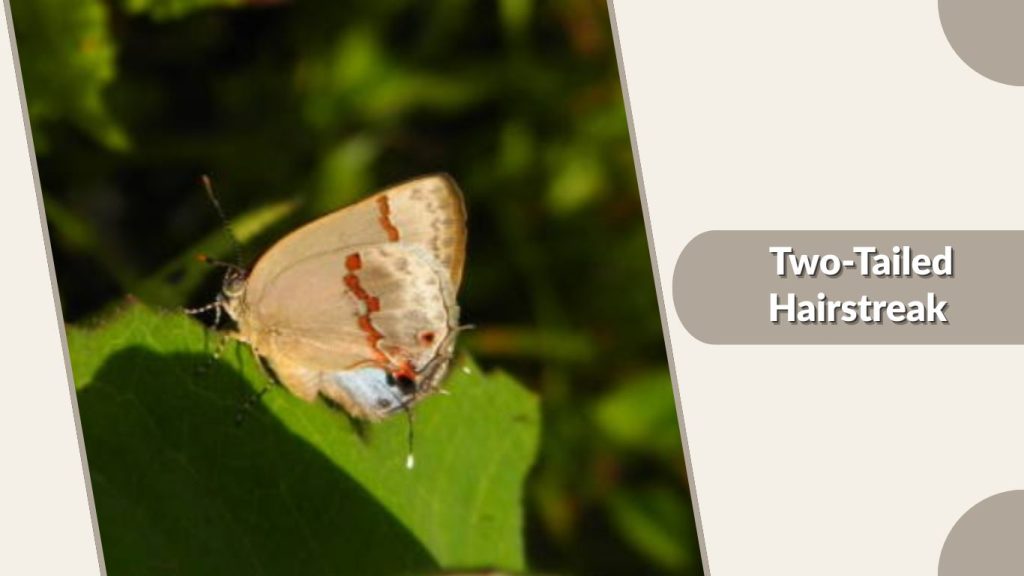
The Two-Tailed Hairstreak is a small butterfly distinguished by its two fine tails on each hindwing and subtle markings on the underside. It is commonly found in woodland edges, meadows, and shrublands. These butterflies are active pollinators and use their tails to distract predators.
Identification
- Small wingspan of about 1 to 1.25 inches
- Brown or gray upper wings with faint markings
- Two fine tails on each hindwing
- Underside gray or brown with white and orange spots
- Slender body with short antennae
- Fast, fluttering flight
- Smooth, delicate wing edges
Habitat and Distribution
Two-Tailed Hairstreaks are commonly found in woodland edges, meadows, and shrubby habitats across North America. They prefer areas with flowering plants for nectar and deciduous host plants such as oak, hickory, or sumac for larval feeding.
Behavior and Diet
Adults feed primarily on flower nectar and occasionally on tree sap or overripe fruit. Males are territorial and perch on leaves or branches to locate females. They often rest with wings closed, showing the cryptic underside for camouflage.
Lifecycle
The lifecycle begins when females lay eggs on leaves or twigs of host plants. Larvae feed on leaves while developing through multiple stages. Pupation occurs in leaf litter or on the host plant. Adults emerge to feed, mate, and continue the reproductive cycle.
26. Eastern Pine Elfin Hairstreak
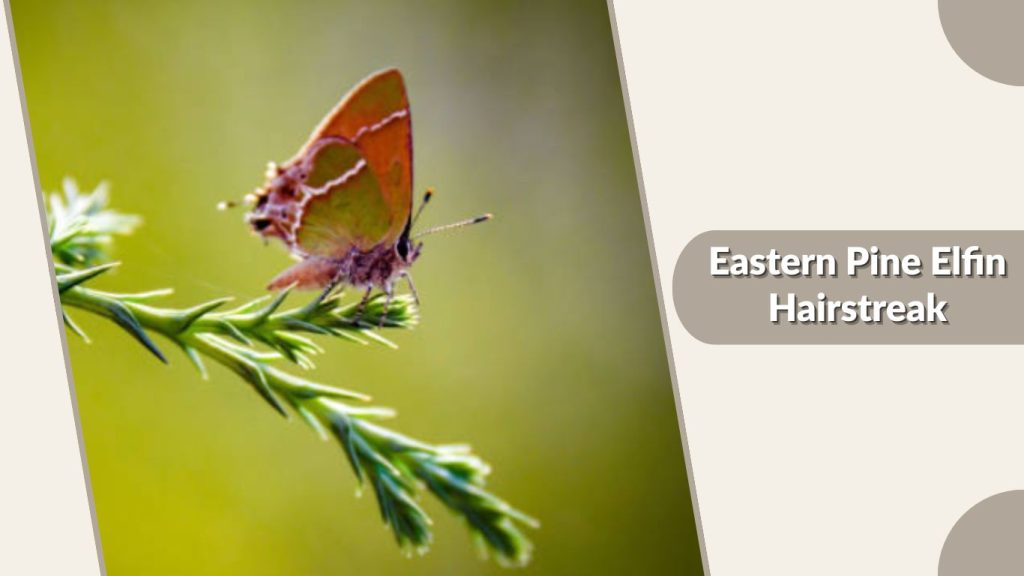
The Eastern Pine Elfin Hairstreak is a small butterfly typically found in pine forests and woodland edges. It is recognized by its muted brown upper wings and fine tails on the hindwings. These butterflies are important pollinators and rely on pine and related conifer species as host plants for their larvae.
Identification
- Small wingspan of about 1 to 1.25 inches
- Brown upper wings with subtle markings
- Two fine tails on the hindwings
- Underside gray or brown with faint white or orange spots
- Slender body with short antennae
- Quick, darting flight
- Smooth, delicate wing edges
Habitat and Distribution
Eastern Pine Elfin Hairstreaks are commonly found in pine forests, woodland edges, and scrubby conifer habitats across eastern North America. They prefer areas with flowering plants for nectar and pine or other conifer trees for larval feeding.
Behavior and Diet
Adults feed primarily on nectar from flowers and occasionally on sap. Males are territorial and perch on pine needles or branches to locate females. They often rest with wings closed, showing the cryptic underside for camouflage against predators.
Lifecycle
The lifecycle begins when females lay eggs on pine needles or twigs of host trees. Larvae feed on young needles while developing through several instars. Pupation occurs in leaf litter or on the host plant. Adults emerge to feed, mate, and continue the reproductive cycle.
27. Eastern Tailed-Blue Hairstreak
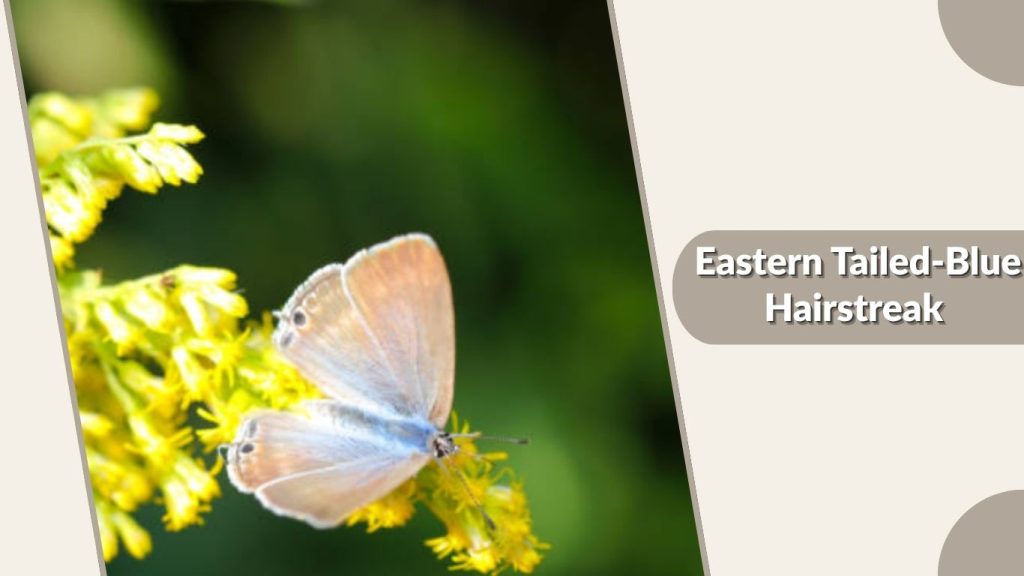
The Eastern Tailed-Blue Hairstreak is a small butterfly recognized for the tiny tails on its hindwings and subtle blue-gray markings. It is commonly found in open fields, meadows, and woodland edges. These butterflies are active pollinators and use the tails and wing patterns to distract predators.
Identification
- Small wingspan of about 1 to 1.25 inches
- Blue-gray or brown upper wings with subtle markings
- Two fine tails on the hindwings
- Underside gray or brown with small white or orange spots
- Slender body with short antennae
- Rapid, darting flight
- Smooth, delicate wing edges
Habitat and Distribution
Eastern Tailed-Blue Hairstreaks are commonly found in meadows, woodland edges, open fields, and gardens across eastern North America. They prefer habitats with flowering plants for nectar and host plants such as legumes and clovers for larval feeding.
Behavior and Diet
Adults feed primarily on flower nectar and occasionally on tree sap or overripe fruit. Males are territorial and perch on leaves or branches to locate females. They often rest with wings closed, displaying the cryptic underside for camouflage.
Lifecycle
The lifecycle begins when females lay eggs on leaves or buds of host plants. Larvae feed on leaves while developing through several stages. Pupation occurs in leaf litter or on the host plant. Adults later emerge to feed, mate, and continue the reproductive cycle.
FAQs
What are hairstreak butterflies?
Hairstreak butterflies are small, delicate butterflies belonging to the family Lycaenidae. They are characterized by fine tails on their hindwings and intricate patterns on the undersides, which help distract predators.
Are hairstreak butterflies harmful to humans?
No, hairstreak butterflies are completely harmless. They do not sting or bite and are safe to observe in gardens, forests, and meadows.
What do hairstreak butterflies eat?
Adult hairstreak butterflies primarily feed on nectar from flowers. Some species also feed on tree sap, rotting fruit, or honeydew produced by aphids. Larvae feed on the leaves or buds of host plants.
Where are hairstreak butterflies commonly found?
Hairstreaks are commonly found in woodland edges, meadows, fields, gardens, and shrubby areas. They occur across North America, Europe, and Asia depending on the species, preferring habitats with host plants and nectar sources.
How do hairstreak butterflies reproduce?
Females lay eggs on the leaves, twigs, or buds of host plants. Larvae feed on the host plants while developing, then pupate in leaf litter or on the host plant. Adults emerge to feed, mate, and continue the reproductive cycle.