
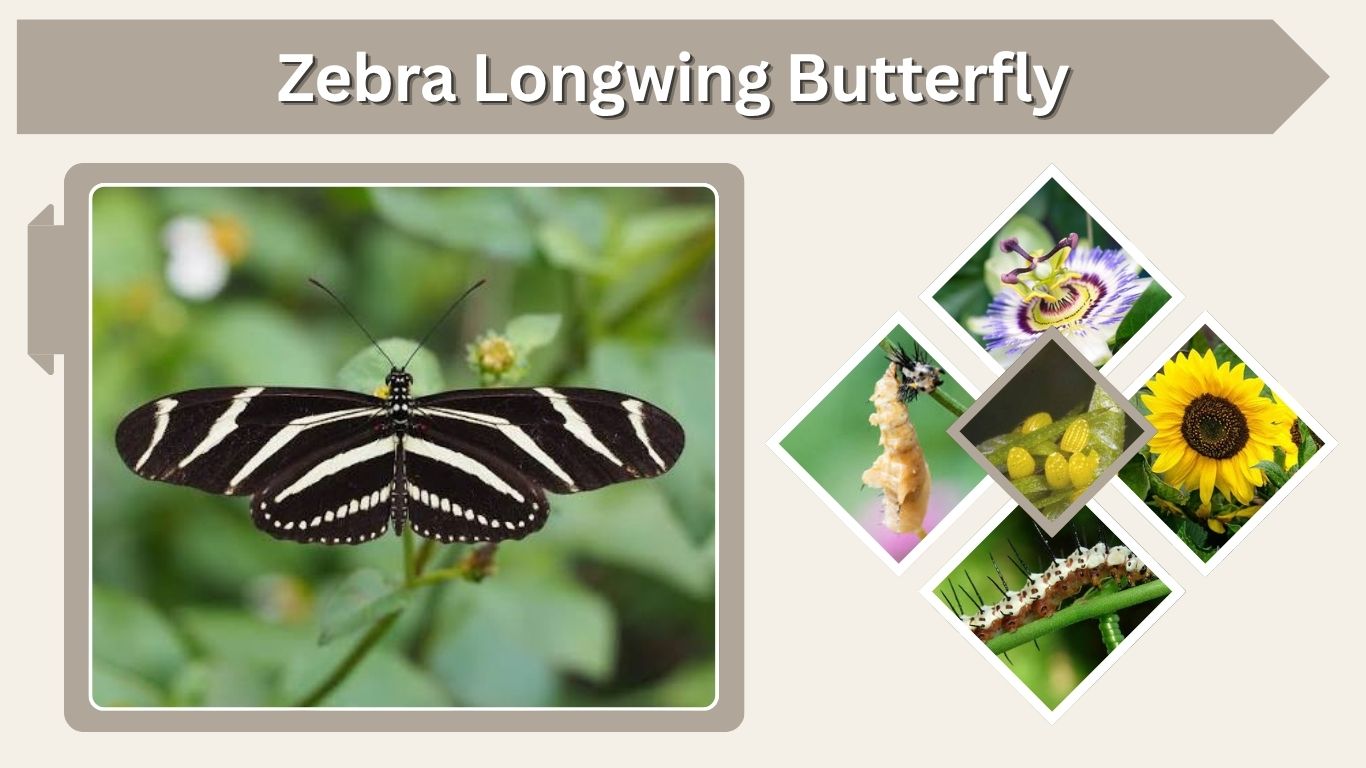
The Zebra Longwing butterfly (Heliconius charithonia) is easy to recognize by its long black wings crossed with narrow yellow stripes. It lives mainly in warm tropical and subtropical habitats and is especially well known in Florida, where it is the official state butterfly. Zebra Longwings have an unusually long adult life because they feed on both flower nectar and pollen. Their caterpillars depend on passionvines, which also provide chemical defenses that help protect the butterflies from predators throughout their lives.
What Does a Zebra Longwing Butterfly Look Like?
The Zebra Longwing has a distinctive appearance unlike most other North American butterflies. Its wings are unusually narrow and elongated, creating the “longwing” part of its name. The contrasting black-and-yellow pattern resembles zebra stripes and remains visible when the butterfly is resting. Adults usually fly slowly and gracefully through shaded gardens, woodland edges, and tropical vegetation.
Zebra Longwing Identification
- Scientific name: Heliconius charithonia
- Family: Nymphalidae
- Long, narrow black wings
- Pale yellow stripes across the wings
- Small yellow or reddish spots near the body
- Wingspan roughly 2.7–4 inches
- Slender black body
- Slow, floating flight
- Long antennae with clubbed tips
The pattern can appear pale cream rather than bright yellow depending on the individual and lighting.
How Big Is a Zebra Longwing?
Adults commonly have a wingspan of approximately 3 inches, although larger individuals can approach 4 inches.
Their narrow wings make them appear longer and more delicate than similarly sized butterflies. The elongated shape is characteristic of many butterflies in the genus Heliconius.
Zebra Longwing Caterpillar
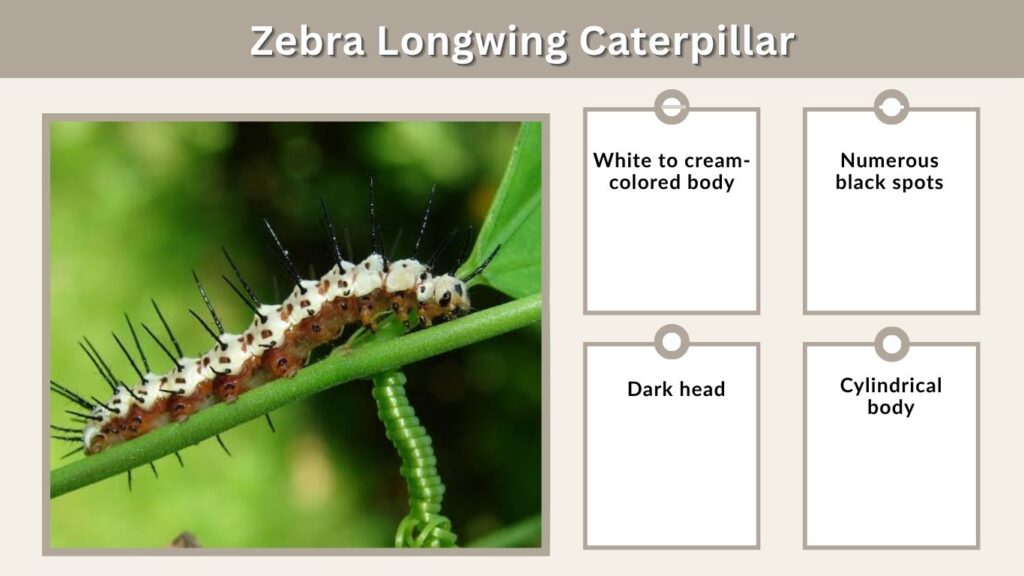
The Zebra Longwing caterpillar looks dramatically different from the adult. It has a pale body covered with numerous long black branched spines. These projections look dangerous, but they are primarily defensive structures rather than the venomous spines found on certain stinging caterpillars. Caterpillars spend most of their time feeding on passionvine leaves and growing through a series of molts.
Caterpillar Identification
- White to cream-colored body
- Numerous black spots
- Long black branched spines
- Dark head
- Cylindrical body
- Often found directly on passionvine
- Becomes progressively larger through several instars
Young caterpillars may gather together, especially soon after hatching.
Are Zebra Longwing Caterpillars Poisonous?
Zebra Longwing caterpillars are chemically protected because they feed on passionflower vines containing cyanogenic compounds.
These chemicals help make the caterpillars and later the adult butterflies distasteful to many predators.
However, their visible spines are not specialized stinging spines. The caterpillars should still be observed rather than unnecessarily handled, especially when identification is uncertain.
Zebra Longwing Host Plants
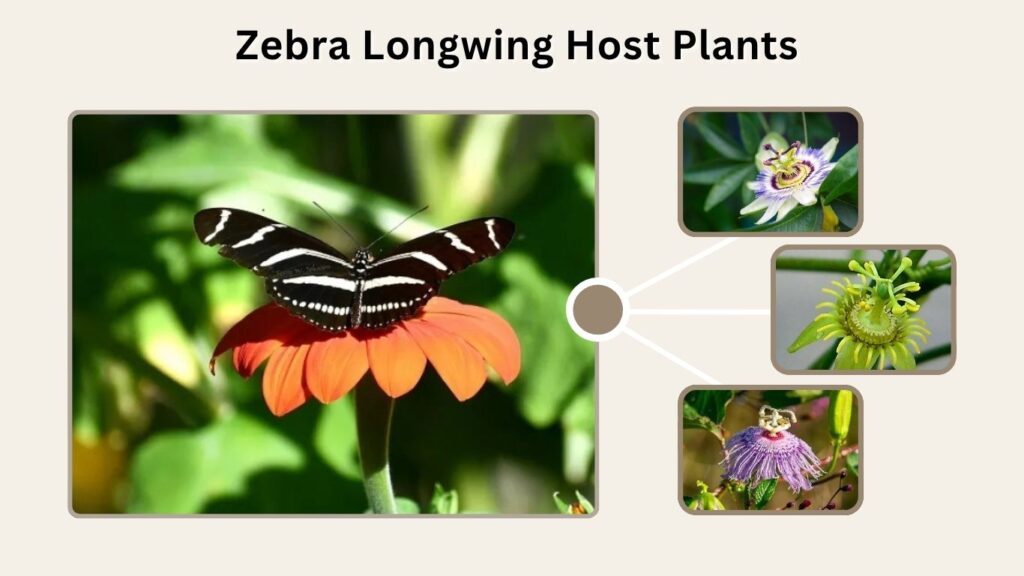
Passionvines are essential to Zebra Longwing reproduction. Adult females search carefully for suitable vines before laying eggs because newly hatched caterpillars cannot simply switch to ordinary garden plants. Growing the right Passiflora species is therefore one of the most effective ways to attract Zebra Longwings and encourage them to reproduce in a butterfly garden.
Common Host Plants
Zebra Longwing caterpillars use passionvines such as:
- Corkystem passionflower (Passiflora suberosa)
- Yellow passionflower (Passiflora lutea)
- Maypop (Passiflora incarnata)
- Blue passionflower (Passiflora caerulea)
- Other suitable Passiflora species
Native passionvines are usually the best choice when creating butterfly habitat.
Why Do They Eat Passionvine?
Passionflowers contain chemicals that discourage many herbivores from feeding on them.
Zebra Longwing caterpillars have evolved the ability to tolerate these compounds. They can use some of the plant’s chemicals as protection against predators.
This relationship between passionvines and Heliconius butterflies is one of their most interesting ecological adaptations.
Zebra Longwing Eggs and Chrysalis
Like other butterflies, the Zebra Longwing undergoes complete metamorphosis. Females deposit eggs on young passionvine growth, giving newly hatched larvae immediate access to food. After passing through several caterpillar stages, the mature larva leaves its feeding location and selects a protected surface for pupation. The resulting chrysalis is surprisingly different from the colorful adult butterfly.
Zebra Longwing Eggs
The eggs are:
- Small
- Yellow to yellow-orange
- Elongated rather than perfectly round
- Ridged
- Usually placed on young passionvine growth
- Often laid in small groups
Egg-laying females inspect leaves and shoots carefully before depositing eggs.
Zebra Longwing Chrysalis
The chrysalis is usually brownish and irregularly shaped, with projecting structures that help it resemble a curled or dried leaf.
This camouflage makes the vulnerable pupal stage difficult for predators to detect.
Although people sometimes call it a Zebra Longwing “cocoon,” butterflies form a chrysalis, not the silk-covered cocoon typical of many moths.
Zebra Longwing Butterfly Life Cycle
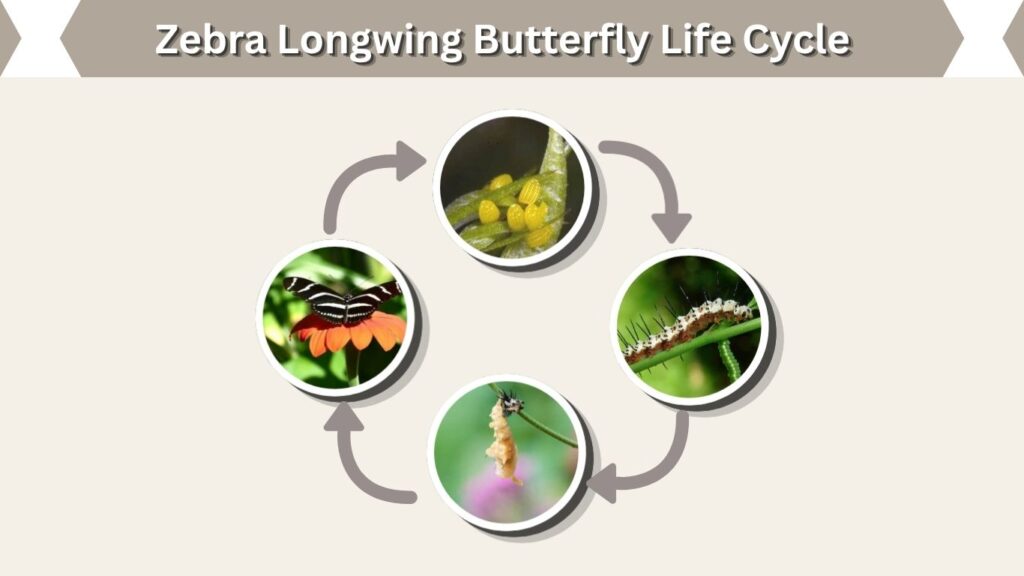
Zebra Longwings pass through four recognizable developmental stages. Warm temperatures allow multiple generations to occur throughout the year in tropical climates. Development slows during cooler conditions, and freezes can greatly reduce populations near the northern edge of their permanent range.
Four Life Stages
- Egg: A female places eggs on suitable passionvine.
- Caterpillar: Larvae hatch and feed heavily on leaves.
- Chrysalis: The mature caterpillar pupates and transforms.
- Adult: The butterfly emerges, feeds, mates, and reproduces.
The complete cycle can occur relatively quickly during warm weather, although temperature strongly influences development.
How Long Do Zebra Longwings Live?
Zebra Longwings are unusually long-lived compared with many butterflies.
Adults can survive for several months, with around three months possible under favorable conditions and some individuals living even longer.
Their longevity is strongly connected to an extraordinary feeding adaptation: adults obtain amino acids from pollen rather than depending solely on sugary nectar.
What Do Zebra Longwing Butterflies Eat?
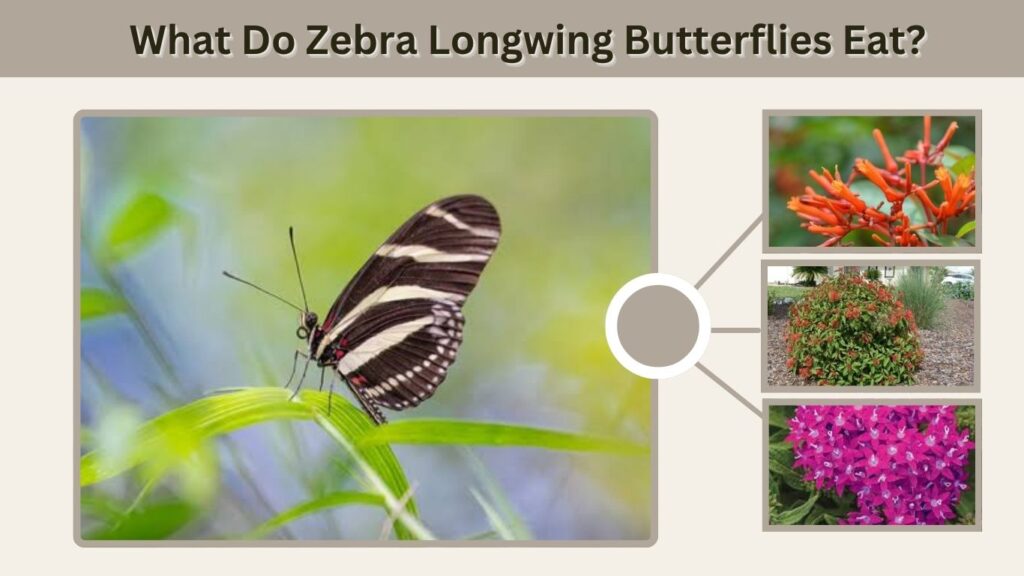
Adult Zebra Longwings visit many flowers, but their diet is more sophisticated than that of most butterflies. They consume nectar for carbohydrates and actively collect pollen. Saliva helps break down pollen grains so nutrients can be absorbed. These additional proteins and amino acids support reproduction, chemical defense, and their exceptionally long adult lifespan.
Adult Food Sources
Adults may visit:
- Lantana
- Hamelia or firebush
- Verbena
- Pentas
- Spanish needles
- Porterweed
- Various tropical flowers
They often return repeatedly to reliable feeding locations.
Why Do Zebra Longwings Eat Pollen?
Pollen feeding is one of the defining traits of Heliconius butterflies.
Most adult butterflies obtain primarily carbohydrates from nectar. Zebra Longwings can obtain valuable amino acids from pollen as well.
These nutrients allow females to continue producing eggs and contribute to adults living much longer than many butterflies that rely almost entirely on nectar.
Zebra Longwing Habitat and Range
Zebra Longwings prefer warm environments containing abundant flowers and passionvines. Unlike butterflies that spend most of their time in open fields, Zebra Longwings frequently use shaded or partly shaded habitats. They may slowly patrol forest trails, garden edges, tropical hammocks, and other areas where nectar sources and host vines grow nearby.
Typical Habitat
They commonly inhabit:
- Tropical forests
- Subtropical woodlands
- Forest edges
- Shaded gardens
- Tropical hammocks
- Butterfly gardens
- Areas containing passionvines
They are particularly associated with warm, humid conditions.
Zebra Longwing Range
The species occurs from the southern United States through Mexico, Central America, the Caribbean, and into parts of South America.
Florida supports especially well-known populations. Individuals may occasionally wander beyond their normal permanent range during warm weather, but cold winters limit survival farther north.
Zebra Longwing: Florida’s State Butterfly
The Zebra Longwing has a particularly strong association with Florida. Its warm climate, native passionvines, and abundant flowering plants provide favorable habitat throughout much of the state.
Why Is It Florida’s State Butterfly?
Florida designated the Zebra Longwing as its official state butterfly in 1996.
The species represents Florida’s tropical and subtropical biodiversity and can be found in gardens and natural habitats across much of the state.
Cold weather can temporarily reduce populations in northern areas, while southern Florida generally provides more consistent year-round conditions.
Male vs Female Zebra Longwing
Male and female Zebra Longwings have almost identical black-and-yellow wing patterns, making sex determination difficult from a quick photograph. Their reproductive anatomy and certain subtle body characteristics provide more dependable identification than color.
Male and Female Differences
Males frequently patrol areas containing recently developed females and search actively for mates.
Females spend more time examining passionvines and selecting appropriate places for eggs.
Females may also have somewhat fuller abdomens, especially when carrying mature eggs, but overall body size and wing pattern overlap considerably.
Zebra Longwing Predators and Defense
Despite their conspicuous appearance and slow flight, Zebra Longwings have effective defensive adaptations. Their caterpillar diet provides compounds that contribute to an unpleasant taste, and adults reinforce those defenses. Their bold black-and-yellow coloration serves as warning coloration that experienced predators can learn to recognize and avoid.
Common Threats
Potential predators include:
- Birds
- Lizards
- Spiders
- Predatory insects
- Small mammals
Eggs and caterpillars are also vulnerable to parasitoid wasps and flies.
Adult butterflies may escape much predation because their chemical defenses make them less appealing after predators have encountered them.
How to Attract Zebra Longwing Butterflies
A successful Zebra Longwing garden should provide both caterpillar food and adult food. Planting nectar flowers alone may attract passing butterflies, but females need passionvines to reproduce. A combination of native passionflowers and continuous nectar sources creates a much more useful habitat.
Best Ways to Attract Them
- Grow native passionvines.
- Plant nectar-rich flowers.
- Include firebush, porterweed, pentas, and similar plants.
- Avoid broad-spectrum insecticides.
- Provide some partial shade.
- Maintain flowers through multiple seasons.
- Allow caterpillars to feed on host vines.
- Avoid removing every chewed passionvine leaf.
Some leaf damage is expected when successfully supporting caterpillars.
FAQs
1. What is the scientific name of the Zebra Longwing?
The Zebra Longwing’s scientific name is Heliconius charithonia.
2. What is the Zebra Longwing host plant?
Its caterpillars feed on passionvines in the genus Passiflora, including corkystem passionflower and several other suitable species.
3. Are Zebra Longwing caterpillars poisonous?
They obtain defensive chemicals from passionvines and are distasteful to predators, but their long spines are not the venomous stinging spines seen on medically significant caterpillars.
4. How long does a Zebra Longwing butterfly live?
Adults can live for several months, substantially longer than many butterflies, partly because they obtain nutrients from pollen.
5. Is the Zebra Longwing endangered?
The species is not generally considered endangered across its broad range. Local populations can still be affected by habitat loss, pesticide use, severe cold, and the disappearance of passionvine host plants.