
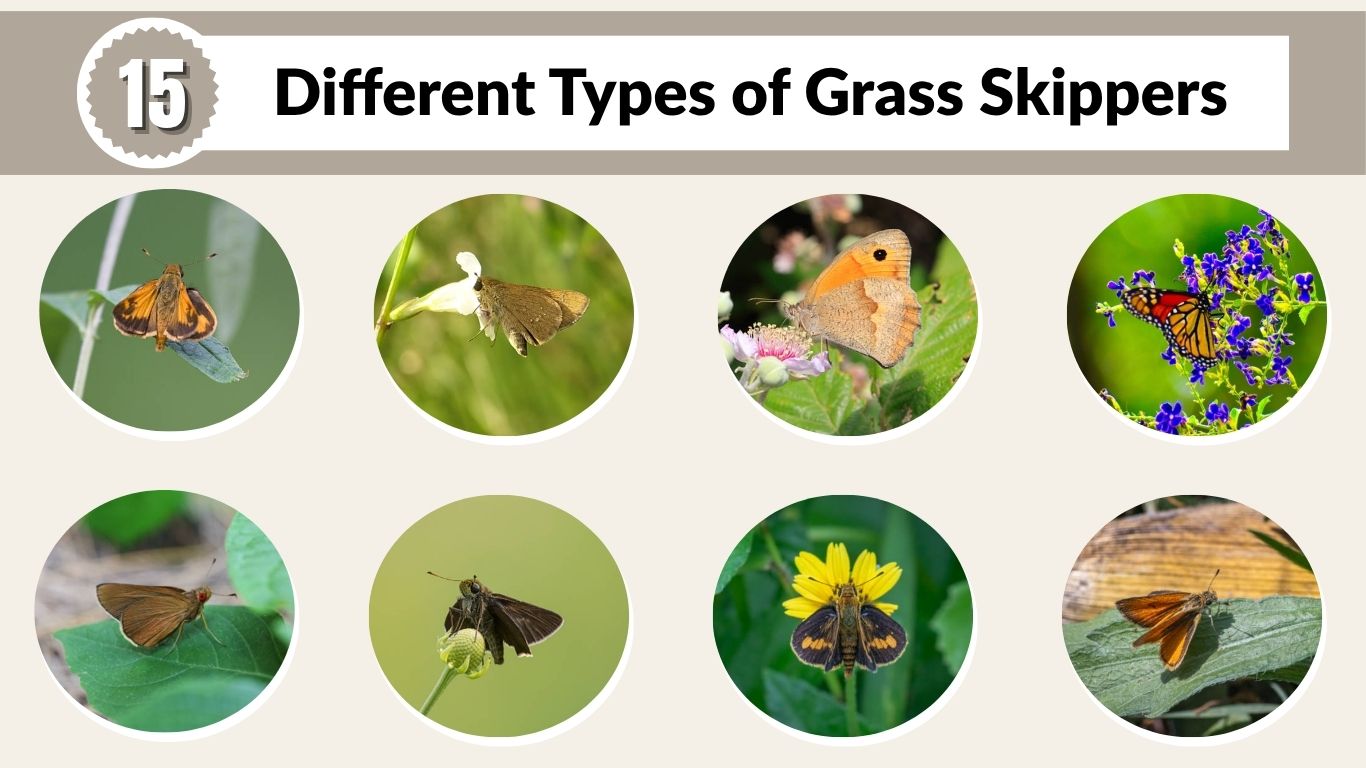
Grass skippers are small, fast-flying butterflies known for their compact bodies, hooked antennae, and rapid darting movements. These fascinating insects are commonly found in meadows, grasslands, wetlands, and gardens where they feed on flower nectar and rest among tall grasses. Although many species look similar at first glance, each grass skipper has unique colors, wing patterns, and habitat preferences. From the bright Fiery Skipper to the dark Mulberry Wing, these butterflies add beauty and diversity to natural ecosystems. Learning about different grass skipper species can help butterfly lovers identify them more easily in the wild.
1. Sachem Skipper
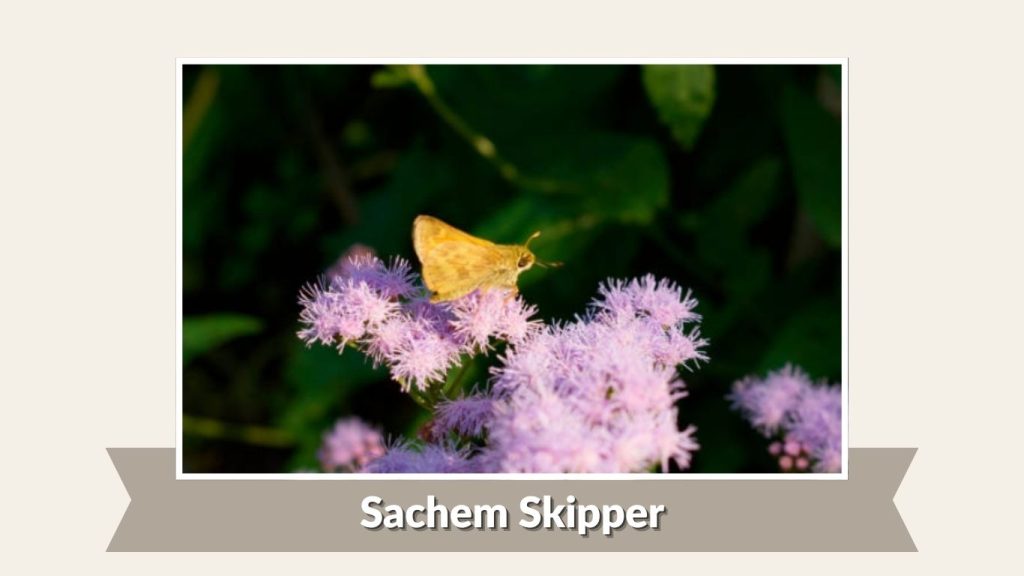
The Sachem Skipper is a fast-flying grass skipper butterfly commonly found in open grassy habitats. It is known for its warm orange-brown coloration and quick darting flight. This species is widespread across the Americas and is often seen visiting flowers during sunny weather.
Identification
- Wingspan ranges from 25 to 40 mm
- Males are bright orange-brown with dark wing borders
- Females are darker brown with pale spots
- Body is thick and fuzzy
- Antennae have hooked tips typical of skippers
Habitat and Distribution
Sachem Skippers inhabit grasslands, gardens, roadsides, parks, meadows, and open fields. They are widely distributed across North and South America and may migrate northward during warmer months. The species thrives in areas with abundant grasses and flowering plants.
Behavior and Diet
Adult Sachem Skippers feed on nectar from flowers such as lantana, clover, and zinnias. They are active during the daytime and fly rapidly close to the ground. Caterpillars feed mainly on grasses and hide within folded grass blades for protection.
Lifecycle
Females lay eggs singly on grass leaves. Caterpillars hatch and create shelters by folding leaves with silk. After feeding and growing through several stages, they pupate within hidden grass shelters. Adults emerge during warm seasons, and multiple generations may occur each year in warmer climates.
2. Fiery Skipper
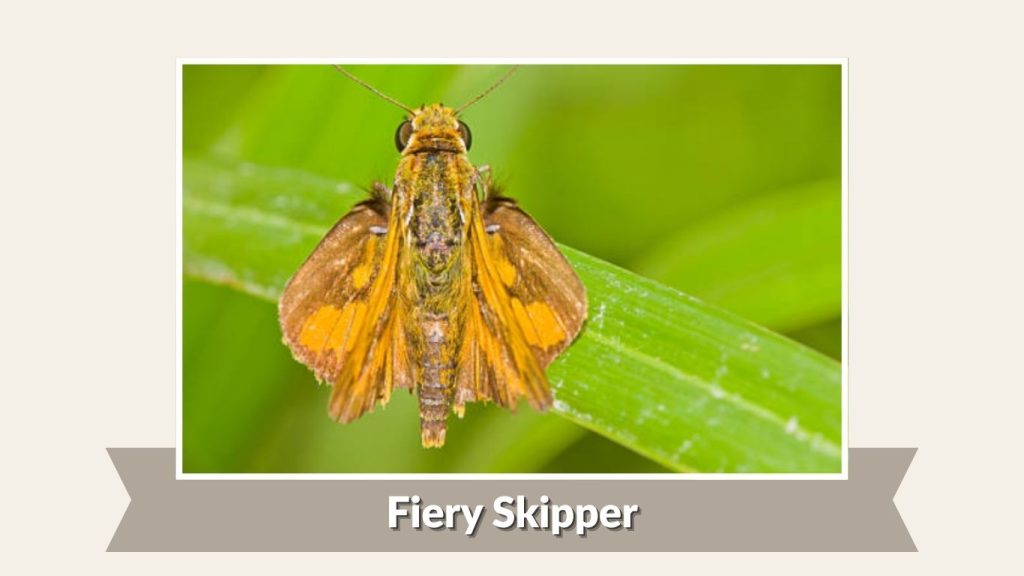
The Fiery Skipper is a small and brightly colored grass skipper butterfly known for its rapid flight and fiery orange appearance. It is commonly seen in lawns, gardens, and grassy fields where it actively visits flowers for nectar during warm sunny days.
Identification
- Wingspan ranges from 25 to 35 mm
- Males are bright orange with dark wing markings
- Females are darker brown with scattered pale spots
- Body is short, thick, and hairy
- Antennae have hooked ends typical of skipper butterflies
Habitat and Distribution
Fiery Skippers are widely distributed across the Americas and are especially common in warm and tropical regions. They inhabit lawns, parks, meadows, roadsides, golf courses, and gardens with plenty of grasses and flowering plants.
Behavior and Diet
Adults feed on nectar from small flowers and are active during the daytime. Their flight is quick, low, and darting, making them difficult to follow. Caterpillars feed mainly on turf grasses and sometimes become lawn pests when populations grow large.
Lifecycle
Females lay eggs individually on grass blades. Caterpillars hatch and build silk shelters among folded leaves while feeding. After several growth stages, the larvae pupate within grassy hiding spots. Adults emerge within weeks, and several generations may occur annually in warm climates.
3. Least Skipper
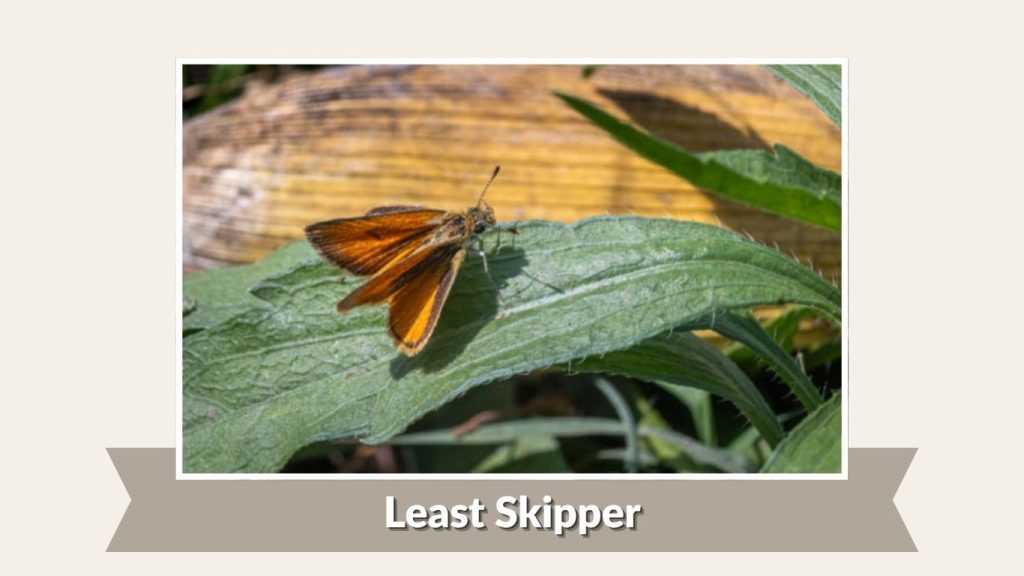
The Least Skipper is one of the smallest grass skipper butterflies found in North America. It is easily recognized by its delicate orange and brown coloring and its weak, fluttering flight. This species prefers moist grassy habitats where it can remain hidden among tall vegetation.
Identification
- Wingspan ranges from 18 to 25 mm
- Wings are orange with dark brown borders
- Underside of wings is pale orange-yellow
- Body is slim and covered with fine hairs
- Antennae are short with hooked tips
Habitat and Distribution
Least Skippers are commonly found in marshes, wet meadows, grassy ditches, pondsides, and damp fields across North America. They prefer areas with tall grasses and high moisture where caterpillar host plants grow abundantly.
Behavior and Diet
Adults feed on nectar from small flowers and are active during warm daylight hours. Their flight is slow and skipping compared to many other skippers. Caterpillars feed mainly on wetland grasses and stay hidden within folded leaves for safety.
Lifecycle
Females lay eggs on grass blades near moist habitats. Caterpillars hatch and build protective shelters by folding leaves with silk. After feeding through several stages, the larvae pupate inside grassy shelters. Adults emerge during spring and summer, with multiple broods possible in warmer regions.
4. Delaware Skipper
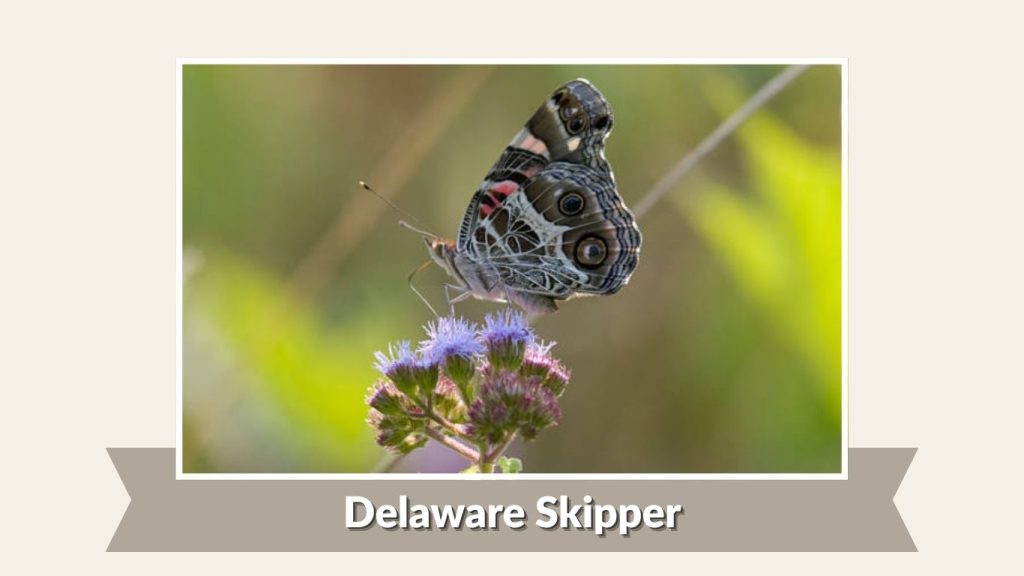
The Delaware Skipper is a small orange grass skipper butterfly commonly seen in meadows and grassy fields during summer. It is known for its bright golden-orange wings and quick flight. This species is especially attracted to wildflowers and thrives in open sunny habitats.
Identification
- Wingspan ranges from 25 to 35 mm
- Wings are bright orange with dark borders
- Underside of wings is yellow-orange
- Body is stout and hairy
- Antennae have hooked black tips
Habitat and Distribution
Delaware Skippers are found throughout eastern and central North America. They inhabit prairies, grasslands, meadows, roadsides, and open fields with tall grasses and flowering plants. The species prefers sunny habitats with little tree cover.
Behavior and Diet
Adults feed on nectar from flowers such as milkweed, clover, and thistles. They are active during sunny weather and fly rapidly close to the ground. Caterpillars feed mainly on native grasses and remain hidden among vegetation while feeding.
Lifecycle
Females lay eggs individually on host grasses. Caterpillars hatch and create silk shelters by folding grass blades together. After growing through several larval stages, they pupate within grassy hiding spots. Adults emerge during summer, and some regions may support more than one generation yearly.
5. Crossline Skipper
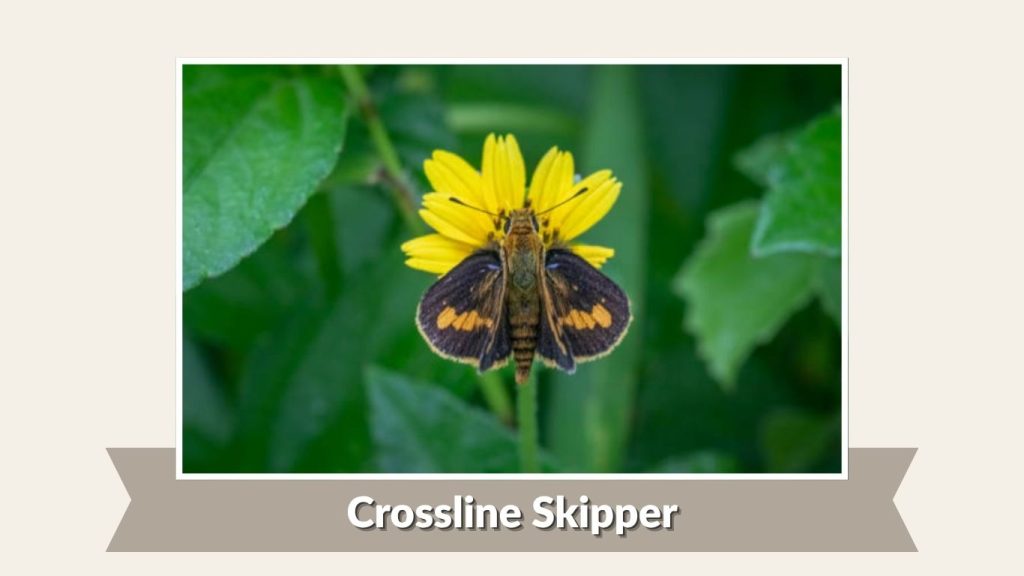
The Crossline Skipper is a small and energetic grass skipper butterfly known for the pale crosslines visible on the underside of its wings. It is commonly found in grassy habitats where it quickly darts between flowers and low vegetation during warm daylight hours.
Identification
- Wingspan ranges from 22 to 32 mm
- Wings are orange-brown with darker borders
- Underside shows pale cream-colored crosslines
- Body is short, thick, and fuzzy
- Antennae end in hooked black tips
Habitat and Distribution
Crossline Skippers are distributed across parts of North and Central America. They inhabit grasslands, meadows, roadside fields, parks, and open woodland edges. The species prefers warm areas with abundant grasses and flowering plants.
Behavior and Diet
Adults feed on nectar from small wildflowers and remain active during sunny conditions. Their flight is rapid, low, and erratic, which helps them avoid predators. Caterpillars feed mainly on grasses and spend much of their time hidden within leaf shelters.
Lifecycle
Females lay eggs singly on host grasses. Caterpillars hatch and use silk to fold leaves into protective shelters while feeding. After passing through several growth stages, they pupate within the grass shelter. Adults emerge during warm seasons, and multiple generations may occur in suitable climates.
6. Dun Skipper
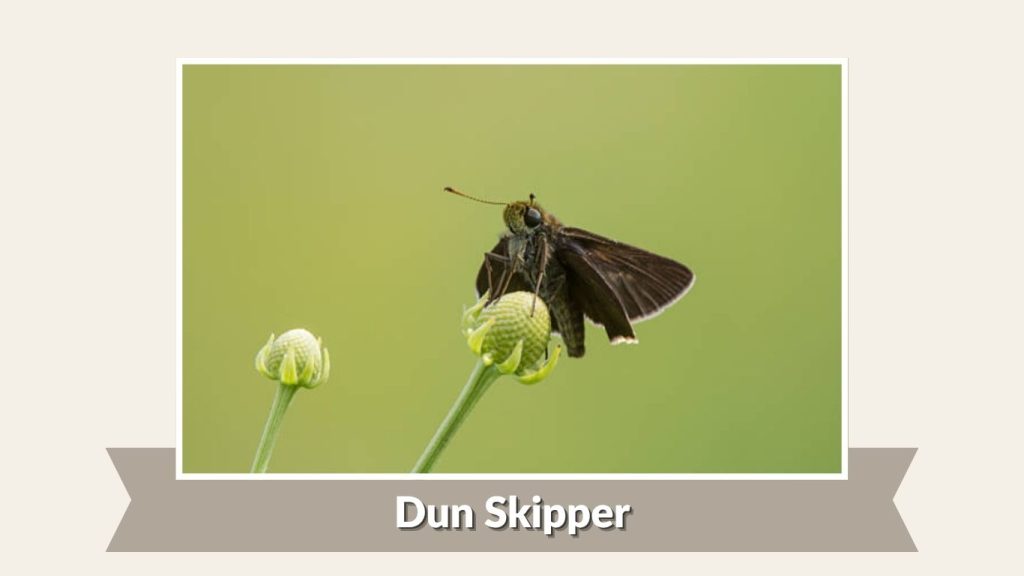
The Dun Skipper is a dark-colored grass skipper butterfly commonly found in grassy meadows and wet habitats. Unlike many brightly colored skippers, this species has a more subdued brown appearance that helps it blend into surrounding vegetation and dried grasses.
Identification
- Wingspan ranges from 25 to 35 mm
- Wings are dark brown with little visible patterning
- Underside is lighter brown or grayish
- Body is thick and covered with short hairs
- Antennae have hooked tips typical of skippers
Habitat and Distribution
Dun Skippers are widely distributed across North America in marshes, damp meadows, grassy fields, and roadside habitats. They prefer moist environments with tall grasses that provide shelter and food for caterpillars.
Behavior and Diet
Adults feed on nectar from wildflowers and remain active during warm sunny weather. Their flight is quick but usually low to the ground. Caterpillars feed on grasses and stay hidden in folded leaves during much of their development.
Lifecycle
Females lay eggs on grass blades in moist habitats. Caterpillars hatch and build leaf shelters using silk while feeding on grasses. After several stages of growth, the larvae pupate inside grassy shelters. Adults emerge during late spring and summer, with one or more broods depending on climate conditions.
7. Northern Broken-Dash
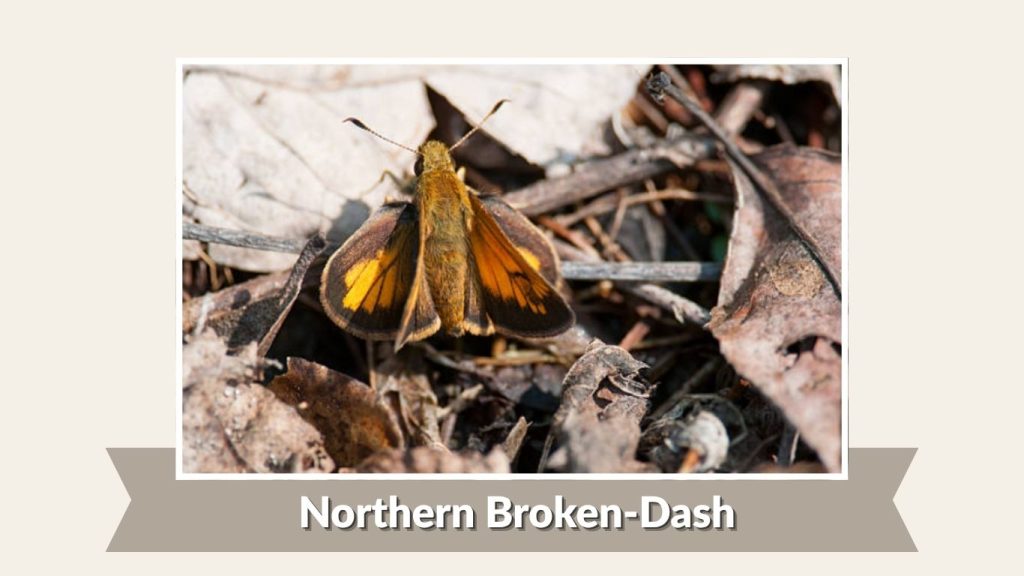
The Northern Broken-Dash is a medium-sized grass skipper butterfly recognized for the broken dash-like markings on its wings. It is a fast and active species commonly seen flying through grassy meadows and wetland edges during the summer months.
Identification
- Wingspan ranges from 28 to 38 mm
- Wings are orange-brown with dark markings
- Males show broken dark streaks on the forewings
- Underside is yellow-brown with pale spots
- Body is stout and hairy
Habitat and Distribution
Northern Broken-Dash butterflies are found across eastern and central North America. They inhabit marshes, wet meadows, grassy fields, roadside ditches, and open wetlands. The species prefers areas with tall grasses and abundant flowering plants.
Behavior and Diet
Adults feed on nectar from flowers such as milkweed, thistle, and clover. They are active during sunny weather and fly quickly with short skipping movements. Caterpillars feed mainly on grasses and remain hidden within folded leaves for protection.
Lifecycle
Females lay eggs on host grasses near moist habitats. Caterpillars hatch and create shelters by folding grass blades with silk. After completing several growth stages, they pupate inside grassy shelters. Adults emerge during summer, and some populations may produce multiple broods annually.
8. Little Glassywing
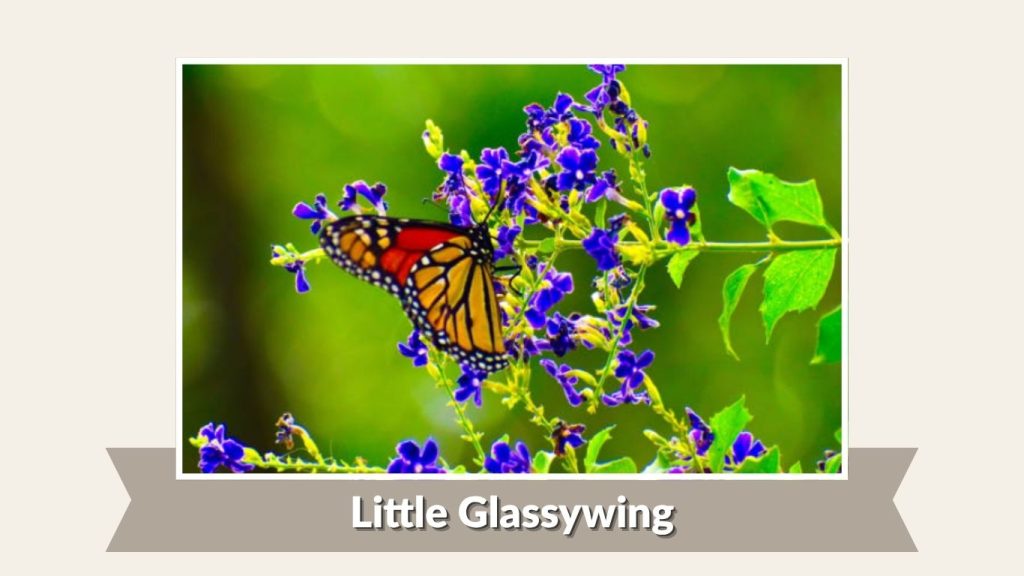
The Little Glassywing is a small grass skipper butterfly named for the semi-transparent spots on its wings. It is commonly found in grassy habitats and woodland edges where it flies low among vegetation. Its quick movements and subtle coloration make it challenging to observe closely.
Identification
- Wingspan ranges from 25 to 32 mm
- Wings are dark brown with small transparent spots
- Underside is lighter brown with pale markings
- Body is short, thick, and fuzzy
- Antennae end in hooked tips
Habitat and Distribution
Little Glassywings are distributed across eastern and central North America. They inhabit grassy meadows, woodland clearings, marsh edges, parks, and roadside vegetation. The species prefers areas with dense grasses and moderate moisture.
Behavior and Diet
Adults feed on nectar from small flowers and remain active during sunny daylight hours. Their flight is rapid and low to the ground, often interrupted by brief rests on grass blades. Caterpillars feed mainly on grasses and remain hidden in leaf shelters.
Lifecycle
Females lay eggs individually on host grasses. Caterpillars hatch and construct protective shelters by folding grass leaves together with silk. After growing through several larval stages, they pupate within these shelters. Adults emerge during late spring and summer, with multiple generations possible in warmer regions.
9. Tawny-Edged Skipper
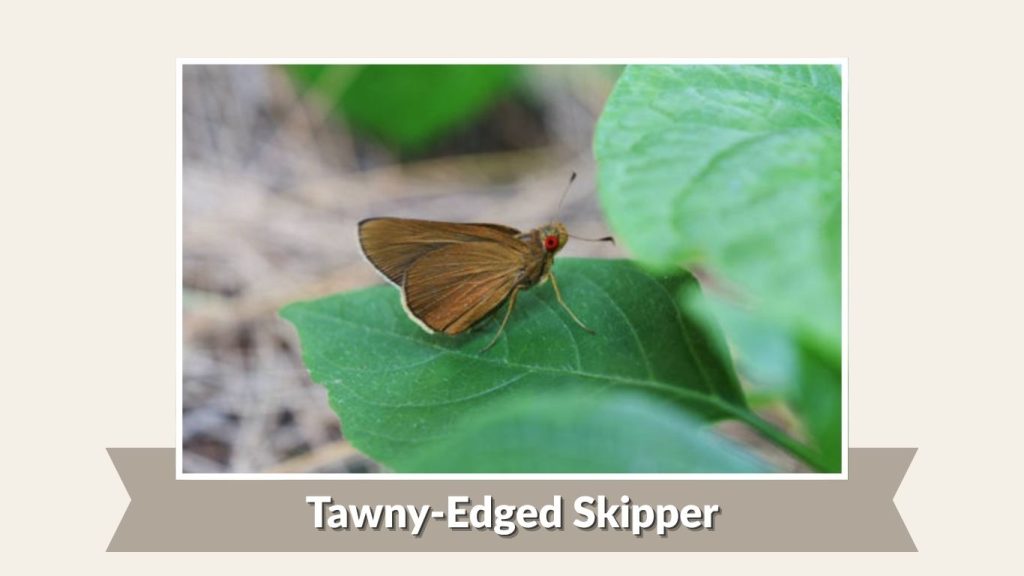
The Tawny-Edged Skipper is a small grass skipper butterfly known for the orange-tan edges along its wings. It is a widespread and adaptable species often seen in lawns, grassy fields, and woodland clearings during warm months.
Identification
- Wingspan ranges from 22 to 30 mm
- Wings are dark brown with tawny-orange edging
- Females display small pale spots on the forewings
- Body is short, thick, and hairy
- Antennae have hooked black tips
Habitat and Distribution
Tawny-Edged Skippers are found throughout North America in grasslands, parks, meadows, roadsides, gardens, and forest edges. They thrive in habitats with abundant grasses and flowering plants.
Behavior and Diet
Adults feed on nectar from low-growing flowers and are active during sunny weather. Their flight is quick and skipping, usually staying close to the ground. Caterpillars feed mainly on grasses and remain hidden inside folded leaf shelters during development.
Lifecycle
Females lay eggs singly on grass blades. Caterpillars hatch and build shelters using silk to fold leaves together. After feeding through several stages, the larvae pupate within the shelter. Adults emerge during spring and summer, and multiple broods may occur in warmer climates.
10. Mulberry Wing
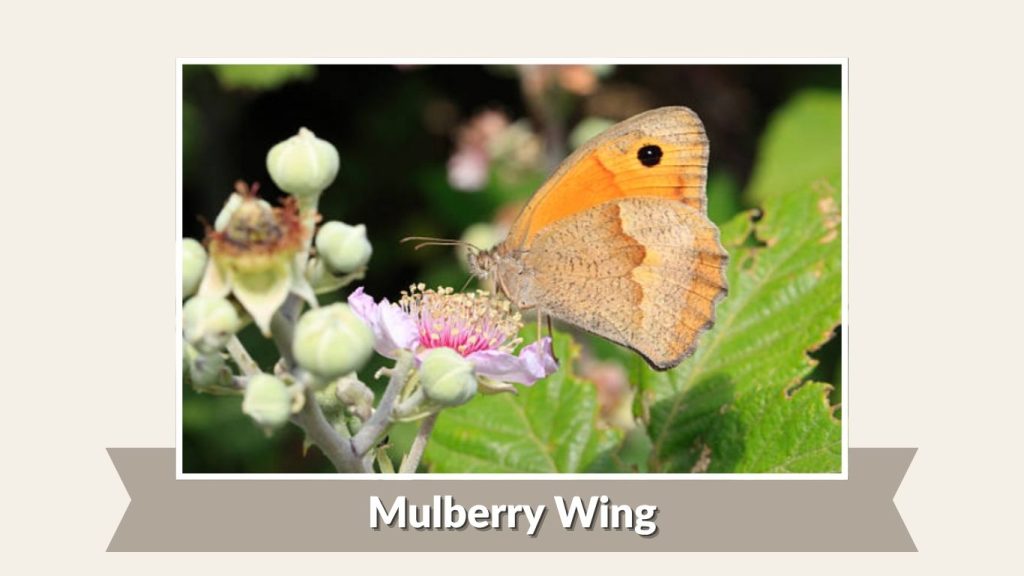
The Mulberry Wing is a dark-colored grass skipper butterfly known for its rich brown wings and preference for wet grassy habitats. It is often seen resting on tall grasses or visiting flowers in marshes and damp meadows during the summer season.
Identification
- Wingspan ranges from 30 to 40 mm
- Wings are dark brown with faint orange markings
- Underside is lighter brown with subtle spots
- Body is thick and covered with short hairs
- Antennae have hooked tips typical of skippers
Habitat and Distribution
Mulberry Wings are found across eastern and central North America. They inhabit wetlands, marshes, bogs, moist meadows, and grassy roadside ditches. The species prefers areas with tall grasses and sedges near water sources.
Behavior and Diet
Adults feed on nectar from wildflowers such as milkweed and thistle. They are active during warm daylight hours and usually fly low above grasses. Caterpillars feed mainly on sedges and grasses while remaining hidden within folded leaves.
Lifecycle
Females lay eggs on host plants in wet habitats. Caterpillars hatch and construct shelters by folding grass or sedge leaves with silk. After completing several larval stages, they pupate inside the shelter. Adults emerge during summer, and most populations produce one generation each year.
11. Broad-Winged Skipper
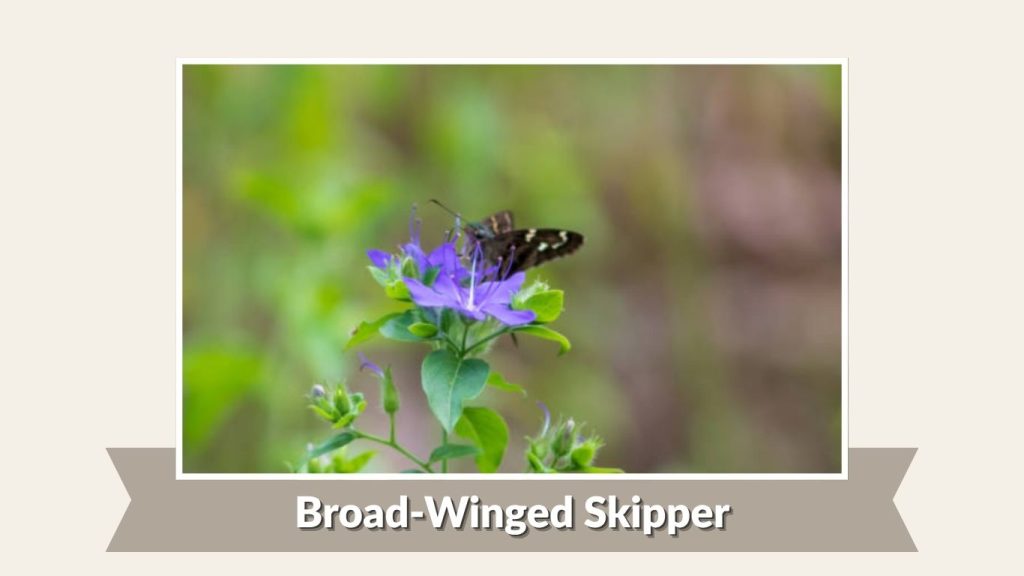
The Broad-Winged Skipper is a dark grass skipper butterfly recognized for its wide wings and strong flight. It is commonly associated with wetlands and grassy marshes where it remains close to dense vegetation during the warmer months.
Identification
- Wingspan ranges from 32 to 42 mm
- Wings are dark brown with faint pale markings
- Forewings appear broader than many other skippers
- Body is stout and fuzzy
- Antennae end in hooked tips
Habitat and Distribution
Broad-Winged Skippers are found mainly in eastern North America. They inhabit marshes, wet meadows, swamps, grassy pondsides, and other moist environments with dense vegetation and sedges.
Behavior and Diet
Adults feed on nectar from wetland flowers and are active during sunny daytime conditions. Their flight is rapid and direct, usually remaining close to grasses and reeds. Caterpillars feed primarily on sedges and grasses while hiding inside folded leaves.
Lifecycle
Females lay eggs on sedges and other host plants in wet habitats. Caterpillars hatch and build silk shelters among leaves where they feed and grow. After several larval stages, pupation occurs inside the shelter. Adults emerge during summer, typically producing one generation per year.
12. Long Dash Skipper
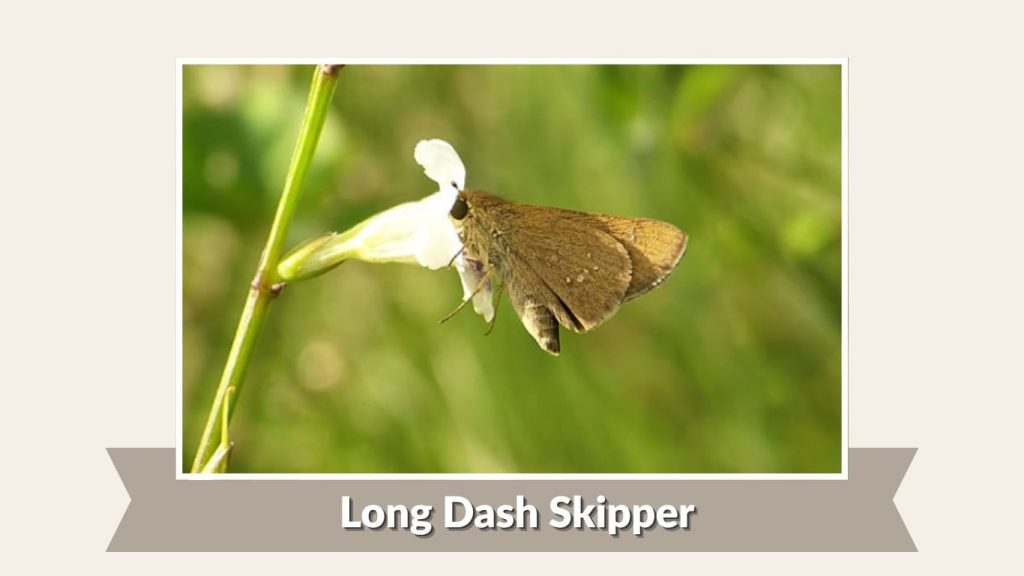
The Long Dash Skipper is a colorful grass skipper butterfly known for the long dark dash marks on the forewings of males. It is commonly seen in grassy habitats and gardens where it quickly flies between flowers during warm sunny days.
Identification
- Wingspan ranges from 30 to 40 mm
- Wings are orange-brown with dark borders
- Males display long black dash-like wing marks
- Females are darker with pale spots
- Body is thick and hairy
Habitat and Distribution
Long Dash Skippers are found across eastern and central North America in meadows, grasslands, parks, gardens, marsh edges, and roadside habitats. They prefer open sunny areas with tall grasses and abundant flowers.
Behavior and Diet
Adults feed on nectar from flowers such as clover, milkweed, and thistle. They are active during daylight hours and fly rapidly with short skipping movements. Caterpillars feed mainly on grasses and remain hidden within silk-bound leaf shelters.
Lifecycle
Females lay eggs individually on host grasses. Caterpillars hatch and create shelters by folding leaves together with silk. After several growth stages, the larvae pupate within these grassy shelters. Adults emerge during summer, and warmer regions may support multiple generations each year.
13. Hobomok Skipper
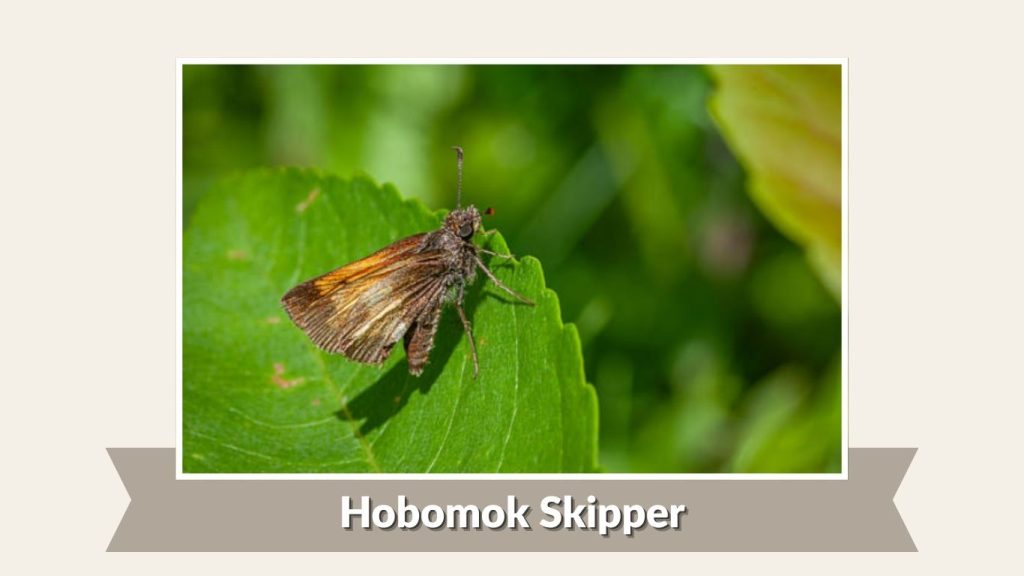
The Hobomok Skipper is a medium-sized grass skipper butterfly known for its dimorphic females and rapid darting flight. It is commonly found in woodland edges and grassy clearings during spring and early summer. The species is named after a Native American spirit figure from northeastern folklore.
Identification
- Wingspan ranges from 32 to 45 mm
- Males are orange-brown with dark borders
- Females may be tan-orange or dark chocolate brown
- Underside of wings is yellow-brown with pale patches
- Body is thick, short, and hairy
Habitat and Distribution
Hobomok Skippers are distributed across eastern North America in woodland openings, forest edges, meadows, grassy trails, and shrubby fields. They prefer partially shaded habitats with plenty of grasses and wildflowers.
Behavior and Diet
Adults feed on nectar from flowers including clover, vetch, and wild iris. Their flight is fast and skipping, usually close to the ground. Caterpillars feed on grasses and remain hidden within rolled or folded leaf shelters.
Lifecycle
Females lay eggs singly on host grasses during spring. Caterpillars hatch and build shelters using silk and grass blades. After several stages of growth, the larvae pupate within grassy hiding spots. Adults emerge mainly in late spring and early summer, with one generation produced annually in most regions.
14. Black Dash Skipper
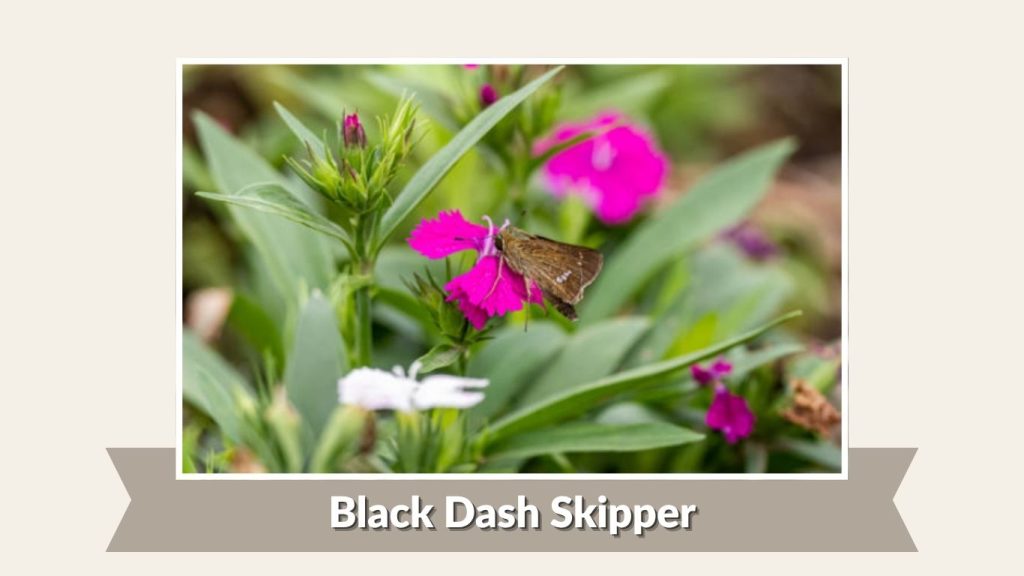
The Black Dash Skipper is a small and energetic grass skipper butterfly recognized by the bold black dash mark on the male’s forewings. It is commonly seen in grassy habitats where it flies rapidly between flowers and low vegetation during warm summer days.
Identification
- Wingspan ranges from 25 to 35 mm
- Wings are orange-brown with dark borders
- Males display a thick black dash on the forewings
- Females are darker with pale spots
- Body is stout and covered with fine hairs
Habitat and Distribution
Black Dash Skippers are found across eastern and central North America. They inhabit prairies, meadows, marsh edges, grassy roadsides, and open fields. The species prefers sunny habitats with tall grasses and abundant flowering plants.
Behavior and Diet
Adults feed on nectar from flowers such as milkweed, clover, and thistles. They are active during sunny weather and fly quickly with short skipping movements. Caterpillars feed mainly on grasses while remaining hidden in silk-bound leaf shelters.
Lifecycle
Females lay eggs individually on host grasses. Caterpillars hatch and create shelters by folding leaves together with silk. After several larval stages, they pupate inside these grassy shelters. Adults emerge during summer, and some populations may produce multiple broods each year.
15. Zabulon Skipper
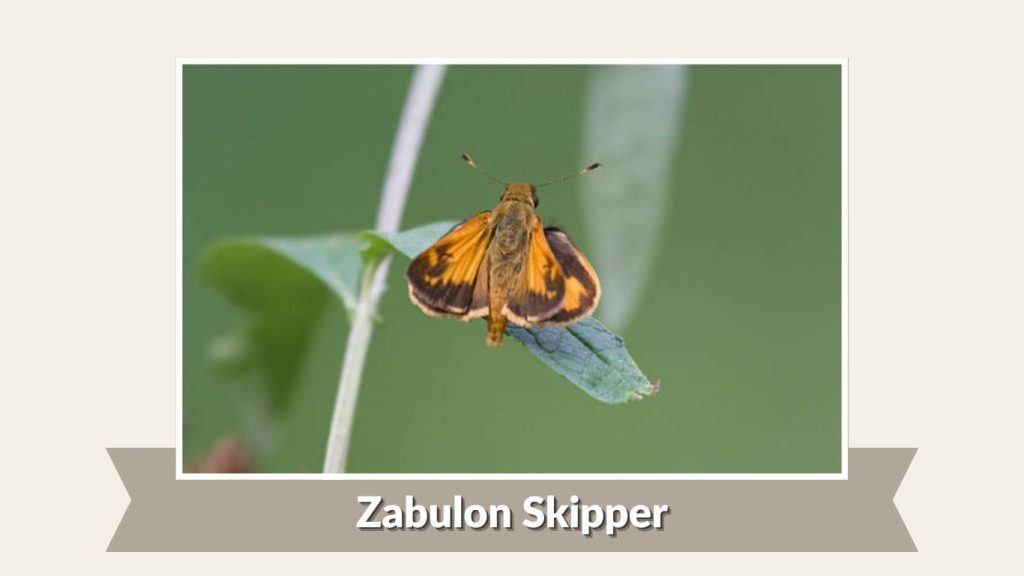
The Zabulon Skipper is a brightly colored grass skipper butterfly known for the strong differences between males and females. It is a fast and active species commonly found in grassy clearings, woodland edges, and gardens during the warmer months.
Identification
- Wingspan ranges from 25 to 35 mm
- Males are orange with dark brown borders
- Females are dark brown with pale orange spots
- Underside of wings is yellow-orange with faint markings
- Body is thick and fuzzy
Habitat and Distribution
Zabulon Skippers are distributed across eastern and southern North America. They inhabit meadows, grassy roadsides, woodland edges, gardens, and open fields. The species prefers sunny habitats with tall grasses and flowering plants.
Behavior and Diet
Adults feed on nectar from flowers such as clover, milkweed, and buttonbush. Their flight is rapid and skipping, often staying close to grasses and shrubs. Caterpillars feed mainly on grasses and hide within folded leaf shelters for protection.
Lifecycle
Females lay eggs singly on host grasses. Caterpillars hatch and construct shelters using silk and folded grass blades. After growing through several stages, the larvae pupate within the shelter. Adults emerge during spring and summer, with multiple generations possible in warmer climates.
FAQs
What are grass skippers?
Grass skippers are small butterflies belonging to the skipper family Hesperiidae. They are known for their rapid skipping flight, stout bodies, and hooked antennae. Most species live in grassy habitats where their caterpillars feed mainly on grasses and sedges.
How can you identify a grass skipper?
Grass skippers are usually small with short, thick bodies and fast flight patterns. Many species have orange-brown wings with dark markings. Their antennae end in hooked tips, which helps distinguish them from many other butterfly groups.
What do grass skipper caterpillars eat?
Grass skipper caterpillars mainly feed on grasses, sedges, and similar plants. Many larvae create shelters by folding leaves together with silk, allowing them to hide while feeding and developing.
Where are grass skippers commonly found?
Grass skippers are commonly found in meadows, grasslands, wetlands, gardens, woodland edges, and roadside fields. They prefer sunny habitats with plenty of grasses and flowering plants for feeding and reproduction.
Are grass skippers beneficial to the environment?
Yes, grass skippers are important pollinators that help flowers reproduce while feeding on nectar. They also serve as food for birds, spiders, and other wildlife, making them valuable members of healthy ecosystems.