
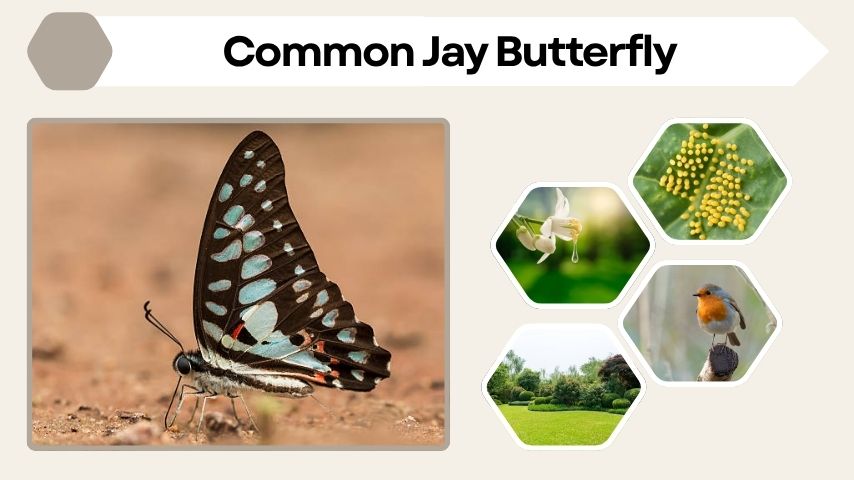
The Common Jay butterfly is a colorful swallowtail butterfly known for its fast flight and striking green markings. Found mainly in tropical parts of Asia, this butterfly is popular among nature lovers and photographers because of its bright appearance and active behavior. It often visits gardens, forests, and parks where nectar-rich flowers and host plants are available.
The Common Jay also has a fascinating life cycle that includes a well-camouflaged caterpillar and pupa stage. Learning about its habitat, diet, and behavior helps butterfly enthusiasts better understand this beautiful insect and its role in nature.
What Is the Common Jay Butterfly?
The Common Jay butterfly is a medium-sized swallowtail butterfly belonging to the species Graphium doson. It is admired for its elegant green and black wing patterns and its quick, darting flight style. Unlike many butterflies that move slowly between flowers, the Common Jay is highly energetic and difficult to photograph while flying. Its beauty and active nature make it one of the most recognized butterflies in tropical Asia.
Scientific Name and Classification
The scientific name of the Common Jay butterfly is Graphium doson. It belongs to the swallowtail butterfly family known as Papilionidae. These butterflies are famous for their colorful wings and graceful flying behavior.
Physical Appearance
The Common Jay butterfly has black wings covered with bright green or turquoise spots and bands. Its underside is usually lighter with pale markings that help create a unique appearance. Adults often have slim bodies and broad wings designed for rapid flight.
Why It Is Called the Common Jay
The butterfly earned the name “Common Jay” because it is frequently seen in many tropical regions across Asia. The word “Jay” likely refers to its colorful appearance, similar to brightly colored jay birds found in different parts of the world.
Common Jay Butterfly Identification
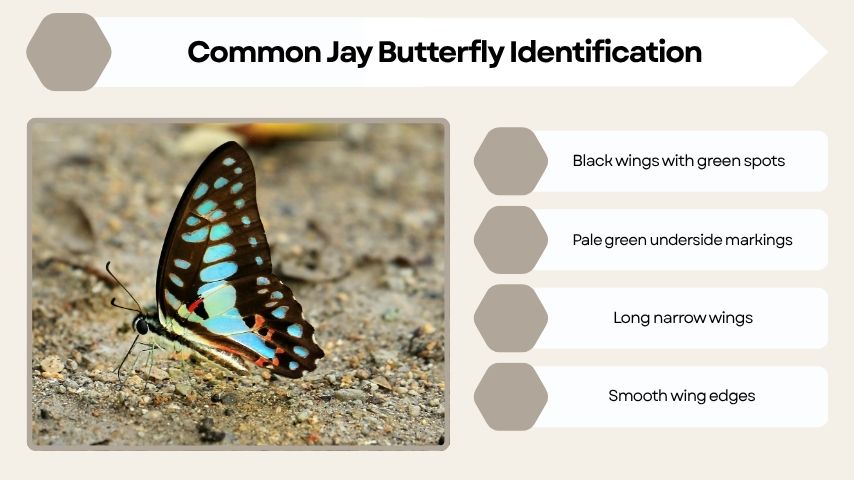
Identifying the Common Jay butterfly becomes easier once you learn its wing patterns, colors, and flying behavior. This butterfly is often spotted quickly moving through gardens or forest edges during warm daylight hours. Its striking green markings and fast movement help separate it from many other swallowtail butterflies found in the same habitat.
Wing Colors and Patterns
Identification Features
- Black wings with green spots
- Pale green underside markings
- Long narrow wings
- Smooth wing edges
- Slim dark body
Male vs Female Common Jay
Male and female Common Jay butterflies look very similar in color and size. Females may sometimes appear slightly larger, but both sexes share the same bright wing patterns and quick flight behavior.
Flight Style and Behavior
The Common Jay is known for flying rapidly and rarely sitting still for long periods. It often glides between flowers and forest paths while searching for nectar or suitable host plants for egg laying.
Common Jay Butterfly Habitat and Distribution
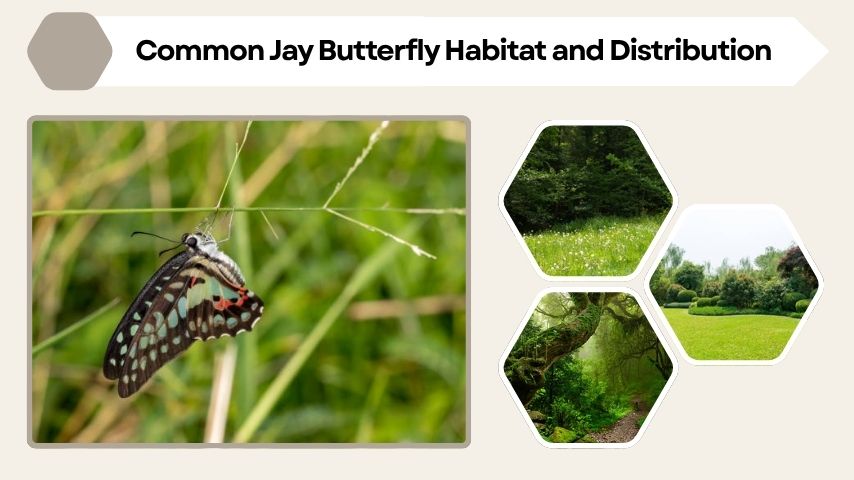
The Common Jay butterfly lives mainly in warm tropical and subtropical environments where forests and flowering plants are abundant. It prefers areas with plenty of shade, moisture, and food sources for both caterpillars and adults. Because of its adaptability, the butterfly is often seen not only in forests but also in city parks and home gardens.
Native Range
The Common Jay butterfly is widely found in India, Sri Lanka, Thailand, Malaysia, and several Southeast Asian countries. It thrives in regions with warm temperatures and rich vegetation throughout most of the year.
Favorite Habitats
Common Locations
- Tropical forests
- Woodland edges
- Public gardens
- Nature parks
- Moist shaded areas
Seasonal Activity
The Common Jay butterfly is most active during warm seasons when flowers bloom heavily. In many tropical regions, sightings increase during rainy periods because plants grow quickly and provide more nectar sources.
Common Jay Butterfly Life Cycle
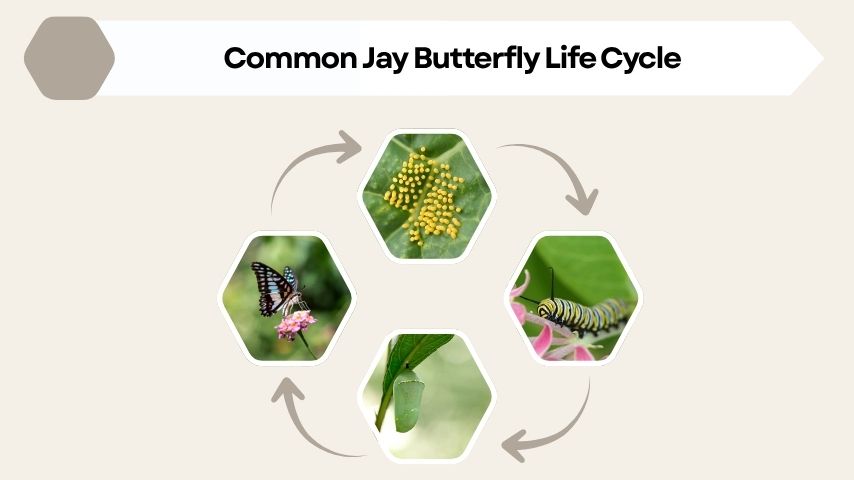
Like other butterflies, the Common Jay passes through four major stages during its life cycle. Each stage has unique physical changes and survival strategies. From tiny eggs to colorful adults, the butterfly depends heavily on host plants and environmental conditions to complete its development successfully.
Egg Stage
Female Common Jay butterflies lay small eggs on the leaves of host plants. The eggs are usually placed individually to give developing caterpillars enough space and food after hatching.
Caterpillar Stage
The caterpillar stage focuses mainly on feeding and growth. Young caterpillars eat fresh leaves constantly and shed their skin several times before becoming fully grown.
Pupa Stage
Pupa Features
- Green or brown coloration
- Camouflage appearance
- Hanging position on stems
- Hard protective outer shell
Adult Butterfly Stage
Adult Common Jay butterflies emerge from the pupa with soft folded wings. After resting and drying their wings, they begin flying in search of nectar, mates, and safe habitats for survival.
Common Jay Caterpillar and Host Plants
The Common Jay butterfly depends heavily on specific host plants for survival. Female butterflies carefully choose these plants before laying eggs because the caterpillars feed on the leaves after hatching. Without proper host plants, young caterpillars cannot grow successfully. Gardeners who plant these species often attract more Common Jay butterflies and support their natural life cycle.
Common Host Plants
Host Plant List
- Cinnamon plants
- Indian bay leaf
- Polyalthia species
- Annona plants
- Laurel family plants
Caterpillar Feeding Behavior
Common Jay caterpillars spend most of their time eating leaves and resting on host plants. Their green body coloration helps them blend into foliage, protecting them from predators such as birds and lizards.
How Host Plants Attract Butterflies
Adult butterflies search for healthy host plants when choosing places to lay eggs. Gardens with these plants often become attractive breeding locations where butterflies can safely complete their life cycle.
Common Jay Butterfly Diet and Feeding Habits
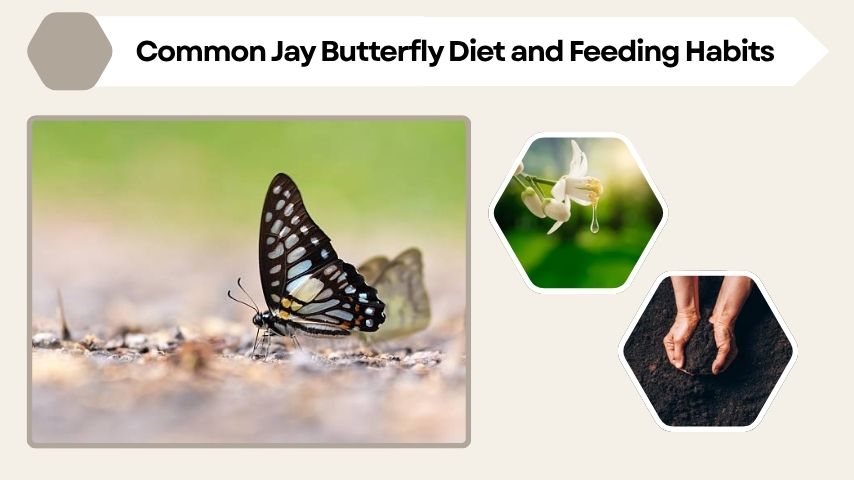
The feeding habits of the Common Jay butterfly change during each stage of life. Caterpillars mainly eat leaves, while adult butterflies drink nectar from flowers. A rich food supply helps support energy, growth, reproduction, and survival. Warm gardens with flowering plants are especially attractive to adult Common Jays searching for nectar throughout the day.
What Adult Butterflies Eat
Adult Common Jay butterflies feed mostly on flower nectar. They also gather minerals and moisture from damp soil or wet surfaces, especially during hot weather.
Caterpillar Diet
Young caterpillars feed heavily on fresh leaves from their host plants. Continuous feeding allows them to grow quickly before entering the pupa stage.
Feeding Behavior in Gardens
Favorite Food Sources
- Bright flowering plants
- Moist garden soil
- Fresh leafy host plants
- Natural nectar sources
Common Jay Butterfly Behavior
The Common Jay butterfly is highly active and energetic compared to many other butterfly species. Its quick movement and restless flying style make it easy to notice in forests and gardens. These butterflies are usually active during daylight hours when sunlight and warm temperatures help support feeding and mating activities.
Fast Flying Ability
The Common Jay is considered one of the faster swallowtail butterflies. Its strong wings allow quick movement between flowers, trees, and shaded pathways while avoiding predators.
Mating and Territorial Behavior
Male butterflies sometimes compete for territory and access to females. Courtship often involves active flying displays where males chase females through open spaces and forest edges.
Resting and Sunbathing Habits
Butterflies often rest quietly during cooler morning hours while warming their wings in sunlight. Sunbathing helps increase body temperature and prepares them for active flight later in the day.
Common Jay Butterfly vs Blue Jay Butterfly
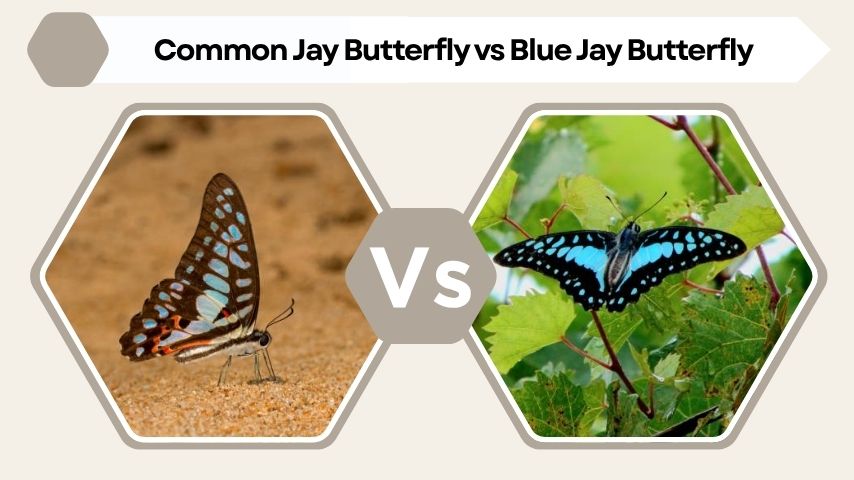
Many people confuse the Common Jay butterfly with butterflies that have blue wing colors or markings. However, the Common Jay has its own unique green-and-black pattern and belongs to the swallowtail family. Comparing these butterflies helps nature enthusiasts improve identification skills while observing insects in gardens or forests.
Color Differences
The Common Jay usually displays bright green or turquoise markings, while blue-colored butterflies may show deeper blue shades or metallic coloring on the wings.
Habitat Differences
Common Jay butterflies are mainly found in tropical Asia, while many blue butterfly species live in completely different climates and regions around the world.
Identification Tips
Easy Comparison Points
- Green spotted wings
- Fast swallowtail flight
- Long narrow wing shape
- Tropical habitat preference
Predators and Survival Adaptations
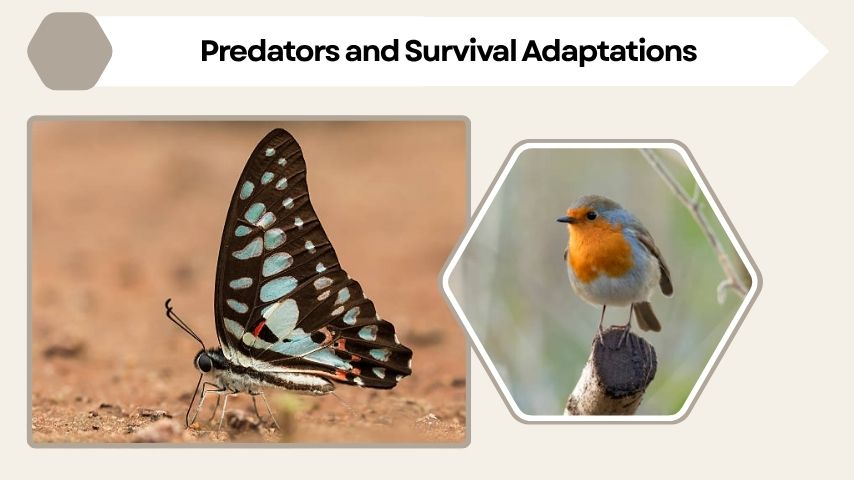
The Common Jay butterfly faces many natural predators throughout its life cycle. Birds, spiders, and lizards commonly hunt eggs, caterpillars, and adult butterflies. To survive, the Common Jay uses camouflage, quick flight, and protective coloration that helps reduce the risk of attack in natural habitats.
Natural Predators
Common predators include birds, reptiles, spiders, and larger insects. Caterpillars are especially vulnerable because they spend long periods feeding openly on leaves.
Camouflage and Defense
The pupa often resembles leaves or plant material, helping it remain hidden from predators. Adult butterflies rely mainly on speed and quick flight to escape danger.
Importance in Ecosystems
Common Jay butterflies play a helpful role in pollination while also serving as part of the natural food chain. Their presence often indicates a healthy environment with diverse plant life.
Common Jay Butterfly in Gardening and Photography
Butterfly enthusiasts often try to attract Common Jays into gardens because of their beauty and graceful movement. Photographers also enjoy capturing their bright wing patterns and active behavior. Creating butterfly-friendly gardens helps support local butterfly populations and encourages biodiversity in outdoor spaces.
How to Attract Common Jays
Garden Tips
- Grow nectar flowers
- Plant host trees
- Avoid pesticides
- Provide damp soil areas
Butterfly Photography Tips
Early morning is often the best time to photograph Common Jay butterflies because they move more slowly while warming up in sunlight. Using patience and natural lighting improves photo quality.
Butterfly Watching and Conservation
Protecting natural habitats and planting native vegetation helps support butterfly populations. Conservation efforts are important because habitat destruction can reduce food sources and breeding areas for many butterfly species.
FAQs
What is the scientific name of the Common Jay butterfly?
The scientific name of the Common Jay butterfly is Graphium doson. It belongs to the swallowtail butterfly family called Papilionidae. This species is well known for its bright green markings, fast flight, and wide distribution across tropical regions of Asia.
What do Common Jay caterpillars eat?
Common Jay caterpillars mainly feed on the leaves of host plants from the laurel family. Popular host plants include cinnamon, Indian bay leaf, and Polyalthia species. These plants provide the nutrients caterpillars need for growth before entering the pupa stage.
Where is the Common Jay butterfly found?
The Common Jay butterfly is commonly found in India, Sri Lanka, Thailand, Malaysia, and other Southeast Asian countries. It prefers warm tropical forests, gardens, woodland edges, and moist areas with plenty of flowering plants and host vegetation.
How long does a Common Jay butterfly live?
Adult Common Jay butterflies usually live for a few weeks, although the full life cycle from egg to adult lasts longer. Weather conditions, predators, food availability, and habitat quality can all affect the butterfly’s lifespan in the wild.
How can I attract Common Jay butterflies to my garden?
You can attract Common Jay butterflies by planting nectar-rich flowers and suitable host plants like cinnamon and Indian bay leaf. Avoid using pesticides and provide moist areas where butterflies can rest and collect minerals during warm weather.