
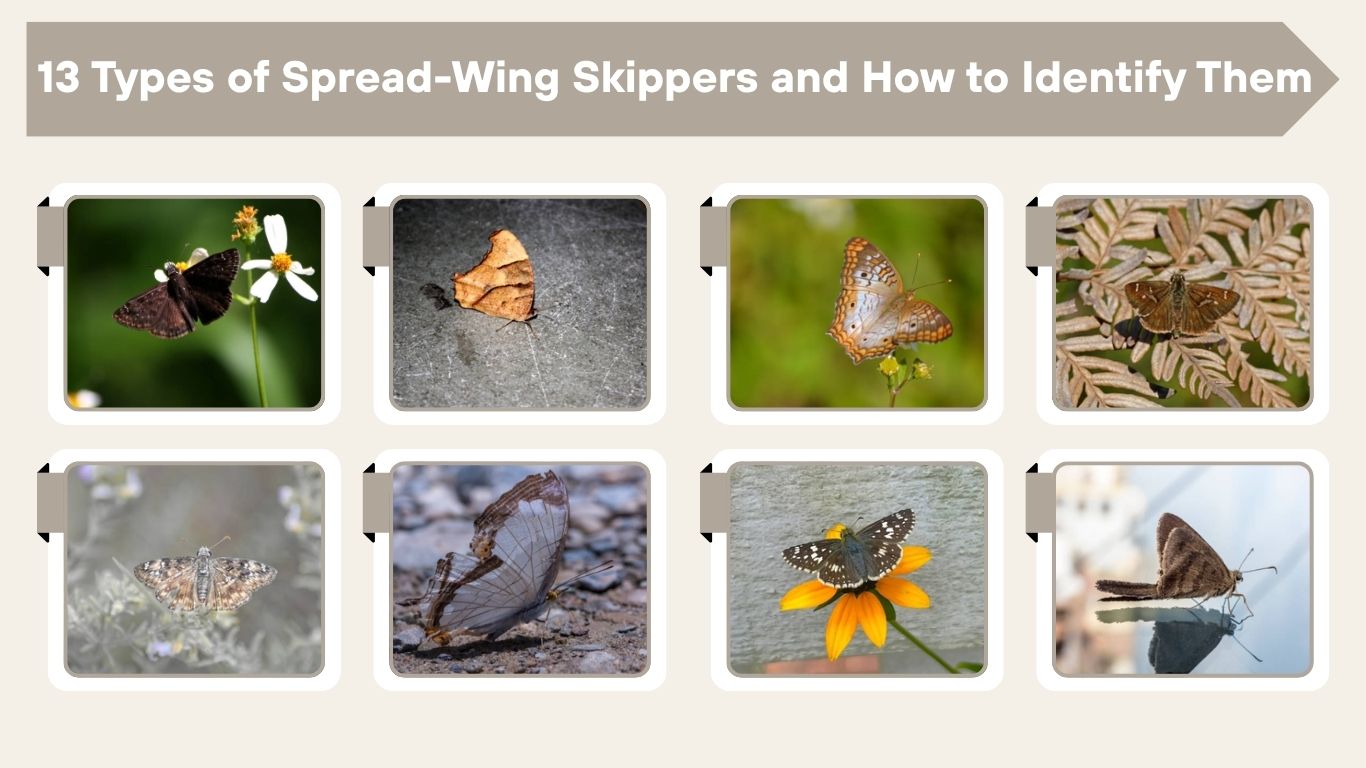
Spread-wing skippers are fascinating butterflies known for resting with their wings held open instead of folded upright like many other skippers. These fast-flying insects belong to the skipper butterfly family and are commonly found in woodlands, meadows, gardens, and grassy habitats. Many species display dark brown wings with colorful spots, silver patches, or mottled patterns that help them blend into their surroundings. From the striking Silver-Spotted Skipper to the subtle Dreamy Duskywing, each species has unique markings and behaviors. Learning about different spread-wing skippers can help butterfly enthusiasts identify these energetic insects more easily in nature.
1. Silver-Spotted Skipper
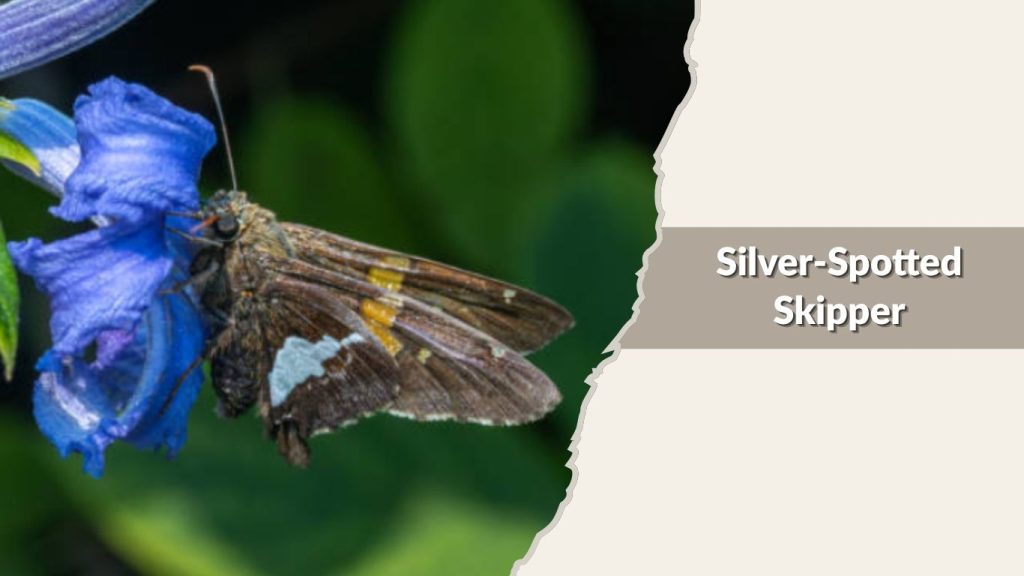
The Silver-Spotted Skipper is one of the largest and most recognizable spread-wing skippers in North America. It is famous for the bright silver patch on the underside of its hindwings and its fast, powerful flight. This butterfly is commonly seen in gardens, woodland edges, and open fields during warm months.
Identification
- Wingspan ranges from 45 to 65 mm
- Wings are dark brown with golden-orange patches
- Underside of hindwings features a large silver-white spot
- Body is thick, furry, and dark colored
- Antennae have hooked tips typical of skipper butterflies
Habitat and Distribution
Silver-Spotted Skippers are widely distributed across North America and parts of Central America. They inhabit woodland edges, meadows, gardens, roadsides, and open grassy areas with flowering plants and shrubs.
Behavior and Diet
Adults feed on nectar from flowers such as thistle, clover, and butterfly bush. They are active during sunny weather and fly rapidly with strong wingbeats. Caterpillars feed mainly on legumes and hide in leaf shelters made by folding leaves together with silk.
Lifecycle
Females lay eggs singly on host plants. Caterpillars hatch and construct protective shelters using leaves and silk. After feeding through several growth stages, the larvae pupate inside leaf shelters. Adults emerge during spring and summer, with multiple generations possible in warmer regions.
2. Common Checkered-Skipper
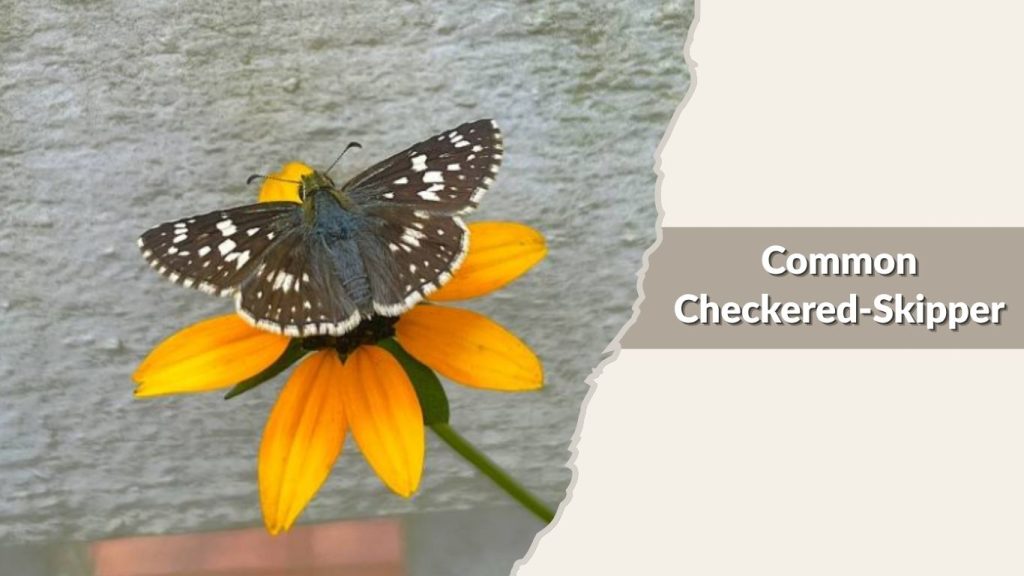
The Common Checkered-Skipper is a small spread-wing skipper butterfly known for its distinctive black-and-white checkered wing pattern. It is widely distributed and often seen basking with its wings spread flat, especially in sunny open habitats.
Identification
- Wingspan ranges from 25 to 35 mm
- Wings display a bold black-and-white checkered pattern
- Hindwings are pale underneath with darker markings
- Body is short, thick, and hairy
- Antennae end in hooked tips
Habitat and Distribution
Common Checkered-Skippers are found throughout North and South America in grasslands, roadsides, gardens, parks, fields, and desert edges. They prefer sunny habitats with low vegetation and flowering plants.
Behavior and Diet
Adults feed on nectar from small flowers and are highly active during warm daylight hours. Their flight is fast and erratic, often staying close to the ground. Caterpillars feed mainly on plants in the mallow family and remain hidden within folded leaf shelters.
Lifecycle
Females lay eggs singly on host plants. Caterpillars hatch and create shelters by folding leaves together with silk. After several larval stages, the caterpillars pupate within the shelter. Adults emerge during warm seasons, and several generations may occur annually in favorable climates.
3. Long-Tailed Skipper
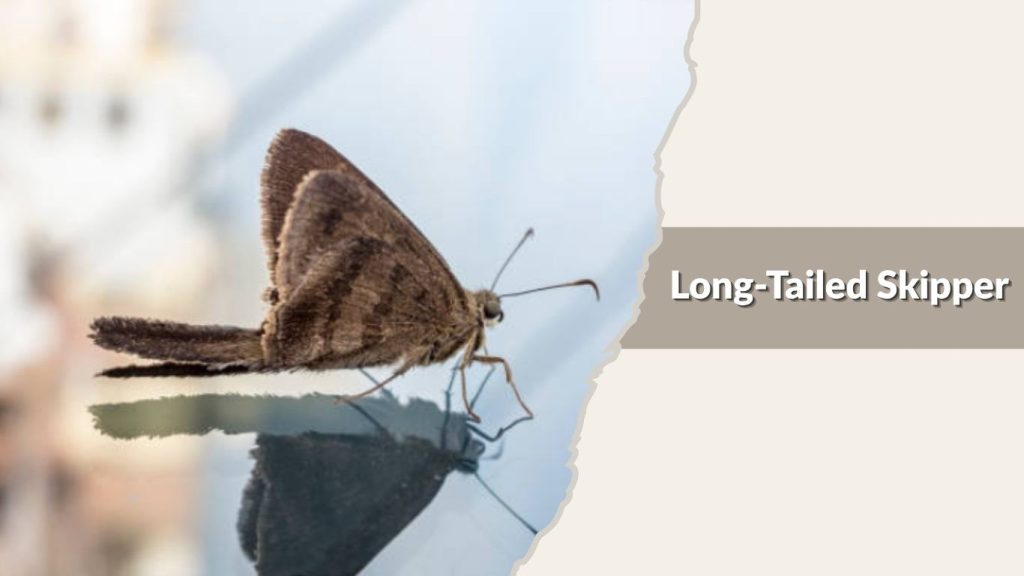
The Long-Tailed Skipper is a striking spread-wing skipper butterfly recognized for the long tail-like extensions on its hindwings and its shimmering blue-green body. It is a fast and energetic species commonly seen around gardens, tropical habitats, and flowering plants.
Identification
- Wingspan ranges from 35 to 50 mm
- Wings are dark brown with iridescent blue-green coloring
- Hindwings have long tail-like extensions
- Body is fuzzy with metallic blue-green hairs
- Antennae are hooked at the tips
Habitat and Distribution
Long-Tailed Skippers are distributed across the Americas, especially in tropical and subtropical regions. They inhabit gardens, woodland edges, open fields, parks, and areas with dense vegetation and flowering plants.
Behavior and Diet
Adults feed on nectar from flowers such as lantana, verbena, and bougainvillea. They are strong fliers and move rapidly between plants during the daytime. Caterpillars feed mainly on bean plants and other legumes while hiding inside folded leaf shelters.
Lifecycle
Females lay eggs on the leaves of host plants. Caterpillars hatch and create shelters using silk and folded leaves. After feeding through several stages, the larvae pupate inside the shelter. Adults emerge during warm months, and multiple generations may occur each year in tropical climates.
4. Dorantes Longtail
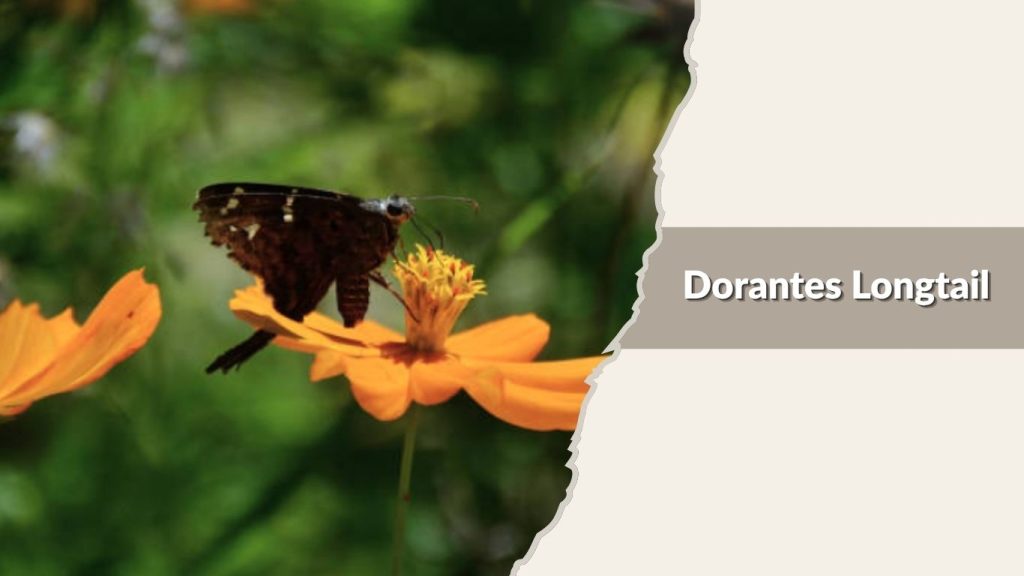
The Dorantes Longtail is a tropical spread-wing skipper butterfly known for its long hindwing tails and rapid flight. It closely resembles the Long-Tailed Skipper but is usually smaller and darker. This species is commonly found in warm regions with abundant flowering plants and dense vegetation.
Identification
- Wingspan ranges from 35 to 45 mm
- Wings are dark brown with blue-green iridescence
- Hindwings have long, narrow tails
- Body is thick and covered with metallic blue hairs
- Antennae have hooked tips
Habitat and Distribution
Dorantes Longtails are found across Central America, South America, Mexico, and the southern United States. They inhabit gardens, woodland edges, tropical forests, parks, and open fields with flowering plants and legumes.
Behavior and Diet
Adults feed on nectar from flowers such as lantana and verbena. They are active during warm daylight hours and fly quickly with darting movements. Caterpillars feed mainly on legumes and hide inside leaf shelters made from folded leaves and silk.
Lifecycle
Females lay eggs on host plants in warm habitats. Caterpillars hatch and create protective shelters while feeding on leaves. After several growth stages, they pupate within the shelter. Adults emerge during warm seasons, and several generations may develop each year in tropical climates.
5. Tropical Checkered-Skipper
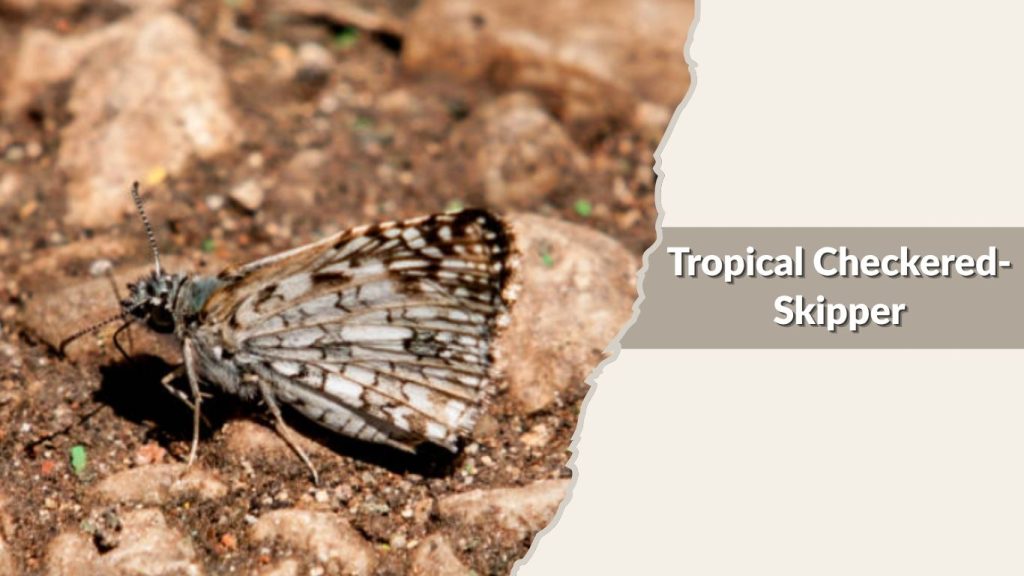
The Tropical Checkered-Skipper is a small and active spread-wing skipper butterfly recognized for its bold checkered wing pattern. It is commonly found in warm tropical and subtropical habitats where it frequently visits flowers during sunny weather.
Identification
- Wingspan ranges from 25 to 35 mm
- Wings display black-and-white checkered markings
- Underside is pale with darker spots
- Body is short, thick, and fuzzy
- Antennae end in hooked tips
Habitat and Distribution
Tropical Checkered-Skippers are distributed across Central and South America, Mexico, and the southern United States. They inhabit gardens, open fields, roadsides, parks, and disturbed grassy habitats with abundant flowering plants.
Behavior and Diet
Adults feed on nectar from small flowers and remain highly active during the daytime. Their flight is rapid and close to the ground, often interrupted by short resting periods. Caterpillars feed mainly on mallows and related plants while hiding within folded leaf shelters.
Lifecycle
Females lay eggs individually on host plants. Caterpillars hatch and create shelters using silk and folded leaves. After feeding through several stages, they pupate within the shelter. Adults emerge during warm months, and multiple generations are common in tropical regions.
6. Northern Cloudywing
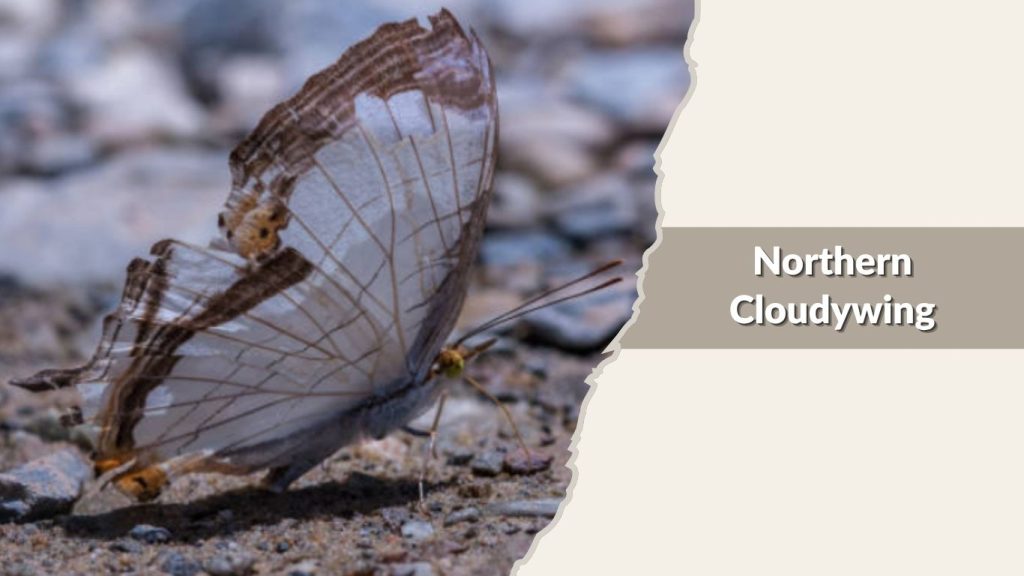
The Northern Cloudywing is a dark-colored spread-wing skipper butterfly commonly found in woodland habitats and forest edges. It is known for its rapid flight and subtle pale spots on the wings, which give it a cloudy appearance when viewed closely.
Identification
- Wingspan ranges from 30 to 40 mm
- Wings are dark brown with small translucent spots
- Underside is lighter brown with faint markings
- Body is thick and fuzzy
- Antennae have hooked tips typical of skippers
Habitat and Distribution
Northern Cloudywings are widely distributed across eastern and central North America. They inhabit woodlands, forest clearings, meadows, parks, and shrubby fields with abundant host plants and flowers.
Behavior and Diet
Adults feed on nectar from flowers such as clover and wild legumes. They are active during sunny weather and fly quickly with short darting movements. Caterpillars feed mainly on legumes and remain hidden in folded leaf shelters during development.
Lifecycle
Females lay eggs singly on host plants. Caterpillars hatch and use silk to fold leaves into protective shelters while feeding. After several stages of growth, they pupate within the shelter. Adults emerge during spring and summer, and some populations may produce multiple generations annually.
7. Southern Cloudywing
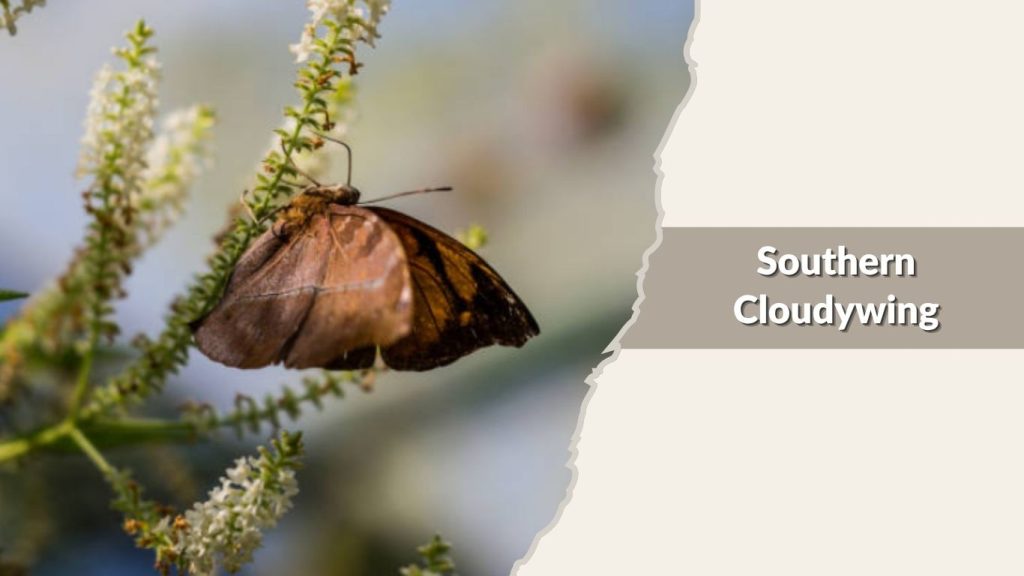
The Southern Cloudywing is a fast-flying spread-wing skipper butterfly known for its dark wings and pale translucent spots. It is commonly found in warm southern habitats where it quickly darts between flowers and low vegetation during sunny days.
Identification
- Wingspan ranges from 30 to 42 mm
- Wings are dark brown with faint glassy spots
- Underside is lighter brown with subtle markings
- Body is stout and hairy
- Antennae have hooked black tips
Habitat and Distribution
Southern Cloudywings are distributed across the southern United States, Mexico, and parts of Central America. They inhabit woodland edges, gardens, open fields, shrubby habitats, and grassy clearings with flowering plants.
Behavior and Diet
Adults feed on nectar from flowers such as clover, thistle, and verbena. They are active during warm daylight hours and fly rapidly with irregular skipping movements. Caterpillars feed mainly on legumes while remaining hidden within folded leaf shelters.
Lifecycle
Females lay eggs individually on host plants. Caterpillars hatch and construct protective shelters using silk and leaves. After feeding through several larval stages, they pupate inside the shelter. Adults emerge during warm seasons, and multiple generations may occur annually in southern regions.
8. Hoary Edge Skipper
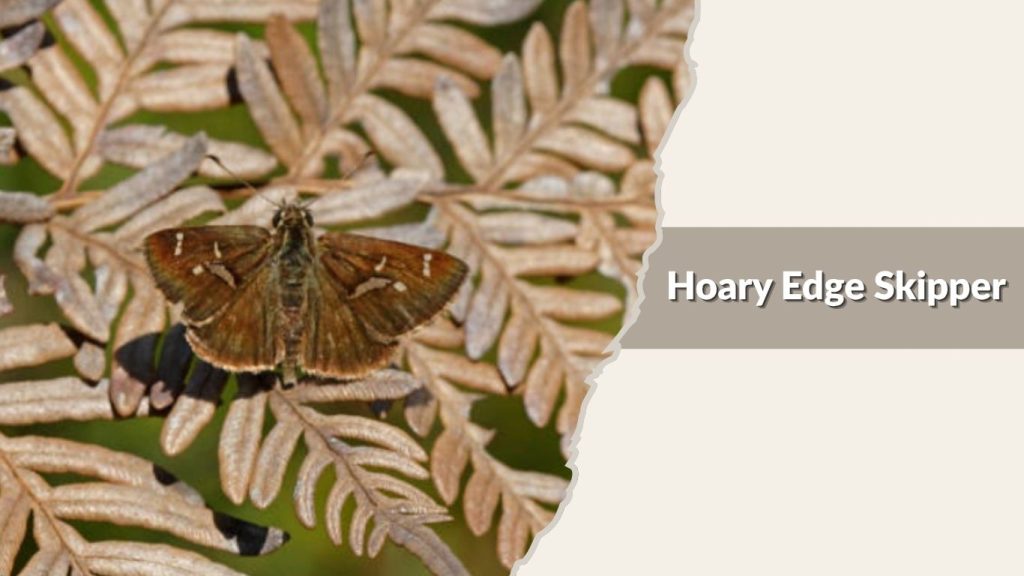
The Hoary Edge Skipper is a dark spread-wing skipper butterfly recognized by the pale frosted border along the edges of its wings. It is commonly seen in woodland clearings and open grassy habitats where it actively visits flowers during warm weather.
Identification
- Wingspan ranges from 38 to 50 mm
- Wings are dark brown with pale whitish edges
- Forewings display several small translucent spots
- Body is thick and fuzzy
- Antennae end in hooked tips
Habitat and Distribution
Hoary Edge Skippers are found across eastern and central North America. They inhabit woodland edges, meadows, grassy fields, roadsides, and shrubby habitats with abundant flowering plants and legumes.
Behavior and Diet
Adults feed on nectar from flowers such as milkweed, clover, and thistle. They are active during sunny conditions and fly quickly with strong wingbeats. Caterpillars feed mainly on legumes and remain hidden in shelters made from folded leaves.
Lifecycle
Females lay eggs singly on host plants. Caterpillars hatch and create protective leaf shelters using silk. After several stages of growth, the larvae pupate within the shelter. Adults emerge during spring and summer, and most populations produce one or two generations each year.
9. Dreamy Duskywing
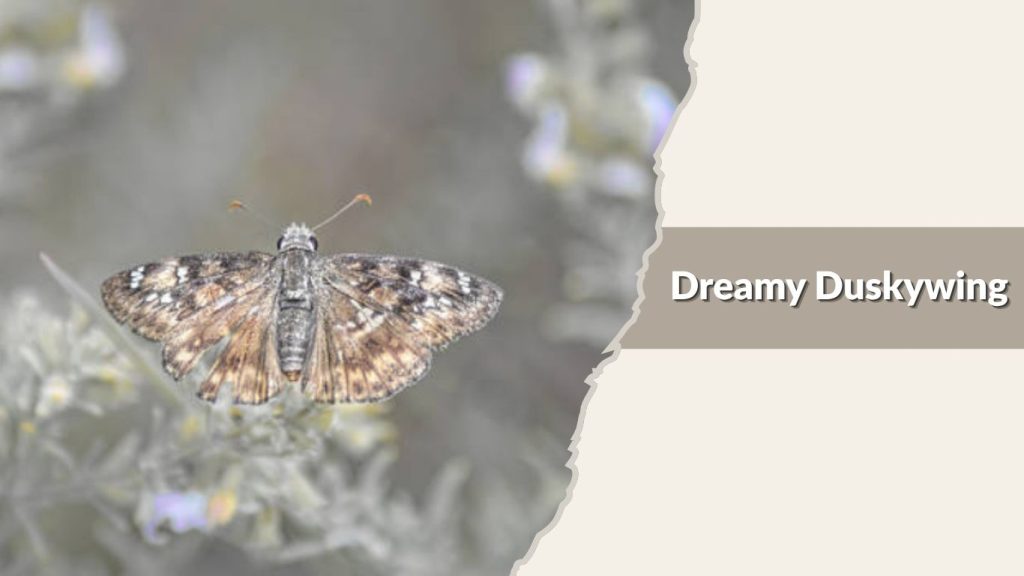
The Dreamy Duskywing is a small dark spread-wing skipper butterfly known for its soft gray-brown coloring and subtle wing markings. It is often seen basking on the ground or low vegetation in woodland habitats during spring and early summer.
Identification
- Wingspan ranges from 25 to 35 mm
- Wings are gray-brown with faint darker markings
- Underside appears mottled and dusty
- Body is short, thick, and hairy
- Antennae have hooked tips typical of skippers
Habitat and Distribution
Dreamy Duskywings are distributed across eastern and central North America. They inhabit woodland clearings, forest edges, shrubby fields, and oak-dominated habitats with sunny openings and low vegetation.
Behavior and Diet
Adults feed on nectar from small flowers and sometimes absorb moisture from damp soil. Their flight is quick and low to the ground, often interrupted by short resting periods. Caterpillars feed mainly on oak leaves while remaining hidden inside folded leaf shelters.
Lifecycle
Females lay eggs singly on oak leaves during spring. Caterpillars hatch and construct shelters by folding leaves together with silk. After feeding through several growth stages, they pupate within the shelter. Adults emerge mainly in spring and early summer, with one generation produced annually in most regions.
10. Horace’s Duskywing
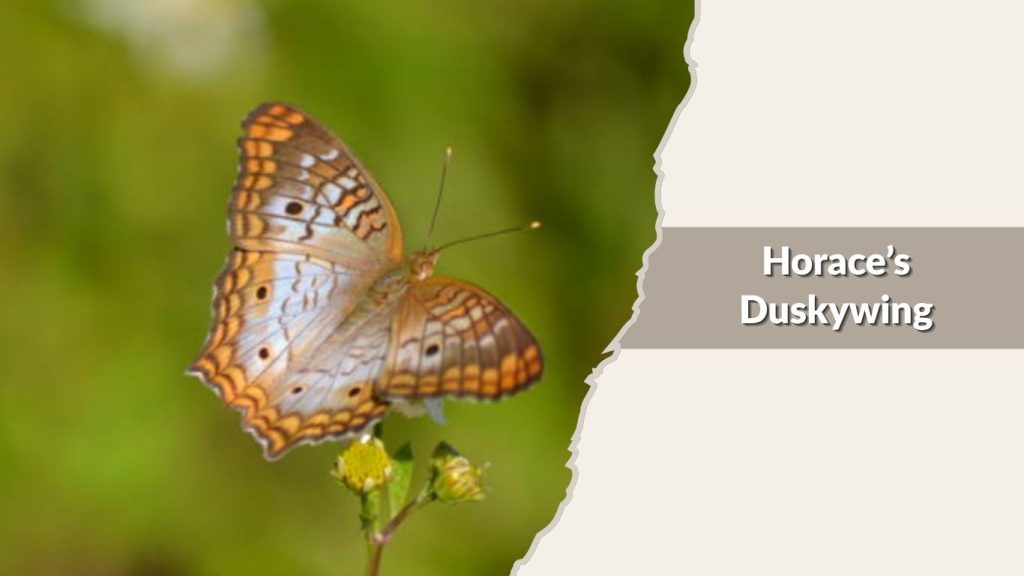
Horace’s Duskywing is a dark spread-wing skipper butterfly recognized for its mottled brown wings and rapid, darting flight. It is commonly found in woodland habitats and open clearings where oak trees grow abundantly.
Identification
- Wingspan ranges from 30 to 40 mm
- Wings are dark brown with scattered pale spots
- Underside is gray-brown with mottled markings
- Body is stout and hairy
- Antennae end in hooked tips
Habitat and Distribution
Horace’s Duskywings are widely distributed across eastern and central North America. They inhabit forest edges, woodland trails, meadows, shrubby fields, and sunny openings with oak trees and flowering plants.
Behavior and Diet
Adults feed on nectar from flowers and sometimes visit damp soil for minerals. Their flight is rapid and close to the ground, often making quick directional changes. Caterpillars feed mainly on oak leaves while hiding within silk-bound leaf shelters.
Lifecycle
Females lay eggs individually on oak leaves during spring and summer. Caterpillars hatch and create protective shelters using folded leaves and silk. After several larval stages, the caterpillars pupate within the shelter. Adults emerge during warm seasons, and southern populations may produce multiple generations yearly.
11. Wild Indigo Duskywing
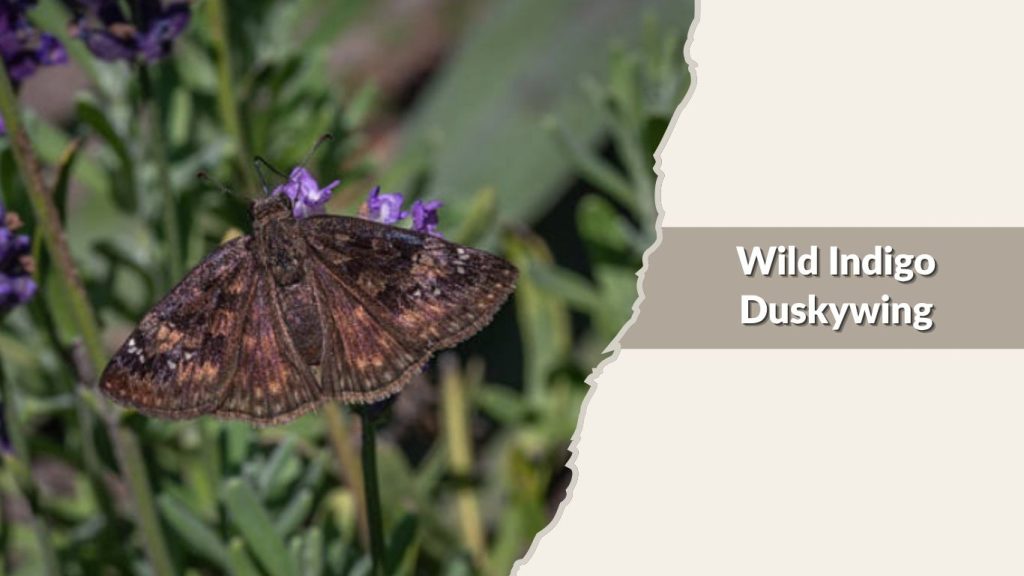
The Wild Indigo Duskywing is a dark spread-wing skipper butterfly known for its association with wild indigo plants and other legumes. It is a fast and active species commonly seen in open sunny habitats during spring and summer.
Identification
- Wingspan ranges from 30 to 40 mm
- Wings are dark brown with small pale spots
- Underside is lighter brown with faint markings
- Body is thick and hairy
- Antennae have hooked tips typical of skippers
Habitat and Distribution
Wild Indigo Duskywings are found across eastern and central North America. They inhabit meadows, prairies, woodland edges, roadsides, and open grassy areas where legumes and wild indigo plants grow.
Behavior and Diet
Adults feed on nectar from flowers such as clover and milkweed. Their flight is rapid and low to the ground, with frequent short rests on leaves or bare soil. Caterpillars feed mainly on wild indigo and other legumes while remaining hidden in leaf shelters.
Lifecycle
Females lay eggs singly on host plants during warm seasons. Caterpillars hatch and construct shelters using silk and folded leaves. After growing through several larval stages, they pupate within the shelter. Adults emerge during spring and summer, and some regions support multiple broods each year.
12. Mottled Duskywing
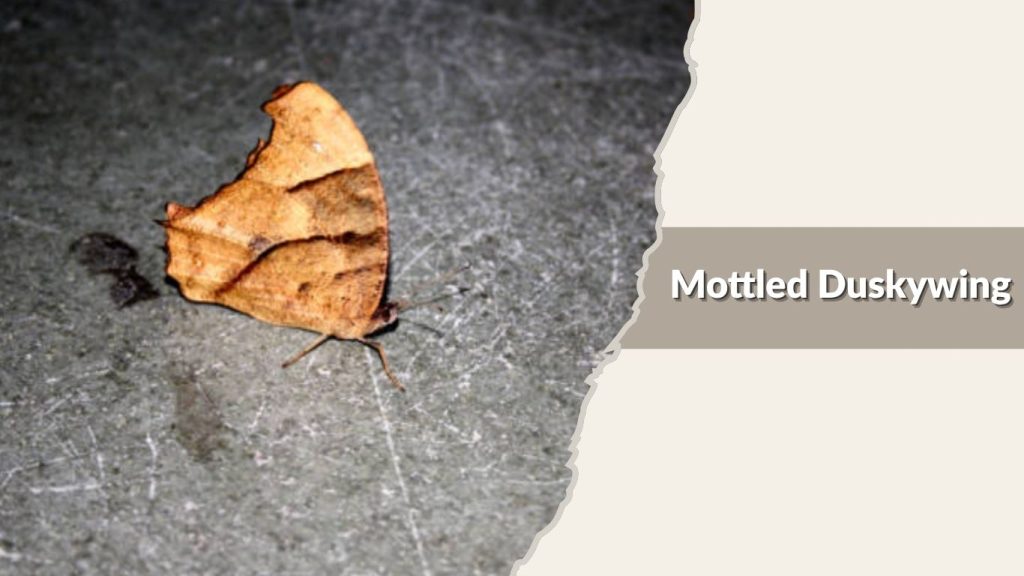
The Mottled Duskywing is a small spread-wing skipper butterfly recognized for its mottled brown wing pattern that provides excellent camouflage against bark and dry leaves. It is commonly found in dry open habitats where oak trees and low shrubs are abundant.
Identification
- Wingspan ranges from 28 to 38 mm
- Wings are brown with mottled gray and pale markings
- Forewings contain faint translucent spots
- Body is short, stout, and hairy
- Antennae end in hooked tips
Habitat and Distribution
Mottled Duskywings are distributed across parts of North America in dry woodlands, scrublands, oak savannas, roadsides, and open shrubby habitats. They prefer sunny environments with scattered trees and host plants.
Behavior and Diet
Adults feed on nectar from small wildflowers and may also gather minerals from damp soil. Their flight is quick, low, and erratic, often ending with short rests on bare ground or leaves. Caterpillars feed mainly on oak leaves while hiding inside folded leaf shelters.
Lifecycle
Females lay eggs individually on host plants. Caterpillars hatch and use silk to fold leaves into protective shelters while feeding. After completing several growth stages, the larvae pupate within the shelter. Adults emerge during spring and summer, with one or more generations depending on climate conditions.
13. Juvenal’s Duskywing
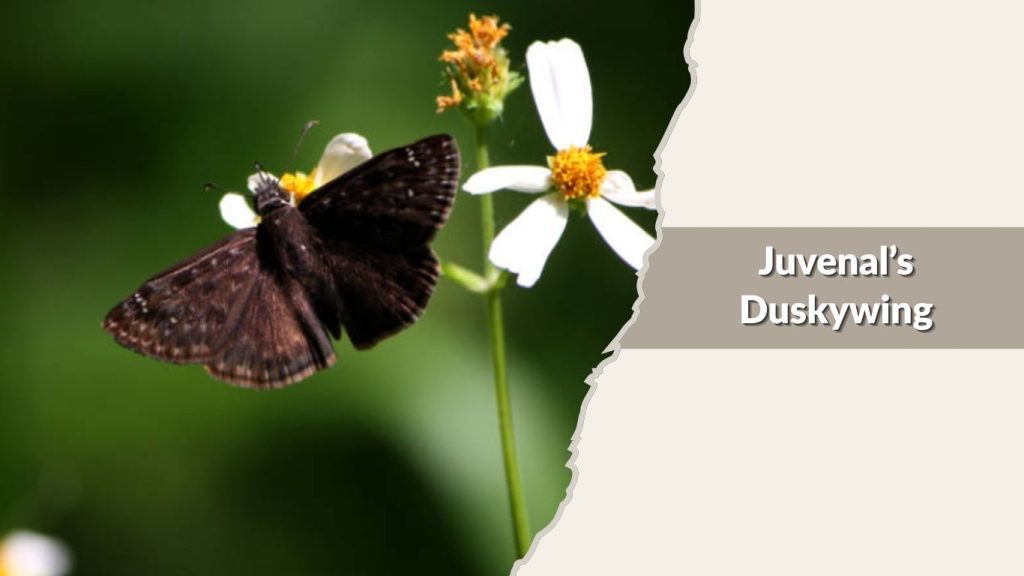
Juvenal’s Duskywing is a dark spread-wing skipper butterfly commonly found in oak woodlands and forest edges. It is known for its mottled brown wings and quick darting flight. This species is often one of the earliest duskywings to appear during spring.
Identification
- Wingspan ranges from 30 to 40 mm
- Wings are dark brown with pale mottled patterns
- Forewings show faint translucent spots
- Body is thick and covered with fine hairs
- Antennae have hooked tips typical of skippers
Habitat and Distribution
Juvenal’s Duskywings are widely distributed across eastern North America. They inhabit oak forests, woodland clearings, forest trails, shrubby fields, and sunny openings with abundant host plants.
Behavior and Diet
Adults feed on nectar from spring wildflowers and may also gather minerals from moist soil. Their flight is fast and low to the ground, often interrupted by brief resting periods. Caterpillars feed mainly on oak leaves while hiding within silk-bound leaf shelters.
Lifecycle
Females lay eggs singly on oak leaves during spring. Caterpillars hatch and create shelters by folding leaves together with silk. After several stages of growth, they pupate within the shelter. Adults emerge mainly during spring and early summer, with one generation produced annually in most regions.
FAQs
What are spread-wing skippers?
Spread-wing skippers are a group of skipper butterflies known for resting with their wings spread flat instead of folded upright. They belong to the butterfly family Hesperiidae and are recognized for their quick flight, stout bodies, and hooked antennae.
How can you identify a spread-wing skipper?
Spread-wing skippers usually have dark brown wings with spots, patches, or mottled markings. They rest with open wings and have thick furry bodies. Many species also display rapid darting flight patterns during sunny weather.
What do spread-wing skipper caterpillars eat?
Most spread-wing skipper caterpillars feed on legumes, grasses, oak leaves, or mallows depending on the species. The larvae often create shelters by folding leaves together with silk for protection while feeding.
Where are spread-wing skippers commonly found?
Spread-wing skippers are commonly found in meadows, woodland edges, gardens, prairies, wetlands, shrubby fields, and open forests. They prefer sunny habitats with flowering plants and suitable host plants for caterpillars.
Are spread-wing skippers important to ecosystems?
Yes, spread-wing skippers are valuable pollinators that help flowering plants reproduce. They also serve as food for birds, spiders, and other wildlife, making them important members of healthy ecosystems.