
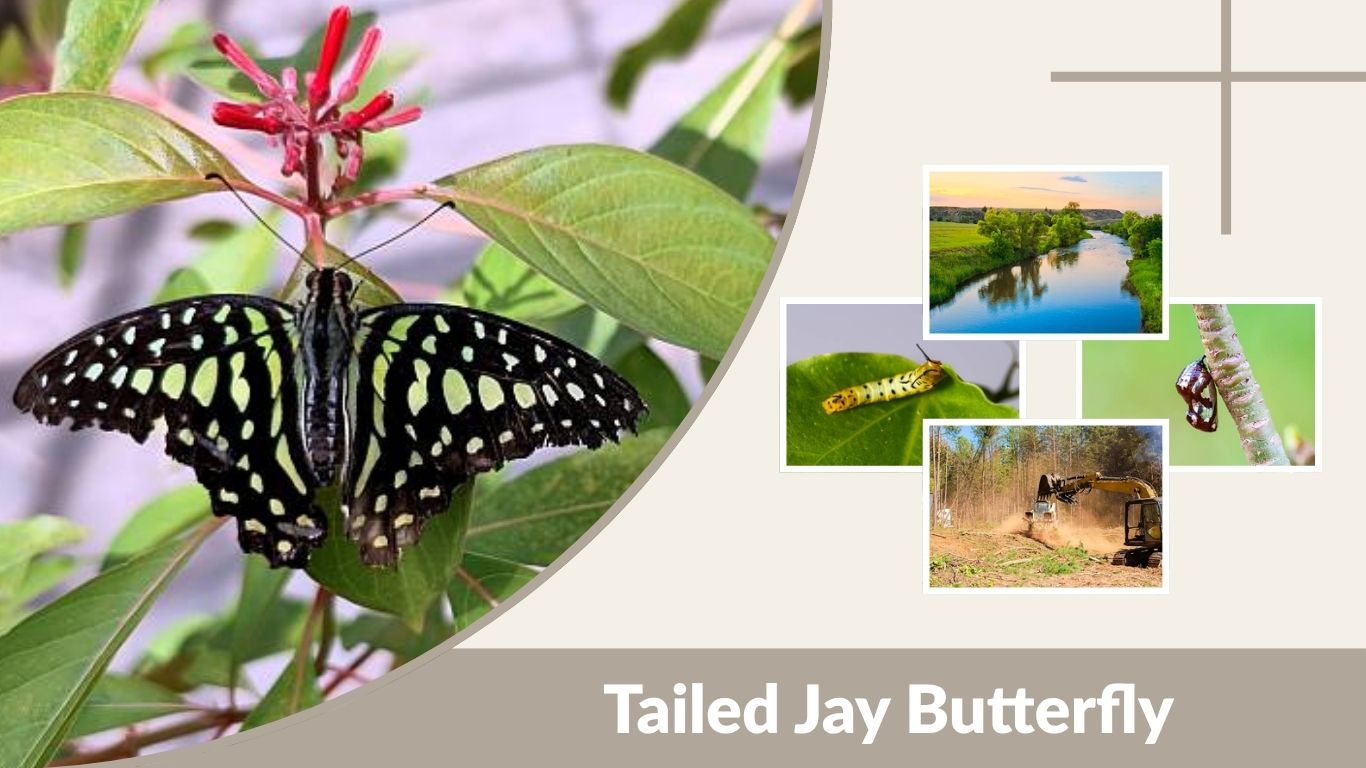
The tailed jay butterfly is a fast-flying tropical swallowtail known for its glowing green spots and striking black wings. Found across Asia and nearby tropical regions, this butterfly is popular among nature lovers because of its energetic flight and colorful appearance. Its caterpillar goes through several interesting stages before transforming into a beautiful adult butterfly. The tailed jay also plays an important role in pollination and healthy ecosystems. Learning about its habitat, host plants, and life cycle helps butterfly enthusiasts better understand this unique species.
What Is a Tailed Jay Butterfly?
The tailed jay butterfly belongs to the swallowtail butterfly family and is famous for its bright green markings and rapid movement. It is commonly seen flying around gardens, forests, and tropical parks. This species is highly active during the daytime and often visits flowering plants for nectar.
Tailed Jay Butterfly Scientific Name
The scientific name of the tailed jay butterfly is Graphium agamemnon. It belongs to the Papilionidae family, which includes many colorful swallowtail butterflies found around the world.
Tailed Jay Butterfly Description
The tailed jay butterfly has a dramatic appearance that makes it easy to recognize:
- Black wings with neon green spots
- Small tail-like wing extensions
- Slender black body
- Wingspan between 3 and 4 inches
- Fast and darting flight style
- Bright patterns visible during flight
Why Is It Called a Green Tailed Jay Butterfly?
Many people call it the green tailed jay butterfly because of the bright green or turquoise spots covering its wings. These colorful markings stand out strongly against the dark wing background and create a glowing effect in sunlight.
Tailed Jay Butterfly Identification
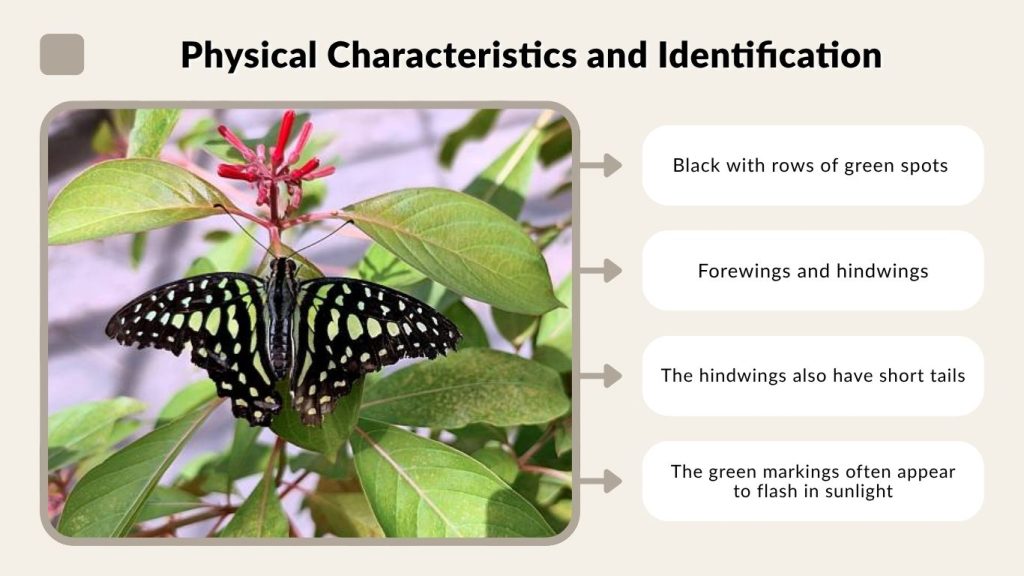
Identifying a tailed jay butterfly is usually easy because of its spotted wings and fast movement. Both adults and caterpillars have unique physical features that separate them from other butterfly species.
Wing Color and Patterns
The butterfly’s wings are mostly black with rows of green spots spread across both the forewings and hindwings. The hindwings also have short tails, which give the species its common name. When flying quickly, the green markings often appear to flash in sunlight.
Male vs Female Tailed Jay Butterfly
| Feature | Male | Female |
| Size | Slightly smaller | Slightly larger |
| Wing Color | Brighter green spots | Slightly duller markings |
| Flight Style | More active | Slower near plants |
| Body Shape | Slimmer | Broader abdomen |
Tailed Jay Butterfly Caterpillar Identification
The caterpillar changes appearance as it grows. Common features include:
- Bright green body color
- Small spines or bumps
- White or yellow markings
- Excellent leaf camouflage
- Curved body posture while resting
Young caterpillars sometimes resemble bird droppings, which helps protect them from predators.
Tailed Jay Butterfly Life Cycle
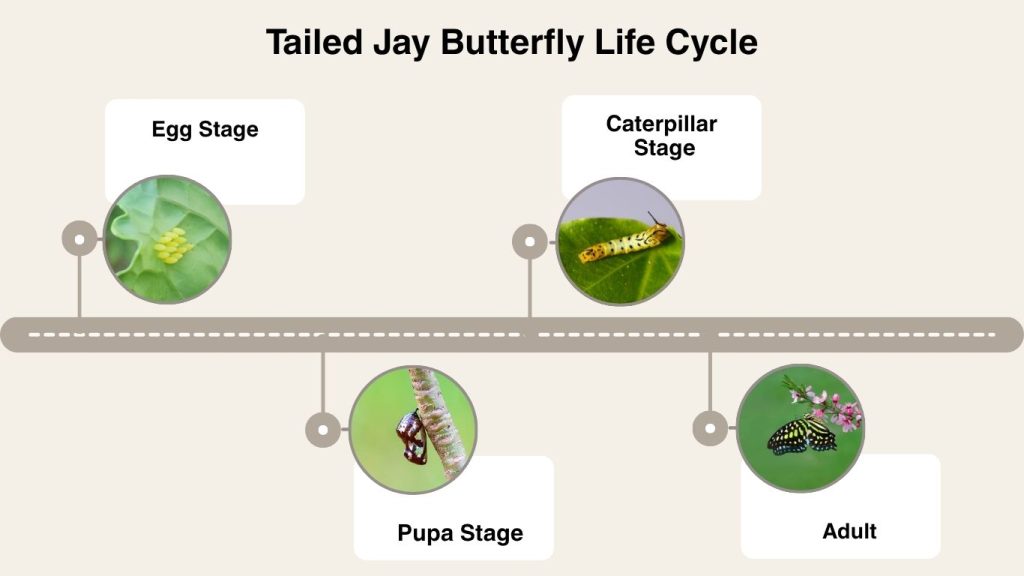
Like all butterflies, the tailed jay goes through complete metamorphosis. Its life cycle includes four major stages: egg, caterpillar, pupa, and adult butterfly.
Egg Stage
Female butterflies lay tiny round eggs on the leaves of host plants. The eggs are usually pale yellow or creamy white and hatch within a few days depending on temperature and humidity.
Caterpillar Stage
After hatching, the caterpillar begins feeding on host plant leaves almost immediately. During this stage, it grows rapidly and sheds its skin several times. The caterpillar spends most of its time eating and hiding among leaves for protection.
Pupa Stage
Once fully grown, the caterpillar forms a chrysalis attached to a stem or leaf. The chrysalis often looks green or brown, helping it blend into nearby vegetation. Inside the pupa, the butterfly slowly develops its wings and adult body structure.
Adult Butterfly Stage
Adult tailed jay butterflies emerge from the chrysalis with soft folded wings. After resting and drying their wings, they begin flying in search of nectar and mates. Adults are highly active and often move quickly between flowers.
Tailed Jay Butterfly Habitat and Range
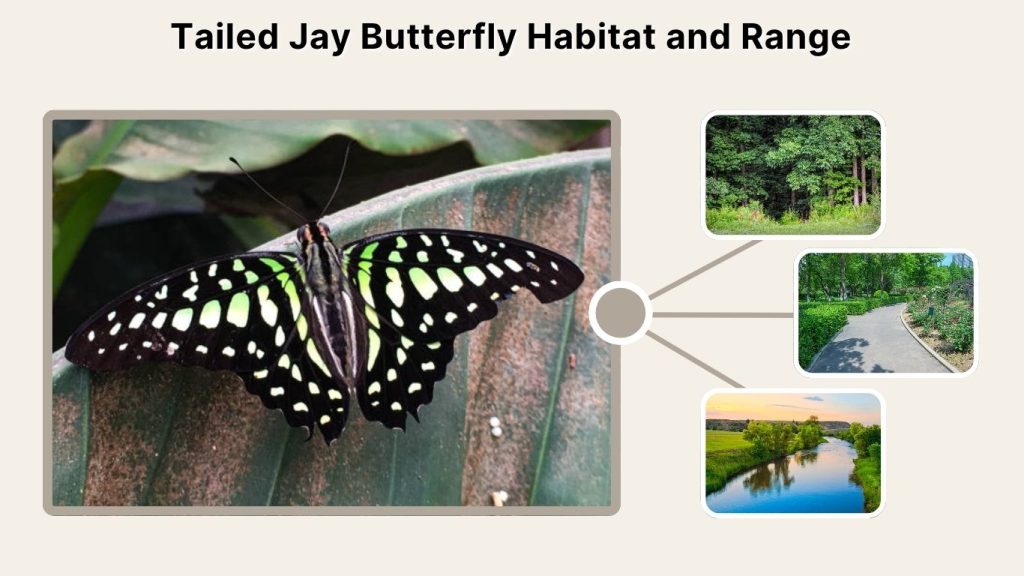
The tailed jay butterfly prefers warm tropical environments with abundant vegetation and flowering plants. It thrives in moist regions where host plants grow naturally.
Natural Habitat
Common habitats include:
- Tropical forests
- Woodland edges
- Public gardens
- Butterfly parks
- Riverbank vegetation
- Moist green landscapes
Geographic Range
The tailed jay butterfly is found across many Asian and tropical regions, including India, Sri Lanka, Thailand, Malaysia, Indonesia, and parts of Australia. It is especially common in warm lowland forests and tropical gardens.
Seasonal Activity
Tailed jay butterflies are most active during warm and humid seasons. Their numbers often increase after rainfall when fresh leaves and flowers become more abundant.
Tailed Jay Butterfly Host Plants
Host plants are essential for the survival of tailed jay caterpillars. Female butterflies carefully choose these plants when laying eggs because the leaves provide food for newly hatched larvae.
Common Host Plants
The caterpillars commonly feed on plants such as:
- Custard apple trees
- Polyalthia species
- Ylang-ylang plants
- Annona species
- Tropical evergreen shrubs
Why Host Plants Matter
Host plants support the butterfly’s entire early life stage. Without suitable leaves, caterpillars cannot survive or complete their development into adult butterflies.
Tailed Jay Butterfly Behavior
The tailed jay butterfly is famous for its energetic behavior and quick flight. Unlike slow-gliding butterflies, this species moves rapidly between flowers and trees, making it difficult to photograph. Its active lifestyle helps it avoid predators and search for food efficiently in tropical habitats.
Fast Flying Behavior
Tailed jay butterflies rarely stay still for long periods. They dart quickly through gardens and forests while searching for nectar-rich flowers. Their strong flight allows them to travel long distances during warm daylight hours.
Feeding Habits
Adult butterflies feed mainly on flower nectar and other sugary liquids. Common feeding sources include:
- Tropical flowers
- Tree sap
- Fruit juices
- Moist soil minerals
- Rotting fruit
Many tailed jay butterflies also gather on wet ground to absorb minerals, a behavior known as mud-puddling.
Defense Mechanisms
The species uses several natural defenses to survive in the wild. Caterpillars blend into leaves using camouflage, while adult butterflies rely on speed and unpredictable flight patterns to escape birds and other predators.
Tailed Jay Butterfly Spiritual Meaning
Butterflies often carry symbolic meanings in different cultures, and the tailed jay butterfly is commonly linked with transformation, positivity, and renewal. Its bright green markings are associated with nature, balance, and fresh beginnings.
Symbol of Transformation
The butterfly life cycle represents personal growth and change. Many people see the tailed jay butterfly as a reminder of transformation, spiritual development, and new opportunities in life.
Meaning of Green Butterfly Colors
Green is often connected with healing, peace, and harmony. The glowing green patterns on the tailed jay butterfly symbolize growth, emotional balance, and connection with nature.
Cultural Butterfly Symbolism
In many traditions, butterflies represent hope and freedom. Seeing a tailed jay butterfly may be viewed as a positive sign connected with happiness or important life changes.
Interesting Tailed Jay Butterfly Facts
The tailed jay butterfly has many fascinating traits that make it popular among butterfly enthusiasts and photographers around the world.
Unique Butterfly Facts
- One of the fastest swallowtail butterflies
- Bright wing spots help with species recognition
- Caterpillars change appearance as they grow
- Frequently seen in tropical gardens
- Strong flyer capable of covering large areas
- Active mainly during daylight hours
Why It Is Popular Among Butterfly Watchers
Its glowing green markings and rapid movement make the tailed jay one of the most eye-catching tropical butterflies. Butterfly parks and nature gardens often attract visitors hoping to photograph this colorful species.
Threats and Conservation
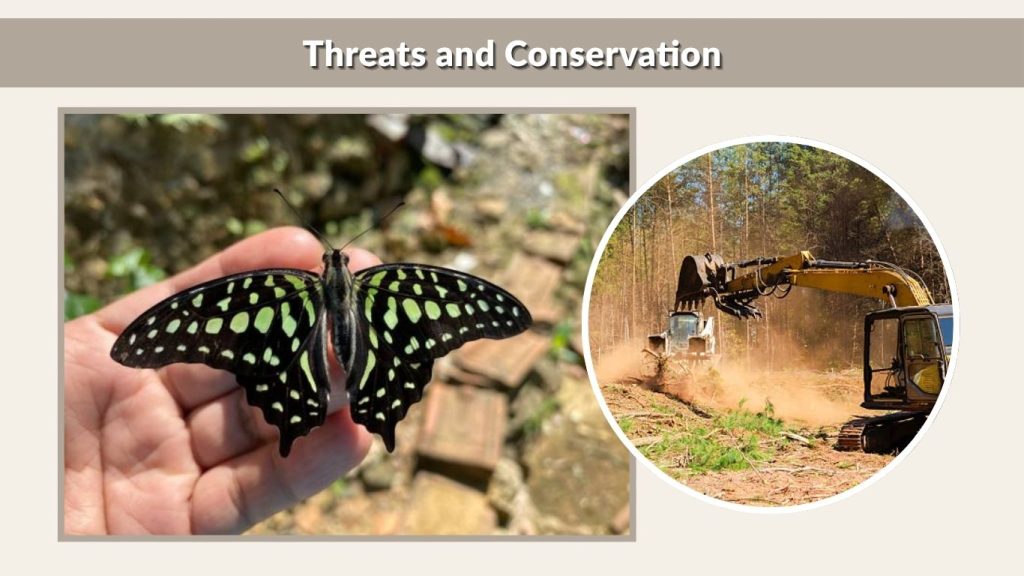
Although the tailed jay butterfly remains common in many regions, environmental changes can still affect local populations. Habitat protection is important for maintaining healthy butterfly numbers.
Habitat Loss
Deforestation and urban expansion reduce the forests and green spaces needed for breeding and feeding. Loss of host plants directly impacts caterpillar survival.
Pesticide Exposure
Chemical pesticides can harm both caterpillars and adult butterflies. Spraying gardens may also reduce nectar plants and food sources needed for healthy butterfly populations.
How People Can Help
People can support butterfly conservation by:
- Planting butterfly-friendly gardens
- Growing native host plants
- Avoiding harmful pesticides
- Protecting local green spaces
- Supporting pollinator conservation projects
Tailed Jay Butterfly Information for Nature Lovers
The tailed jay butterfly is one of the most beautiful tropical swallowtails found in Asia and nearby regions. Its glowing green wing patterns, quick flight, and interesting caterpillar stages make it a favorite species among butterfly enthusiasts. From tropical forests to home gardens, this butterfly continues to play an important role in pollination and natural ecosystems.
FAQs
What is the scientific name of the tailed jay butterfly?
The scientific name of the tailed jay butterfly is Graphium agamemnon, a member of the swallowtail butterfly family.
What do tailed jay butterfly caterpillars eat?
The caterpillars feed mainly on leaves from custard apple trees, Polyalthia plants, and other tropical host plants.
Is the tailed jay butterfly rare?
No, the tailed jay butterfly is fairly common in many tropical regions where suitable host plants and warm climates are available.
Why is the tailed jay butterfly green?
The butterfly’s green markings come from special wing scales that reflect light, creating its bright glowing appearance.
What does the tailed jay butterfly symbolize?
The tailed jay butterfly often symbolizes transformation, growth, hope, renewal, and spiritual change in different cultures.