
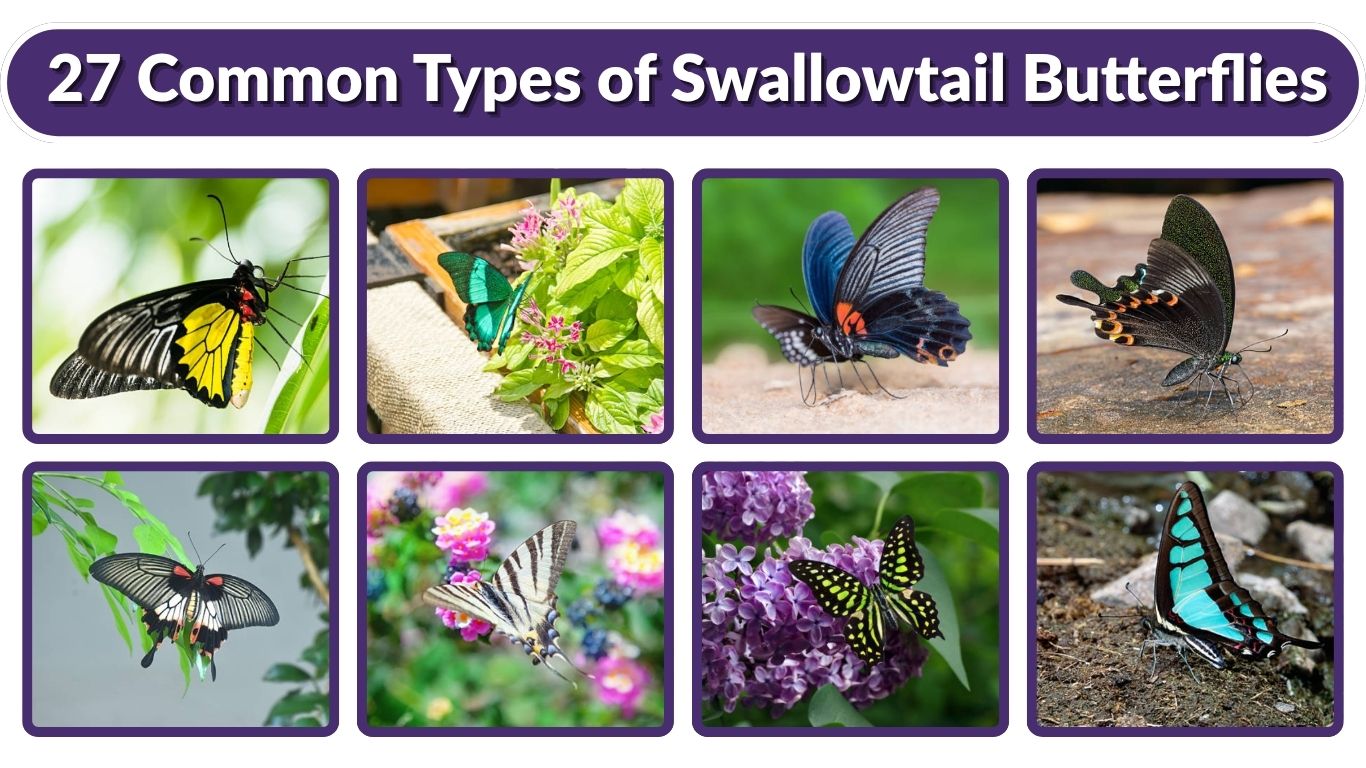
Swallowtail butterflies are among the most beautiful and recognizable butterflies in the world, known for their large size, vibrant colors, and unique tail-like wing extensions. They are found across various habitats, from tropical forests to gardens and grasslands. These butterflies play an important role in pollination and maintaining ecological balance. This guide explores 27 common types of swallowtail butterflies, highlighting their identification, habitat and distribution, behavior and diet, and lifecycle to help you better understand these fascinating insects.
1. Eastern Tiger Swallowtail
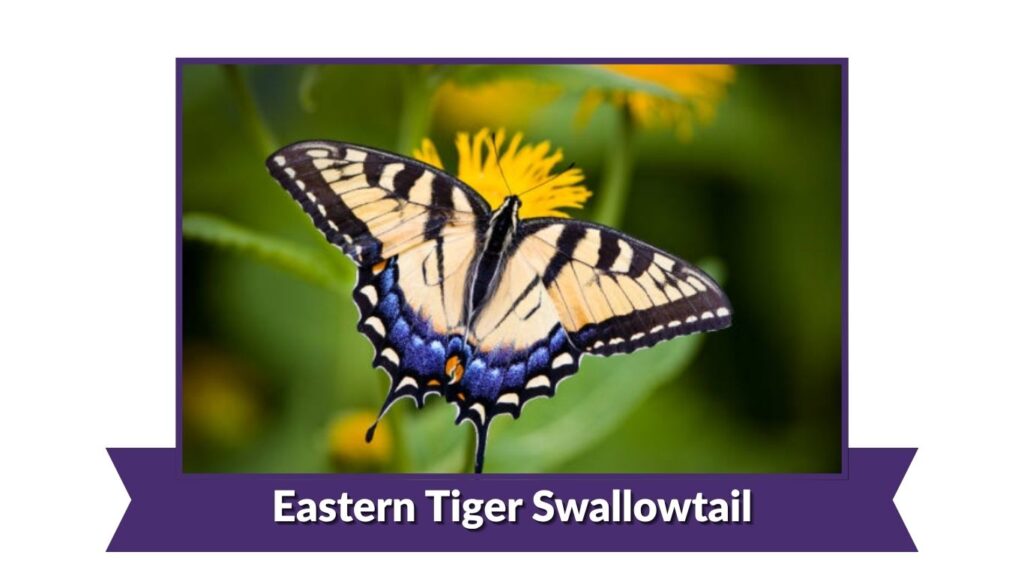
The Eastern tiger swallowtail is one of the most recognizable and widespread butterflies in North America. It is known for its large size and striking yellow and black striped wings. This species is often seen in gardens, forests, and open fields, making it a favorite among butterfly watchers.
Identification
- Large wingspan ranging from 7 to 14 cm
- Bright yellow wings with bold black tiger-like stripes
- Black border along the wing edges
- Blue and orange spots near the hindwings
- Tails extending from the hindwings
Habitat and Distribution
The Eastern tiger swallowtail is found across eastern North America, including the United States and parts of Canada. It lives in a variety of habitats such as deciduous forests, woodlands, gardens, and river valleys. This butterfly prefers areas with plenty of flowering plants and host trees for its caterpillars. It is commonly seen in both rural and suburban environments.
Behavior and Diet
Adult butterflies feed mainly on nectar from flowers such as lilac, milkweed, and wild cherry. They are active during the day and are strong fliers, often gliding between plants. Males are sometimes seen gathering on moist ground to absorb minerals, a behavior known as puddling. Caterpillars feed on leaves of host plants like tulip tree, willow, and birch.
Lifecycle
The lifecycle begins when a female lays eggs on the leaves of host plants. The eggs hatch into caterpillars, which grow and molt several times before forming a chrysalis. Inside the chrysalis, the transformation into an adult butterfly takes place. Depending on the climate, there may be one to three generations per year.
2. Western Tiger Swallowtail
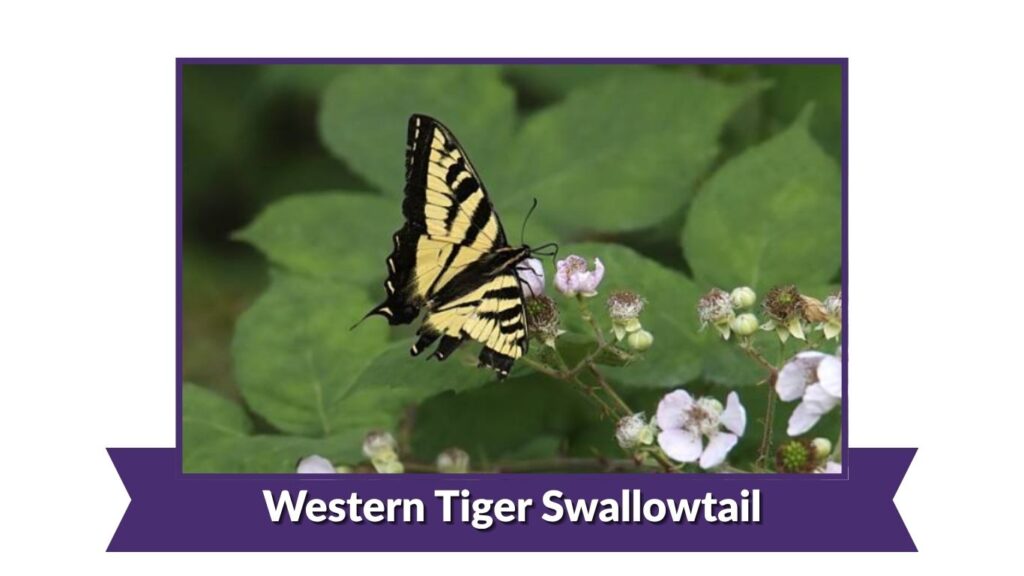
The Western tiger swallowtail is a large and beautiful butterfly found in western North America. It closely resembles the Eastern tiger swallowtail but has some distinct differences in markings. It is commonly seen near rivers, forests, and open areas, where it gracefully flies from flower to flower.
Identification
- Large wingspan ranging from 7 to 10 cm
- Bright yellow wings with bold black stripes
- Narrower black stripes compared to eastern species
- Blue and orange spots on hindwings
- Long tails extending from the hindwings
Habitat and Distribution
The Western tiger swallowtail is found across western North America, from Canada down to Mexico. It prefers habitats such as woodlands, riverbanks, canyons, and gardens. This butterfly is often associated with areas near water, where host plants and nectar sources are abundant. It can also be found in urban parks and suburban landscapes.
Behavior and Diet
Adult butterflies feed on nectar from a variety of flowers, including thistles, lilacs, and wildflowers. They are active during the day and are strong, fast fliers. Males often gather near damp ground or puddles to absorb minerals. Caterpillars feed on leaves of host plants such as willow, cottonwood, and alder trees.
Lifecycle
The lifecycle starts when females lay eggs on host plants. The eggs hatch into caterpillars, which feed and grow through several stages. They eventually form a chrysalis, where they undergo transformation into adult butterflies. Depending on the region, there may be one or two generations each year.
3. Canadian Tiger Swallowtail
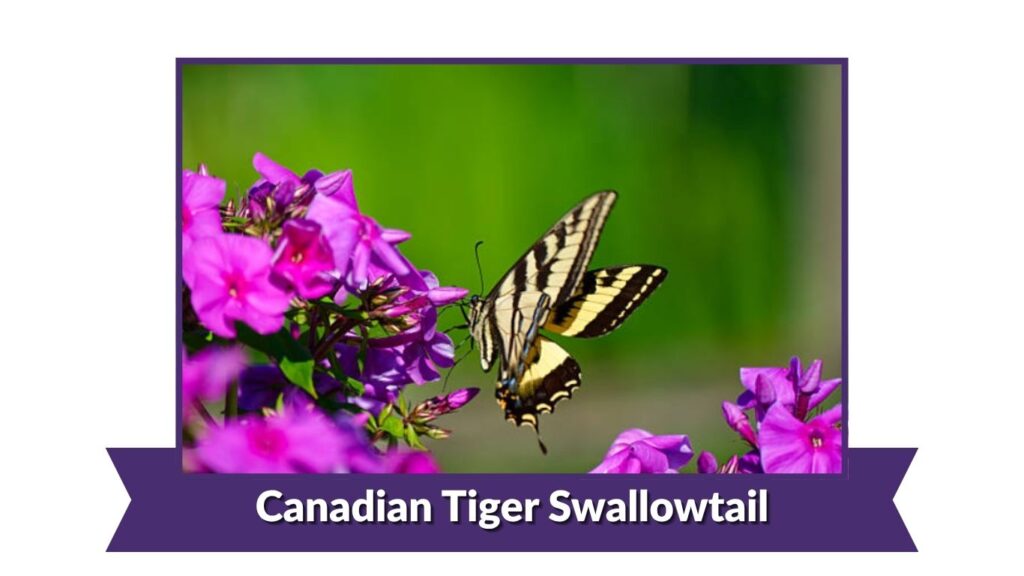
The Canadian tiger swallowtail is a slightly smaller and paler relative of the tiger swallowtail group. It is well adapted to cooler climates and is commonly found in northern regions. This butterfly is known for its graceful flight and preference for forested areas.
Identification
- Wingspan about 6 to 9 cm
- Pale yellow wings with black tiger-like stripes
- Black border along wing edges
- Blue and orange markings on hindwings
- Tails extending from hindwings
Habitat and Distribution
The Canadian tiger swallowtail is found in Canada and the northern United States. It prefers cooler environments such as deciduous and mixed forests, woodland edges, and river valleys. This species is often seen in areas with abundant host plants and flowering vegetation. It thrives in regions where summers are mild and not too hot.
Behavior and Diet
Adult butterflies feed on nectar from flowers such as dandelions, lilacs, and wild berries. They are active during the day and are strong fliers. Males often gather at moist ground to absorb minerals. Caterpillars feed on the leaves of trees like birch, aspen, and cherry.
Lifecycle
The lifecycle begins when eggs are laid on host plants. The caterpillars hatch and go through several growth stages before forming a chrysalis. Inside the chrysalis, the transformation into an adult butterfly takes place. This species usually has one generation per year due to its cooler habitat.
4. Black Swallowtail
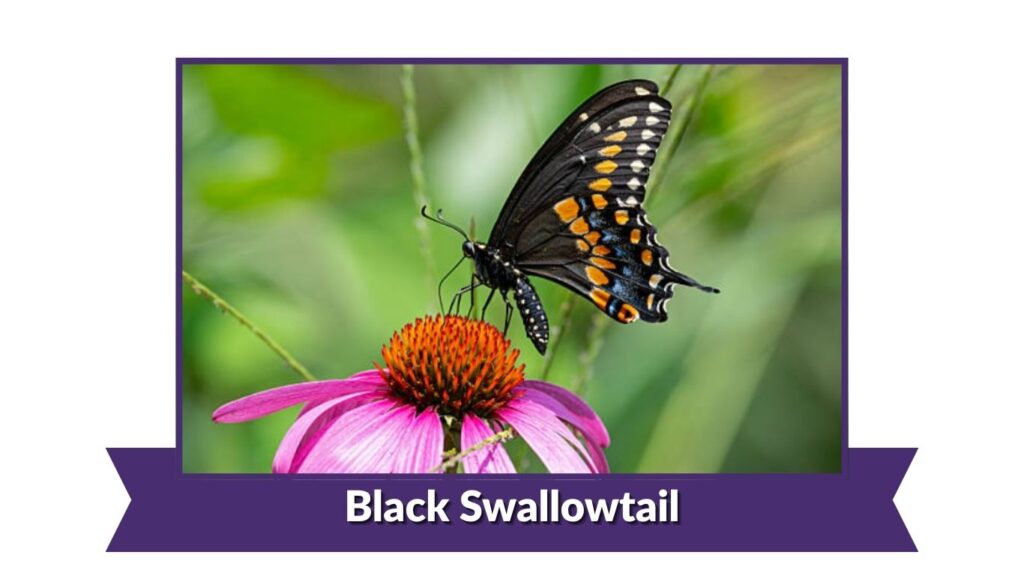
The black swallowtail is a striking butterfly known for its dark wings with bright colorful spots. It is commonly found in gardens and open fields, especially where herbs and flowering plants grow. This species is popular among gardeners because its caterpillars feed on common plants like parsley and dill.
Identification
- Wingspan about 6 to 9 cm
- Black wings with rows of yellow spots
- Blue and orange markings on hindwings
- Distinct tails on hindwings
- Females often show more blue coloration
Habitat and Distribution
The black swallowtail is found across North America, from southern Canada to Mexico. It lives in open areas such as fields, gardens, meadows, and roadsides. This butterfly prefers habitats with plenty of sunlight and flowering plants. It is especially common in areas where host plants like parsley, carrot, and fennel are present.
Behavior and Diet
Adult black swallowtails feed on nectar from flowers such as clover, milkweed, and thistle. They are active during the day and are strong fliers. Males may gather on damp soil to absorb minerals. Caterpillars feed on plants from the carrot family, including parsley, dill, and fennel, making them easy to spot in home gardens.
Lifecycle
The lifecycle begins when females lay eggs on host plants. The caterpillars hatch and go through several stages, changing appearance as they grow. Eventually, they form a chrysalis where transformation occurs. This species can have multiple generations per year, especially in warmer regions.
5. Giant Swallowtail
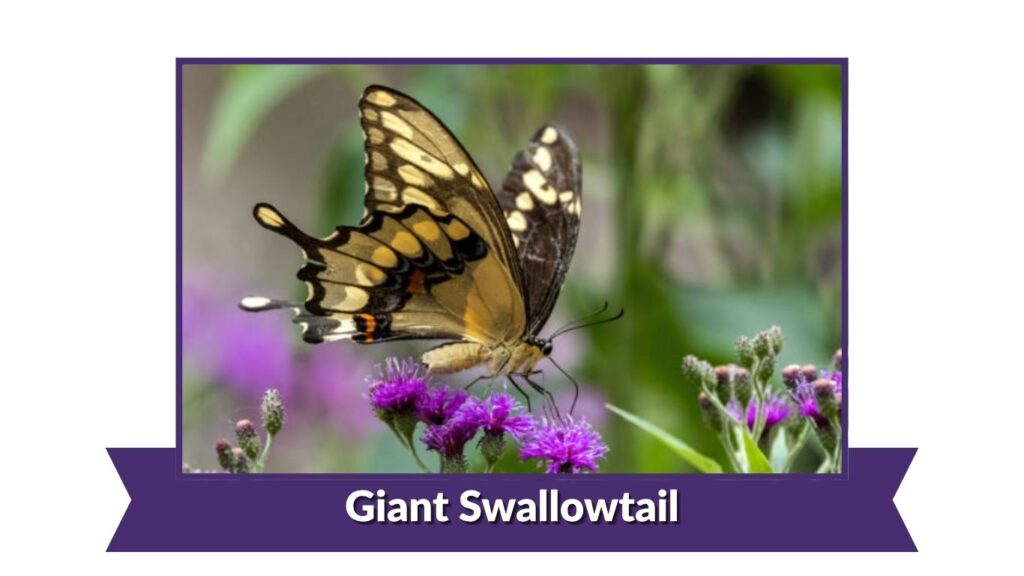
The giant swallowtail is the largest butterfly in North America, known for its bold black and yellow patterns. It has a slow, graceful flight and is often seen in gardens and citrus-growing areas. Its caterpillar is sometimes called the “orange dog” due to its appearance and feeding habits.
Identification
- Wingspan about 10 to 16 cm
- Black wings with striking yellow bands
- Long tails on hindwings
- Yellow spot near the center of wings
- Brown and cream underside
Habitat and Distribution
The giant swallowtail is found in North and Central America, including the southern United States, Mexico, and parts of the Caribbean. It prefers warm regions and is commonly seen in citrus groves, gardens, woodlands, and coastal areas. This butterfly thrives in places where host plants like citrus trees are available.
Behavior and Diet
Adult butterflies feed on nectar from flowers such as lantana, azalea, and bougainvillea. They are active during the day and have a slow, steady flight pattern. Caterpillars feed mainly on leaves of citrus plants, including orange, lemon, and lime trees. Adults may also visit moist areas to absorb minerals.
Lifecycle
The lifecycle begins when eggs are laid on host plants, especially citrus leaves. The caterpillars hatch and go through several stages, often resembling bird droppings for camouflage. They eventually form a chrysalis, where transformation into an adult butterfly occurs. This species can have multiple generations per year in warmer climates.
6. Spicebush Swallowtail
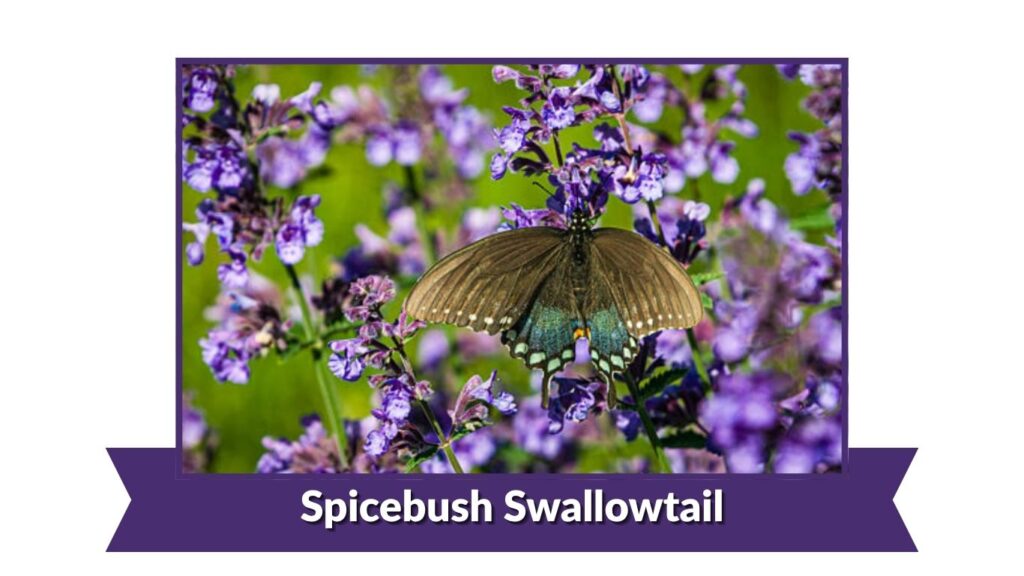
The spicebush swallowtail is a beautiful butterfly known for its dark wings and eye-like spots that help scare predators. It is commonly found in wooded areas and gardens. Its caterpillar is especially unique, resembling a small snake with large false eyes.
Identification
- Wingspan about 7 to 10 cm
- Dark brown or black wings
- Blue or greenish sheen on hindwings
- Distinct orange spots near wing edges
- Tails present on hindwings
Habitat and Distribution
The spicebush swallowtail is found in eastern North America, including the United States and parts of Canada. It prefers habitats such as forests, woodlands, swamps, and gardens. This butterfly is often seen in shaded areas where its host plants grow. It thrives in regions with moist environments and dense vegetation.
Behavior and Diet
Adult butterflies feed on nectar from flowers like honeysuckle, thistle, and azalea. They are active during the day and often stay close to wooded areas. Males may gather on damp ground to absorb minerals. Caterpillars feed mainly on leaves of spicebush and sassafras plants. Their snake-like appearance helps protect them from predators.
Lifecycle
The lifecycle begins when a female lays eggs on host plants. The caterpillars hatch and go through several growth stages, changing appearance as they develop. Eventually, they form a chrysalis, where they transform into adult butterflies. This species usually has two to three generations per year depending on the climate.
7. Pipevine Swallowtail
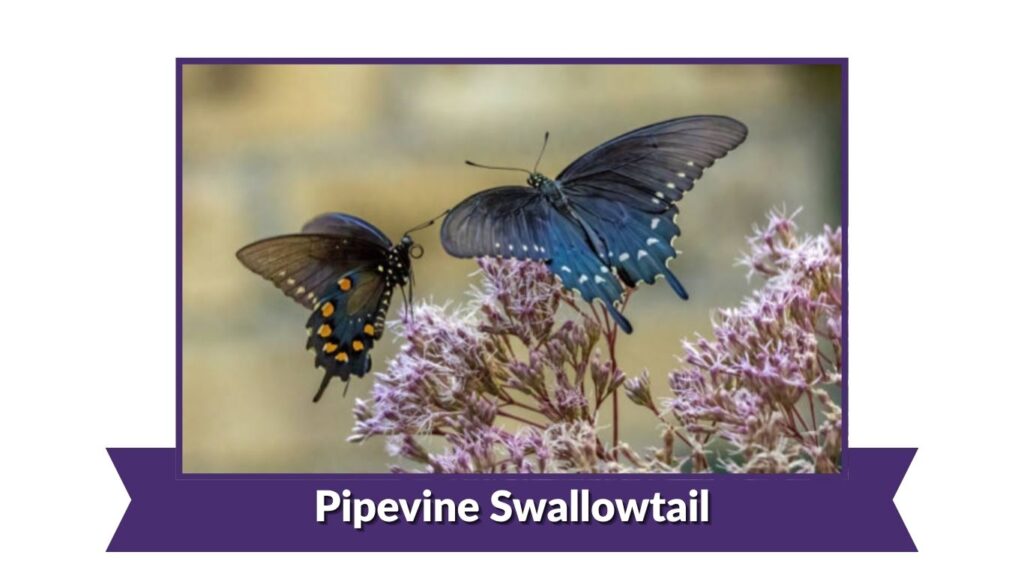
The pipevine swallowtail is a dark-colored butterfly known for its shimmering blue or iridescent hindwings. It is famous for its toxicity, which protects it from predators and makes it a model for mimic species. This butterfly is often seen gliding gracefully through gardens and woodlands.
Identification
- Wingspan about 6 to 10 cm
- Black forewings with metallic blue hindwings
- Iridescent blue or green sheen on lower wings
- Row of bright orange spots underneath hindwings
- Slender body with distinct tails
Habitat and Distribution
The pipevine swallowtail is found in North and Central America, especially in the United States and Mexico. It prefers habitats such as woodlands, gardens, meadows, and areas near streams. This species is closely tied to the presence of pipevine plants, which serve as host plants for its caterpillars. It thrives in warm regions with abundant vegetation.
Behavior and Diet
Adult butterflies feed on nectar from flowers like thistle, lantana, and milkweed. They are active during the day and are known for their smooth, gliding flight. Caterpillars feed exclusively on pipevine plants, which make them toxic to predators. This toxicity carries into adulthood, providing protection. Adults may also gather on moist ground to absorb minerals.
Lifecycle
The lifecycle begins when females lay eggs on pipevine plants. The caterpillars hatch and feed on the leaves, absorbing toxins that help defend them. After growing through several stages, they form a chrysalis. Inside, they undergo transformation into adult butterflies. This species typically has multiple generations per year in warmer climates.
8. Zebra Swallowtail
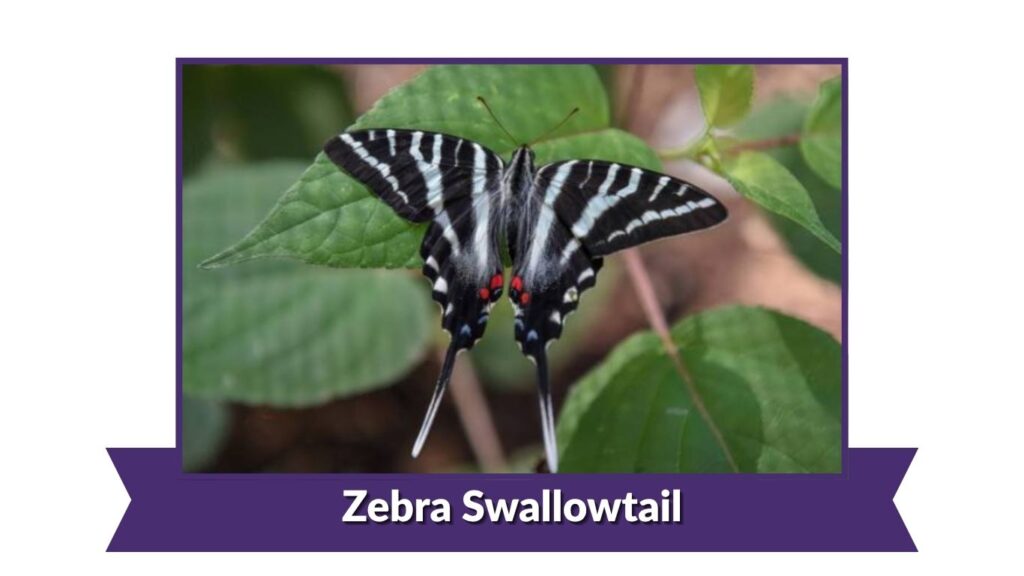
The zebra swallowtail is a distinctive butterfly known for its bold black and white striped pattern, resembling a zebra. It has long, narrow wings and graceful flight. This species is commonly found near rivers and forests, especially where its host plant grows.
Identification
- Wingspan about 6 to 10 cm
- White wings with bold black zebra-like stripes
- Long, narrow tails on hindwings
- Red and blue markings near the body
- Slim and elegant wing shape
Habitat and Distribution
The zebra swallowtail is found in the eastern United States, especially in areas near rivers, swamps, and woodlands. It prefers habitats where pawpaw trees grow, as these are essential for its caterpillars. This butterfly is often seen in moist, shaded environments with plenty of vegetation and water sources.
Behavior and Diet
Adult zebra swallowtails feed on nectar from flowers such as milkweed, verbena, and wildflowers. They are active during the day and have a slow, gliding flight. Males are often seen puddling on damp ground to absorb minerals. Caterpillars feed mainly on the leaves of pawpaw plants.
Lifecycle
The lifecycle begins when females lay eggs on pawpaw leaves. The caterpillars hatch and feed on the plant, going through several stages of growth. They eventually form a chrysalis, where transformation into an adult butterfly occurs. This species can have multiple generations per year in suitable climates.
9. Palamedes Swallowtail
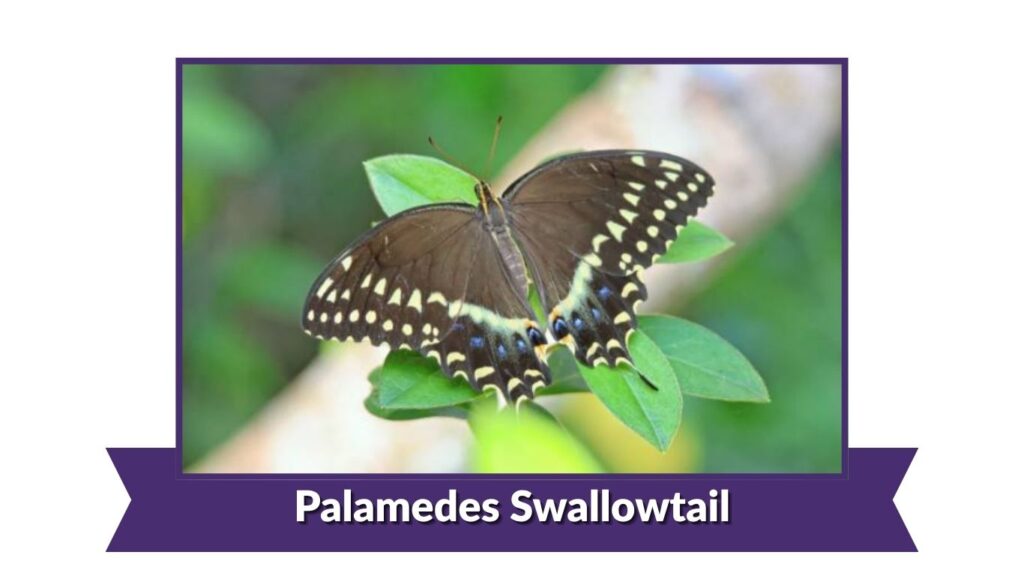
The Palamedes swallowtail is a large and elegant butterfly known for its dark wings marked with yellow spots. It is commonly found in wetland areas and coastal regions. This species is closely associated with swamp habitats and has a smooth, gliding flight.
Identification
- Wingspan about 8 to 13 cm
- Dark brown or black wings with yellow spots
- Yellow bands across both wings
- Blue shading on hindwings
- Tails present on hindwings
Habitat and Distribution
The Palamedes swallowtail is found in the southeastern United States. It prefers swampy areas, wetlands, coastal plains, and forests. This butterfly is often seen near water bodies where host plants like redbay and swamp bay trees grow. It thrives in warm, humid environments with dense vegetation.
Behavior and Diet
Adult butterflies feed on nectar from flowers such as thistle, pickerelweed, and other wetland plants. They are active during the day and have a steady, gliding flight. Males are often seen gathering on moist soil to absorb minerals. Caterpillars feed mainly on leaves of bay trees, especially in swampy habitats.
Lifecycle
The lifecycle begins when females lay eggs on host plants like bay trees. The caterpillars hatch and feed on the leaves, going through several stages of growth. They eventually form a chrysalis, where they transform into adult butterflies. This species usually has multiple generations per year in warm regions.
10. Schaus’ Swallowtail
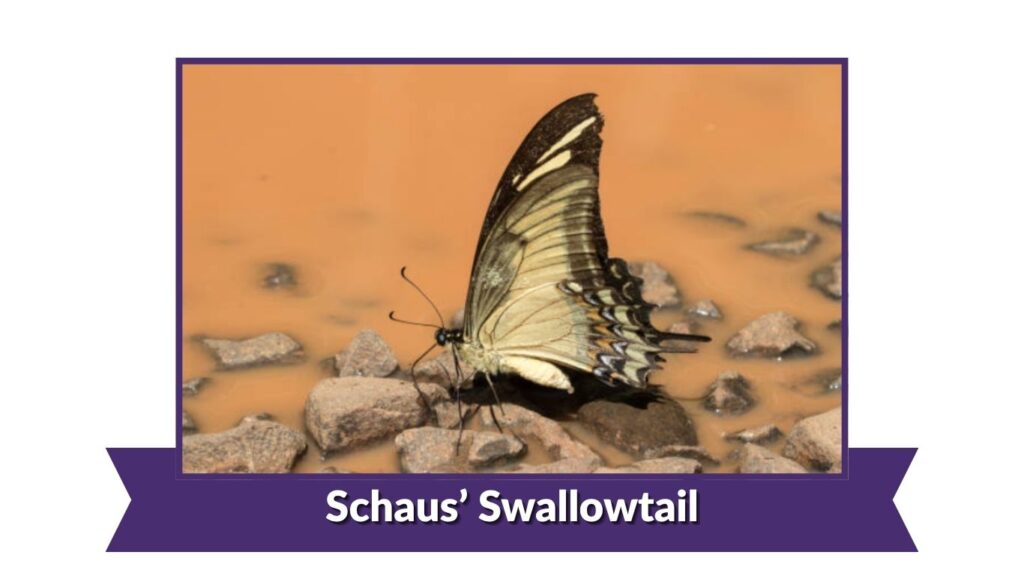
Schaus’ swallowtail is a rare and endangered butterfly known for its soft yellow and brown coloration. It is mainly found in limited areas and is protected due to its declining population. This species is important for conservation efforts and is rarely seen in the wild.
Identification
- Wingspan about 8 to 10 cm
- Pale yellow wings with brown markings
- Light banding across the wings
- Short tails on hindwings
- Soft, muted coloration overall
Habitat and Distribution
Schaus’ swallowtail is found mainly in southern Florida and parts of the Caribbean, especially in the Florida Keys. It prefers tropical hardwood forests and coastal habitats. This butterfly depends on specific host plants found in these regions, making its distribution very limited. Habitat loss has greatly affected its population.
Behavior and Diet
Adult butterflies feed on nectar from flowers found in tropical forests. They are active during the day but are not commonly seen due to their low population. Caterpillars feed on leaves of specific host plants such as wild lime. This species is less active compared to more common swallowtails and prefers shaded environments.
Lifecycle
The lifecycle begins when eggs are laid on host plants. The caterpillars hatch and feed on the leaves, growing through several stages. They eventually form a chrysalis, where transformation into an adult butterfly occurs. Due to its limited range, this species typically has one main breeding cycle per year.
11. Old World Swallowtail
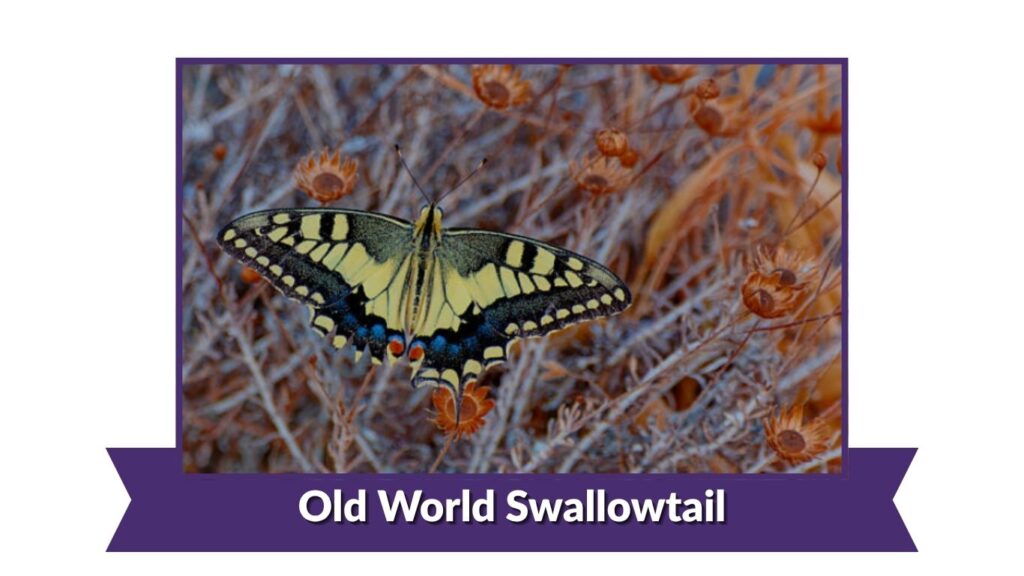
The Old World swallowtail is a widespread and well-known butterfly found across Europe, Asia, and parts of North Africa. It is admired for its bright yellow wings with black patterns and elegant flight. This species is highly adaptable and can live in many different environments.
Identification
- Wingspan about 6 to 9 cm
- Bright yellow wings with bold black markings
- Blue and red spots near the hindwings
- Distinct tails on hindwings
- Black border along the wing edges
Habitat and Distribution
The Old World swallowtail is found across Europe, Asia, and North Africa. It lives in a wide range of habitats including grasslands, meadows, farmlands, mountains, and gardens. This butterfly prefers open areas with plenty of sunlight and flowering plants. It is highly adaptable and can survive in both lowland and high-altitude environments.
Behavior and Diet
Adult butterflies feed on nectar from flowers such as thistle, clover, and wild herbs. They are active during the day and are strong fliers, often seen gliding over open landscapes. Males may gather on damp ground to absorb minerals. Caterpillars feed on plants from the carrot family, including fennel, dill, and wild carrot.
Lifecycle
The lifecycle begins when females lay eggs on host plants. The caterpillars hatch and go through several growth stages before forming a chrysalis. Inside the chrysalis, they transform into adult butterflies. This species can have one to three generations per year depending on the climate.
12. Scarce Swallowtail
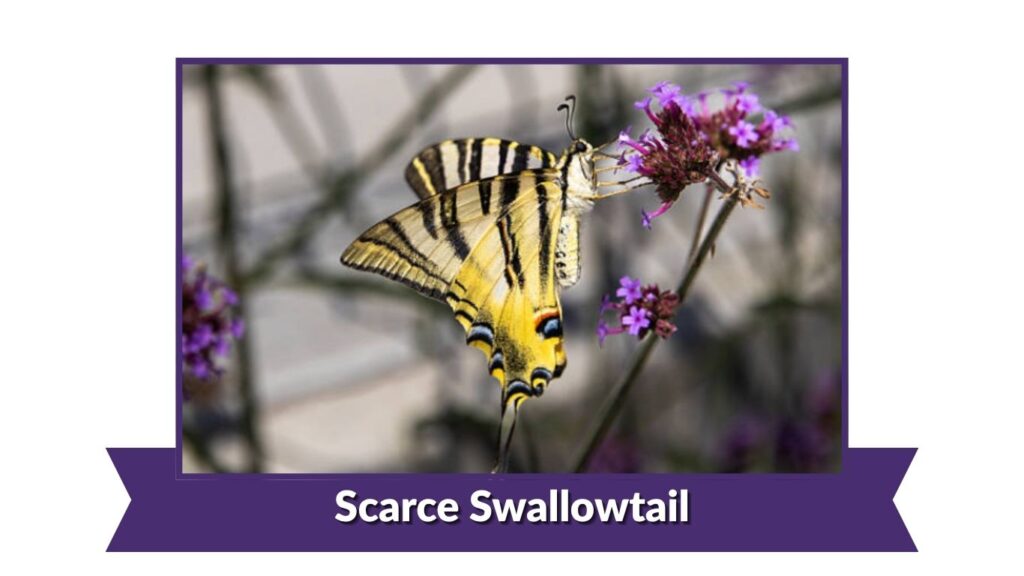
The scarce swallowtail is a graceful butterfly known for its long tails and bold black and white striped pattern. It is similar in appearance to the zebra swallowtail but found in different regions. This species is admired for its elegant flight and striking wing design.
Identification
- Wingspan about 6 to 10 cm
- White wings with bold black stripes
- Very long, narrow tails on hindwings
- Blue markings near the hindwings
- Slender body and elongated wing shape
Habitat and Distribution
The scarce swallowtail is found in parts of Europe, North Africa, and Asia. It prefers warm, dry habitats such as open woodlands, orchards, gardens, and rocky slopes. This butterfly is often seen in areas with flowering plants and host trees like cherry and peach. It thrives in sunny environments with moderate vegetation.
Behavior and Diet
Adult butterflies feed on nectar from flowers such as lavender, thistle, and other wild plants. They are active during the day and are known for their smooth, gliding flight. Males often visit damp ground to absorb minerals. Caterpillars feed mainly on leaves of fruit trees and shrubs.
Lifecycle
The lifecycle begins when eggs are laid on host plants. The caterpillars hatch and go through several stages of growth before forming a chrysalis. Inside the chrysalis, they transform into adult butterflies. This species typically has one to two generations per year depending on the region.
13. Common Yellow Swallowtail
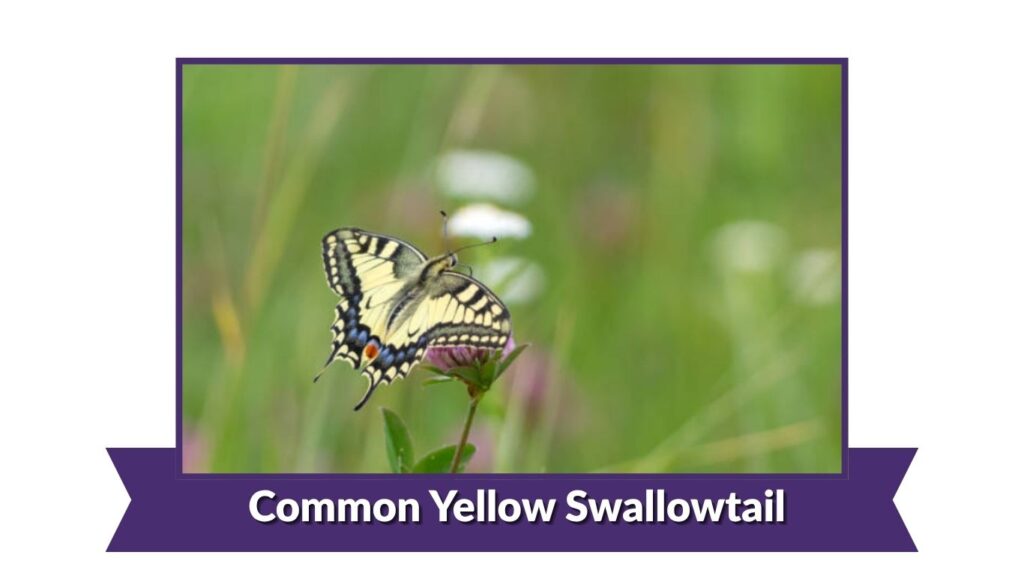
The common yellow swallowtail is a bright and eye-catching butterfly known for its yellow wings and bold black markings. It is often seen in open landscapes and gardens, where it moves gracefully between flowers. This species is admired for its beauty and active daytime behavior.
Identification
- Wingspan about 7 to 10 cm
- Bright yellow wings with black patterns
- Black border along wing edges
- Blue and orange spots on hindwings
- Distinct tails extending from hindwings
Habitat and Distribution
The common yellow swallowtail is found in parts of Asia and nearby regions. It prefers habitats such as gardens, open fields, grasslands, and forest edges. This butterfly thrives in warm climates with abundant flowering plants. It is commonly seen in sunny areas where nectar sources are easily available.
Behavior and Diet
Adult butterflies feed on nectar from flowers such as lantana, marigold, and other garden plants. They are active during the day and are strong fliers. Males may gather on damp soil to absorb minerals. Caterpillars feed mainly on leaves of plants from the citrus and related families.
Lifecycle
The lifecycle begins when a female lays eggs on host plants. The caterpillars hatch and feed on leaves, growing through several stages. They eventually form a chrysalis, where transformation into an adult butterfly takes place. This species can have multiple generations per year in suitable climates.
14. Common Bluebottle
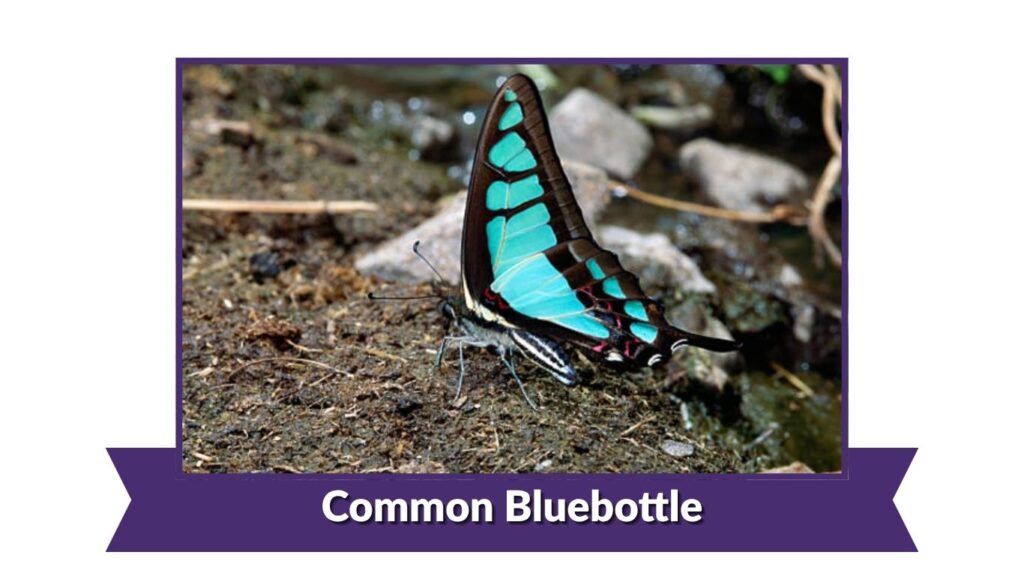
The common bluebottle is a striking swallowtail butterfly known for its bright blue or greenish-blue markings on dark wings. It is commonly seen in tropical regions and is admired for its fast flight and vibrant colors. This species is often found in gardens and forested areas.
Identification
- Wingspan about 9 to 12 cm
- Black wings with bright blue or greenish-blue bands
- Iridescent coloration on hindwings
- Distinct tails on hindwings
- Slender body with smooth appearance
Habitat and Distribution
The common bluebottle is found in South and Southeast Asia, including countries like India, Sri Lanka, and Thailand. It prefers habitats such as forests, gardens, and riverbanks. This butterfly thrives in warm, humid environments with plenty of flowering plants and host trees. It is commonly seen in both rural and urban green spaces.
Behavior and Diet
Adult butterflies feed on nectar from flowers such as lantana, ixora, and jasmine. They are active during the day and are known for their fast and direct flight. Males are often seen puddling on damp ground to absorb minerals. Caterpillars feed mainly on leaves of plants from the laurel family.
Lifecycle
The lifecycle begins when eggs are laid on host plants. The caterpillars hatch and feed on leaves, growing through several stages. They eventually form a chrysalis, where they transform into adult butterflies. This species can have multiple generations per year in warm climates.
15. Common Jay
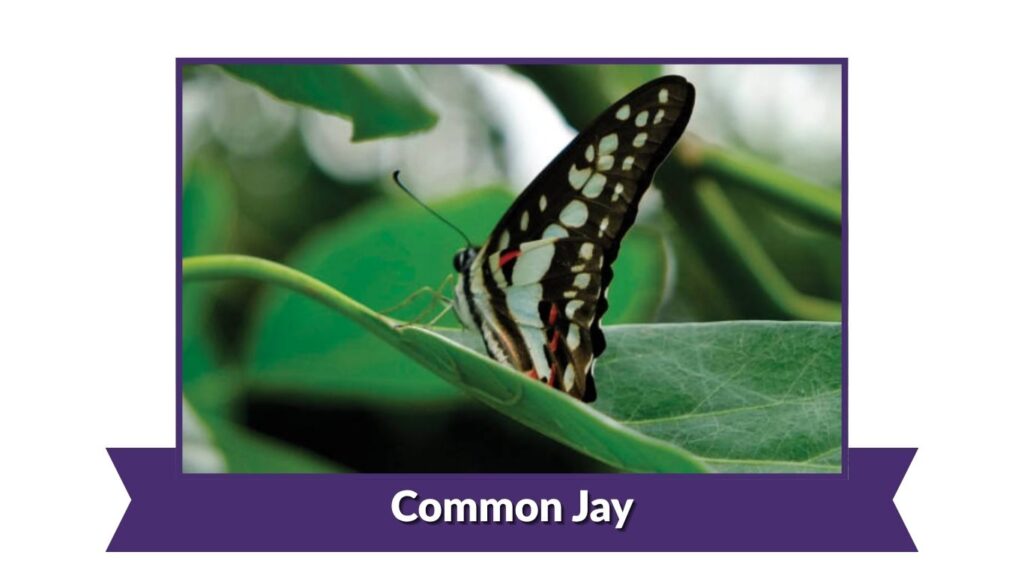
The common jay is a vibrant swallowtail butterfly known for its striking mix of black, green, and blue markings. It is a fast and active flier, often seen moving quickly through gardens and forests. This species is admired for its colorful patterns and energetic behavior.
Identification
- Wingspan about 9 to 12 cm
- Black wings with green or bluish-green spots
- Pattern resembles small patches across the wings
- Distinct tails on hindwings
- Slender body with a smooth appearance
Habitat and Distribution
The common jay is found in South and Southeast Asia, including India, Sri Lanka, and surrounding regions. It lives in forests, gardens, and urban green spaces. This butterfly prefers warm and humid environments with plenty of host plants and flowering vegetation. It is often seen in areas with dense plant growth.
Behavior and Diet
Adult butterflies feed on nectar from flowers such as lantana, jasmine, and ixora. They are active during the day and are known for their fast, restless flight. Males often gather on moist ground to absorb minerals. Caterpillars feed mainly on plants from the laurel family, especially species of Litsea and Cinnamomum.
Lifecycle
The lifecycle begins when females lay eggs on host plants. The caterpillars hatch and feed on leaves, growing through several stages. They eventually form a chrysalis, where transformation into an adult butterfly takes place. This species can have multiple generations per year in suitable climates.
16. Tailed Jay
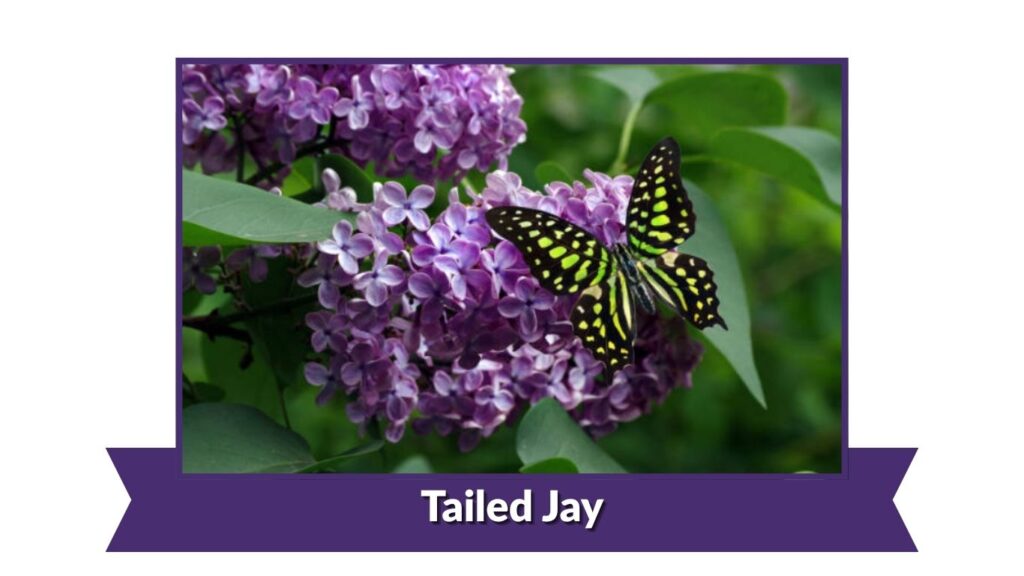
The tailed jay is a colorful and fast-flying swallowtail butterfly known for its bright green spots on dark wings. It is highly active and often seen darting quickly through gardens and forests. This species is admired for its speed, energy, and striking appearance.
Identification
- Wingspan about 9 to 11 cm
- Black wings with bright green or bluish-green spots
- Distinct tails on hindwings
- Pattern of spots arranged in rows
- Slender body with smooth texture
Habitat and Distribution
The tailed jay is found across South and Southeast Asia, including India, Sri Lanka, Malaysia, and Indonesia. It prefers habitats such as tropical forests, gardens, plantations, and urban green areas. This butterfly thrives in warm and humid climates where host plants and nectar sources are abundant.
Behavior and Diet
Adult tailed jays feed on nectar from flowers like lantana, jasmine, and ixora. They are extremely active during the day and are known for their fast, erratic flight. Males often gather on damp soil to absorb minerals. Caterpillars feed mainly on leaves of plants from the laurel family.
Lifecycle
The lifecycle begins when eggs are laid on host plants. The caterpillars hatch and feed on leaves, growing through several stages. They eventually form a chrysalis, where transformation into an adult butterfly occurs. This species can have multiple generations per year in favorable climates.
17. Lime Swallowtail
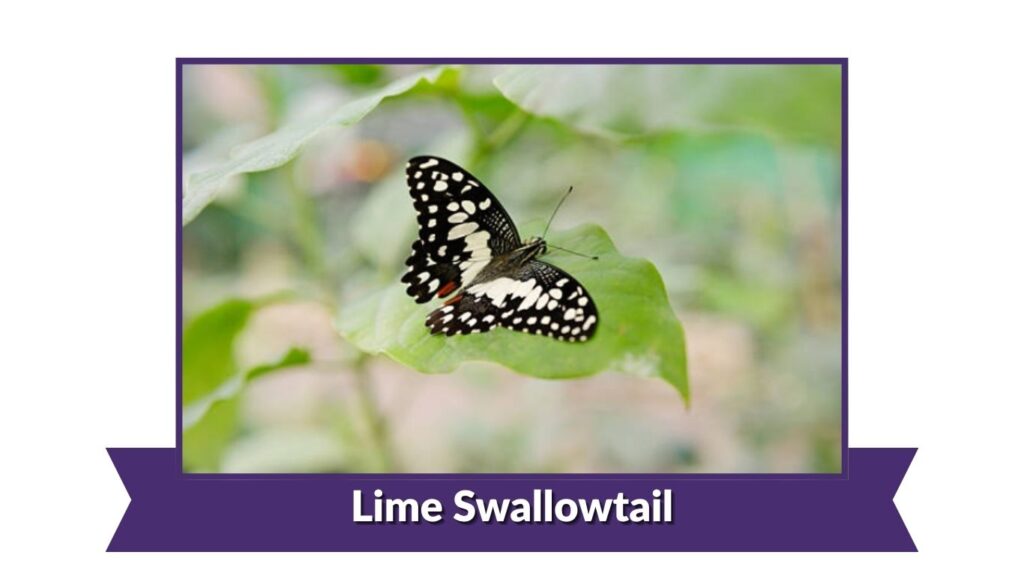
The lime swallowtail is a widely distributed butterfly known for its bold black and white pattern. It is commonly found in gardens and agricultural areas, especially where citrus plants grow. This species is adaptable and often seen in both rural and urban environments.
Identification
- Wingspan about 8 to 10 cm
- Black wings with creamy white patches
- No prominent tails on hindwings (short or absent)
- Red and blue spots near the lower wings
- Strong contrast in wing pattern
Habitat and Distribution
The lime swallowtail is found across Africa, the Middle East, South Asia, and Southeast Asia. It thrives in a wide range of habitats including gardens, farms, forests, and urban areas. This butterfly is especially common in places where citrus plants are grown, as they serve as host plants for its caterpillars.
Behavior and Diet
Adult butterflies feed on nectar from flowers such as jasmine, lantana, and citrus blossoms. They are active during the day and are strong fliers. Caterpillars feed mainly on leaves of citrus plants like lemon, orange, and lime. This makes them sometimes considered pests in citrus farms.
Lifecycle
The lifecycle begins when females lay eggs on citrus plants. The caterpillars hatch and go through several stages, often resembling bird droppings for camouflage. They later form a chrysalis, where they transform into adult butterflies. This species can have multiple generations throughout the year in warm climates.
18. Orchard Swallowtail
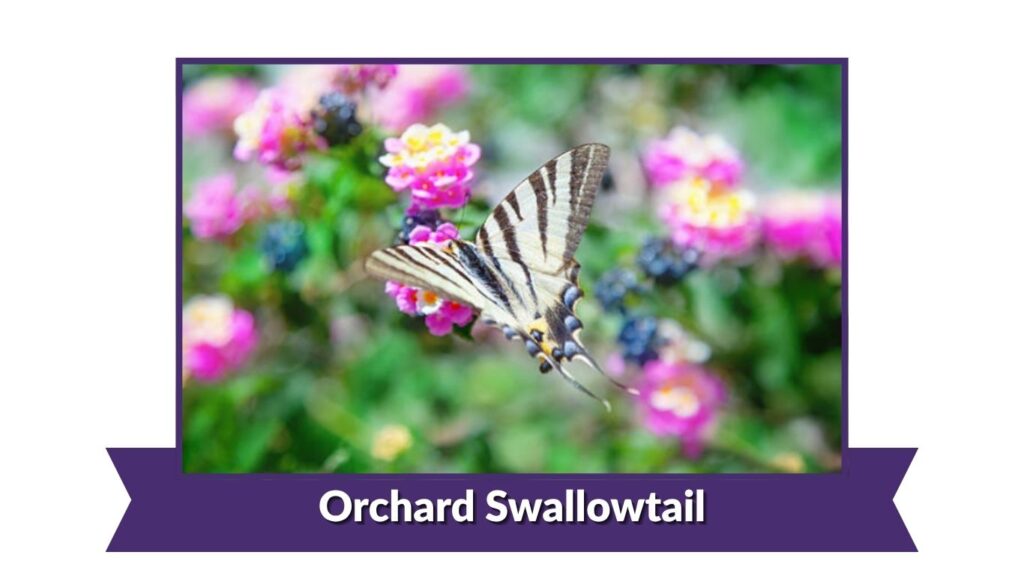
The orchard swallowtail is a large and striking butterfly native to Australia. It is known for its bold black and yellow markings and smooth, gliding flight. This species is often seen in gardens and orchards, especially where citrus plants are present.
Identification
- Wingspan about 12 to 16 cm
- Black wings with large yellow patches
- Blue and red markings near hindwings
- Distinct tails on hindwings
- Strong, broad wing shape
Habitat and Distribution
The orchard swallowtail is found mainly in eastern Australia. It lives in a variety of habitats including gardens, orchards, forests, and urban areas. This butterfly prefers warm climates and areas with plenty of citrus plants, which are important for its caterpillars. It is commonly seen in suburban gardens and agricultural regions.
Behavior and Diet
Adult butterflies feed on nectar from flowers such as citrus blossoms, lantana, and other garden plants. They are active during the day and are known for their steady, gliding flight. Caterpillars feed mainly on leaves of citrus trees like orange and lemon. Adults may also visit damp areas to absorb minerals.
Lifecycle
The lifecycle begins when eggs are laid on citrus leaves. The caterpillars hatch and go through several growth stages, often using camouflage to avoid predators. They eventually form a chrysalis, where transformation into an adult butterfly takes place. This species can have multiple generations per year in warm climates.
19. Red Helen
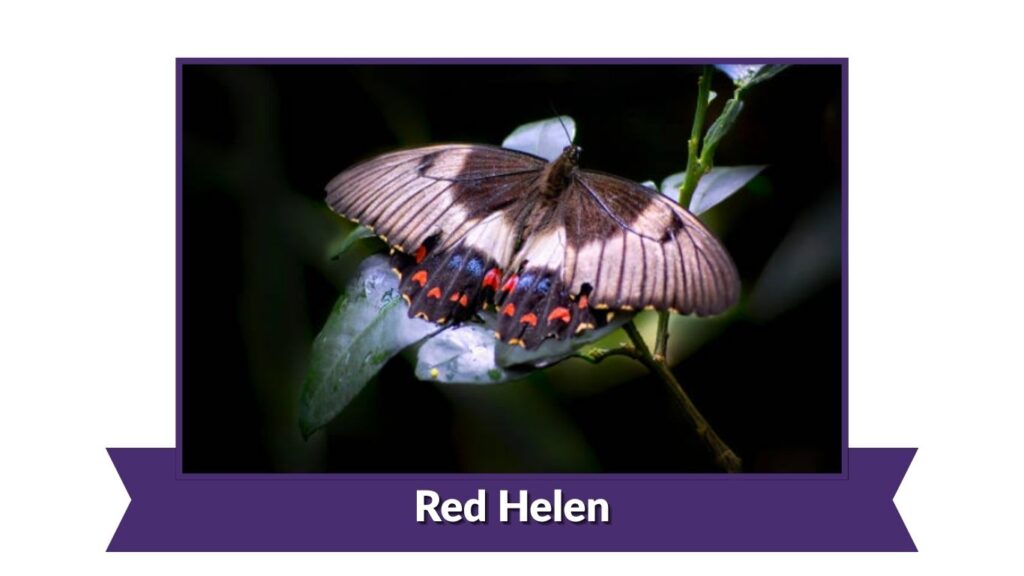
The Red Helen is a large and elegant swallowtail butterfly known for its dark wings and striking red markings. It is commonly found in forested regions and is admired for its graceful flight. This species is often seen in tropical environments where it moves smoothly between flowering plants.
Identification
- Wingspan about 12 to 15 cm
- Black wings with white patches
- Bright red spots on the hindwings
- Distinct tails on hindwings
- Strong and broad wing shape
Habitat and Distribution
The Red Helen is found in South and Southeast Asia, including countries like India, Sri Lanka, and parts of Southeast Asia. It prefers habitats such as tropical forests, gardens, and wooded areas. This butterfly thrives in warm, humid environments with dense vegetation and plenty of flowering plants.
Behavior and Diet
Adult butterflies feed on nectar from flowers such as ixora, lantana, and jasmine. They are active during the day and are known for their smooth and steady flight. Males are sometimes seen gathering on damp ground to absorb minerals. Caterpillars feed mainly on plants from the citrus family.
Lifecycle
The lifecycle begins when females lay eggs on host plants. The caterpillars hatch and feed on leaves, growing through several stages. They eventually form a chrysalis, where transformation into an adult butterfly occurs. This species can have multiple generations per year in suitable climates.
20. Common Mormon
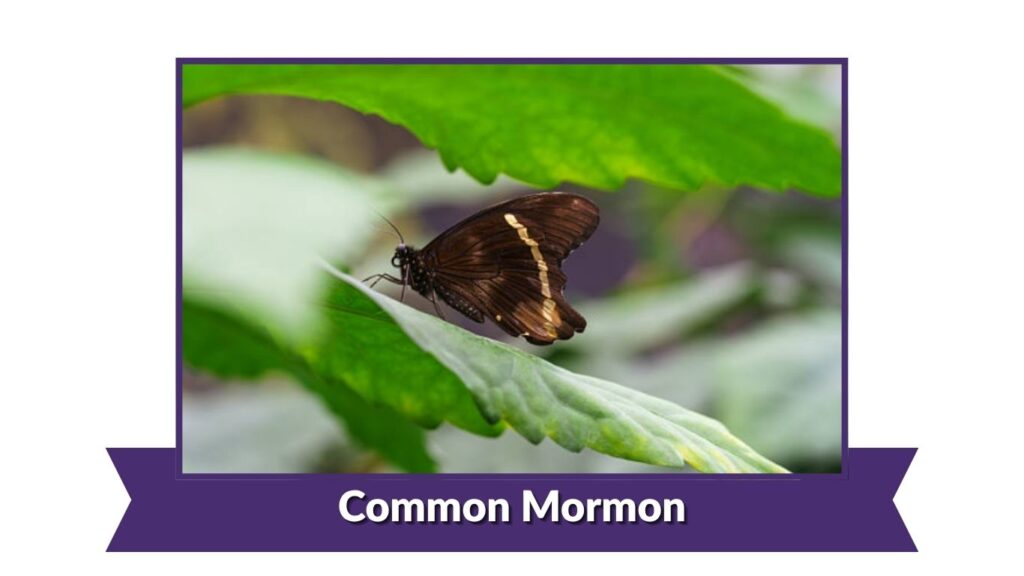
The common Mormon is a highly adaptable swallowtail butterfly known for its variable wing patterns and mimicry. It is especially interesting because females can mimic other toxic butterfly species for protection. This butterfly is commonly seen in gardens and urban areas.
Identification
- Wingspan about 9 to 12 cm
- Males are mostly black with white markings
- Females vary in color and pattern (mimicry forms)
- Distinct tails on hindwings
- Blue or red markings on hindwings
Habitat and Distribution
The common Mormon is found across South and Southeast Asia, including India, Sri Lanka, and surrounding regions. It lives in forests, gardens, urban areas, and farmlands. This butterfly thrives in warm climates and is often seen near human settlements where host plants are available.
Behavior and Diet
Adult butterflies feed on nectar from flowers such as jasmine, ixora, and lantana. They are active during the day and are strong fliers. Caterpillars feed mainly on plants from the citrus family, including orange and lemon trees. Females use mimicry to avoid predators, which is a unique behavior in this species.
Lifecycle
The lifecycle begins when eggs are laid on host plants like citrus. The caterpillars hatch and go through several stages, often resembling bird droppings for camouflage. They eventually form a chrysalis, where they transform into adult butterflies. This species can have multiple generations per year in warm climates.
21. Great Mormon
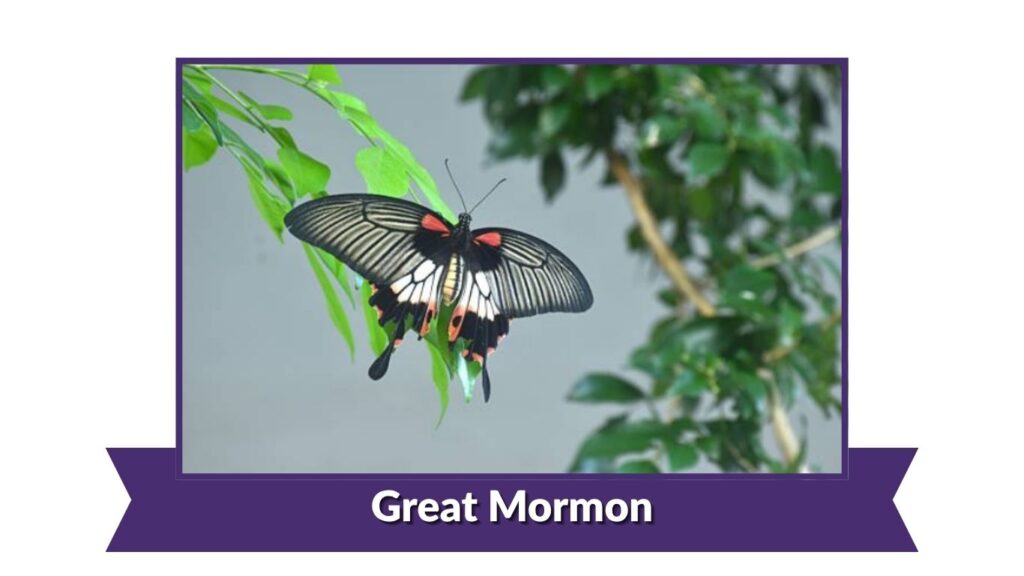
The great Mormon is a large and impressive swallowtail butterfly known for its size and striking wing patterns. It is closely related to the common Mormon but is larger and more vividly marked. This butterfly is often seen in forests and gardens in warm regions.
Identification
- Wingspan about 12 to 15 cm
- Males are mostly black with white patches
- Females show varied patterns with red and white markings
- Distinct tails on hindwings
- Broad wings with bold contrast
Habitat and Distribution
The great Mormon is found in South and Southeast Asia, including India, Sri Lanka, and nearby regions. It prefers habitats such as forests, gardens, and plantations. This butterfly thrives in warm, humid environments with plenty of host plants like citrus trees. It is often seen in areas with dense vegetation and flowering plants.
Behavior and Diet
Adult butterflies feed on nectar from flowers such as ixora, lantana, and jasmine. They are active during the day and are strong fliers. Caterpillars feed mainly on leaves of citrus plants. Like the common Mormon, females may show mimicry to protect themselves from predators.
Lifecycle
The lifecycle begins when females lay eggs on host plants. The caterpillars hatch and feed on leaves, growing through several stages. They eventually form a chrysalis, where they transform into adult butterflies. This species can have multiple generations per year in suitable climates.
22. Paris Peacock
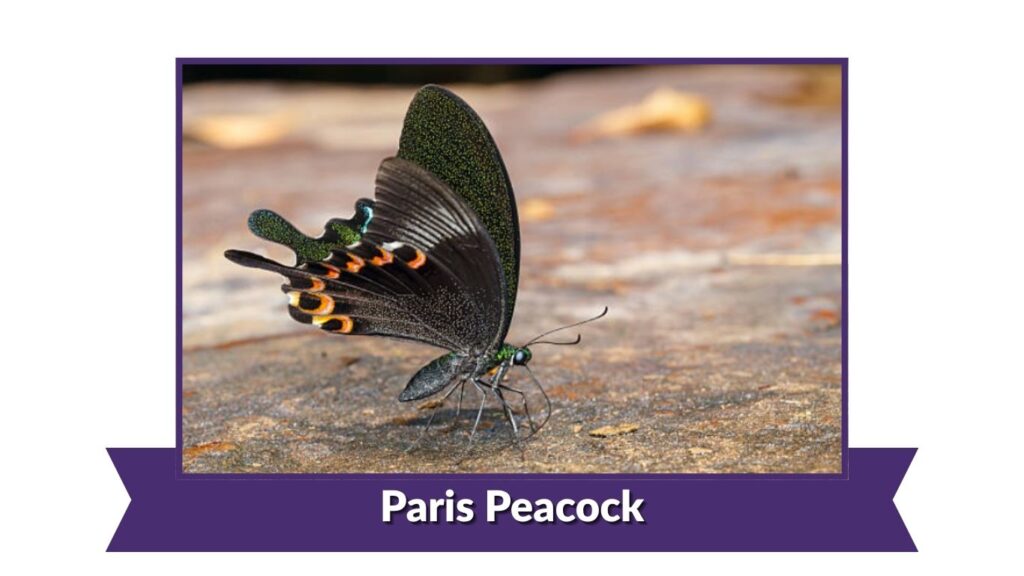
The Paris peacock is a stunning swallowtail butterfly known for its iridescent green and blue coloration. Its shimmering wings make it one of the most beautiful species in its group. It is commonly found in forested regions and is admired for its graceful and smooth flight.
Identification
- Wingspan about 10 to 13 cm
- Dark wings with bright green or blue iridescent patches
- Metallic sheen visible in sunlight
- Distinct tails on hindwings
- Broad wings with smooth edges
Habitat and Distribution
The Paris peacock is found in parts of Asia, including China, India, and Southeast Asia. It prefers forested areas, especially in hills and mountainous regions. This butterfly thrives in warm and humid environments with dense vegetation and plenty of host plants. It is often seen in shaded forest paths and near streams.
Behavior and Diet
Adult butterflies feed on nectar from flowers and sometimes visit damp ground to absorb minerals. They are active during the day and have a smooth, gliding flight. Caterpillars feed mainly on plants from the citrus and related families. This species tends to stay within forested areas rather than open landscapes.
Lifecycle
The lifecycle begins when females lay eggs on host plants. The caterpillars hatch and feed on leaves, growing through several stages. They eventually form a chrysalis, where they transform into adult butterflies. This species can have multiple generations per year depending on the climate.
23. Common Peacock
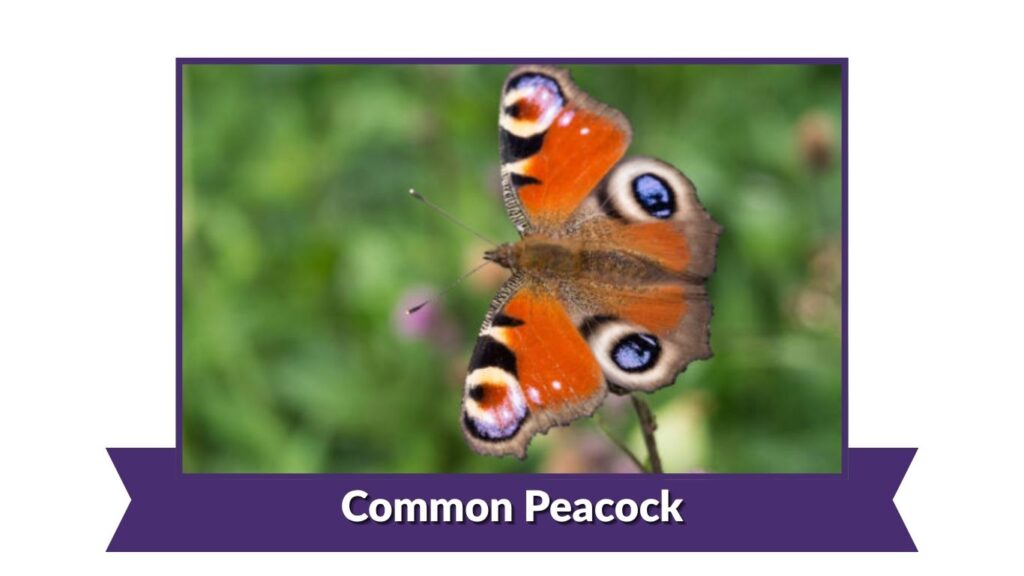
The common peacock is a visually striking swallowtail butterfly known for its colorful and patterned wings. It is often seen in warm regions, especially in forested and garden areas. This butterfly is admired for its elegant appearance and steady flight.
Identification
- Wingspan about 9 to 12 cm
- Dark wings with green or bluish patterns
- Iridescent sheen under sunlight
- Distinct tails on hindwings
- Broad wings with smooth edges
Habitat and Distribution
The common peacock is found in parts of Asia, including India, China, and Southeast Asia. It prefers habitats such as forests, gardens, and hilly regions. This butterfly thrives in warm, humid climates with plenty of vegetation and flowering plants. It is often seen near forest edges and shaded paths.
Behavior and Diet
Adult butterflies feed on nectar from various flowers and may also visit damp ground to absorb minerals. They are active during the day and have a calm, gliding flight. Caterpillars feed mainly on plants from the citrus family. This species is usually found in areas with dense plant growth.
Lifecycle
The lifecycle begins when females lay eggs on host plants. The caterpillars hatch and feed on leaves, growing through several stages. They eventually form a chrysalis, where transformation into an adult butterfly occurs. This species can have multiple generations per year in suitable climates.
24. Fivebar Swordtail
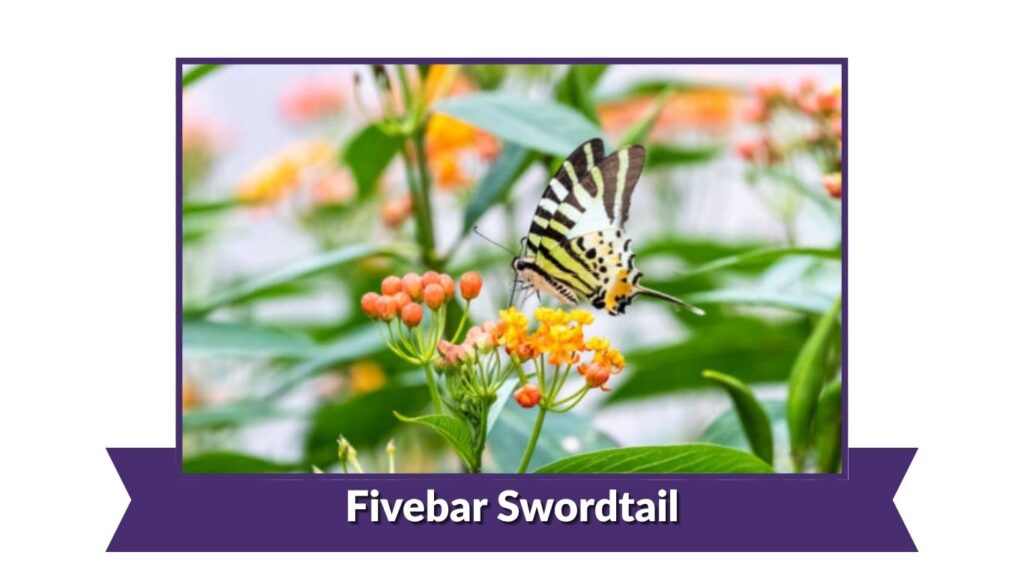
The fivebar swordtail is a unique swallowtail butterfly known for its long, sword-like tails and distinct banded wing pattern. It is a fast and agile flier, often seen in forested areas. This species stands out due to its elegant shape and striking markings.
Identification
- Wingspan about 8 to 11 cm
- Dark wings with five pale bands across them
- Long, sword-like tails on hindwings
- Slender body with elongated wings
- Smooth and slightly glossy appearance
Habitat and Distribution
The fivebar swordtail is found in parts of South and Southeast Asia. It prefers habitats such as tropical forests, wooded hills, and forest edges. This butterfly thrives in warm and humid environments with dense vegetation. It is often seen flying along shaded paths or near streams within forested areas.
Behavior and Diet
Adult butterflies feed on nectar from flowers and are active during the day. They are known for their fast and direct flight, often moving quickly through forested areas. Males may gather on damp ground to absorb minerals. Caterpillars feed mainly on plants from the citrus family and related species.
Lifecycle
The lifecycle begins when females lay eggs on host plants. The caterpillars hatch and feed on leaves, growing through several stages. They eventually form a chrysalis, where they transform into adult butterflies. This species can have multiple generations per year in suitable climates.
25. Blue Mormon
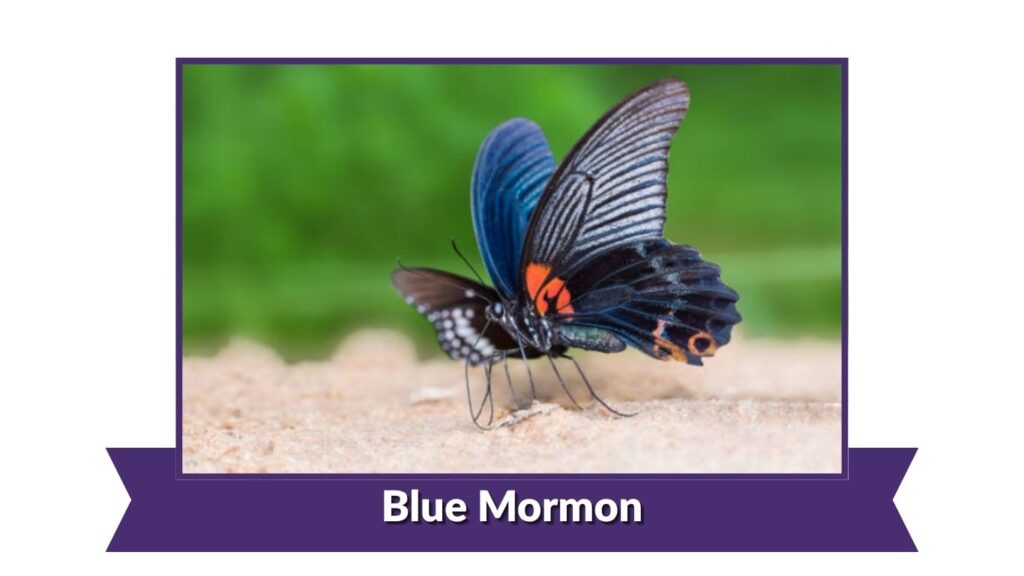
The blue Mormon is a large and striking swallowtail butterfly known for its deep black wings highlighted with bright blue patches. It is commonly found in tropical regions and is admired for its size and smooth, gliding flight. This butterfly is especially popular in gardens and forested areas.
Identification
- Wingspan about 12 to 15 cm
- Black wings with bright blue patches
- Females often larger with more blue markings
- Distinct tails on hindwings
- Broad wings with a smooth texture
Habitat and Distribution
The blue Mormon is found in South and Southeast Asia, including India and Sri Lanka. It prefers habitats such as forests, gardens, plantations, and urban green spaces. This butterfly thrives in warm, humid climates where host plants like citrus are available. It is often seen in areas with abundant flowering plants.
Behavior and Diet
Adult butterflies feed on nectar from flowers such as ixora, jasmine, and lantana. They are active during the day and have a slow, steady flight. Caterpillars feed mainly on citrus plants like orange and lemon trees. Adults may also visit damp ground to absorb minerals.
Lifecycle
The lifecycle begins when females lay eggs on host plants. The caterpillars hatch and feed on leaves, growing through several stages. They eventually form a chrysalis, where transformation into an adult butterfly occurs. This species can have multiple generations per year in warm climates.
26. Green-banded Swallowtail

The green-banded swallowtail is a beautiful butterfly known for its dark wings highlighted by bright green bands. It is commonly found in tropical regions and is admired for its smooth flight and elegant appearance. This species is often seen in forests and gardens.
Identification
- Wingspan about 7 to 10 cm
- Dark wings with bright green bands
- Iridescent green markings visible in sunlight
- Distinct tails on hindwings
- Slender body with smooth texture
Habitat and Distribution
The green-banded swallowtail is found in Central and South America. It prefers tropical rainforests, forest edges, and gardens. This butterfly thrives in warm, humid environments with dense vegetation and plenty of host plants. It is often seen in shaded forest areas and near flowering plants.
Behavior and Diet
Adult butterflies feed on nectar from flowers such as lantana and other tropical plants. They are active during the day and have a smooth, gliding flight. Males may gather on damp ground to absorb minerals. Caterpillars feed mainly on plants from the citrus and related families.
Lifecycle
The lifecycle begins when females lay eggs on host plants. The caterpillars hatch and feed on leaves, growing through several stages. They eventually form a chrysalis, where they transform into adult butterflies. This species can have multiple generations per year in suitable climates.
27. Golden Birdwing
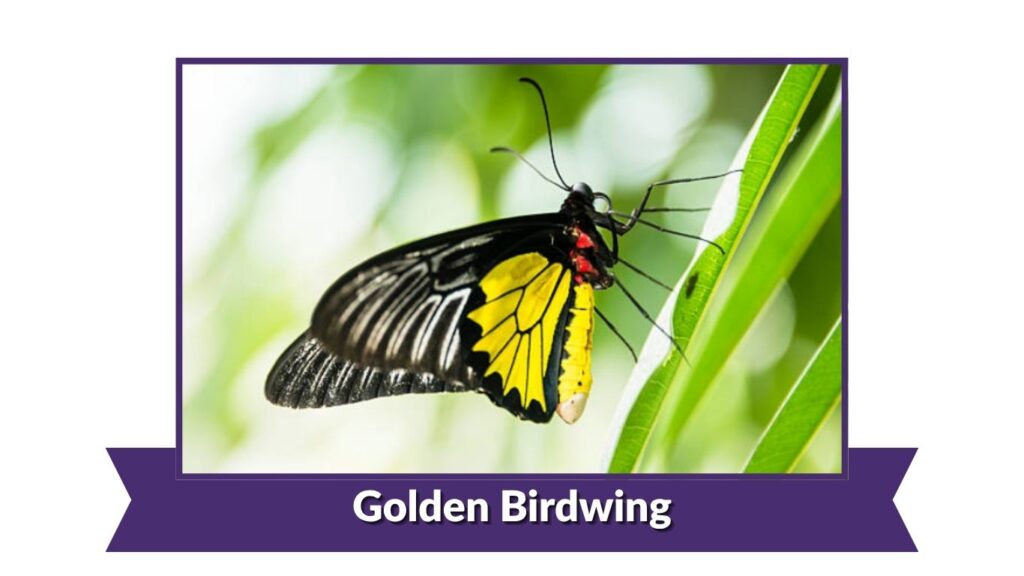
The golden birdwing is one of the largest and most spectacular swallowtail butterflies in the world. It is known for its bright golden-yellow wings and impressive size. This butterfly is often found in tropical forests and is admired for its slow, graceful flight.
Identification
- Wingspan about 15 to 20 cm
- Bright golden-yellow wings with black borders
- Males are more colorful than females
- Females are larger with more muted tones
- Distinct tails on hindwings
Habitat and Distribution
The golden birdwing is found in parts of Southeast Asia, including countries like the Philippines and nearby regions. It prefers tropical rainforests with dense vegetation. This butterfly thrives in warm, humid environments where host plants and nectar sources are abundant. It is usually seen flying high among trees or along forest edges.
Behavior and Diet
Adult butterflies feed on nectar from flowers such as hibiscus and other tropical plants. They are active during the day and have a slow, powerful flight. Caterpillars feed mainly on plants from the Aristolochia family. These butterflies often stay within forested areas and are less commonly seen in open spaces.
Lifecycle
The lifecycle begins when females lay eggs on host plants. The caterpillars hatch and feed on leaves, growing through several stages. They eventually form a chrysalis, where transformation into an adult butterfly takes place. This species usually has multiple generations per year in suitable climates.
FAQs
What are swallowtail butterflies known for?
Swallowtail butterflies are known for their large size, bright colors, and distinctive tail-like extensions on their hindwings. These tails often resemble the shape of a swallow’s tail, which is how they got their name. They are also admired for their graceful flight and striking patterns.
Where are swallowtail butterflies found?
Swallowtail butterflies are found all over the world, except in very cold regions like Antarctica. They live in a wide range of habitats including forests, gardens, grasslands, and tropical areas. Many species prefer warm climates with plenty of flowering plants.
What do swallowtail butterflies eat?
Adult swallowtail butterflies mainly feed on nectar from flowers. Their caterpillars eat leaves from specific host plants, which vary by species. Some common host plants include citrus, parsley, and plants from the laurel or carrot family.
How long do swallowtail butterflies live?
The lifespan of a swallowtail butterfly varies by species and environment. As adults, they usually live for about 1 to 4 weeks. However, their full life cycle—from egg to adult—can take several weeks to a few months depending on conditions.
Are swallowtail butterflies harmful or helpful?
Swallowtail butterflies are generally helpful. Adults assist in pollination, which supports plant growth. While caterpillars may feed on plant leaves, they usually do not cause serious damage. Overall, they play an important role in maintaining healthy ecosystems.