
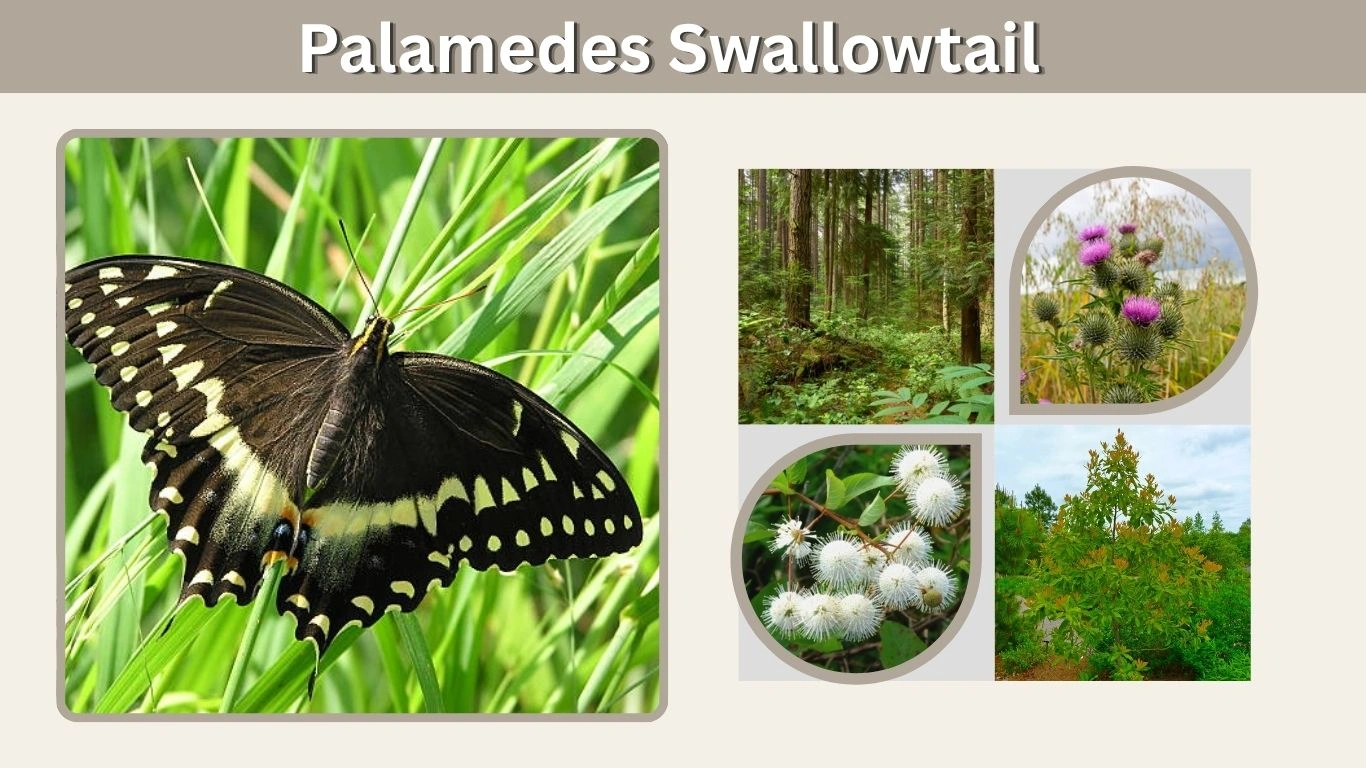
The Palamedes swallowtail is a striking butterfly known for its dark wings, bright yellow markings, and graceful flight through swamps and forested wetlands in the southeastern United States. This large swallowtail butterfly depends heavily on plants in the laurel family, especially redbay and swamp bay trees, for reproduction and caterpillar development. Its caterpillars display impressive camouflage abilities, while adults feed on flower nectar and help pollinate native plants. Learning about the Palamedes swallowtail’s habitat, host plants, life cycle, and behavior reveals why this butterfly is an important part of wetland ecosystems.
What Is a Palamedes Swallowtail?
The Palamedes swallowtail is a large butterfly species belonging to the swallowtail family Papilionidae. Its scientific name is Papilio palamedes, and it is native to the southeastern coastal regions of the United States.
This butterfly is especially associated with swamp habitats and forests where laurel family plants grow naturally. Because of its elegant appearance and strong flight, it is considered one of the most beautiful swallowtail butterflies in North America.
Key Facts About the Palamedes Swallowtail
- Scientific name is Papilio palamedes
- Native to the southeastern United States
- Large black and yellow swallowtail butterfly
- Common in wetland and swamp habitats
- Caterpillars feed mainly on laurel family plants
Why It Is Called a Swallowtail
The butterfly belongs to the swallowtail group because of the tail-like extensions on the hindwings. These wing tails are common among swallowtail butterflies and help distinguish them from many other butterfly species.
The Palamedes swallowtail’s wings also display bright yellow striping that contrasts strongly against its dark background coloration.
What Does a Palamedes Swallowtail Look Like?
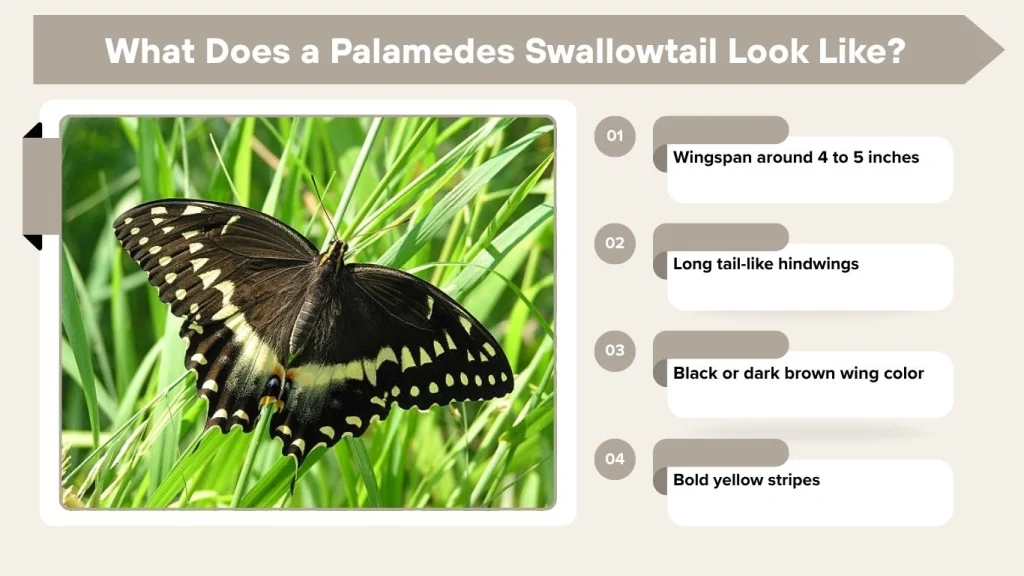
The Palamedes swallowtail has dark brown or black wings marked with bright yellow bands and spots. The underside of the wings contains additional yellow and blue markings that become visible while resting or flying.
Its long wing tails and smooth gliding flight make it easy to recognize in wetland habitats.
Palamedes Swallowtail Size
The Palamedes swallowtail is considered a fairly large butterfly.
Typical size characteristics include:
- Wingspan around 4 to 5 inches
- Long tail-like hindwings
- Broad dark wings
- Bright yellow stripe patterns
Palamedes Swallowtail Identification
Several features help identify this butterfly correctly.
- Black or dark brown wing color
- Bold yellow stripes
- Blue markings near hindwings
- Long swallowtail extensions
- Smooth floating flight style
These traits help separate it from black swallowtails and pipevine swallowtails.
Male vs Female Palamedes Swallowtail
Male and female Palamedes swallowtails look very similar, though females are sometimes slightly larger and more rounded in appearance.
Females spend much of their time searching for suitable host plants where eggs can be laid safely.
Female Palamedes Swallowtail
Female butterflies are responsible for reproduction and host plant selection.
Female behaviors include:
- Laying eggs on host plants
- Searching for healthy leaves
- Avoiding predator-rich areas
- Visiting nectar flowers frequently
Palamedes Swallowtail Male vs Female Differences
Although both sexes share similar coloration, subtle differences may exist:
- Females are often slightly larger
- Males patrol territories more actively
- Females spend more time near host plants
- Males may fly more continuously
These differences are usually subtle and difficult for beginners to notice.
Palamedes Swallowtail Habitat and Range
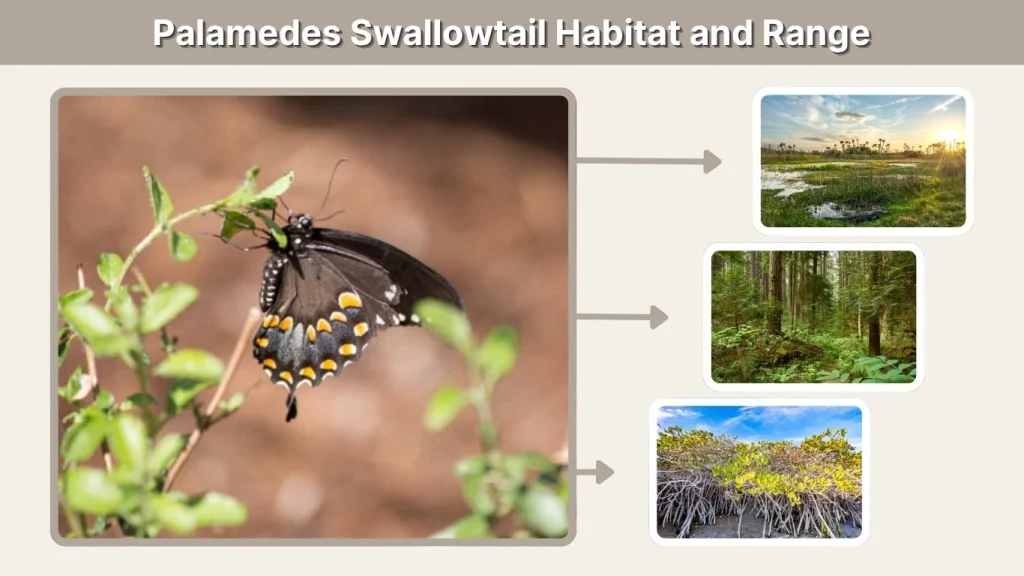
The Palamedes swallowtail lives mainly in warm wet habitats throughout the southeastern United States. Swamps, marshes, bay forests, and coastal woodlands provide ideal conditions because host plants grow naturally in these areas.
The butterfly is strongly tied to wetland ecosystems and is often seen flying along forest edges or near standing water.
Where Palamedes Swallowtails Live
Common habitats include:
- Swamps
- Wet forests
- Coastal plains
- Bay forests
- Marsh edges
Palamedes Swallowtail in Florida
Florida contains large populations of Palamedes swallowtails because of its warm climate and abundant swamp habitats.
The butterfly is especially common in:
- Northern Florida wetlands
- Coastal forests
- Swampy woodland areas
- Laurel-rich habitats
Warm weather allows multiple generations to develop throughout much of the year.
Palamedes Swallowtail Host Plants
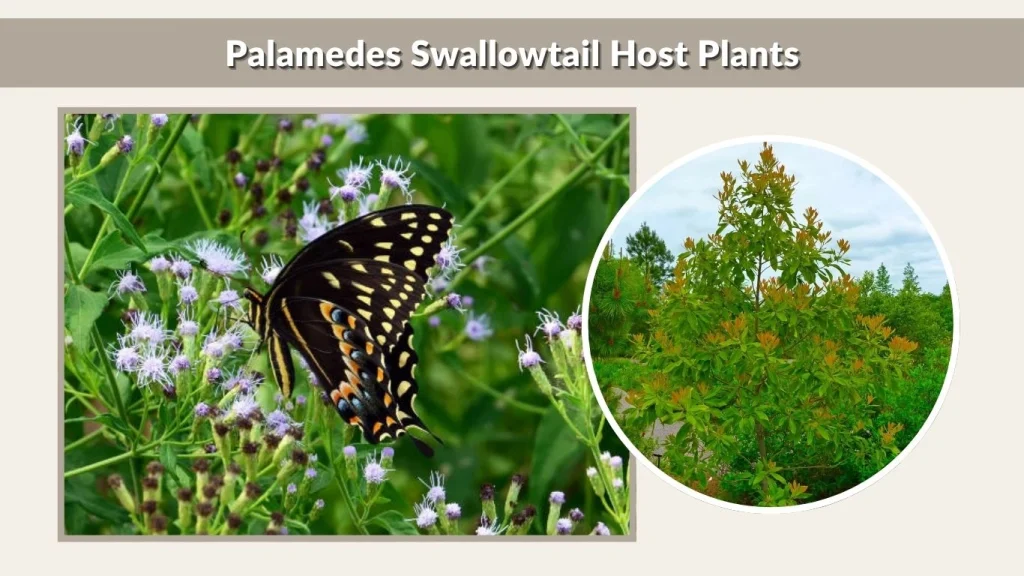
Palamedes swallowtail caterpillars depend heavily on plants in the laurel family. Female butterflies carefully choose these host plants because caterpillars require the leaves for survival and growth.
Without suitable host plants, caterpillars cannot complete development successfully.
Common Palamedes Swallowtail Host Plants
Preferred host plants include:
- Redbay
- Swamp bay
- Sweetbay
- Silk bay
- Other laurel family species
Will Palamedes Swallowtails Lay Eggs on Avocado?
Avocado trees belong to the laurel family, so female Palamedes swallowtails may occasionally lay eggs on avocado leaves. However, caterpillar survival can vary depending on the avocado variety and local growing conditions.
Because avocado trees are related to native laurel plants, they may sometimes support caterpillar feeding successfully.
Palamedes Swallowtail Caterpillar
The Palamedes swallowtail caterpillar changes appearance several times during development. Young caterpillars often resemble bird droppings, which helps camouflage them from predators.
Older caterpillars become greener and blend into leaves more effectively as they mature.
Palamedes Swallowtail Caterpillar Life Cycle
The Palamedes swallowtail undergoes a complete metamorphosis that includes egg, caterpillar, chrysalis, and adult butterfly stages. Each stage plays an important role in the butterfly’s development and survival.
Females carefully place eggs on host plant leaves where newly hatched caterpillars can begin feeding immediately.
Palamedes Swallowtail Egg Stage
Female butterflies lay small eggs individually on leaves rather than in clusters.
Key egg stage facts include:
- Eggs are pale green or yellowish
- Usually laid on host plant leaves
- Hatch within several days
- Caterpillars feed immediately after hatching
Palamedes Swallowtail Chrysalis
After completing the caterpillar stage, the larva forms a chrysalis attached to a branch or plant stem.
The chrysalis provides protection while transformation occurs. Its coloration often blends into nearby vegetation, helping hide it from predators.
Palamedes Swallowtail Larvae Food
Palamedes swallowtail caterpillars feed almost entirely on leaves from laurel family plants. Their specialized diet is one reason the butterfly remains closely connected to swamp and bay forest habitats.
Healthy host plants are essential because caterpillars require large amounts of food during growth.
Common Caterpillar Food Sources
Caterpillars commonly eat:
- Redbay leaves
- Swamp bay foliage
- Sweetbay leaves
- Silk bay plants
- Other laurel species
Caterpillar Defense Mechanisms
Palamedes swallowtail caterpillars possess defensive adaptations that help protect them from predators.
These defenses include:
- Bird-dropping camouflage
- Green leaf-like coloration
- Hiding beneath leaves
- Osmeterium scent organ for defense
The osmeterium is a forked orange organ released when the caterpillar feels threatened.
What Do Palamedes Swallowtails Eat?
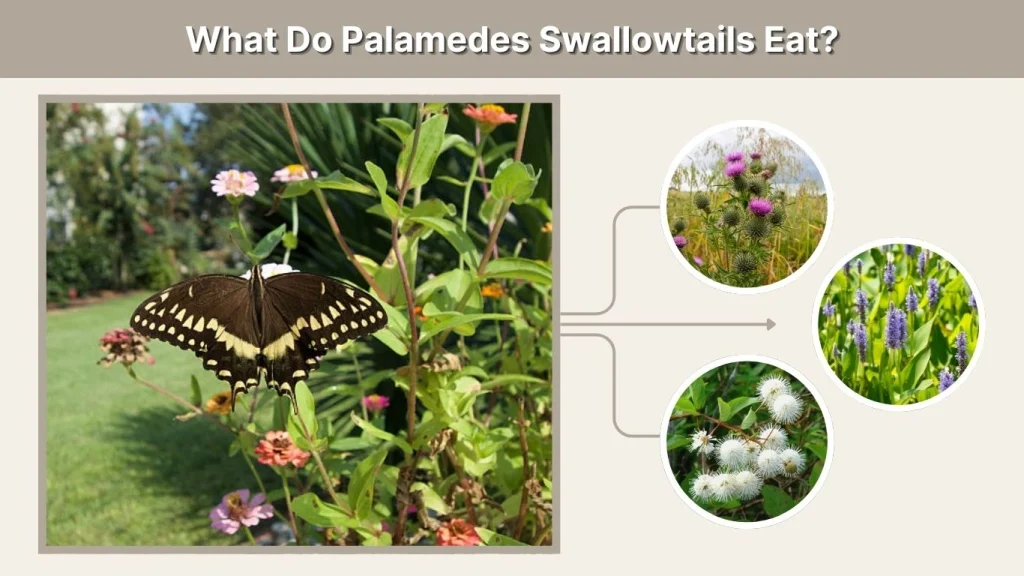
Adult Palamedes swallowtails feed mainly on flower nectar and occasionally obtain minerals from damp soil or puddles. Their long proboscis allows them to drink nectar from a wide range of flowers.
Adults are active pollinators and frequently visit flowering plants throughout wetland ecosystems.
Common Nectar Sources
Adult butterflies commonly feed on:
- Thistles
- Pickerelweed
- Azaleas
- Buttonbush flowers
- Wild swamp flowers
Mud-Puddling Behavior
Male butterflies sometimes gather around wet soil or muddy areas to absorb minerals and salts. This behavior is known as mud-puddling and is common among many butterfly species.
The nutrients collected may support reproduction and overall health.
Are Palamedes Swallowtails Poisonous?
Palamedes swallowtails are not poisonous to humans or pets. They do not bite, sting, or release harmful toxins during adulthood.
However, their dark coloration and bright markings may help discourage predators by resembling other less desirable insects.
Why Predators Avoid Them
Several factors help protect Palamedes swallowtails:
- Fast flight
- Camouflage during caterpillar stages
- Large wing size
- Sudden erratic movement
Caterpillar Chemical Defenses
Caterpillars feeding on laurel plants may absorb mild plant chemicals that help make them less appealing to predators.
The defensive osmeterium also produces unpleasant odors when disturbed.
Palamedes Swallowtail vs Black Swallowtail
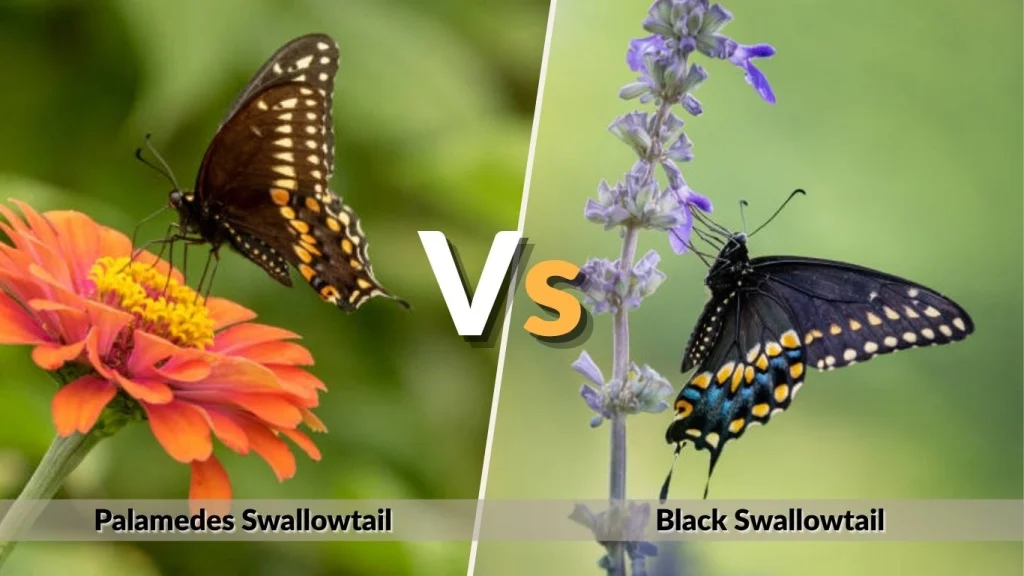
The Palamedes swallowtail is often confused with the black swallowtail because both butterflies display dark wings and yellow markings. However, important differences help separate the two species.
The Palamedes swallowtail is usually larger and more strongly associated with swamp habitats and laurel host plants.
Main Differences Between the Two Butterflies
| Feature | Palamedes Swallowtail | Black Swallowtail |
| Main Habitat | Wetlands and swamps | Fields and gardens |
| Host Plants | Laurel family | Parsley family |
| Wing Markings | Broad yellow stripes | Smaller yellow spots |
| Range | Southeastern wetlands | Widespread North America |
| Flight Style | Smooth gliding | Faster fluttering |
Palamedes vs Pipevine Swallowtail
Some people also confuse the Palamedes swallowtail with the pipevine swallowtail because both have dark wings and blue markings.
However:
- Pipevine swallowtails show stronger blue iridescence
- Palamedes swallowtails display bold yellow stripes
- Host plants are completely different
These details help butterfly watchers identify the species correctly.
Palamedes Swallowtail Lifespan and Behavior
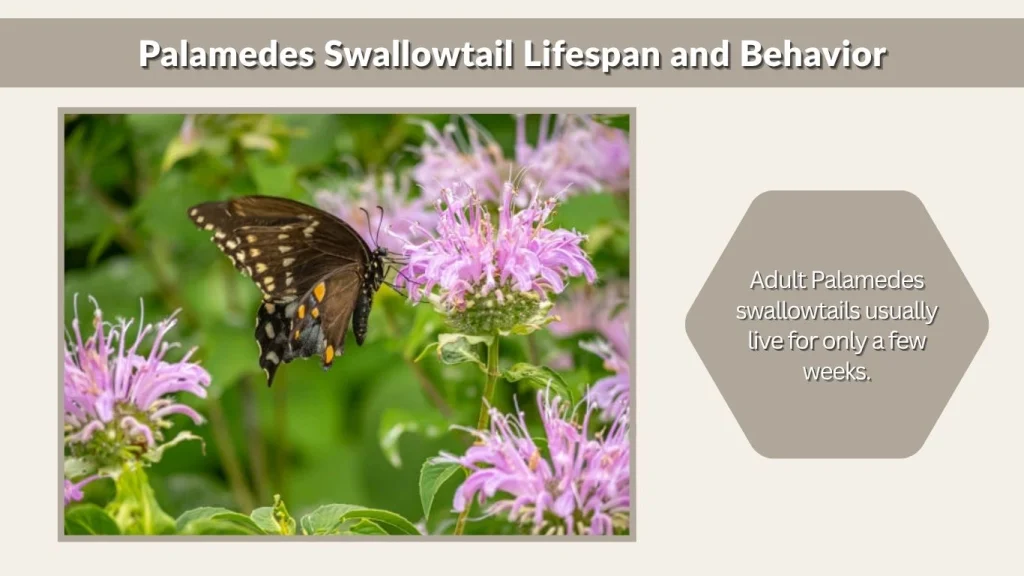
Adult Palamedes swallowtails usually live for only a few weeks, though the complete life cycle may last several months depending on weather and seasonal conditions.
Warm climates allow multiple generations to develop each year.
Palamedes Swallowtail Butterfly Lifespan
Typical life stages include:
- Egg stage lasting several days
- Caterpillar stage lasting weeks
- Chrysalis stage lasting days or months
- Adult lifespan of several weeks
Flight and Courtship Behavior
Adult butterflies are strong flyers and often glide smoothly through forests and wetland edges.
Common behaviors include:
- Visiting flowers for nectar
- Patrolling territories
- Searching for host plants
- Avoiding predators through rapid flight
Their graceful movement makes them especially popular among butterfly watchers and photographers.
Interesting Palamedes Swallowtail Facts
The Palamedes swallowtail possesses several unique characteristics that make it one of the most fascinating butterflies in southeastern wetlands.
Fascinating Palamedes Swallowtail Facts
- It relies heavily on laurel family plants
- Caterpillars resemble bird droppings when young
- Adults are strong gliding flyers
- Wetland habitats are essential for survival
- Multiple generations may appear yearly
Why the Species Faces Challenges
Habitat destruction and diseases affecting redbay trees threaten some Palamedes swallowtail populations. Loss of host plants directly impacts caterpillar survival and butterfly reproduction.
Protecting wetlands and native laurel plants helps support healthy populations of this beautiful butterfly.
FAQs
What plants do Palamedes swallowtail caterpillars eat?
Palamedes swallowtail caterpillars mainly feed on plants in the laurel family, including redbay, swamp bay, sweetbay, and silk bay. These host plants are essential for caterpillar growth and successful butterfly development.
Are Palamedes swallowtails rare?
Palamedes swallowtails are not considered extremely rare, but they are strongly tied to wetland habitats in the southeastern United States. Habitat loss and diseases affecting redbay trees can reduce local butterfly populations.
Can Palamedes swallowtails lay eggs on avocado trees?
Yes, Palamedes swallowtails may sometimes lay eggs on avocado trees because avocados belong to the laurel family. Caterpillars can occasionally feed on avocado leaves, though success may vary depending on conditions and plant variety.
How do you identify a Palamedes swallowtail butterfly?
The Palamedes swallowtail has dark brown or black wings marked with bright yellow stripes and spots. It also has long swallowtail extensions and smooth gliding flight patterns commonly seen in wetland habitats.
Are Palamedes swallowtails beneficial?
Yes, Palamedes swallowtails are beneficial pollinators that help support healthy ecosystems by visiting flowers and spreading pollen. Their caterpillars also contribute to natural food chains within wetland and forest habitats.