
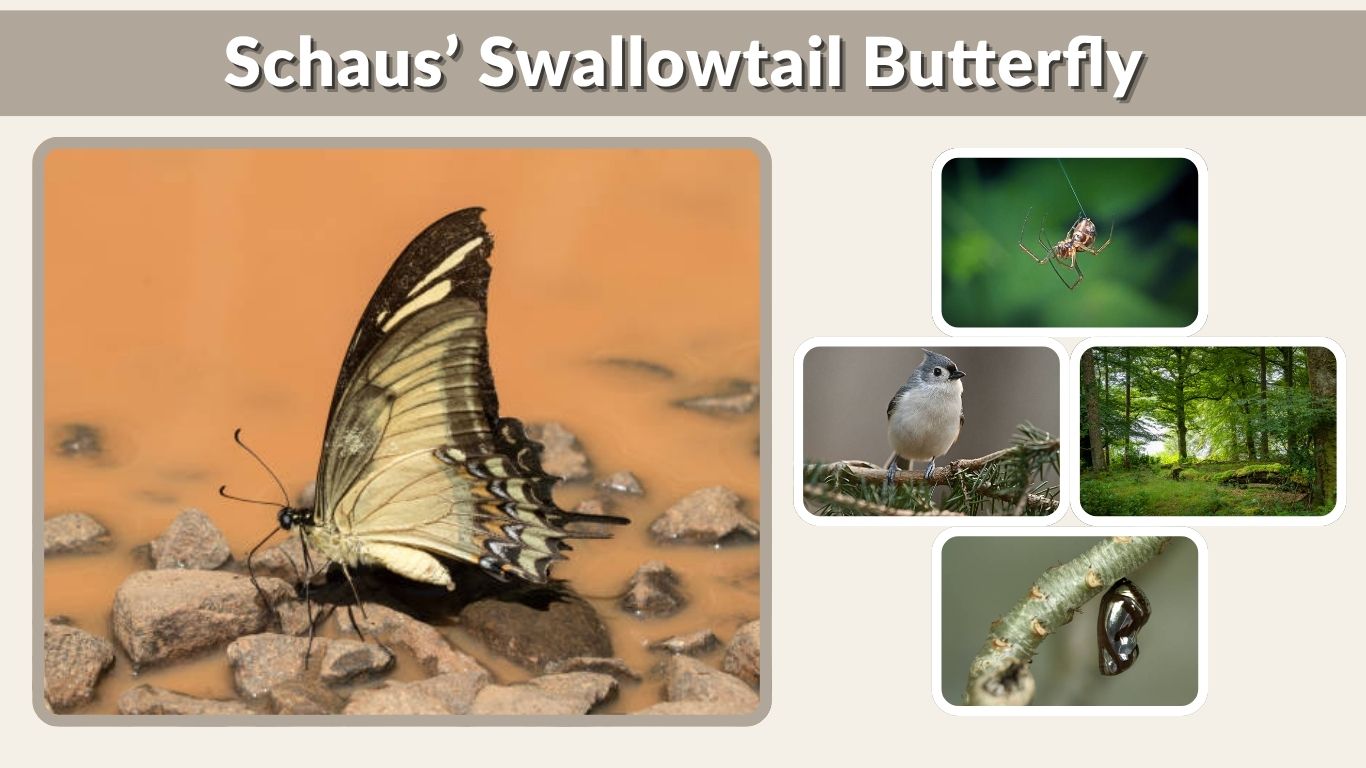
The Schaus’ swallowtail butterfly is one of the rarest and most endangered butterflies in the United States. Found mainly in the Florida Keys and parts of South Florida, this beautiful butterfly plays an important role in native ecosystems and pollination. Scientifically known as Heraclides aristodemus ponceanus, the species depends heavily on tropical hardwood hammock habitats and native host plants such as torchwood and wild lime. Habitat destruction, hurricanes, and environmental changes have caused major population declines, making conservation efforts essential for the butterfly’s survival.
What Is the Schaus’ Swallowtail Butterfly?
The Schaus’ swallowtail butterfly is a large and colorful butterfly species native to South Florida and nearby island habitats. It belongs to the swallowtail butterfly family, which includes some of the most recognizable butterflies in North America. This species is considered highly endangered because of its limited geographic range and declining habitat.
The butterfly is named after William Schaus, an American entomologist who studied tropical insects and butterflies. Today, the Schaus’ swallowtail is protected under federal conservation laws due to its fragile population status.
Scientific Classification
The scientific name of the Schaus’ swallowtail butterfly is Heraclides aristodemus ponceanus. It belongs to the Papilionidae family, commonly known as swallowtail butterflies. These butterflies are famous for their large wings and elegant flight patterns.
Physical Description
The Schaus’ swallowtail butterfly has soft brown wings mixed with yellow markings and pale cream-colored patches. Its wings often display a slightly faded appearance compared to brighter swallowtail species.
Important physical features include:
- Large brown and yellow wings
- Cream-colored markings near the edges
- Long tail-like wing extensions
- Wide wingspan reaching up to 5 inches
- Slender dark-colored body
The butterfly’s muted colors help it blend naturally into tropical forest environments.
Schaus’ Swallowtail Habitat and Geographic Distribution
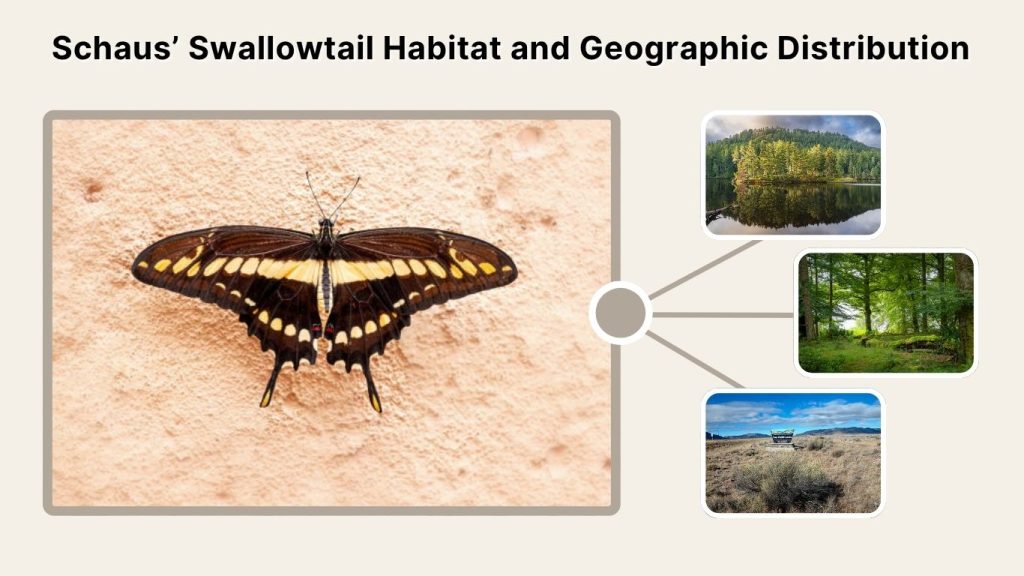
The Schaus’ swallowtail butterfly survives mainly in tropical hardwood hammock forests found in South Florida. These rare habitats provide food, shelter, and breeding areas necessary for the butterfly’s lifecycle.
Hardwood hammocks are dense tropical forests filled with native trees, shrubs, and flowering plants. These environments create the warm and humid conditions the butterfly requires to survive throughout the year.
Natural Habitat
This butterfly depends heavily on coastal hardwood forests with abundant native vegetation. The habitat must contain specific host plants because caterpillars feed only on certain species.
The butterfly is commonly associated with:
- Tropical hardwood hammocks
- Coastal island forests
- Native woodland areas
- Warm subtropical environments
- Protected conservation lands
These habitats support both adult butterflies and developing caterpillars.
Geographic Range
The Schaus’ swallowtail butterfly is found mainly in the Florida Keys and small parts of Miami-Dade County in South Florida. Biscayne National Park is one of the most important protected locations for the species.
Historically, the butterfly existed across larger areas of South Florida and nearby Caribbean islands. However, urban development and habitat destruction greatly reduced its range over time.
Schaus’ Swallowtail Host Plants and Ecological Importance
Host plants are extremely important for the survival of the Schaus’ swallowtail butterfly. Female butterflies lay eggs only on specific native plants that provide food and protection for caterpillars after hatching.
Two plants are especially important: torchwood and wild lime. Without these plants, the butterfly cannot complete its lifecycle successfully.
Torchwood as a Host Plant
Torchwood is one of the butterfly’s primary host plants. Female butterflies place eggs on young leaves, allowing newly hatched caterpillars immediate access to food.
Torchwood provides several survival benefits:
- Food source for caterpillars
- Safe egg-laying locations
- Shelter from predators
- Protection during early growth stages
Healthy torchwood populations are critical for butterfly conservation efforts.
Wild Lime and Butterfly Survival
Wild lime is another essential native plant used during the butterfly’s lifecycle. Caterpillars feed on its leaves while adults often remain close to these plants for breeding purposes.
The ecological role of wild lime includes supporting insect biodiversity and helping stabilize tropical forest ecosystems. Conservationists actively protect these plants to improve butterfly populations in Florida habitats.
Schaus’ Swallowtail Lifecycle and Feeding Behavior
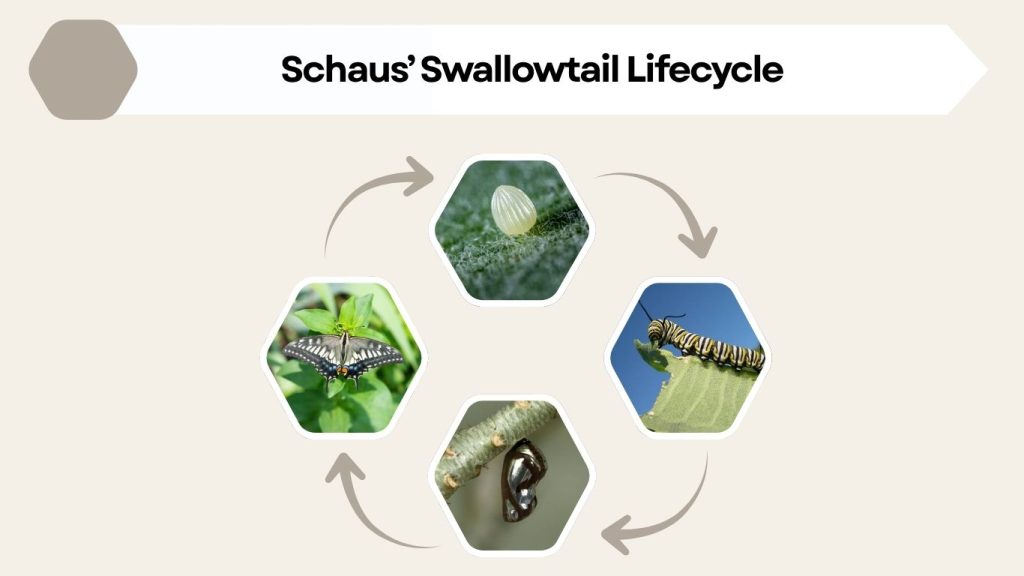
The Schaus’ swallowtail butterfly experiences a complete metamorphosis process that includes egg, caterpillar, chrysalis, and adult stages. Each stage depends on stable environmental conditions and healthy native vegetation.
Caterpillar Stage
After hatching, caterpillars immediately begin feeding on host plant leaves. Young caterpillars often resemble bird droppings, which helps camouflage them from predators such as birds and lizards.
The caterpillar stage focuses mainly on growth and energy storage before metamorphosis begins.
Adult Butterfly Feeding Habits
Adult Schaus’ swallowtail butterflies feed primarily on flower nectar collected from native plants. Their feeding activity also contributes to pollination within tropical forest ecosystems.
Adult butterflies are usually most active during warm daylight hours and spend much of their time flying between flowering plants and shaded woodland areas.
Why Is the Schaus’ Swallowtail Butterfly Endangered?
The Schaus’ swallowtail butterfly is listed as an endangered species because its population has declined dramatically over the past several decades. Habitat destruction and environmental changes are the main reasons for this decline. Since the butterfly survives only in limited parts of South Florida, even small environmental disturbances can seriously affect the population.
By 1984, scientists observed a major reduction in butterfly numbers due to habitat loss and severe weather conditions. Conservation experts continue monitoring the species carefully to prevent extinction.
Habitat Loss and Urban Development
One of the biggest threats to the Schaus’ swallowtail butterfly is habitat destruction caused by human development. Expanding cities, roads, and tourism infrastructure in South Florida have reduced large portions of native hardwood hammock forests.
Important environmental threats include:
- Clearing native forests
- Construction and urban expansion
- Destruction of host plants
- Habitat fragmentation
- Pollution and pesticide exposure
When natural habitats disappear, butterflies lose food sources, nesting locations, and protection from predators.
Hurricanes and Climate Effects
Hurricanes are a natural part of Florida’s climate, but severe storms can destroy large areas of butterfly habitat in a short time. Strong winds and flooding damage host plants and reduce food availability for caterpillars and adult butterflies.
In some years, researchers noticed temporary population increases after hurricanes because fresh plant growth provided new feeding opportunities. However, repeated storms usually create long-term habitat damage that threatens butterfly survival.
Schaus’ Swallowtail Predators and Survival Adaptations
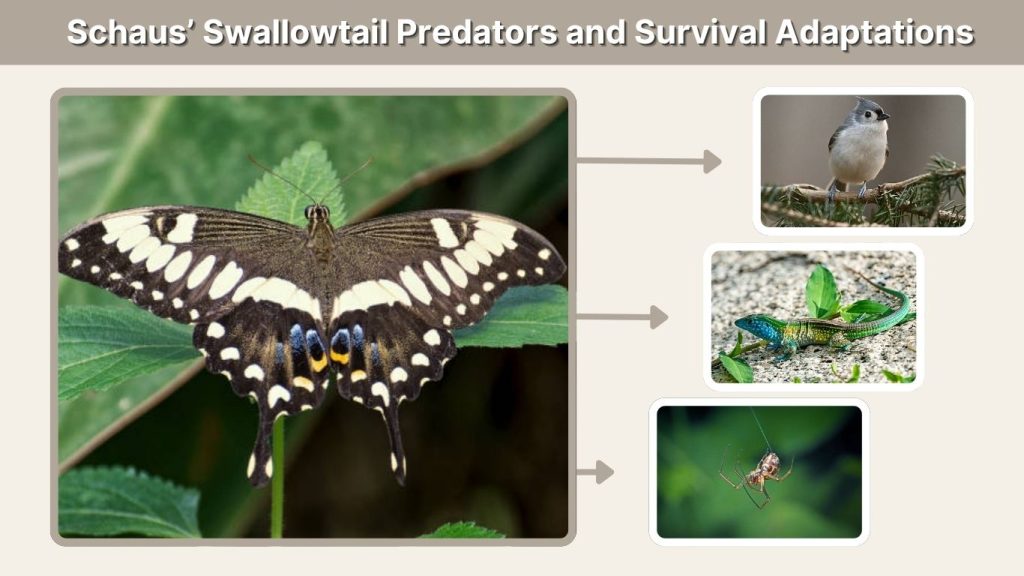
Like many insects, the Schaus’ swallowtail butterfly faces danger from numerous predators throughout its lifecycle. Eggs, caterpillars, and adult butterflies all require defense strategies to survive in the wild.
The butterfly uses camouflage, fast flight, and protective behaviors to avoid predators in tropical forest environments.
Natural Predators
Several animals feed on the Schaus’ swallowtail butterfly at different life stages. Young caterpillars are especially vulnerable because they move slowly while feeding on leaves.
Common predators include:
- Birds
- Lizards
- Spiders
- Ants
- Small mammals
Predators play a natural role in controlling insect populations within forest ecosystems.
Protective Adaptations
The Schaus’ swallowtail butterfly has developed several adaptations that improve survival chances in the wild. Caterpillars use camouflage to blend into leaves and branches, while adults rely on rapid flight and hiding behavior.
Important survival adaptations include:
- Caterpillar camouflage resembling bird droppings
- Brown wing coloration for forest blending
- Fast and irregular flight patterns
- Resting quietly under leaves
- Choosing protected breeding habitats
These adaptations help reduce predation and increase survival during vulnerable life stages.
Conservation and Recovery Efforts
Scientists and conservation organizations continue working to protect the Schaus’ swallowtail butterfly from extinction. Federal agencies, national parks, and wildlife researchers cooperate to restore habitat and improve butterfly populations in South Florida.
Conservation programs focus heavily on preserving native hardwood hammocks and protecting important host plants.
Protected Conservation Areas
Biscayne National Park is one of the most important protected areas supporting the Schaus’ swallowtail butterfly population. Conservation lands provide safe habitats with reduced human disturbance and healthy native vegetation.
Protected habitats help maintain:
- Native host plant populations
- Breeding environments
- Pollinator diversity
- Stable forest ecosystems
Habitat preservation remains one of the most effective conservation strategies for endangered butterflies.
Recovery Programs and Research
Researchers monitor butterfly populations every year to study migration patterns, breeding success, and habitat quality. Scientists also work on captive breeding projects designed to strengthen wild populations.
Important recovery efforts include:
- Habitat restoration projects
- Native plant conservation
- Scientific population monitoring
- Captive breeding programs
- Public education campaigns
These programs aim to increase butterfly numbers and reduce long-term extinction risks.
Ecological Importance of the Schaus’ Swallowtail Butterfly
Although rare, the Schaus’ swallowtail butterfly plays an important ecological role in Florida’s tropical ecosystems. Adult butterflies help pollinate flowering plants while caterpillars contribute to the natural food chain.
Butterflies are also considered environmental indicators because healthy butterfly populations usually reflect healthy ecosystems.
Pollination and Biodiversity
Adult butterflies transfer pollen between flowers while feeding on nectar. This process supports plant reproduction and helps maintain biodiversity within tropical forest habitats.
The butterfly contributes to ecosystem balance by supporting:
- Native flowering plants
- Pollination cycles
- Food web stability
- Forest biodiversity
Protecting the butterfly also helps preserve many other plant and animal species living within the same habitat.
FAQs
Why is the Schaus’ swallowtail butterfly endangered?
The Schaus’ swallowtail butterfly is endangered because of habitat loss, urban development, hurricanes, pesticide exposure, and the destruction of native host plants in South Florida.
Where is the Schaus’ swallowtail butterfly found?
This butterfly is found mainly in the Florida Keys and parts of South Florida, especially within tropical hardwood hammock habitats and protected areas like Biscayne National Park.
What do Schaus’ swallowtail caterpillars eat?
Schaus’ swallowtail caterpillars feed primarily on the leaves of native host plants such as torchwood and wild lime.
How does the Schaus’ swallowtail butterfly protect itself?
The butterfly uses camouflage, fast flight patterns, and hiding behavior to avoid predators. Young caterpillars often resemble bird droppings for extra protection.
What is the scientific name of the Schaus’ swallowtail butterfly?
The scientific name of the Schaus’ swallowtail butterfly is Heraclides aristodemus ponceanus.