
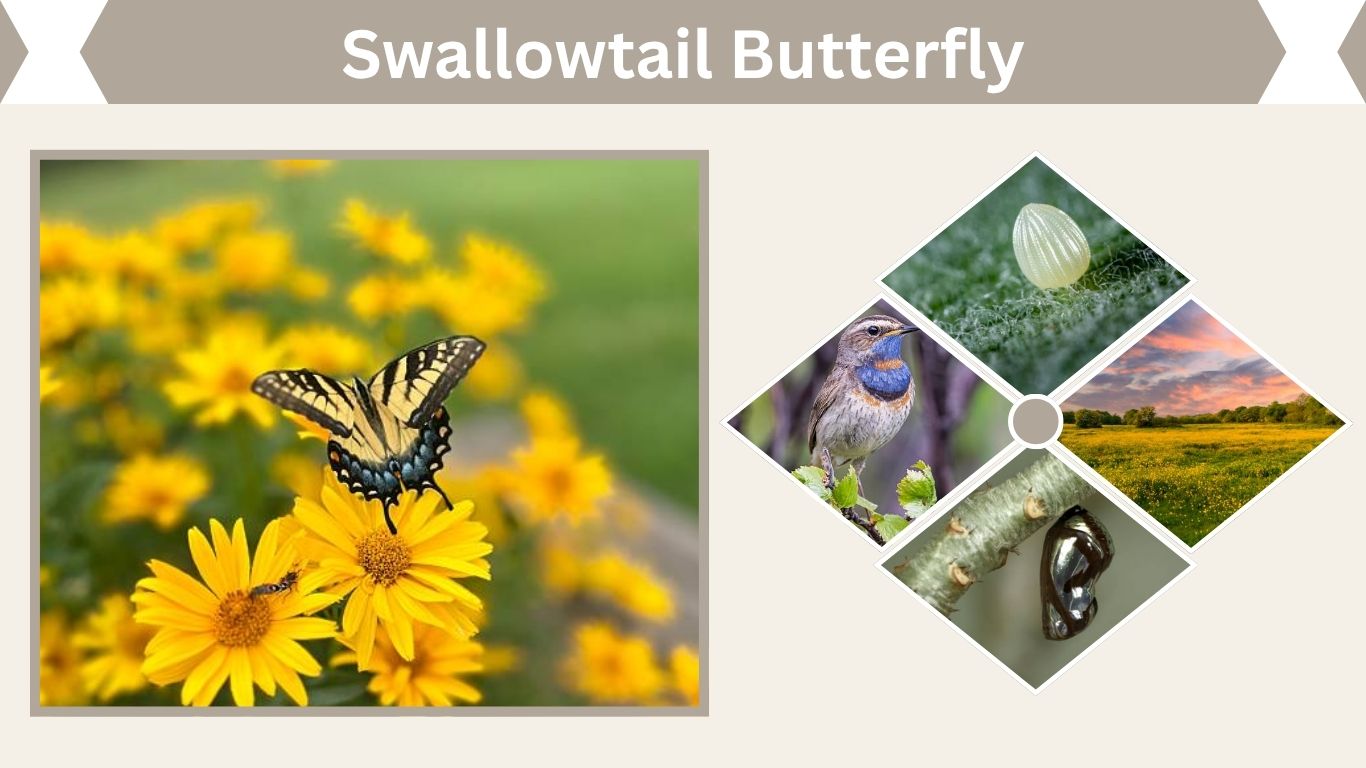
The Old World Swallowtail is one of the most beautiful and recognizable butterflies in the world. Known for its bright yellow wings, black markings, and elegant tail-like wing extensions, this butterfly has fascinated nature lovers for centuries. It belongs to the swallowtail butterfly family and is widely admired for its graceful flight and colorful appearance.
Found across Europe, Asia, and parts of North Africa, the Old World Swallowtail thrives in sunny open habitats where flowers and host plants are abundant. Its fascinating life cycle, unique caterpillar defenses, and strong flying ability make it one of the most interesting butterfly species in the world.
What Is the Old World Swallowtail?
The Old World Swallowtail is a large butterfly species scientifically known as Papilio machaon. It belongs to the swallowtail butterfly family, which includes some of the largest and most colorful butterflies on Earth.
This butterfly is especially famous for its striking yellow and black wing patterns and fast, graceful flight.
Old World Swallowtail Scientific Name
The scientific name of the Old World Swallowtail is Papilio machaon.
Important scientific facts include:
- Belongs to the family Papilionidae
- One of the best-known swallowtail butterflies
- Named after Machaon from Greek mythology
- Widely studied by entomologists
The species has existed across much of the Northern Hemisphere for thousands of years.
Main Characteristics of the Old World Swallowtail
The Old World Swallowtail has several easily recognizable features.
Important characteristics include:
- Bright yellow wings
- Black wing veins and patterns
- Tail-like wing extensions
- Blue and red markings near the hindwings
- Large wingspan
Adults are strong flyers and can travel long distances while searching for flowers and mates.
Old World Swallowtail Habitat
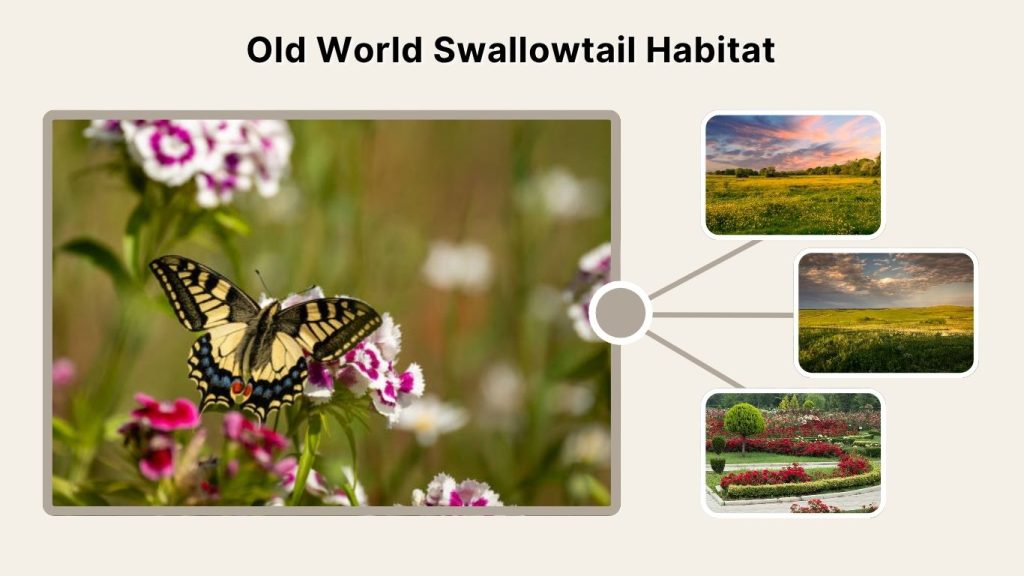
The Old World Swallowtail lives in a variety of open sunny habitats where nectar flowers and caterpillar host plants are available.
Unlike butterflies that prefer dense forests, this species usually thrives in open landscapes with plenty of sunlight.
Natural Habitat of the Old World Swallowtail
Common habitats include:
- Meadows
- Grasslands
- Gardens
- Mountain slopes
- Open countryside
These habitats provide warmth, flowers, and safe breeding locations.
Old World Swallowtail Range
The Old World Swallowtail has one of the widest ranges of any swallowtail butterfly species.
| Region | Population Presence |
| Europe | Common |
| Asia | Widespread |
| North Africa | Limited populations |
| Arctic regions | Seasonal populations |
Its adaptability allows it to survive in many climates ranging from warm grasslands to cooler mountain environments.
Why Habitat Is Important
Habitat quality strongly affects butterfly survival and reproduction.
Important habitat needs include:
- Host plants for caterpillars
- Flower nectar sources
- Warm sunny areas
- Low pesticide exposure
Butterflies rely heavily on healthy ecosystems with diverse plant life.
Old World Swallowtail Butterfly Appearance
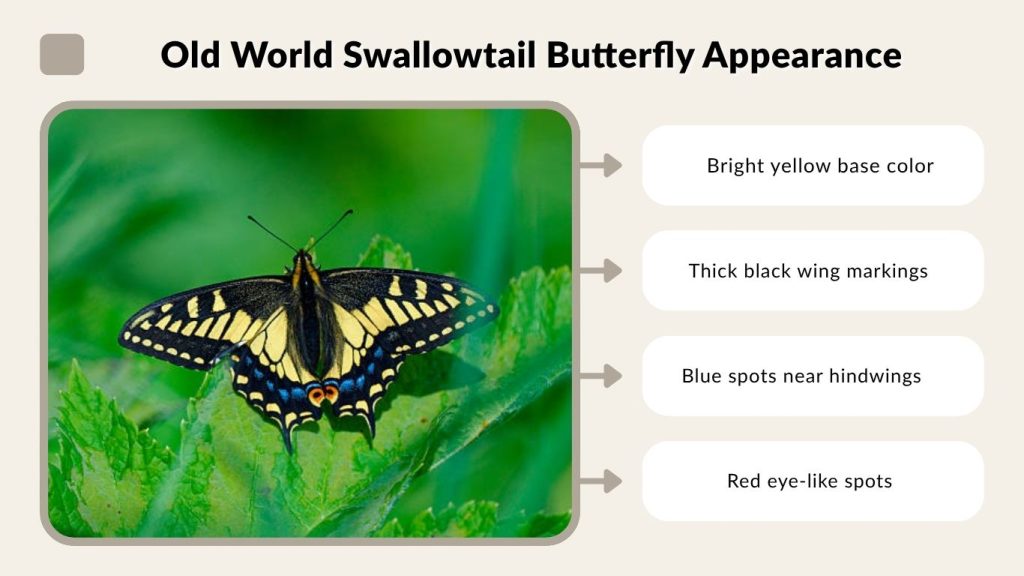
The Old World Swallowtail is considered one of the most visually striking butterflies because of its bold coloration and elegant wing shape.
Its appearance helps it stand out among other butterflies.
Wing Colors and Patterns
Important wing features include:
- Bright yellow base color
- Thick black wing markings
- Blue spots near hindwings
- Red eye-like spots
These colorful markings may help confuse predators and attract mates.
Old World Swallowtail Wingspan
The Old World Swallowtail is a relatively large butterfly species.
Important size facts include:
- Wingspan usually ranges from 2.5 to 4 inches
- Females are often slightly larger
- Strong wings support long-distance flight
Their large size makes them easier to spot in gardens and fields.
Male vs Female Old World Swallowtails
Males and females have slight physical differences.
| Feature | Male | Female |
| Size | Slightly smaller | Larger |
| Color intensity | Brighter | Slightly duller |
| Body shape | Slimmer | Wider abdomen |
Females often require larger body size for egg production.
Old World Swallowtail Caterpillar
The caterpillar stage of the Old World Swallowtail looks very different from the adult butterfly. As caterpillars grow, they change color and develop defensive features that help them avoid predators.
What Does the Old World Swallowtail Caterpillar Look Like?
Common caterpillar features include:
- Green body coloration
- Black horizontal bands
- Orange or yellow spots
- Smooth segmented body
These colors help the caterpillar blend into leaves and stems.
Host Plants for Caterpillars
Old World Swallowtail caterpillars feed mainly on plants from the carrot family.
Popular host plants include:
- Dill
- Fennel
- Parsley
- Rue
- Wild carrot plants
These plants provide nutrients needed for growth and development.
Caterpillar Defense Mechanisms
The caterpillar has several interesting defense systems.
Important defenses include:
- Camouflage coloration
- Defensive posture
- Osmeterium organ release
- Strong unpleasant odor
The osmeterium is a special orange forked organ that extends from the caterpillar’s head when threatened.
Old World Swallowtail Diet
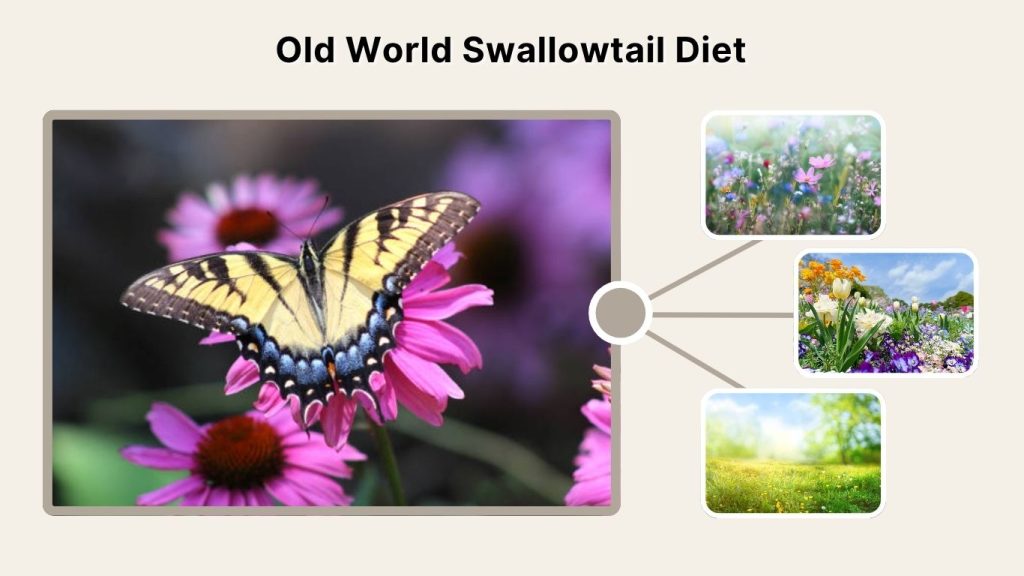
The Old World Swallowtail feeds differently during each stage of its life cycle. Caterpillars consume leaves, while adult butterflies drink nectar from flowers.
What Does the Old World Swallowtail Eat?
Adult butterflies commonly feed on:
- Flower nectar
- Wildflowers
- Garden flowers
- Meadow plants
Caterpillars mainly feed on leaves from host plants in the carrot family.
Favorite Nectar Plants
Different flowering plants attract adult butterflies.
| Plant Type | Butterfly Attraction |
| Thistles | High |
| Lavender | High |
| Milkweed | Moderate |
| Clover | Moderate |
Bright colorful flowers with accessible nectar are especially attractive to swallowtail butterflies.
Old World Swallowtail Life Cycle
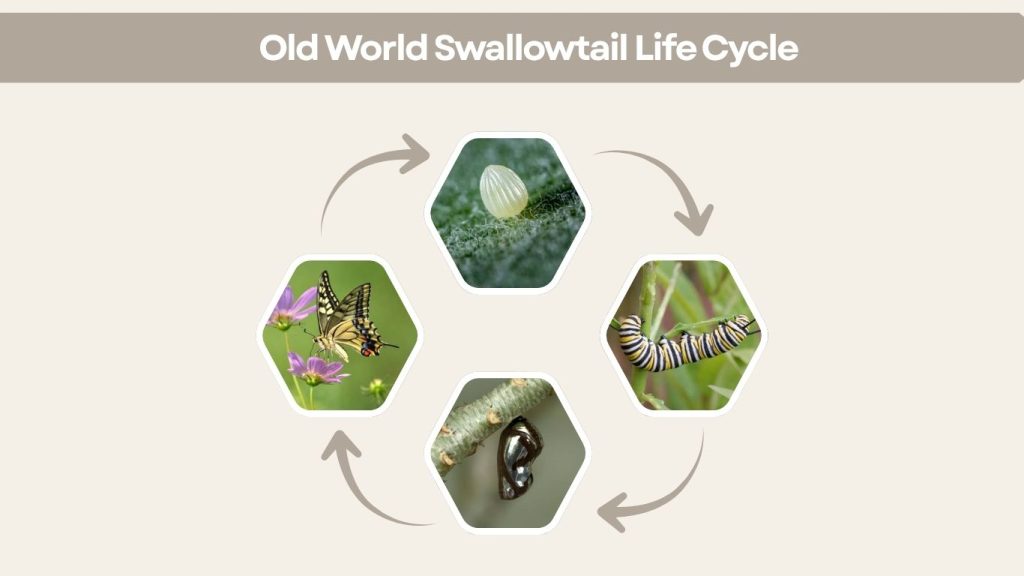
Like all butterflies, the Old World Swallowtail goes through complete metamorphosis. This process transforms the butterfly from a tiny egg into a colorful winged adult.
The life cycle consists of four distinct stages.
Stages of the Life Cycle
The Old World Swallowtail life cycle includes:
- Egg
- Caterpillar
- Chrysalis
- Adult butterfly
Female butterflies lay eggs individually on suitable host plants where caterpillars can feed immediately after hatching.
How Long Does the Life Cycle Take?
The length of the life cycle depends on climate and environmental conditions.
Important factors include:
- Temperature
- Food availability
- Seasonal weather
- Habitat quality
In warmer regions, multiple generations may appear during a single year.
Old World Swallowtail Lifespan
The adult butterfly stage is relatively short compared to the entire life cycle.
General lifespan estimates include:
- Adult lifespan: 2–4 weeks
- Caterpillar stage: several weeks
- Chrysalis stage: varies by season
Some chrysalises overwinter and emerge the following spring.
Old World Swallowtail Behavior
The Old World Swallowtail is an active and powerful butterfly species known for its fast flight and wide-ranging movement.
These butterflies spend much of their time feeding, searching for mates, and basking in sunlight.
Common Butterfly Behaviors
Typical behaviors include:
- Rapid flight
- Sun basking
- Flower feeding
- Territorial activity
- Long-distance movement
Males may patrol open areas while searching for females during breeding season.
Migration and Seasonal Movement
Some populations of Old World Swallowtails show seasonal movement patterns.
Important migration facts include:
- Seasonal dispersal in warmer months
- Movement toward suitable breeding areas
- Weather-influenced activity
Northern populations may appear only during favorable seasonal conditions.
Old World Swallowtail Predators
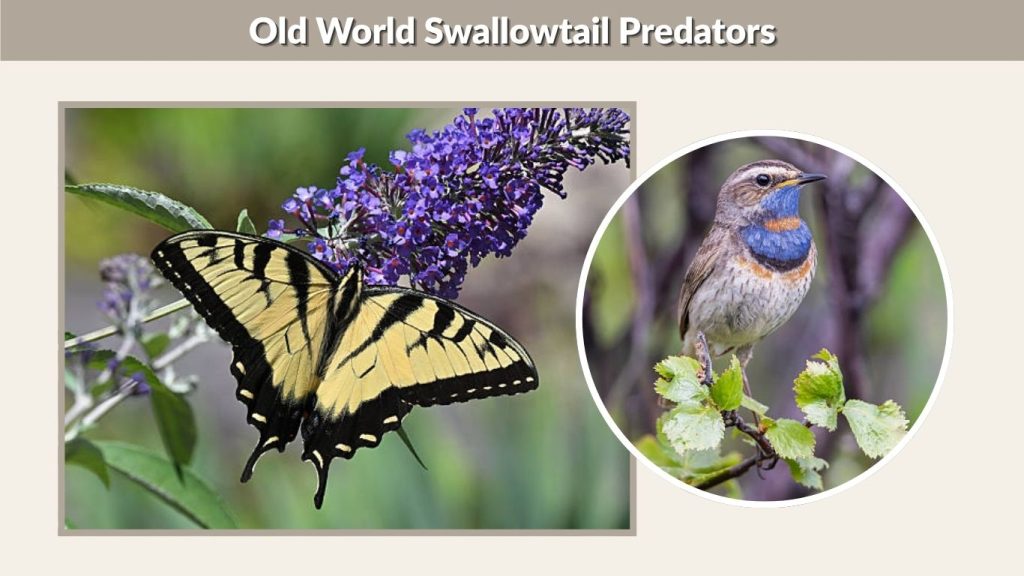
Despite their beauty and flight ability, Old World Swallowtails face many natural predators throughout their life cycle.
Eggs, caterpillars, and adult butterflies are all vulnerable to attack.
Common Predators
Natural predators include:
- Birds
- Spiders
- Lizards
- Small mammals
- Predatory insects
Young caterpillars are especially vulnerable because of their small size.
How the Butterfly Avoids Predators
The Old World Swallowtail uses several defense strategies for protection.
Important defenses include:
- Camouflage
- Fast flight
- Bright warning markings
- Caterpillar odor defenses
Adult butterflies can escape many predators through quick and unpredictable flight patterns.
Interesting Facts About the Old World Swallowtail
The Old World Swallowtail is one of the most studied and admired butterfly species in the world.
Fun Facts
- It is one of the largest swallowtail butterflies
- The caterpillar releases a defensive odor when threatened
- Adults are strong long-distance flyers
- The butterfly appears across several continents
- It is popular in butterfly gardens and nature parks
Its striking appearance makes it one of the easiest butterflies for beginners to identify.
Conservation and Population
Although still common in many areas, some Old World Swallowtail populations face environmental threats due to habitat destruction and chemical use.
Healthy ecosystems are important for long-term butterfly survival.
Threats to Old World Swallowtails
Major threats include:
- Habitat loss
- Pesticide exposure
- Climate change
- Loss of host plants
Agricultural expansion and urban development can reduce suitable breeding habitats.
How People Can Help
People can support butterfly conservation by:
- Planting butterfly-friendly gardens
- Growing host plants
- Avoiding harmful pesticides
- Protecting wildflower habitats
Even small backyard gardens can provide valuable nectar and breeding resources.
FAQs
What is the Old World Swallowtail?
The Old World Swallowtail is a large colorful butterfly species scientifically known as Papilio machaon. It is recognized for its yellow and black wings, tail-like hindwing extensions, and wide distribution across Europe, Asia, and parts of North Africa.
What does the Old World Swallowtail eat?
Adult Old World Swallowtails feed mainly on flower nectar from plants such as lavender, thistles, and clover. Caterpillars eat leaves from host plants in the carrot family, including dill, fennel, parsley, and wild carrot plants.
Where does the Old World Swallowtail live?
The Old World Swallowtail lives in open sunny habitats such as meadows, grasslands, gardens, and mountain slopes. It is widely distributed across Europe, Asia, North Africa, and some northern seasonal regions.
What do Old World Swallowtail caterpillars eat?
Old World Swallowtail caterpillars feed mainly on plants in the carrot family. Common host plants include dill, parsley, fennel, rue, and wild carrot species that provide essential nutrients for growth and development.
How long does the Old World Swallowtail live?
Adult Old World Swallowtails usually live about 2–4 weeks, although the full life cycle lasts much longer. The caterpillar and chrysalis stages may continue for several weeks or months depending on climate and seasonal conditions.