
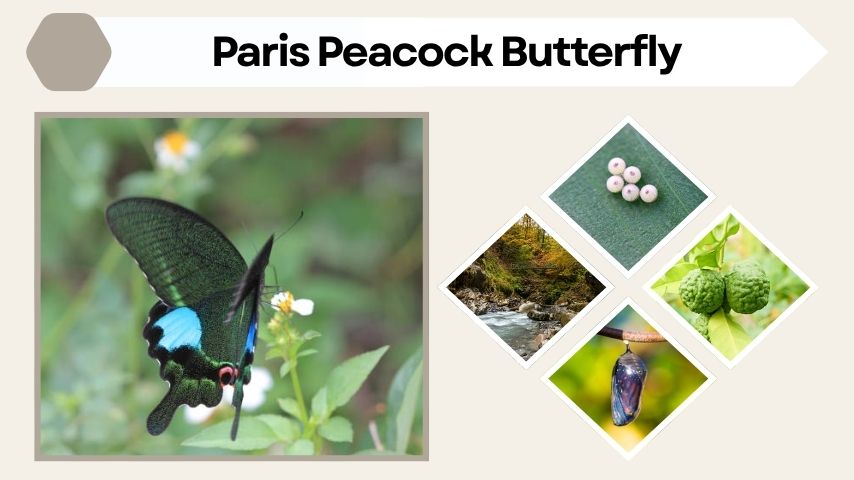
The Paris Peacock butterfly is one of the most dazzling swallowtail butterflies found in Asia. Known for its shimmering green markings and elegant flight, this species attracts butterfly watchers, photographers, and nature lovers alike. Its metallic wing colors often glow in sunlight, giving it a truly exotic appearance.
This beautiful butterfly belongs to the swallowtail family and is commonly seen in forested habitats, mountain regions, and tropical environments. In this guide, you will learn how to identify the Paris Peacock butterfly, where it lives, what it eats, and the fascinating behaviors that make it unique among butterflies.
What Is the Paris Peacock Butterfly?
The Paris Peacock butterfly is a large and colorful swallowtail butterfly admired for its iridescent green wing patterns and graceful movement. It belongs to the Papilionidae family and is commonly found in forests across South and Southeast Asia. Its striking appearance and fast flight make it one of the most recognizable forest butterflies in the region.
Scientific Classification
The Paris Peacock butterfly is scientifically known as Papilio paris. It belongs to the swallowtail butterfly group, which includes many large and brightly colored species. This butterfly is closely related to other peacock and emerald swallowtails that share similar wing colors and tail structures.
Why It Is Called “Paris Peacock”
The butterfly gets its common name from the shimmering patterns on its wings that resemble the eye-catching colors of peacock feathers. The metallic green scales reflect light beautifully, especially when the butterfly flies through sunny forest paths. Its elegant appearance has made it popular among butterfly collectors and wildlife photographers.
Natural Range and Distribution
The Paris Peacock butterfly is widely distributed throughout parts of Asia. It can be found in:
- India
- Nepal
- Bhutan
- China
- Myanmar
- Thailand
- Vietnam
- Malaysia
This species mainly lives in tropical and subtropical forests where humidity and vegetation provide ideal breeding conditions.
Paris Peacock Butterfly Identification
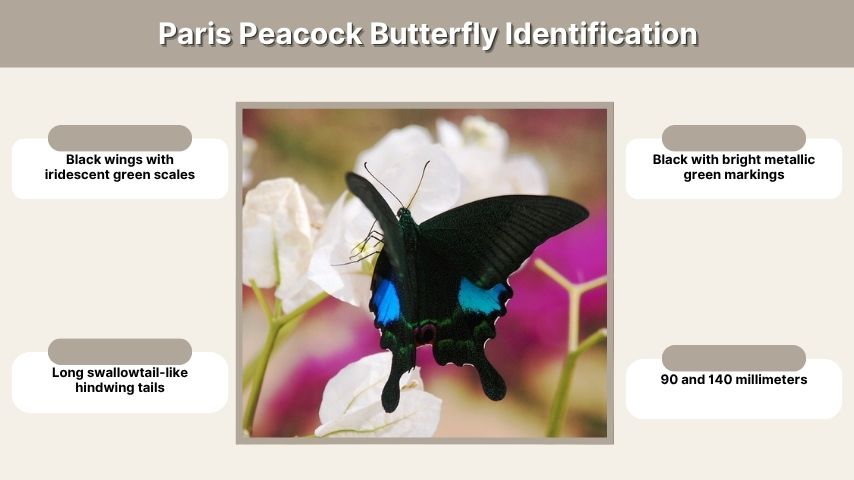
The Paris Peacock butterfly is easy to recognize because of its dark wings decorated with glowing green patches. Its long tails and strong flight also help distinguish it from many other swallowtail butterflies. Careful observation of its wing shape and coloration can help beginners identify this species in the wild.
Wing Color and Patterns
The wings of the Paris Peacock butterfly are mostly black with bright metallic green markings. These green patches appear almost fluorescent under sunlight. The hindwings often feature blue or green dusting near the lower edges, adding to the butterfly’s dramatic appearance.
Size and Wingspan
Adult Paris Peacock butterflies are considered medium to large swallowtails. Their wingspan usually ranges between 90 and 140 millimeters depending on region and sex. Females are sometimes slightly larger than males, although both share similar color patterns.
Distinctive Features
The following characteristics help identify the Paris Peacock butterfly:
- Black wings with iridescent green scales
- Long swallowtail-like hindwing tails
- Fast and gliding flight pattern
- Metallic shine visible in sunlight
- Strong body with dark coloration
Paris Peacock vs Similar Butterflies
| Feature | Paris Peacock | Emerald Swallowtail | Common Peacock |
| Wing Color | Green-black | Bright green | Red-blue |
| Tail Presence | Yes | Yes | No |
| Family | Swallowtail | Swallowtail | Nymphalid |
| Flight Style | Fast and smooth | Quick and active | Fluttering |
Peacock Butterfly Habitat and Geographic Distribution
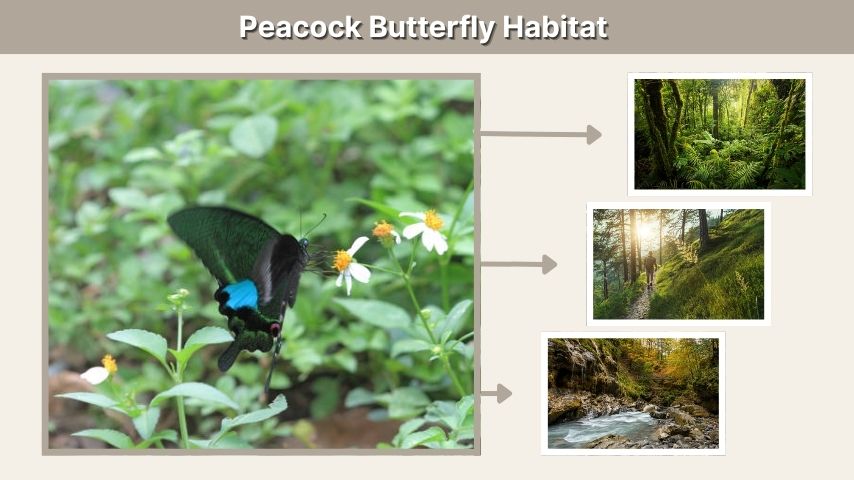
The Paris Peacock butterfly thrives in warm and humid environments with dense vegetation. Forest ecosystems provide shelter, food plants, and ideal breeding areas for this species. Although it prefers natural habitats, it can occasionally be seen near forest gardens and flowering trails.
Preferred Forest Habitats
This butterfly commonly lives in tropical forests, mountain woodlands, and moist valleys. It prefers shaded environments where host plants and nectar flowers are abundant. Streams and damp forest paths are especially attractive to adult males.
Countries Where It Lives
The Paris Peacock butterfly is commonly found across several Asian countries. Its range stretches from the Himalayan foothills to Southeast Asian forests. In some areas, it appears year-round, while in cooler regions, it is more seasonal.
Elevation and Climate Preferences
The species adapts well to humid climates with moderate rainfall. It is often found at elevations ranging from lowland forests to mountainous regions above 2,000 meters. Warm temperatures and healthy vegetation are important for its survival.
Lifecycle of the Paris Peacock Butterfly
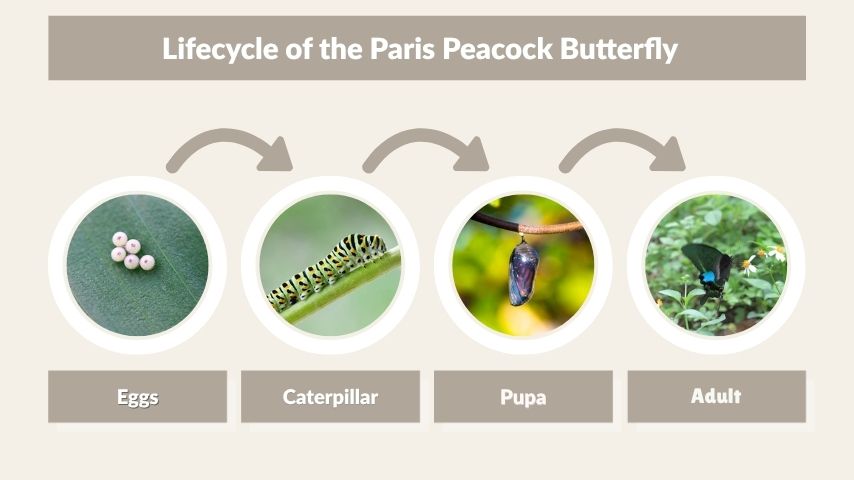
Like all butterflies, the Paris Peacock passes through four distinct life stages. Each stage plays an important role in its growth and survival. From tiny eggs to shimmering adults, the transformation process is both complex and fascinating for butterfly enthusiasts.
Egg Stage
Female Paris Peacock butterflies lay small eggs on the leaves of host plants. The eggs are carefully placed where newly hatched caterpillars will have immediate access to food. Warm temperatures help speed up development during this stage.
Caterpillar Stage
The caterpillars feed heavily on leaves and grow rapidly through several molts. Young larvae often resemble bird droppings, which helps protect them from predators. Older caterpillars become greener and develop smoother body textures as they mature.
Pupa and Chrysalis
After completing the larval stage, the caterpillar forms a chrysalis attached to a branch or leaf stem. The pupa blends into the environment, helping it avoid predators during transformation. Inside the chrysalis, the butterfly develops its wings and adult body structure.
Peacock Butterfly Diet and Feeding Habits
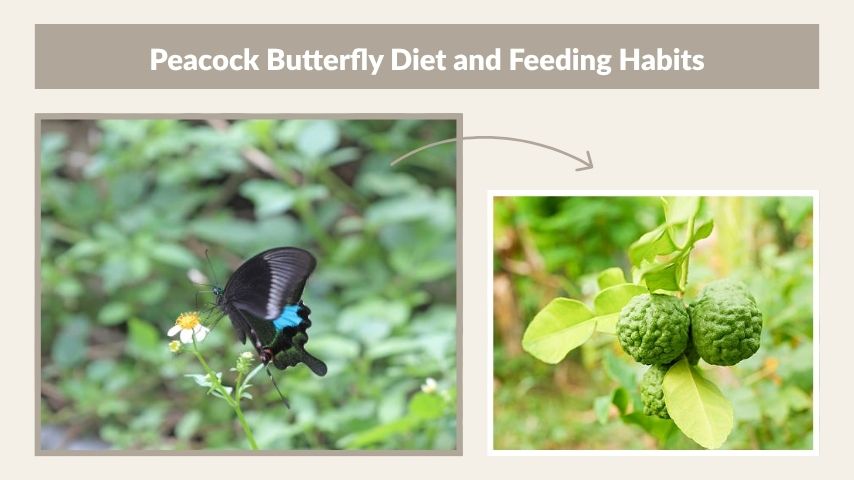
The Paris Peacock butterfly depends on different food sources throughout its life cycle. Caterpillars mainly consume leaves from host plants, while adults search for nectar and minerals. Their feeding habits play an important role in pollination and forest ecosystems, making them valuable insects in tropical habitats.
Caterpillar Food Plants
Paris Peacock caterpillars feed on several plant species commonly found in forested regions. These host plants provide the nutrients needed for rapid growth and development.
Common caterpillar food plants include:
- Citrus plants
- Wild lime species
- Laurel family plants
- Forest shrubs
- Aromatic woodland plants
The availability of healthy host plants directly affects butterfly populations in the wild.
Adult Nectar Sources
Adult butterflies feed on nectar from flowering plants and forest blossoms. They use their long proboscis to extract sweet liquids that provide energy for flight and reproduction. Bright flowers growing along forest edges are especially attractive to them.
Mud-Puddling Behavior
Male Paris Peacock butterflies are often seen gathering on wet soil, riverbanks, and muddy trails. This behavior, known as mud-puddling, allows them to absorb minerals and salts that are important for reproduction. Groups of males may gather together in sunny forest openings after rainfall.
Peacock Butterfly Behavior and Adaptations
The Paris Peacock butterfly has developed several adaptations that help it survive in dense forest habitats. Its flight style, coloration, and defensive behavior make it highly effective at avoiding predators while searching for food and mates.
Flight Patterns
This butterfly is known for its strong and graceful flight. It moves rapidly through forest trails and often glides between trees with sudden directional changes. Despite its speed, the metallic colors on its wings remain visible when sunlight strikes them.
Camouflage and Defense
The dark underside of the wings helps the butterfly blend into shaded forest surroundings when resting. Sudden flashes of green color during flight may confuse predators such as birds and lizards. Caterpillars also use camouflage during early growth stages to reduce the risk of attack.
Seasonal Behavior
The activity level of the Paris Peacock butterfly changes with the seasons. In warm tropical areas, adults may appear throughout the year. In cooler mountain regions, sightings are more common during warmer months when flowers and host plants are abundant.
Paris Peacock Butterfly in Gardens and Butterfly Houses
Because of its brilliant colors and elegant appearance, the Paris Peacock butterfly is popular in butterfly conservatories and educational exhibits. Although it mainly prefers natural forests, some butterfly-friendly gardens can attract this species under suitable environmental conditions.
Can You Attract It to Gardens?
Gardeners in tropical regions may occasionally attract Paris Peacock butterflies by planting nectar-rich flowers and suitable host plants.
Helpful garden features include:
- Flowering shrubs with bright blooms
- Damp shaded corners
- Citrus or laurel plants
- Fresh water sources
- Natural vegetation layers
Creating a pesticide-free environment also increases the chances of attracting butterflies.
Butterfly Conservatories
Many butterfly parks and conservatories display swallowtail butterflies because of their vivid colors and active behavior. The Paris Peacock is especially admired for its reflective green wing scales that shimmer under natural lighting.
Ethical Butterfly Watching Tips
Butterfly observation should always be done responsibly to avoid harming natural populations. Visitors should remain on marked paths and avoid disturbing resting butterflies or caterpillars. Ethical wildlife photography helps preserve natural habitats while allowing people to appreciate these beautiful insects.
Threats and Conservation Status
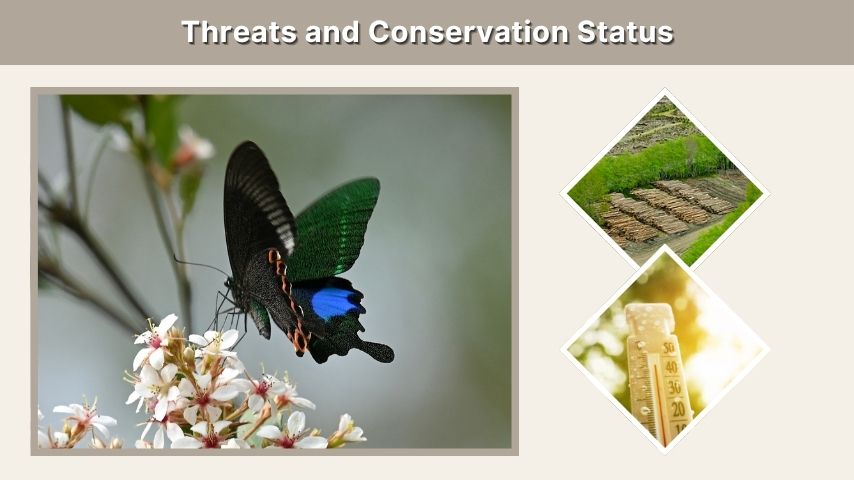
Although the Paris Peacock butterfly remains widespread in several regions, habitat destruction and environmental changes can negatively affect local populations. Protecting forests and maintaining healthy ecosystems are important for the long-term survival of this species.
Habitat Loss
Deforestation is one of the biggest threats to the Paris Peacock butterfly. Forest clearing removes host plants, nectar sources, and breeding habitats. Expanding agriculture and urban development also reduce suitable environments for this species.
Climate Change Effects
Changes in rainfall and temperature patterns may alter butterfly breeding cycles and migration behavior. Mountain populations are especially vulnerable because they depend on stable forest climates for survival.
Conservation Efforts
Several conservation programs aim to protect butterfly habitats through forest preservation and wildlife education. National parks and protected forest reserves provide safe environments where the Paris Peacock butterfly can continue to thrive.
FAQs
What does the Paris Peacock butterfly look like?
The Paris Peacock butterfly has black wings covered with shimmering metallic green markings. It also features swallowtail-like wing tails and a fast, graceful flight pattern.
Where can the Paris Peacock butterfly be found?
This butterfly is commonly found in forests across India, Nepal, China, Thailand, and other parts of Southeast Asia.
What do Paris Peacock caterpillars eat?
The caterpillars mainly feed on citrus plants, wild lime species, and other forest host plants that support their growth.
Is the Paris Peacock butterfly rare?
The species is locally common in healthy forest habitats, but habitat destruction can reduce populations in some regions.
Can Paris Peacock butterflies live in gardens?
They may occasionally visit tropical butterfly gardens that provide nectar flowers, host plants, shade, and clean water sources.