
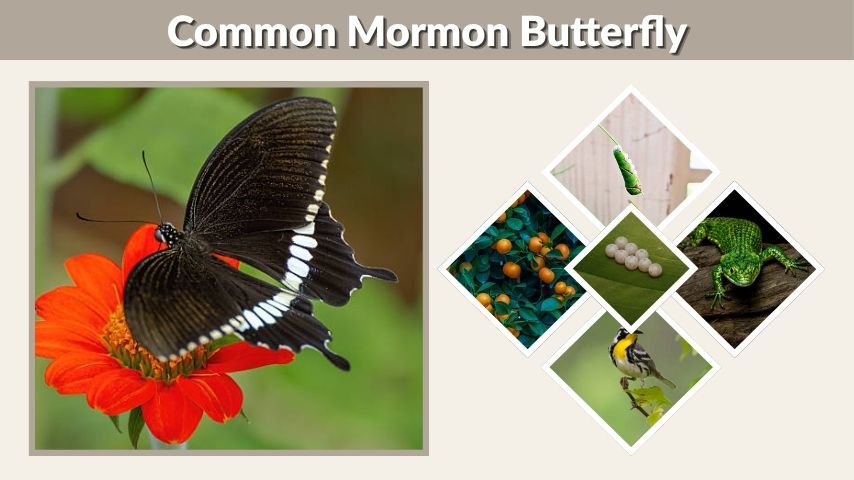
The common mormon butterfly is a beautiful swallowtail butterfly widely found across Asia, especially in India and Southeast Asia. Known for its black wings, fast flight, and remarkable mimicry, this butterfly is a favorite among nature lovers and butterfly gardeners. Its caterpillars are often seen feeding on citrus and curry leaf plants in home gardens.
Many people search for common mormon butterfly facts because of its striking appearance and unusual life cycle. From caterpillar stages and host plants to habitat and feeding behavior, the common mormon butterfly is one of the most fascinating tropical butterflies.
What Is a Common Mormon Butterfly?
The common mormon butterfly is a species of swallowtail butterfly belonging to the family Papilionidae. It is scientifically known as Papilio polytes and is famous for the female’s ability to mimic toxic butterfly species for protection against predators. This butterfly is common in forests, gardens, farms, and urban green spaces across tropical Asia.
Scientific Classification
- Scientific name: Papilio polytes
- Family: Papilionidae
- Butterfly type: Swallowtail butterfly
- Native region: Asia
- Common habitat: Gardens and forests
Why Is It Called the Common Mormon?
- Historical butterfly naming tradition
- Widely distributed species
- Common in tropical regions
- Easily recognized swallowtail
- Frequent garden butterfly
Common Mormon Butterfly vs Other Swallowtails
| Feature | Common Mormon | Crimson Rose |
| Wing Color | Black with white spots | Black and bright red |
| Tail Extension | Present | Smaller tail |
| Mimicry | Strong female mimicry | Less mimicry |
| Habitat | Gardens and forests | Tropical habitats |
Common Mormon Butterfly Identification
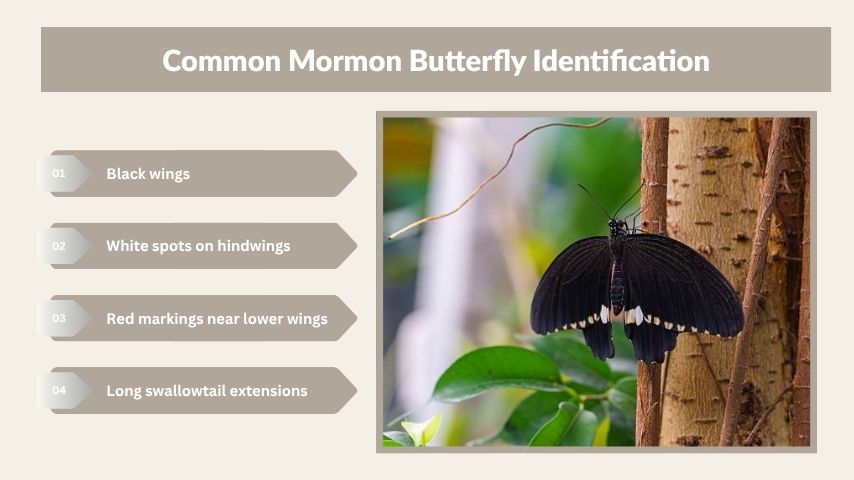
The common mormon butterfly is easy to recognize because of its black wings and graceful swallowtail extensions. Males and females often look different, especially because females may imitate poisonous butterflies to avoid predators.
Physical Appearance
- Black wings
- White spots on hindwings
- Red markings near lower wings
- Long swallowtail extensions
- Slender black body
Common Mormon Male and Female Differences
| Feature | Male | Female |
| Wing Pattern | Simpler black pattern | Multiple mimic forms |
| Coloration | Less colorful | More varied markings |
| Mimicry Ability | Minimal | Strong mimicry |
Common Mormon Butterfly Size
Adult common mormon butterflies usually have a wingspan between 3 and 4 inches. Their fast and smooth flight makes them easy to notice while feeding on flowers in gardens and parks.
Common Mormon Habitat and Distribution
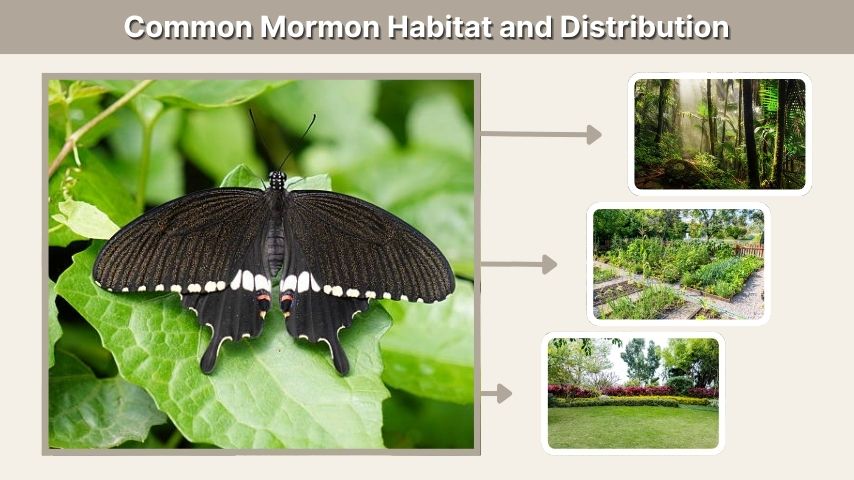
Common mormon butterflies thrive in warm tropical climates with abundant flowering plants and citrus vegetation. They are highly adaptable and can survive in both natural forests and urban gardens.
Where Do Common Mormon Butterflies Live?
- India
- Sri Lanka
- Southeast Asia
- Tropical forests
- Parks and gardens
Preferred Habitat
These butterflies prefer habitats with flowering plants and host trees suitable for caterpillars. Gardens with citrus plants often attract egg-laying females searching for safe food sources for larvae.
Common Mormon Butterflies in India
The common mormon butterfly is widespread throughout India and is commonly seen in villages, farms, cities, and butterfly gardens. Warm weather and citrus plants support large populations across many regions.
Common Mormon Butterfly Diet and Feeding
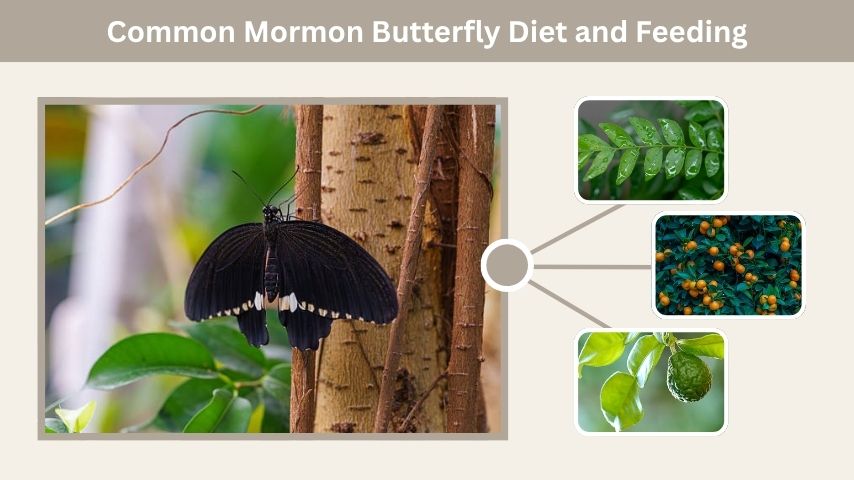
The diet of the common mormon butterfly changes throughout its life cycle. Adult butterflies mainly feed on nectar, while caterpillars consume leaves from citrus-related plants.
What Do Adult Common Mormon Butterflies Eat?
- Flower nectar
- Fruit juices
- Plant liquids
- Moist minerals
- Sugary fluids
Common Mormon Caterpillar Diet
- Curry leaf plant leaves
- Citrus leaves
- Lemon plant leaves
- Lime tree leaves
- Orange tree foliage
Host Plants for Common Mormon Caterpillars
Curry leaf plants and citrus trees are among the most important host plants for common mormon caterpillars. Female butterflies carefully lay eggs on these plants so newly hatched larvae have immediate access to food.
Common Mormon Butterfly Life Cycle
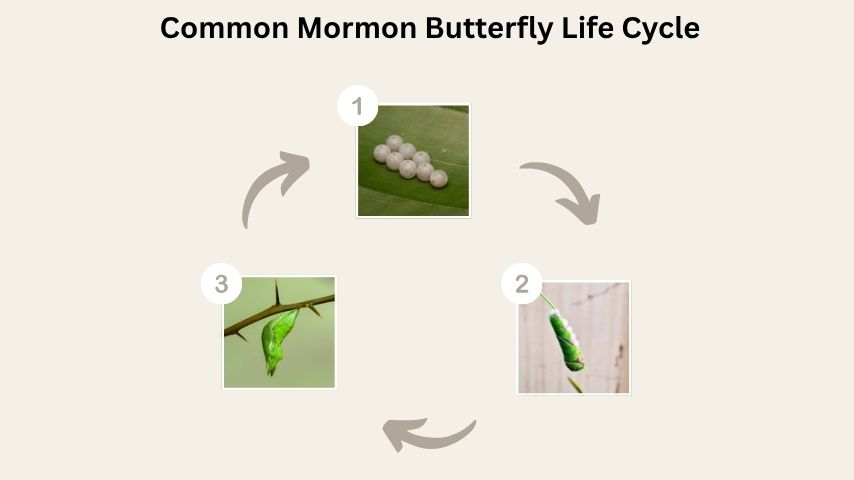
The common mormon butterfly undergoes complete metamorphosis, changing from egg to caterpillar, pupa, and finally into an adult butterfly. Each stage has unique physical features and survival strategies.
Common Mormon Butterfly Eggs
Female butterflies lay small round eggs on the underside of leaves. The eggs are usually pale yellow and hatch within a few days depending on weather conditions.
Caterpillar Stages
- Early caterpillars resemble bird droppings
- Later stages become green
- White patches appear during growth
- Feeding increases rapidly
- Molting occurs several times
Common Mormon Pupa and Cocoon
The pupa stage is often green or brown and blends into surrounding branches or leaves. During this stage, the caterpillar transforms completely into an adult butterfly inside the chrysalis.
Common Mormon Butterfly Behavior
Common mormon butterflies are active daytime insects known for their fast flight and constant movement between flowers. They spend much of their time feeding, searching for mates, and laying eggs on suitable host plants. Their behavior helps pollinate flowers while supporting the natural ecosystem.
Flight and Feeding Behavior
Adult butterflies fly quickly and gracefully through gardens, forests, and open green spaces. They frequently visit flowering plants to feed on nectar using their long proboscis.
Female Mimicry Adaptations
- Females mimic poisonous butterflies
- Mimicry protects against predators
- Wing patterns vary by region
- Helps survival in the wild
- Reduces bird attacks
Mating and Reproduction
Male butterflies actively search for females during warm daylight hours. After mating, females lay eggs individually on host plants where caterpillars can feed immediately after hatching.
Common Mormon Caterpillar Facts
The caterpillar stage is one of the most interesting parts of the common mormon butterfly life cycle. Young caterpillars use camouflage and defensive tricks to avoid predators while feeding heavily on leaves.
Common Mormon Caterpillar Appearance
Young caterpillars often resemble bird droppings, helping them avoid detection from birds and predators. As they mature, they become greener with more noticeable markings.
Defense Mechanisms
- Bird-dropping camouflage
- False eye spots
- Foul-smelling defensive organ
- Sudden body movements
- Leaf hiding behavior
Common Mormon Caterpillar Stages
Caterpillars pass through several growth stages called instars. During each stage, they molt their skin and increase rapidly in size before entering the pupa stage.
Predators and Threats
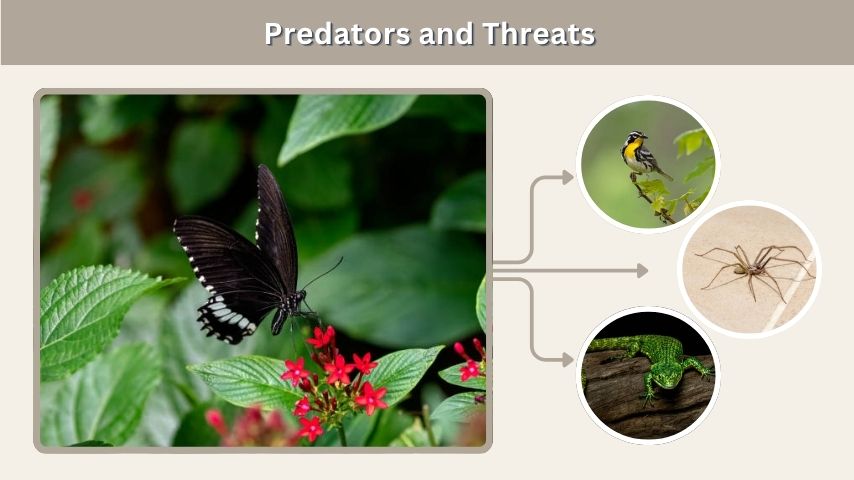
Common Mormon butterflies face many dangers throughout their life cycle. Eggs, caterpillars, pupae, and adults are all vulnerable to predators and environmental changes.
Natural Predators
- Birds
- Spiders
- Lizards
- Parasitic wasps
- Praying mantises
Human-Related Threats
Pesticide use and habitat destruction are major threats to common mormon butterfly populations. Removing host plants from gardens also reduces breeding opportunities for caterpillars.
Conservation Importance
Butterflies like the common mormon are important pollinators and indicators of healthy ecosystems. Planting native flowers and reducing chemical pesticide use can help protect local butterfly populations.
Interesting Common Mormon Butterfly Facts
The common mormon butterfly is one of the most adaptable and recognizable swallowtail butterflies in Asia. Its mimicry abilities and changing caterpillar appearance make it especially interesting to butterfly enthusiasts.
Fun Facts About Common Mormon Butterflies
- Females mimic poisonous butterfly species
- Caterpillars resemble bird droppings
- Belong to the swallowtail butterfly family
- Common in citrus gardens
- Fast and agile fliers
- Important flower pollinators
- Found widely across tropical Asia
Adult Common Mormon Butterfly
The adult common mormon butterfly is a graceful and active pollinator often seen visiting flowers during sunny weather. Adults have fully developed wings, long antennae, and strong flying ability that helps them travel between feeding and breeding areas.
Adult Butterfly Appearance
Adult common mormon butterflies have black wings with white and red markings. Males usually have simpler patterns, while females may show different mimic forms that resemble toxic butterflies.
Adult Butterfly Lifespan
Most adult common mormon butterflies live for a few weeks, although weather, predators, and food availability can affect survival. During this time, they focus mainly on feeding and reproduction.
Adult Butterfly Feeding Habits
- Feed mainly on nectar
- Visit flowering plants
- Prefer sunny feeding spots
- Use long proboscis for feeding
- Help pollinate garden flowers
FAQs
What do common Mormon butterflies eat?
Adult butterflies feed mainly on flower nectar and fruit juices, while caterpillars eat leaves from citrus and curry leaf plants.
What is the scientific name of the common Mormon butterfly?
The scientific name of the common Mormon butterfly is Papilio polytes.
What do common Mormon caterpillars eat?
Common Mormon caterpillars feed mostly on citrus leaves, curry leaf plants, lime trees, and lemon plants.
Where are common Mormon butterflies found?
They are found across India, Sri Lanka, Southeast Asia, and other tropical Asian regions with warm climates and suitable host plants.
Why do female common mormon butterflies mimic other species?
Female butterflies mimic toxic species to protect themselves from predators such as birds and lizards that avoid poisonous butterflies.