
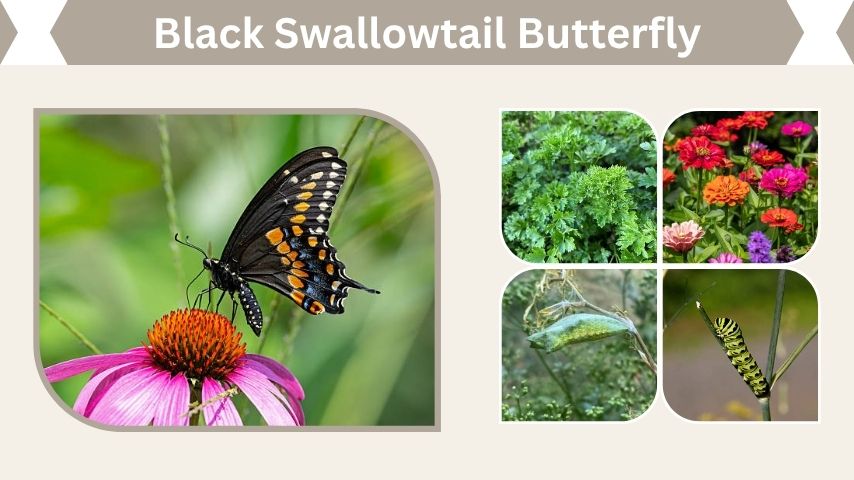
The black swallowtail butterfly (Papilio polyxenes) is one of North America’s most recognizable and admired butterflies. Known for its striking black wings, colorful markings, and fascinating life cycle, this species is a favorite among gardeners and butterfly enthusiasts. From tiny eggs laid on parsley and dill to the beautiful adult butterfly, each stage offers unique characteristics worth observing. Understanding the black swallowtail’s life cycle, caterpillar stages, host plants, and habitat can help gardeners attract and support these beneficial pollinators.
What Is a Black Swallowtail Butterfly?
The black swallowtail is a large butterfly species native to North America. It belongs to the swallowtail family and is commonly found in gardens, meadows, roadsides, and open fields. The butterfly is especially attracted to flowering plants and host plants that support its caterpillars. Because of its beauty and ecological importance, it is one of the most studied butterfly species in the region.
Scientific Name and Classification
The scientific name of the black swallowtail is Papilio polyxenes. It belongs to the Papilionidae family, which includes many of the world’s largest and most colorful butterflies. The eastern black swallowtail is the most commonly recognized subspecies throughout much of the United States.
Physical Appearance
Adult black swallowtail butterflies are easily identified by several features:
- Black wings with yellow markings
- Distinctive tail-like wing extensions
- Blue coloration on the hind wings
- Orange spots near the lower wings
- Wingspan of 2.5 to 4 inches
These characteristics help distinguish them from many other butterfly species.
Where Are Black Swallowtails Found?
Black swallowtails occur throughout much of North America. They thrive in areas where suitable host plants and nectar sources are available. Gardens containing parsley, dill, fennel, and flowering plants often attract both caterpillars and adult butterflies.
Black Swallowtail Caterpillar Identification
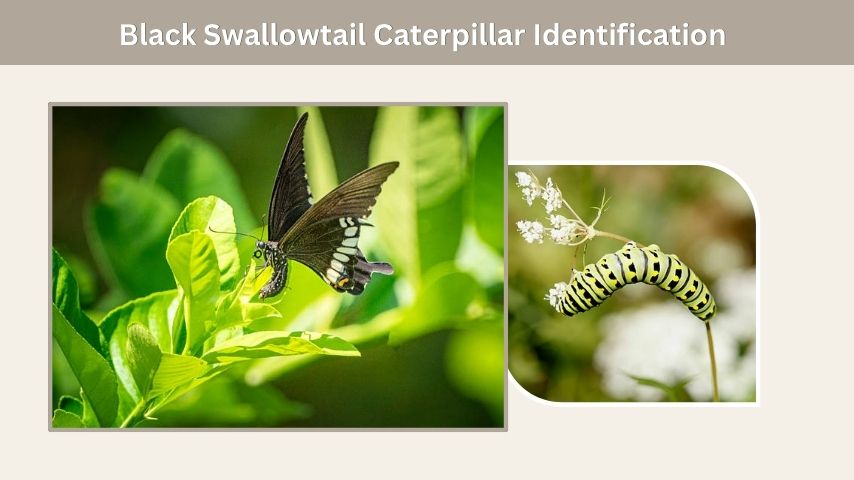
The caterpillar stage is one of the most fascinating parts of the black swallowtail’s development. As the caterpillar grows, it changes appearance several times through a series of molts known as instars. These changes help protect the caterpillar from predators and prepare it for metamorphosis.
What Does a Black Swallowtail Caterpillar Look Like?
Young black swallowtail caterpillars look surprisingly different from mature ones. Early instars resemble bird droppings, a clever form of camouflage that helps reduce predation. As they mature, they develop the bright green coloration many gardeners recognize.
Black Swallowtail Caterpillar Stages
The caterpillar passes through several developmental stages:
- Egg hatching
- Early black-and-white instars
- Intermediate growth stages
- Bright green mature caterpillar
- Pre-pupal stage before chrysalis formation
Each stage serves a specific purpose in the butterfly’s development.
Are Black Swallowtail Caterpillars Poisonous?
Black swallowtail caterpillars are not poisonous to humans. However, they possess a unique defense mechanism called an osmeterium. When disturbed, this orange, forked organ extends from behind the head and releases an unpleasant odor that helps deter predators.
Black Swallowtail Eggs and Larvae
The life cycle begins when female butterflies lay eggs on carefully selected host plants. These plants provide food for newly hatched caterpillars and significantly influence survival rates. Female butterflies are highly selective because caterpillars depend on suitable host plants immediately after hatching.
What Do Black Swallowtail Eggs Look Like?
Black swallowtail eggs are small, round, and pale yellow. They are usually laid individually rather than in clusters. Their tiny size makes them difficult to spot without careful inspection of host plant leaves.
Black Swallowtail Eggs on Parsley
Parsley is one of the most common host plants used by female black swallowtails. Gardeners frequently discover eggs attached to parsley leaves during the growing season. Dill, fennel, and carrot tops are also popular egg-laying locations.
How Long Do Eggs Take to Hatch?
The incubation period depends on temperature and environmental conditions. In warm weather, eggs often hatch within several days. Once the caterpillar emerges, it begins feeding almost immediately on the host plant.
Black Swallowtail Life Cycle
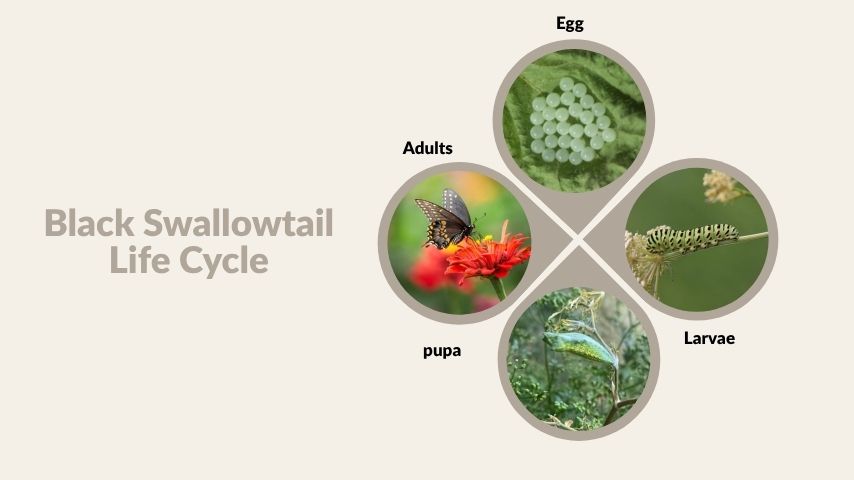
The black swallowtail undergoes complete metamorphosis, a remarkable process that transforms a tiny egg into a beautiful butterfly. This transformation involves four distinct stages and demonstrates one of nature’s most extraordinary biological processes.
Complete Life Cycle Overview
The life cycle follows a predictable sequence:
- Egg
- Caterpillar (larva)
- Chrysalis (pupa)
- Adult butterfly
Each stage has unique characteristics and survival challenges.
How Long Does the Life Cycle Take?
The complete life cycle typically takes several weeks during warm weather. Environmental conditions such as temperature, food availability, and seasonal timing can influence development speed. Multiple generations may occur during a single year in warmer regions.
Why the Life Cycle Is Important
The black swallowtail’s life cycle supports both butterfly populations and ecosystem health. Caterpillars serve as food for wildlife, while adult butterflies contribute to pollination. This interconnected role highlights their importance in natural and garden environments.
Black Swallowtail Chrysalis and Pupa
After completing the caterpillar stage, the black swallowtail enters one of the most dramatic phases of its life cycle. During this stage, the caterpillar transforms into a chrysalis where remarkable internal changes occur. Although the chrysalis appears inactive from the outside, a complete metamorphosis is taking place within.
What Does a Black Swallowtail Chrysalis Look Like?
The black swallowtail chrysalis is usually green or brown, allowing it to blend into surrounding vegetation. Its shape resembles a small twig or leaf stem, providing excellent camouflage from predators. This protective coloration helps increase survival during the vulnerable pupal stage.
How Long Does a Black Swallowtail Chrysalis Last?
The duration of the chrysalis stage varies depending on temperature and season. During warm weather, an adult butterfly may emerge within 10 to 20 days. If the chrysalis forms late in the season, it may overwinter and remain dormant until spring.
Chrysalis vs Cocoon
Many people mistakenly refer to a butterfly chrysalis as a cocoon. However, these structures are different. Butterflies form chrysalises, while moths typically create cocoons made from silk. Understanding this distinction helps accurately describe the black swallowtail’s development.
What Do Black Swallowtail Caterpillars Eat?
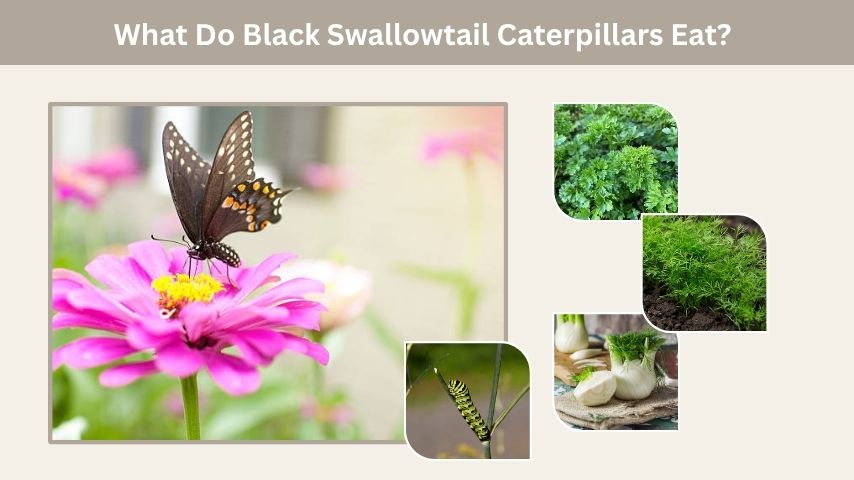
Providing suitable host plants is one of the most important factors in supporting black swallowtail populations. Caterpillars feed exclusively on specific plants, making host plant availability essential for their survival and growth.
Favorite Caterpillar Food Sources
Black swallowtail caterpillars commonly feed on members of the carrot family. Preferred host plants include:
- Parsley
- Dill
- Fennel
- Carrot tops
- Queen Anne’s lace
These plants contain nutrients necessary for healthy caterpillar development.
Why Host Plants Matter
Without suitable host plants, female butterflies cannot successfully reproduce. Caterpillars depend entirely on these plants during their growth stages. Gardeners who grow host plants often attract multiple generations of black swallowtails each year.
Black Swallowtail Caterpillar Food in Gardens
Home gardens provide ideal environments for black swallowtail caterpillars. Herb gardens are particularly attractive because they often contain parsley, dill, and fennel. Allowing some plants to remain available for caterpillars can support local butterfly populations.
What Do Black Swallowtail Butterflies Eat?
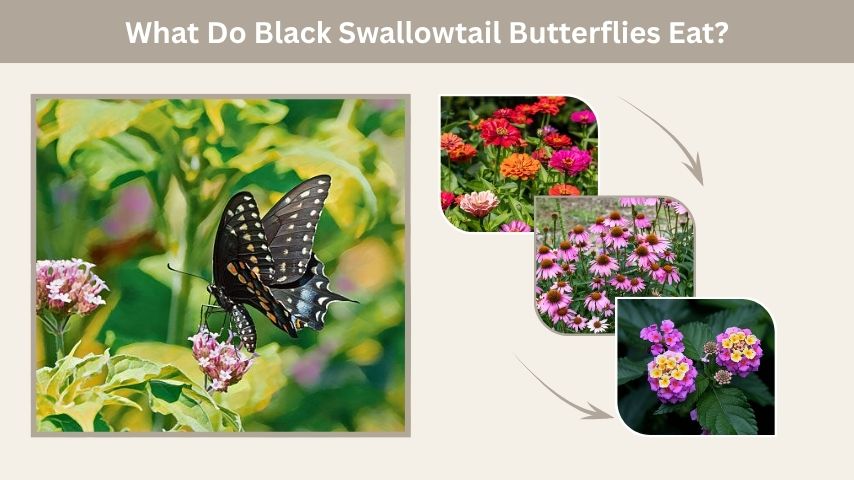
Adult butterflies have dietary needs that differ significantly from those of caterpillars. Instead of feeding on leaves, adult black swallowtails consume nectar from flowering plants. Their long proboscis allows them to access nectar deep within blossoms.
Favorite Nectar Plants
Adult black swallowtails are attracted to a wide variety of flowers, including:
- Zinnias
- Coneflowers
- Phlox
- Milkweed
- Lantana
Planting these flowers can help create a butterfly-friendly landscape.
Feeding Behavior
Black swallowtails spend much of their time visiting flowers in search of nectar. During feeding, they also transfer pollen between plants, contributing to pollination and supporting healthy ecosystems.
Creating a Butterfly Garden
A successful butterfly garden includes both caterpillar host plants and nectar-producing flowers. Combining these resources provides food throughout every stage of the butterfly’s life cycle.
Black Swallowtail Male vs Female
Although male and female black swallowtails appear similar at first glance, several features can help distinguish them. Careful observation of wing coloration and markings often reveals the differences.
Male Black Swallowtail Identification
Male black swallowtails generally display brighter yellow markings across their wings. Their coloration is often more vivid, making them easier to identify in flight.
Female Black Swallowtail Identification
Female black swallowtails typically have larger areas of blue coloration on their hind wings. This blue iridescence can be especially noticeable when viewed in sunlight.
Behavioral Differences
Males and females also exhibit different behaviors. Males frequently patrol territories in search of mates, while females spend more time locating suitable host plants for egg-laying.
Black Swallowtail vs Similar Species
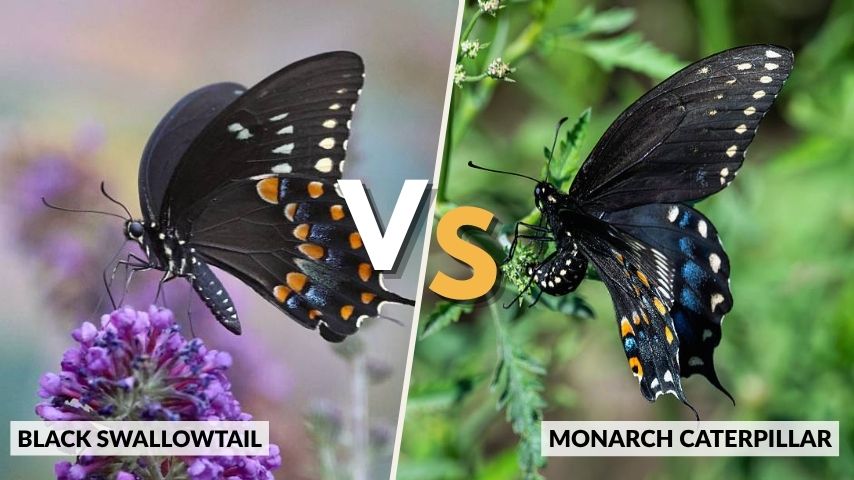
Several butterfly species resemble the black swallowtail, leading to occasional identification confusion. Learning the differences can help gardeners and butterfly enthusiasts accurately identify what they observe.
Black Swallowtail vs Monarch Caterpillar
Monarch caterpillars display distinct black, white, and yellow stripes, while mature black swallowtail caterpillars are primarily green with black bands and yellow spots. Their host plants also differ significantly.
Spicebush Swallowtail vs Black Swallowtail
Spicebush swallowtail caterpillars develop large false eye spots that help deter predators. Black swallowtail caterpillars lack these eye spots and instead rely on camouflage and their defensive osmeterium.
Black Swallowtail vs Eastern Tiger Swallowtail
Eastern tiger swallowtails are generally larger and feature bold yellow wings with black stripes. Black swallowtails have darker overall coloration with distinctive blue and yellow markings.
FAQs
How long do black swallowtail butterflies live?
Adult black swallowtail butterflies typically live for two to four weeks, although environmental conditions can affect their lifespan.
Are black swallowtail butterflies endangered?
No, black swallowtails are not currently considered endangered and remain common throughout much of North America.
What is the orange fork on a black swallowtail caterpillar?
The orange fork is called an osmeterium, a defensive organ that releases an unpleasant odor to deter predators.
How can I attract black swallowtail butterflies to my garden?
Plant host plants such as parsley, dill, and fennel, along with nectar-rich flowers like zinnias, coneflowers, and lantana.
Do black swallowtail caterpillars harm garden plants?
They may eat portions of host plants, but the damage is usually minor and is often considered worthwhile for supporting butterfly populations.