
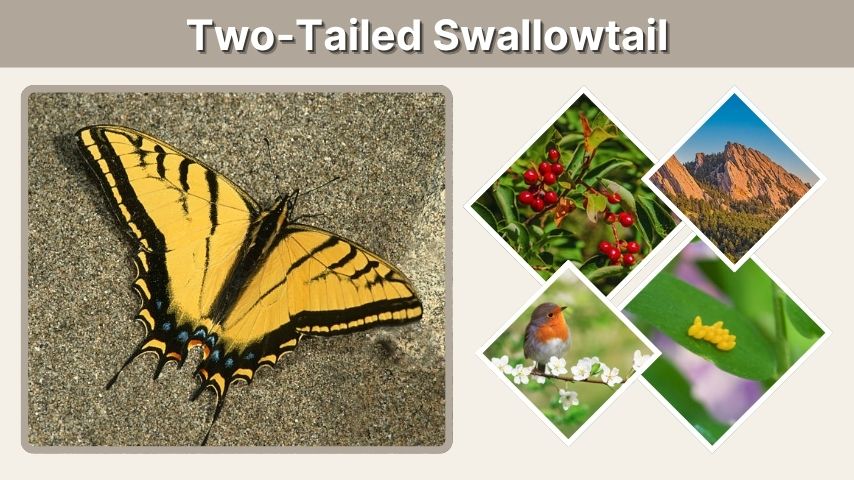
The Two-Tailed Swallowtail is one of the most impressive butterflies in North America. Known for its large size, bright yellow wings, and distinctive double tails, this species attracts the attention of butterfly enthusiasts, gardeners, and nature lovers alike. It is also recognized as the official state butterfly of Arizona. Understanding its habitat, life cycle, caterpillar stage, and feeding habits helps reveal why this butterfly plays an important role in local ecosystems and continues to fascinate people across its range.
What Is a Two-Tailed Swallowtail?
The Two-Tailed Swallowtail (Papilio multicaudata) is a large butterfly species belonging to the swallowtail family. It is closely related to tiger swallowtails but can be identified by the presence of two tails on each hind wing. This beautiful butterfly is commonly found in western North America and is especially abundant in mountainous and wooded regions.
Scientific Classification
The Two-Tailed Swallowtail belongs to the butterfly family Papilionidae, which contains some of the largest and most colorful butterflies in the world. Its scientific name, Papilio multicaudata, refers to the multiple tail extensions that make this species unique.
Why It Is Called a Two-Tailed Swallowtail
Several characteristics contribute to its name.
- Two tail extensions on each hind wing.
- Bright yellow and black wing pattern.
- Large wingspan.
- Swallowtail family classification.
- Distinctive flight behavior.
- Easy identification among western butterflies.
Two-Tailed Swallowtail Appearance
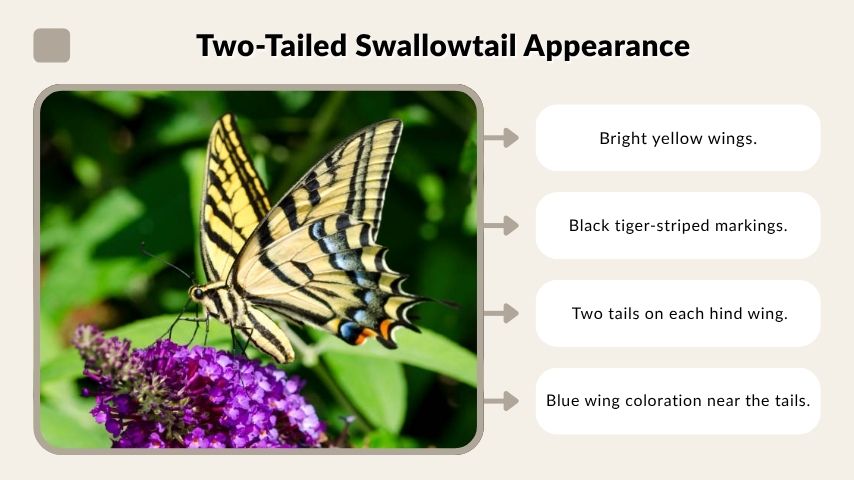
The Two-Tailed Swallowtail is admired for its striking appearance and graceful flight. Its vivid coloration helps it stand out among other butterfly species while also serving as a warning signal to potential predators. Although males and females look similar, females are often slightly larger and may display more extensive blue markings on the hind wings.
Adult Butterfly Appearance
Adult butterflies have yellow wings marked with black tiger-like stripes. The hind wings feature blue and orange spots near the tails, creating a colorful and eye-catching display. Their elegant flight pattern makes them easy to observe in gardens, forests, and open landscapes.
Wingspan and Size
This butterfly is among the largest swallowtail species in North America. Adults often reach wingspans between 4 and 6 inches, making them noticeably larger than many other butterflies found within their range.
Distinctive Features
Several traits help identify the species.
- Bright yellow wings.
- Black tiger-striped markings.
- Two tails on each hind wing.
- Blue wing coloration near the tails.
- Orange eyespots.
- Large overall size.
Two-Tailed Swallowtail Caterpillar
The caterpillar stage is a critical period in the butterfly’s development. During this phase, the insect focuses almost entirely on feeding and growth. Caterpillars consume large amounts of plant material, storing energy needed for metamorphosis and eventual transformation into adult butterflies.
Young caterpillars often rely on camouflage to avoid predators. Their appearance changes significantly as they grow, helping them adapt to different developmental stages.
What Does a Two-Tailed Swallowtail Caterpillar Look Like?
Early-stage caterpillars resemble bird droppings, which helps protect them from predators. As they mature, they become green with eye-like markings that create the illusion of a small snake. This defensive adaptation helps discourage birds and other predators from attacking.
Are Two-Tailed Swallowtail Caterpillars Poisonous?
No, Two-Tailed Swallowtail caterpillars are not poisonous to humans. They do possess a defensive organ called an osmeterium, which releases a strong odor when the caterpillar feels threatened. While unpleasant to predators, this defense mechanism is generally harmless to people.
Caterpillar Defense Mechanisms
These caterpillars use several strategies for protection.
- Camouflage coloration.
- Snake-like eye markings.
- Osmeterium scent gland.
- Remaining motionless when threatened.
- Feeding in sheltered locations.
Two-Tailed Swallowtail Life Cycle
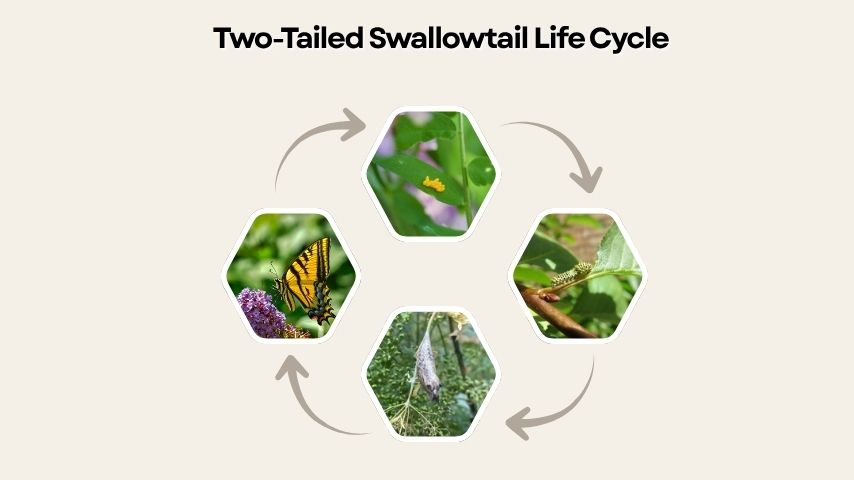
Like all butterflies, the Two-Tailed Swallowtail undergoes complete metamorphosis. This process includes four distinct life stages that transform the insect from a tiny egg into a fully developed butterfly. Each stage serves a specific purpose and contributes to the species’ survival and reproduction.
Egg Stage
Female butterflies lay eggs individually on suitable host plants. The eggs are usually attached to leaves where newly hatched caterpillars can begin feeding immediately after emerging.
Caterpillar Stage
After hatching, caterpillars spend most of their time feeding on leaves. Rapid growth occurs during this stage, and the caterpillar molts several times before reaching full size.
Chrysalis Stage
Once fully grown, the caterpillar forms a chrysalis and enters the pupal stage. Inside the chrysalis, remarkable changes occur as the insect transforms into an adult butterfly. Depending on environmental conditions, this stage may last several weeks or several months.
Adult Butterfly Stage
After emerging from the chrysalis, the adult Two-Tailed Swallowtail expands and dries its wings before taking flight. The primary goals of the adult stage are feeding, reproduction, and laying eggs. Adult butterflies may live for only a few weeks, but during that time they play an important role in pollination and maintaining healthy ecosystems.
Two-Tailed Swallowtail Habitat and Distribution
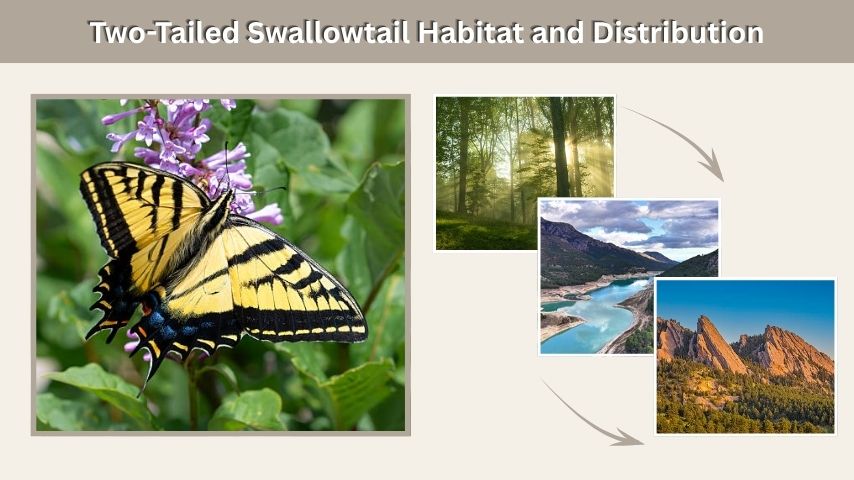
The Two-Tailed Swallowtail occupies a wide range of habitats throughout western North America. Its distribution includes forests, canyons, river valleys, foothills, and suburban landscapes containing suitable host plants. The species adapts well to various elevations and can often be observed in both natural and cultivated environments.
Where Do Two-Tailed Swallowtails Live?
The species occurs throughout much of western North America, including parts of the United States, Canada, and northern Mexico. It is especially common in Arizona, where it serves as the official state butterfly.
Preferred Habitats
Common habitats include:
- Woodlands.
- River corridors.
- Mountain foothills.
- Forest edges.
- Parks and gardens.
- Residential landscapes with host plants.
What Do Two-Tailed Swallowtails Eat?
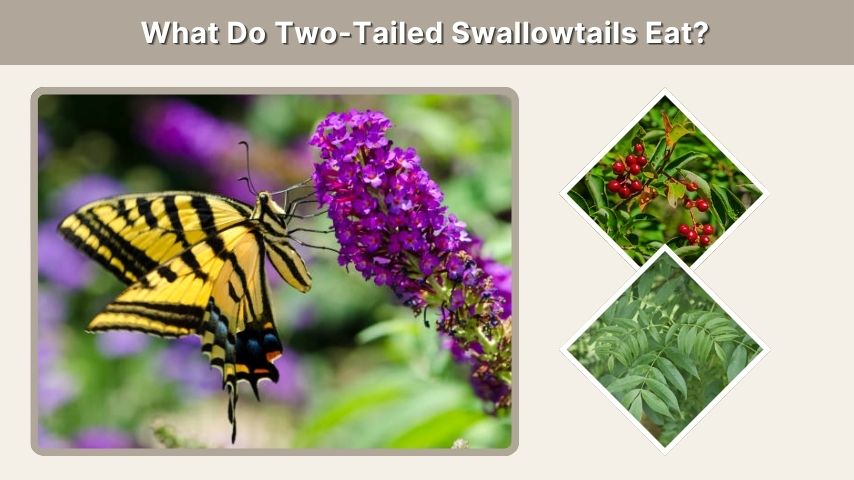
Food sources differ significantly between the caterpillar and adult stages. Caterpillars depend on specific host plants for growth, while adult butterflies consume nectar from flowering plants. Access to suitable food sources is essential for survival, reproduction, and maintaining healthy butterfly populations throughout their natural range.
What Do Caterpillars Eat?
Two-Tailed Swallowtail caterpillars feed on leaves from several host plants.
- Ash trees.
- Willow trees.
- Chokecherry.
- Cottonwood.
- Wild cherry.
- Other related tree species.
What Do Adult Butterflies Eat?
Adult butterflies primarily feed on flower nectar. They use their long proboscis to extract nectar from blooms while also helping pollinate plants. They are commonly seen visiting wildflowers, flowering shrubs, and garden plants throughout spring and summer.
Feeding Behavior
Adult butterflies often gather around moist soil, puddles, and stream edges in a behavior known as puddling. This activity helps them obtain minerals and nutrients not available from nectar alone.
Host Plants for Two-Tailed Swallowtails
Host plants are critical to the survival of this butterfly species. Female butterflies carefully select suitable plants for egg-laying because newly hatched caterpillars depend entirely on these plants for food. Without host plants, caterpillars cannot survive and complete their development.
Why Host Plants Matter
Host plants provide food, shelter, and protection during the caterpillar stage. They also influence butterfly distribution because females typically remain close to areas where appropriate plants are available.
Best Host Plants
Several trees are especially important.
- Ash species.
- Chokecherry.
- Willow.
- Cottonwood.
- Wild cherry.
- Bitter cherry.
Creating a Butterfly-Friendly Garden
Gardeners can attract Two-Tailed Swallowtails by planting nectar-producing flowers and maintaining suitable host plants. Providing both food sources and shelter creates an environment that supports butterflies throughout multiple life stages.
Arizona State Butterfly
The Two-Tailed Swallowtail holds a special place in Arizona’s natural heritage. Its beauty, size, and widespread presence throughout the state made it an ideal choice for official recognition. Today, it serves as an important educational symbol that encourages appreciation for native wildlife and conservation efforts.
Why Arizona Chose the Two-Tailed Swallowtail
Arizona selected this butterfly because it is one of the state’s most recognizable and impressive native species. Its striking appearance and ecological importance helped it become a symbol of Arizona’s diverse natural landscapes.
Educational Importance
The butterfly helps teach students and nature enthusiasts about insect life cycles, pollination, biodiversity, and habitat conservation. Its status as a state symbol increases awareness of environmental stewardship.
Two-Tailed Swallowtail vs Tiger Swallowtail
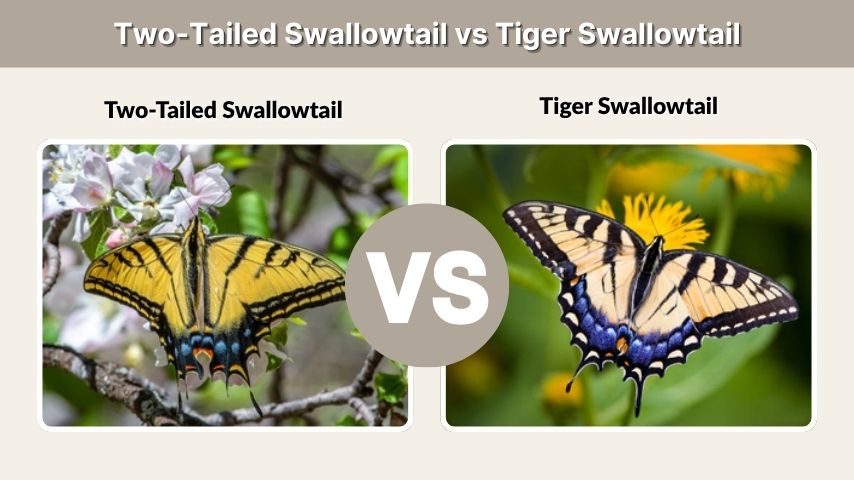
Many people confuse the Two-Tailed Swallowtail with tiger swallowtail species because both share yellow wings and black stripes. However, careful observation reveals several important differences that make identification easier.
Key Differences
| Feature | Two-Tailed Swallowtail | Tiger Swallowtail |
| Number of Tails | Two per hind wing | One per hind wing |
| Scientific Name | Papilio multicaudata | Papilio glaucus |
| Primary Range | Western North America | Eastern North America |
| State Butterfly | Arizona | No |
Which Species Is Larger?
The Two-Tailed Swallowtail is generally larger than most tiger swallowtail species and is considered one of the largest butterflies found in western North America.
Identification Tips
Several features help distinguish the species.
- Double tail extensions.
- Larger wingspan.
- More blue coloration on hind wings.
- Primarily western distribution.
- Distinct orange eyespots.
Predators and Threats
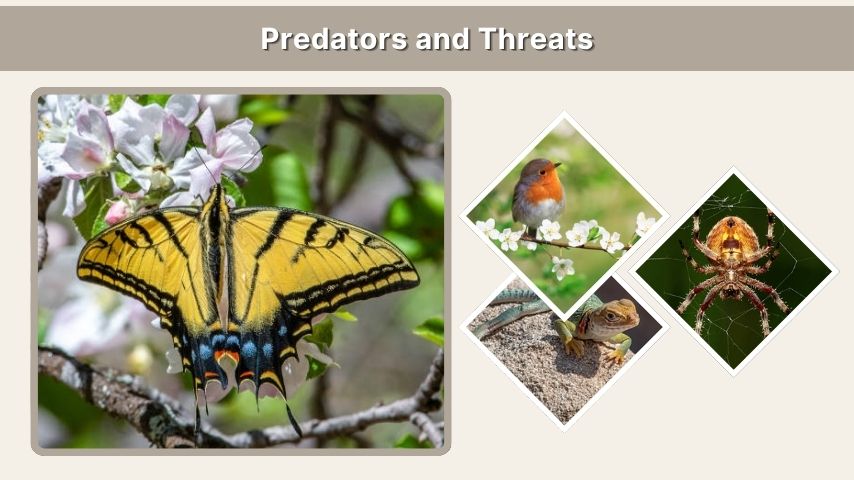
Like many butterflies, the Two-Tailed Swallowtail faces numerous threats throughout its life cycle. Eggs, caterpillars, chrysalides, and adults are vulnerable to different predators and environmental challenges. Despite these risks, healthy habitats help support stable populations.
Common Predators
Natural predators include:
- Birds.
- Spiders.
- Lizards.
- Praying mantises.
- Small mammals.
- Predatory insects.
Environmental Threats
Habitat loss, pesticide use, climate changes, and declining host plant availability can negatively affect butterfly populations. Maintaining native vegetation helps reduce these threats and supports long-term survival.
Conservation Importance
Protecting butterfly habitats benefits not only the Two-Tailed Swallowtail but also many other pollinators and wildlife species. Conservation efforts focus on preserving natural ecosystems and encouraging the planting of native host plants.
FAQs
Where Do Two-Tailed Swallowtail Butterflies Live?
Two-Tailed Swallowtails are found throughout western North America, including Arizona, Colorado, California, New Mexico, Utah, Nevada, and parts of Canada and northern Mexico. They commonly inhabit forests, river valleys, foothills, and suburban areas with suitable host plants.
How Big Is a Two-Tailed Swallowtail Butterfly?
The Two-Tailed Swallowtail is one of the largest butterflies in western North America. Adults typically have a wingspan of 4 to 6 inches (10 to 15 cm), with females often being larger than males.
What Eats Two-Tailed Swallowtail Butterflies?
Two-Tailed Swallowtails face predators throughout their life cycle. Birds, spiders, lizards, praying mantises, small mammals, and predatory insects may feed on eggs, caterpillars, chrysalides, or adult butterflies.
How Can I Attract Two-Tailed Swallowtails to My Garden?
You can attract these butterflies by planting nectar-rich flowers and host plants such as ash, willow, chokecherry, and wild cherry trees. Providing sunny areas, shallow water sources, and avoiding pesticides can also encourage butterfly visits.
What Is the Difference Between a Two-Tailed Swallowtail and a Tiger Swallowtail?
The easiest way to distinguish them is by the tails on their hind wings. A Two-Tailed Swallowtail has two tail extensions on each hind wing, while most Tiger Swallowtails have only one. Two-Tailed Swallowtails are also generally larger and are primarily found in western North America.