
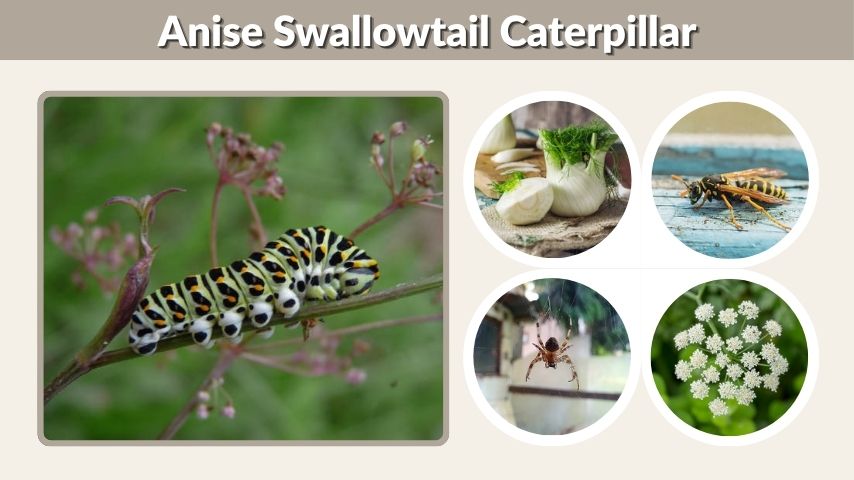
The anise swallowtail caterpillar is a colorful garden visitor that often appears on fennel, dill, parsley, and other plants in the carrot family. At first, it may look like a tiny dark larva, but as it grows, it becomes a bright green caterpillar with bold black and yellow-orange markings. Many gardeners wonder whether it is a pest, what it eats, and how it compares with the black swallowtail caterpillar. This guide explains its life cycle, diet, stages, defenses, host plants, and what to do if you find one in your garden.
What Is an Anise Swallowtail Caterpillar?
An anise swallowtail caterpillar is the larval stage of the anise swallowtail butterfly, known scientifically as Papilio zelicaon. This butterfly is common in many parts of western North America and is often seen in open areas, hillsides, gardens, roadsides, and places where host plants grow.
The caterpillar is best known for feeding on plants in the carrot family, especially fennel, dill, parsley, and anise. Because these herbs are common in home gardens, people often discover the caterpillar while checking their plants.
Why Gardeners Notice It
Gardeners usually notice anise swallowtail caterpillars because they are colorful and can chew noticeable sections of leaves. A mature caterpillar may be bright green with black bands and yellow or orange spots. Younger caterpillars look very different and may be dark with pale markings.
This dramatic change can confuse people. A small early-stage caterpillar may not look like the mature green caterpillar at all.
Anise Swallowtail Caterpillar Identification
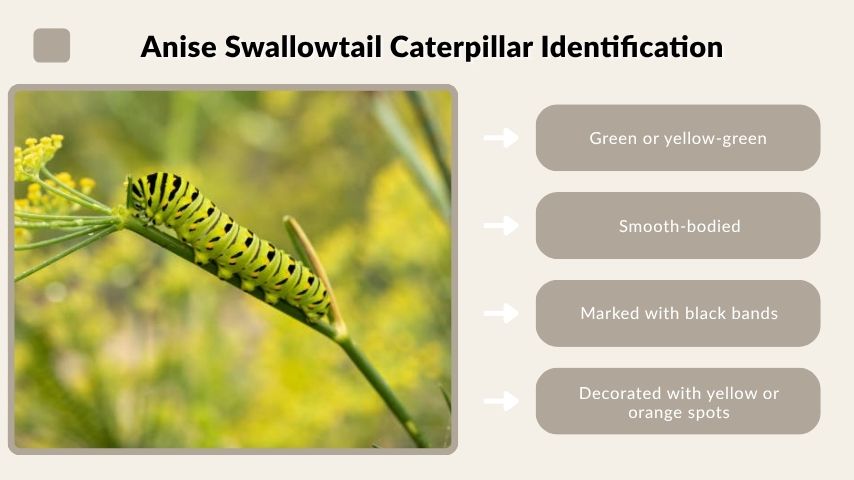
The easiest way to identify an anise swallowtail caterpillar is by its host plant, body pattern, and growth stage. Mature caterpillars are usually easier to recognize than young ones.
Mature Caterpillar Appearance
A mature anise swallowtail caterpillar is usually:
- Green or yellow-green
- Smooth-bodied
- Marked with black bands
- Decorated with yellow or orange spots
- Found on fennel, dill, parsley, anise, or related plants
- About 1.5 to 2 inches long when fully grown
The body may look glossy or smooth, which may explain why some searches include “anise swallowtail caterpillar hair gloss.” Unlike fuzzy caterpillars, this species is not covered in long hairs.
Early Stage Appearance
An early stage anise swallowtail caterpillar can look dark, almost black or brown, with pale spots or stripes. This helps it resemble bird droppings, a useful camouflage against predators.
As it molts and grows, it gradually changes into the more familiar green caterpillar with bold markings.
Anise Swallowtail Caterpillar Stages
The anise swallowtail caterpillar goes through several growth stages called instars. Each instar happens between molts. After the final caterpillar stage, it forms a chrysalis and later emerges as an adult butterfly.
Life Cycle Overview
| Stage | What Happens | What You May Notice |
| Egg | Female lays eggs on host plants | Tiny round eggs on leaves or stems |
| Early instars | Small caterpillar hatches and begins feeding | Dark body with pale markings |
| Middle instars | Caterpillar grows and molts | More visible striping and color change |
| Final instar | Caterpillar becomes large and green | Green body with black and yellow-orange bands |
| Chrysalis | Caterpillar pupates | Brown or green chrysalis attached to support |
| Adult | Butterfly emerges | Yellow and black swallowtail butterfly |
Anise Swallowtail Caterpillar Instars
Anise swallowtail caterpillars usually pass through five instars. During these instars, they eat, grow, shed their skin, and change appearance.
In the first instar, the caterpillar is tiny and may look dark. By the final instar, it has the bold green, black, and yellow-orange look that most people recognize.
How Long Do the Stages Take?
The timing depends on temperature, food quality, weather, and season. In warm conditions, caterpillars may grow quickly. In cooler weather, development can slow down. Once the caterpillar reaches full size, it leaves the feeding plant or chooses a safe nearby location to form a chrysalis.
Anise Swallowtail Caterpillar Diet
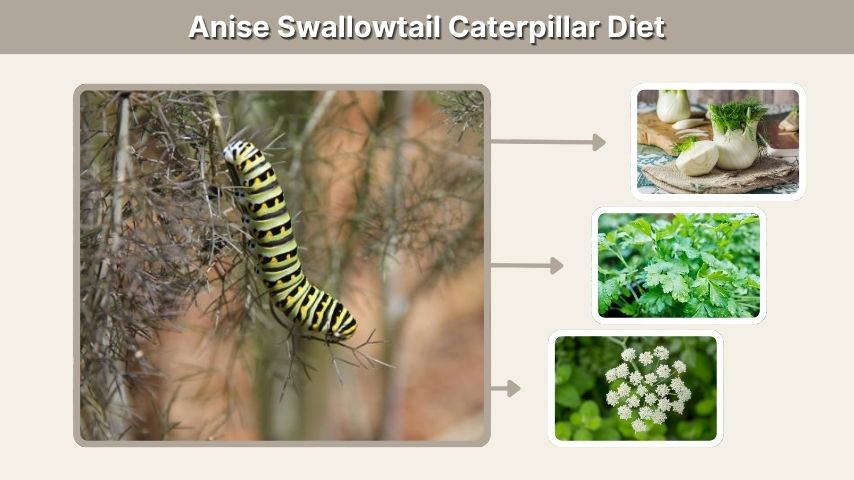
The anise swallowtail caterpillar diet is one of the most important topics for gardeners. These caterpillars feed on specific host plants rather than random garden leaves.
What Do Anise Swallowtail Caterpillars Eat?
Common food plants include:
- Fennel
- Dill
- Parsley
- Anise
- Carrot family plants
- Queen Anne’s lace
- Some native members of the Apiaceae family
- Occasionally citrus in related forms or regional populations
Fennel is one of the most common host plants, especially in areas where wild fennel grows along roadsides, fields, or open spaces.
Anise Swallowtail Caterpillar on Dill
Finding an anise swallowtail caterpillar on dill is common. Dill is a suitable host plant, and female butterflies may lay eggs on it when available. If you want to support butterflies, plant extra dill so both your kitchen and the caterpillars have enough.
Anise Swallowtail Caterpillar on Parsley
An anise swallowtail caterpillar on parsley may be confused with a black swallowtail caterpillar because black swallowtails are also famous for feeding on parsley. Location matters. In the western United States, anise swallowtails are more likely, while black swallowtails are more common in many eastern and central regions.
Is the Anise Swallowtail Caterpillar a Pest?
The anise swallowtail caterpillar can chew leaves, but it is usually not a serious pest. On small herb plants, one or two caterpillars can remove noticeable foliage. On large fennel plants or established garden herbs, the damage is often manageable.
When It May Be a Problem
It may become a problem if:
- The plant is very young
- Many caterpillars are feeding at once
- The herb is already stressed
- You need the plant for harvest
- Caterpillars are on small potted herbs
Even then, the best solution is usually relocation rather than killing. Move the caterpillar to another suitable host plant, such as extra fennel or dill.
Why You Should Consider Keeping It
The caterpillar becomes a beautiful swallowtail butterfly. Adult butterflies help pollinate flowers and add biodiversity to gardens. Supporting host plants is one of the best ways to attract butterflies naturally.
Anise Swallowtail Caterpillar Defense
The anise swallowtail caterpillar has clever defenses against predators. Its early appearance, warning colors, and special scent organ all help it survive.
Camouflage in Early Stages
Young caterpillars often resemble bird droppings. This makes them less attractive to birds and other predators. Instead of looking like soft prey, they look like something not worth eating.
The Orange “Horns”
Many people search for “anise swallowtail caterpillar horns.” These are not true horns. They are part of a defensive organ called the osmeterium.
When disturbed, the caterpillar pushes out a bright orange, forked structure from behind its head. This organ can release a strong smell that may discourage predators such as ants, spiders, birds, and wasps.
Warning Colors
The mature green caterpillar has bold black and yellow-orange markings. These colors may help warn predators or make the caterpillar more noticeable in a way that signals it is not an easy meal.
Anise Swallowtail Caterpillar Predators
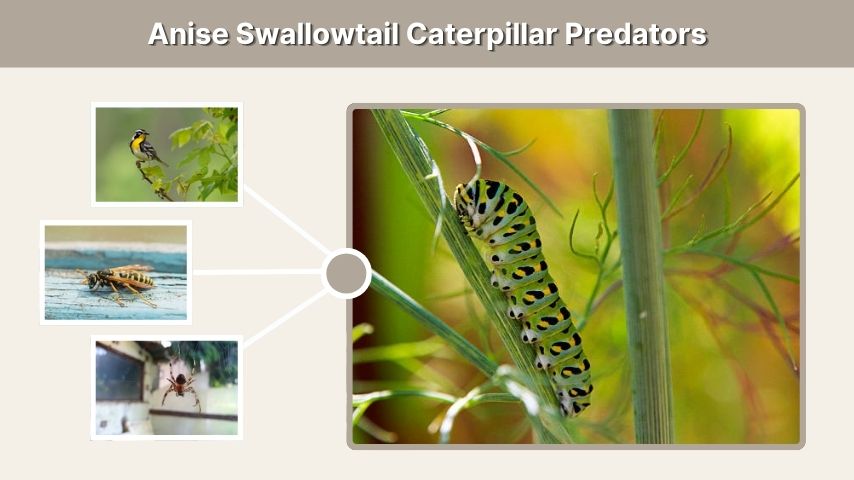
Like many caterpillars, the anise swallowtail caterpillar faces many natural enemies. Most caterpillars do not survive to adulthood because predators and parasitoids are common in nature.
Common Predators and Threats
Predators and threats may include:
- Birds
- Wasps
- Ants
- Spiders
- Assassin bugs
- Parasitic wasps
- Harsh weather
- Pesticides
- Lack of host plants
Parasitic wasps are especially important. They may lay eggs in or on caterpillars, and the developing wasp larvae eventually kill the host.
How Gardeners Can Help
Avoid spraying pesticides on host plants. Even organic sprays can harm caterpillars. If you grow herbs for butterflies, keep a separate section of fennel, dill, or parsley as a caterpillar-friendly area.
Anise Swallowtail Caterpillar Chrysalis
After the final instar, the caterpillar stops feeding and searches for a safe place to pupate. It then forms a chrysalis, also called a pupa.
What Does the Chrysalis Look Like?
The chrysalis may be green, brown, tan, or grayish depending on surroundings and conditions. It is usually attached to a stem, twig, wall, fence, or another firm surface with silk.
The caterpillar uses a silk pad and a silk girdle to hold itself in place. Inside the chrysalis, the caterpillar transforms into an adult butterfly.
How Long Before the Butterfly Emerges?
The time inside the chrysalis depends on temperature and season. In warm weather, the adult may emerge relatively soon. In cooler seasons, the chrysalis may overwinter and remain inactive until conditions improve.
Anise Swallowtail Caterpillar vs Black Swallowtail Caterpillar
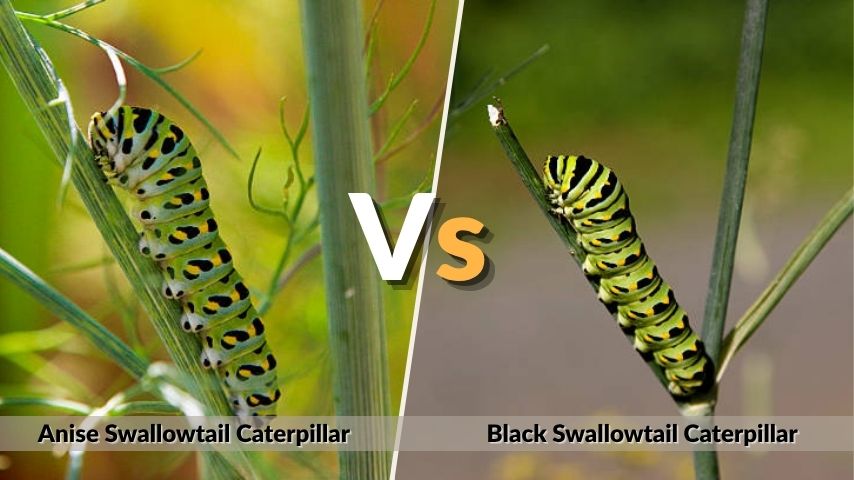
The comparison between anise swallowtail caterpillar and black swallowtail caterpillar is one of the most important search intents in this keyword group. These caterpillars can look similar because both may feed on plants in the carrot family and both can develop green bodies with black and yellow-orange markings.
Key Differences
| Feature | Anise Swallowtail Caterpillar | Black Swallowtail Caterpillar |
| Scientific name | Papilio zelicaon | Papilio polyxenes |
| Common range | Western North America | Much of eastern and central North America |
| Common host plants | Fennel, dill, parsley, anise | Parsley, dill, fennel, carrot, Queen Anne’s lace |
| Mature appearance | Green with black bands and yellow-orange markings | Green with black bands and yellow-orange spots |
| Main clue | More likely in western regions | More likely in eastern and central regions |
| Adult butterfly | Yellow and black swallowtail | Mostly black butterfly with yellow/blue/orange markings |
How to Tell Which One You Have
Start with location. If you are in California, the Pacific Northwest, the Great Basin, or other western areas, anise swallowtail is more likely. If you are in the eastern or central United States, black swallowtail is more likely.
Next, look at the adult butterflies in your area. If yellow-and-black anise swallowtails are visiting fennel or hilltop areas nearby, your caterpillar may be anise. If black swallowtail adults are common around parsley, dill, and carrot-family plants, your caterpillar may be black swallowtail.
Why Identification Can Be Hard
Caterpillar markings vary by stage, individual, and environment. Young caterpillars look different from mature ones, and photos online can show different instars. For a confident ID, consider host plant, location, adult butterfly presence, and clear photos from the side and top.
Western Tiger Swallowtail vs Anise Swallowtail Caterpillar
Some people also search for western tiger swallowtail and anise swallowtail caterpillar comparisons. The adults are easier to confuse than the caterpillars. Western tiger swallowtail caterpillars typically use different host plants, such as trees, and have a different mature larval appearance.
Anise swallowtail caterpillars are more commonly found on fennel, dill, parsley, and related herbs. If the caterpillar is on an herb in the carrot family, anise swallowtail is a stronger possibility in western regions.
How to Care for an Anise Swallowtail Caterpillar
If you want to help an anise swallowtail caterpillar, the best thing you can do is provide fresh, pesticide-free host plants. Do not move it to a plant it cannot eat.
Garden Care Tips
Use these simple steps:
- Leave caterpillars on their host plant when possible.
- Plant extra fennel, dill, or parsley.
- Avoid insecticides on butterfly host plants.
- Move caterpillars only to the same type of suitable host plant.
- Protect small herb plants by growing extras for caterpillars.
- Allow some fennel or dill to flower for adult butterflies.
Raising One Indoors
Some butterfly enthusiasts raise caterpillars indoors, but it requires care. The enclosure must be clean, ventilated, and supplied with fresh host plant cuttings. Waste should be removed daily to prevent mold and disease.
If you are not experienced, it is usually better to let the caterpillar remain outdoors where it can complete its natural life cycle.
FAQs
What does an anise swallowtail caterpillar turn into?
An anise swallowtail caterpillar turns into an anise swallowtail butterfly, Papilio zelicaon. The adult butterfly is usually yellow and black with swallowtail-shaped wings and tail-like extensions on the hindwings.
What does an anise swallowtail caterpillar eat?
Anise swallowtail caterpillars eat host plants in the carrot family. Common foods include fennel, dill, parsley, anise, and related plants. They need these specific plants to grow and should not be moved to unrelated leaves.
Is an anise swallowtail caterpillar poisonous?
It is not considered dangerous to people. However, it has a defensive osmeterium that can release a strong smell when disturbed. Avoid handling it too much, because caterpillars are delicate and can be injured easily.
How many stages does an anise swallowtail caterpillar have?
The caterpillar usually goes through five instars before forming a chrysalis. Early instars are often dark with pale markings, while the final instar is larger, green, and marked with black and yellow-orange bands.
Is an anise swallowtail caterpillar good for the garden?
Yes, it can be good for a wildlife-friendly garden because it becomes a pollinating butterfly. It may chew herb leaves, but the damage is usually minor on established plants. Plant extra fennel, dill, or parsley if you want to support them.