
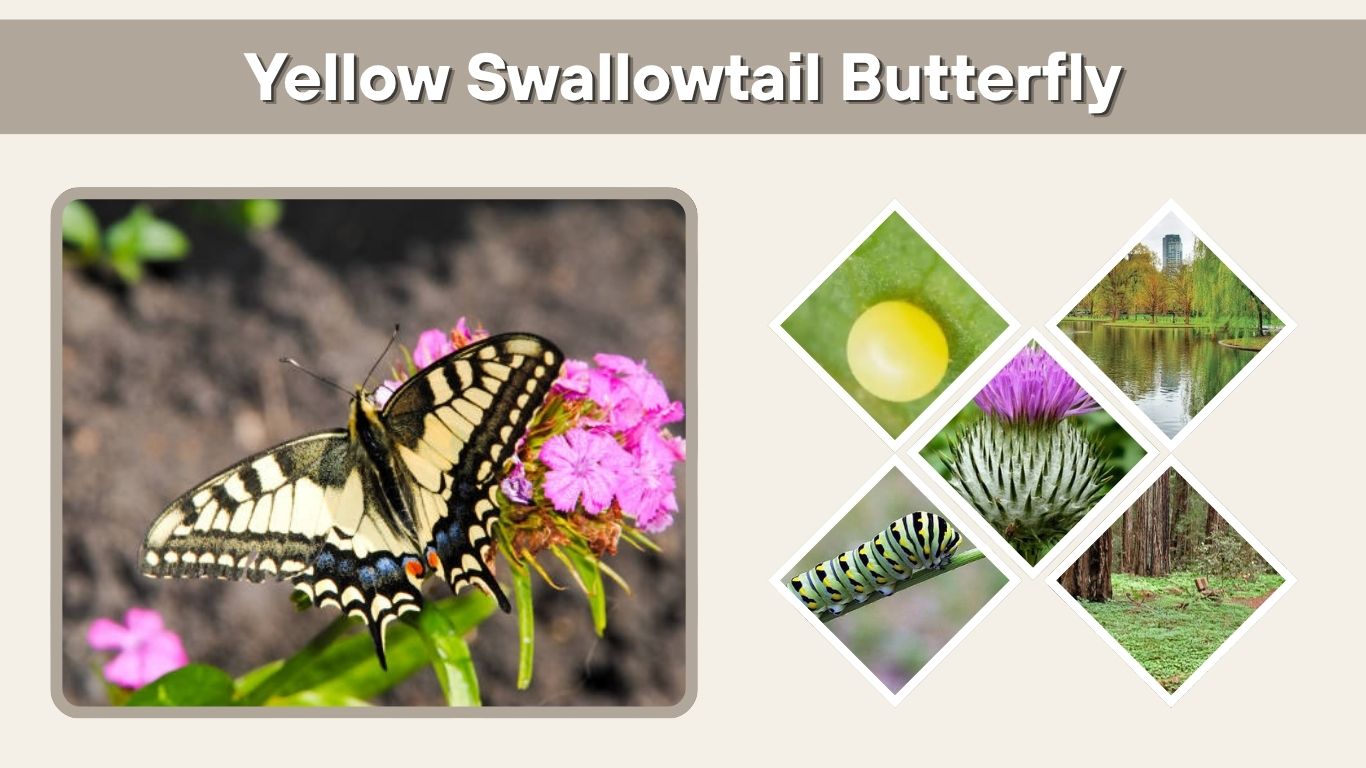
The yellow swallowtail butterfly is one of the most eye-catching butterflies in gardens, meadows, woodland edges, and open fields. Its bright yellow wings, dark markings, and graceful tails make it easy to notice while it feeds on flowers. Many people also recognize its caterpillar stage because it has a unique appearance and depends on specific host plants. This guide explains its identification, life cycle, diet, habitat, and common facts.
What Is a Yellow Swallowtail Butterfly?
A yellow swallowtail butterfly is a large butterfly known for its yellow wings and dark tiger-like stripes or black markings. The name “yellow swallowtail” can refer to different swallowtail species with yellow coloring, but it is often used for tiger swallowtails and other similar yellow-and-black butterflies.
These butterflies belong to the swallowtail family, a group known for wing tails that look a little like the forked tail of a swallow bird. Not every individual has perfect tails, because wings can become worn or damaged over time. Still, the long tails are one of the most recognizable features.
Basic Appearance
A yellow swallowtail butterfly usually has bright yellow wings with black borders, black veins, and dark stripes. Some species have blue or orange spots near the lower hindwings. The body is slender, and the wings are broad enough to make the butterfly look elegant in flight.
The black and yellow pattern is not only beautiful but also useful. It helps the butterfly blend with shadows, leaves, and flowers. The pattern can also confuse predators when the butterfly moves quickly.
Size and Shape
Yellow swallowtails are usually medium to large butterflies. Their wingspan can be several inches wide, depending on the species. They are much larger than many small garden butterflies, which makes them easier to identify.
Their wings are triangular in shape when open. The hindwings often have tail-like extensions. These tails may distract birds or other predators from attacking the butterfly’s main body.
Common Types of Yellow Swallowtails
Several swallowtails may be called yellow swallowtails in casual use. Common examples include eastern tiger swallowtail, western tiger swallowtail, Canadian tiger swallowtail, and giant swallowtail. Some black swallowtails may also show yellow markings, although they are not usually called yellow swallowtails.
The exact species depends on location, wing pattern, size, and host plant. For example, tiger swallowtails often have bold black stripes, while giant swallowtails have a different yellow-and-black pattern.
Yellow and Black Swallowtail Butterfly
The phrase yellow and black swallowtail butterfly usually describes a butterfly with yellow wings and strong black markings. Tiger swallowtails are a common example. These butterflies are often seen visiting flowers such as milkweed, lantana, thistle, zinnia, butterfly bush, and wildflowers.
Their bright color makes them easy to spot, but their quick flight can make close identification harder.
Yellow Swallowtail Identification
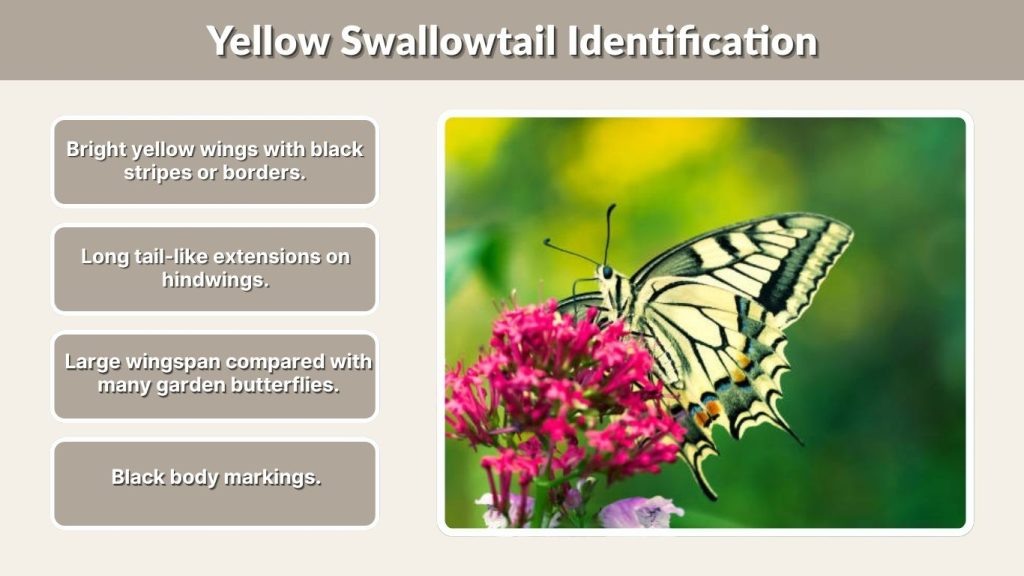
Yellow swallowtail identification starts with wing color, markings, size, and tail shape. Because several species share yellow and black colors, it is helpful to look closely at the stripe pattern, hindwing spots, and where the butterfly is found.
Some yellow swallowtails look very similar from a distance. Careful observation can help separate tiger swallowtails from giant swallowtails, spicebush swallowtails, and other related species.
Identification Checklist
- Bright yellow wings with black stripes or borders
- Long tail-like extensions on hindwings
- Large wingspan compared with many garden butterflies
- Black body markings
- Blue or orange spots near hindwings in some species
- Strong, floating flight pattern
- Often seen on flowers, mud, or near host trees
- Caterpillars found on specific host plants
Male Yellow Swallowtail Butterfly
Male yellow swallowtails are often bright yellow with clear dark markings. In many tiger swallowtail species, males are usually yellow and have bold black stripes. They may patrol open areas, woodland edges, and gardens while searching for females.
Males also visit wet soil, mud, or damp sand to absorb minerals. This behavior is called puddling. Several males may gather together in one damp spot.
Female Yellow Swallowtail Butterfly
Female yellow swallowtails can look similar to males, but in some species, females may have more blue coloring on the hindwings. In eastern tiger swallowtails, females can be yellow or dark form. The dark form may look almost black with faint tiger stripes and blue markings.
Females search for suitable host plants where they can lay eggs. Their behavior near trees and shrubs is often linked to egg-laying.
Yellow Swallowtail vs Monarch Butterfly
A yellow swallowtail is different from a monarch butterfly. Monarchs are orange and black, while yellow swallowtails are usually yellow and black. Monarchs have rounded wings without long swallowtail tails. Yellow swallowtails often have tail-like extensions on the hindwings.
Their caterpillars are also different. Monarch caterpillars feed mainly on milkweed, while yellow swallowtail caterpillars use different host plants depending on the species.
Yellow Swallowtail Caterpillar
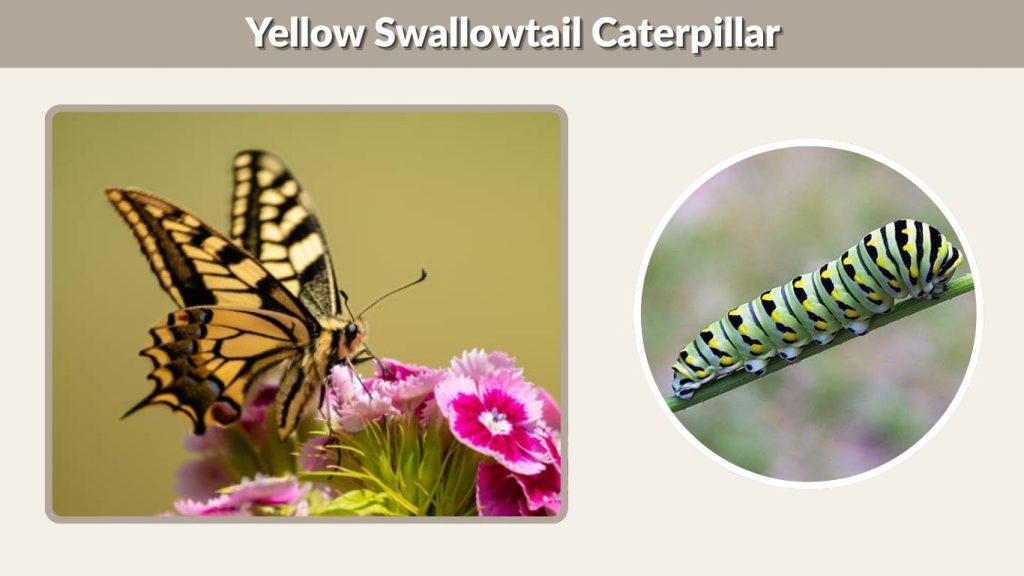
The yellow swallowtail caterpillar is the larval stage of the butterfly. It looks very different from the adult butterfly. Depending on the species and age, the caterpillar may look like bird droppings when young, then later become green, brown, or patterned.
Caterpillars spend most of their time eating host plant leaves. This feeding stage helps them store energy before they form a chrysalis.
What Does a Yellow Swallowtail Caterpillar Look Like?
A young yellow swallowtail caterpillar may be dark, brown, or blackish and can resemble bird droppings. This camouflage helps protect it from predators. As it grows, it may become green with large eye-like markings near the front of the body.
These false eyes do not see. They are markings that help scare predators or make the caterpillar look larger than it really is.
Caterpillar Stages
The caterpillar grows through several stages called instars. Each time it grows too large for its skin, it molts and enters the next stage. Early instars are small and more vulnerable. Later instars are larger and easier to notice.
Before pupating, the caterpillar may stop eating and wander away from the host plant. This is normal behavior. It is searching for a safe place to become a chrysalis.
What Do Yellow Swallowtail Caterpillars Eat?
Yellow swallowtail caterpillars eat leaves from specific host plants. The exact plant depends on the species. Tiger swallowtail caterpillars may feed on leaves of trees such as tulip tree, wild cherry, ash, birch, cottonwood, and willow.
Giant swallowtail caterpillars often use citrus plants and related trees. Other yellow swallowtails may use different native plants. The female butterfly chooses these plants because the caterpillar needs them after hatching.
Black vs Yellow Swallowtail Caterpillar
A black swallowtail caterpillar is usually green with black bands and yellow-orange spots when mature. A yellow swallowtail caterpillar, especially a tiger swallowtail caterpillar, is often green with large false eyes. Giant swallowtail caterpillars may look like bird droppings.
The easiest way to compare them is by host plant. Black swallowtail caterpillars often feed on parsley, dill, fennel, carrot, and Queen Anne’s lace. Yellow tiger swallowtail caterpillars usually feed on trees and shrubs.
Yellow Swallowtail Host Plants and Egg Laying
Host plants are the plants where female butterflies lay eggs and where caterpillars feed after hatching. Adult butterflies can drink nectar from many flowers, but caterpillars are much more specific. Without the right host plant, the caterpillars cannot survive.
This is why host plants are important for attracting yellow swallowtails to a garden.
Common Host Plants
| Swallowtail Type | Common Host Plants | Notes |
| Eastern tiger swallowtail | Tulip tree, wild cherry, ash, birch | Common in eastern North America |
| Western tiger swallowtail | Willow, cottonwood, alder, cherry | Common in western regions |
| Giant swallowtail | Citrus, prickly ash, rue | Caterpillars often mimic bird droppings |
| Canadian tiger swallowtail | Aspen, birch, willow | More common in northern areas |
| Anise swallowtail | Fennel, anise, parsley family plants | Common in parts of western North America |
Where Do Yellow Swallowtails Lay Their Eggs?
Female yellow swallowtails lay eggs on suitable host plants. The eggs are usually placed on leaves where the young caterpillar can begin feeding after it hatches. A female may inspect several plants before choosing one.
Eggs are often small, round, and pale at first. They may darken slightly as the caterpillar develops inside.
Host Plants for Gardens
If you want yellow swallowtails in a butterfly garden, plant both nectar flowers and host plants. Nectar flowers feed adults, while host plants support caterpillars. Native trees and shrubs are especially helpful for tiger swallowtails.
Good garden choices may include native cherry, tulip tree, willow, birch, citrus in warm regions, and nectar flowers such as zinnia, milkweed, verbena, lantana, and butterfly bush.
Do Caterpillars Harm Plants?
Yellow swallowtail caterpillars eat leaves, but they usually do not destroy healthy mature trees or shrubs. On small plants, feeding damage may be more noticeable. In most gardens, the damage is minor and temporary.
If you grow host plants for butterflies, some chewed leaves are a good sign. It means your garden is supporting the butterfly life cycle.
Life Cycle of Yellow Swallowtail Butterfly
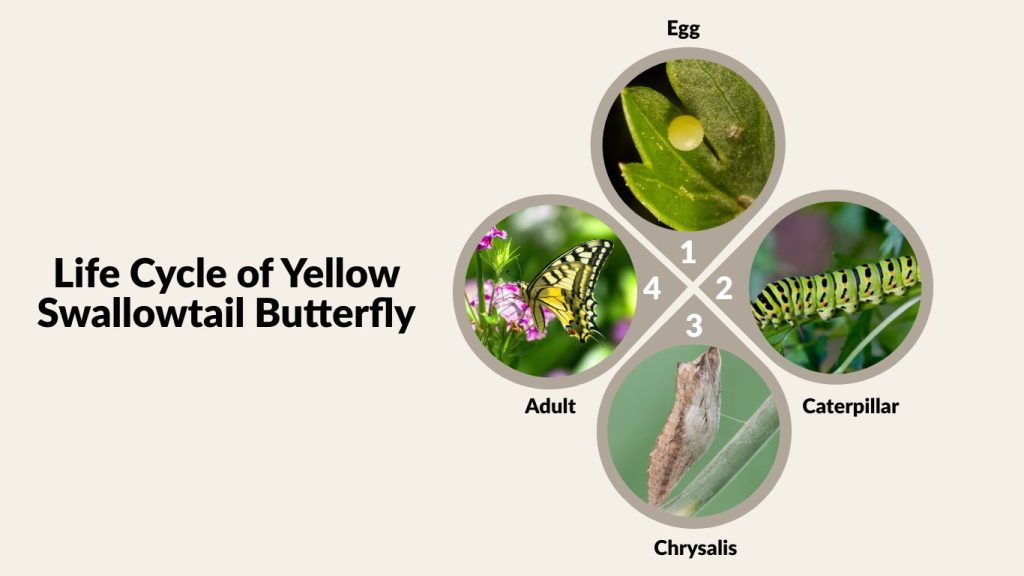
The yellow swallowtail butterfly has four main life stages: egg, caterpillar, chrysalis, and adult butterfly. This process is called complete metamorphosis. Each stage looks different and has a different purpose.
The adult butterfly focuses on feeding, mating, and laying eggs. The caterpillar focuses on eating and growing. The chrysalis is the transformation stage.
Egg Stage
The life cycle begins when a female lays eggs on a host plant. The eggs are tiny and may be placed singly on leaves. After several days, a small caterpillar hatches and begins eating.
The egg stage is short compared with the chrysalis stage. Weather and temperature can affect how quickly the egg hatches.
Caterpillar Stage
The caterpillar eats leaves and grows quickly. It molts several times as its body gets larger. Young caterpillars may use camouflage to avoid predators. Older caterpillars may have false eyes or other markings.
This stage is important because the caterpillar stores energy for the chrysalis and adult stages.
Chrysalis Stage
After the caterpillar finishes growing, it forms a chrysalis. Swallowtails do not make a cocoon like many moths. Instead, the caterpillar attaches itself with silk and becomes a chrysalis.
The chrysalis may be green, brown, or tan. Some yellow swallowtails overwinter in this stage and emerge when warmer conditions return.
Adult Butterfly Stage
When development is complete, the adult butterfly emerges from the chrysalis. Its wings are soft and folded at first. It must hang quietly while the wings expand and dry.
After the wings harden, the butterfly can fly, feed, mate, and continue the life cycle.
Yellow Swallowtail Diet, Habitat, and Behavior
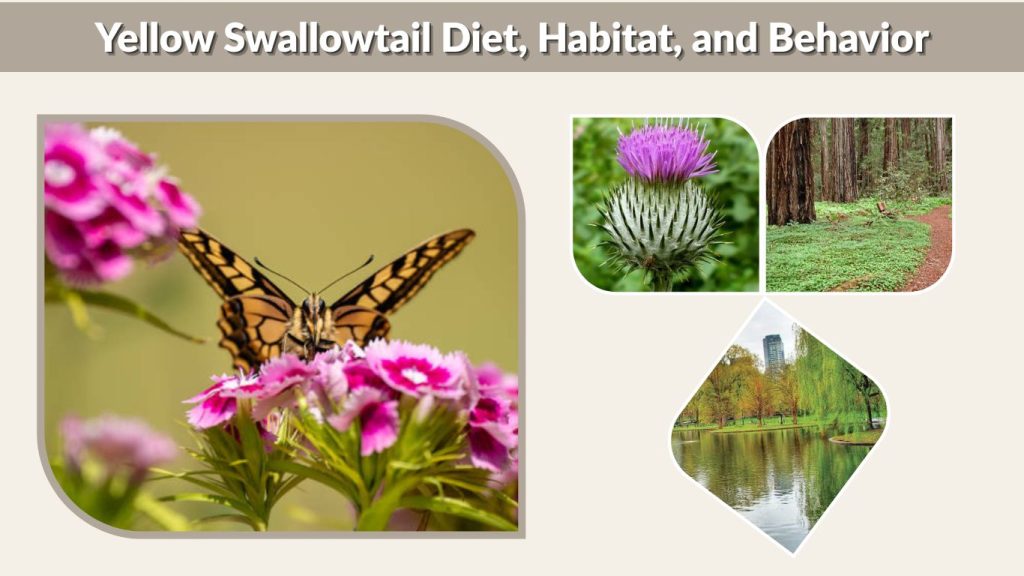
Yellow swallowtails are active butterflies that need both nectar sources and suitable habitat. They are often seen in sunny places where flowers are available. Their caterpillars need host plants, while adults need nectar and sometimes minerals from damp ground.
Their behavior changes by stage, season, and species.
What Do Yellow Swallowtail Butterflies Eat?
Adult yellow swallowtail butterflies drink nectar from flowers. They may visit milkweed, thistle, zinnia, phlox, lilac, lantana, verbena, Joe-Pye weed, and butterfly bush. Their long proboscis helps them reach nectar inside flowers.
They may also visit wet soil, mud, animal droppings, or damp sand for minerals. This is especially common among males.
Habitat and Range
Yellow swallowtails live in many habitats, including gardens, open woods, forest edges, meadows, roadsides, orchards, parks, and river areas. The exact habitat depends on species and host plant availability.
Eastern tiger swallowtails are common in many eastern regions. Western species are more common near rivers, wooded areas, and places with willow or cottonwood.
Do Yellow Swallowtail Butterflies Migrate?
Some yellow swallowtails may move locally in search of food and breeding sites, but they are not famous for long-distance migration like monarch butterflies. Their populations usually depend on local breeding, seasonal emergence, and suitable host plants.
In colder regions, some survive winter as a chrysalis and emerge the following season.
Predators and Defense
Yellow swallowtails face predators such as birds, spiders, wasps, ants, and other insects. Their caterpillars use camouflage, false eyes, and sometimes defensive organs to discourage attackers.
Swallowtail caterpillars have a special forked organ called an osmeterium. When disturbed, it may extend and release a strong smell to scare predators.
Yellow Swallowtail Meaning and Symbolism
The yellow swallowtail butterfly is often seen as a symbol of beauty, change, hope, and renewal. Its transformation from caterpillar to butterfly makes it easy to connect with growth and personal change.
Symbolic meanings are cultural and personal. They are not scientific facts, but many people enjoy the butterfly as a positive sign in nature.
Common Symbolic Meanings
- Change and transformation
- Hope and renewal
- Lightness and joy
- New beginnings
- Freedom and movement
- Beauty in nature
- Patience through life stages
Spiritual Meaning
Some people connect the yellow swallowtail butterfly with encouragement, peace, or a reminder to move through life changes with confidence. The yellow color is often linked with warmth, energy, and happiness.
These meanings depend on personal belief. In nature, the butterfly’s real story is also powerful because it shows survival, adaptation, and complete transformation.
Yellow and Black Butterfly Meaning
A yellow and black swallowtail butterfly may symbolize balance between brightness and strength. The yellow color suggests joy, while black markings may represent protection or mystery.
For garden lovers, its appearance may simply mean the habitat is healthy enough to support butterflies, flowers, and host plants.
Why People Notice Yellow Swallowtails
Yellow swallowtails are large, colorful, and graceful. They often fly slowly around flowers, making them easier to observe than tiny fast-moving butterflies. Their beauty and size make them one of the most memorable butterflies in many landscapes.
Seeing one in a garden often feels special because it connects flowers, host plants, caterpillars, and adult butterflies in one natural cycle.
FAQs
What is a yellow swallowtail butterfly?
A yellow swallowtail butterfly is a large butterfly with yellow wings, black markings, and often tail-like extensions on the hindwings. The name can refer to several yellow swallowtail species, especially tiger swallowtails. These butterflies are commonly seen in gardens, meadows, woodland edges, and open sunny habitats.
What does a yellow swallowtail caterpillar eat?
A yellow swallowtail caterpillar eats leaves from specific host plants. Tiger swallowtail caterpillars often feed on tulip tree, wild cherry, ash, birch, cottonwood, and willow. Giant swallowtail caterpillars may feed on citrus and related plants. The correct host plant depends on the swallowtail species.
How can you tell male and female yellow swallowtails apart?
Male yellow swallowtails are often bright yellow with bold black markings. Females may look similar but can have more blue markings on the hindwings. In some species, females may also appear in a dark form, making them look much darker than typical yellow males.
Is a yellow swallowtail the same as a monarch?
No, a yellow swallowtail is not the same as a monarch. Monarch butterflies are orange and black, with rounded wings and no swallowtail tails. Yellow swallowtails are usually yellow and black and often have tail-like hindwing extensions. Their caterpillars also use different host plants.
Do yellow swallowtail butterflies need host plants?
Yes, host plants are essential for their life cycle. Adult butterflies can drink nectar from many flowers, but females must lay eggs on the right host plants so caterpillars can feed after hatching. Without host plants, yellow swallowtails cannot successfully reproduce in a garden.