
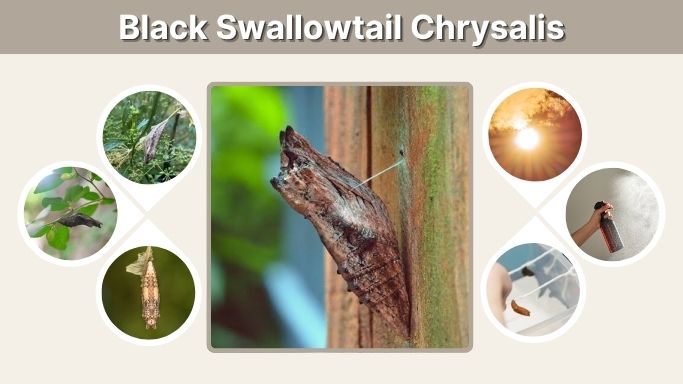
A black swallowtail chrysalis is one of the most interesting stages in the butterfly life cycle. After feeding as a caterpillar, the black swallowtail forms a firm chrysalis where it changes into an adult butterfly. This stage may look still from the outside, but inside, major transformation is happening. Knowing its color, timing, health signs, and common problems helps you understand whether the chrysalis is developing normally.
What Is a Black Swallowtail Chrysalis?
A black swallowtail chrysalis is the pupal stage of the black swallowtail butterfly. It forms after the caterpillar finishes eating and finds a safe place to attach itself. Unlike moths, swallowtail butterflies do not make cocoons. Instead, the caterpillar sheds its final skin and becomes a chrysalis.
The chrysalis is usually attached to a stem, stick, wall, container side, or another firm surface. It is held in place by a small silk pad at the base and a thin silk girdle around the middle. This support keeps the chrysalis upright while the butterfly develops inside.
How the Chrysalis Forms
Before becoming a chrysalis, the black swallowtail caterpillar enters a resting stage. It may stop eating, wander away from the host plant, and search for a dry, protected location. This behavior is normal and usually means it is ready to pupate.
Once it chooses a spot, it attaches its rear end to a silk pad. Then it spins a thin silk band around its body. After hanging in this position for some time, the caterpillar sheds its outer skin. Underneath, the chrysalis appears soft at first, then hardens within hours.
Chrysalis vs Cocoon
A chrysalis and a cocoon are not the same thing. A chrysalis is the body of a butterfly pupa. A cocoon is a silk covering made by many moth caterpillars. Black swallowtails form a chrysalis, not a cocoon.
This difference is important because people often ask whether swallowtail caterpillars form chrysalis or cocoons. In black swallowtails, the caterpillar becomes the chrysalis itself. It does not wrap itself in a thick silk case.
Where Black Swallowtails Make Their Chrysalis
Black swallowtail caterpillars may form a chrysalis on plant stems, garden stakes, fences, tree bark, walls, or the sides of a rearing container. They often move away from parsley, dill, fennel, carrot tops, or other host plants before pupating.
In the wild, they choose places that are hidden from predators and protected from heavy rain. Indoors, they may attach to a mesh cage, jar lid, paper towel, stick, or container wall.
Common Chrysalis Colors
A black swallowtail chrysalis can be green, brown, tan, or grayish. The color often depends on the surrounding surface, light, and seasonal conditions. A green chrysalis may blend with plant stems, while a brown chrysalis may look like bark or dried leaves.
Both green and brown colors can be healthy. Color alone does not always tell you whether the chrysalis is alive or dead.
Black Swallowtail Chrysalis Stages
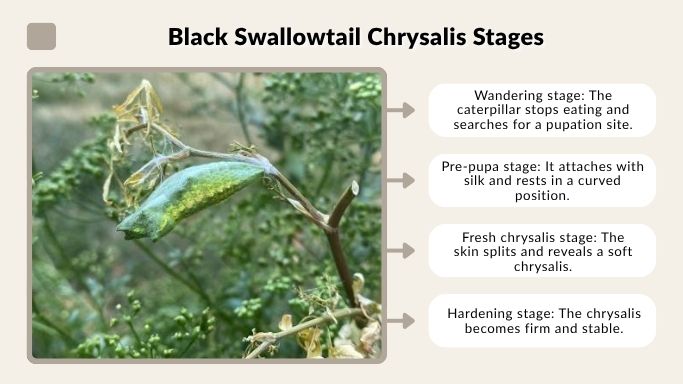
The chrysalis stage begins after the caterpillar finishes its final molt. From the outside, it may seem like nothing is happening. However, this is the time when the caterpillar’s body is reorganized into a butterfly.
The stages include pre-pupa, fresh chrysalis, hardened chrysalis, developing chrysalis, and emergence. Each stage has signs that help you understand what is happening.
Main Stages List
- Wandering stage: The caterpillar stops eating and searches for a pupation site.
- Pre-pupa stage: It attaches with silk and rests in a curved position.
- Fresh chrysalis stage: The skin splits and reveals a soft chrysalis.
- Hardening stage: The chrysalis becomes firm and stable.
- Development stage: The butterfly forms inside.
- Emergence stage: The chrysalis darkens or changes before the adult butterfly comes out.
Caterpillar to Chrysalis
The change from caterpillar to chrysalis usually begins when the caterpillar is fully grown. It may look restless and may leave the food plant. This is not usually a problem. It is searching for a proper place to pupate.
During the pre-pupa stage, the caterpillar may remain still for many hours. It may look like a “J” shape or lean backward while held by the silk girdle. After that, the outer caterpillar skin splits and falls away, leaving the chrysalis behind.
Chrysalis to Butterfly
Inside the chrysalis, the butterfly develops wings, legs, antennae, eyes, and other adult body parts. The chrysalis does not need food during this time. It only needs a safe, stable, and well-ventilated place.
Near emergence, the chrysalis may become darker or slightly transparent. You may see wing patterns through the outer shell. This is often a sign that the butterfly may emerge soon.
Butterfly Emerging from Chrysalis
When the adult black swallowtail is ready, the chrysalis splits open. The butterfly climbs out with soft, folded wings. It must hang quietly while fluid pumps into the wings and the wings expand.
This process is delicate. Do not touch or move the butterfly during this time unless it is in danger. It needs space to hang so the wings can dry properly.
How Long Does a Black Swallowtail Stay in Chrysalis?
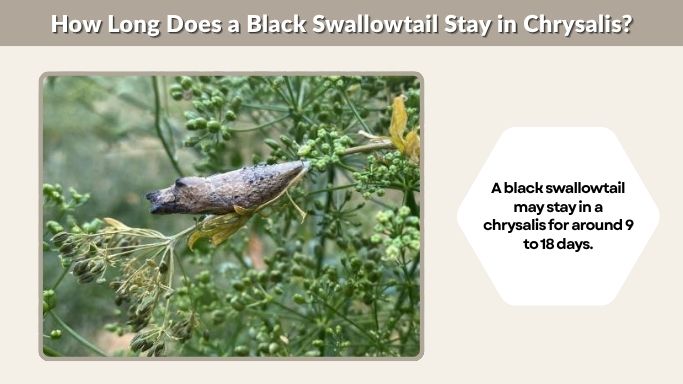
The time in chrysalis depends on temperature, season, and whether the chrysalis is going into diapause. In warm conditions, a black swallowtail may stay in chrysalis for around 9 to 18 days. Some may take a little less or longer.
If the chrysalis forms late in the season, it may overwinter. In that case, the butterfly may not emerge until spring.
Normal Chrysalis Duration
For many black swallowtails, the chrysalis stage lasts about two weeks in warm weather. Indoor conditions may speed up or slow down the timing slightly. Cooler temperatures usually slow development.
If the chrysalis is healthy but takes longer than expected, it may not always mean something is wrong. Temperature and seasonal timing make a big difference.
Timing Table
| Chrysalis Situation | Common Time Frame | Notes |
| Warm-season chrysalis | 9–18 days | Often emerges within two weeks |
| Cool indoor chrysalis | 2–4 weeks | Development may slow down |
| Late-season chrysalis | Several months | May overwinter until spring |
| Overwintering chrysalis | Fall to spring | Needs natural seasonal cues |
| Problem chrysalis | Varies | Watch for odor, mold, or collapse |
Why Some Take Longer
A black swallowtail chrysalis may take longer because of cool weather, lower indoor temperature, shorter daylight, or seasonal diapause. Diapause is a resting state that allows the insect to survive winter.
A chrysalis that does not hatch quickly is not always dead. If it formed in late summer or fall, it may be waiting for warmer spring conditions.
Black Swallowtail Chrysalis Not Hatching
If a chrysalis does not hatch after several weeks, check the season first. A late-season chrysalis may be overwintering. Keep it in a safe, cool, sheltered place where it will not dry out completely or get too warm too early.
However, if the chrysalis becomes black, soft, leaking, moldy, or gives off a bad smell, it may be dead or infected.
Healthy vs Dead Black Swallowtail Chrysalis
A healthy black swallowtail chrysalis is usually firm, attached well, and free from bad odor or wet spots. It may be green, brown, or tan. It may also darken naturally before emergence.
A dead chrysalis often looks collapsed, mushy, moldy, or dried out. Sometimes it turns very dark without any sign of normal butterfly development.
Signs of a Healthy Chrysalis
- Firm body shape
- Secure attachment
- No bad smell
- No leaking fluid
- No fuzzy mold growth
- Natural green, brown, tan, or gray color
- Darkening near emergence
- Slight visible wing pattern before hatching
A healthy chrysalis may look different depending on age and environment. Do not judge only by color. A brown chrysalis can be just as healthy as a green one.
Signs of a Dead Chrysalis
A dead swallowtail chrysalis may become very soft, shriveled, or hollow. It may fall from its support or show signs of rotting. If it smells bad, leaks dark liquid, or grows mold, it is likely no longer alive.
Some dead chrysalises dry out and become light in weight. Others turn black and mushy because of disease or infection.
Infected Chrysalis Problems
An infected black swallowtail chrysalis may show discoloration, wet patches, mold, or an unusual smell. Infection can happen because of bacteria, fungi, parasites, or poor rearing conditions.
Good airflow is important. A closed, damp container can encourage mold. If you raise swallowtails indoors, avoid overcrowding and clean out frass and old leaves regularly before the caterpillars pupate.
Dead or Overwintering?
A chrysalis that does not hatch quickly may be dead, but it may also be overwintering. The difference can be difficult to tell. If the chrysalis is firm, dry, and has no bad smell, it may still be alive.
For overwintering chrysalises, patience is important. They may remain unchanged for months and emerge when spring conditions return.
How to Care for a Black Swallowtail Chrysalis
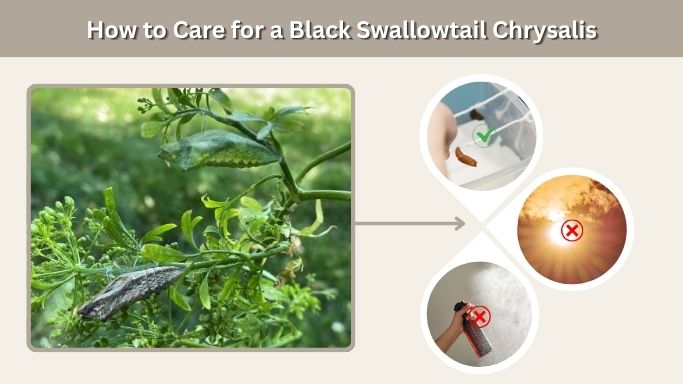
A black swallowtail chrysalis does not need food, but it does need the right environment. The most important care points are safety, airflow, proper humidity, and enough room for the butterfly to emerge.
Do not place the chrysalis in direct sunlight or in a sealed wet container. It should stay protected but not overly damp.
Basic Care Tips
- Keep the chrysalis in a ventilated container.
- Avoid direct hot sunlight.
- Keep it safe from ants, spiders, wasps, and pets.
- Do not spray water directly on it.
- Provide enough space for the butterfly to hang after emerging.
- Keep the attachment point stable.
- Avoid touching it unless necessary.
If the chrysalis is indoors, a mesh butterfly cage or container with breathable fabric works well. Make sure the emerging butterfly can climb and hang.
Can You Move a Swallowtail Chrysalis?
Yes, you can move a swallowtail chrysalis if needed, but it should be done carefully. Moving is usually only necessary if the chrysalis is in danger, attached to a dying plant stem, or in a place where the butterfly cannot safely emerge.
If possible, move the entire stick, stem, or object it is attached to. This is safer than removing the chrysalis itself.
How to Move It Safely
If the chrysalis is attached to a removable stem or stick, cut the stem and place it in a safe container. Keep the chrysalis in a natural hanging position. Do not squeeze or bend it.
If it has fallen, you can place it on a soft surface near a vertical climbing area. Some people gently reattach a chrysalis using thread, dental floss, or a tiny amount of non-toxic glue on the silk pad area, but this must be done with great care.
Best Indoor Setup
A good indoor setup includes ventilation, a dry base, and vertical surfaces. Mesh cages are useful because butterflies can climb them after emergence. A jar or plastic container can work if it has breathable covering and enough room.
Avoid overcrowding many caterpillars or chrysalises in one small container. Crowding increases stress, disease risk, and damage during emergence.
Overwintering Black Swallowtail Chrysalis
Black swallowtails can overwinter as a chrysalis. This usually happens when the chrysalis forms late in the growing season. Instead of emerging quickly, it remains in diapause until spring.
Overwintering is normal and should not be treated as a problem unless the chrysalis shows signs of death, mold, or infection.
How Overwintering Works
Diapause helps the black swallowtail survive cold months. The chrysalis pauses development and waits for seasonal signals such as temperature changes and longer daylight.
If kept too warm indoors during winter, a butterfly may emerge too early when there are no flowers, mates, or safe outdoor conditions. This is why overwintering chrysalises should not be kept in a heated room all winter.
How to Overwinter Safely
Keep the chrysalis in a protected, unheated place such as a garage, porch, shed, or outdoor sheltered enclosure. It should be safe from freezing extremes, predators, and heavy rain. It also needs airflow.
Do not keep it in a sealed plastic box. Too much moisture can cause mold. Too much dryness can also be harmful, so the goal is a cool, natural, protected environment.
When It Will Emerge
An overwintering black swallowtail may emerge in spring when temperatures rise. The exact timing depends on your local climate. Some emerge early in warm regions, while others wait until later spring.
When spring arrives, move the chrysalis to a safe emergence area with space to hang. Check it regularly but avoid disturbing it.
What to Do After Emergence
After the butterfly emerges, let it hang until its wings are fully expanded and dry. This can take several hours. Once it is active and the weather is suitable, release it outdoors near flowers or host plants.
Do not release it during heavy rain, strong wind, or cold weather. A calm, warm day is best.
Common Swallowtail Chrysalis Types
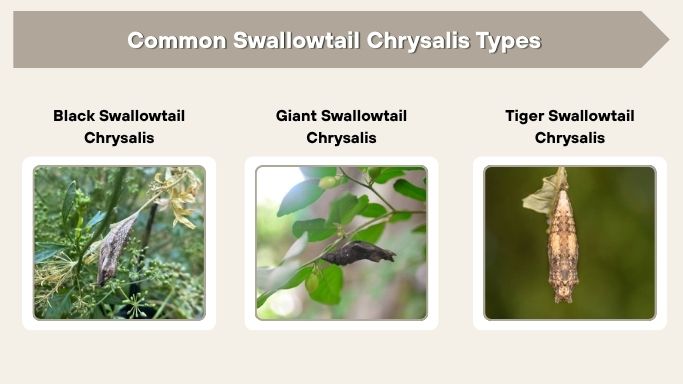
Different swallowtail species form different-looking chrysalises. Black swallowtail, giant swallowtail, tiger swallowtail, spicebush swallowtail, pipevine swallowtail, zebra swallowtail, and anise swallowtail all have pupal stages, but their colors, shapes, and timing can vary.
Knowing the species helps you understand what is normal for that chrysalis.
Black Swallowtail Chrysalis
The black swallowtail chrysalis is often green, brown, tan, or gray. It is held upright with a silk girdle. It may emerge in about two weeks during warm weather or overwinter if formed late in the season.
This species commonly uses plants in the carrot family, such as parsley, dill, fennel, carrot, and Queen Anne’s lace.
Giant Swallowtail Chrysalis
A giant swallowtail chrysalis often looks like a piece of bark or a broken twig. This camouflage helps protect it from predators. Giant swallowtail caterpillars are known for looking like bird droppings when young.
Their chrysalis duration can vary based on temperature and season, similar to other swallowtails.
Tiger Swallowtail Chrysalis
Tiger swallowtails also form a chrysalis held by silk. Eastern tiger swallowtail chrysalises may be brownish and blend with woody surfaces. These butterflies are larger than black swallowtails and use different host plants, including trees such as tulip tree, wild cherry, and ash.
Their pupal stage may also overwinter depending on season and climate.
Spicebush, Pipevine, and Zebra Swallowtail Chrysalis
Spicebush swallowtail chrysalises may be green or brown and often blend with leaves or stems. Pipevine swallowtail chrysalises can have a dramatic shape and may vary in color. Zebra swallowtail chrysalises are linked to pawpaw host plants and may also blend with their surroundings.
FAQs
What does a black swallowtail chrysalis look like?
A black swallowtail chrysalis is usually green, brown, tan, or grayish. It has an angled, firm shape and is attached with silk at the base and around the middle. It may look like a small leaf, stem, or piece of bark depending on color and location.
How long does a black swallowtail stay in chrysalis?
In warm weather, a black swallowtail usually stays in chrysalis for about 9 to 18 days. Cooler temperatures can make it take longer. If the chrysalis forms late in the season, it may overwinter and not emerge until spring.
How can you tell if a swallowtail chrysalis is dead?
A dead swallowtail chrysalis may be soft, shriveled, leaking, moldy, or foul-smelling. A healthy chrysalis is usually firm and dry. However, a chrysalis that stays unchanged for months may simply be overwintering, especially if it formed in fall.
Can you move a black swallowtail chrysalis?
Yes, you can move it carefully if it is in danger or attached to an unsafe place. The safest method is to move the stem, stick, or object it is attached to. Avoid pulling the chrysalis off unless absolutely necessary.
Do swallowtail caterpillars form chrysalis or cocoons?
Swallowtail caterpillars form a chrysalis, not a cocoon. A chrysalis is the butterfly’s pupal body. A cocoon is a silk covering made by many moth caterpillars. Black swallowtails attach with silk but do not wrap themselves in a full cocoon.