
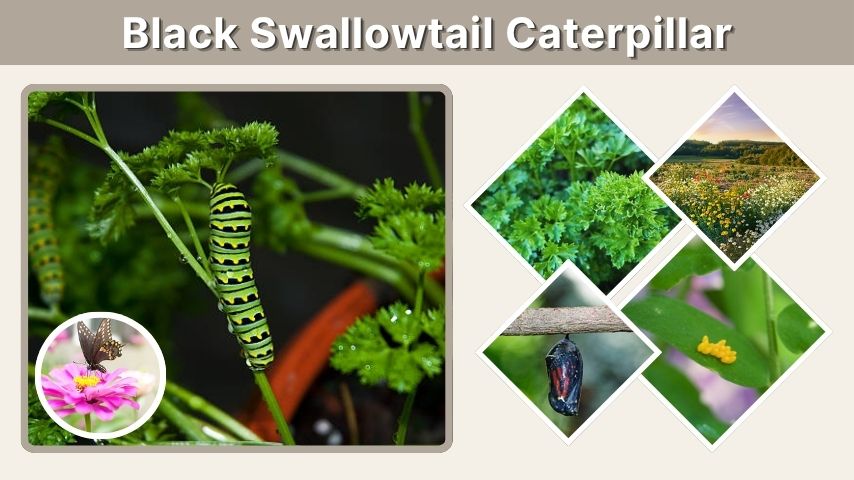
The black swallowtail caterpillar is the larval stage of the beautiful black swallowtail butterfly (Papilio polyxenes). Commonly found on parsley, dill, fennel, and other plants in the carrot family, this caterpillar is a favorite among gardeners and butterfly enthusiasts. Its appearance changes dramatically throughout development, making it one of the most fascinating caterpillars in North America. Understanding its identification, growth stages, habitat, diet, and lifecycle helps gardeners support butterfly populations while appreciating the important role these insects play in local ecosystems.
What Is a Black Swallowtail Caterpillar?
The black swallowtail caterpillar is an important stage in the life cycle of the black swallowtail butterfly. During this phase, the caterpillar focuses almost entirely on feeding and growth. As it develops, it undergoes multiple molts before eventually transforming into a chrysalis and later emerging as an adult butterfly.
Scientific Classification
The black swallowtail butterfly belongs to the family Papilionidae and is scientifically known as Papilio polyxenes. It is one of the most common swallowtail butterflies found throughout North America.
Why This Caterpillar Is Unique
Several characteristics make the black swallowtail caterpillar easy to recognize:
- Bright green body coloration
- Black bands across the body
- Yellow or orange spots
- Hidden orange defense organ
- Rapid growth through multiple stages
These features help distinguish it from many other garden caterpillars.
Relationship to the Black Swallowtail Butterfly
The caterpillar represents the feeding stage of the butterfly’s lifecycle. During this period, it consumes large quantities of plant material to store the energy needed for metamorphosis. Once fully grown, it forms a chrysalis where the transformation into a butterfly occurs.
Black Swallowtail Caterpillar Identification
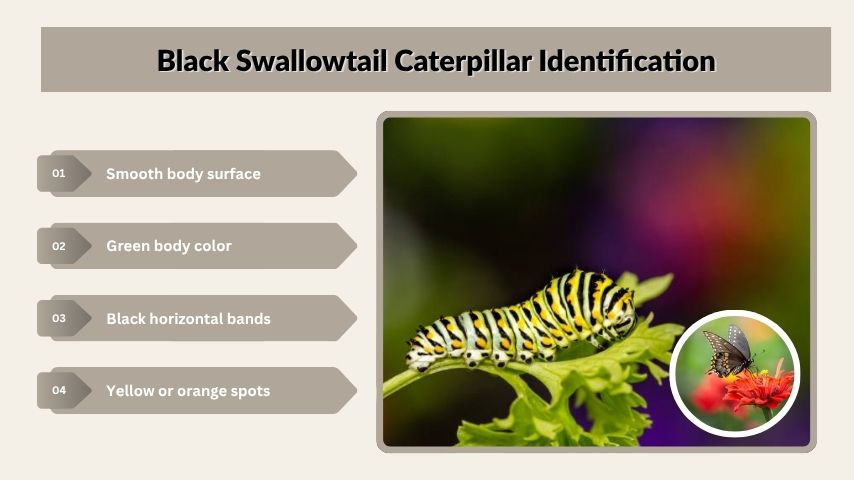
Identifying a black swallowtail caterpillar is relatively easy once you understand how its appearance changes throughout development. Young caterpillars look completely different from mature individuals, often causing confusion among gardeners.
Young Black Swallowtail Caterpillar
Newly hatched caterpillars are dark brown or black with white markings. Their appearance resembles bird droppings, which helps protect them from predators. This form of camouflage is especially effective during the vulnerable early stages of development.
Mature Black Swallowtail Caterpillar
As the caterpillar grows, it develops its familiar green coloration with bold black bands and yellow spots. This striking pattern makes mature caterpillars one of the most recognizable butterfly larvae in North America.
Key Identification Features
Common identification traits include:
- Smooth body surface
- Green body color
- Black horizontal bands
- Yellow or orange spots
- Orange defensive osmeterium
- Length of about 1.5 to 2 inches
These characteristics help separate black swallowtail caterpillars from monarchs and other butterfly species.
Black Swallowtail Caterpillar Stages
The black swallowtail caterpillar passes through several growth stages known as instars. Each instar ends with a molt, allowing the caterpillar to increase in size. These changes are essential for successful development into adulthood.
Egg Stage
The lifecycle begins when a female butterfly lays tiny eggs on suitable host plants such as parsley, dill, or fennel. Eggs are usually deposited individually on leaves and stems. After several days, a small caterpillar emerges and begins feeding immediately.
First Instar Caterpillar
The first instar is the earliest caterpillar stage. During this period, the caterpillar remains very small and exhibits bird-dropping camouflage. Feeding activity increases rapidly as it prepares for its first molt.
Intermediate Instars
Several additional instars follow as the caterpillar grows. With each molt, its coloration gradually changes and its body becomes larger. Feeding continues almost constantly during these stages to support rapid development.
Final Instar Stage
The final instar is the largest and most colorful stage. At this point, the caterpillar consumes significant amounts of foliage and begins searching for a suitable location to pupate. Once ready, it stops feeding and prepares to form a chrysalis.
Black Swallowtail Caterpillar Life Cycle
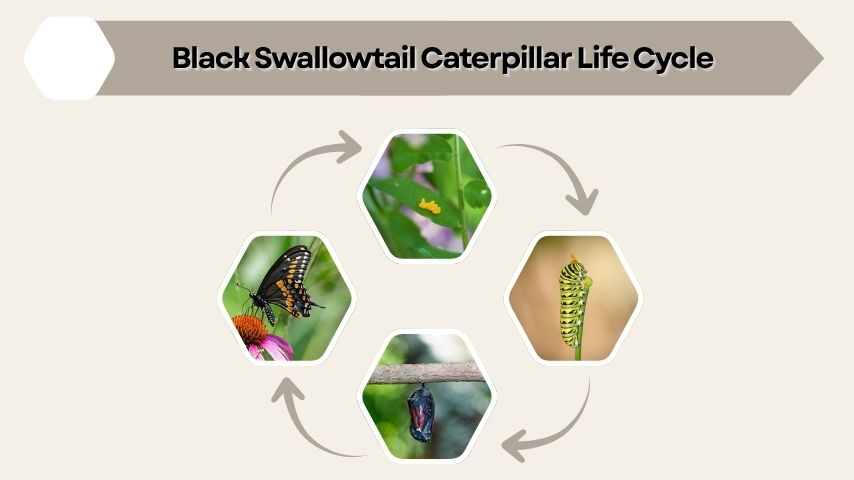
The black swallowtail undergoes complete metamorphosis, one of the most remarkable transformations in the insect world. Each stage serves a specific purpose and contributes to the successful development of the butterfly.
Four Main Life Stages
The complete lifecycle includes:
- Egg
- Caterpillar
- Chrysalis
- Adult butterfly
Each stage differs dramatically in appearance, behavior, and biological function.
How Long the Lifecycle Takes
The duration of the lifecycle depends on temperature, food availability, and environmental conditions. In warm weather, development from egg to butterfly may occur within several weeks, while cooler temperatures can extend the process considerably.
Black Swallowtail Caterpillar Diet
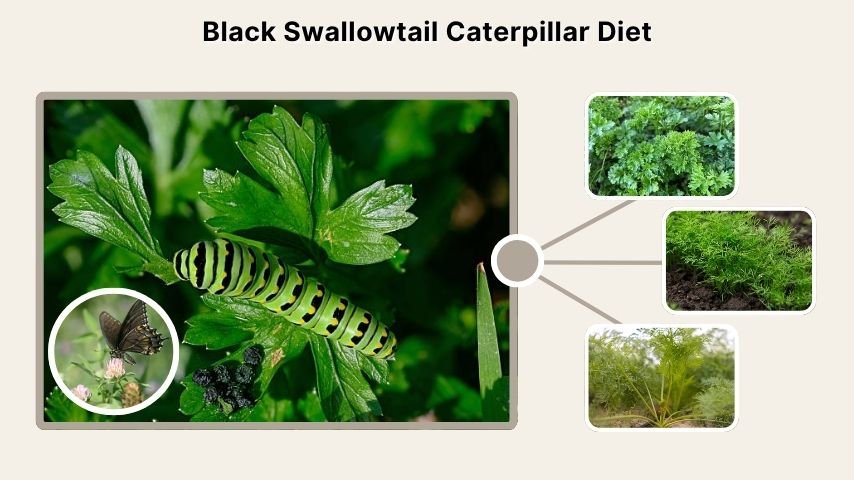
The black swallowtail caterpillar relies on specific host plants for food and survival. These plants provide the nutrients needed for rapid growth and successful metamorphosis. Gardeners often discover these caterpillars feeding on herbs and vegetables, particularly members of the carrot family.
What Does a Black Swallowtail Caterpillar Eat?
The caterpillar commonly feeds on:
- Parsley
- Dill
- Fennel
- Carrot leaves
- Queen Anne’s lace
These plants serve as both food sources and egg-laying sites for adult butterflies.
Favorite Host Plants
Parsley and dill are among the most attractive host plants for black swallowtail butterflies. Female butterflies actively search for these plants when laying eggs because they provide ideal nutrition for developing caterpillars.
Why They Eat So Much
Caterpillars must consume large amounts of plant material to support rapid growth. During the final instar stage, feeding activity reaches its peak as the insect stores energy needed for pupation and transformation into an adult butterfly.
Habitat and Distribution
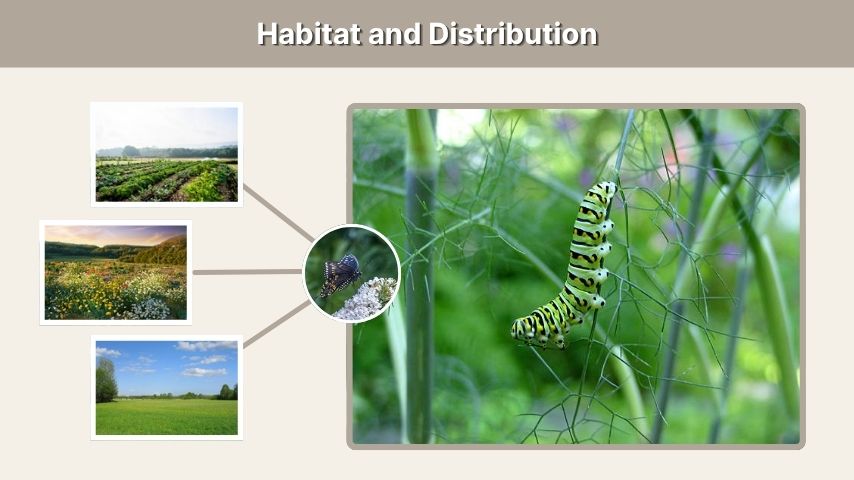
Black swallowtail caterpillars are widely distributed throughout North America and can be found wherever suitable host plants grow. Their adaptability allows them to thrive in both natural and human-managed landscapes.
Geographic Range
The black swallowtail occurs across much of:
- United States
- Southern Canada
- Northern Mexico
Its broad range makes it one of the most familiar swallowtail species in North America.
Preferred Habitats
These caterpillars commonly inhabit gardens, meadows, open fields, roadsides, and agricultural areas. Locations containing parsley-family plants are especially attractive because they provide both food and breeding opportunities.
Seasonal Occurrence
Black swallowtail caterpillars are most common during spring and summer when host plants are actively growing. In warmer regions, multiple generations may develop within a single year.
Black Swallowtail Caterpillar Defense Mechanisms
Although harmless to humans, black swallowtail caterpillars possess several effective defenses against predators. These adaptations improve survival during the vulnerable larval stage.
Osmeterium Explained
One of the caterpillar’s most remarkable defenses is the osmeterium, a bright orange forked organ hidden behind the head. When threatened, the caterpillar extends this structure and releases an unpleasant odor that can discourage predators.
Camouflage in Early Instars
Young caterpillars resemble bird droppings, helping them avoid detection by birds and other predators. This disguise provides excellent protection during the earliest stages of development.
Warning Coloration
As caterpillars mature, their bold green, black, and yellow pattern may serve as a warning signal. While they are not poisonous, the striking coloration can make predators think twice before attacking.
Is the Black Swallowtail Caterpillar Poisonous?
Many people wonder whether these colorful caterpillars are dangerous to touch. Fortunately, black swallowtail caterpillars are harmless and pose little risk to humans.
Are They Poisonous to Humans?
Black swallowtail caterpillars are not poisonous. They do not sting, bite, or inject venom. Their primary defense is the osmeterium, which produces an unpleasant smell rather than causing harm.
Can You Touch Them?
These caterpillars can generally be handled gently without danger. However, excessive handling may stress the caterpillar and interfere with its natural behavior. Washing hands afterward is always a good practice when handling insects.
Are They Dangerous to Pets?
Black swallowtail caterpillars are not considered toxic to dogs or cats. Nevertheless, pets should not be encouraged to eat caterpillars or other insects because digestive upset can occasionally occur.
Black Swallowtail Caterpillar vs Monarch Caterpillar
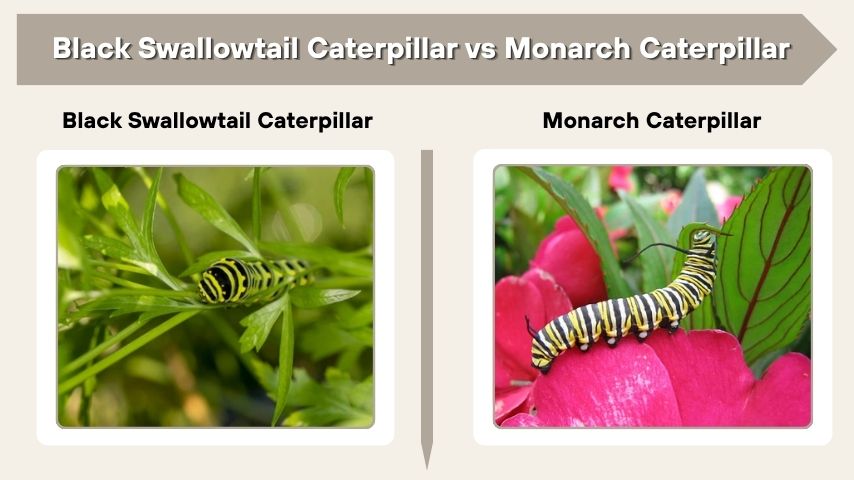
Black swallowtail and monarch caterpillars are often confused because both are common garden butterfly larvae. However, several important differences make identification relatively simple.
Appearance Differences
Monarch caterpillars have distinctive black, yellow, and white stripes, while black swallowtail caterpillars display green bodies with black bands and yellow spots during later stages.
Host Plant Differences
Monarch caterpillars feed exclusively on milkweed plants. Black swallowtail caterpillars depend primarily on members of the carrot family, including parsley, dill, and fennel.
Defense Strategies
Monarch caterpillars obtain chemical protection from milkweed toxins. Black swallowtail caterpillars rely on camouflage and their defensive osmeterium instead.
FAQs
What do black swallowtail caterpillars eat?
Black swallowtail caterpillars feed primarily on plants in the carrot family. Their favorite food sources include parsley, dill, fennel, carrot leaves, and Queen Anne’s lace. These host plants provide the nutrients needed for growth and development.
Are black swallowtail caterpillars poisonous?
No, black swallowtail caterpillars are not poisonous or venomous. They are harmless to humans and pets. When threatened, they may extend an orange defensive organ called an osmeterium that releases an unpleasant odor to deter predators.
How long does the black swallowtail caterpillar stage last?
The caterpillar stage typically lasts between 2 and 4 weeks, depending on temperature, food availability, and environmental conditions. After reaching full size, the caterpillar forms a chrysalis before transforming into an adult butterfly.
What is the orange horn on a black swallowtail caterpillar?
The orange “horns” are actually a forked defensive organ known as the osmeterium. When disturbed, the caterpillar extends this organ from behind its head and releases a strong odor that helps repel predators.
Can you raise black swallowtail caterpillars at home?
Yes, black swallowtail caterpillars are commonly raised by butterfly enthusiasts. They require fresh host plants such as parsley, dill, or fennel, a well-ventilated enclosure, and a clean environment. With proper care, they can successfully develop into beautiful black swallowtail butterflies.