
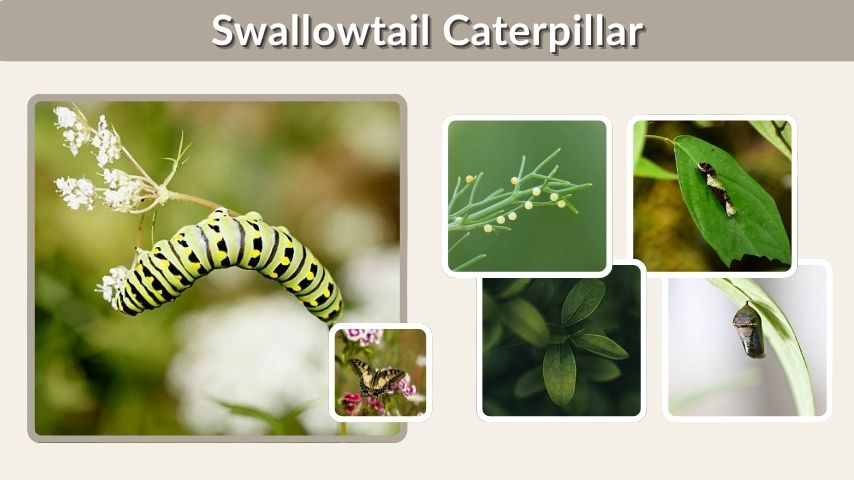
Swallowtail caterpillars are the fascinating larval stage of some of the world’s most beautiful butterflies. Known for their colorful patterns, unique defense mechanisms, and dramatic transformation into adult butterflies, these caterpillars attract gardeners, nature enthusiasts, and butterfly lovers alike. Different swallowtail species vary in appearance, but all share remarkable adaptations that help them survive in the wild. Understanding their life cycle, food preferences, and identifying features can help anyone appreciate these important insects and support butterfly conservation efforts.
What Is a Swallowtail Caterpillar?
A swallowtail caterpillar is the larval stage of a swallowtail butterfly belonging to the family Papilionidae. These caterpillars are found throughout North America and many other parts of the world. They are best known for their striking appearance, specialized host plants, and unique defensive structures. Depending on the species, swallowtail caterpillars may resemble bird droppings, display eye-like markings, or develop vibrant green coloration during later growth stages.
Scientific Classification
Swallowtail butterflies belong to the family Papilionidae, one of the largest butterfly families worldwide. Their caterpillars develop through several growth stages before forming a chrysalis and eventually emerging as adult butterflies.
How to Identify a Swallowtail Caterpillar
Identification depends on the species and stage of development. Young caterpillars often look very different from mature individuals. Some species mimic bird droppings, while others develop bright colors and eye spots as they grow.
Common Characteristics
Many swallowtail caterpillars share several recognizable features:
- Soft segmented bodies.
- Multiple growth stages called instars.
- Specialized defense organ known as an osmeterium.
- Strong preference for specific host plants.
- Transformation into large, colorful butterflies.
These characteristics distinguish them from many other caterpillar species.
Swallowtail Caterpillar Life Cycle
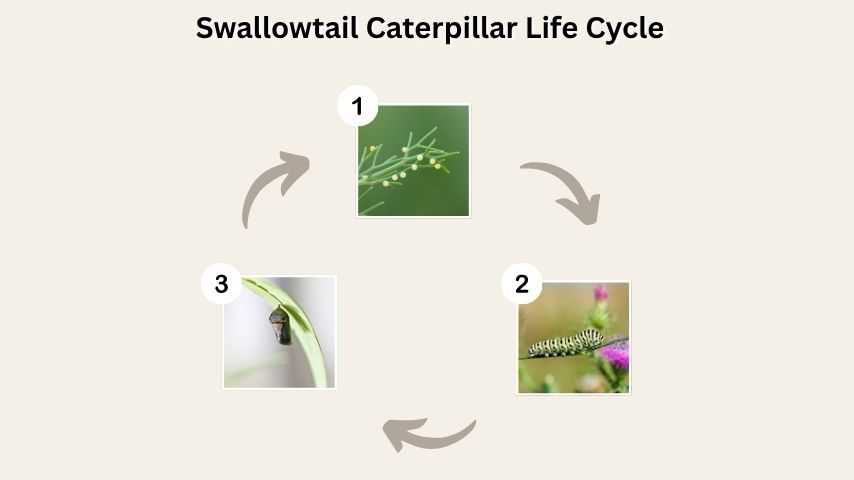
The swallowtail caterpillar life cycle involves a complete metamorphosis consisting of four major stages. Each stage serves a specific purpose in the butterfly’s development. This remarkable transformation is one of the reasons swallowtail butterflies are among the most admired insects in nature.
Egg Stage
The life cycle begins when a female butterfly lays eggs on suitable host plants. Each species selects plants that provide the ideal food source for newly hatched caterpillars. Eggs usually hatch within several days, depending on weather conditions and species.
Caterpillar Stage
After hatching, the caterpillar begins feeding immediately. During this period, it grows rapidly and molts several times. Each molt marks a new instar stage, allowing the caterpillar to increase in size and prepare for pupation.
Chrysalis Stage
Once fully grown, the caterpillar forms a chrysalis. Inside this protective casing, dramatic changes occur as the insect transforms into an adult butterfly. Depending on species and climate, the chrysalis stage may last several weeks or even several months.
What Do Swallowtail Caterpillars Eat?
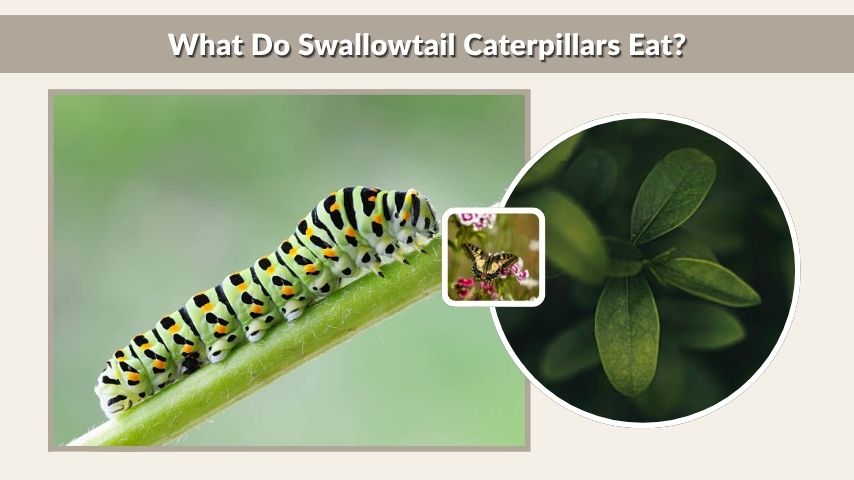
Food plays a critical role in the growth and survival of swallowtail caterpillars. Most species are highly selective and feed only on specific host plants. Because each species has unique dietary preferences, understanding host plant relationships is important for gardeners hoping to attract swallowtail butterflies.
Common Host Plants
Many swallowtail caterpillars feed on plants from particular families. Popular host plants include:
- Parsley
- Dill
- Fennel
- Rue
- Spicebush
- Sassafras
- Citrus trees
Providing these plants can help support local swallowtail populations.
Feeding Behavior
Swallowtail caterpillars spend much of their time eating. Their rapid growth requires large amounts of plant material. Some species consume entire leaves, while others feed selectively on tender foliage.
Why Host Plants Matter
Without suitable host plants, swallowtail butterflies cannot successfully reproduce. Female butterflies carefully choose locations where their offspring will have immediate access to food after hatching.
Black Swallowtail Caterpillar
The black swallowtail caterpillar is one of the most recognizable swallowtail species in North America. Frequently found in herb gardens, it is often associated with parsley, dill, and fennel. Its attractive coloration and interesting life cycle make it a favorite among butterfly gardeners and educators.
Black Swallowtail Caterpillar Stages
Young black swallowtail caterpillars initially resemble bird droppings, helping them avoid predators. As they mature, they develop bright green bodies marked with black bands and yellow spots. These color changes occur gradually through multiple instars.
Favorite Host Plants
Black swallowtail caterpillars commonly feed on:
- Parsley
- Dill
- Fennel
- Carrot tops
- Queen Anne’s lace
These plants provide essential nutrients needed for healthy growth and development.
Black Swallowtail Caterpillar Defense
One of the caterpillar’s most fascinating defenses is the osmeterium, a forked orange organ hidden behind the head. When threatened, the caterpillar extends this structure and releases a strong odor that helps deter predators.
Tiger Swallowtail Caterpillar
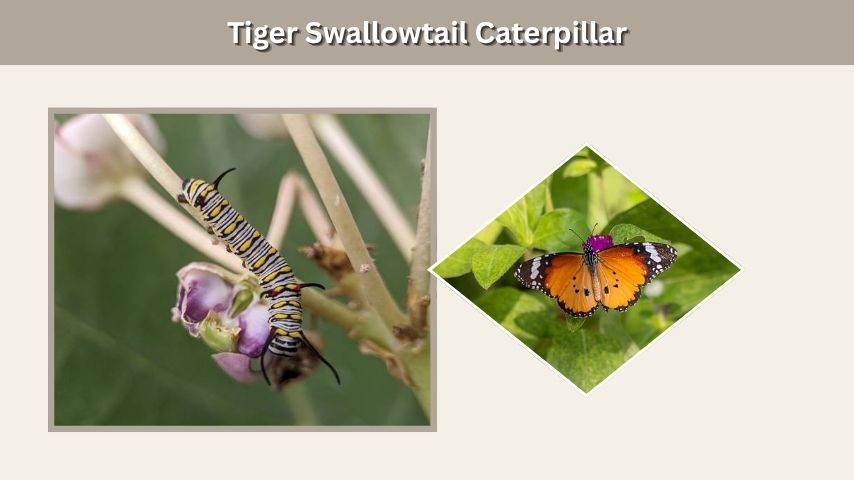
Tiger swallowtail caterpillars differ significantly from black swallowtail caterpillars in both appearance and host plant preferences. They are known for their distinctive green coloration and large false eye spots, which help scare away potential predators.
Eastern Tiger Swallowtail Caterpillar
The eastern tiger swallowtail caterpillar is commonly found on deciduous trees throughout eastern North America. As it matures, it develops prominent eye-like markings that create the illusion of a larger animal.
Western Tiger Swallowtail Caterpillar
Western tiger swallowtail caterpillars occupy habitats across western regions and feed on a variety of tree species. Although similar to eastern tiger swallowtails, slight differences in distribution and host plants distinguish the two groups.
Spicebush Swallowtail Caterpillar
The spicebush swallowtail caterpillar is famous for its remarkable camouflage and large false eye spots. These unique features help it avoid predators by resembling a small snake. Found primarily in eastern North America, this caterpillar depends on specific host plants and undergoes dramatic appearance changes as it develops through its growth stages.
Identification Features
Young spicebush swallowtail caterpillars resemble bird droppings, helping them remain hidden from predators. As they mature, they become bright green and develop large eye-like markings near the front of the body.
False Eye Spots
The caterpillar’s most recognizable feature is its pair of large false eyes. When threatened, it raises its body and displays these markings, creating the illusion of a larger animal.
Preferred Host Plants
Common host plants include:
- Spicebush
- Sassafras
- Redbay
- Swamp bay
These plants provide the food necessary for successful development.
Giant Swallowtail Caterpillar
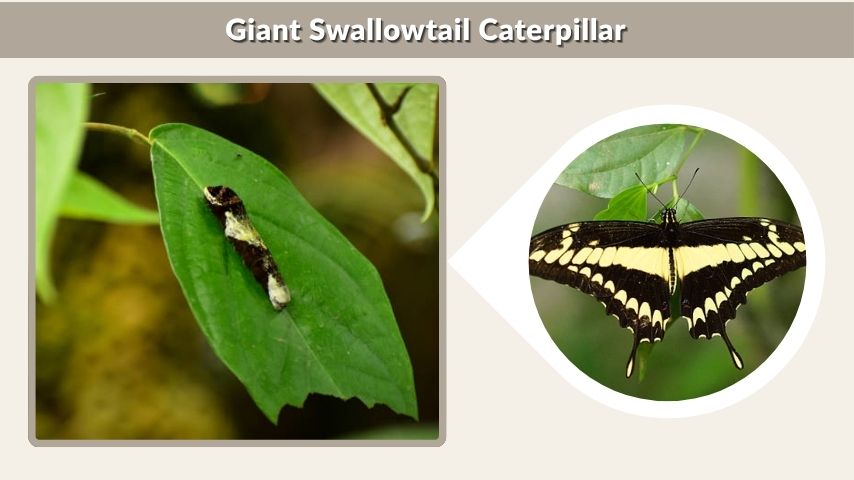
The giant swallowtail caterpillar belongs to North America’s largest butterfly species. It is commonly found in warm regions where citrus trees grow. Its unusual appearance often surprises gardeners because it strongly resembles bird droppings during much of its development.
Bird Dropping Camouflage
Unlike many colorful caterpillars, giant swallowtail caterpillars remain brown and white for much of their life. This coloration provides excellent camouflage and helps protect them from predators.
Relationship With Citrus Trees
These caterpillars frequently feed on:
- Orange trees
- Lemon trees
- Grapefruit trees
- Lime trees
- Wild citrus relatives
For this reason, they are sometimes considered minor pests in citrus-growing regions.
Giant Swallowtail Caterpillar Stages
As the caterpillar grows, it passes through several instars before forming a chrysalis. Each stage increases in size while maintaining its highly effective camouflage.
Pipevine Swallowtail Caterpillar
The pipevine swallowtail caterpillar is one of the most distinctive swallowtail species. Its dark coloration and rows of fleshy projections make it easy to identify. Unlike many swallowtail caterpillars, this species gains chemical protection from the plants it consumes.
Identification
Pipevine swallowtail caterpillars are typically dark brown, black, or reddish in color. Their bodies are covered with soft, spike-like projections that create a unique appearance.
Toxicity and Defense
Because they feed on pipevine plants containing toxic compounds, these caterpillars become distasteful to many predators. This chemical defense continues into adulthood, helping protect the butterfly as well.
Host Plants
Pipevine swallowtail caterpillars rely primarily on:
- Pipevine species
- Dutchman’s pipe
- Virginia snakeroot
Without these host plants, reproduction cannot occur successfully.
Are Swallowtail Caterpillars Poisonous?
Many people wonder whether swallowtail caterpillars are poisonous because of their bright colors and unusual defensive behaviors. While some species possess chemical defenses, most swallowtail caterpillars are harmless to humans and pets. Their primary defense mechanisms are designed to discourage natural predators rather than cause harm.
The Osmeterium Defense Organ
Most swallowtail caterpillars possess an osmeterium, a forked gland located behind the head. When threatened, the caterpillar extends this organ and releases a strong odor. This scent helps deter birds, spiders, and other predators.
Toxic and Non-Toxic Species
Most swallowtail caterpillars are not poisonous to humans. However, certain species such as the pipevine swallowtail contain plant-derived toxins that make them unappealing to predators.
Are They Safe to Handle?
Swallowtail caterpillars are generally safe to observe and gently handle. However, it is always best to minimize handling to avoid stressing the insect or accidentally damaging its delicate body.
Swallowtail Caterpillar vs Monarch Caterpillar
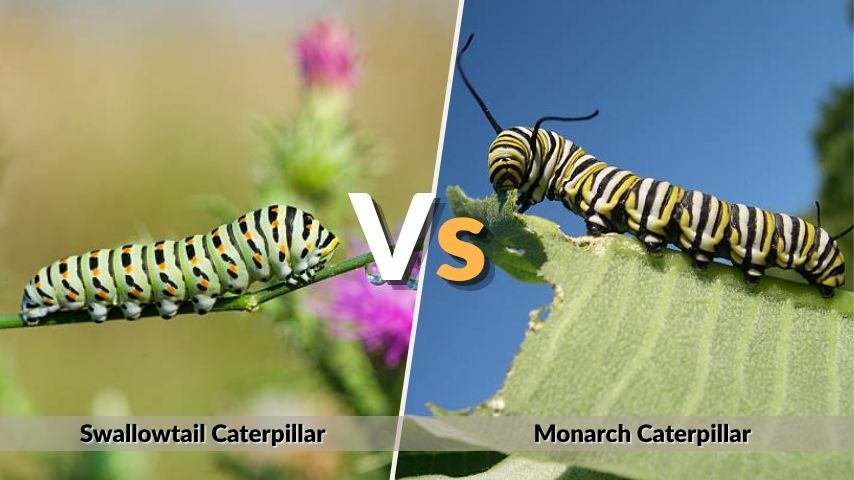
Swallowtail caterpillars and monarch caterpillars are among the most recognized butterfly larvae in North America. Although both eventually transform into beautiful butterflies, they differ significantly in appearance, diet, and defense strategies.
Appearance Differences
Monarch caterpillars display bold black, white, and yellow stripes. Swallowtail caterpillars vary considerably by species and may appear green, brown, black, or even resemble bird droppings.
Host Plant Differences
Monarch caterpillars feed exclusively on milkweed plants. Swallowtail caterpillars utilize a much wider range of host plants depending on the species.
Defense Mechanisms
Monarch caterpillars gain chemical protection from milkweed toxins. Swallowtail caterpillars rely more heavily on camouflage, false eye spots, mimicry, and the osmeterium defense organ.
Fascinating Swallowtail Caterpillar Facts
Swallowtail caterpillars possess numerous adaptations that help them survive and eventually become some of the world’s most beautiful butterflies. Their unique behaviors and appearances make them fascinating subjects for observation and study.
Amazing Swallowtail Caterpillar Facts
- Many species mimic bird droppings when young.
- Most undergo five or more growth stages called instars.
- They possess a defensive osmeterium.
- Some species develop realistic false eye spots.
- Host plants vary greatly between species.
- Certain caterpillars acquire chemical defenses from their food plants.
- They undergo complete metamorphosis.
- Adult swallowtail butterflies are important pollinators.
FAQs
What does a swallowtail caterpillar eat?
Swallowtail caterpillars feed on specific host plants depending on the species. Common food sources include parsley, dill, fennel, spicebush, sassafras, and citrus trees. Female butterflies lay eggs on these plants to ensure newly hatched caterpillars have an immediate food supply.
How long does a swallowtail caterpillar stay in the chrysalis?
The chrysalis stage typically lasts between 10 and 20 days during warm weather. However, some swallowtail species may overwinter in the chrysalis and emerge as butterflies the following spring.
What is the orange fork on a swallowtail caterpillar?
The orange fork-like structure is called an osmeterium. When threatened, the caterpillar extends this defensive organ and releases a strong odor that helps deter predators such as birds and insects.
Are black swallowtail caterpillars harmful to garden plants?
Black swallowtail caterpillars may consume parsley, dill, fennel, and related plants, but they rarely cause serious damage. Many gardeners intentionally grow extra host plants to support butterfly populations while still maintaining healthy herb gardens.
How can I attract swallowtail caterpillars to my garden?
Planting host plants such as parsley, dill, fennel, spicebush, sassafras, and citrus trees can attract swallowtail butterflies and caterpillars. Avoid using pesticides and provide nectar-rich flowers to support both caterpillars and adult butterflies throughout their life cycle.