
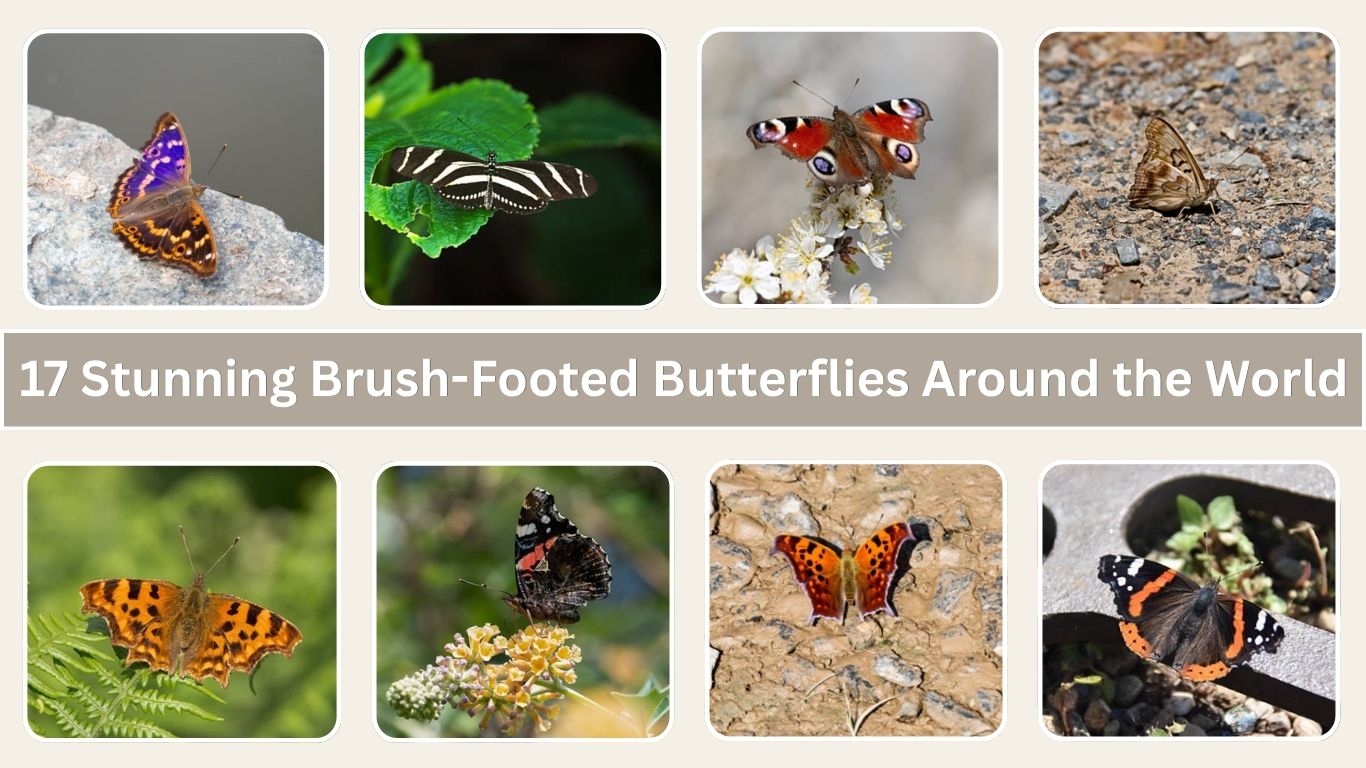
Brush-footed butterflies are among the most colorful and fascinating butterflies in the world. Belonging to the family Nymphalidae, these butterflies are known for their reduced front legs, vibrant wing patterns, and graceful flight. They can be found in forests, gardens, meadows, wetlands, and tropical habitats across many continents. Some species, like the monarch butterfly, are famous for long migrations, while others are admired for eye-catching markings and camouflage abilities. From the striking zebra longwing to the shimmering purple emperor, brush-footed butterflies display remarkable beauty, behaviors, and adaptations that make them important pollinators and fascinating insects to observe.
1. Monarch Butterfly
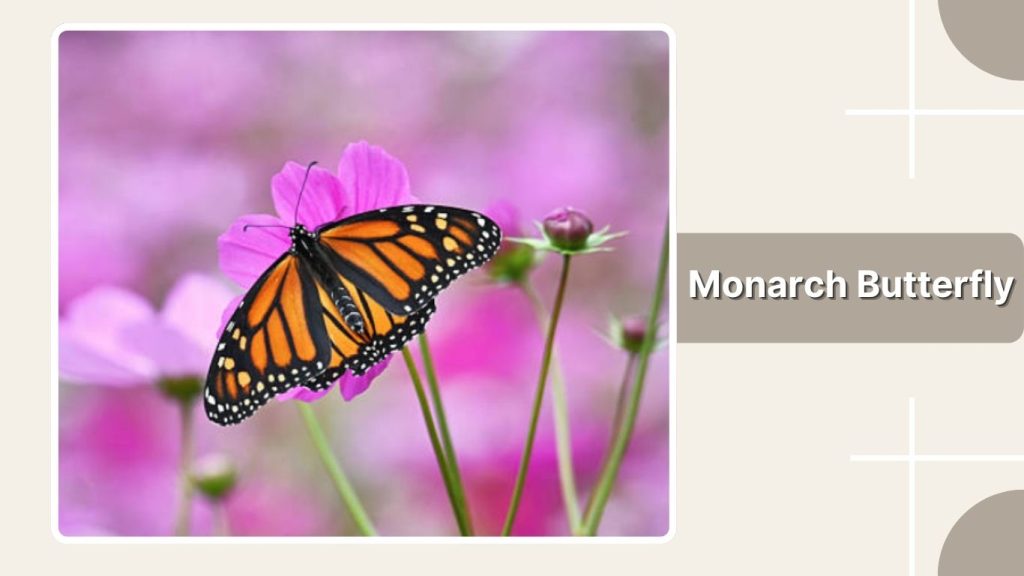
The monarch butterfly is one of the most recognizable brush-footed butterflies in the world. Famous for its bright orange wings and remarkable migration, this butterfly is commonly seen in gardens, meadows, and open grasslands. Monarchs are admired for their beauty, gentle flight, and ecological importance as pollinators.
Identification
- Bright orange wings with black veins
- Thick black borders with white spots
- Wingspan usually ranges from 3.5 to 4 inches
- Black body covered with tiny white dots
- Males have black scent spots on the hindwings
- Slow and graceful flight style
- Caterpillars have black, white, and yellow stripes
Habitat and Distribution
Monarch butterflies are widely distributed across North America, Central America, and parts of South America. They inhabit meadows, gardens, roadsides, grasslands, and agricultural fields where milkweed plants are available.
These butterflies prefer warm sunny environments with abundant flowering plants. During migration, millions of monarchs travel long distances to overwintering areas in Mexico and coastal California. They often gather in large clusters on trees during colder months.
Behavior and Diet
Adult monarch butterflies mainly feed on nectar from flowers such as milkweed, goldenrod, lantana, and asters. They play an important role in pollination while feeding.
Monarch caterpillars feed exclusively on milkweed leaves, absorbing toxic chemicals that make them distasteful to predators. Their bright coloration acts as a warning sign to birds and other animals. Monarchs are especially known for their seasonal migration, which is one of the longest insect migrations in the world.
Life Cycle
The monarch butterfly undergoes complete metamorphosis with four stages: egg, larva, pupa, and adult. Females lay eggs on milkweed plants, where the caterpillars hatch and begin feeding.
After several growth stages, the caterpillar forms a green chrysalis decorated with golden spots. Inside the chrysalis, it transforms into an adult butterfly. Once emerged, the adult expands its wings before beginning its life of feeding, migration, and reproduction.
2. Viceroy Butterfly
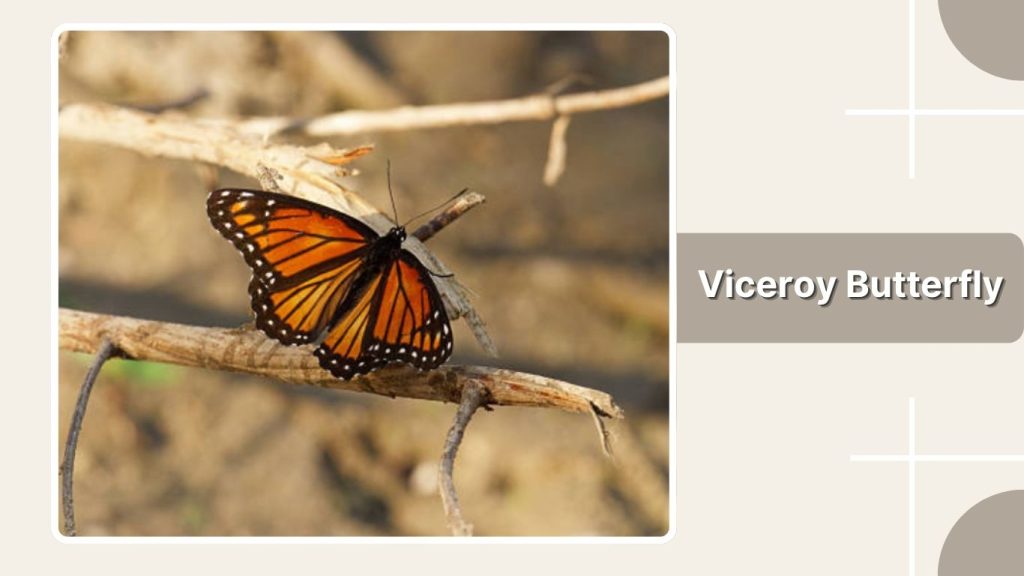
The viceroy butterfly is a beautiful brush-footed butterfly well known for its close resemblance to the monarch butterfly. This species uses mimicry as a defense mechanism, helping it avoid predators. Viceroys are graceful fliers commonly found near wetlands, ponds, and riverbanks throughout North America.
Identification
- Bright orange wings with black veins
- Distinct black line crossing the hindwings
- Black wing borders with white spots
- Wingspan usually ranges from 2.5 to 3.5 inches
- Smaller than the monarch butterfly
- Slow and steady flight pattern
- Caterpillars resemble bird droppings for camouflage
Habitat and Distribution
Viceroy butterflies are widely distributed across North America, from southern Canada to parts of Mexico. They are commonly found in wetlands, marshes, lakesides, riverbanks, and moist meadows where willow and poplar trees grow.
These butterflies prefer warm habitats with abundant vegetation and flowering plants. Adults are often seen basking in sunny areas or gliding slowly near water sources.
Behavior and Diet
Adult viceroy butterflies feed on nectar, tree sap, rotting fruit, and animal dung. Unlike many butterflies, they are frequently attracted to decaying organic material for nutrients.
Viceroy caterpillars feed mainly on willow, poplar, and cottonwood leaves. Both caterpillars and adults contain unpleasant chemicals that make them less appealing to predators. Their resemblance to monarch butterflies strengthens their protection through mimicry.
Life Cycle
The life cycle of the viceroy butterfly includes four stages: egg, larva, pupa, and adult. Females lay eggs individually on host plant leaves, where caterpillars hatch and begin feeding.
The caterpillar grows through several stages before forming a chrysalis attached to vegetation. Inside the chrysalis, it transforms into an adult butterfly. After emerging, the adult expands its wings and begins feeding and reproducing during warm seasons.
3. Painted Lady
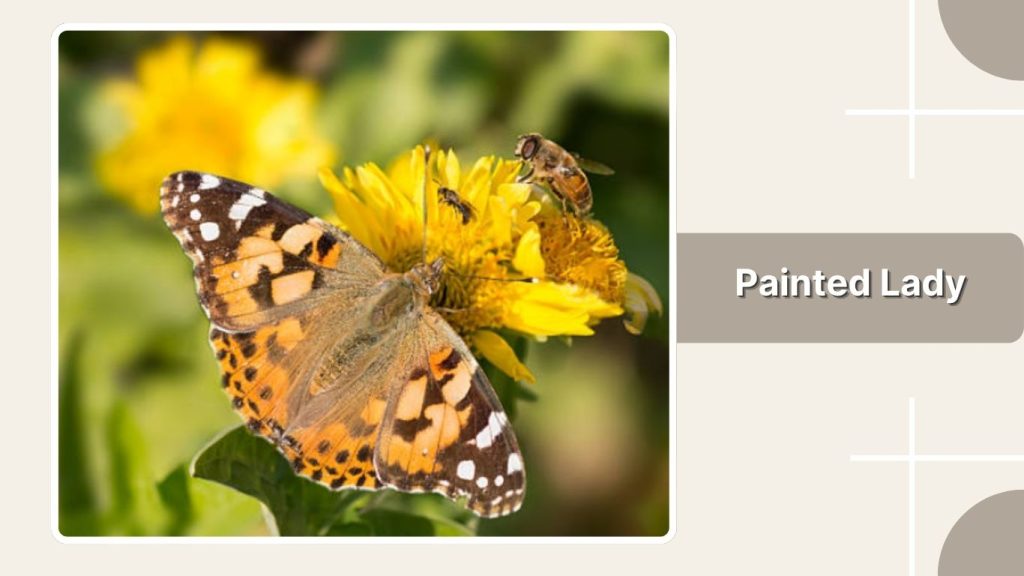
The painted lady is one of the most widespread and colorful brush-footed butterflies in the world. Known for its orange, brown, black, and white wing patterns, this butterfly is a strong migratory species that can travel long distances. Painted ladies are commonly seen in gardens, fields, and meadows during warm seasons.
Identification
- Orange-brown wings with black and white markings
- Small white spots near the wing tips
- Underside of hindwings features eye spots
- Wingspan usually ranges from 2 to 3 inches
- Slender dark body with fine hairs
- Fast and fluttering flight style
- Caterpillars vary in color from black to brown with spines
Habitat and Distribution
Painted lady butterflies are found on every continent except Antarctica and Australia. They inhabit meadows, gardens, deserts, grasslands, roadsides, and open woodland areas with abundant flowering plants.
These butterflies prefer sunny environments where nectar sources are plentiful. They are highly migratory and may travel great distances during seasonal movements. Painted ladies are especially common during spring and summer in temperate regions.
Behavior and Diet
Adult painted lady butterflies feed mainly on nectar from flowers such as thistles, asters, and sunflowers. They are active during the day and often bask in sunlight with open wings.
Caterpillars feed on a wide variety of plants, especially thistles, mallows, and hollyhocks. The larvae build silk shelters on leaves for protection while feeding. Painted ladies are quick fliers and are often seen moving rapidly between flowers.
Life Cycle
The painted lady butterfly undergoes complete metamorphosis with four stages: egg, larva, pupa, and adult. Females lay eggs singly on host plants where the caterpillars hatch and begin feeding.
After growing through several stages, the caterpillar forms a chrysalis attached to vegetation. Inside the chrysalis, transformation into an adult butterfly takes place. Once emerged, the adult expands its wings and begins feeding, migrating, and reproducing.
4. Red Admiral
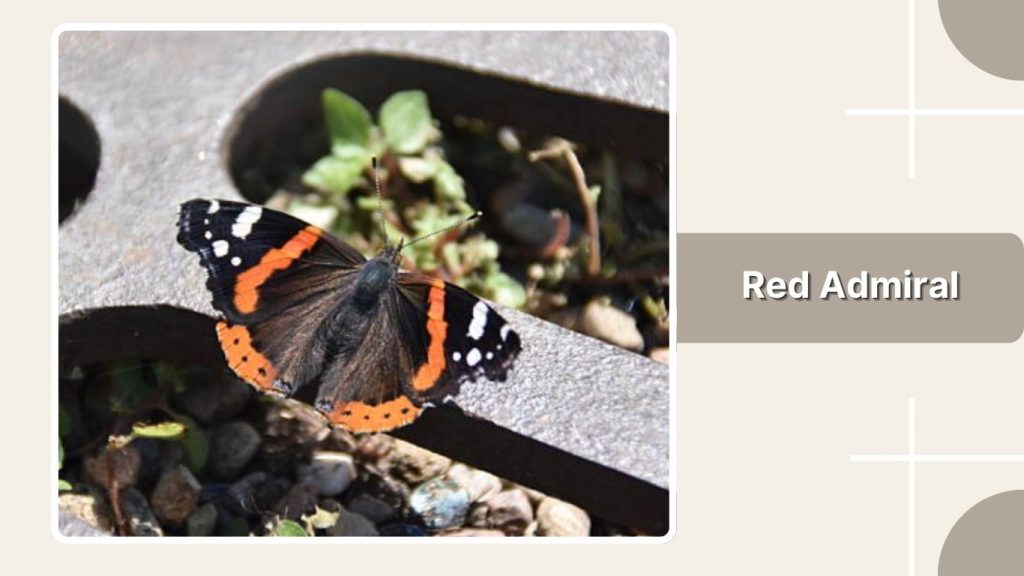
The red admiral is a striking brush-footed butterfly recognized for its dark wings marked with bright red-orange bands. This active and fast-flying butterfly is commonly seen in gardens, forests, and parks. Red admirals are known for their territorial behavior and their habit of basking in sunny locations.
Identification
- Dark brown or black wings with red-orange bands
- White spots near the tips of the forewings
- Wingspan usually ranges from 1.8 to 3 inches
- Underside of wings has mottled brown camouflage patterns
- Slender dark-colored body
- Quick and erratic flight behavior
- Caterpillars are dark with small spines and yellow markings
Habitat and Distribution
Red admiral butterflies are widely distributed across North America, Europe, Asia, and parts of North Africa. They inhabit forests, gardens, meadows, parks, woodland edges, and urban areas with abundant vegetation.
These butterflies prefer sunny habitats with access to flowering plants and host plants such as nettles. They are also migratory in some regions and may travel south during colder months.
Behavior and Diet
Adult red admirals feed on nectar, tree sap, rotting fruit, and fermenting plant material. They are highly active during warm daylight hours and are often seen basking with open wings.
Males are territorial and may chase away other butterflies or insects from feeding areas. Caterpillars mainly feed on nettle leaves, where they create folded leaf shelters for protection while growing.
Life Cycle
The red admiral butterfly passes through four life stages: egg, larva, pupa, and adult. Females lay eggs individually on host plants, especially nettles.
After hatching, the caterpillar feeds and grows through several stages before forming a hanging chrysalis. Inside the chrysalis, transformation into an adult butterfly occurs. Once emerged, the adult expands its wings and begins feeding and reproducing during warm seasons.
5. American Lady
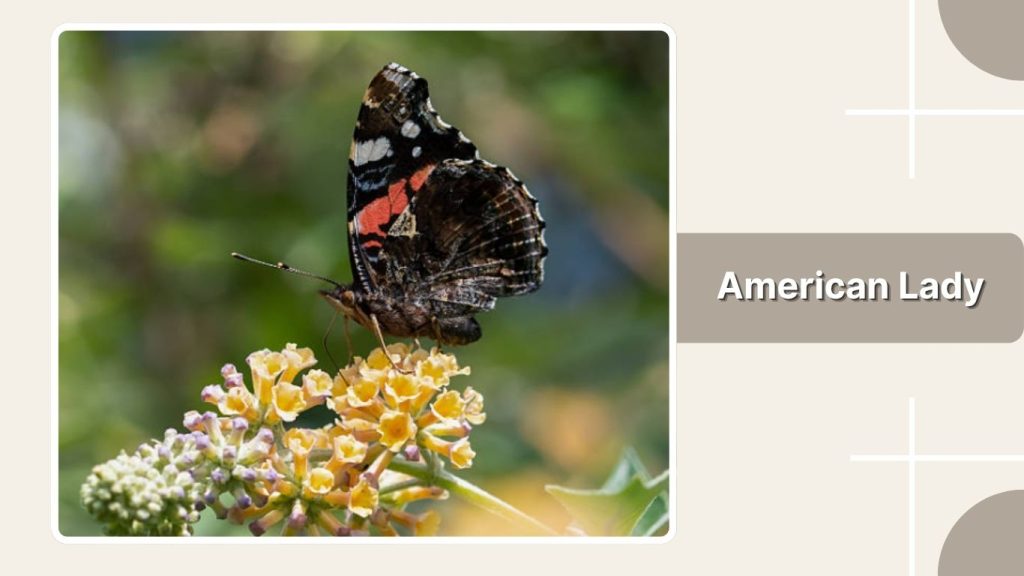
The American lady is a colorful brush-footed butterfly closely related to the painted lady. This species is known for its beautiful orange-brown wings and distinctive eye spots. American ladies are commonly found in open sunny habitats where flowers and host plants are abundant.
Identification
- Orange-brown wings with black and white markings
- Two large eye spots on the underside of the hindwings
- White spots near the tips of the forewings
- Wingspan usually ranges from 1.8 to 2.8 inches
- Slender dark body covered with fine hairs
- Fast and fluttering flight pattern
- Caterpillars are dark with yellow stripes and spines
Habitat and Distribution
American lady butterflies are widely distributed across North America, especially in the United States and southern Canada. They inhabit gardens, grasslands, meadows, roadsides, deserts, and open woodland areas.
These butterflies prefer sunny environments with plenty of flowering plants and host plants such as everlasting and pussytoes. They are most active during spring and summer and may migrate in some regions.
Behavior and Diet
Adult American ladies mainly feed on nectar from flowers including asters, goldenrods, and daisies. They are active during the day and are often seen basking in sunlight.
Caterpillars feed primarily on plants in the aster family. The larvae build silk shelters by folding leaves together for protection while feeding. Adult butterflies are quick and agile fliers that frequently visit flower-rich habitats.
Life Cycle
The American lady butterfly undergoes complete metamorphosis with four stages: egg, larva, pupa, and adult. Females lay eggs singly on host plants where caterpillars hatch and begin feeding.
After passing through several growth stages, the caterpillar forms a chrysalis attached to vegetation. Inside the chrysalis, transformation into an adult butterfly takes place. Once emerged, the butterfly expands its wings before beginning its adult life.
6. Mourning Cloak
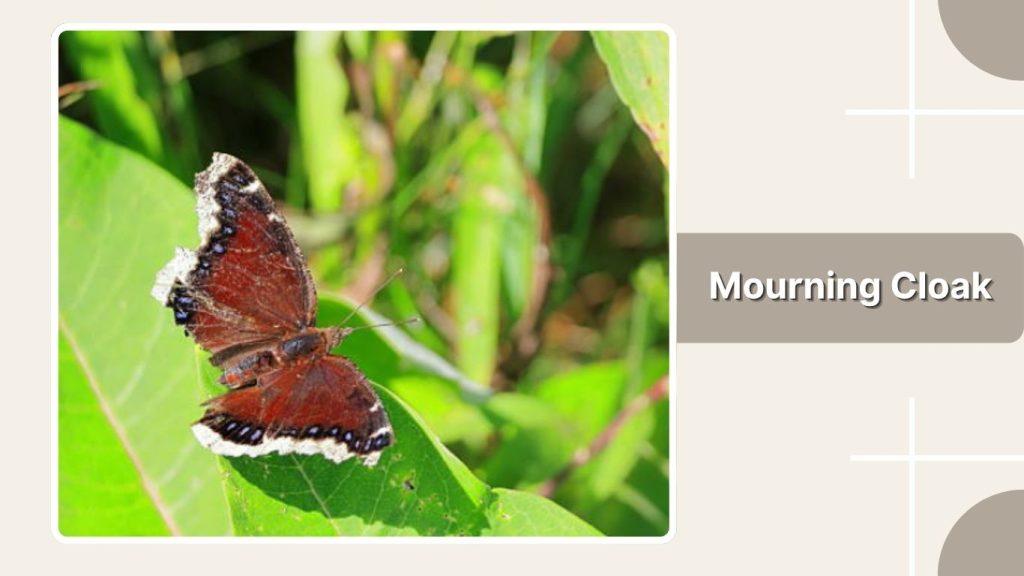
The mourning cloak is a unique brush-footed butterfly known for its dark wings bordered with pale yellow edges and blue spots. This butterfly is one of the longest-living butterfly species in North America and is often among the first butterflies seen in spring.
Identification
- Dark maroon or brown-black wings
- Pale yellow or cream-colored wing borders
- Row of bright blue spots along the wings
- Wingspan usually ranges from 3 to 4 inches
- Jagged wing edges resembling dead leaves
- Strong and gliding flight style
- Caterpillars are black with white speckles and red spots
Habitat and Distribution
Mourning cloak butterflies are widely distributed across North America, Europe, and Asia. They are commonly found in forests, woodland edges, parks, riversides, and suburban gardens.
These butterflies prefer habitats with deciduous trees such as willow, elm, cottonwood, and poplar. Adults are often seen resting on tree trunks, where their dark wing undersides provide excellent camouflage.
Behavior and Diet
Adult mourning cloaks feed mainly on tree sap, rotting fruit, and decaying organic material rather than flower nectar. They are highly territorial and may chase away other insects from feeding sites.
Caterpillars feed in groups on host trees and can quickly strip leaves from small branches. Adult butterflies hibernate during winter in tree cavities, woodpiles, or sheltered areas, allowing them to emerge early in spring.
Life Cycle
The mourning cloak butterfly undergoes complete metamorphosis with four stages: egg, larva, pupa, and adult. Females lay clusters of eggs around host plant twigs.
After hatching, the caterpillars feed together before forming hanging chrysalises. Inside the chrysalis, transformation into an adult butterfly occurs. Adults may live for several months, making them one of the longest-lived butterfly species.
7. Question Mark Butterfly
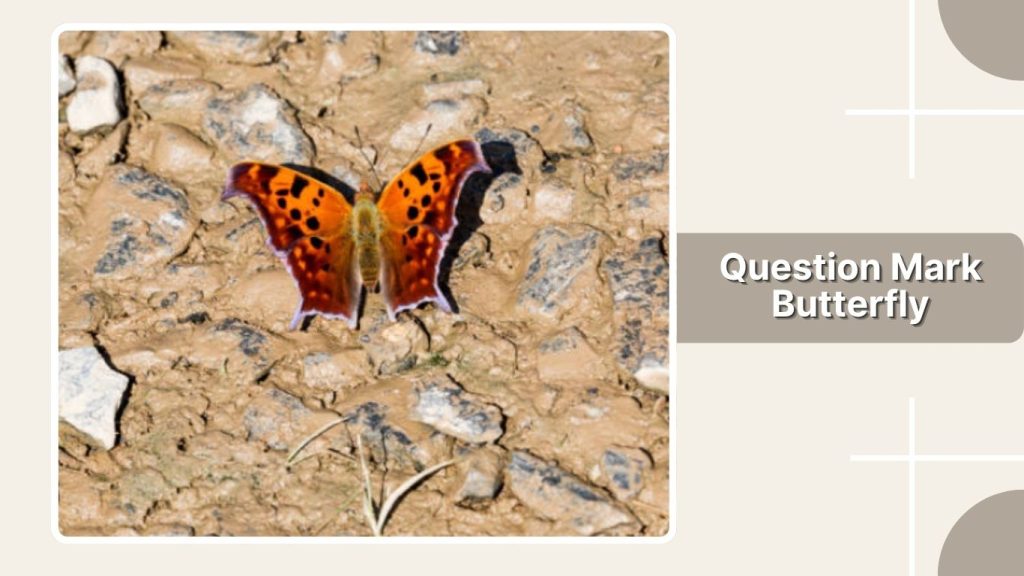
The question mark butterfly is a distinctive brush-footed butterfly named after the small silver marking on the underside of its hindwings that resembles a question mark. This butterfly is known for its irregular wing edges, strong flight, and seasonal color variations.
Identification
- Bright orange wings with black spots
- Jagged wing edges that resemble dead leaves
- Small silver question mark marking on the underside of the hindwings
- Wingspan usually ranges from 2.2 to 3 inches
- Dark brown underside for camouflage
- Fast and strong flight behavior
- Caterpillars are dark with orange and white markings and spines
Habitat and Distribution
Question mark butterflies are widely distributed across North America, especially in forests, woodland edges, parks, gardens, and riverbanks. They prefer habitats with trees and open sunny areas.
These butterflies are commonly found near elm trees, hackberries, and nettles, which serve as host plants for caterpillars. Adults often rest on tree trunks or branches where their wing patterns blend into the surroundings.
Behavior and Diet
Adult question mark butterflies mainly feed on tree sap, rotting fruit, and animal dung instead of flower nectar. They are highly active during warm weather and are often seen basking in sunny spots.
Males are territorial and may defend feeding or resting areas from other butterflies. Caterpillars feed on elm, nettle, and hackberry leaves while remaining hidden among foliage for protection.
Life Cycle
The question mark butterfly undergoes complete metamorphosis through egg, larva, pupa, and adult stages. Females lay eggs singly or in small groups on host plants.
After hatching, caterpillars feed and grow through several stages before forming a hanging chrysalis. Inside the chrysalis, transformation into an adult butterfly occurs. Once emerged, adults expand their wings and begin feeding and reproducing.
8. Comma Butterfly
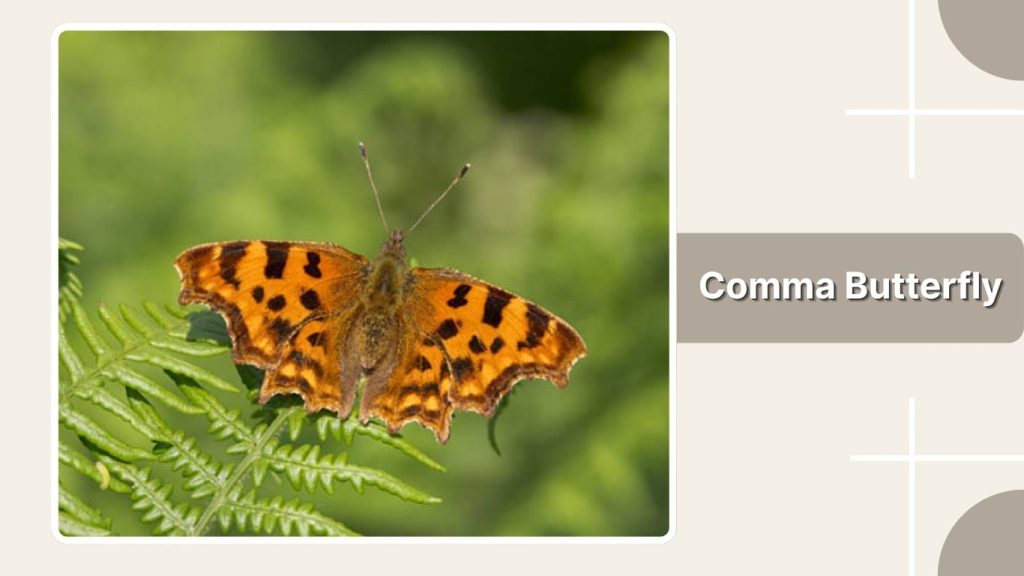
The comma butterfly is a distinctive brush-footed butterfly recognized for the small silver comma-shaped marking on the underside of its hindwings. Its jagged wing edges and earthy colors provide excellent camouflage, helping it blend into tree bark and dead leaves.
Identification
- Orange-brown wings with dark black spots
- Jagged wing edges resembling torn leaves
- Small silver comma-shaped mark on the hindwings
- Wingspan usually ranges from 2 to 2.5 inches
- Dark brown underside with camouflage patterns
- Fast and erratic flight style
- Caterpillars are dark with white markings and spines
Habitat and Distribution
Comma butterflies are widely distributed across North America, Europe, and Asia. They commonly inhabit forests, woodland edges, gardens, parks, and riverbanks with abundant trees and shrubs.
These butterflies prefer sunny clearings near host plants such as nettles, hops, elm, and willow. Adults are often seen resting on tree trunks or leaf litter where their wing patterns help them remain hidden from predators.
Behavior and Diet
Adult comma butterflies feed mainly on tree sap, rotting fruit, and decaying organic material rather than flower nectar. They are active during warm weather and often bask with open wings in sunny areas.
Caterpillars feed on leaves of host plants and usually remain hidden among foliage. Adult butterflies are territorial and may chase away intruders from feeding or resting areas.
Life Cycle
The comma butterfly undergoes complete metamorphosis with four stages: egg, larva, pupa, and adult. Females lay eggs on the leaves of host plants where caterpillars hatch and begin feeding.
After several growth stages, the caterpillar forms a hanging chrysalis attached to vegetation. Inside the chrysalis, transformation into an adult butterfly occurs. Once emerged, the adult expands its wings before beginning its feeding and breeding activities.
9. Gulf Fritillary
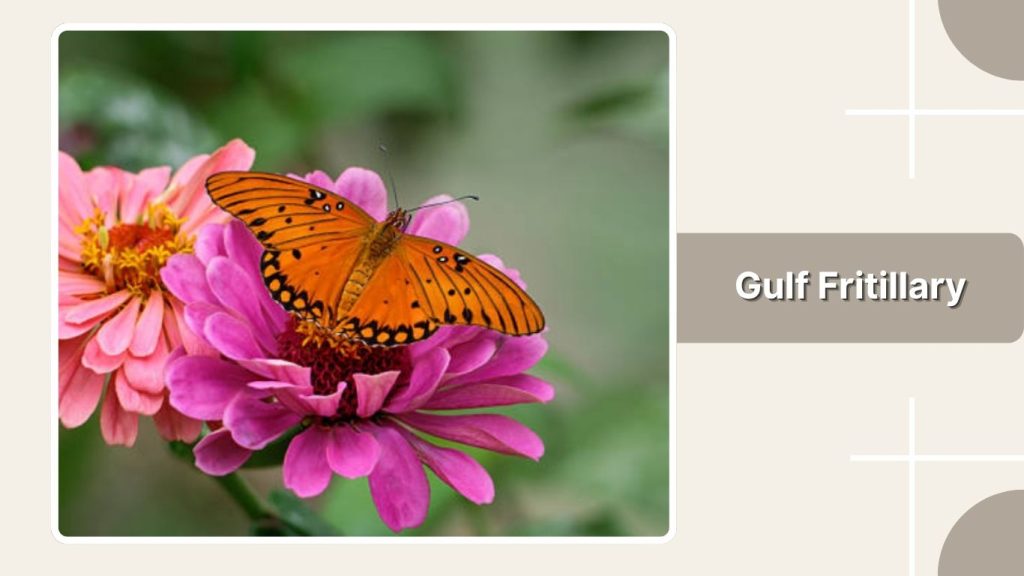
The gulf fritillary is a bright orange brush-footed butterfly known for its graceful flight and striking silver wing markings. This butterfly is commonly found in warm regions and is often seen fluttering around gardens, meadows, and open fields filled with flowering plants.
Identification
- Bright orange wings with black spots and markings
- Long forewings with a slender shape
- Silvery white spots on the underside of the wings
- Wingspan usually ranges from 2.5 to 3.7 inches
- Black antennae and slender body
- Fast and floating flight pattern
- Caterpillars are orange with black spines
Habitat and Distribution
Gulf fritillary butterflies are commonly found across the southern United States, Central America, South America, and parts of the Caribbean. They inhabit gardens, grasslands, roadsides, parks, and coastal habitats.
These butterflies prefer warm sunny environments with abundant flowering plants and passionflower vines, which serve as host plants for caterpillars. In warmer climates, they may remain active throughout most of the year.
Behavior and Diet
Adult gulf fritillaries mainly feed on nectar from flowers such as lantana, verbena, and zinnias. They are active during the day and are often seen gliding smoothly between flowers.
Caterpillars feed primarily on passionflower leaves. The bright orange coloration and spiny bodies of the larvae help discourage predators. Adult butterflies are quick fliers and frequently bask in sunlight with open wings.
Life Cycle
The gulf fritillary undergoes complete metamorphosis with four stages: egg, larva, pupa, and adult. Females lay eggs on passionflower vines where caterpillars hatch and begin feeding.
After several growth stages, the caterpillar forms a brown chrysalis attached to vegetation. Inside the chrysalis, transformation into an adult butterfly occurs. Once emerged, the butterfly expands its wings before beginning its feeding and reproductive activities.
10. Variegated Fritillary
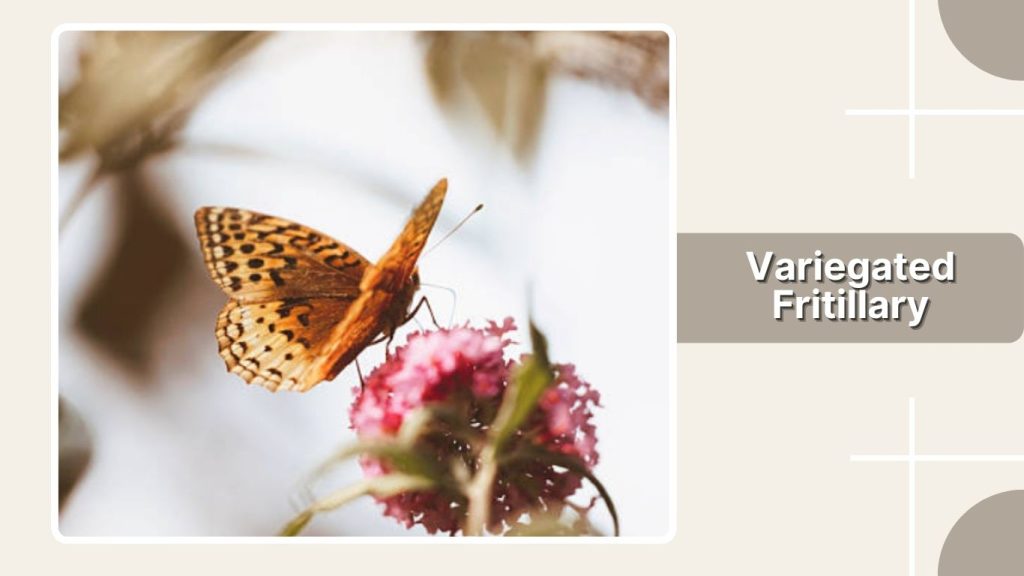
The variegated fritillary is a beautifully patterned brush-footed butterfly recognized for its orange wings covered with dark markings and lines. This fast-flying butterfly is commonly found in open sunny habitats and is known for its active behavior and wide distribution.
Identification
- Orange wings with black spots and wavy dark lines
- Pale brown underside with silvery white markings
- Wingspan usually ranges from 2 to 3 inches
- Long and somewhat pointed forewings
- Slender orange-brown body
- Rapid and low flight style
- Caterpillars are orange or dark with rows of black spines
Habitat and Distribution
Variegated fritillary butterflies are widely distributed across North America, Central America, and parts of South America. They commonly inhabit grasslands, gardens, fields, roadsides, and open woodland areas.
These butterflies prefer warm sunny environments with abundant flowering plants and host plants such as violets, passionflowers, and pansies. They are especially common in disturbed habitats and agricultural areas.
Behavior and Diet
Adult variegated fritillaries mainly feed on nectar from flowers including lantana, milkweed, and asters. They are highly active during warm daylight hours and are often seen flying quickly between flowers.
Caterpillars feed on a variety of low-growing plants, especially violets and passionflower vines. Adults are strong fliers and may travel long distances while searching for food and breeding sites.
Life Cycle
The variegated fritillary undergoes complete metamorphosis through egg, larva, pupa, and adult stages. Females lay eggs singly on host plants where caterpillars hatch and begin feeding.
After several growth stages, the caterpillar forms a chrysalis attached to vegetation. Inside the chrysalis, transformation into an adult butterfly takes place. Once emerged, the adult expands its wings before beginning its feeding and reproductive cycle.
11. Great Spangled Fritillary
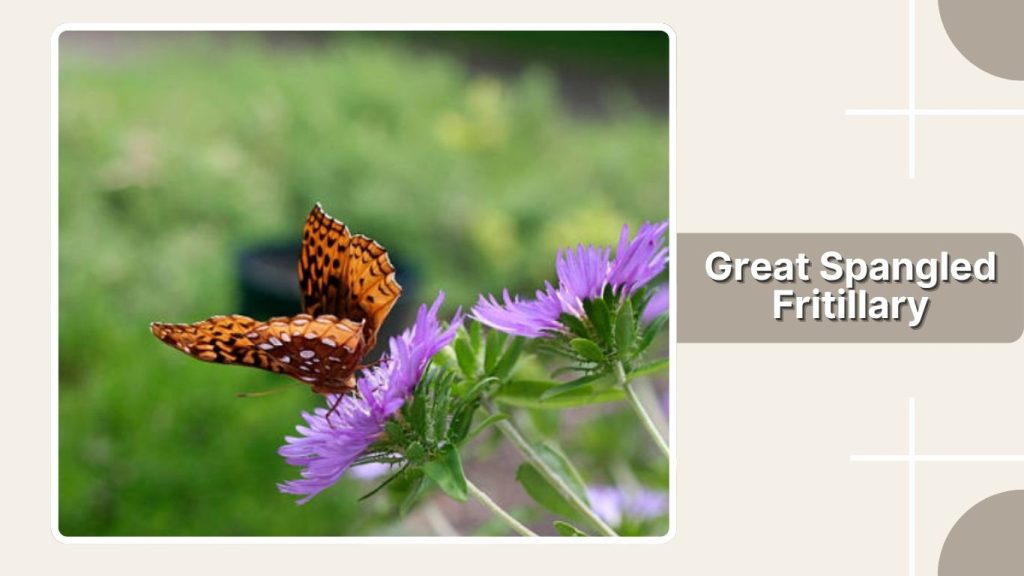
The great spangled fritillary is a large and striking brush-footed butterfly known for its bright orange wings and silvery spots. This butterfly is commonly found in meadows and open woodland areas during summer and is admired for its graceful flight and colorful appearance.
Identification
- Bright orange wings with black spots and markings
- Large silvery spots on the underside of the hindwings
- Wingspan usually ranges from 2.5 to 4 inches
- Dark brown edges along the wings
- Slender dark-colored body
- Strong and steady flight pattern
- Caterpillars are dark with orange spines and stripes
Habitat and Distribution
Great spangled fritillaries are widely distributed across North America, especially in the United States and southern Canada. They commonly inhabit meadows, prairies, open forests, gardens, and woodland edges.
These butterflies prefer sunny habitats with abundant wildflowers and violet plants, which serve as host plants for caterpillars. Adults are most active during summer when flowering plants are plentiful.
Behavior and Diet
Adult great spangled fritillaries mainly feed on nectar from flowers such as milkweed, thistles, coneflowers, and asters. They are active during warm daylight hours and are often seen gliding over fields and meadows.
Caterpillars feed mainly on violet leaves and remain hidden among vegetation during much of their development. Adult butterflies are strong fliers and may travel considerable distances while searching for food and breeding areas.
Life Cycle
The great spangled fritillary undergoes complete metamorphosis through egg, larva, pupa, and adult stages. Females lay eggs near violet plants during late summer.
After hatching, young caterpillars overwinter before feeding in spring. The caterpillar later forms a chrysalis attached to vegetation where transformation into an adult butterfly occurs. Once emerged, the adult expands its wings before beginning its feeding and reproductive activities.
12. Hackberry Emperor
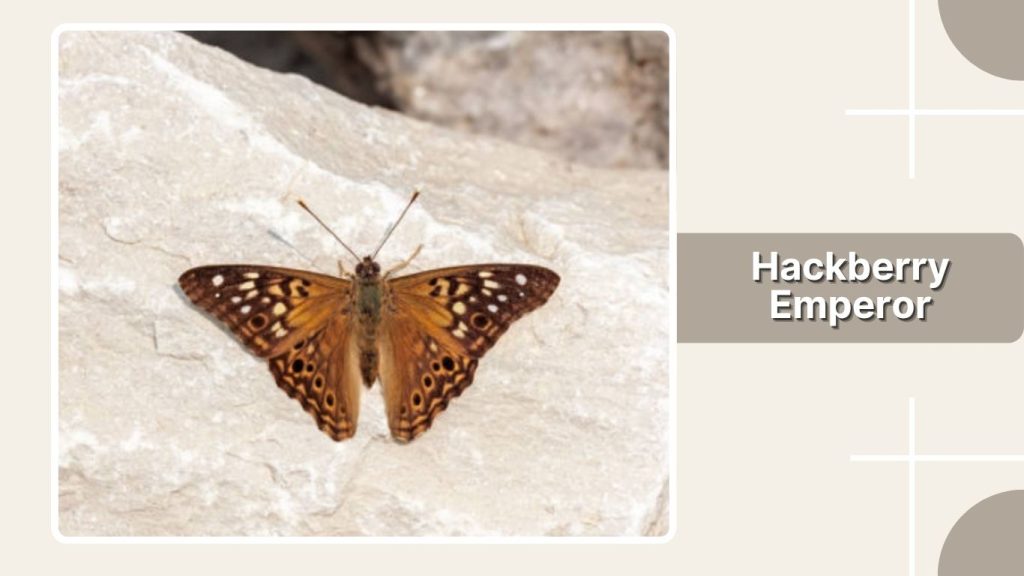
The hackberry emperor is a medium-sized brush-footed butterfly known for its brown wings marked with small eye spots and dark bands. This butterfly is often seen resting on tree trunks or feeding on sap rather than flowers. It is a fast and active species commonly found in wooded habitats.
Identification
- Light brown wings with black and orange eye spots
- Dark brown bands across the wings
- Wingspan usually ranges from 2 to 2.75 inches
- Underside of wings appears pale brown with markings
- Slender body covered with fine hairs
- Quick and darting flight behavior
- Caterpillars are green with small horns on the head
Habitat and Distribution
Hackberry emperor butterflies are widely distributed across the eastern and central United States and parts of southern Canada. They commonly inhabit forests, parks, woodland edges, riverbanks, and suburban areas where hackberry trees grow.
These butterflies prefer shaded habitats with nearby water sources and mature trees. Adults are often seen resting on tree trunks, rocks, or the ground during warm weather.
Behavior and Diet
Adult hackberry emperors feed mainly on tree sap, rotting fruit, mud, and animal droppings rather than flower nectar. They are active during the day and are known for their rapid flight.
Caterpillars feed exclusively on hackberry leaves. Adult butterflies are territorial and may chase away other insects from feeding areas. Their brown wing patterns provide effective camouflage against tree bark.
Life Cycle
The hackberry emperor undergoes complete metamorphosis through egg, larva, pupa, and adult stages. Females lay eggs on hackberry leaves where caterpillars hatch and begin feeding.
After several growth stages, the caterpillar forms a chrysalis attached to vegetation. Inside the chrysalis, transformation into an adult butterfly occurs. Once emerged, the adult expands its wings before beginning its feeding and reproductive activities.
13. Tawny Emperor
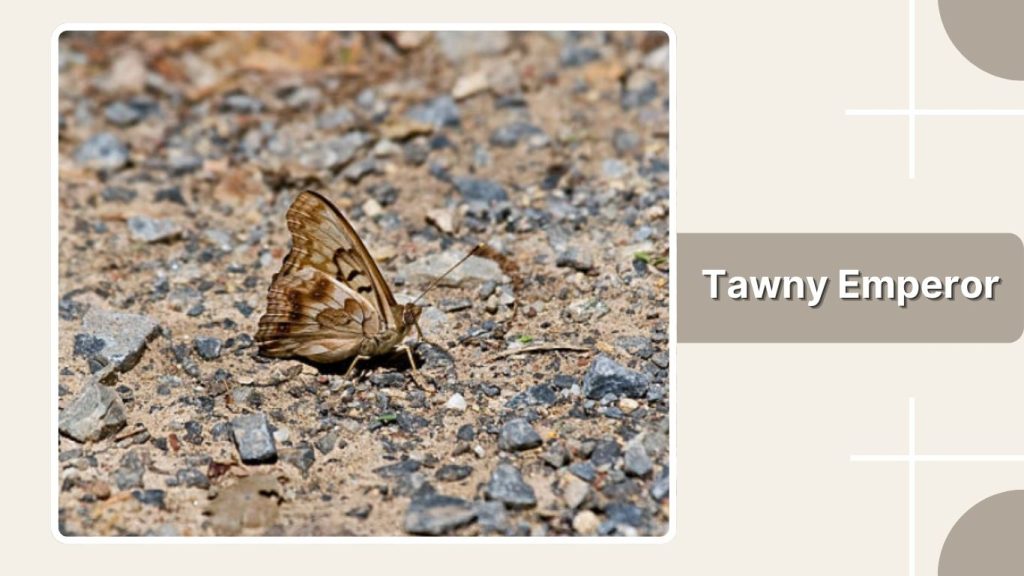
The tawny emperor is a soft brown brush-footed butterfly known for its subtle wing patterns and fast flight. This butterfly is closely related to the hackberry emperor and is commonly found in wooded habitats near rivers and forests. Its calm coloration helps it blend into tree bark and dry leaves.
Identification
- Light tawny-brown wings with dark spots
- Small eye spots near the forewing tips
- Wingspan usually ranges from 2 to 2.6 inches
- Pale underside with fine brown markings
- Slender brown body covered with tiny hairs
- Fast and low flight style
- Caterpillars are green with yellow stripes and small horns
Habitat and Distribution
Tawny emperor butterflies are widely distributed across the eastern and southern United States and parts of Mexico. They commonly inhabit forests, woodland edges, parks, riverbanks, and areas where hackberry trees are abundant.
These butterflies prefer warm habitats with shade and nearby water sources. Adults are often seen resting on tree trunks, mud, rocks, or low vegetation during sunny weather.
Behavior and Diet
Adult tawny emperors mainly feed on tree sap, rotting fruit, mud, and animal waste instead of flower nectar. They are active during warm daylight hours and are known for their quick and direct flight.
Caterpillars feed primarily on hackberry leaves. Adult butterflies often gather in groups around moist ground or decaying material to obtain minerals and nutrients.
Life Cycle
The tawny emperor undergoes complete metamorphosis through egg, larva, pupa, and adult stages. Females lay clusters of eggs on hackberry leaves where caterpillars hatch and begin feeding.
After several growth stages, the caterpillar forms a chrysalis attached to vegetation. Inside the chrysalis, transformation into an adult butterfly occurs. Once emerged, the adult expands its wings before beginning its feeding and breeding activities.
14. Common Buckeye
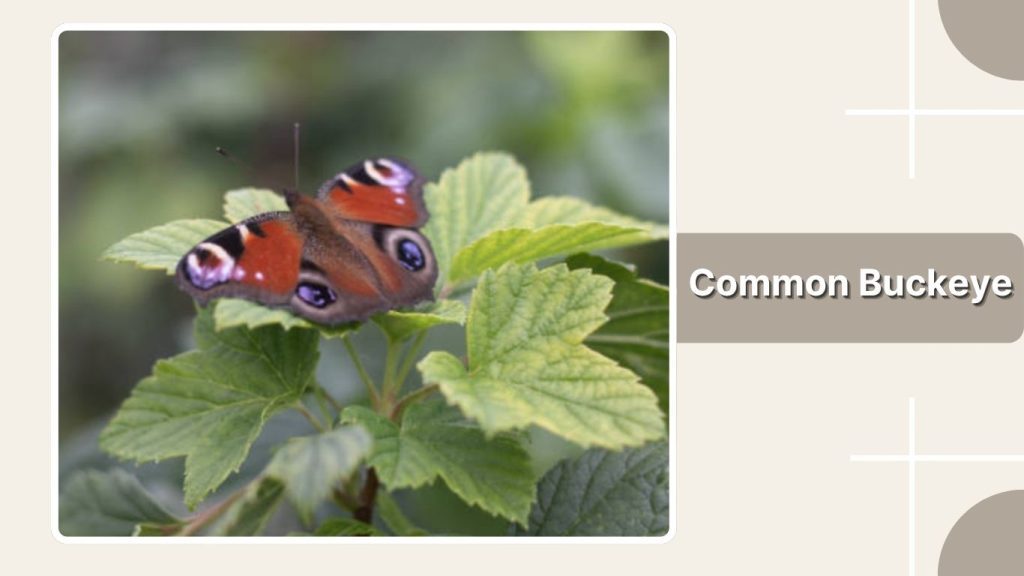
The common buckeye is a striking brush-footed butterfly famous for its large eye spots and bold wing patterns. This active butterfly is commonly found in sunny open habitats and is known for basking on the ground with its wings spread wide.
Identification
- Brown wings with orange bands and large eye spots
- Two prominent eye spots on each hindwing
- White patches near the tips of the forewings
- Wingspan usually ranges from 1.5 to 2.7 inches
- Slender dark-colored body
- Fast and low flight pattern
- Caterpillars are dark with orange spots and branching spines
Habitat and Distribution
Common buckeye butterflies are widely distributed across North America, Central America, and parts of South America. They commonly inhabit grasslands, gardens, roadsides, fields, coastal dunes, and open woodland edges.
These butterflies prefer warm sunny environments with low vegetation and flowering plants. They are especially common in disturbed habitats and open areas with bare ground for basking.
Behavior and Diet
Adult common buckeyes mainly feed on nectar from flowers such as asters, lantana, and plantains. They are highly active during warm weather and are often seen resting on open ground with wings spread.
The large eye spots on their wings help scare away predators by mimicking the eyes of larger animals. Caterpillars feed on plants such as snapdragons, plantains, and toadflax.
Life Cycle
The common buckeye undergoes complete metamorphosis with four stages: egg, larva, pupa, and adult. Females lay eggs individually on host plants where caterpillars hatch and begin feeding.
After several growth stages, the caterpillar forms a chrysalis attached to vegetation. Inside the chrysalis, transformation into an adult butterfly takes place. Once emerged, the butterfly expands its wings before beginning its feeding and reproductive cycle.
15. Zebra Longwing
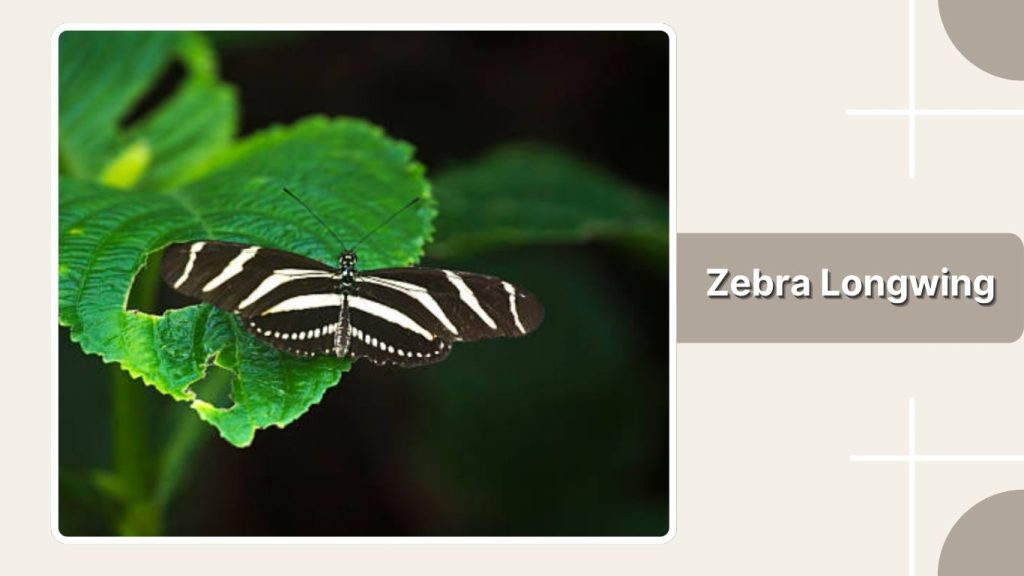
The zebra longwing is a graceful brush-footed butterfly recognized for its long narrow wings marked with bold black and yellow stripes. This butterfly is the official state butterfly of Florida and is admired for its slow flight and striking appearance.
Identification
- Black wings with long yellow stripes
- Long and narrow wing shape
- Wingspan usually ranges from 2.8 to 4 inches
- Slender black body with small white markings
- Slow and graceful flight style
- Underside of wings has pale yellow stripes
- Caterpillars are white with black spots and branching spines
Habitat and Distribution
Zebra longwing butterflies are commonly found in the southern United States, Central America, South America, and the Caribbean. They inhabit tropical forests, gardens, parks, wetlands, and woodland edges.
These butterflies prefer warm humid environments with abundant flowering plants and passionflower vines, which serve as host plants for caterpillars. Adults often gather together in groups while resting at night.
Behavior and Diet
Adult zebra longwings mainly feed on nectar and pollen from flowers. Unlike many butterflies, they can digest pollen, which provides extra nutrients and helps them live longer.
These butterflies are slow fliers and are often seen gliding gently through vegetation. Caterpillars feed primarily on passionflower leaves and use their spiny appearance to discourage predators.
Life Cycle
The zebra longwing undergoes complete metamorphosis with four stages: egg, larva, pupa, and adult. Females lay eggs on passionflower vines where caterpillars hatch and begin feeding.
After several growth stages, the caterpillar forms a hanging chrysalis attached to vegetation. Inside the chrysalis, transformation into an adult butterfly occurs. Once emerged, the adult expands its wings before beginning its feeding and breeding activities.
16. Peacock Butterfly
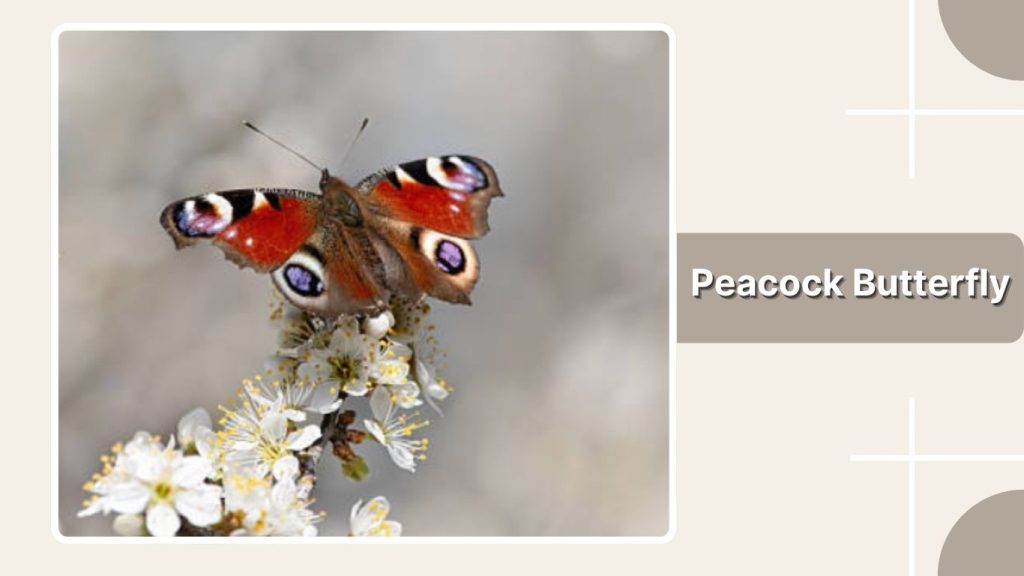
The peacock butterfly is a colorful brush-footed butterfly famous for the large eye-like spots on its wings. These striking markings help protect the butterfly from predators by making it appear larger and more threatening. Peacock butterflies are commonly seen in gardens, meadows, and woodland edges during warm seasons.
Identification
- Bright reddish-brown wings with large eye spots
- Blue, black, and yellow markings within the eye spots
- Wingspan usually ranges from 2 to 2.5 inches
- Dark brown underside that resembles dead leaves
- Slender dark-colored body
- Slow and fluttering flight pattern
- Caterpillars are black with tiny white dots and spines
Habitat and Distribution
Peacock butterflies are widely distributed across Europe and parts of Asia. They commonly inhabit gardens, parks, meadows, forests, and countryside habitats with abundant flowering plants.
These butterflies prefer sunny environments with nearby nettle plants, which serve as host plants for caterpillars. Adults are often seen basking in warm sunlight with wings fully spread.
Behavior and Diet
Adult peacock butterflies mainly feed on nectar from flowers such as thistles, buddleia, and dandelions. They are active during warm daylight hours and are known for their defensive wing displays.
When threatened, the butterfly suddenly reveals its large eye spots to startle predators. Caterpillars feed mainly on nettle leaves and often live together in groups during early development.
Life Cycle
The peacock butterfly undergoes complete metamorphosis through egg, larva, pupa, and adult stages. Females lay clusters of eggs on nettle leaves where caterpillars hatch and begin feeding.
After several growth stages, the caterpillar forms a chrysalis attached to vegetation. Inside the chrysalis, transformation into an adult butterfly occurs. Once emerged, the butterfly expands its wings before beginning its feeding and reproductive cycle.
17. Purple Emperor Butterfly
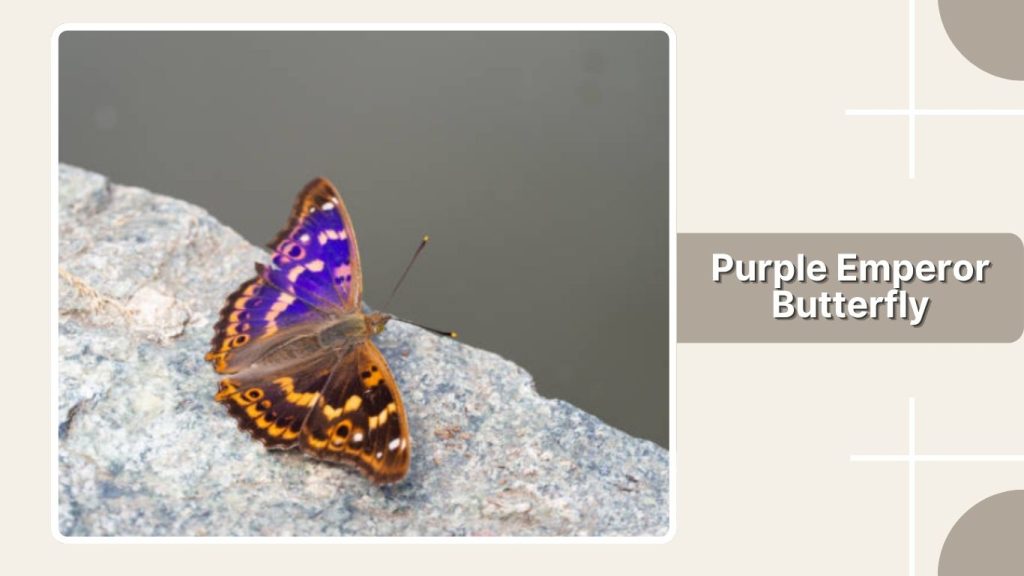
The purple emperor butterfly is a magnificent brush-footed butterfly admired for the shimmering purple sheen seen on the wings of males. This rare and elusive butterfly is often found high in treetops and is considered one of the most beautiful butterflies in Europe.
Identification
- Dark brown wings with iridescent purple sheen in males
- White bands and small eye spots on the wings
- Females are larger but lack the strong purple coloring
- Wingspan usually ranges from 2.8 to 3.5 inches
- Strong and powerful flight style
- Underside of wings is pale gray with fine markings
- Caterpillars are green with small horn-like projections on the head
Habitat and Distribution
Purple emperor butterflies are mainly found across Europe and parts of Asia. They inhabit mature woodlands, forest clearings, and areas with oak trees and willow plants.
These butterflies prefer quiet forest habitats where adults spend much of their time high in the canopy. They are most commonly seen during summer in sunny woodland areas.
Behavior and Diet
Adult purple emperors feed on tree sap, animal droppings, carrion, and moisture from mud rather than flower nectar. Males are territorial and often defend areas high in the trees.
Caterpillars feed mainly on willow leaves and remain well hidden among foliage. Adult butterflies are strong fliers and can move rapidly through woodland habitats.
Life Cycle
The purple emperor butterfly undergoes complete metamorphosis with four stages: egg, larva, pupa, and adult. Females lay eggs on willow leaves where caterpillars hatch and begin feeding.
After growing through several stages, the caterpillar forms a chrysalis attached to vegetation. Inside the chrysalis, transformation into an adult butterfly takes place. Once emerged, the butterfly expands its wings before beginning its adult life cycle.
FAQs
What are brush-footed butterflies?
Brush-footed butterflies belong to the family Nymphalidae, the largest butterfly family in the world. They are known for having reduced front legs that appear brush-like, giving the group its common name.
Where are brush-footed butterflies commonly found?
Brush-footed butterflies are found worldwide in habitats such as forests, grasslands, gardens, meadows, wetlands, and tropical regions. Different species prefer different climates and environments depending on their food plants and life cycles.
What do brush-footed butterflies eat?
Most adult brush-footed butterflies feed on flower nectar, tree sap, rotting fruit, or plant juices. Caterpillars usually feed on specific host plants, including milkweed, nettles, violets, and passionflower vines.
How long do brush-footed butterflies live?
The lifespan of brush-footed butterflies varies by species. Many adults live for a few weeks, while some species, such as the mourning cloak and monarch butterfly, can survive for several months under favorable conditions.
Why do many brush-footed butterflies have eye spots on their wings?
Eye spots help protect butterflies from predators by making them appear larger or more threatening. These markings can startle birds and other predators, giving the butterfly time to escape.