
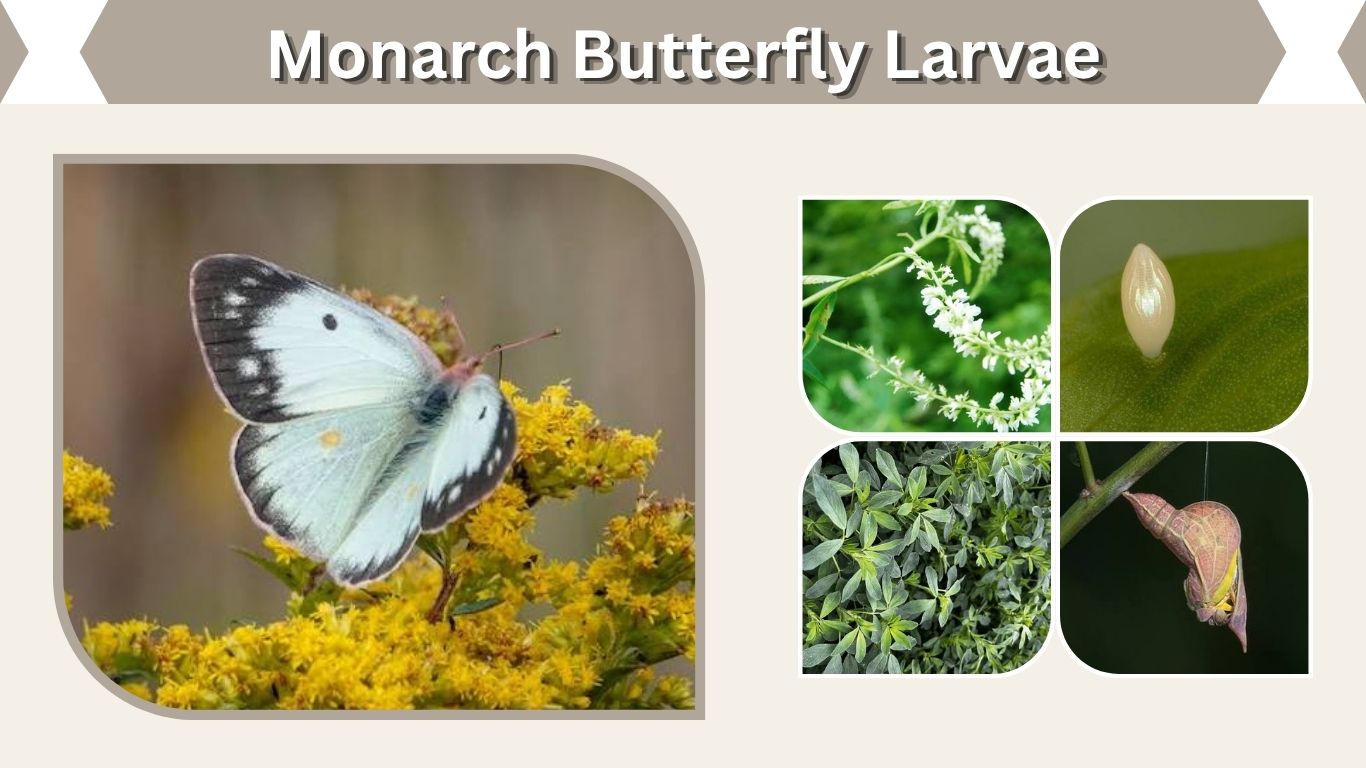
The clouded sulphur is a familiar yellow butterfly that darts over meadows, roadsides, lawns, and clover fields. Although it looks simple, identification can be difficult because it closely resembles the orange sulphur and sometimes appears in a white female form. Its lemon-yellow color, dark wing borders, pea-family host plants, and low, energetic flight are the best clues for recognizing this widespread North American butterfly.
What Is a Clouded Sulphur Butterfly?
The clouded sulphur (Colias philodice), also called the common sulphur, belongs to the family Pieridae, which includes whites, sulphurs, and orange-tips. It is a medium-sized North American butterfly associated mainly with sunny, open habitats.
| Feature | Description |
| Scientific name | Colias philodice |
| Family | Pieridae |
| Wingspan | About 1¼–2 inches (3.5–5.1 cm) |
| Main color | Lemon yellow or greenish yellow |
| Host plants | Clover, alfalfa, vetch, and other legumes |
| Typical habitat | Meadows, pastures, roadsides, lawns, and fields |
| Overwintering stage | Chrysalis |
Clouded Sulphur Butterfly Identification
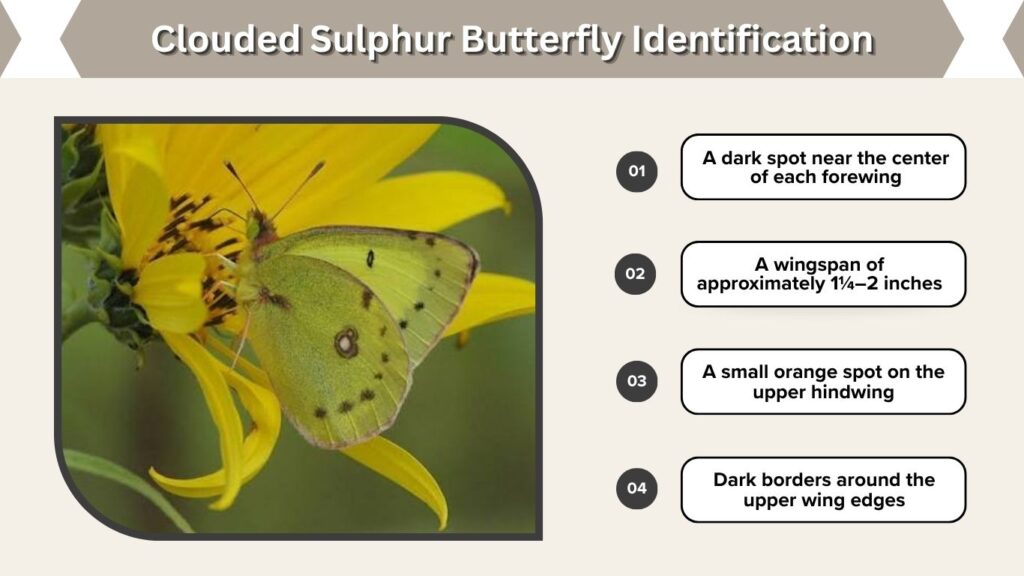
Clouded sulphurs usually rest with their wings closed, hiding many of their most useful markings. Observers may need to watch the butterfly in flight or photograph its upper wing surface to confirm the species.
Key Identification Features
- Clear lemon-yellow wings without a strong orange center
- A dark spot near the center of each forewing
- A small orange spot on the upper hindwing
- Dark borders around the upper wing edges
- A silver or whitish hindwing spot bordered with pink or red underneath
- Pinkish edging that may be visible along the closed wings
- A wingspan of approximately 1¼–2 inches
The underside is generally yellow to greenish yellow. Spring and fall individuals may appear greener, smaller, or less boldly marked than midsummer butterflies.
Male vs Female Clouded Sulphur
Males usually have solid, sharply defined black borders on the upper wings. Females have broader dark borders containing pale yellow spots. Some females occur in a white or greenish-white form called alba, which can be extremely difficult to distinguish from white-form orange sulphur females.
Clouded Sulphur Caterpillar and Chrysalis
The immature stages blend into leafy pea-family plants. Clouded and orange sulphur caterpillars are so similar that separating them by appearance alone is often impossible.
What Does the Caterpillar Look Like?
The caterpillar is smooth and grass green, often with a darker line along its back. A pale stripe runs along each side and may include reddish, white, or dark accents. This coloring helps conceal it among clover, alfalfa, and similar foliage.
Clouded Sulphur Chrysalis
The chrysalis is green, pointed at both ends, and may display small yellow or dark markings. It is secured upright to vegetation and is normally the stage in which the species survives winter.
Clouded Sulphur Life Cycle
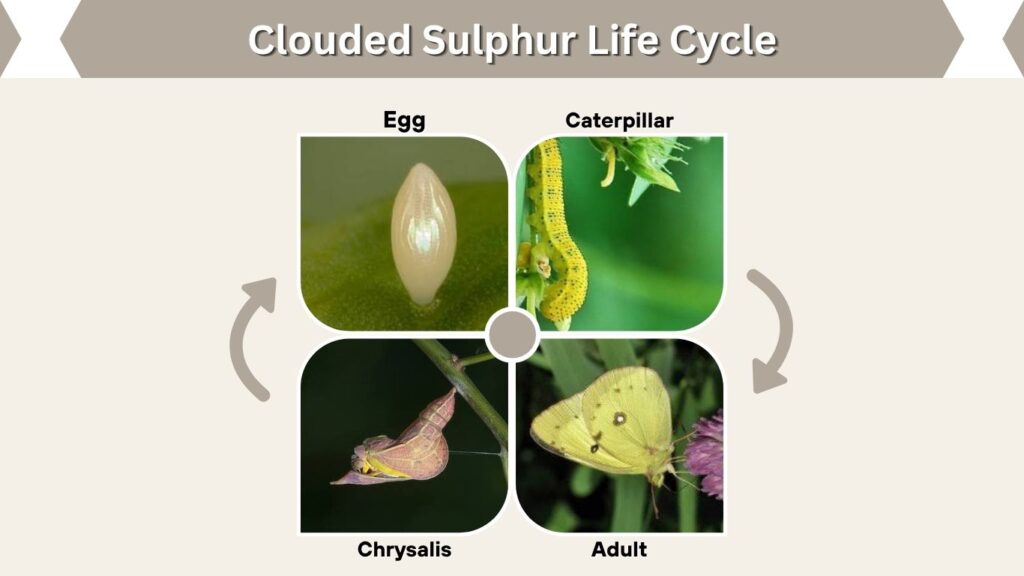
The clouded sulphur undergoes complete metamorphosis through four stages: egg, caterpillar, chrysalis, and adult.
Egg
A female places spindle-shaped eggs singly on the upper surface of a host leaf. Fresh eggs are pale or yellowish and later turn orange-red or crimson. Under suitable conditions, they hatch in about five days.
Caterpillar
The newly hatched larva eats the host plant’s leaves and grows through several molts. It may reach full size in approximately three weeks, although temperature, food quality, and seasonal conditions affect its development.
Chrysalis
The mature caterpillar forms a green chrysalis. Non-wintering pupae may produce adults in around ten days. Late-season individuals can remain in the chrysalis through winter and emerge when warmer conditions return.
Adult
Adults mate, drink nectar, and begin another generation. Several overlapping broods may occur from spring through fall, meaning different life stages can be present during the warmer months.
Clouded Sulphur Host Plants and Diet
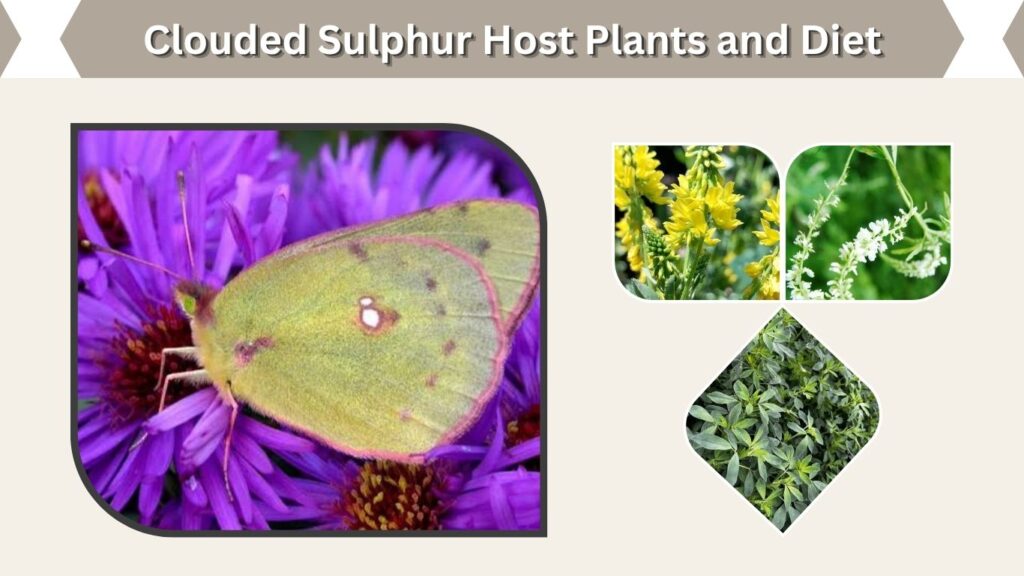
Clouded sulphur caterpillars and adults have different diets. Caterpillars consume plant tissue, while adults drink liquid nectar through a coiled proboscis.
What Do Clouded Sulphur Caterpillars Eat?
Their main host plants are members of the pea family, particularly:
- White clover
- Sweet clover
- Alfalfa
- Vetches
- Other herbaceous legumes
Females lay their eggs on suitable host plants, giving newly hatched caterpillars immediate access to food.
What Do Adult Clouded Sulphurs Eat?
Adults visit numerous flowering plants for nectar. Recorded food sources include goldenrods, Joe-Pye weed, boneset, asters, and purple loosestrife. Males may also gather around puddles or damp soil to absorb moisture and dissolved minerals.
Clouded Sulphur Habitat, Range, and Behavior
Clouded sulphurs prefer open, sunny places rather than dense forests. Common habitats include meadows, pastures, farmland, clover fields, lawns, roadsides, marsh edges, gardens, and other grassy areas.
Their range covers much of North America, extending from Alaska and Canada through most of the United States and south into Mexico and Guatemala. Local abundance and flight periods vary according to latitude and climate.
Flight and Mating Behavior
The clouded sulphur’s flight is low, quick, and somewhat erratic, often occurring just above grass or flowers. Males patrol open areas while searching for females. Wing patterns, ultraviolet signals, pheromones, and close wing movements help the butterflies identify suitable mates.
Clouded Sulphur vs Orange Sulphur vs Cloudless Sulphur
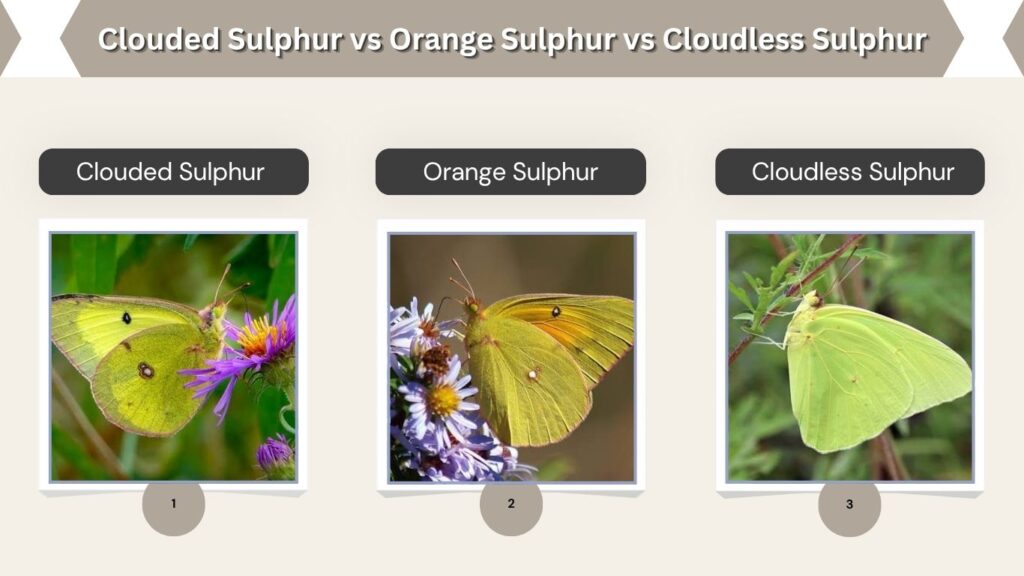
| Feature | Clouded Sulphur | Orange Sulphur | Cloudless Sulphur |
| Scientific name | Colias philodice | Colias eurytheme | Phoebis sennae |
| Upper-wing color | Clear lemon yellow | Yellow with orange or gold | Usually bright yellow |
| Dark wing borders | Prominent | Prominent | Different, less solid pattern |
| General shape | Compact and rounded | Compact and rounded | Larger and more elongated |
| Main host plants | Clover, alfalfa, vetch | Clover, alfalfa, vetch | Senna and related plants |
Clouded Sulphur vs Orange Sulphur
Look for orange or deep golden coloring on the upper wings. A clouded sulphur should remain lemon yellow without a distinct orange center. However, pale orange sulphurs, white females, hybrids, and closed-wing individuals can make definite identification impossible without seeing the upper wings.
Clouded Sulphur vs Cloudless Sulphur
The cloudless sulphur is generally larger, more elongated, and belongs to a different genus. Clouded sulphurs have the smaller, compact shape and dark upper-wing borders associated with Colias. Their caterpillar food plants also differ: clouded sulphurs favor clover and related legumes, while cloudless sulphurs commonly use senna plants.
Clouded Sulphur Butterfly Meaning
Butterfly symbolism is cultural rather than scientific. The clouded sulphur may represent optimism, renewal, adaptability, or personal transformation because of its bright yellow color and metamorphosis. A sighting has no scientifically proven supernatural meaning, but it can still serve as a positive personal symbol.
Interesting Clouded Sulphur Facts
- It usually rests with its wings closed.
- Some females are white instead of yellow.
- Its caterpillars closely resemble orange sulphur caterpillars.
- Adults may gather in large groups on moist ground.
- Multiple generations can overlap during the warm season.
- The chrysalis normally survives winter.
FAQs
Are clouded sulphur butterflies rare?
Clouded sulphurs are widespread and can be common in suitable open habitats, especially where clover, alfalfa, or other legumes grow. They may be overlooked because orange sulphurs look extremely similar and frequently occupy the same fields.
Is a clouded sulphur a moth?
No. The clouded sulphur is a true butterfly in the family Pieridae. It is active during daylight, has clubbed antennae, and usually holds its wings upright and closed while resting. Its quick flight is commonly seen over meadows and roadsides.
Are clouded sulphur caterpillars harmful?
Clouded sulphur caterpillars do not sting or bite people. They feed on legumes such as clover, vetch, and alfalfa. Ordinary backyard populations rarely cause significant damage, and the adults later visit numerous flowering plants for nectar.
Do clouded sulphur butterflies migrate?
They can disperse locally and regionally but are not known for the coordinated long-distance migration associated with monarch butterflies. Seasonal movement and population expansion may bring them into new areas when warm weather and suitable host plants are available.
How can I attract clouded sulphur butterflies?
Grow pesticide-free clover, native legumes, or other locally suitable pea-family plants and provide nectar flowers from spring through fall. A sunny meadow-style area, shallow damp soil, and reduced mowing can support adults while providing places for females to lay eggs.