
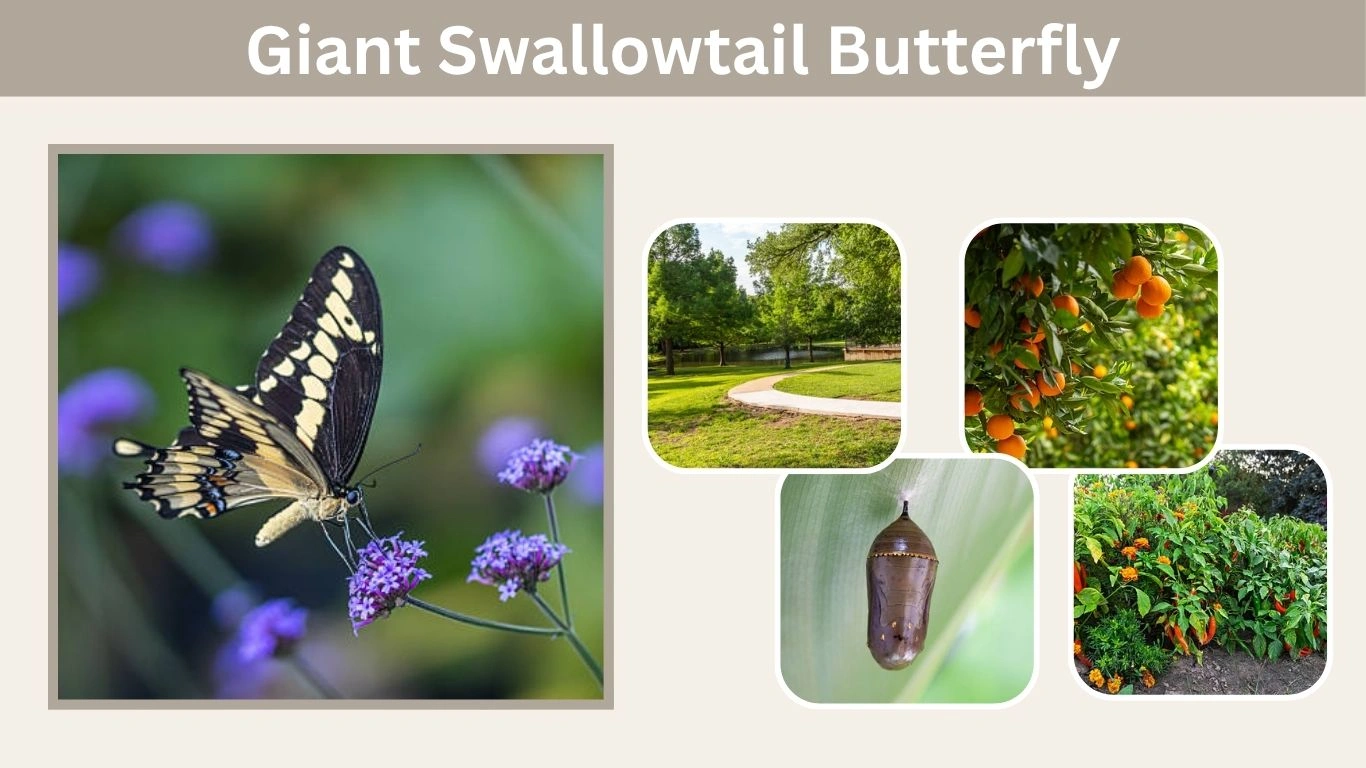
The giant swallowtail butterfly is one of the most fascinating butterflies in North America. Known for its impressive size and striking yellow-and-black wings, this species attracts gardeners, butterfly enthusiasts, and nature lovers alike. Its caterpillar is equally famous because it mimics bird droppings for protection against predators. From eggs to chrysalis and finally into a large butterfly, the giant swallowtail has a remarkable life cycle. Understanding its habitat, host plants, and behavior can help gardeners attract and protect this beautiful pollinator in natural spaces.
What Is a Giant Swallowtail Butterfly?
The giant swallowtail butterfly, scientifically known as Papilio cresphontes, is the largest butterfly species found in North America. It belongs to the swallowtail butterfly family and is widely recognized for its dramatic wingspan and elegant flight patterns. These butterflies are commonly seen in warm regions where citrus plants and other host plants are available.
The butterfly’s black wings feature bold yellow markings that make it easy to identify in gardens and forests. Adult giant swallowtails are strong fliers and often glide through sunny areas while searching for nectar-rich flowers.
Key Features of the Giant Swallowtail
- Wingspan can reach up to 6 inches
- Black wings with yellow diagonal bands
- Long tail-like extensions on hindwings
- Commonly found near citrus plants
- Active during warm spring and summer months
Where Giant Swallowtails Are Found
- Southern United States
- Florida and Texas gardens
- Parts of Central America
- Expanding northern regions like Ontario
- Open woodlands and citrus groves
Giant Swallowtail Butterfly Identification
Giant swallowtail butterflies are easy to recognize because of their large size and distinctive wing patterns. Their appearance differs slightly between males and females, although both share the same striking black and yellow coloration. These butterflies are often mistaken for tiger swallowtails from a distance, but closer observation reveals major differences in wing shape and markings.
Giant Swallowtail Size and Appearance
The giant swallowtail is considered the largest butterfly in North America. Adult butterflies typically have a wingspan between 4 and 6 inches, making them noticeably larger than many other swallowtail species. Their wings are mostly black with yellow bands stretching across the forewings and hindwings.
The underside of the wings contains additional yellow patterns that help camouflage the butterfly while resting. Tail-like projections on the hindwings give the butterfly its classic swallowtail appearance.
Male vs Female Giant Swallowtail
Male and female giant swallowtails look similar, but there are a few subtle differences between them. Females are usually slightly larger and may have broader wings. Males are often more active while searching for mates and defending territory.
Females spend more time near host plants because they lay eggs individually on leaves. Observing their behavior is often the easiest way to distinguish between the sexes in nature.
Giant Swallowtail Caterpillar
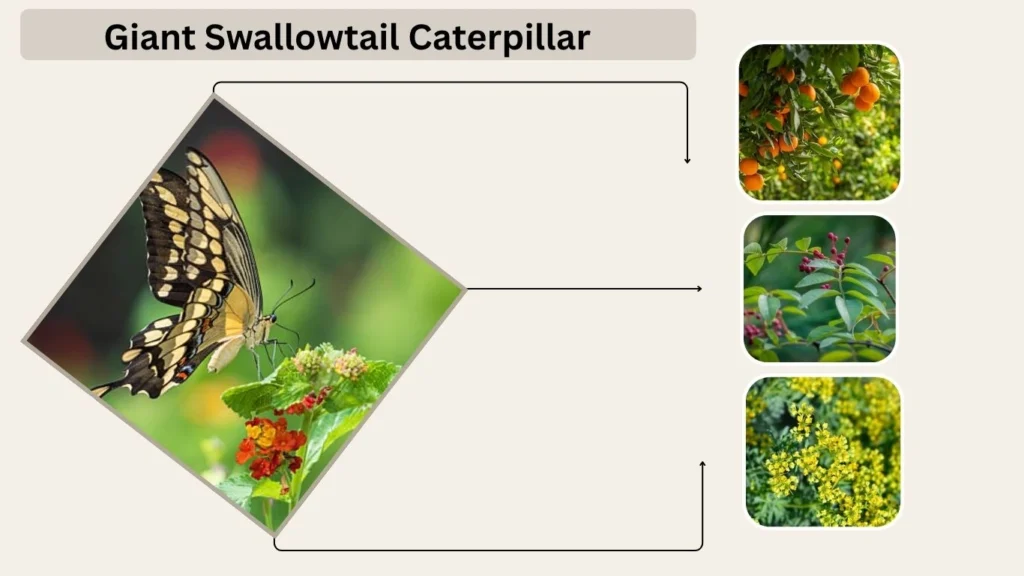
The giant swallowtail caterpillar is one of the most unusual-looking caterpillars in the butterfly world. Its strange appearance helps protect it from predators and allows it to survive in exposed environments. Caterpillars feed heavily on host plants before entering the chrysalis stage.
What Does the Caterpillar Look Like?
Young giant swallowtail caterpillars resemble fresh bird droppings. They have a brown body mixed with white patches, creating a realistic camouflage effect. This disguise helps deter birds and other predators that may avoid eating what appears to be waste.
As the caterpillar grows, it becomes larger and develops a rough texture. Even at later stages, the caterpillar continues using camouflage as its main defense mechanism. When threatened, it also extends a bright orange organ called an osmeterium that releases a strong odor.
What Do Giant Swallowtail Caterpillars Eat?
Giant swallowtail caterpillars mainly feed on plants from the citrus family. They consume leaves continuously during their growth stages and can sometimes become noticeable pests on young citrus trees. However, they are also important because they eventually develop into pollinating butterflies.
Common host plants include:
- Orange trees
- Lemon trees
- Prickly ash
- Hop tree
- Rue plants
These plants provide both food and safe locations for female butterflies to lay eggs. Gardeners who want to attract giant swallowtails often grow citrus or native host plants specifically for caterpillars.
Giant Swallowtail Life Cycle
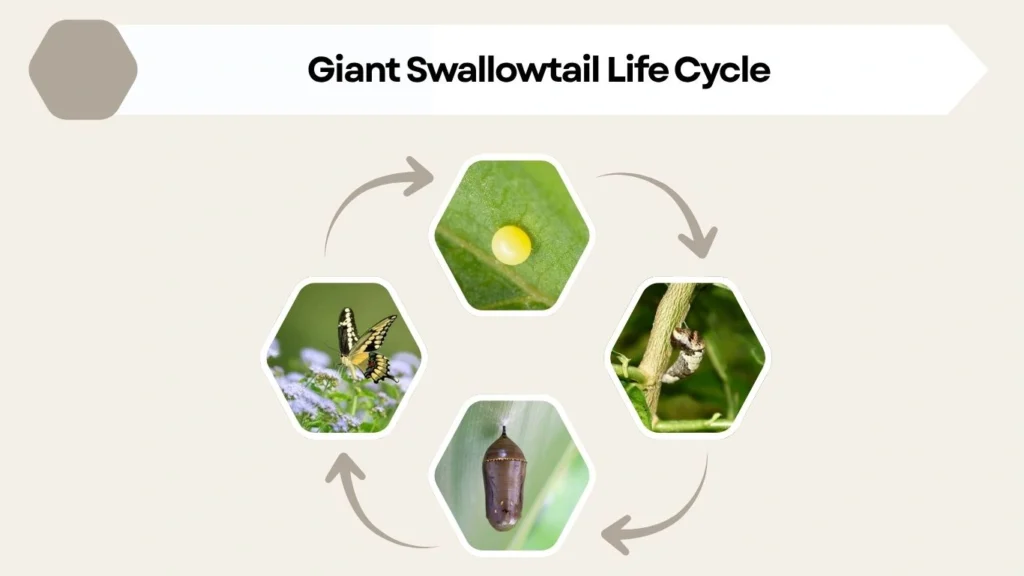
The giant swallowtail butterfly goes through a complete metamorphosis that includes four stages: egg, caterpillar, chrysalis, and adult butterfly. Each stage plays an important role in the butterfly’s growth and survival. Depending on weather and habitat conditions, the entire life cycle may take several weeks to a few months.
Egg Stage
Female giant swallowtail butterflies lay small pale-yellow eggs individually on the leaves of host plants, especially citrus trees and prickly ash. Laying eggs separately helps reduce competition between caterpillars after hatching.
The eggs usually hatch within a few days. Once the tiny caterpillars emerge, they immediately begin feeding on nearby leaves to support rapid growth.
Caterpillar Stage
The caterpillar stage is the longest and most active part of the giant swallowtail life cycle. Young caterpillars resemble bird droppings, which helps protect them from predators such as birds and lizards.
As they grow, caterpillars pass through several stages called instars. During this period, they eat continuously and shed their skin multiple times. Their primary food sources include citrus leaves, hop tree leaves, and prickly ash.
When threatened, giant swallowtail caterpillars extend a bright orange defensive organ called an osmeterium. This organ releases a strong odor that helps scare away predators.
Chrysalis Stage
After completing the caterpillar stage, the giant swallowtail forms a chrysalis attached to a twig or stem. The chrysalis is usually brown or gray, allowing it to blend into its surroundings for protection.
Inside the chrysalis, the caterpillar undergoes a remarkable transformation into an adult butterfly. This stage can last several weeks, although some chrysalises overwinter in colder regions and hatch during spring.
Adult Butterfly Stage
When development is complete, the adult giant swallowtail butterfly emerges from the chrysalis with soft folded wings. The butterfly rests while fluid pumps through the wings, allowing them to expand and harden.
Adult giant swallowtails feed on nectar from flowers and play an important role as pollinators. They are strong fliers and can travel long distances while searching for food and suitable host plants for reproduction.
Giant Swallowtail Host Plants
Host plants are essential for the survival of giant swallowtail butterflies because females rely on them when laying eggs. These plants provide food for caterpillars and help support the butterfly’s complete life cycle. Most host plants belong to the citrus family and grow well in warm climates.
Best Host Plants for Giant Swallowtails
Several plants are especially attractive to giant swallowtail butterflies. Female butterflies search for healthy leaves where newly hatched caterpillars can feed safely and grow quickly.
Popular host plants include:
- Orange trees
- Lemon trees
- Grapefruit trees
- Prickly ash
- Hop tree
Gardeners who grow these plants often notice giant swallowtail caterpillars appearing during warmer months. Native host plants are especially useful because they naturally support local butterfly populations.
Why Citrus Trees Attract Caterpillars
Citrus plants contain nutrients that caterpillars need during their rapid growth stages. The leaves are soft, easy to consume, and widely available in southern regions where giant swallowtails are common. Caterpillars may eat many leaves before reaching the chrysalis stage.
Young citrus trees can sometimes suffer visible damage from feeding caterpillars. However, many gardeners tolerate this because the butterflies are valuable pollinators and important parts of the ecosystem.
Giant Swallowtail Butterfly Habitat and Geographic Range
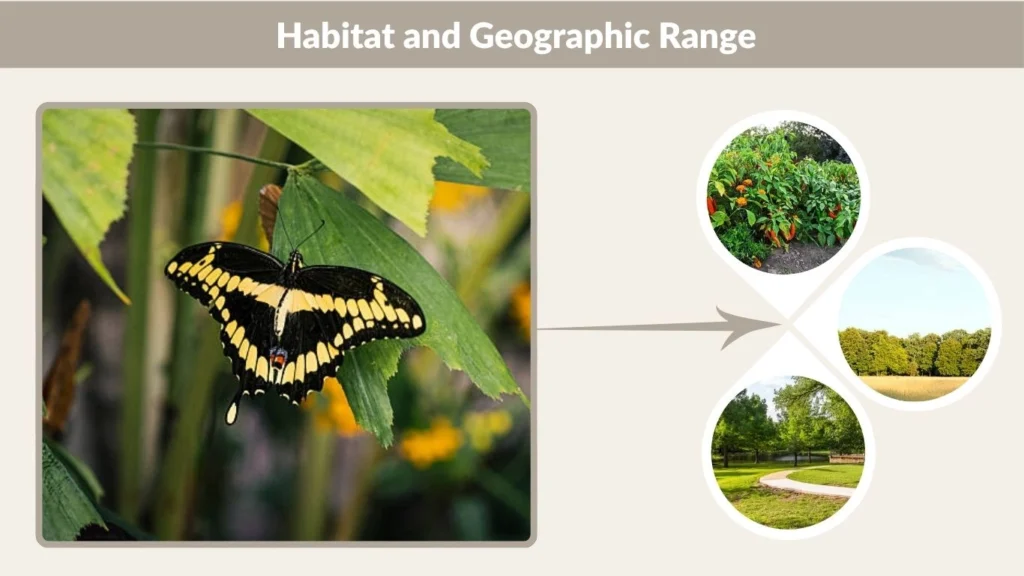
The giant swallowtail butterfly thrives in warm and sunny environments where host plants and flowering nectar sources are abundant. Its range has expanded significantly over recent decades due to climate changes and the spread of citrus cultivation in some regions.
Where Giant Swallowtails Are Found
Giant swallowtails are widely distributed across North America and parts of Central America. They are especially common in areas with mild winters and abundant citrus plants.
Regions where they are frequently seen include:
- Florida
- Texas
- Arizona
- California
- Ontario during warmer seasons
In northern areas, giant swallowtails may only appear during summer months because colder temperatures limit survival during winter.
Preferred Habitat
These butterflies prefer open spaces with plenty of sunlight and flowering plants. They are commonly spotted in gardens, forest edges, parks, and citrus groves. Adult butterflies spend much of their time searching for nectar flowers while females look for suitable host plants.
Their strong flying ability allows them to travel long distances between feeding and breeding areas. Because of this, giant swallowtails can adapt to both natural habitats and urban gardens.
Giant Swallowtail vs Other Swallowtail Butterflies
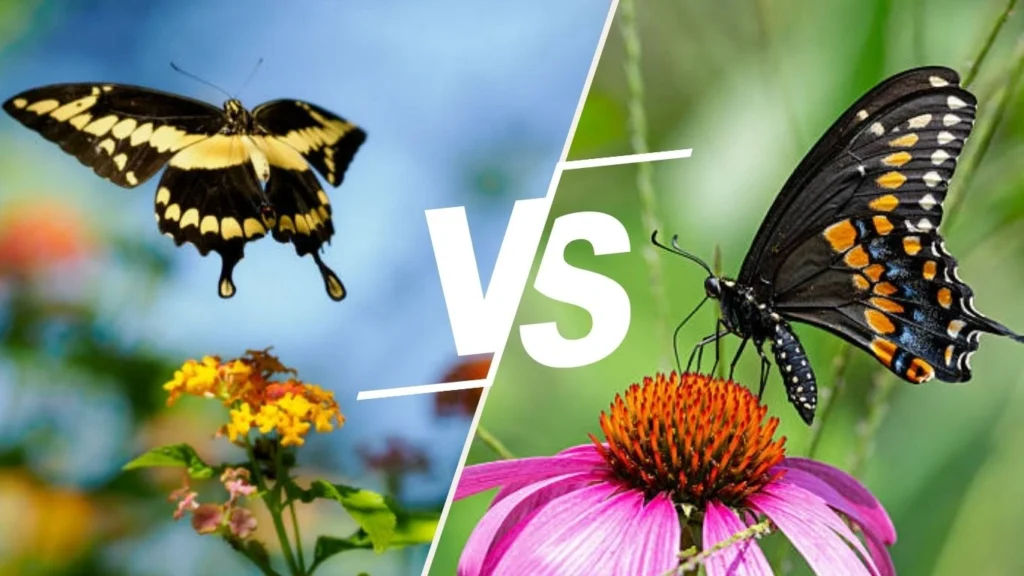
Many people confuse giant swallowtails with other swallowtail butterfly species because they share similar wing shapes and tail extensions. However, several physical differences help distinguish them from black swallowtails and tiger swallowtails.
Giant Swallowtail vs Black Swallowtail
The giant swallowtail is much larger than the black swallowtail. Giant swallowtails also have more prominent yellow bands across their wings, while black swallowtails display rows of smaller yellow spots.
Their caterpillars look completely different as well. Black swallowtail caterpillars are green with black stripes and yellow dots, while giant swallowtail caterpillars resemble bird droppings for camouflage.
Giant Swallowtail vs Tiger Swallowtail
Tiger swallowtails are known for their bright yellow wings with black tiger-like stripes. Giant swallowtails, in contrast, have darker black wings with yellow diagonal markings. Tiger swallowtails also tend to have smoother wing edges and slightly different flight patterns.
Although both species are large and beautiful, giant swallowtails usually appear darker and more dramatic when flying through gardens or wooded habitats.
How to Attract Giant Swallowtail Butterflies
Creating a butterfly-friendly garden can encourage giant swallowtails to visit regularly. Providing the right combination of nectar flowers, host plants, and shelter helps support both adult butterflies and caterpillars throughout the growing season.
Simple Ways to Attract Giant Swallowtails
- Plant citrus or native host plants
- Grow nectar-rich flowers
- Avoid chemical pesticides
- Provide sunny resting spots
- Add shallow water sources
Butterfly gardens not only support giant swallowtails but also help many other pollinators thrive. A healthy garden ecosystem creates safe spaces where butterflies can feed, reproduce, and complete their life cycle naturally.
FAQs
How long does the giant swallowtail life cycle take?
The giant swallowtail life cycle usually takes several weeks to a few months, depending on temperature and food availability. Warmer climates speed up development, while colder regions may cause the chrysalis to overwinter until spring before the adult butterfly emerges.
What do giant swallowtail caterpillars eat?
Giant swallowtail caterpillars mainly feed on citrus plants and other members of the rue family. Common host plants include orange trees, lemon trees, grapefruit trees, prickly ash, and hop tree leaves.
Are giant swallowtail caterpillars poisonous?
Giant swallowtail caterpillars are not poisonous to humans. However, they use a defensive organ called an osmeterium that releases a strong unpleasant smell to discourage predators when threatened.
Why do giant swallowtail caterpillars look like bird droppings?
The caterpillars mimic bird droppings as a form of camouflage. This unusual appearance helps protect them from predators because birds and other animals are less likely to attack something that resembles waste.
Where are giant swallowtail butterflies commonly found?
Giant swallowtail butterflies are commonly found in the southern United States, especially in Florida, Texas, Arizona, and California. They also live in parts of Central America and have expanded into northern regions such as Ontario during warmer seasons.