
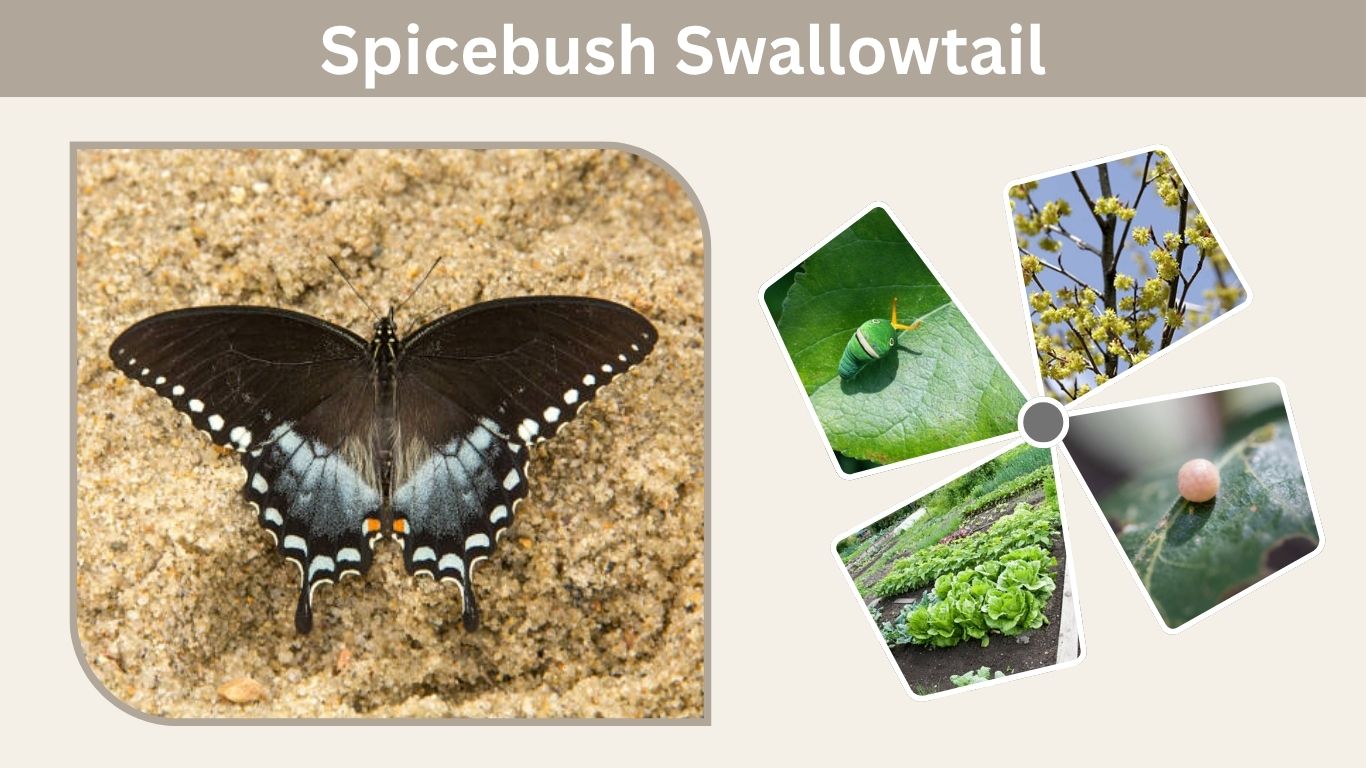
The spicebush swallowtail is one of the most fascinating butterflies found in eastern North America. Known for its dark wings, graceful flight, and remarkable caterpillar mimicry, this butterfly attracts gardeners, butterfly enthusiasts, and nature lovers alike. Its caterpillar stage is especially famous because it resembles a small green snake with large fake eyes designed to scare away predators.
Scientifically called Papilio troilus, the spicebush swallowtail depends heavily on host plants such as spicebush and sassafras trees. From egg to caterpillar, chrysalis, and adult butterfly, every stage of its life cycle shows unique survival adaptations. In this guide, you’ll learn about the spicebush swallowtail caterpillar, life cycle, host plants, butterfly appearance, and key differences from similar swallowtail species.
What Is a Spicebush Swallowtail?
The spicebush swallowtail is a large swallowtail butterfly recognized for its dark wings and elegant blue-green markings. It belongs to the Papilionidae family and is commonly found in forests, woodland edges, wetlands, and gardens with suitable host plants.
Scientific Classification
The scientific name of the spicebush swallowtail is Papilio troilus. It belongs to the swallowtail butterfly family, which includes many large and colorful butterfly species found throughout the world.
Like other swallowtails, it has tail-like extensions on its hind wings that give the butterfly its characteristic appearance. These wing tails may help distract predators away from vital body parts.
The species is especially common in eastern parts of the United States where spicebush and sassafras plants are abundant.
Key Features
Adult spicebush swallowtail butterflies are mostly dark black with subtle blue-green scaling on the hind wings. Their elegant wing shape and smooth flight pattern make them easy to recognize once you know what to look for.
Important identifying features include:
- Dark black wings
- Blue-green or bluish hind wing coloration
- Orange spots near wing edges
- Long swallowtail wing extensions
- Graceful gliding flight
The underside of the wings contains brighter orange markings that become more visible while the butterfly is resting or flying.
Spicebush Swallowtail Caterpillar
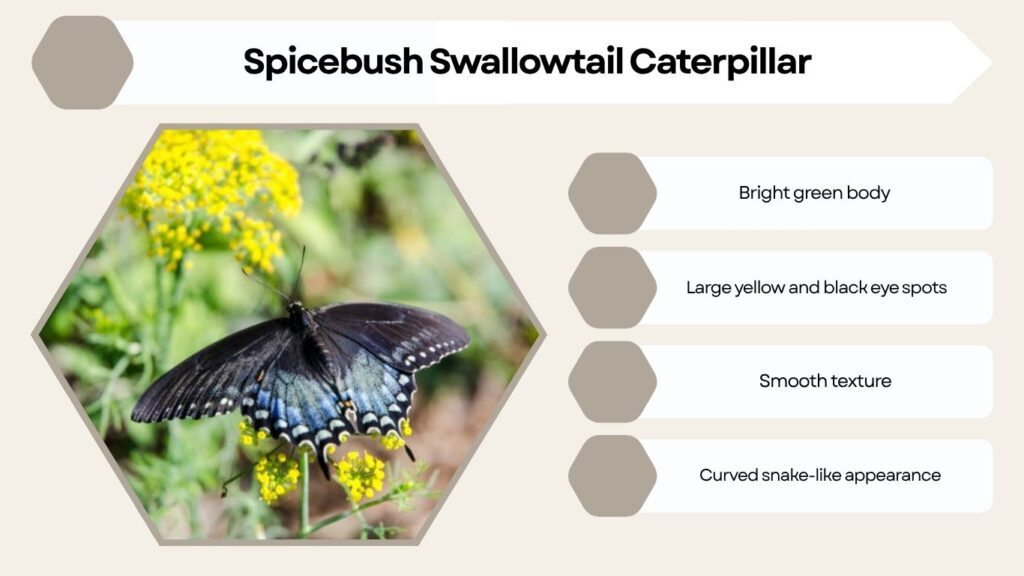
The spicebush swallowtail caterpillar is one of the most recognizable caterpillars in North America because of its snake-like appearance and large false eye spots. These markings help scare away predators by making the caterpillar resemble a small snake.
Caterpillar Appearance
Young spicebush swallowtail caterpillars begin as dark brown larvae with white markings that resemble bird droppings. This camouflage helps them avoid predators during their vulnerable early stages.
As the caterpillar grows, it transforms into a bright green caterpillar with large eye-like markings near the head. These false eyes are one of its most famous defensive adaptations.
The mature caterpillar typically has:
- Bright green body
- Large yellow and black eye spots
- Smooth texture
- Curved snake-like appearance
- Hidden true head behind eye spots
When threatened, the caterpillar may pull its head inward and expand the area around the fake eyes to appear even more intimidating.
Caterpillar Color Changes
The spicebush swallowtail caterpillar changes appearance significantly as it develops through multiple growth stages called instars.
Early instars are usually:
- Brown or dark-colored
- Small and thin
- Camouflaged as bird droppings
Later instars become:
- Bright green
- Larger and thicker
- More snake-like in appearance
Some caterpillars may also show orange or yellow tones depending on lighting and stage of development. This dramatic transformation is one reason why the spicebush swallowtail caterpillar attracts so much attention.
Are Spicebush Swallowtail Caterpillars Poisonous?
Despite their intimidating appearance, spicebush swallowtail caterpillars are not poisonous to humans. Their fake eye spots and snake mimicry are defensive adaptations designed to scare predators rather than harm them.
They are generally safe to touch gently, although handling caterpillars unnecessarily is not recommended because it may stress or injure them.
Unlike some caterpillar species that use toxic chemicals for defense, spicebush swallowtail caterpillars rely mostly on camouflage and visual deception to survive.
Spicebush Swallowtail Caterpillar Stages
The caterpillar passes through several stages before becoming a butterfly. Each stage involves growth, molting, and changes in appearance that improve survival.
Early Instars
During the earliest stages, the caterpillar is very small and dark brown. Its bird-dropping camouflage helps it blend into leaves and avoid predators such as birds.
At this stage, feeding activity begins immediately after hatching. The caterpillar consumes leaves from host plants to support rapid growth.
The tiny larvae often stay hidden on the underside of leaves where they are less visible.
Middle Instars
As the caterpillar grows, its body becomes thicker and the characteristic eye spots begin developing. Feeding activity increases significantly during these stages.
The caterpillar may begin rolling leaves into small shelters using silk. These rolled leaves provide protection from predators and harsh weather conditions.
This behavior is one of the unique traits commonly associated with spicebush swallowtail caterpillars.
Final Instar
The final instar is the largest and most recognizable stage. The caterpillar becomes bright green with prominent eye spots and a swollen front body that strongly resembles a snake.
During this stage, the caterpillar spends most of its time feeding and storing energy for metamorphosis. Eventually, it stops eating and searches for a suitable location to form a chrysalis.
This final stage is often the one featured in photographs because of its dramatic appearance.
Spicebush Swallowtail Life Cycle
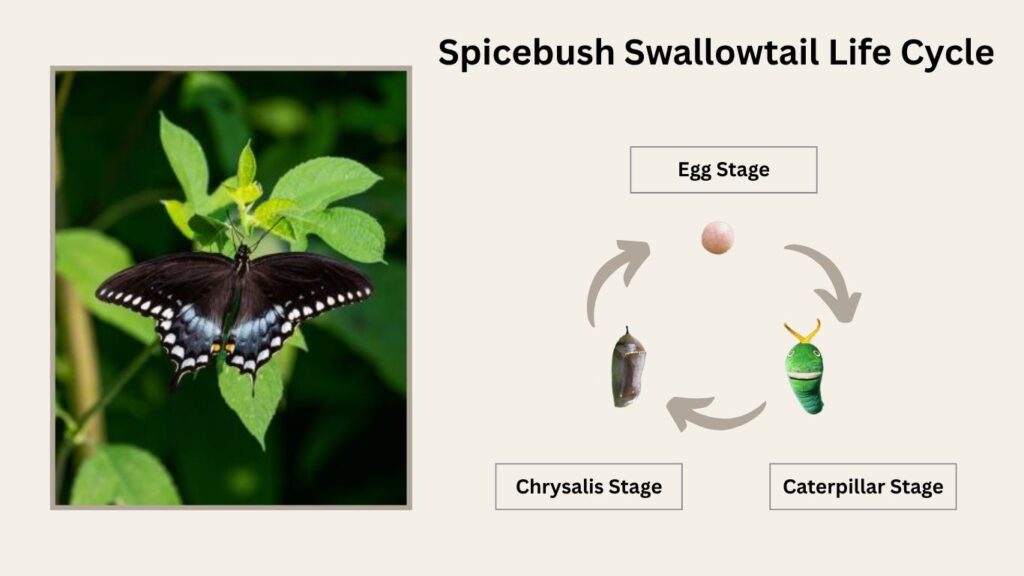
Like all butterflies, the spicebush swallowtail undergoes complete metamorphosis involving four major stages: egg, caterpillar, chrysalis, and adult butterfly.
Egg Stage
The lifecycle begins when the female butterfly lays small pale eggs on the leaves of host plants such as spicebush or sassafras.
The eggs are usually laid individually rather than in clusters. This helps reduce competition between caterpillars once they hatch.
After several days, tiny caterpillars emerge and begin feeding immediately.
Caterpillar Stage
The caterpillar stage is focused entirely on feeding and growth. Caterpillars consume large amounts of leaves to gain enough energy for metamorphosis.
During this period, they molt several times as their bodies increase in size. Each molt marks a transition into a new instar stage.
Leaf-rolling behavior also becomes common as the caterpillar creates protective shelters.
Chrysalis Stage
Once fully grown, the caterpillar forms a chrysalis attached to a branch or leaf using silk. The chrysalis may appear green or brown depending on environmental conditions.
This stage allows the caterpillar to transform internally into an adult butterfly while remaining protected from predators through camouflage.
In colder climates, the chrysalis may overwinter and remain dormant until spring.
Spicebush Swallowtail Chrysalis
The chrysalis stage is one of the most important parts of the butterfly’s lifecycle because it is when complete transformation occurs.
Chrysalis Appearance
The spicebush swallowtail chrysalis is designed for camouflage and often resembles a curled dead leaf or plant stem. Its appearance helps protect it from predators during this vulnerable stage.
Common chrysalis characteristics include:
- Green or brown coloration
- Leaf-like shape
- Small horn-like projections
- Silk attachment to stems or branches
The exact color often depends on the environment where the chrysalis forms. Green chrysalides are more common among fresh vegetation, while brown ones blend into dead leaves or branches.
How Long the Chrysalis Stage Lasts
The length of the chrysalis stage depends on the season and climate conditions. During warm weather, the butterfly may emerge within a couple of weeks. In colder regions, however, the chrysalis can remain dormant throughout winter.
Overwintering allows the species to survive freezing temperatures until conditions improve in spring. Once temperatures rise, the adult butterfly emerges and begins the next stage of its life cycle.
This seasonal adaptation helps the spicebush swallowtail survive in regions with changing climates and harsh winters.
Spicebush Swallowtail Host Plants
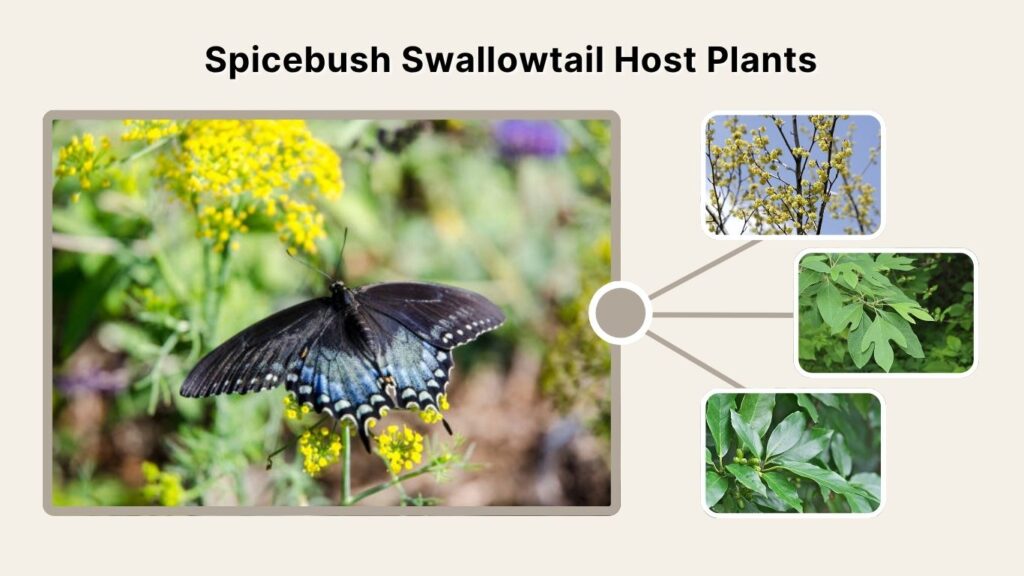
Host plants are essential for the survival of spicebush swallowtails because females lay eggs only on plants that caterpillars can eat. Without suitable host plants, the butterfly cannot complete its life cycle.
- Spicebush (Lindera benzoin)
- Sassafras trees
- Redbay in southern regions
- Swampbay plants
- Other laurel-family plants
Spicebush shrubs are considered the primary host plant and are one of the best ways to attract these butterflies to gardens. Sassafras trees are also highly important because caterpillars feed heavily on their leaves.
The relationship between the butterfly and its host plants is extremely specialized. Female butterflies carefully inspect leaves before laying eggs to ensure the caterpillars will have immediate access to food after hatching.
What Do Spicebush Swallowtail Caterpillars Eat?
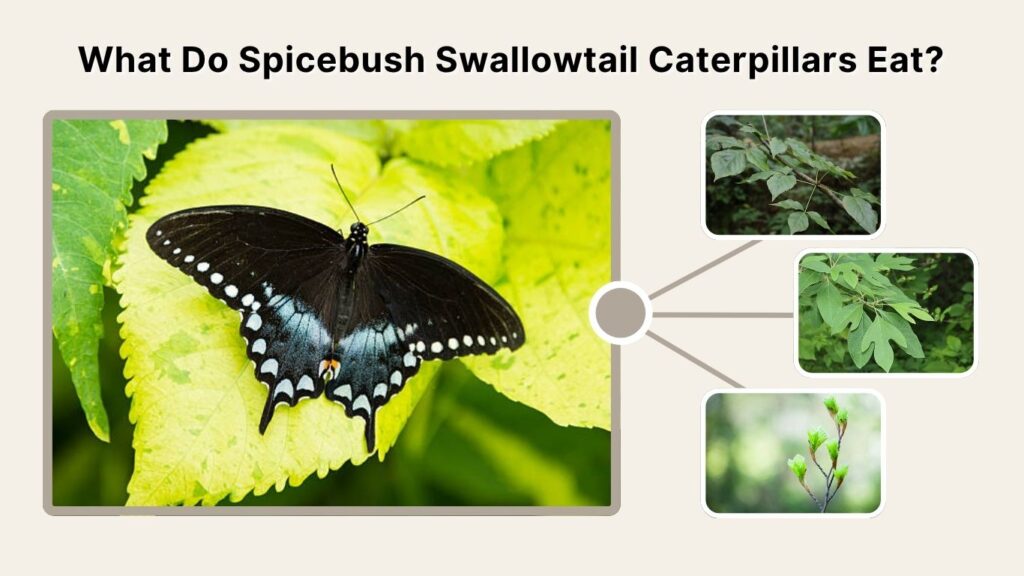
The caterpillars depend entirely on host plants for food and growth. Their diet is limited mainly to plants within the laurel family.
- Spicebush leaves
- Sassafras leaves
- Tender young foliage
- Leaves from laurel-family plants
- Fresh moist leaves preferred
Young caterpillars often feed on soft new leaves because they are easier to chew and contain more nutrients. As the caterpillar grows, its appetite increases significantly.
The caterpillars may also hide inside folded leaves while feeding. This behavior helps protect them from predators and harsh weather while allowing them to remain close to their food source.
Without proper host plants, caterpillars cannot survive or complete development into butterflies.
Spicebush Swallowtail Butterfly Appearance
Adult spicebush swallowtail butterflies are elegant and dark-colored with beautiful blue-green and orange markings. Although males and females appear similar, there are several noticeable differences between them.
Male Spicebush Swallowtail
Male spicebush swallowtails usually have darker overall coloration with smaller areas of blue-green scaling on the hind wings.
Important male characteristics include:
- Dark black wings
- Subtle blue-green hind wing coloration
- Slightly smaller size
- Narrower wings
Males are often seen actively flying in search of females and nectar sources during warm daylight hours.
Female Spicebush Swallowtail
Female spicebush swallowtails tend to display brighter blue coloration on the hind wings. They are also slightly larger than males in many cases.
Common female traits include:
- More visible blue coloration
- Slightly broader wings
- Larger overall appearance
- Similar orange spots underneath wings
Females spend much of their time searching for suitable host plants where they can lay eggs safely.
Male vs Female Comparison
| Feature | Male | Female |
| Wing Color | Less blue scaling | More blue coloration |
| Size | Slightly smaller | Slightly larger |
| Appearance | Darker overall | More vibrant hind wings |
Although differences can sometimes be subtle, females generally appear brighter and slightly larger when viewed closely.
Spicebush Swallowtail vs Black Swallowtail
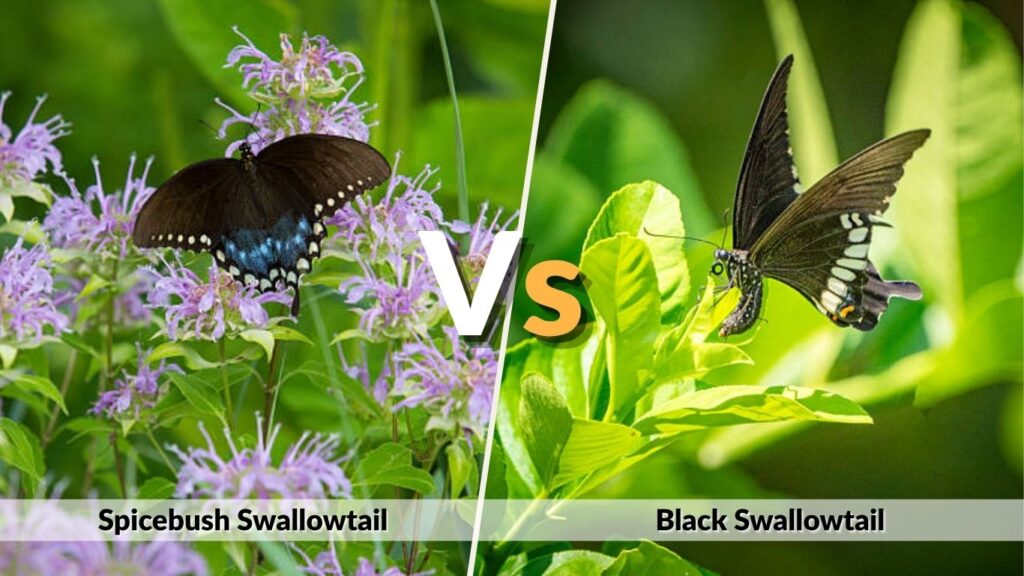
These two butterfly species are commonly confused because both belong to the swallowtail family and share similar body shapes. However, there are several important differences in coloration, caterpillar appearance, and host plants.
| Feature | Spicebush Swallowtail | Black Swallowtail |
| Main Color | Black with blue-green | Black with yellow spots |
| Caterpillar | Green with fake eyes | Green striped caterpillar |
| Host Plants | Spicebush, sassafras | Parsley, dill, fennel |
| Wing Shape | More curved | More spotted appearance |
Black swallowtail caterpillars are commonly found on garden herbs such as parsley and dill, while spicebush swallowtail caterpillars rely mostly on woodland host plants.
The caterpillars also look very different. Spicebush swallowtail caterpillars use snake mimicry for defense, while black swallowtail caterpillars rely more on coloration and chemical defenses.
Pipevine vs Spicebush Swallowtail
The pipevine swallowtail and spicebush swallowtail are both dark swallowtail butterflies, but they differ significantly in coloration, caterpillar appearance, and defense strategies.
| Feature | Spicebush Swallowtail | Pipevine Swallowtail |
| Wing Color | Black with blue-green | Iridescent blue-black |
| Caterpillar | Green snake mimic | Dark caterpillar with spikes |
| Host Plants | Spicebush family | Pipevine plants |
| Defense | Visual mimicry | Toxic chemical defense |
Pipevine swallowtail caterpillars absorb toxic chemicals from their host plants, making them unpleasant to predators. Spicebush swallowtails instead depend heavily on camouflage and visual mimicry.
Adult pipevine swallowtails also tend to show stronger iridescent blue coloration compared to the softer blue-green tones of spicebush swallowtails.
Habitat and Range
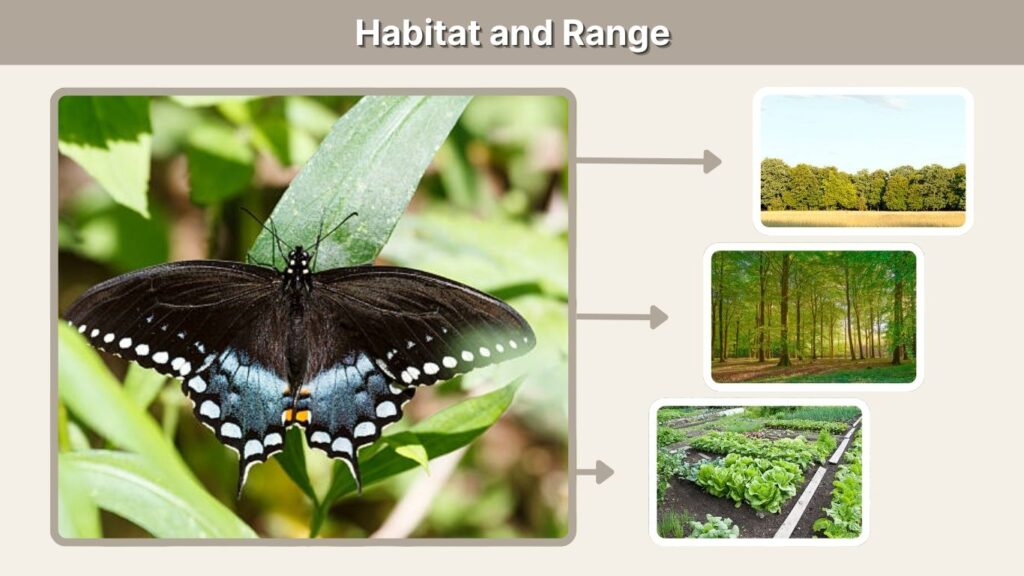
The spicebush swallowtail is commonly found throughout eastern regions of North America where forests and host plants are abundant.
- Eastern United States
- Woodland edges
- Forest clearings
- Wetland habitats
- Gardens containing host plants
These butterflies prefer moist woodland habitats because spicebush shrubs and sassafras trees grow well in these environments.
Adults are often seen flying near forest edges, flower gardens, trails, and open sunny spaces where nectar sources are available.
Behavior and Defense Mechanisms
The spicebush swallowtail uses several impressive survival strategies throughout its life cycle to avoid predators.
- Caterpillars mimic small snakes
- Rolled leaves provide shelter
- Adults glide smoothly while flying
- Chrysalides use camouflage
- Active mainly during warm daylight hours
Snake mimicry is one of the species’ most famous defenses. When threatened, the caterpillar pulls its head inward and enlarges the area around its fake eyes to resemble a snake’s face.
The chrysalis stage also relies heavily on camouflage. By resembling leaves or twigs, the chrysalis avoids detection from birds and insects.
How Long Do Spicebush Swallowtails Live?
The lifespan of a spicebush swallowtail varies greatly depending on which stage of the life cycle is considered.
Caterpillar Lifespan
The caterpillar stage generally lasts several weeks. During this period, the caterpillar spends nearly all of its time feeding and growing before entering the chrysalis stage.
Growth speed depends on temperature, food availability, and environmental conditions.
Adult Butterfly Lifespan
Adult spicebush swallowtail butterflies usually live for about one to two weeks. During this short period, they focus on feeding, mating, and reproduction.
Despite their relatively short adult lifespan, they play an important role as pollinators within their ecosystem.
Interesting Facts About Spicebush Swallowtails
The spicebush swallowtail has many fascinating adaptations that make it one of the most interesting butterfly species in North America.
- Fake eye spots scare predators away
- Caterpillars hide inside rolled leaves
- Adults are strong agile flyers
- Closely connected to laurel-family plants
- Popular among butterfly gardeners and enthusiasts
One of the most remarkable facts is the caterpillar’s ability to imitate a snake convincingly enough to frighten birds and other predators.
Their close relationship with spicebush and sassafras plants also makes them important indicators of healthy woodland ecosystems.
FAQs
What is a spicebush swallowtail?
The spicebush swallowtail is a black swallowtail butterfly native to eastern North America and scientifically known as Papilio troilus.
Are spicebush swallowtail caterpillars poisonous?
No, spicebush swallowtail caterpillars are not poisonous to humans. Their large eye spots are used only for defensive mimicry.
What do spicebush swallowtail caterpillars eat?
They mainly eat leaves from spicebush, sassafras, and other plants in the laurel family.
What does the spicebush swallowtail chrysalis look like?
The chrysalis resembles a curled leaf or twig and may appear green or brown for camouflage.
How do you attract spicebush swallowtail butterflies?
Planting spicebush shrubs, sassafras trees, and nectar-rich flowers can help attract these butterflies to gardens.